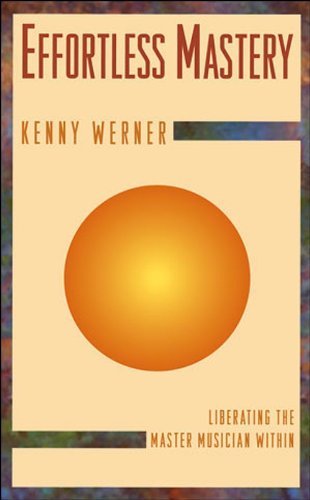
Eastern mindful approach to practice and performance (of any craft really). More philosophical than a practical guide, but if applied will reap great benefits.
Encourages slowing down and feeling before playing. Don't let thinking (fear, expectations etc) get in the way.
"Just before I play, I like to feel that no one has ever played the piano before...that every note I play is the most beautiful sound I’ve ever heard".
Really absorb your practice. Don't rush through all the material to get through it, or you'll only scratch the surface and wont really absorb anything. "So little time!" This can lead to a common feeling of overwhelm, and stall practice all together. Instead, focus on the next step, master it before moving on. You are where you are, and it takes the time that it takes. Useful advice for any endeavour.
Some good mindfulness/meditation practices in the book to apply to the instrument. He encourages the reader to try get into that same meditative zone before playing. Open, egoless state, flow; whatever you want to call it. This is the goal. A state of 'allowing', getting out of the way and let the music play itself.
A bunch of flowery spiritual language if you're into that. He has a cool way of approaching music as more of a spiritual practice; a path of mastery.
"As you play, there must be no intellectual interference. It’s good for practicing scales, reading books and studying. But it is not good for creating. Intellect has to surrender to instinct when it’s time to play."
Exercise: Play like "There are no wrong notes" and "That is the most beautiful sound I’ve ever heard."
End Goal:
"Mastery is playing whatever you’re capable of playing ... every time ...WITHOUT THINKING ..."
"To be perceived as a master, one must stay within the boundaries of what comes naturally and easily...There is always a schism between what the ego wants to play and what wants to come out. Although the master player may have great technical ability, you will not sense his attempt to show it; the technique manifests unconsciously"
If one combines masterful technique with the "channeling” of inspiration directly from within, the result can be awesome....After all is mastered, the inner being may manifest"
"For something to be mastered on your instrument, it must feel as simple as playing one note."
Practice To Perfection
Frame new stuff as "Unfamiliar, Not Difficult"
"Every time I practice written music, I move slowly enough to play it correctly, while almost in a state of meditation. In that way, I am teaching my fingers to perform by themselves while I soar!"
*Mastery of Sound - Get a deep feel for the notes (Mathieu Harmonic Experience is a great practical book on this. Getting a tangible feel through singing different intervals and the moods they create in different modal contexts)
The way artists express notes...
"They may be simple, but they resonate in a profound way. This depth of tone or phrase has to do with the artist’s "inner mastery" of the sounds he’s playing. It reflects the character of the player as an evolved being, and the depth with which he unites himself to his notes. He contemplates the different sounds, and forms personal relationships with intervals, chords, rhythms, and so on....focusing on a small amount of material, getting inside it, investigating all its
variations, running it through different keys"
Mastering the Body - Relaxed effort.
"You must have the faith that once you start moving, it’s going to happen"
"Remember: barreling through material works for only a very few. The rest are clearly overwhelmed by that pace and fail to develop a relationship to the music, supporting the belief that they are not meant to play well, that they’re not very talented. But by practicing small amounts, chewing fully and digesting everything from the lesson, extracting from it all the vitamins possible, one becomes mighty!"