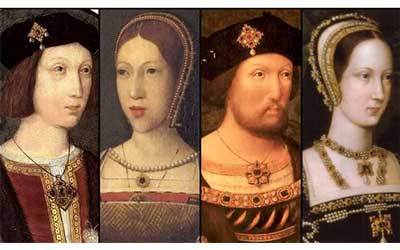
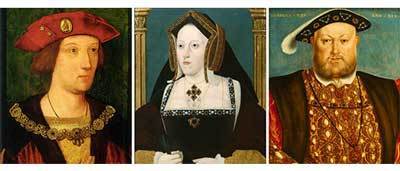
"The Tudors" is not exactly a "complete" story, as the title promises, but it is a very entertaining and illuminating look at the socio-political life and times of the Tudor dynasty (if a family that dies out after three generations can be called a dynasty.)
I'm a huge fan of putting history into context rather than the usual dull recitation of chronological events, and on that account "The Tudors" excels. While Meyer more or less does stick to a chronological approach in his main chapters, he intersperses what he calls "Background" chapters. I found the Background chapters to be fascinating, covering everything from schooling to torture to theatre to the pre-reformation English church to the intricate and never ending maneuvers for power on the European continent between France, Spain, the Habsburg/Holy Roman Empire, the Pope and the Ottoman Empire. This is why I gave the book five stars - in other hands, this important history becomes a jumble of eye-glazing-over names, dates and battles but here, it's entertaining and the reader is quick to grasp the significance.
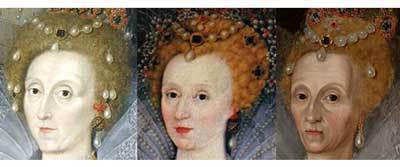
This is not a comprehensive biography of any of its subjects. In fact, at times Meyer even points out he is glossing over certain events, claiming that to do them justice is outside the scope of this particular book. Therefore, some reviewers appear upset that Elizabeth, in particular, seems to get short shrift. However, for the purposes of this book, which is to look at the power shifts and social development that shaped England under the Tudors, it's perhaps not so important to detail every event of Elizabeth's reign. Besides, most of Elizabeth's actions, as Meyer takes as his thesis, were calculated to keep her alive and secure on the throne, so to go into more explanation would just be more of the same.
Meyer does take a revisionist view of his subjects. As he points out in his epilogue, Tudor England has been the subject of much biography, analysis, propaganda and outright fabrication since the Tudors themselves were on the throne. Therefore, anyone seeking to read this for tales of Gloriana Elizabeth or Bloody Mary are bound to be disappointed.
However, I don't find this book as slanted as some reviewers on Goodreads. Perhaps because I've read plenty of Tudor scholarship (and fiction) over the last few years, I'm rather used to Elizabeth the Insecure and Horribly Self-Centered, Mary Tudor the Misunderstood, Edward the Strong-Willed and Intelligent Who Died Far Too Young. (Henry VIII is always a monster in his sunset years, however - it's just too hard to make excuses for someone who summarily executed everyone pretty much within earshot.)
But those who view Fox News as the holy grail of fair and balanced accuracy should stay far away and perhaps stick to Glenn Beck and Bill O'Reilly for "history."
While Meyer doesn't overtly make the parallels, it's not hard to draw them between Tudor England and the current political climate in the United States. For example, Henry VIII enacted severe penalties for anyone caught homeless and destitute. Meyer writes, "It was the classic case of punishing the victim, singling out for final humiliation the very people left most helpless by the pillaging of institutions that for centuries had attended to the needs of weak and the destitute." Doesn't sound too far off certain policies of certain political parties today.
Later, Meyer writes, "Tudor England was a world in which the rich got richer while the poor got not much poorer but much, much more numerous....There were many reasons why the condition of ordinary English families deteriorated precipitously during the Tudor century: the destruction of an ecclesiastical social welfare system ...; the ongoing enclosure of arable land...; an unprecedented concentration of wealth in the hands of a gentry class that was only a tiny part of the population; and a toxic mix of economic forces that caused real wages to fall decade after decade even as prices relentlessly rose.
"Added to this was the emergence of a new set of social values...that encouraged the prosperous to equate wealth with virtue and to regard the destitute as responsible for (or even predestined to) their predicament."
Well, I guess those who do not learn from history, etc. etc.
So yes, some could claim Meyer has a bias. He is also definitely sympathetic to the Catholics who were killed during Elizabeth's reign; while he points out that hardline Protestant Puritans were also targeted, they don't get the same tear-jerking treatment as, say, devoting a whole chapter to the hunting and execution of a Jesuit priest. This may also account for his rather disdainful treatment of Protestant Elizabeth, while her Catholic sister Mary is more dimensional.
But as a book that looks at the Tudor century from all sorts of (fresh to me) angles - I really enjoyed it.