Jump to ratings and reviews
Rate this book
Rate this book
Balthazar, is the second volume of Durrell's The Alexandria Quartet, set in Alexandria, Egypt, during the 1940s. The events of each lush and sensuous novel are seen through the eyes of the central character L.G. Darley, who observes the interactions of his lovers, friends, and acquaintances. Balthazar, named for Darley's friend, a doctor and mystic, interprets Darley's views from a philosophical and intellectual viewpoint.

280 pages, Mass Market Paperback

First published January 1, 1958

153 people are currently reading
4018 people want to read

About the author

Lawrence Durrell

324 books891 followers
Lawrence George Durrell was a critically hailed and beloved novelist, poet, humorist, and travel writer best known for The Alexandria Quartet novels, which were ranked by the Modern Library as among the greatest works of English literature in the twentieth century. A passionate and dedicated writer from an early age, Durrell’s prolific career also included the groundbreaking Avignon Quintet, whose first novel, Monsieur (1974), won the James Tait Black Memorial Prize, and whose third novel, Constance (1982), was nominated for the Booker Prize. He also penned the celebrated travel memoir Bitter Lemons of Cyprus (1957), which won the Duff Cooper Prize. Durrell corresponded with author Henry Miller for forty-five years, and Miller influenced much of his early work, including a provocative and controversial novel, The Black Book (1938). Durrell died in France in 1990.

The time Lawrence spent with his family, mother Louisa, siblings Leslie, Margaret Durrell, and Gerald Durrell, on the island of Corfu were the subject of Gerald's memoirs and have been filmed numerous times for TV.

Ratings & Reviews

What do you think?
Rate this book

Friends & Following

Create a free account to discover what your friends think of this book!

Community Reviews

5 stars
1,725 (39%)
4 stars
1,708 (38%)
3 stars
778 (17%)
2 stars
125 (2%)
1 star
48 (1%)
Displaying 1 - 30 of 404 reviews
Profile Image for Vit Babenco.
1,784 reviews5,785 followers
December 8, 2025
Balthazar… Belshazzar’s feast… The writing on the wall… Or is he one of Magi?
Balthazar visits the reclusive narrator on his island…
…the grave dark face of my friend, like some goat-like apparition from the Underworld, materialized among the thick branches of myrtle. We drew a breath and stood smiling at each other in the yellow light: the dark Assyrian ringlets, the beard of Pan. ‘No – I am real!’ said Balthazar with a laugh and we embraced furiously.

After the talk with Balthazar and reading his notices the protagonist sees everything that happened in a somewhat new light… Justin’s marriage… Her husband… She doesn’t love him… Her mother-in-law says…
“…she is an adventuress; like a small dark snake coiled up at the centre of Nessim’s life.”

Justin has a love affair with quite a known writer… And she falls in love…
In his diary he added drily: “Moths are attracted by the flame of personality. So are vampires. Artists should take note and beware.”

Some men are capable of ruining many a woman.
Some women are capable of ruining many a man.
Profile Image for Guille.
1,006 reviews3,278 followers
June 8, 2023

“Desde la posición privilegiada de esta isla lo veo todo en su duplicidad, veo con nuevos ojos cómo se intercalan los hechos y la fantasía, –y al releer, al trabajar nuevamente la realidad a la luz de todo lo que ahora sé, me sorprende comprobar que incluso mis sentimientos han cambiado, han madurado, se han ahondado. Quizá la destrucción de mi Alejandría particular era necesaria ("ese objeto que es toda verdadera obra de arte nunca muestra una superficie plana"); quizá en el fondo de todo esto yace el germen y la substancia de una verdad –usufructo del tiempo– que, si logro asimilarla, me hará avanzar un poco más en lo que es realmente la búsqueda de mi propio yo.”
El amor de su vida, el tiempo que pasó junto a ella, la ciudad mágica que sirvió de marco a su gran pasión –“Una ciudad se hace un mundo cuando uno ama a uno de sus habitantes”–, todo lo que pensaba al respecto cambia para Darley, narrador apesadumbrado, cuando recibe las reflexiones que de su manuscrito sobre Justine le ha hecho y le ha llevado personalmente Balthazar a la isla en la que vive retirado. Unas reflexiones que le acercan un poco más al conocimiento de sí mismo, al siempre difícil trato con la membrana que ineludiblemente se interpone entre nosotros y los hechos.
“Vivimos vidas que se basan en una selección de hechos imaginarios. Nuestra visión de la realidad está condicionada por nuestra posición en el espacio y en el tiempo, no por nuestra personalidad, como nos complacemos en creer. Por eso toda interpretación de la realidad se funda en una posición única. Dos pasos al este o al oeste, y todo el cuadro cambia.”
Pocas páginas necesitamos para damos cuenta de que justificar la idea recogida en esta cita es uno de los objetivos de la novela y, parece ser, del cuarteto en su conjunto. Al igual que Darley, los lectores también debemos ir recomponiendo y ajustando todo el cuadro que nos habíamos hecho en base a estas nuevas pinceladas. Los personajes no son lo que parecían, las relaciones entre ellos distan mucho de estar tan claras como se definieron en Justine, y por si esto fuera poco, la nueva entrega nos crea además la sospecha de que todavía estamos lejos de conocer la verdadera trama oculta en toda esta red de personajes y relaciones, incluso nos induce la duda de si la llegaremos a conocer, de si puede llegarse a conocer verdad alguna sobre nadie.
“En cuanto a los personajes humanos, sean reales o inventados, son animales que no existen. Cada psiquis es en realidad un semillero de predisposiciones antagónicas. La personalidad concebida como una entidad con atributos fijos es una ilusión... ¡pero una ilusión necesaria si queremos enamorarnos!”
Y en ese cambio de perspectiva destaca la figura de Justine, la mujer que vimos entregada a los placeres, que no paraba mientes en el dolor que infligía a sus amantes, es ahora el sujeto de ese dolor. En esta segunda entrega descubrimos que Justine, que vegetaba en su matrimonio, que mantenía una relación pasional, que ahora sabemos que no lo era tanto, con el narrador, realmente vivía y sufría por el amor a otro hombre, alguien del que no podía estar segura, a quien admiraba sin restricciones, al que no podía castigar con sus infidelidades, al que, en fin, no pudo salvar.

La novela mantiene el estilo lírico y barroco de la anterior entrega, con la misma habilidad para la recreación de atmósferas y la descripción de paisajes y sentimientos y con abundancia de reflexiones artísticas y filosóficas. Más episódica que la anterior entrega, posee dos focos especialmente bellos y crueles, tan fundamentales como la cacería con la que termina la primera parte del cuarteto: la vida rural escenificada en la visita que Nessim hace a su madre y hermano para anunciarles el compromiso con Justine, y la fiesta de carnaval, desaforada en su confusión de seres enmascarados y que culmina en un asesinato grotesco.

Y naturalmente, se mantiene la visión trágica del amor y del deseo.
"Al principio –escribe Pursewarden–, tratamos de complementar el vacío de nuestra individualidad por medio del amor, y por un breve instante tenemos la ilusión de la plenitud. Pero es sólo una ilusión. Pues esa criatura extraña que creímos nos uniría al cuerpo del universo, consigue al final separarnos aún más de él. El amor une, luego separa. ¿Cómo, si no, podríamos desarrollarnos?"
El amor se sigue tratando como una enfermedad, como una locura, nunca satisfactoria, siempre vivida a destiempo o con la persona equivocada, una obsesión que nos empuja a desear poseer lo imposible, plagada de decepciones, que enturbia y entorpece cualquier relación que en su ausencia sería infinitamente más placentera, que incluso impulsa nuestro afán autodestructor.
"Los jugadores y los enamorados juegan en realidad para perder."
Veremos.
Profile Image for Paul.
1,473 reviews2,168 followers
January 1, 2014
The second book in the Alexandria Quartet, still seen through the central character the writer Darley. He is now living on a remote Greek island a few years after the events of the first novel. Durrell’s narrative and descriptive powers create an atmosphere you can almost touch and smell. Balthazar arrives with some notes/descriptions/ information about the events of Justine which sort of fill in gaps, create new perspectives, answer some puzzles and create new puzzles. The bulk of the novel is taken up with these notes. We learn more about Pursewarden (loosely based on Wyndham Lewis). There is also a long section about the annual carnival and masque at which a murder takes place. The novel ends with a brief interlude relating to Clea, who is as enigmatic as ever.
Things are never quite what they seem is also part of the message and the added nuance makes the reader question their perceptions of the first novel. Different versions of the same story; it feels almost as though Durrell is mimicking the story of Jesus in New Testament. Durrell said the whole Quartet was about modern love. The language is luscious and feels venerable, but the themes are indeed modern, but they are age old themes and there is nothing new under the sun. The mingling of the sacred and profane in the city of Alexandria is modern, but could just as easily be a tale set in the age of the pharaohs.
This was published in 1958, but is set in the 1930s, so Durrell is looking back through the prism of time and perhaps recapturing something of his past as well. Durrell was in Alexandria during the war; the model for the character of Justine was Durrell’s second wife. Of course, a great deal of the sexual complexity in the novels reflects Durrell’s own life; although the theme is modern love Durrell wasn’t himself “modern” in his attitudes. I also have the edition of Granta in which his daughter Sappho’s diary extracts are published (not long after his death and about five years after her suicide). Real life themes mirror fiction.
Nevertheless it is a great novel, beautifully written and I’m looking forward to the next novel, Mountolive.
Profile Image for Ian "Marvin" Graye.
948 reviews2,782 followers
May 2, 2015
First Impression Followed by a Second

Initially, I suspected that this second volume of "The Alexandria Quartet" might be inferior to the first.

However, having finished it, I don't really think of it as a wholly different work. Its very nature and purpose is to tweek "Justine". It's both supplementary and complementary.

What emerges (in the mind of the reader) isn't so much a second distinct work, but a compound of the two. My memory of the first is now irreversibly altered by the experience of the second. Soon, I expect, I will have one collective impression of "The Alexandria Quartet".

The Great Interlinear

Like "Justine", this novel is a composite of diverse fictional contributions.

Over the two volumes, we absorb the narrator's words, Justine's journal, her first husband's novel ("Moeurs"), letters from Clea, Pursewarden's notebooks for his novel, and the "the Great Interlinear" contributed by Balthazar as a critique of the narrator's first draft of "Justine".


In a way, Durrell uses Balthazar's Interlinear to clarify, question, contradict, qualify or change what he or his narrator has written.

description

Lawrence Durrell, Layer by Layer


Towards the Creation of a Palimpsest

Balthazar explains his motive for writing the Interlinear in terms of the quest for truth:

"No doubt you are bringing us to judgement on paper in the manner of writers...It must fall very short of truth...

"These pages may lose your friendship without adding anything to the sum of your knowledge. You have been painting the city, touch by touch, upon a curved surface - was your object poetry or fact? If the latter, then there are things which you have a right to know."


The narrator realises that his memories of Alexandria and his friends are an ongoing creative work. The Interlinear highlights the extent to which it is "a palimpsest upon which each of us had left his or her individual traces, layer by layer."

By extension, the reference to a palimpsest emphasises that Durrell's metaphor is an artistic or painterly one:

"In order to go on, it is necessary to go back: not that anything I wrote about them is untrue, far from it. Yet when I wrote, the full facts were not at my disposal. The picture I drew was a provisional one - like the picture of a lost civilisation deduced from a few fragmented vases, an inscribed tablet, an amulet, some human bones, a gold smiling death-mask."

The past is a lost civilsation if we rely solely on our own experiences and observations.

Retroactive Perception

Now that we know a little of the city and its characters, Durrell seemed to feel it was time we observed them interact. Thus, there is far more narrative action in "Balthazar". However, the events that occur in this volume retroactively shape the narrator's perception and memories of the past:

"In my mind's eye the city rose once more against the flat mirror of the green lake and the broken loins of sandstone which marked the desert's edge.

"The politics of love, the intrigues of desire, good and evil, virtue and caprice, love and murder, moved obscurely in the dark corners of Alexandria's streets and squares, brothels and drawing-rooms - moved like a great congress of eels in the slime of plot and counter-plot."


This is a pretty good summary of the novel. For every aspect of the plot, there is a counter-plot. It writhes before our very eyes.

A Memory Reflected in a Mirror

Durrell indulges in much more description of both the psychic and the physical landscape. However, there is more conflict in this volume. The narrator becomes more engaged in his subject matter. His perspective changes:

"Once again, as always when the drama of external events altered the emotional pattern of things, I began to see the city through new eyes - to examine the shapes and contours made by human beings with the detachment of an entomologist studying a hitherto unknown species of insect. Here it was, the race, each member of it absorbed in the solution of individual preoccupations, loves, hates and fears. A woman counting money on to a glass table, an old man feeding a dog, an Arab in a red flowerpot drawing a curtain."

The surface detail invites him to explore the depth of what lies beneath. Equally, he acknowledges that the surface has altered his perception of the earlier layers:

"...a single chance factor has altered everything, has turned me back upon my tracks. A memory which catches sight of itself in a mirror."

I love the constant reflexivity that the mirror brings to the mind and its memories.

description

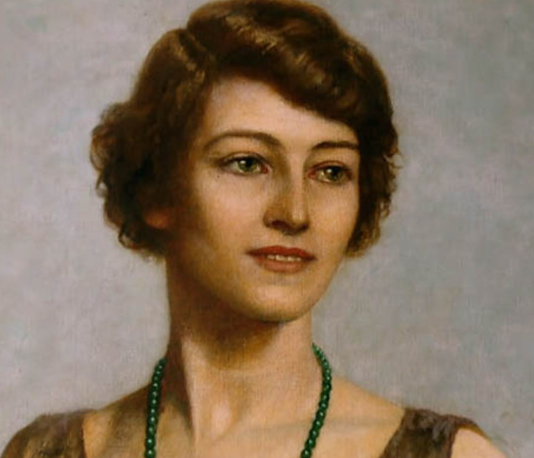
Portrait of Josa Finney, the hostess of the Carnival ball in the novel


The Key to the Self

Although the narrator's mind is made of memories, he is gripped and captivated by them. They appear to have cast a spell on him. Ultimately, he seeks a release, a deliverance from their hold.

The city of Alexandria might be a metaphor for life and perhaps for the individual as well, but he must escape it in order to know himself. Ironically, he must know more before he is able to discard the wealth of information:

"I must know everything in order to be at last delivered from the city...How will I ever deliver myself from this whore among cities...I must set it all down in cold black and white, until such time as the memory and impulse of it is spent. I know that the key I am trying to turn is in myself."

The Self Located in a Space and Time Marriage

The narrator believes he must discover the self ("my own real (inner) life") that is separate from his experiences and memories.

Yet, he wonders whether his mission is misguided. There is no self that is static or constant, that simply perceives a constantly-changing exterior world. The self is at the heart of relativity.

Pursewarden, the novelist who has been reading Einstein (1) ("In the Space and Time marriage we have the greatest Boy meets Girl story of the age!"), is the vehicle for these speculations:

"As for human characters, whether real or invented, there are no such animals. Each psyche is really an ant-hill of opposing predispositions. Personality as something with fixed attributes is an illusion - but a necessary illusion if we are to love...

"We live lives based upon selected fictions. Our view of reality is conditioned by our position in space and time - not by our personalities as we like to think. Thus every interpretation of reality is based upon a unique position. Two paces east or west and the whole picture is changed."


Once again, we are witness to the changing composition of the art work, the picture, the portrait.

The Other's Love of the Self

If our individual perspective can change in space, then perhaps we might also need the perspectives of other individuals to approach the truth more assuredly? Hence, Balthazar's Great Interlinear and the other metafictional devices.

Ironically, observation of the self by the other contributes to whatever substance the self is capable of. We need verification and vindication. Pursewarden says:

"I regard [the psyche] as completely unsubstantial as a rainbow - it only coheres into identifiable states and attributes when attention is focused on it. The truest form of right attention is of course love. Thus 'people' are as much of an illusion to the mystic as 'matter' to the physicist when he is regarding it as a form of energy."

Love, it seems, is a way of acknowledging the existence of an other (and reciprocally, of being acknowledged by the other).

The Illusion of Completeness

Still, the foundation of one's own self is unstable. Love is a perceived, but inadequate, prop:

"At first, we week to supplement the emptiness of our individuality through love, and for a brief moment enjoy the illusion of completeness. But it is only an illusion. For this strange creature, which we thought would join us to the body of the world, succeeds at last in separating us most thoroughly from it. Love joins and then divides. How else would we be growing?"

description

Justine Imagined Wearing a Domino at the Carnival ball


The Form of Truth

As with the first volume, Durrell constructs the novel on the foundation of these abstract concerns. We increasingly encounter multiple, incrementally-changing perspectives in the constant search for truth:

"I had made the image my own jealous personal property and it was true yet only within the limitations of a truth only partially perceived. Now, in the light of all these new treasures - for truth, though merciless as love, must always be a treasure - what should I do? Extend the frontiers of original truth, filling in with the rubble of this new knowledge the foundations upon which to build a new Alexandria? Or should the dispositions remain the same, the characters remain the same - and is it only truth itself which has changed in contradiction?"

It's too early to say whether Durrell was positing a stable or variable concept of truth. If anything, though, it seems at this stage as if truth is a matter of perception, and there are multiple perceptions.

On the other hand, Time itself might be a constant or at least an invariable Truth. However, Balthazar contradicts this:

"To intercalate realities is the only way to be faithful to Time, for at every moment in Time the possibilities are endless in their multiplicity. Life consists in the act of choice. The perpetual reservations of judgement and the perpetual choosing."

Hence, Time itself is multi-faceted, subjective, and variable. In other words, Time is relative.

The Form of the Novel

Ultimately, once again, this speculation is reflected in the form of the novel.

Balthazar proposes:

"I suppose that if you wished somehow to incorporate all I am telling you into your own Justine manuscript now, you would find yourself with a curious sort of book - the story would be told, so to speak, in layers.

"Unwittingly I may have supplied you with a form, something out of the way!

"Not unlike Pursewarden's idea of a series of novels like 'sliding panels'...or else, perhaps, like some medieval palimpsest where different sorts of truth are thrown down upon the other, the one obliterating or perhaps supplementing another. Industrious monks scraping away an elegy to make room for a verse of Holy Writ...I don't suppose such an analogy would be a bad one to apply to the reality of Alexandria, a city at once sacred and profane..."


To which the narrator responds:

"The Interlinear now raises for me much more than the problem of objective 'truth to life', or if you like 'to fiction'.

"It raises, as life does itself - whether one makes or takes it - the harder-gained question of form.

"How then am I to manipulate this mass of crystallised data in order to work out the meaning of it and so give a coherent picture of this impossible city of love and obscenity?"


It's almost as if life is a fictional work that we create as we experience and remember it. However, the more the narrator learns (or the more the author writes), the more the fiction changes.

In the Light of These New Treasures

As readers, we're still striving for our own coherence within the fictional world of Durrell's novel. The more we think about it, the more it changes! And we're only halfway through!

As a result, it seems like it's still too early to rush to judgement about what's actually happening. More treasures await us.

The narrator has isolated himself in Corfu, so that he can distance himself from the city and its characters enough to write about them. However, by the end of this volume, the characters want him back. They crave an input into the narrator's (if not the author's) enterprise (maybe even its direction and outcome). In the words of Clea:

"...perhaps your book...has changed. Or perhaps you, more than any of us, need to see the city again, need to see us again. We, for our part, very much need to see you again and refresh the friendship which we hope exists the other side of writing - if indeed an author can ever be just a friend of his 'characters'."

If reality is fiction, here is fiction striving to become reality.

These metaphysical and metafictional concerns are often associated with Post-Modernism. However, up to this point, at least, the Quartet is a persuasive argument that they were equally part of the Modernist project.


FOOTNOTES:

(1) The character of Pursewarden is believed to be based on the novelist Wyndham Lewis. His non-fiction work, "Time and Western Man" (1927), examines concepts of Time in literature. In it, he attacks James Joyce, to which attacks Joyce responded in "Finnegan's Wake". At the level of Time and Space, the work can be construed as evidence of a continuity between the concerns of Modernism and Post-Modernism. The work was published in the same year as Heidegger's "Being and Time".

http://duszenko.northern.edu/joyce/re...

http://modernism.research.yale.edu/wi...


REVIEWS OF "THE ALEXANDRIA QUARTET":

"Justine" (Vol. 1 of 4)

https://www.goodreads.com/review/show...

"Mountolive" (Vol. 3 of 4)

https://www.goodreads.com/review/show...

"Clea" (Vol. 4 of 4)

https://www.goodreads.com/review/show...


SOUNDTRACK:

Matthew Sweet - "Walk Out"

https://www.youtube.com/watch?v=wSwRA...

"When you look into a mirror,
The reflection that you see
Is a shell of what you were.
It's not who you want to be."


Miles Davis - "Time after Time"

Live at Yomiuri Land East, Tokyo, Japan on July 25, 1987

https://www.youtube.com/watch?v=L5qfu...

Live At Yomiuri Land Open Theatre East, Tokyo, Japan on July 28th, 1985

https://www.youtube.com/watch?v=rE8y7...

"Lying in my bed I hear the clock tick,
And think of you
Caught up in circles...confusion...
Is nothing new
Flashback...warm nights...
Almost left behind
Suitcases of memories,
Time after time."
Profile Image for Darwin8u.
1,835 reviews9,035 followers
May 21, 2018
"Our view of reality is conditioned by our position in space and time — not by our personalities as we like to think."
- Lawrence Durrell, Balthazar

description

In Durrell's second book of the Alexandria Quartet, Durrell has added another voice, another perspective to the events of the first novel. He is giving the story depth. He is destroying of the private Alexandria of Darley, and now expanding the story to include perspectives from Balthazar. Darley has sent Balthazar the manuscript for Book 1, and Book 2 now replays some of the same narrative (some things are missing, some new details are added, some facts are contradicted, new facts are discovered). Balthazar has dropped his loose-leafed Inter-Linear of Book 1 off to Darley, who is now raising Melissa (and Nassim's daughter) on a small Greek island (just West of Smyrna.* Chios?).

Again, I LOVED this second book. The language pulls me page after page. I had to stop myself from licking the page to get another scent or taste of Alexandria. The Carnival scene was intense and reminded me of a comination of Eyes-Wide-Shut and a William Burroughs trip. I also adored the desert/farm section with Nassim and his hair-lipped brother Narouz and their mother Leila).

Finally, I ravished every scene and every line from author Pursewarden (who seems to be modeled on a combination of Henry Miller and Wyndham Lewis)

* Modern-day Izmir
Profile Image for Laura .
447 reviews222 followers
July 28, 2020
I am disappointed with this - and bored also unfortunately. I recently finished "Mountolive", third in this series which I enjoyed. I don't know if the problem I am having with "Balthazar", is that I haven't read "Justine" - which is the first book in this series of four. My reason for not buying was the exhorbitant cost, and I will have to order it online. I do, however, have "Clea", and if I enjoy this last book in Durrell's quartet, I will behove myself to dig deep, and splurge on "Justine".

So, I will try to identify, for me at least, the problem(s) with "Balthazar". The main narrator is Darley, about whom I know practically nothing; I could list his main points - on one hand. He has retired to a small Greek island, presumably to write his next book - I'm guessing that Darley is the author of "Justine" - as the book exists both in the fictional world and our real world. And Balthazar the doctor, scholar, mystic visits him, a surprise visit to the remote island, and gives him a large sheaf of papers on which he has recorded his observations, conversations, thoughts, pronouncements etc on the same group of friends; Alexandrians that both he and Darley know. But this book is not really Balthazar's story - yes we are encouraged to believe that he has supplied most of the material but still Darley is our main narrator - it is his thoughts and experiences and concerns that predominate in trying to capture the recent events of their lives in Egypt. And this I think - is the main problem - I still don't know - who Darley is. Yes I gleaned some information from "Mountolive" about him - a lecturer, in literature, a teacher. He meets Justine through his lecture on Cavafy; he becomes Justine's lover temporarily; he treats Melissa badly, the cabaret dancer who is dying of TB. We do know that Darley has taken Melissa's child, an act of guilt/contrition - to bring her up as his own on the Greek island, but we also know that the child has been fathered by Nessim Hosnani. Hosnani, embarrassed by his connection with Melissa - had asked Balthazar to perform an abortion, which Balthazar refuses to do on account of Melissa's ill health.

So we hear about the same characters - from "Mountolive" except that in "Mountolive" everything is clearly from his perspective and we know who he is: his background, his position and status, his past relationship with Leila who is the mother of Nessim and Narouz Hosnani. We hear about his life at the embassy and how he knows the other characters, in particular Justine, and Nessim and Pursewarden - some of the minor characters such as Scobie, Pombal, Clea, Balthazar and Darley figure vaguely around Mountolive's narrative. But I enjoyed this book, I liked the descriptions of Egypt of the great lake Mareotis with its birds and fish and secret marshes etc.

I enjoyed "Mountolive" because I could see and understand how he felt about the events affecting the people around him. The people he cared about - he was devastated by Pursewarden's death, knowing that he is implicated in the events leading to it. He cares deeply about Nessim and Leila and we know why; we know his long history with them. We connect with the events which disturb and effect Mountolive because quite simply we understand who he is.

The problem with Darley's story is that although he recounts several unfortunate deaths and several tragic events concerning the same characters - there is no emotional engagement. In this book - the narrative is quite often switched around so that sometimes we hear Justine's thoughts, or sometimes Balthazar's and most enjoyably there are quotes from Pursewarden - which fill in his mysterious character. We have first hand accounts of some of Narouz's experiences; how he forces a Malzub to reveal the circumstances of the disappearance of Justine's child, but again - we feel nothing. These stories are brief, just as we feel we could connect with the feelings or the experiences of each different character we are switched to yet another scene, another event in Alexandria.

The writing is uneven - meaning there are some terrible long-winded passages, but the story of the Cervonis' ball during the Carnival season is one of the more interesting. We follow Darley in his long domino cloak, trying desperately to locate Justine, by the ring on her finger, but he eventually gives up and leaves. We know, however, that this party is amounting to a climax in the book - there is a murder. Justine somehow is involved; there is a telephone call from Clea, strange, odd in the middle of the ball, anxious to talk with her friend. But Darley has left and instead thwarts our patience with a tedious description of the - harbour.

So just as Plot begins to quicken the pace and interest of this no-plot story - Durrell plays it down with his slow descriptions. He is experimenting. He doesn't want any one particular voice to dominate; he is trying to get away from the one-person linear narrative - in an attempt to make us understand the complexity of the whole. If we focus on a particular character's perception we understand only how they have constructed the world around them, and Durrell is attempting to show how this is a limiting and narrow perspective; but in doing so he has sacrificed the personal. I think, it was also on trend - to show himself as a Modernist to break from his his voice, his authorial control and to "hide" or rather encourage the truthfulness of polyphony - to allow other perspectives to dominate so that Darley's/Durrell's interpretation does not dominate. Of course this is difficult to render convincingly because - it IS Durrell's creation - every line, word and comma etc...

It is the personal, however, which drives forward the novel. And it is the reader's identification with one or more characters that holds our interest. If we are are stirred, drawn-in emotionally, we want to know what happens - but in the case of "Balthazar" - I was repeatedly disconnected from understanding anyone character "completely" or at least as well as I could and I could not care about any of them, e.g. Scobie - the old cross-dressing policeman - he is beaten to death. Another character about whom I understood very little - Capodistria, or Da Capo for short, also dies. Toto de Brunel, accidentally murdered by Narouz thinking it is Justine - and yet we never understand why Narouz should be driven to such extremes. There is no engagement - we are left cold. Yes, we can see the multiple interlinking of all these different people and events, all connected by the social intercourse and location of Alexandria - a particular time, a particular place - but I was bored.
Profile Image for Edita.
1,586 reviews589 followers
December 2, 2020
I cannot say that I forgot the city, but I let the memory of it sleep.Yet of course, it was always there, as it always will be, hanging in the mind like the mirage which travellers so often see.
*
Now in the spring come the long calms, the tideless, scentless days of premonition. The sea tames itself and becomes attentive. Soon the cicadas will bring in their crackling music, background to the shepherd’s dry flute among the rocks. The scrambling tortoise and the lizard are our only companions.
*
Her mind had been formed by solitude, enriched by books which she could only discuss in letters to friends in remote places, could only read in the privacy of the harim. [...] Her letters had become her very life, and in the writing of them she had begun to suffer from that curious sense of distorted reality which writers have when they are dealing with real people; in the years of writing to Mountolive, for example, she had so to speak re-invented him so successfully that he existed for her now not so much as a real human being but as a character out of her own imagination.
*
The night was hot and still, and the scent of magnolia blossom came up to the balcony in little drifts and eddies of air which made the candles flutter and dance; he was gnawed by irresolution.
*
Nessim was busy with his memories of those youthful nights camped out here under a sky hoary with stars, in a booming tent (whose frosted guy-ropes glittered like brilliants) pitched under Vega, the whole desert spread around them like an empty room. How did one come to forget the greatest of one’s experiences? It was all lying there like a piano that one could play but which one had somehow forgotten to touch for years. He was irradiated by the visions of his inner eye and followed Narouz blindly. He saw them in all that immensity — two spots like pigeons flying in an empty sky.
*
Where must one look for justifications? Only I think to the facts themselves; for they might enable me to see now a little further into the central truth of this enigma called ‘love’. I see the image of it receding and curling away from me in an infinite series like the waves of the sea; or, colder than a dead moon, rising up over the dreams and illusions I fabricated from it — but like the real moon, always keeping one side of the truth hidden from me, the nether side of a beautiful dead star.
*
‘To intercalate realities’ writes Balthazar ‘is the only way to be faithful to Time, for at every moment in Time the possibilities are endless in their multiplicity. Life consists in the act of choice.The perpetual reservations of judgement and the perpetual choosing.’
From the vantage-point of this island I can see it all in its doubleness, in the intercalation of fact and fancy, with new eyes;and re-reading, re-working reality in the light of all I now know,I am surprised to find that my feelings themselves have changed,have grown, have deepened even. Perhaps then the destruction of my private Alexandria was necessary (‘the artifact of a true work of art never shows a plane surface’); perhaps buried in all this there lies the germ and substance of a truth — time’s usufruct — which,if I can accommodate it, will carry me a little further in what is really a search for my proper self. We shall see.
*
A whole new world of experience stands between us…. How could you know all this?


Profile Image for Eylül Görmüş.
756 reviews4,684 followers
January 6, 2022
Balthazar da bitti. İnsan bazı kitapları olayları merak ederek soluk soluğa okur, bazılarında sözcükler öyle güzel, öyle lezzetlidir ki ağır ağır, durup düşünerek ilerlemek ister hani. Bir de hayatta her ikisini de becerebilen az sayıda kitap vardır, görünen o ki İskenderiye Dörtlüsü de o kategoriden. Bir yandan gözüm meraktan ve heyecandan yan sayfaya kayıyor, bir yandan içinde olduğum sayfanın sihrinden kopmak istemiyorum. Ne diyeyim ki sana Durrell, olacak iş değil bu yaptığın. Balthazar, Justine’e göre temposu daha yüksek bir kitap ancak lezzeti yine çok yerinde. Bu ikinci kitapta, ilk kitapta okuduğumuz olayları okuyoruz, başkasının gözünden, onun bildikleriyle ve bambaşka bir gerçekliğe varıyoruz. “Yalnızca düşünmek istediğimiz sayıda gerçeklik vardır” diyor karakterlerden biri; öyle. Doğru nedir / gerçeklik hangisidir / gerçek dediğimiz şey ne kadar özneldir? Bu soruları size teslim edip gidiyor Durrell. “Belki üzeri silinip yeniden yazılan ortaçağ parşömeni gibi, birbiri üzerine yığılmış, biri ötekini bozan ya da tamamlayan değişik doğrular…” Bellek, aşk, şehir… Bu kitabın muazzam örüntüleri. Kendi belleğimde bana bir sürü yolculuk yaptırdı Balthazar ve vardığım yere baktığımda Durrell’in “insanoğlunun belleği mutsuzlukla aynı yaştadır” derken ne kadar haklı olduğunu gördüm. Şimdi üçüncü kitap Mountolive ile yola devam.
Profile Image for Brodolomi.
292 reviews197 followers
September 4, 2024
I dok je prvi deo "Aleksandrijskog kvarteta" predstavljao pokušaj glavnog junaka i pripovedača da kroz sećanja, dnevnike, pisma i tuđe rukopise dosegne istinu o proživljenim događajima u Aleksandriji i neuhvatljivoj Justini, drugi deo, već na prvim stranicama, kao vila brodarica razara ono što je izgrađeno i podseća nas da ljudi žive živote zasnovane na odabranim izmišljotinama i da je naš pogled na događaje uslovljen položajem u prostoru i vremenu. Stoga je svako tumačenje stvarnosti zasnovano na jedinstvenom položaju. Dva koraka na istok ili zapad i cela slika se menja.

Ulogu vile brodarice preuzima Baltazar, koji dolazi na ostrvo gde se povukao glavni junak. Baltazar mu vraća napisani rukopis s brojnim prepravkama i dopisanim komentarima, te mu uz uzdah saopštava da je pogrešno razumeo mnoge stvari, uključujući i ono glavno – ono što je velikim delom pokretalo narativ u prvom delu. Raskrinkavanjem pogrešne premise dešava se prvi preokret i ruši dobar deo postavke iz prvog dela. Moram priznati da, iako sam već čitao "Kvartet", preokret nije izgubio na svojoj svežini. Ponovo sam sa zadovoljstvom razjapio usta od iznenađenja, jer prvi deo te tako fino ušuška u svojoj prezasićenoj atmosferi spleena da zaboraviš šta ti se sprema.

Stoga, drugi deo nije klasičan književni nastavak u kojem se pripoveda o događajima koji slede, već pripovedač, na osnovu Baltazarovih ispravki, govori o istom vremenskom periodu iz prvog dela, ali iz promenjene perspektive. Uključuje nove likove i događajima daje na širini. Čitaoci koji vole da logika narativnih elemenata funkcioniše savršeno uglavljeno kao švajcarski sat, mogli bi Darelu da zamere na aljkavosti, ali, hej, ipak smo u mutnim vodama Aleksandrije u sećanjima jednog čoveka.

Plus ovo:
“Na kraju, otkriće se da je tačno sve o svima. Svetac i gad dele sve”.
Profile Image for merixien.
671 reviews666 followers
February 14, 2022
Justine’in hikayesi, bu kitaptaki Balthazar’ın anlattıklarıyla daha bir yerine oturmaya başlıyor. Bundan olsa gerek, Balthazar’ı daha çok sevdim. Bilmediğiniz detayları öğrendikçe ve karakterleri daha iyi tanıdıkça hikayenin içine daha çok çekiliyor insan. Seriyi okumaya devam edeceğim ve ilk kitaptan beri en çok merak ettiğim karakter de kitap da son kitapta düğümleri çözülecek olan Clea.
Profile Image for Alma.
751 reviews
November 6, 2020
"A vida não é longa. Devemos a nós próprios procurar um caminho para a felicidade."

"Às vezes não há nada mais cruel que a franqueza."

"Num certo sentido, era justamente o homem de quem ela precisava; mas, como deve saber, uma das leis do amor quer que a pessoa "idónea" chegue sempre ou demasiado cedo ou demasiado tarde."

"Depois, ele fazia-a rir - a coisa mais perigosa que se pode fazer com uma mulher porque, depois da paixão, é o riso que elas mais prezam. Fatal!"

"Saíram juntos e dirigiram-se para o carro, e de repente Justine sentiu-se muito fraca, como se a tivessem arrancado dos abismos do oceano para deixá-la à superfície das ondas."

"«Para começar», escreve Pursewarden, «procuramos encher o vazio das nossas personalidades pelo amor, e durante um momento breve desfrutamos de uma ilusão de plenitude. Mas não passa de ilusão. Porque a estranha criatura que nos tinha deixado crer ser capaz de unir-nos ao corpo do Universo consegue efetivamente separar-nos dele totalmente. O amor une, antes de separar. Se assim não fosse como podíamos nós crescer?»"
Profile Image for Lobstergirl.
1,921 reviews1,435 followers
July 31, 2013

I'm beginning to think Durrell is one of the great writers of the 20th century. Really, the writing is just incredible. Like music on the page. ("An Arab woman makes my bed, beating the pillows till they fluff out like the white of egg under a whisk...") "Baroque," I think George Steiner called it. Durrell said that the second two novels in the quartet weren't sequels, because that indicates a relationship in time; rather, they are siblings. (The fourth novel, he says, is a legitimate sequel.) You understand what he means once you begin to get into Balthazar. Time is not linear. We revisit not just the same characters from Justine, but some of the same events. As with baroque or classical music, there is the introduction of themes, their development, and their recapitulation. There are repeats and codas. Or, as Balthazar writes to the narrator, his manuscript could be described as "some medieval palimpsest where different sorts of truth are thrown down one upon the other, the one obliterating or perhaps supplementing another." Someone, perhaps Darley, writes, "perhaps buried in all this there lies the germ and substance of a truth - time's usufruct." Although I've only read half the Quartet at this point, I feel an analogy coming on - to the Gospels - the same stories told four ways, by four people - although in Durrell's case we have one common narrator, Darley. So here we have "the Gospel of Balthazar" or as Darley calls it, "Balthazar's Interlinear."

Durrell intended the Alexandria Quartet to be an investigation of "modern love," so it's interesting that he chose to situate it in this ancient city. Alexandria is "a city at once sacred and profane," writes Balthazar, and the narrator struggles to "give a coherent picture of this impossible city of love and obscenity." What is modern love? There's a lot of sleeping around. Partner swapping. Hetero and homosexuality. People fall in love with prostitutes. People of different religions and races mate. The young fall into rapturous embraces with the very old. Sexual perversions abound.

There are moments in the novel that shock you, as when the young landowner Narouz, riding horseback across his family's country estate with his brother, pauses to pull a human head out of a bag and toss it into a body of water. It had once sat atop a Bedouin who had been causing labor troubles. Other moments are hilarious - a parrot who recites parts of the Koran interspersed with fart noises - or surreal - the circumcision booth set up at the local festival, where unwary teen boys leaning back in the barber's chair hardly know what's happening to them until they feel the knife.
Profile Image for Lorna.
1,053 reviews735 followers
June 2, 2025
“Landscape tones: brown to bronze, steep skyline, low cloud, pearl ground with shadowed oyster and violet reflections. The lion-dust of desert: prophets’ tombs turned to zinc and copper at sunset on the ancient lake. Its huge sand-faults like watermarks from the air; green, and citron giving to gunmetal, to a single plum-dark sail, moist, palpitations: sticky-winged nymph. Taporis is dead among its tumbling columns and seamarks, vanished the Harpoon Men. . . Mareotis under a sky of hot lilac.”


And with that lush and beautiful writing, one begins Balthazar, the second volume of The Alexandria Quartet by British writer Lawrence Durrell. The first three books take place in Alexandria around 1940, just before the start of World War II. Again the narrative continues with the same unknown narrator of the first book in the quartet Justine. But it is in this book that we learn that the narrator is Darley who has moved to a remote Greek island with the illegitimate child of Melissa while he has devoted his time writing a manuscript about Justine. It is in the process of sending this draft of the book to his friend and psychiatrist, Balthazar, that we have a different perspective of what we learned in Justine. Balthazar drops off the manuscript with his comments and annotations throughout the manuscript and referred to as his “interlinear.” But it is in this interlinear that we have a literary recounting from Balthazar’s point of view and introducing us to other characters such as the writer Pursewadden and their mutual friend Scobie and how they are linked to the narrative. But Balthazar’s account completely reconfigures Darley’s understanding of the events as he presented in the first volume Justine. The book too is rich with lush and beautiful writing but sometimes confusing as more pieces of the puzzle are revealed. I am looking forward to continuing the journey of The Alexandria Quartet with the third book, Mountolive.
Profile Image for Czarny Pies.
2,829 reviews1 follower
November 6, 2018
The Alexandra Quartet is not a set of four novels but rather a composition for four voices.
At the centre of this movement is Balthazar who is described as a "homosexual goat"by Durrell. Balthazar is the leader of the gnostic-kabbal that many of the key characters belong to. "Indulge but refine was Balthazar's very alexandrian doctrine. Balthazar understood that it was in the nature of Alexandrians to seek a reconciliation between extreme sensuality and extreme asceticism which was why they were hysterics and extremists. It also explained why they were incomparable lovers."

The novel Balthazar also serves to very clearly enunciate Durrell's theses on God and sexuality :

"Gods are men and men Gods; they intrude on each other's lives, trying to express themselves through each other - hence much apparent confusion in our human states of mind, our intimation of powers within or beyond us. I think that very few people realize that sex is a pyschic and not a physical act. The clumsy coupling of human beings is simply a biological paraphrase of this truth. - a primitive method of introducing minds to each other, engaging them." p. 292
Profile Image for Ahmed.
918 reviews8,054 followers
June 17, 2014
الجزء الثانى من رباعية الاسكندريه.
أفضل من الجزء الأول بكل تأكيد, والتركيز على المدينه نفسها أعلى من الجزء الأول
اللغه رغم ترجمتها جيده
والاحداث والتفاصيل لم تختلف طبيعتها كثيرا عن الجزء الأول.
شخصيات العمل متطورة جدا وأفضل مافى الروايه والتطور الأكثر وضوحا عن لجزء الأول
فى المجمل عمل جيد ضمن رباعية روائيه قد تكون من أعظم ما قرأت
Profile Image for Jim.
2,414 reviews798 followers
January 28, 2025
I first read Lawrence Durrell's The Alexandria Quartet not long after arriving in Southern California in the late 1960s. In fact, I remember reading it on the beach in Santa Monica. Durrell's view of the varieties of love and sexual longing made a distinct impression on me. Balthazar is the second novel of the Quartet and it acts as a gloss on the first volume (Justine), correcting the narrator's perception of the various characters.

The narrator is Lawrence G. Durrell himself, who is nicknamed Lineaments of Gratified Desire by his writer friend Pursewarden. The plot is in the shape of a spiral, as we follow the narrator's friend Balthazar's "interlinear" (commentary) on the earlier volume.

Included are the deaths of several characters from Justine, including Pursewarden, Scobie, and Toto de Brunel.
Profile Image for الزهراء الصلاحي.
1,608 reviews681 followers
July 13, 2022
"_ماذا تريدين؟
=الفرار من عيون هذا العالم إلى ركن هادئ حيث يكون في وسعي امتلاك زمام نفسي. هنالك في شخصيتي أجزاء كاملة لا أدرك كنهها. إنني أحتاج وقتاً لذلك."

هذا الجزء أقوى وأفضل بكثير من سابقه!
لم أشعر بالملل ولا التشتت الذي شعرت به في الجزء الأول.
بل على العكس، هذا الجزء حل الكثير من الألغاز وأعطى مفاتيح كثيرة لحكاية "جوستين"!

كما توقعت،
وكما قال الكاتب في بداية هذا الجزء،
الأجزاء التالية ليست متممات للجزء الأول، بل شقيقاته!
أى أن الجزء الثاني والثالث يحكي القصة من منظور آخر ويوضح أبعاد أخرى.
وهذا كان أكثر شيء مميز في هذا الجزء!

لا زال هناك لغز الراوى الخفي الذي أأمل أن ينكشف في الجزء التالي الذي بلغ حماسي له مداه.

تمت
١٠ يوليو ٢٠٢٢
Profile Image for Larnacouer  de SH.
890 reviews200 followers
January 25, 2023
Justine’de beni zorlayan şeyin doğru kitap yanlış zaman olduğunu düşünmüştüm. Yazarın kimi okuru boğan süslü, ağdalı dili kimini tam tersi hayran bırakmıştı ama ben problemi kendimde aramıştım.

Güzel haber şu ki, buna- yani diline alıştık. Okurken sarf ettiğimiz çaba minimuma inmiş, artık bocalamıyoruz.
Kötü haber şu ki, bu sefer doğru zaman yanlış kitap skfmksmdmd.

Kitaba herkes gibi motivasyonu yüksek başlamıştım, gelişmeye doğru bi’ dağıldım; nasıl birden düşüşe geçti anlamadım ama valla yalan yok sona doğru biraz sürünerek okudum o yüzden. Dörtlemeyi tamamladığım zaman fikrim değişir mi bilmiyorum ama şimdilik serinin en zayıf halkası bu kitap diyebilirim.

Karalar bağlatmalı dramın dibine ekmek banmalı, denizin yansımalarını sayfalarca anlatmalı kitaplara varım bu arada beni sıkan şeyler değildir böyle şaşalı kelimeler, ağdalı abartılı anlatımlar. Uykumun gelmesi de problem değil ama okurken uyuyakalmışım hissi var ya, uyuyup bir şey kaçırmışım sanki? İşte bir tane yalatasım geliyor böyle hissedince. Hiçbir şey göründüğü gibi değildir olay örgüsünden tertemiz bir okuma, algı beklemiyorum ama mesela X karakter niye ortama zınk diye giriş yaptı? Okurken uyuyakalmışım hissi işte. Hiç sevmem.

Seri kitaplarda bunlar normaldir, sekizinci ciltte birden yeni birisi gelir ve onuncu kitaba kadar onu tanırız. Böyle bir şey değil benim dediğim. Yazar zaten kitaplarını seriden ziyade herkes ana bacı gardaş diye tanımlamış, nys anlayacağız mevzuyu durun bakalım. Beynim nerdesin?
Profile Image for Korcan Derinsu.
583 reviews406 followers
January 11, 2023
Serinin ikinci kitabı Balthazar, ilk kitap Justine’in daha derinleşmesini sağlayan, karakterleri ve olayları çok boyutlu görmemize olanak veren bir eser. İlk kitaba göre daha akıcı bir temposu olmasına ve daha kolay okunmasına rağmen tat olarak Justine’in bir adım gerisinde buldum. Bunda kuşkusuz birden fazla bölümün varlığı ve her ne kadar bağlantılı olsalar da bunun getirdiği çok parçalı yapının etkisi var. Tabii bunlar detay sayılabilecek unsurlar. Okurken aldığım zevk ve bu zevkin okuyup hızla bitirmekle hazzı ertelemek arasındaki ince çizginin üstünde gerçekleşmesi çok etkileyici.
Profile Image for Jonfaith.
2,146 reviews1,747 followers
April 20, 2015
I am just a refugee from the long slow toothache of English life. It is terrible to love life so much you can hardly breathe!

A fattened, more comprehensive and weezing approach will occur when I finish the Quartet.
Profile Image for Joy D.
3,133 reviews330 followers
June 17, 2022
This is the second book in the Alexandria Quartet. The four books tell the same story from different perspectives. It is about love, relationships, and jealousy. In the first book, we focused on the unnamed narrator’s overwhelming love for Justine. In this book we find out what he believed is not true.

We spend a lot of time with the reminiscences of the narrator, and we learn his name. We find out more about Justine and her various relationships. The major set piece of this book is an intriguing description of Carnaval. There is a murder, and a mystery, all wrapped up in a wide variety of philosophical musings.

This is not a standalone. Justine must be read first for it to make any sense. I appreciate the creativity but it’s not going to be for everyone. The reader will need a great deal of patience with flowery language and a nonlinear storyline. As in Justine, toward the end of the book we find a thin thread of a plot, but there is nothing that feels like a conclusion. It just … ends. I liked this one more than Justine and will continue to read the quartet. I am planning to take my time, since I can only digest these books in small portions. Next up is Mountolive.
Profile Image for Tuna Turan.
408 reviews57 followers
December 4, 2020
Serinin ikinci kitabında Durrell ilk kitabında olduğu gibi İskenderiye kentindeki karakterlerin içinde bulundukları şehir ve toplum arasındaki ilişkilerini anlatmaya devam ediyor.

İlk kitap olan Justine’de konuyu ana hatları ile açıkladı ve bizlere ana karakterleri tanıttı. Balthazar da hemen hemen aynı çizgide devam ediyor ancak Justine’in öyküsünü doktor Balthazar’ın bakış açısını da ekleyerek hikayeyi tamamlıyor. Kitapta diğer ilişkiler keşfedildikçe hikaye sanki biraz geri çekilmeye başlıyor, yazar bu seride daha fazla topluma zaman ayırıyor gibi geldi. İnanılmaz bir aşk döngüsü bu kitapta da devam ediyor.

Kitabın henüz ilk iki bölümüyle bile ele alacak olursak İngiliz edebiyatının ihtişamlarından biri olarak hakkında yapılan övgüleri fazlası ile hak ediyor.
Profile Image for Pavle.
506 reviews185 followers
March 4, 2018
Ono što mi je malo škripalo kod Baltazara je narativa, ili radije, njena neubedljivost. Darelova ideja primene relativiteta (mada malo laička) na strukturu kvarteta jeste zanimljiva – na neki način svaki potonji deo je ponovo čitanje jednog istog romana, ali sa različitim predznanjem – ali istovremeno unosi i sumnju u autentičnost pisanja, posebno kada karakteristično prvo lice iz Justine neretko zameni trećim licem nekog tamo nezanimljivog lika (npr. Nesimov brat). Dodaj na to što sam očekivao više hermetizma, i to je i dalje dobar roman koji samostalno stoji vrlo, vrlo dobro – ali u kontekstu nastavka Justine, tojest kvarteta u celosti, malo manjka.

4
Profile Image for Mehrnaz.
204 reviews23 followers
November 20, 2024
داستان این جلد یه سوپرایز بزرگ در ابتدا داره ولی در ادامه اتفاق تازه ای نمیوفته و فقط ما با روی دیگه ای از افراد داستان روبرو میشیم و قشنگی ماجرا اینجاست که با اینکه اتفاق چشمگیری در این جلد نمیوفته ولی خوندنش به شدت جذابه!!!
Profile Image for Sinem A..
484 reviews292 followers
August 19, 2015
Bir yapıyı yavaş yavaş kurmak gibi ya da iyice derine dalmak gibi.. kalan iki kitabı da okumak isteği...
Profile Image for Jenny (Reading Envy).
3,876 reviews3,710 followers
April 13, 2015
This is a review of the audiobook, which I received in exchange for an honest review from Brilliance Audio.

I originally read the second book of the Alexandria Quartet in 2009, and stopped without finishing the quartet. My goal is to get through all four books this year, but it is definitely slower going since I'm using the audio version. Narrator Jack Klaff makes great efforts to distinguish between characters but sometimes that makes me really hate the time we spend with some of them. Scobie with his whistled "s" is just unbearable in the car, and has a considerably large section near the beginning.

What I love about this book is the way it fills in some of the details missing in Justine, and gives the reader an entirely new perspective on the characters and events. You find out why Justine marries Nessim, and it is not what you might expect. You learn more about the espionage side of things, which I of course enjoyed. But the author is also stepping back and reflecting on love and life, and Durrell writes so beautifully that hearing the passages again was like revisiting a favorite poem.

The other layer of interest in Balthazar that as far as I know is unique to this volume of the quartet is the inclusion of two additional texts referenced in different ways. The novel starts with Balthazar visiting the author, bringing a pile of marked up pages the author had written about Justine, hoping to tell him the facts and background he never knew. There is also a novelist named Pursewarden who has died, and while I don't particularly remember him being mentioned in Justine he is a key figure in this book.

Another moment of reading synergy I happened to have was reading The Butterfly Mosque: A Young American Woman's Journey to Love and Islam by G. Willow Wilson in the middle of listening to this novel. Wilson details her conversion to Islam in the first few years of the 21st century, as well as a cultural shift (she marries an Egyptian.) Durrell is describing Egypt, focusing on Alexandria, as its own character, right as colonial rule is diminishing and a shift in power is on the horizon; Wilson describes a much more modern (and much more Islam-dominant) Egypt. But between 1958 and 2010, there remain some elements that are Egyptian cultural practices. I actually felt I understood Durrell's Alexandria better after reading Wilson's account, particularly on approaches to love and the many definitions of marriage. Durrell wanted to write about "modern" love but the characters in Balthazar that aren't British are seeing it from a completely different perspective that even he may not have completely understood.

I was surprised my original review contained no quotations so I will include some of them here.

"It is not enough, perhaps, to respect a man's genius - one must love him a little, no?"

"Are we then nourished only by fictions, by lies?"

"We live by selected fictions."

"At first" writes Pursewarden, "we seek to supplement the emptiness of our individuality through love, and for a brief moment enjoy the illusion of completeness. But it is only an illusion. For this strange creature, which we thought would join us to the body of the world, succeeds at last in separating us most thoroughly from it. Love joins and then divides. How else would we be growing?"
Profile Image for Teresa.
1,492 reviews
July 24, 2016
"A única maneira de permanecermos fiéis ao tempo — escreve Baltasar — consiste em intercalar as realidades, porque em cada ponto do Tempo as possibilidades são infinitas na sua multiplicidade. Viver é escolher. Reservar perpetuamente o nosso juízo, escolher perpetuamente."
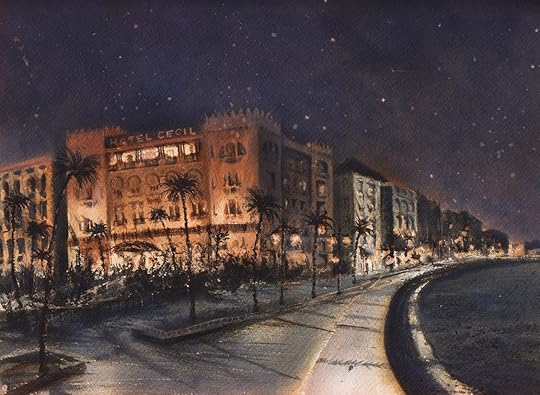

Alexandria...
description
Profile Image for David Carrasco.
Author 1 book146 followers
June 20, 2025
¿Y si todo lo que creías saber sobre una historia fuera mentira, pero no porque alguien te mintió, sino porque tú escuchaste lo que querías oír?

Balthazar no es una continuación. Es un bofetón elegante. Un "permíteme que te corrija" dicho con la sonrisa irónica de quien ha leído tus cartas íntimas y viene a devolvértelas con anotaciones al margen. Esta segunda entrega del Cuarteto de Alejandría no avanza hacia adelante, sino hacia los lados. Donde Justine era una inmersión narcótica en la memoria emocional de Darley, Balthazar es una rectificación. O peor: una anotación a pie de página que lo desarma todo. Lo que creíamos verdad no era más que una versión. Y aquí Durrell, con una crueldad literaria deliciosa, nos dice que no hay relato que sobreviva intacto a una segunda mirada.

¿La trama? No esperes revelaciones en el sentido convencional. Sí, reaparecen los mismos nombres: Justine, Nessim, Melissa, Pursewarden... y, por supuesto, el propio Darley, aún exiliado, aún obsesionado. Pero el eje ahora lo toma Balthazar, ese médico místico, ese intermediario entre el sexo, el esoterismo y la ciencia, que llega con su interlineal: una versión corregida del manuscrito anterior, salpicada de notas que lo reconfiguran todo. ¿Qué fue real? ¿Qué fue malinterpretado? ¿Qué fue directamente inventado por Darley para protegerse o castigarse?

Porque la estructura de Balthazar es brillante en su malevolencia: no construye, desmonta. A cada capítulo uno va sintiendo que lo leído en Justine era apenas la superficie de un palimpsesto emocional mucho más turbio. Durrell juega con el lector como un prestidigitador malicioso. El truco ya lo hemos visto. Ahora nos enseña cómo lo hizo. Y aún así, seguimos sin entenderlo del todo.

Y parte del truco está en la prosa, claro, ese lujo oriental embriagador: densa, voluptuosa, casi impúdica en su belleza. Pero hay un matiz. En Justine , esa sensualidad era un narcótico. Aquí, en Balthazar, es más cerebral. Menos perfume, más alquimia. A veces incluso se permite el sarcasmo. La ironía entra en escena, como si el propio Durrell empezara a reírse del embrollo que ha creado. Y de paso, de nosotros, pobres lectores que creímos que la verdad estaba en el deseo. No. La verdad, si existe, está en las zonas muertas entre las versiones.

Y justo cuando empezabas a acostumbrarte a esa incertidumbre, aparece Balthazar. Con una sonrisa y un corrector rojo. Sí, Balthazar. El tipo que llega con un 'yo te lo dije', pero sin decir nada. Y de pronto, todo lo que creías saber sobre la historia de Justine se convierte en un amasijo de interpretaciones más bien incómodas. No es un personaje que te dé respuestas, ni que resuelva misterios. Más bien, es el tipo que viene a recordarte que en el juego de las historias, nunca hay 'una' verdad. Solo versiones. Y la suya, claro, viene con notas al margen, que no son tan reveladoras como prometen, pero que tienen esa habilidad de hacernos dudar de todo lo que pensábamos tener claro. Balthazar no es tu amigo. Y no es el enemigo de nadie. Es simplemente el tipo que te mira con cara de: '¿pensabas que todo esto tenía algún sentido?'. Es el maestro del cinismo, el que te dice, en susurros, que todos los relatos son cuentos que se cuentan para no enfrentarse a lo que realmente somos: unos estúpidos intentando dar forma a un caos sin sentido.

Y es ahí cuando entendemos que su papel no es explicarnos nada, sino desestabilizarlo todo desde dentro. Balthazar se convierte en un personaje fundamental, pero no porque lo conozcamos más. Al contrario: cuanto más habla, más enigmático se vuelve. Es un médium literario. Un testigo que no solo ha estado ahí, sino que ha leído lo que Darley escribió y ha decidido intervenir. Su mirada introduce una dimensión nueva: la del cinismo, la del análisis, incluso la del humor negro. Donde Darley era pasión y culpa, Balthazar es mirada clínica. Pero no por eso menos comprometida. De hecho, el libro insinúa que ni él es tan lúcido ni Darley tan ciego. Y ahí está la gracia: todos están contaminados. Todos tienen algo que ocultar. Incluso el que dice traer la luz.

Y Darley, claro. Nuestro Darley ya no es aquí aquel hombre arrodillado ante Justine. Es otro, con las manos vacías y la cabeza menos cargada de espejismos. Su prosa también ha cambiado: sigue siendo lírica, pero ya no canta; observa. Ahora escribe desde el suelo, no desde el altar.

Pero la lucidez, en Durrell, siempre tiene un precio. Y se llama Pursewarden. Porque uno de los grandes logros de esta segunda novela es la aparición más consistente de Pursewarden. Ese escritor nihilista, suicida, arrogante y brillante que parece salido de una novela escrita por Thomas Bernhard y editada por Nabokov. Es el personaje más autoconsciente del Cuarteto, el único que parece entender que la vida no tiene un argumento claro, y que la literatura que intenta capturarla, tampoco debería tenerlo. Las cartas que deja tras su muerte son una bomba de relojería. Y uno sospecha que Durrell, en el fondo, se divierte mucho más escribiendo a Pursewarden que a cualquier otro personaje. Porque es él. O al menos una parte de él: la más despiadada, la más lúcida, la más iconoclasta.

Y mientras Pursewarden incendia la idea de argumento, el propio mundo de la novela muta, se descompone. En comparación con Justine , esta novela desestabiliza. Lo que era tragedia romántica ahora se transforma en manipulación política. Lo que era deseo se revela como cálculo. Hay una subtrama conspirativa —religiosa, política, incluso esotérica— que flota por debajo de todo, como si Alejandría no fuera solo una ciudad, sino una célula enferma del mundo. Y ahí vuelve Durrell a hacer su magia: convertir el escenario en personaje. Alejandría sigue siendo ese lugar entre oriente y occidente, entre el deseo y la muerte, entre la carne y la palabra. Pero ahora está menos vestida de seda y más llena de sangre seca y polvo.

Y es en ese escenario descompuesto donde Durrell planta imágenes que se quedan en el cuerpo como tatuajes secos, como esa cabalgada de Nessim y Naruz por el desierto, brutal y luminosa, que parece escrita con los huesos de la historia familiar. Durrell no necesita empujar la trama: le basta con estas imágenes para recordarnos que lo esencial siempre ocurre fuera del relato.

Pero si esas imágenes se nos quedan clavadas en la piel, como cicatrices invisibles, también hay que decirlo: Balthazar no es un libro fácil. Ni amable. Si Justine era un vino especiado que te emborrachaba con gusto, este es un licor más oscuro, más denso, que baja rascando. Requiere más atención, más entrega, más disposición a ser desorientado. Pero el premio es grande. Porque con Balthazar entendemos que el Cuarteto no va de descubrir una verdad, sino de entender que la verdad es, siempre, una construcción de ángulos. Que lo que importa no es qué ocurrió, sino cómo se contó, y quién lo contó. Así, Durrell no está tan lejos de Pirandello, ni de Faulkner, ni de Cortázar cuando juega con la cronología y la multiplicidad en Rayuela. Aunque aquí hay más incienso y menos jazz.

Y si en Justine Melissa era la figura trágica de fondo, aquí su sombra se vuelve más punzante. Su dolor, su desamparo, su ternura torpe se revelan con más crudeza. No es solo la otra mujer: es la que siempre supo más de lo que decía. Es, en cierto modo, la única que no está interpretando un papel. Y eso, en un mundo de máscaras, la vuelve insoportable. Porque lo real, en esta novela, duele. Y se paga caro.

Al cerrar Balthazar, no tienes la sensación de haber terminado una novela. Más bien, has desenterrado un cadáver que creías vivo. La historia de Justine ha sido profanada, reescrita, contaminada, como si alguien hubiera abierto las ventanas de una habitación cargada y dejado entrar el viento frío. Y mientras tiembla, uno no puede evitar preguntarse: ¿y si aún hay más?

Pues sí, lo hay. Viene Mountolive, la tercera entrega del cuarteto. Y entonces, todo volverá a cambiar.

Porque Mountolive no es solo la siguiente página. Es la puerta que Durrell abre para que te vuelvas a preguntar quién narra, qué oculta y cuánto estás dispuesto a tragarte de verdad. Prepárate: el juego se complica y las certezas se vuelven aún más frágiles. Aquí no vas a encontrar respuestas tranquilizadoras, sino esa incomodidad necesaria que hace que leer siga teniendo sentido. Y si creías que con Balthazar estabas a salvo, te aviso: todavía no has visto nada.
Profile Image for Elizabeth.
748 reviews29.1k followers
June 8, 2017
Spectacular. These books are structured in such a complex way that as you peel away each layer you learn more about the whole. I'm going to be sad when I finish this quartet.
Profile Image for path.
351 reviews34 followers
April 8, 2025
“To understand it is necessary to work backwards, through the great Interlinear which Balthazar has constructed around my manuscript” (50).

This book is less of a sequel to Justine as much as it is a retelling of the events and a reassertion of the characters. Whereas the first book warped characters like Justine, Nessim, Clea, and Melissa to fit the narrator’s emotional perspective, this volume adds layers and provides different histories and motives and desires that still add up to the actions from the first book, but but provide those actions different significance and meaning. These new threads come through the “inter-linear” provided by Balthazar. The “inter-linear” is literally what is between the lines of the manuscript, “Justine” that Darly shared with Balthazar for comment. In between the lines, Balthazar adds in the missing details. And at their most arresting moments undo and call into question what both Darly and the readers know.

I still find the principal narrator, Darly, a bit too much. Perhaps a bit less so in this book, however, as his emotional morass isn’t the only bog to wade through. There are some lovely chapters focused on Nessim and his brother Narouz in the desert. Pursewarden has a bit larger presence in this book via quotes and journal entries. Mountolive is more present as well. And as these characters come to life, the complexity of their relationships and various kinds of love they feel (or don’t feel for each other) become clear.

The writing is poetic, evocative of meaning that goes beyond what is said.
Displaying 1 - 30 of 404 reviews

Can't find what you're looking for?

Get help and learn more about the design.