Ozick is a kind of narrative hypnotist. Her range is extraordinary; there is seemingly nothing she can't do. Her stories contain passages of intense lyricism and brilliant, hilarious, uncontainable inventiveness.
Recipient of the first Rea Award for the Short Story (in 1976; other winners Rea honorees include Lorrie Moore, John Updike, Alice Munro), an American Academy of Arts and Letters Mildred and Harold Strauss Living Award, and the PEN/Malamud award in 2008.
Upon publication of her 1983 The Shawl, Edmund White wrote in the New York Times, "Miss Ozick strikes me as the best American writer to have emerged in recent years...Judaism has given to her what Catholicism gave to Flannery O'Connor."
I was slightly intrigued at first, although I worried I might find the suicide angle triggering (I didn’t, as it was all so unrelatable to my father's death).
The narrator dropped out of a New York rabbinical seminary, but his friend, Isaac Kornfeld, went on to become a renowned rabbinical thinker and regularly ordered books from the narrator’s bookstore. Their own fathers had been rival rabbis, competing to be the most charitable, pious, and esteemed.
When he learns of his friend’s suicide, the narrator goes first to visit the carefully chosen tree Isaac hung himself from with his prayer shawl, and then, with mixed motives, he calls on Sheindel, Isaac’s devout widow, and mother of seven girls.
Next-level tree-hugging
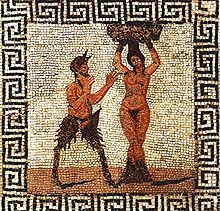
With horror and disgust, she shows him the notebook and letter found in her husband’s coat pocket that suggest he turned from appreciating nature to full Paganism. “She was an orphan and had been saved by magic [from a concentration camp] and [therefore] had a terror of it.” The narrator’s father had not forgiven his apostasy, and Sheindel is equally fixed in her views of her late husband.
There is page after page of overwrought theology, philosophy, and mysticism, with quotes within quotes between various entities, detailing a rather literal love of nature. “I… plucked a leaf and made my tongue travel meditatively along its periphery… The taste was sticky and exaltingly bitter. A jubilation carpeted my groin.”
A crisis of faith, let alone changing leaving the religion one was raised in and that pays the bills, creates interesting dilemmas. Or can do.
Others in the Short Story Club got far more from this than I did, finding it both profound and funny, so join the group, or look for other reviews on GR. I wonder if a bit more knowledge of Jewish-American thought and culture would have helped me - though I expect strict, Orthodox Jews might find it heretical.
Quotes
• “Count the babies. The Jews are also Puritans, but only in public.” • “We are not like them [non-Jews]. Their bodies are more to them than ours are to us. Our books are holy, to them their bodies are holy.” • “‘Everybody marries for the same reason.’ ‘No,’ said my wife. ‘Some for love and some for spite.’” • “His intention was not to accumulate mystery but to dispel it.”
These stories aren't nearly as good as other stories of Ozick's I've recently read. They are a little over-written and too short-story-ish. The kind of stories that makes you think of school and that you imagine earnest writing students writing earnestly as they bear their soul on paper along with some extra words to make it look like their soul is more soulful than it probably really is, not that there is anything wrong with their soul to begin with but sometimes there is the feeling to embellish.
These stories are pretty Jewey. I mean that in the most underogatory manner one could ever imagine. Not in the way that Philip Roth is Jewey, but in a non-self hating Jew Jewey way. One story even deals with some Isaac Bashevis Singer making fun of, which is kind of funny if only because it's funny to think that there were Yiddish speaking Jews who might have hated him for being so popular among goyim.
There is a guard at work that finds the cover (which is different on my copy than the one you see above), which has a rabbi hugging a tree. He wants to read the story and he laughs when he mentions the book. I am amused at how much he is amused by the book and I plan on giving him the book once I remember to bring it to work on a day that he is working.
You know who I wouldn't give this book to? DoctorM* or that douche with the funny hair who had a girl fight his battles for him and then blocked me for calling him an idiot on his total lack of understanding what the literary term gothic meant and on his misuse of the term in a review that I cited as ridiculous bullshit. I wouldn't give either of them this book because it is mine and why would I give them a present?
*I'm of the belief that he must be name dropped if one is to earn votes these days, and seriously this review sucks so far. What have I really said? I've used the word Jewey a few times, and blahed about blah blah, but there is no content. One might wonder if I even really remember reading this book. One might ask, Greg, can you seriously not remember almost anything about this book even though you read it only 10 days ago? One might ask a question like that but why would someone write a review for a book that they barely remember, and not even pick up the bok to leaf through and jog their memory, especially if the aforementioned book were within arm-reach because unreviewed books are left on the ground where my mattress meets the floor because that is where books that need to be reviewed are put so they can be in my way until I review them. Obviously, this is not the case and the fact that you are thinking this is a little disturbing to me, first of all because you might consider me to the the type with a bad memory; secondly to be the type of person who would just ramble on in a desperate attempt to get your vote, and finally, or thirdly that you would know where I keep my books that I haven't rated yet and why you are sneaking about my room. That is fucked up. Seriously. It's like DoctorM fucked up, if he were in fact guilty of what we all deep down in our heart of hearts know he probably really did do, but which we like to fairly go ehhhhhhh, he might have or might not have like we are aging Jewish uncles being Talmudic about who took the last chocolate from the little dish near the front door, even though we can all see the chocolate stains all around the mouth of Moishe, the little lying fucker, who says not me, but we all know it is.
Cynthia Ozick, a Jewish writer, wrote about characters leaving their traditional faith. The unnamed narrator tells about his own loss of faith as a young man, living a secular life, and never receiving forgiveness from his father. He's just received the news that Rabbi Isaac Kornfeld, a longtime friend, ended his life by suicide. When he visits Kornfeld's widow, she has the narrator examine a small notebook and a long philosophical letter that were found in Kornfeld's pockets.
The Orthodox Rabbi Kornfeld began worshipping Nature, feeling that God resides in Nature so he was not adoring a false idol. The rabbi was trying to find a new version of himself out in the woods. Magical realism, Greek mythology, sexuality, pantheism, and mental health concerns are all present in his letter about his exploration of Nature and his new beliefs.
One's religion is mostly an accident of birth, and determined by our parents when we are young. The story shows conflicts between a religious life and a secular life, traditional teachings and alternative ways of experiencing spirituality, monotheism and pantheism, and compassionate attitudes and unforgiveness. The author injects some humor into the story. It was an interesting short story, but it did drag during the Rabbi's long philosophical letter.
"The Pagan Rabbi" is a short story in "Black Water: The Book of Fantastic Literature" which I'm reading with the Short Story Club. 3.5 stars.
In which our conflicted Rabbi Kornfeld suffers a crisis of faith and hangs himself from a tree in a park next to the water stinking of sewage after making vigorous love to that tree and invoking a dryad whose vegetable attentions he enjoys immensely until she tires of him. In his suicide note he helpfully lets us know, “Scripture does not forbid sodomy with the plants.”
Ozick’s tale is a hilarious read that manages to be both quite serious and silly at the same time, both a savage critique of the damage caused to our souls by monotheistic fundamentalism as well as a savage satire of crunchy back-to-nature pseudo-Romanticism. Boy is it savage.
++++++++++ Title story read for GR short story group
Titular story . A story of two halves with the second half loosing the humour and mischief of the first . That said it's an interesting exploration of head and heart , monotheism and paganism , order and chaos, faith and belief with a fabulous description of either an earthly nymph and the huge mystery of Nature or a single man's descent into madness .
The first two stories, "The Pagan Rabbi" and "Envy: Or, Yiddish in America" were fantastic, and a great introduction to Cynthia Ozick's writing style, characterization, and themes (take note, anyone who has patiently listened to me gush about her over the past several months). The final story, "Virility," is ALMOST as great. It stumbles a little with the ending--I don't want to give anything away.
In between, there are four other stories, and they have their ups and downs. "The Dock-Witch" has great atmosphere and takes an interesting approach to an overdone theme (the shiftlessness of young men). "The Doctor's Wife" has interesting characters, though the ending is too quirkily expected. "The Butterfly and the Traffic Light" is a bizarre experiment, almost a creative non-fiction piece with an illustrative "story" tacked on. That one I probably need to reread. And "The Suitcase" was my least favorite of all. It was as smartly written as anything else she's done; it just felt purposeless.
But Cynthia Ozick is one of the greatest American writers of the last 50 years, and The Pagan Rabbi and Envy are possibly the greatest short fiction she's written (other contenders: "An Education" and the Puttermesser stories). This collection is really hard to find, but no bother--just buy "The Collected Short Stories of Cynthia Ozick" and "The Puttermesser Papers". I've seen both many times at used book stores, and they have all of her best stories and novellas.
Ozick still feels above my literary chops, each story like a Saturday crossword, but I admire her forlorn take on Jewishness in a post-Holocaust world, on every culture's ongoing death by assimilation into modernity.
From Envy, or Yiddish in America, the best story in this collection:
"...in judging them he dug for his deepest vituperation -- they were, he said, Amerikaner geboren. Spawned in America, pogroms a rumor, mamaloshen a stranger, history a vacuum."
"Of what other language can it be said that it died a sudden and definitive death, in a given decade, on a given piece of soil? [...] A little while ago there were twelve million people--not including babies--that lived inside this tongue, and now what is left? A language that never had a territory except in Jewish mouths, and half the Jewish mouths on Earth already stopped up with German worms."
"Choose death or death. Which is to say death through forgetting or death through translation."
I'm conflicted about my rating for this one. I love Cynthia Ozick's essays and short stories in general, but this early collection was uneven for me. I really liked or loved "The Pagan Rabbi," "Envy; or, Yiddish in America," "The Doctor's Wife," and "Virility." "The Suitcase" and "The Dock-Witch" were okay, and I don't even know what was happening with "The Butterfly and the Traffic Light." I think Ozick was trying something different there, and I'm not sure it worked. So I'm going to average all that out to 3.5 stars, since I enjoyed over half of the stories and would generally recommend the collection if you like short stories, but in my heart, Cynthia Ozick deserves a higher rating, gosh darn it!
English-language magical realism published in 1971, this collection of short stories by Cynthia Ozick deals largely with American Jews in the decade or so after the Holocaust. It's one of Ozick's early works and the only one of hers I've read. It's extremely well written in a slightly antique style. The overwrought inner agonies of the characters remind me of Russian and Eastern European fiction of the late 19th centuries. The fantastical and supernatural elements really spin my wheels, but the jaundiced view of humanity keep me from wanting to read more of Ozick's work. Like some of those Russians, it's just too depressing.
Concernig the titular story only: Right, so this was a pretty good one, in spite of getting near mired in the muck (literally). It begins with some subtle foreshadowing: “I . . . journeyed out TO SEE THE TREE.” There is more in this vein, or should I say, xylem, e.g. “the COMELY neck of the [tree] limb. “Fathers like ours don’t know how to love. They live too much indoors.”
The red herring – “Idolatry is the abomination . . . not philosophy.”
The damning epigraph that leads to this epitaph-tale. Whereas Shakespeare once penned “What’s past is prologue,” yet here the overwhelming weight of underlying indoctrinated culture irreversibly sets the mold.
Of the several stories we have read (Short Story Club) highlighting and self-deprecatingly lowbrowing Yiddishness (Mishnaicness?) this one certainly rings the bell. (Although I found it hard to pin down specific quotable examples to present here, nevertheless the aura succeeds in this regard spectacularly.)
The uniquely colorful phrases; for an avid reader – “wearing the look of a man half-sotted with print.” The line about uttering “Bring the tea.” Again, “He could concoct holiness out of the fine line of a serif.” By the way Sans Serif is a flutingly fanciful moniker meaning, simply, plain.
The Yogi-ism to consider: “What are they like, those people?” “They’re exactly like us, if you can think what we would be if we were like them.” Ponder that thought in this age of discordancy.
Another harbinger of trouble brewing, “To them their bodies are holy.”
Then there is the clever dichotomy of having the wife Sheindal (“beautiful”), once physically liberated from a concentration camp, married to a man who becomes convinced escape comes from release of the soul from the incarnation.
Then there is the clever dichotomy of having the wife Sheindal (“beautiful”), once physically liberated from a concentration camp, married to a man who becomes convinced escape comes from release of the soul from the incarnation.
It’s true that there’s a lot of what comes across as pedantic theological philosophizing. However although the author places Isaac on a bit of a pedestal, later Ozick pulls the carpet (and stand) away, leaving the character and us dangling momentarily, until cutting away to something else. No biblical-like reprieve for Isaac on this occasion! And all the time set against the backdrop (“fringing’) of the fetid stagnant undercurrent. Musty as it must be aside, the decay process spews forth again in later passages renewed.
It was briefly intriguing to consider, although perhaps I just ran momentarily with a tangent, that Moses chastising the “idol” worshippers actually drove them away from their “real” spiritual underpinnings. As they say, history is written, not necessarily specifically by the victors, but by historians, and when their tale survives, it makes them victors in a sense. (The pen is mightier than the sword.)
Later the author, expressed through the (looong note, goes off on another tangent himself . . . It seems to me that, if man is the exception to some rule, then there may be an exception to the exception, as in I before e, except . . . except . . . just except it 😁. Which is exactly what Isaac is hoping for. Rather vulgarly going about it, yet Isaac ends ups ensnared in some faeirie-land fantasy. These episodes roll along in the muck for several more ensuing pages before the last twist of the screw.
Remember the prologue, thus his stoney soul, so set in stone, rejects these changes. Spirit is liberated from body, but, jarringly, the essence is found to remain in the remains after all. “To them their bodies are holy.” A withered spirit would have sung dirges until the end of time of matter, but now no longer matters. Where does that leave us and the narrator, let alone Sheindel and the seven dwarves, just kidding, asleep at the wheel. Who really knows?
This was a rather gripping tale, which held me to my seat (sitzfleish) with brief interludes, and left me thoughtful, even though I’m not sure what the author was really trying to get across. What more can one ask for?
Thirty years ago I gave Ozick a (post-) "college try." Although her essays often continue to interest me, her stories and novels can't keep my attention. Her penchant for shifting into mythic modes and spooky moods doesn't jibe with my sensibilities, ok? So many readers may prefer this magic-realist path, sidling into the shadows. Thus, your preferences may differ. Mine, it seems, stay fixed.
The title story's exemplary of her approach, from her early collection circa 1972. And this shows how early in her long career over more than half a century she had leveled off at her flight pattern, her cruising altitude, her natural pace. It's a creepy tale, and at least the narrator cringes, as did I. That allows necessary distancing from its intriguing, if typically florid (pun intended) prosiness.
I came to this for the novella "Envy, or Yiddish in America," reminded of this by Ruth W. Wisse's 2017 memoir reviewed by me, "Free as a Jew." The portrait of Ostrover, who's been widely taken to be I.B. Singer, rings pretty true. Again unsettling how his detractors call his pale mien as if a "pig."
The inherent fascination I have with this cultural conflict, between those safe in America "drinking tea in" NYC even as the Shoah shattered those able to survive, clashed with the stilted style of her dialogue, the stagy phrasing suited for the theatre but sounding nothing like those who came from a devastated Europe who I grew up knowing, the intellectual self-absorption, rankles me. Sure, it's perhaps ideal for the New Yorker readership, but it remains removed from everyday rhythms and speech. Of course, as literary fiction it's not mass-market. Ozick has always elevated herself and her characters and preoccupations above the quotidian, as her calling. Yet I can't shake its irrelevance.
I had no idea how to rate this book or these short stories, as I had no preconceived knowledge about Cynthia Ozick or her writing when this compilation crossed my radar, and very little knowledge about Jewish tradition, thinking, or legendary folklore. I am delighted, however, to add her brand of short story to my fairly limited base.
In Envy, I certainly would be one of the people reviled by the poet Edelshtein (but then, who wouldn't). The Pagan Rabbi and Envy; or Yiddish in America, were so steeped in the philosophy of bitterness (anger, desolation, desperation??) that I nearly stopped at that point. Nor were they easy to follow for someone with my limits. Instead, I skipped over to The Doctor's Wife, finished the book, and backtracked to read The Suitcase and The Dock-Witch.
Having been in early adolescence when these were written, but subsequently having read many authors from the '60s and '70s, there seemed to be a very '60s approach to the stories. The vocabulary was engaging and Ozick's imagination unparalleled.
A varied selection of short stories, many of which are very good. The titular story of a rabbi who communes with forest nymphs is great, as is 'Envy, or Yiddish in America', a funny and insightful story about New York Yiddish writers despising the English-translated success of a literary superstar who is clearly, and amusingly, modelled on Isaac Bashevis Singer. 'The Dock-Witch' is another enjoyable magical-realist nightmare, and I had a lot of time for 'Virility', a story of a monstrous immigrant poet who terrorises his colleague and unwilling landlord. I had less time for 'The Doctor's Wife' and 'The Butterfly and the Traffic Light', where I think Ozick is a little too pleased with her prose style at the expense of plot. On the whole enjoyable, though.
An extraordinary collection of short stories. All of the stories were excellent but the title story "The Pagan Rabbi" was probably the best. It was about a rabbi who committed suicide but didn't leave a suicide note but a letter that was absolutely brilliant. My next favorite story was "Virility" about a man who wanted to be a poet but had no talent for it but suddenly became successful after discovering a source for his poems. Ozick's writing borders on genius.
¡Wow! Apenas terminé el primer cuento (The Pagan Rabbi) pero ¡es una belleza!
Combina mitología judaica con griega, cábala, y hasta la filosofía de Spinoza en una historia trágica de amor con un lenguaje bellísimo.
Me identifiqué con "La superfluidad, el exceso de costumbre y la superstición subirían como una vid asfixiante en la valla de la Ley si el escepticismo no los cortara continuamente para liberar la pureza."
No conocía a esta autora, definitivamente seguiré leyéndola.
I discovered I’m not much of a short stories fan. By the time I start to understand what’s going on, the story is over!
Even so, I found that once I got past the second story, I started to be able to recognize the author’s voice and messages and appreciate that she has so many ideas and thoughts to share.
The Pagan Rabbi is an early collection of seven short stories—Ozick’s second published work of fiction, from 1971. The title story is about a bookseller whose books on mysticism are blamed for the suicide of a rabbi. The story begins, “When I heard that Isaac Kornfield, a man of piety and brains, had hanged himself in the public park, I put a token in the subway stile and journeyed out to see the tree.” The two men were friends of sorts, fellow students in rabbinical seminary, but not close except in the way long history unites two people beyond the breaks in contact and communication—their fathers, both rabbis, were friends and rivals, a shared faith but different crises regarding it, and the narrator’s unexpressed love for Isaac’s wife. The rabbi, father of seven daughters, left no suicide note but something else, a long letter that describes a strange spiritual journey, which led to the widow’s accusation.
The second story, “Envy, Or, Yiddish in America,” is about transplanted culture’s brittle battle for life, which contains aspects of intellectual civil war, as scholars and writers hurl rabid opinions in comic-tragic disputes about authenticity, heritage, status, and, of course, God and sex. “The Suitcase,” the third story, is about a German-American artist with a Jewish mistress and a visiting father who dislikes America, Jewish mistresses, and his son’s work. The fourth story is a new kind of urban myth. “The Dock Witch” comes to bon voyage parties of passenger ships despite the fact that she has no friends or family on the departing vessel. The story’s narrator works at shipping company that transports mainly goods and encounters the woman and soon joins her on her daily visits to departing ocean liners, beginning an odd and complicated relationship. The fifth story, and perhaps my favorite, was “The Doctor’s Wife.” The doctor has an incorrigibly irascible father and a batch of not well married sisters. All gatherings are contentious with intrigue and dissatisfaction. The doctor is a bit of normality among the comically unhappy family members who nonetheless are trying to settle him down and get him married.
“The Butterfly and the Traffic Light” is an allegorical satire set in an undistinguished Midwestern college town that even when it tries to purchase some history fails. The town is pretty but bland and without the gravity of long and tragic history. A professor named Fishbein has a walking companion named Isobel to whom he pontificates while ogling the coeds and waxing elusively about the difference between caterpillars and butterflies. The final story, “Virility,” is a classic immigrant story blown to surreal bits. An Irish immigrant becomes a world famous poet without a lick of talent. The narrator is a newspaperman who is 106 and recalling this no longer famous poet’s life and dark secret.
So: seven imaginative, satiric stories that are smart, rooted in cultural America (immigrants, academia, business, religion, cities, dissatisfaction, etc.), sharply written and gifted with richly contrarian characters and a perspective that, however steeped in recognizable traditions, is uniquely Ozick’s.
На відміну від її есеїстики - яку дуже люблю - в оповіданнях, чи бодай у цій збірці (втім, ранній) Озік шалено бракує елегантності й легкості. На одне оповідання - одна ідея (скажімо, "одні й ті ж вірші прочитуватимуть по-різному, залежно від того, якої статі, на читачеву думку, був автор тексту"). І оповідання висить на ідеї, самотнє й безформне, як пальто на вішаку. Зате стилістка вона чудова. Після перекладу її есеїстики в мене досі лишився рефлекс - щойно потрапляє до рук якась Озік, берися перекладати! То от пейзажна замальовка з цієї збірки - бо я люблю її пейзажні замальовки: "Єрусалим, те місто-фенікс, назвами вулиць не славиться. Як і Багдад, Копенгаген, Ріо де Жанейро, Камелот чи Атени; Пекін, Флоренція, Вавилон чи Санкт-Петербург. Шпилі, бані й сталеві плетива цих легендарних столиць постають перед нами на обрії за рівниною, на пагорбі чи в імлі, обнесені ровами й мурами міфу і древнього поголосу. Зведені з міді, срібла і злота, на камені кольору молока, у клечанні з тронів досконалих королів [...] Бульвари, вулиці, площі і п'яцци давніх міст ми не помічаємо, ми не любимо про них думати, вони - мов подряпини на гладкій емалі наших золотих міст; ми вже майже про них забули. У роздоріжжі краси нема - наші міста, як наші мрії, потрібні нам цілими. У містах без слави чи тих, де час іще не оселився, все інакше. Особливо в Америці. Кажуть, Бостон - наш Єрусалим; проте всі, хто там жили, знають: у Бостона є тільки половина історії. Почесті й честь, побожність, горді роди, Атенеум і симфонічний оркестр у Бостона є; але в нього немає трагічної традиції. Бостон ніколи не ридав."
bought this last october almost purely for the combination of title & front & back cover, & picked it up after reading a curious only semi-revealing profile of ozick in the new york times magazine. the first two stories—the pagan rabbi & envy; or, yiddish in america—are complicated and punchy and have a sort of hard vivid quality to them that is both immediately striking & invites further mulling that i think i usually shorthand as 'sensational.' the rest, except perhaps the dock-witch, which i need to think a little bit more about, and parts of the butterfly and the traffic light (good things about cities & jerusalem but on the whole a weird couple strips of prose hanging loosely together), are self-conscious and disappointing. on another note about envy, and some of the stories, they felt like they wouldn't have been too out of place in a course i took on health & disease in jewish literature last winter—envy even references several of the obscure writers (leivik, edelshtat...) that we read. though what the course really taught me is that a good syllabus doesn't make a good course, and perhaps daydream syllabi in which you can slot themes so easily are meant to just be no more than that—fun exercises. it's why bookforum has a 'syllabus' feature. anyway, ozick still feels only semi-revealed to me.
Because I had heard some business where she's highly critical of I.B. Singer, I did a general search and this book came up. I think the story "Envy" is her satire of Mr. Singer. I'm sure I could read an essay collection of hers, but she's one of those that I keep meaning to check out. I'm on the case...
Just finished "Envy" terribly freaky story. Very sad--funny, but sad about the decline of Yiddish culture (kind of...).
Had to return it to the library. I will probably resume again at a later date.
I hadn't really meant to read this, but when I looked at the first page, I thought the writing was arrestingly direct and good. But while there are moments of wonderful writing here, the stories as a whole felt overlong and tired. Finishing this book was a bit of a chore.