

What do you think?

The Death of the Adversary: A Novel
Written while Hans Keilson was in hiding during World War II, The Death of the Adversary is the self-portrait of a young man helplessly fascinated by an unnamed “adversary” whom he watches rise to power in 1930s Germany. It is a tale of horror, not only in its evocation of Hitler’s gathering menace but also in its hero’s desperate attempt to discover logic where none exists. A psychological fable as wry and haunting as Badenheim 1939 , The Death of the Adversary is a lost classic of modern fiction.
208 pages, Paperback
First published January 1, 1959
About the author
Hans Keilson
14 books29 followersHans Keilson is the author of Comedy in a Minor Key and The Death of the Adversary. Born in Germany in 1909, he published his first novel in 1933. During World War II he joined the Dutch resistance. Later, as a psychotherapist, he pioneered the treatment of war trauma in children. In a 2010 New York Times review, Francine Prose called Keilson a “genius” and “one of the world’s very greatest writers.” He died in 2011 at the age of 101.
http://us.macmillan.com/author/hanske...
http://us.macmillan.com/author/hanske...
Ratings & Reviews
Friends & Following
Create a free account to discover what your friends think of this book!
Community Reviews
Displaying 1 - 30 of 125 reviews

December 20, 2013
NELLA MENTE DELL’AVVERSARIO
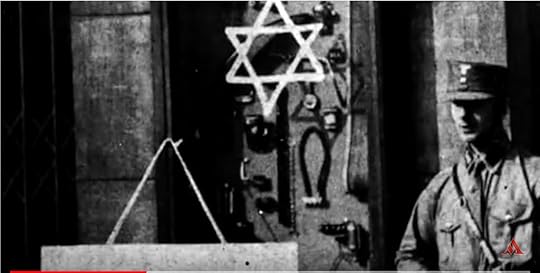
A me sembra che sia una di quelle opere nelle quali il Contenuto soffoca la Forma.
A me sembra che il mestiere dell’autore (psicologo) sia croce e scarsa delizia di questo romanzo.

A me sembra che, cara Francine Prose del NYT, capolavoro sia una parola che andrebbe usata con più parsimonia. E anche genio è termine un po’ abusato, dovrebbe stare più attenta a simili esagerazioni tipicamente giornalistiche.
A me sembra che, nonostante le magnifiche e importanti intenzioni di Keilson, questo libro sia molto noioso, e di faticosa lettura.

A me sembra che la scelta adottata sia quella di una costruzione tipo parabola, quindi piuttosto astratta: niente nomi, solo un’iniziale, B., l’avversario, e Wolf, che però è quasi sempre fastidiosamente chiamato ‘il mio amico’ - anche il narratore rimane senza nome; niente confini geografici, solo indicazioni tipo vivevo nella grande città; anche gli spazi temporali sono vaghi; la parola ebreo non scappa mai, anche se è chiaro che si sta parlando proprio di ebrei, Hitler (B.), nazismo…

A me sembra che si svolga pressoché tutto nella testa del narratore, un lungo monologo interiore d’incerta presa, che annacqua anche i momenti più pregnanti. Lunghi dialoghi sono essenzialmente discettazioni tra Tesi e Antitesi.
A me sembra che manchi anche solo un briciolo d’ironia: capisco che l’argomento si presta con fatica a tale approccio, tuttavia… E quanta enfasi, quante maiuscole, quante esclamazioni… Dio come odio i punti esclamativi!!!
A me sembra che prendersela col traduttore sarebbe come dire che il colpevole è il maggiordomo.
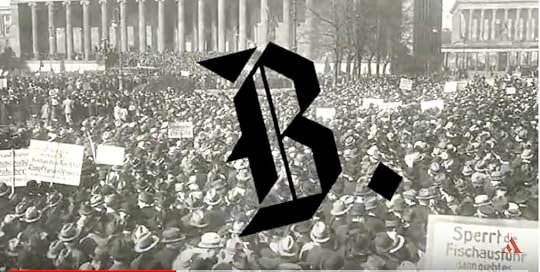
A me sembra che forse la gestazione di quest’opera spieghi le difficoltà che ho incontrato ad arrivare in fondo: 50 pagine furono scritte già durante la guerra e nascoste nel 1942, poi recuperate, forse pubblicate nel 1947, ma più probabilmente nel 1959, lunga travagliata complessa incerta gestazione.
Ma forse anche no, tutto questo non spiega niente.

A me sembra che la ricchezza del pensiero di Keilson, la sua capacità di scendere nei recessi più profondi e contraddittori della natura umana, il suo tentativo di elaborare un lutto e, forse, anche un senso di colpa, non siano in discussione, emergono da queste pagine.
Ma non bastano a rendere quest’opera un capolavoro, e probabilmente neppure un testo imprescindibile.

È proprio quando si arriva alle situazioni (scene?) di cui parlano tutti i critici (il comizio di B., i ragazzi che raccontano la profanazione del cimitero [i morti ammazzati], lo zaino preparato dal padre per l’ultima e definitiva partenza), è proprio allora che si avverte quanto manchi per completare il cammino che conduce alla Letteratura.
A me sembra che la tesi che gli ebrei abbiano avuto bisogno del nazismo (per cosa, avvicinarsi al loro dio, compattarsi…?) e il nazismo degli ebrei sia abbastanza inquietante, e aberrante.
A me sembra che, forse, io sono troppo schierato, troppo partigiano.
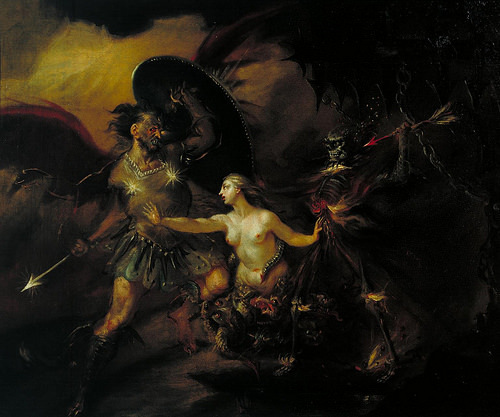
William Hogarth: Satan, Sin and Death (da Milton’s ‘Paradise Lost’) c.1735-40.
A me sembra che sia una di quelle opere nelle quali il Contenuto soffoca la Forma.
A me sembra che il mestiere dell’autore (psicologo) sia croce e scarsa delizia di questo romanzo.
A me sembra che, cara Francine Prose del NYT, capolavoro sia una parola che andrebbe usata con più parsimonia. E anche genio è termine un po’ abusato, dovrebbe stare più attenta a simili esagerazioni tipicamente giornalistiche.
A me sembra che, nonostante le magnifiche e importanti intenzioni di Keilson, questo libro sia molto noioso, e di faticosa lettura.
A me sembra che la scelta adottata sia quella di una costruzione tipo parabola, quindi piuttosto astratta: niente nomi, solo un’iniziale, B., l’avversario, e Wolf, che però è quasi sempre fastidiosamente chiamato ‘il mio amico’ - anche il narratore rimane senza nome; niente confini geografici, solo indicazioni tipo vivevo nella grande città; anche gli spazi temporali sono vaghi; la parola ebreo non scappa mai, anche se è chiaro che si sta parlando proprio di ebrei, Hitler (B.), nazismo…
A me sembra che si svolga pressoché tutto nella testa del narratore, un lungo monologo interiore d’incerta presa, che annacqua anche i momenti più pregnanti. Lunghi dialoghi sono essenzialmente discettazioni tra Tesi e Antitesi.
A me sembra che manchi anche solo un briciolo d’ironia: capisco che l’argomento si presta con fatica a tale approccio, tuttavia… E quanta enfasi, quante maiuscole, quante esclamazioni… Dio come odio i punti esclamativi!!!
A me sembra che prendersela col traduttore sarebbe come dire che il colpevole è il maggiordomo.
A me sembra che forse la gestazione di quest’opera spieghi le difficoltà che ho incontrato ad arrivare in fondo: 50 pagine furono scritte già durante la guerra e nascoste nel 1942, poi recuperate, forse pubblicate nel 1947, ma più probabilmente nel 1959, lunga travagliata complessa incerta gestazione.
Ma forse anche no, tutto questo non spiega niente.
A me sembra che la ricchezza del pensiero di Keilson, la sua capacità di scendere nei recessi più profondi e contraddittori della natura umana, il suo tentativo di elaborare un lutto e, forse, anche un senso di colpa, non siano in discussione, emergono da queste pagine.
Ma non bastano a rendere quest’opera un capolavoro, e probabilmente neppure un testo imprescindibile.
È proprio quando si arriva alle situazioni (scene?) di cui parlano tutti i critici (il comizio di B., i ragazzi che raccontano la profanazione del cimitero [i morti ammazzati], lo zaino preparato dal padre per l’ultima e definitiva partenza), è proprio allora che si avverte quanto manchi per completare il cammino che conduce alla Letteratura.
A me sembra che la tesi che gli ebrei abbiano avuto bisogno del nazismo (per cosa, avvicinarsi al loro dio, compattarsi…?) e il nazismo degli ebrei sia abbastanza inquietante, e aberrante.
A me sembra che, forse, io sono troppo schierato, troppo partigiano.
William Hogarth: Satan, Sin and Death (da Milton’s ‘Paradise Lost’) c.1735-40.

September 10, 2019
Es este un libro de los llamados de ideas, narrado con una pasión contenida, buscando la objetividad, la explicación no partidaria. Su pretensión es hacer comprensible qué es lo que pasó en Alemania, y realmente en gran parte de Europa, para que se produjera la barbarie nazi (nunca se habla de los nazis ni de los judíos de forma expresa aunque las pistas son abrumadoras).
Lo que pasó en Alemania sigue siendo para mí un gran misterio. No tanto el odio de todo un pueblo hacia otro pueblo (no hay nada que dé más cohesión a un grupo que tener un enemigo común, mucho más que cualquier coincidencia cultural. Los nazis necesitaban a los judíos tanto como los odiaban), sino la absoluta falta de oposición que en general presentaron los judíos ante tal adversario. En este sentido se apunta el sentimiento ancestral de ser un pueblo perseguido incluso por parte de su propio Dios (los nazis como azote de Dios); o el orgullo de un pueblo que no quería ponerse a la misma altura de su adversario; o, y esta creo que es la tesis fundamental del libro, la necesidad de tener un adversario que les defina como si fuera el negativo de una película y al que se odia y se quiere porque, en el fondo, son parte de ellos mismos. Más o menos aquello que se decía en los primeros años de nuestra transición: contra Franco vivíamos mejor.
Quizás con dos de los momentos del libro se entienda mejor lo que quiero decir.
En este primer momento que selecciono, un partido de fútbol, el protagonista es todavía un niño que es admitido al juego a regañadientes (ya había empezado la marginación). El niño sufre múltiples golpes del equipo rival sin encontrar la comprensión y la solidaridad de sus propios compañeros ni la justicia del árbitro. Ante esta situación el niño no se arruga y se enfrenta al equipo rival con dureza en el juego. ¿Buscando qué? ¿La comprensión de los que le marginan? ¿La necesidad de que aquellos que le odian lleguen a quererlo y aceptarlo? ¿Provocar algún tipo de cambio en los sentimientos hacia él de sus propios compañeros y, no obstante, enemigos? ¿Mostrarse a sí mismo que no pueden con él, aunque en el fondo sea su propia autodestrucción?
Otro momento. Una leyenda. El Zar recibe un regalo, una manada de alces. Estos son llevados a un paraje ideal, que, para su protección, es declarado parque natural. En un primer momento todo va bien, los alces se adaptan estupendamente a su nuevo hogar. Pero, pasado un tiempo, los alces empiezan a morir uno tras otro. Muchos intentan explicar el enigma sin conseguirlo. Como último recurso llaman a un experto residente en el lugar del que proceden los alces. Tras meses de observación llega a una conclusión: los alces se mueren porque les faltan los lobos.
El libro no me ha gustado excesivamente, cuestión de estilo y de orgullo por la humillación sufrida ante tanto pasaje para mí incomprensible, pero, al menos, me hizo pensar. Algo es algo.

September 3, 2013
A strange book about events leading up to the Holocaust. I say strange because the narrator, through a supposedly posthumous journal, tells us of events leading up to the time of tyranny in Germany. However, Hitler is never mentioned by name; he is only referred to as "my adversary, B."
Nor is the word "Jew" ever mentioned in the book. We can only surmise it is about Jews through oblique references such as "because of who we are" or "because we are different." The author seems to go through a convoluted conceptual development while meditating on the complex relationship between aggressor and victim; at times he seems to almost believe that this aggression is preordained or even "necessary." (At one point he rationalizes that elk can only survive when the herd is thinned by wolves.)
We watch as a young German boy absorbs his parents' fears of what is to come and how dire it will be. We watch the parents argue with each other about how much they need to reveal to their son. Later we see the boy shunned and picked on by his classmates. It is said of an early Jewish victim of a Nazi killing "It was thought that he himself provoked the attack."
Now an adult, the narrator listens to Hitler over a loudspeaker at a tavern when the tyrant was on the stump at local theaters and beer halls. Later he sees Hitler go by in a motorcade. We cheer the narrator only at the end when we learn that he finally got past his conceptual constipation and took action to help the cause of his people.
There is one particular gem of a chapter where our narrator sits with a group of young German men (they do not know he is Jewish) while one of them describes in horrific, methodical detail how he and a group of other thugs desecrated a Jewish cemetery. The tiny children's stones were 'so much easier to break' than those of the adults.
The book is translated from the German and we see some good turns of phrase: "I always knew that words are suitcases with false bottoms..."
A horrifying must-read.
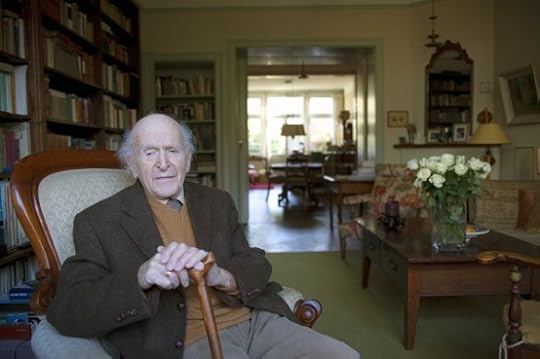
The author (1909-2011) was a German Dutch Jew who fought in the Dutch resistance against the Nazis in WW II. He wrote a dozen book of which five have been translated into English. All his translated books and most of his writings are about the Nazi occupation of the Netherlands in WW II. He best known in English for Comedy in a Minor Key.
Photo of the author from bookcritics.org
[Edited 11/9/23]
Nor is the word "Jew" ever mentioned in the book. We can only surmise it is about Jews through oblique references such as "because of who we are" or "because we are different." The author seems to go through a convoluted conceptual development while meditating on the complex relationship between aggressor and victim; at times he seems to almost believe that this aggression is preordained or even "necessary." (At one point he rationalizes that elk can only survive when the herd is thinned by wolves.)
We watch as a young German boy absorbs his parents' fears of what is to come and how dire it will be. We watch the parents argue with each other about how much they need to reveal to their son. Later we see the boy shunned and picked on by his classmates. It is said of an early Jewish victim of a Nazi killing "It was thought that he himself provoked the attack."
Now an adult, the narrator listens to Hitler over a loudspeaker at a tavern when the tyrant was on the stump at local theaters and beer halls. Later he sees Hitler go by in a motorcade. We cheer the narrator only at the end when we learn that he finally got past his conceptual constipation and took action to help the cause of his people.
There is one particular gem of a chapter where our narrator sits with a group of young German men (they do not know he is Jewish) while one of them describes in horrific, methodical detail how he and a group of other thugs desecrated a Jewish cemetery. The tiny children's stones were 'so much easier to break' than those of the adults.
The book is translated from the German and we see some good turns of phrase: "I always knew that words are suitcases with false bottoms..."
A horrifying must-read.
The author (1909-2011) was a German Dutch Jew who fought in the Dutch resistance against the Nazis in WW II. He wrote a dozen book of which five have been translated into English. All his translated books and most of his writings are about the Nazi occupation of the Netherlands in WW II. He best known in English for Comedy in a Minor Key.
Photo of the author from bookcritics.org
[Edited 11/9/23]

September 19, 2022
This is a tricky review, it is hard to do Death of the Adversary by Hans Keilson any justice at all, as it's complicated. It is unlike anything I have read before, but it is about a topic I have read about many times before.
We are talking about 1930s Germany the period of the ascension of Adolf Hitler, and importantly, the horrible consequences that followed. Even though Hitler isn’t mentioned by name – the author refers to him as B, us readers have a good idea who the author is referring to.
Our main character is a boy who becomes aware of the growing stature of his enemy - B – this is a very gradual process. We know it’s just a matter of time before B spills his poison throughout Germany and the rest of Europe.
The interesting thing here is, there are no typical scenes of Nazis in jackboots beating up the Jewish population, burning books, smashing shop windows, and herding people onto trains. Instead, we follow the innermost thoughts of our boy as he comes to terms with B as his adversary. Unusually, there are only 4 or 5 scenes in this book. These scenes predominantly detail the thought processes of our main character.
The reason I mention ‘thought processes’ is – they are a central theme as the boy tries to (fruitlessly) rationalize the relationship he has with his enemy – B. He suggests B is essential to his own survival, and vice versa. I get the latter – i.e. Hitler needed to create an internal enemy, in the form of the Jews for his own needs. But I found it difficult to accept, a Jewish boy relied on the existence of Hitler, for his own survival. For me, that was a difficult argument to sustain, but the author returned to this many times. I needed to stop and think often.
There are some harrowing scenes – not in the sense of florid violence, it was more subtle than that. For example, our boy was slowly excluded from the playground games at school, this was gradual and insidious. It was upsetting to read. The impact on the child was profound. As was the time his father described the way he packed his own rucksack, for the inevitable time when he would be forced to ‘go away.’ He described it to the lad with such animation, it was obviously an attempt to distract them both from the upcoming horrors. Imagining these types of scenes happening millions of times during these dark days certainly made me reflect about the gravity and depravity of these times. It was also unbelievably sad. I many ways a lot more sad than watching or reading about descriptions of violence - this is about feelings and thoughts.
I’ll give this 4 stars, its impact was massive, its style unusual, unique even. But I do know there are some readers on GR friends who will find the literary tools and brilliant writing on display here wonderful and will give this a glowing review and 5 stars.
4 Stars
We are talking about 1930s Germany the period of the ascension of Adolf Hitler, and importantly, the horrible consequences that followed. Even though Hitler isn’t mentioned by name – the author refers to him as B, us readers have a good idea who the author is referring to.
Our main character is a boy who becomes aware of the growing stature of his enemy - B – this is a very gradual process. We know it’s just a matter of time before B spills his poison throughout Germany and the rest of Europe.
The interesting thing here is, there are no typical scenes of Nazis in jackboots beating up the Jewish population, burning books, smashing shop windows, and herding people onto trains. Instead, we follow the innermost thoughts of our boy as he comes to terms with B as his adversary. Unusually, there are only 4 or 5 scenes in this book. These scenes predominantly detail the thought processes of our main character.
The reason I mention ‘thought processes’ is – they are a central theme as the boy tries to (fruitlessly) rationalize the relationship he has with his enemy – B. He suggests B is essential to his own survival, and vice versa. I get the latter – i.e. Hitler needed to create an internal enemy, in the form of the Jews for his own needs. But I found it difficult to accept, a Jewish boy relied on the existence of Hitler, for his own survival. For me, that was a difficult argument to sustain, but the author returned to this many times. I needed to stop and think often.
There are some harrowing scenes – not in the sense of florid violence, it was more subtle than that. For example, our boy was slowly excluded from the playground games at school, this was gradual and insidious. It was upsetting to read. The impact on the child was profound. As was the time his father described the way he packed his own rucksack, for the inevitable time when he would be forced to ‘go away.’ He described it to the lad with such animation, it was obviously an attempt to distract them both from the upcoming horrors. Imagining these types of scenes happening millions of times during these dark days certainly made me reflect about the gravity and depravity of these times. It was also unbelievably sad. I many ways a lot more sad than watching or reading about descriptions of violence - this is about feelings and thoughts.
I’ll give this 4 stars, its impact was massive, its style unusual, unique even. But I do know there are some readers on GR friends who will find the literary tools and brilliant writing on display here wonderful and will give this a glowing review and 5 stars.
4 Stars

March 25, 2011
Are you kidding me?
This book looked gloomy and philosophical and (best of all) short, so I picked it up at 50% off at the Borders Going Out of Business Sale. They had THREE copies of it. That should have been a warning sign, I guess. Why would a Borders have three copies of relatively obscure midcentury WWII novel -- especially this late in the sale?
Well, this is why: It's horrific. Not 'horrific' in that it evocatively details the atrocities of WWII, but 'horrific' in that it takes place entirely within the mind of a terrible bore.
I hate boring people. There's no one I want to get away from faster than a boring person. Not a sociopath, not a Scientologist, not a fascist dictator. (Unless those people happen to be boring.) Be evil before boring. That's my rule of thumb.
I know, I know... 'Only boring people get bored.' Thanks. But no. This guy is really actually boring, in and of himself. He is a shining beacon of boringness that radiates dullness toward the farthest reaches of the universe.
He should be on Facebook.
This book looked gloomy and philosophical and (best of all) short, so I picked it up at 50% off at the Borders Going Out of Business Sale. They had THREE copies of it. That should have been a warning sign, I guess. Why would a Borders have three copies of relatively obscure midcentury WWII novel -- especially this late in the sale?
Well, this is why: It's horrific. Not 'horrific' in that it evocatively details the atrocities of WWII, but 'horrific' in that it takes place entirely within the mind of a terrible bore.
I hate boring people. There's no one I want to get away from faster than a boring person. Not a sociopath, not a Scientologist, not a fascist dictator. (Unless those people happen to be boring.) Be evil before boring. That's my rule of thumb.
I know, I know... 'Only boring people get bored.' Thanks. But no. This guy is really actually boring, in and of himself. He is a shining beacon of boringness that radiates dullness toward the farthest reaches of the universe.
He should be on Facebook.

June 4, 2023
"De hardste schreeuwers om recht als het henzelf betreft, zijn vaak de meest onrechtvaardigen als het hun tegenstander aangaat."
Heerlijke schrijfstijl, zo eentje die je meeneemt in de emoties en de gedachten. Maar ondanks dat het van een hele interessante hoek de ervaring van een Jood beschrijft in de tweede wereldoorlog zonder dat daadwerkelijk te benoemen, bleef ik toch achter met een soort 'En nu?'.
Heerlijke schrijfstijl, zo eentje die je meeneemt in de emoties en de gedachten. Maar ondanks dat het van een hele interessante hoek de ervaring van een Jood beschrijft in de tweede wereldoorlog zonder dat daadwerkelijk te benoemen, bleef ik toch achter met een soort 'En nu?'.

August 4, 2011
This may be the most enjoyable experience reading fiction that I have had in the last year – and also one of the most profound and unexpected. My attention was piqued in June when I heard of Keilson’s death at the age of 101; I knew he was considered to be a good author, yet I never read him. Having long had a penchant for the bleak, searching quality of twentieth-century Dutch fiction, particularly Willem Frederik Hermans, Harry Mulisch, and Gerard Reve, I decided to read this.
However stunning Keilson’s novels are – and I hope to communicate that momentarily – he is even better known for other work. For many decades, he worked in child psychology and psychiatry, with an especial focus on children severely traumatized by World War II. His keen insight into human nature, thought processes, and motivation is on par with the world’s greatest novelists, and that is no hyperbole. As if his psychological and psychiatric training were not inducements enough to read his work, the horrors of the War were not pure theory for him. Both of his parents perished in Auschwitz.
The novel’s setting is 1930s Germany. We follow an unnamed narrator in childhood; we get hints of his precociousness and impishness through learning of both his penchant for forging stamps, and also through a sustained theory of the history of struggle that he presents and continuously develops throughout the novel. As a boy, he acquires a lifelong fascination with an adversary who is almost always unnamed, but sometimes goes by simply “B.” Some reviews have been only too eager to guess at the existence of “B,” seeing as how we are in 1930s Germany. However, I personally think Keilson might have a good reason for keeping the adversary anonymous; using one name would collapse the entire structure of the novel into a kind of singularity; keeping the adversary nameless (even though we still may continue to guess, and guess accurately), Keilson keeps the narrative at a level of constant psychological, humanistic portraiture, instead of the story of a single couple locked in interminable battle.
As the novel progresses and the narrator grows into manhood, we learn that he has a friend who is utterly taken with “B” and his ideas; another time, we see him spending an afternoon with a girl that he knows and fancies from his workplace whose friends turn out to be sympathetic to fascism, too. Instead of simplistic moralism, Keilson intelligently and deftly engages with the adversary on a human level, at one point realizing the nihilism inherent in the logic of “I want to kill him just as badly as he wants to kill me.”
Narratively speaking, Keilson’s biggest gift is to mix tone and message in such unique and telling ways. On hearing that a novel is set during World War II, one is almost preconditioned to expect the trials and tribulations of the oppressor against the oppressed and hiding in safe houses; it is assumed that we will root for the good, the just, the persecuted, and that evil, in the end, will be vanquished. Keilson presented us with nothing so sugar-coated. His efforts at characterization drive toward showing the similarities between himself and B, not the vast differences. He is not interested in showing you how morally superior he is (we already know that), but instead wants to show how existentially, a word applied perhaps too liberally to this novel, he and “B” are similarly situated.
Keilson’s search feels so liberating, instead of the moral burden that seem to come with reading so many novels of the Holocaust. As much as I have read Elie Wiesel and Primo Levi, I found Keilson to be better than both of them. Unfortunately, he is not well known in the United States, but he should be. I should also add here that Ivo Jarosy’s translation from the German is luminous, especially in its ability to capture dialogue. I would recommend “The Death of the Adversary” for anyone in search of a great novel that, like all great novels, is more eager to share questions than answers.
However stunning Keilson’s novels are – and I hope to communicate that momentarily – he is even better known for other work. For many decades, he worked in child psychology and psychiatry, with an especial focus on children severely traumatized by World War II. His keen insight into human nature, thought processes, and motivation is on par with the world’s greatest novelists, and that is no hyperbole. As if his psychological and psychiatric training were not inducements enough to read his work, the horrors of the War were not pure theory for him. Both of his parents perished in Auschwitz.
The novel’s setting is 1930s Germany. We follow an unnamed narrator in childhood; we get hints of his precociousness and impishness through learning of both his penchant for forging stamps, and also through a sustained theory of the history of struggle that he presents and continuously develops throughout the novel. As a boy, he acquires a lifelong fascination with an adversary who is almost always unnamed, but sometimes goes by simply “B.” Some reviews have been only too eager to guess at the existence of “B,” seeing as how we are in 1930s Germany. However, I personally think Keilson might have a good reason for keeping the adversary anonymous; using one name would collapse the entire structure of the novel into a kind of singularity; keeping the adversary nameless (even though we still may continue to guess, and guess accurately), Keilson keeps the narrative at a level of constant psychological, humanistic portraiture, instead of the story of a single couple locked in interminable battle.
As the novel progresses and the narrator grows into manhood, we learn that he has a friend who is utterly taken with “B” and his ideas; another time, we see him spending an afternoon with a girl that he knows and fancies from his workplace whose friends turn out to be sympathetic to fascism, too. Instead of simplistic moralism, Keilson intelligently and deftly engages with the adversary on a human level, at one point realizing the nihilism inherent in the logic of “I want to kill him just as badly as he wants to kill me.”
Narratively speaking, Keilson’s biggest gift is to mix tone and message in such unique and telling ways. On hearing that a novel is set during World War II, one is almost preconditioned to expect the trials and tribulations of the oppressor against the oppressed and hiding in safe houses; it is assumed that we will root for the good, the just, the persecuted, and that evil, in the end, will be vanquished. Keilson presented us with nothing so sugar-coated. His efforts at characterization drive toward showing the similarities between himself and B, not the vast differences. He is not interested in showing you how morally superior he is (we already know that), but instead wants to show how existentially, a word applied perhaps too liberally to this novel, he and “B” are similarly situated.
Keilson’s search feels so liberating, instead of the moral burden that seem to come with reading so many novels of the Holocaust. As much as I have read Elie Wiesel and Primo Levi, I found Keilson to be better than both of them. Unfortunately, he is not well known in the United States, but he should be. I should also add here that Ivo Jarosy’s translation from the German is luminous, especially in its ability to capture dialogue. I would recommend “The Death of the Adversary” for anyone in search of a great novel that, like all great novels, is more eager to share questions than answers.

February 4, 2011
COVER!
Ik zie een zwart-witfoto met op de achtergrond de Brandenburger Poort in Berlijn.
Een groep geüniformeerde, vlaggendragende jongens marcheert richting camera.
Zijdelings van de groep loopt een niet geüniformeerde jongen.
De foto is zo gemaakt dat duidelijk te zien is dat de vlaggendragers opgaan in de groep. De individuele jongen steekt als een eenzaam donker silhouet tegen een lichte achtergrond af.
Hoort die jongen bij de groep of niet?
TITEL!
Een jongeman vertelt hoe hij van jongs af aan steeds meer in de ban raakt van een zekere B. (deze “tegenstander” is naar mijn gevoel “Kafka-achtig” alleen met zijn voorletter aangeduid). Er is sprake van verhaal van een naamloze jongeman in een niet nader genoemd land, behorend tot een gemeenschap die met vernietiging bedreigd wordt door een zekere B.
De jongeman probeert te begrijpen waarom hijzelf en de mensen om hem heen zo veel haat oproepen in B.
Ook al zijn directe verwijzingen weggelaten en worden Hitler noch Duitsland noch joden genoemd, toch is duidelijk dat de ik’ opgroeit in Duitsland tijdens de opkomst van Hitler en dat hij een joods jongetje is. Hij is tien jaar, als hij zijn vader vraagt wie die persoon toch is die maakt dat ‘wij Gods genade nodig hebben’. Het antwoord van zijn vader luidt dat ‘B. onze vijand is’. Natuurlijk vraagt de ‘ik’ waarom dat zo is. B. kent hem (als individu) toch helemaal niet? Het onbevredigende antwoord van zijn vader is: ‘Wij zijn…’
Enige tijd later vertelt zijn grote vriend, die op dat moment echter een volger van zijn vijand blijkt te zijn, hem het volgende: ‘Hij laat zich door jou meeslepen. Vergeet dat niet! Je moet zijn woorden onderzoeken, je moet zoeken waar hij door jou geraakt is. En dan zou je weleens kunnen ontdekken dat er misschien een zekere verwantschap tussen jullie bestaat.’ Zijn vriend neemt afscheid van hem met een parabel waarin verteld wordt dat ‘elanden wolven nodig hebben om te overleven’.
LEITMOTIV! – “De parabel van de Wolven en de Elanden”.In het kort: (vanaf Pagina 66)
De keizer van Duitsland was op een keer op bezoek bij zijn neef, de tsaar van Rusland. Deze schenkt zijn neef een kudde elanden die op een mooie plak in Duitsland met de beste zorgen omringd worden. Maar de kudde wordt kleiner. Elanden sterven en de overlevenden worden steeds apathischer. Tenslotte sterven ze. Volgens een deskundige houtvester komt dit doordat de elanden de wolven missen.
Ik (de lezer, Ans) heb deze parabel niet begrepen.
Ook de hoofdpersoon pijnigt zijn hoofd het hele boek door om tot een soort begrip te komen.
Op pagina 230 wordt de parabel vervolgd: ”de elanden stierven. Maar hoe verging het de wolven?
De elanden zijn weggetrokken en ze zijn gestorven. Maar nu woedt de dood onder de wolven”.
Merkwaardig is dat de naam van de vriend van de hoofdpersoon wel genoemd wordt. Hij heet Wolf. Dat kan geen toeval zijn.
Wat heeft de schrijver ons met deze parabel willen vertellen?
Het is mij niet duidelijk geworden. Het is het laatste dat zijn vriend de hoofdpersoon vertelt en lijkt dan te betekenen dat iedere groep een vijand of tegenstander nodig heeft om te overleven. De hoofdpersoon concludeert echter dat de wolven die de begraafplaats vernielen, geen echte beesten zijn. Verging het de joodse elanden dan slecht, omdat de wolven geen echte wolven waren? Of omdat de wolven geen beesten waren? Maar wat betekent dan de verzuchting aan het eind van het boek: ’Misschien ben ik zelf een eland geweest, destijds en in de jaren die erop volgden. Ach, had ik maar een wolf kunnen zijn!’? Is er een lezer die dit kan verklaren?
VORM !
Er is sprake van een verhuld autobiografische, psychologische roman van een op tijd gevluchte Duits/joodse man, die beschrijft dubbelzinnige persoonlijke gevoelens jegens Hitler: aan 'de vijand' meent de ik zijn eigen identiteit te ontlenen en daardoor komt hij te laat in verzet.
De dreiging wordt meer voelbaar gemaakt dan concreet verwoord. Ik las het meer uit de beschrijving van de daden van de aanhangers van de tegenstander ( het vriendinnetje en haar kennissen), een jeugdbende die een joods kerkhof schendt.
Naar ik begrepen heb is het boek al in 1944 geschreven en na de oorlog uitgegeven.
HET VERHAAL!
Een jongen groeit op in een niet met name genoemd land waar een volksmenner steeds meer aanhang krijgt. De demagoog bedreigt de evenmin nader aangeduide bevolkingsgroep waartoe de jongen behoort. Het begint met discriminatie: de jongen merkt dat de meeste andere kinderen niet meer met hem willen spelen. Gaandeweg wordt duidelijk dat de bevolkingsgroep in kwestie zijn leven niet meer veilig is. Als puber vraagt de hoofdpersoon zich af waarom de man die het hele land in zijn macht krijgt zo door haat wordt gedreven. De tegenstander boeit hem. Is deze zelf een werktuig van een hogere macht? Soms twijfelt de verteller (de roman is hoofdzakelijk in de eerste persoon geschreven) aan het bestaan van de volksmenner, die in het boek B. wordt genoemd. Hij heeft foto's van zijn vijand in de krant gezien, hij heeft een toespraak van hem gehoord, maar hij gelooft pas echt in zijn bestaan wanneer hij zich toevallig tegenover B. bevindt tijdens een rijtoer. De jongeman, die inmiddels is gaan inzien dat haten in bepaalde gevallen mag, spijt het dat hij geen revolver bij zich heeft. Hij was al vervreemd geraakt van een vriend en een vriendin die aanhangers van B. waren geworden en had jongelui die voor het merendeel ogenschijnlijk heel normaal waren er prat op horen gaan dat zij een begraafplaats hadden geschonden. Samen met zijn ouders vlucht hij naar een ander land, waar hun veiligheid van korte duur is. De jongeman sluit zich aan bij het verzet. Hij kan niet verhinderen dat zijn vader en moeder worden gedeporteerd.
MIJN LEESERVARING!
Ik vond het boek moeilijk te doorgronden en het heeft me in verwarring achtergelaten.
Eigenlijk zou ik het een tweede keer moeten lezen.
Er waren momenten dat ik dacht duidelijk te weten wat Keilson me wilde laten zien, maar dan raakte ik het spoor weer bijster. Het is de hoofdpersoon niet gelukt mij te laten zien wat er werkelijk in hem leefde. Ik stoorde me ook aan de traagheid waarin hij zij autobiografische relaas vertelde. Waarom had hij een soort haat-liefde verhouding met die tegenstander? Kun je in zo’n Kafka-achtige setting geen onderscheid maken? Vertegenwoordigde hij de inertie van vrijwel zijn hele bevolkingsgroep tijdens de opkomst van het nationaalsocialisme? Wellicht heeft mijn ergernis ober de traagheid te maken met het feit dat het boek meer dan een halve eeuw geleden geschreven is.
Waarom werd dit boek in 2009 ineens een hype en verscheen de schrijver bij Pauw en Witteman?
Heeft het iets te maken met de verrechtsing in de samenleving en het gedogen van een wolf in schaapskleren?
Ik zie een zwart-witfoto met op de achtergrond de Brandenburger Poort in Berlijn.
Een groep geüniformeerde, vlaggendragende jongens marcheert richting camera.
Zijdelings van de groep loopt een niet geüniformeerde jongen.
De foto is zo gemaakt dat duidelijk te zien is dat de vlaggendragers opgaan in de groep. De individuele jongen steekt als een eenzaam donker silhouet tegen een lichte achtergrond af.
Hoort die jongen bij de groep of niet?
TITEL!
Een jongeman vertelt hoe hij van jongs af aan steeds meer in de ban raakt van een zekere B. (deze “tegenstander” is naar mijn gevoel “Kafka-achtig” alleen met zijn voorletter aangeduid). Er is sprake van verhaal van een naamloze jongeman in een niet nader genoemd land, behorend tot een gemeenschap die met vernietiging bedreigd wordt door een zekere B.
De jongeman probeert te begrijpen waarom hijzelf en de mensen om hem heen zo veel haat oproepen in B.
Ook al zijn directe verwijzingen weggelaten en worden Hitler noch Duitsland noch joden genoemd, toch is duidelijk dat de ik’ opgroeit in Duitsland tijdens de opkomst van Hitler en dat hij een joods jongetje is. Hij is tien jaar, als hij zijn vader vraagt wie die persoon toch is die maakt dat ‘wij Gods genade nodig hebben’. Het antwoord van zijn vader luidt dat ‘B. onze vijand is’. Natuurlijk vraagt de ‘ik’ waarom dat zo is. B. kent hem (als individu) toch helemaal niet? Het onbevredigende antwoord van zijn vader is: ‘Wij zijn…’
Enige tijd later vertelt zijn grote vriend, die op dat moment echter een volger van zijn vijand blijkt te zijn, hem het volgende: ‘Hij laat zich door jou meeslepen. Vergeet dat niet! Je moet zijn woorden onderzoeken, je moet zoeken waar hij door jou geraakt is. En dan zou je weleens kunnen ontdekken dat er misschien een zekere verwantschap tussen jullie bestaat.’ Zijn vriend neemt afscheid van hem met een parabel waarin verteld wordt dat ‘elanden wolven nodig hebben om te overleven’.
LEITMOTIV! – “De parabel van de Wolven en de Elanden”.In het kort: (vanaf Pagina 66)
De keizer van Duitsland was op een keer op bezoek bij zijn neef, de tsaar van Rusland. Deze schenkt zijn neef een kudde elanden die op een mooie plak in Duitsland met de beste zorgen omringd worden. Maar de kudde wordt kleiner. Elanden sterven en de overlevenden worden steeds apathischer. Tenslotte sterven ze. Volgens een deskundige houtvester komt dit doordat de elanden de wolven missen.
Ik (de lezer, Ans) heb deze parabel niet begrepen.
Ook de hoofdpersoon pijnigt zijn hoofd het hele boek door om tot een soort begrip te komen.
Op pagina 230 wordt de parabel vervolgd: ”de elanden stierven. Maar hoe verging het de wolven?
De elanden zijn weggetrokken en ze zijn gestorven. Maar nu woedt de dood onder de wolven”.
Merkwaardig is dat de naam van de vriend van de hoofdpersoon wel genoemd wordt. Hij heet Wolf. Dat kan geen toeval zijn.
Wat heeft de schrijver ons met deze parabel willen vertellen?
Het is mij niet duidelijk geworden. Het is het laatste dat zijn vriend de hoofdpersoon vertelt en lijkt dan te betekenen dat iedere groep een vijand of tegenstander nodig heeft om te overleven. De hoofdpersoon concludeert echter dat de wolven die de begraafplaats vernielen, geen echte beesten zijn. Verging het de joodse elanden dan slecht, omdat de wolven geen echte wolven waren? Of omdat de wolven geen beesten waren? Maar wat betekent dan de verzuchting aan het eind van het boek: ’Misschien ben ik zelf een eland geweest, destijds en in de jaren die erop volgden. Ach, had ik maar een wolf kunnen zijn!’? Is er een lezer die dit kan verklaren?
VORM !
Er is sprake van een verhuld autobiografische, psychologische roman van een op tijd gevluchte Duits/joodse man, die beschrijft dubbelzinnige persoonlijke gevoelens jegens Hitler: aan 'de vijand' meent de ik zijn eigen identiteit te ontlenen en daardoor komt hij te laat in verzet.
De dreiging wordt meer voelbaar gemaakt dan concreet verwoord. Ik las het meer uit de beschrijving van de daden van de aanhangers van de tegenstander ( het vriendinnetje en haar kennissen), een jeugdbende die een joods kerkhof schendt.
Naar ik begrepen heb is het boek al in 1944 geschreven en na de oorlog uitgegeven.
HET VERHAAL!
Een jongen groeit op in een niet met name genoemd land waar een volksmenner steeds meer aanhang krijgt. De demagoog bedreigt de evenmin nader aangeduide bevolkingsgroep waartoe de jongen behoort. Het begint met discriminatie: de jongen merkt dat de meeste andere kinderen niet meer met hem willen spelen. Gaandeweg wordt duidelijk dat de bevolkingsgroep in kwestie zijn leven niet meer veilig is. Als puber vraagt de hoofdpersoon zich af waarom de man die het hele land in zijn macht krijgt zo door haat wordt gedreven. De tegenstander boeit hem. Is deze zelf een werktuig van een hogere macht? Soms twijfelt de verteller (de roman is hoofdzakelijk in de eerste persoon geschreven) aan het bestaan van de volksmenner, die in het boek B. wordt genoemd. Hij heeft foto's van zijn vijand in de krant gezien, hij heeft een toespraak van hem gehoord, maar hij gelooft pas echt in zijn bestaan wanneer hij zich toevallig tegenover B. bevindt tijdens een rijtoer. De jongeman, die inmiddels is gaan inzien dat haten in bepaalde gevallen mag, spijt het dat hij geen revolver bij zich heeft. Hij was al vervreemd geraakt van een vriend en een vriendin die aanhangers van B. waren geworden en had jongelui die voor het merendeel ogenschijnlijk heel normaal waren er prat op horen gaan dat zij een begraafplaats hadden geschonden. Samen met zijn ouders vlucht hij naar een ander land, waar hun veiligheid van korte duur is. De jongeman sluit zich aan bij het verzet. Hij kan niet verhinderen dat zijn vader en moeder worden gedeporteerd.
MIJN LEESERVARING!
Ik vond het boek moeilijk te doorgronden en het heeft me in verwarring achtergelaten.
Eigenlijk zou ik het een tweede keer moeten lezen.
Er waren momenten dat ik dacht duidelijk te weten wat Keilson me wilde laten zien, maar dan raakte ik het spoor weer bijster. Het is de hoofdpersoon niet gelukt mij te laten zien wat er werkelijk in hem leefde. Ik stoorde me ook aan de traagheid waarin hij zij autobiografische relaas vertelde. Waarom had hij een soort haat-liefde verhouding met die tegenstander? Kun je in zo’n Kafka-achtige setting geen onderscheid maken? Vertegenwoordigde hij de inertie van vrijwel zijn hele bevolkingsgroep tijdens de opkomst van het nationaalsocialisme? Wellicht heeft mijn ergernis ober de traagheid te maken met het feit dat het boek meer dan een halve eeuw geleden geschreven is.
Waarom werd dit boek in 2009 ineens een hype en verscheen de schrijver bij Pauw en Witteman?
Heeft het iets te maken met de verrechtsing in de samenleving en het gedogen van een wolf in schaapskleren?

December 4, 2010
This is the second of two novels by Keilson now available in the U.S. A holocaust survivor, Keilson is nearing 101 and his fiction is only now being re-discovered here. A German Jewish doctor he fled Germany for the Netherlands after his first novel was banned in the mid-thirties. He joined the Dutch resistance after the Nazi occupation, was forced into hiding (an experience that informed his novel Comedy in a Minor Key), and after war’s end became a leading psychoanalyst, specializing in children’s trauma. The Death of the Adversary was begun while Keilson was in hiding but not completed until after the war. Published in Europe in 1959 and in the U.S. in 1962 (with this translation) it was widely praised (a Time magazine Best Book) but soon slipped into obscurity. Republished in conjunction with the first U.S. printing of Comedy in a Minor Key the two novels are a welcome, if overdue, blessing for American readers. (Wouldn’t it be nice if Keilson’s other novels soon find their way into translation?)
Of the two novels, The Death of the Adversary is the more challenging and complex. For one thing, the words Jew, Jewish, Hitler, Nazi, fascism, or anti-semitism don’t appear. The protagonist is also unnamed (but clearly Jewish although he considers himself a German he recognizes that the new leader and his followers consider him an other). The time for most of the novel is the early 1930s (though not identified), just prior to and right after Hitler’s rise to power. Hitler is the adversary of the title. Sometimes he is referred to as B. (Once the letter J. is used to refer to his Christian name.) Ostensibly the notes of the protagonist left with a Dutch lawyer at the mid-point of the war after the narrator has made a decision to act, the anonymity is a theoretical veil intended to protect the writer and the lawyer he entrusts with his pages—though when the lawyer reads the notes he buries the manuscript, as Keilson himself buried the first fifty pages of the novel during his period of hiding. Keilson’s protagonist, however, has a persistent intellectual ambivalence toward his enemy. He hears what B. is saying but somehow doesn’t believe it will come to pass, that it isn’t just a kind of rhetorical means to a political end. He is also fascinated by the symbiotic relationship between adversaries, seeing not just a dependency but a bond between them that opens the door to a reasoned approach to differences. Others around him, including his father, who early on warns his family that should B. come to power “May God have mercy on us.”
The novel follows the narrator’s battle with his ambivalence, his values, and the increasingly brutal reality of his day to day existence. It provides levels of insight, into the uncertainty that precedes history’s hindsight of inevitability and into universal questions of good and evil, justice, reason, and truth. In an early domestic incident the narrator, still a child, forges marks on postage stamps in his collection to increase their value (and his value) with some friends. His father, a failed businessman and struggling photographer, is ashamed by his son’s fraud but doesn’t punish the boy as he might, in part because the son once was upset that his father faked a photograph of a cat and dog sitting harmoniously together for a client. These naïve understandings of what is true or not get challenged in a much less forgiving crucible and are part of the transformation the narrator undergoes. The Death of the Adversary is not as emotionally rewarding as Comedy in a Minor Key, nor is it as easy a read, but it is provocative and insightful. Keilson is an amazing individual and a great writer who deserves a much wider audience.
Of the two novels, The Death of the Adversary is the more challenging and complex. For one thing, the words Jew, Jewish, Hitler, Nazi, fascism, or anti-semitism don’t appear. The protagonist is also unnamed (but clearly Jewish although he considers himself a German he recognizes that the new leader and his followers consider him an other). The time for most of the novel is the early 1930s (though not identified), just prior to and right after Hitler’s rise to power. Hitler is the adversary of the title. Sometimes he is referred to as B. (Once the letter J. is used to refer to his Christian name.) Ostensibly the notes of the protagonist left with a Dutch lawyer at the mid-point of the war after the narrator has made a decision to act, the anonymity is a theoretical veil intended to protect the writer and the lawyer he entrusts with his pages—though when the lawyer reads the notes he buries the manuscript, as Keilson himself buried the first fifty pages of the novel during his period of hiding. Keilson’s protagonist, however, has a persistent intellectual ambivalence toward his enemy. He hears what B. is saying but somehow doesn’t believe it will come to pass, that it isn’t just a kind of rhetorical means to a political end. He is also fascinated by the symbiotic relationship between adversaries, seeing not just a dependency but a bond between them that opens the door to a reasoned approach to differences. Others around him, including his father, who early on warns his family that should B. come to power “May God have mercy on us.”
The novel follows the narrator’s battle with his ambivalence, his values, and the increasingly brutal reality of his day to day existence. It provides levels of insight, into the uncertainty that precedes history’s hindsight of inevitability and into universal questions of good and evil, justice, reason, and truth. In an early domestic incident the narrator, still a child, forges marks on postage stamps in his collection to increase their value (and his value) with some friends. His father, a failed businessman and struggling photographer, is ashamed by his son’s fraud but doesn’t punish the boy as he might, in part because the son once was upset that his father faked a photograph of a cat and dog sitting harmoniously together for a client. These naïve understandings of what is true or not get challenged in a much less forgiving crucible and are part of the transformation the narrator undergoes. The Death of the Adversary is not as emotionally rewarding as Comedy in a Minor Key, nor is it as easy a read, but it is provocative and insightful. Keilson is an amazing individual and a great writer who deserves a much wider audience.

August 11, 2010
In The Death of the Adversary the narrator fantasizes about assassinating B, whose rise to power is interfering with his and his family's state of well being. B, of course, is Hitler, whose name is never used. As with the newly "discovered" works of Irene Nemirovsky and Hans Fallada, Hans Keilson's books, written over 60 years ago, give penetrating insight into European life during the Nazi regime in a way no contemporary author can duplicate. This haunting tale of a young man in Berlin during Hitler's rise bears the stamp of truth in a harrowing fashion. Beginning with the narrator's bewilderment at his sudden ostrazation on the playing fields at a young age. Since Keilson left Germany but only made it as far as Holland, where he lived in secrecy and fought with the Resistance, the book seems autobiographical, more than any other sheds light on the unmistakable power of B's rhetoric and why so many German citizens were pulled under his spell.

November 4, 2011
Hans Keilson’s The Death of the Adversary is an odd little portrait of a nameless young man tracking an unnamed “adversary” whom he watches rise to power in an unnamed country in the 1930s. Keilson – a German Jew – wrote the book while in hiding in the Netherlands during World War Two. Interestingly, the novel itself has been lauded as a ‘lost’ masterpiece in the last few years.
Now, I shall be frank and confess that although I think that the book is a really interesting piece of history, as a literary work it seems a little uneven to me. Perhaps it is a deliberate narrative device, but the jarring (and repetitive) series of notes ruminating on the rise of Hitler, his motives, personality, as well as the nature and causes of the rise of fascism and anti-Semitism is clumsy and wooden (perhaps this might be a poor translation) and worst of all: intensely dull.
I wouldn’t bother if I were you.
Now, I shall be frank and confess that although I think that the book is a really interesting piece of history, as a literary work it seems a little uneven to me. Perhaps it is a deliberate narrative device, but the jarring (and repetitive) series of notes ruminating on the rise of Hitler, his motives, personality, as well as the nature and causes of the rise of fascism and anti-Semitism is clumsy and wooden (perhaps this might be a poor translation) and worst of all: intensely dull.
I wouldn’t bother if I were you.

February 24, 2016
"La muerte del adversario" no es una novela más sobre el nazismo: aquí no encontramos asesinatos, brutalidad ni campos de concentración, sino que se narra el intento de comprender lo que motiva determinadas actitudes inexplicables en el ser humano. Y Hans Keilson lo hace extraordinariamente bien sin perder en ningún momento el pulso narrativo. Una novela que no se olvida fácilmente.

Read
October 22, 2010Done.
Life's too short to read Socratic dialogues disguised as psychological first-person narratives, wherein said first-person has total recall about every conversation he's ever had.
Life's too short to read Socratic dialogues disguised as psychological first-person narratives, wherein said first-person has total recall about every conversation he's ever had.

August 22, 2023
This short novel grows in its strength and power. Its subject is the emergence of Nazism as experienced by the nameless narrator who recounts his antipathy for his “adversary” – Hitler – beginning in his early childhood in the late 1920s and 30s. First published in the 1950s in the original German, Keilson was a German-Jew who hid out in the Netherlands following the Nazi ascendency and became active in the resistance. As the narrator grows into young adulthood, so of course does Germany come under Nazi rule. The narrator is trying (without success) to write cryptically about who exactly he is (a Jew). Similarly, he refrains from naming his great adversary – referred to as “B” – nor does he ever name the Nazi party. While his family – his father in particular – is keenly aware from early on of the terrible threat arising, the narrator also describes his discovery that many of his initial friends, associates, and potential girlfriends (who often don’t know that he is Jewish) are in fact adherents to B and his party.
I believe I might have enjoyed it more had Francine Prose not written:
“The Death of the Adversary and Comedy in a Minor Key are masterpieces, and Hans Keilson is a genius…. Read these books and join me in adding him to the list, which each of us must compose on our own, of the world’s very greatest writers.”
So, here is a yet another example of the disappointment that can come with very high expectations. While Keilson will not be on my own list of the world’s greatest writers, I’m nevertheless glad to have read this book. Without Prose’s endorsement, I probably would not have been aware of it at all (along with Keilson’s Comedy in a Minor Key,” which I liked more).
I believe I might have enjoyed it more had Francine Prose not written:
“The Death of the Adversary and Comedy in a Minor Key are masterpieces, and Hans Keilson is a genius…. Read these books and join me in adding him to the list, which each of us must compose on our own, of the world’s very greatest writers.”
So, here is a yet another example of the disappointment that can come with very high expectations. While Keilson will not be on my own list of the world’s greatest writers, I’m nevertheless glad to have read this book. Without Prose’s endorsement, I probably would not have been aware of it at all (along with Keilson’s Comedy in a Minor Key,” which I liked more).

January 28, 2013
A testament to the palpable disdain the protagonist - ostensibly, Keilson - felt for his "adversary" (clearly, Hitler), and his ensuing internal conflict.
This chronicles the evolution of Keilson's awareness of the ascension of Hitler as a political enemy, juxtaposed by personal experiences of his youth.
Even as a boy, he is able to correlate rejection by his classmates with the ascension of Hitler, in situations where earlier it had not mattered.
Children learn fear through adults, and the protagonist was no exception. His memories are vivid and trustworthy, including those of his father.
The image of the father, packing his rucksack for a fate unknown, is achingly heartbreaking, as was the inevitability of the tragedy that was upon them, while clinging less and less to the hope that "he (Hitler) wouldn't dare".
Keilson also expresses his reluctance to bond with other Jewish people simply based upon the fact that they shared a common enemy. A lot of the existentialist themes of the book come from this internal conflict.
His literature has all the more gravitas when taken in historical context. (His first book, "Life Goes On", was published in 1933 and subsequently banned by the Nazi party.)
Hans Keilson, who died in 2011 at age 101, survived Hitler by hiding in the Netherlands and working for the Dutch resistance. His parents were sent to Auschwitz and killed.
This chronicles the evolution of Keilson's awareness of the ascension of Hitler as a political enemy, juxtaposed by personal experiences of his youth.
Even as a boy, he is able to correlate rejection by his classmates with the ascension of Hitler, in situations where earlier it had not mattered.
Children learn fear through adults, and the protagonist was no exception. His memories are vivid and trustworthy, including those of his father.
The image of the father, packing his rucksack for a fate unknown, is achingly heartbreaking, as was the inevitability of the tragedy that was upon them, while clinging less and less to the hope that "he (Hitler) wouldn't dare".
Keilson also expresses his reluctance to bond with other Jewish people simply based upon the fact that they shared a common enemy. A lot of the existentialist themes of the book come from this internal conflict.
His literature has all the more gravitas when taken in historical context. (His first book, "Life Goes On", was published in 1933 and subsequently banned by the Nazi party.)
Hans Keilson, who died in 2011 at age 101, survived Hitler by hiding in the Netherlands and working for the Dutch resistance. His parents were sent to Auschwitz and killed.
This entire review has been hidden because of spoilers.

October 7, 2010
This novel is set in Nazi-occupied Europe, although it is never mentioned. There is no guessing here. The adversary is the Führer (referred to as “my enemy”) and the word Nazi is never used. All of this creates an atmosphere where the protagonist fails to come to grips with the reality of the ascendance of National Socialism and the relationship between subject matter and context. Written as memoir, we see how a person who is just as caught up in the culture of his homeland as those who seek to make him an enemy, can only see himself with detachment as a way to protectively shield himself from certain truths, not only about himself but about the horror in the making. This dichotomy is never clearer than when the protagonist (unknown to be a Jew) is sitting with the friends (Nazi thugs) of a girl he has a crush on and them talking about an assignment to desecrate a Jewish cemetery. This is as haunting a scene as you will ever come across in fiction. The prose is astonishing: part philosophy, part psychology, and part poetry—combined to point out the failure of coming to grips with reality. Because of the anonymous nature of the people and places, I was able to transpose this story to a new time, here in America, where the hatred toward Muslims could have the same effect on a young Muslim man who also grew up an American. Certainly a masterpiece!

December 23, 2012
Keilson, who survived World War II in hiding in Holland and working with the Dutch resistance, here tells a fable of a man - nameless - whose life and being is permeated by a constant obsession with a formidable adversary. Never referred to by name, the adversary is obviously Hitler. Curiously, the protagonist - who dreams of killing Hitler and feels that he is called to do so - is also somewhat ambivalent about his adversary, to whom he feels a powerful connection and even, in a strange way, a closeness or sameness. This book is powerful and disturbing; evil, it seems, is part of each of us, and it wears our own face. We might have a chance to do something about it, but we can't or won't, because it's too close to our own being. "What was the strange thought that just broke in upon me? That he was just as uncertain and wavering as I myself; that gripped by the fear of being a stranger to himself, he had raised up his adversary, me, and had painted my image on the wall, as the old painters painted their icons with sweating hands when their demon took possession of them." Keilson's prose is awkward at times, cumbersome and occasionally repetitive, which serves to underline the inward struggles of the unnamed protagonist. A very good book, but not for everybody.
March 25, 2011
Just as Hitler used the Jews as an alien other around which to build up himself and Germany, so the narrator here uses Hitler as the enabling and empowering adversary which gives his life meaning. But were not the Shoah so close to us in time, the reader might not connect the story told here with it. The story could conceivably stand in for virtually any conflict among the Judeo-Christian hoards. For the tale has been universalized and removed from it have been all identifying labels of time, place. The narrator is unnamed, as is his adversary, referred to simply as B. The word Jew never appears. All the politics, all the old tired rhetoric of the period have been removed. I found it interesting in spots, yet due to a lack of concrete detail it tends--awkwardly in my view--toward the abstract and philosophical. I have tried to press on but in the end could not finish the novel. Its arguments are just too oblique, too impalpable to satisfy. Alas, I am not sure what got Francine Prose so excited that she praised the book as a "masterpiece" in the New York Times. (See "As Darkness Falls," NYT, August 5, 2010.) Go figure.

January 6, 2011
This is a very strange book and I can't quite put my finger on why. But I will try. I think what was most strange in it was that at various times I couldn't distinguish metaphor from reality. Also, the book is told as if its scenes are recollections, but the memories are crystalline in detail and thus impossible. And stories told in dialogue during the book are literary such that imagining the character actually telling a story this way makes it bizarre.. These are not bad things, I think they were good things.
The major theme was about evil and about whether fighting the evil done to oneself (this is pre- and Holocaust Holland) or allowing it to happen is a bigger harm to one's soul. Is the enemy as much a pawn of a larger force as is the man who is in the enemy's power. The enemy, or adversary, is called "B." and he is a character in the book who appears in the flesh. But is this a real person? The Dutch analogue to Hitler? I don't know who is this B.
All in all very weird but good in the sense that it gives one pause.
The major theme was about evil and about whether fighting the evil done to oneself (this is pre- and Holocaust Holland) or allowing it to happen is a bigger harm to one's soul. Is the enemy as much a pawn of a larger force as is the man who is in the enemy's power. The enemy, or adversary, is called "B." and he is a character in the book who appears in the flesh. But is this a real person? The Dutch analogue to Hitler? I don't know who is this B.
All in all very weird but good in the sense that it gives one pause.

October 9, 2010
This is a difficult book to categorize- part history, part memoir, part philosophical treatise. But what a treat it was to read. I can honestly say that this is one of the only books I have ever read that actually brought tears to my eyes. The writing is very sparse, but manages to pack a strong emotional punch at the same time. Written by a German Jew witnessing Hitler's slow yet terrifying rise to power in the 1930s, this book is essential reading for anyone interested in the psychological effects of propaganda, questions of identity and the feelings of uncertainty that accompanied the rise of National Socialism. The ending is inevitable, which makes the book all the more terrifying- there is a creeping sense of dread that increases with every page. I flew through this book in 2 days and would highly recommend it.

February 26, 2012
For the first ten pages or so I thought I was going to have to agree with reviewers who found this boring. And it is much harder to read than the relatively breezy (if also thought-provoking and disturbing) Comedy in a Minor Key. But after the puzzling abstraction of the initial pages, in which the interdependence of the protagonist and his enemy are discussed, the plot becomes gradually more and more concrete. Nazis and Jews are never mentioned by name, but it becomes clearer and clearer why the narrator is attempting so desperately (and unsuccessfully) to produce a logic (the need of elks for wolves, in the novel's terms) that would explain the necessity of the rise of his enemy.

October 9, 2015
Cuando acabas con un libro lleno de notas y post-its, es que hay muchos fragmentos destacables y eso siempre es bueno.
Si buscas un ensayo interesante, con aspectos que podrían ser de novela, ésta es una buena opción.
https://lahierbaroja.wordpress.com/20...
Si buscas un ensayo interesante, con aspectos que podrían ser de novela, ésta es una buena opción.
https://lahierbaroja.wordpress.com/20...
March 21, 2016
Product Description: Written while Hans Keilson was in hiding during World War II, The Death of the Adversary is the self-portrait of a young man helplessly fascinated by an unnamed "adversary” whom he watches rise to power in 1930s Germany.

Want to Read
August 8, 2010Great review in the NYT on this author. http://www.nytimes.com/2010/08/08/boo...

September 19, 2010
This is a carefully crafted and structured book. Whether it will engage every good reader is another matter.
You know very early on that the narrator is a Jew living in Germany during Hitler’s rise to power and that he is struggling to avoid facing up of the evil that Hitler both represents and fosters. But this is a very abstract book, both in its emphasis on thought or ideas and in its great distance from almost all forms of physical reality. Characters have no names, not even Hitler. No city, town or country is named. No time frame is given, no character’s age. You find little physical grit and no physical or emotional beauty in this book.
One point of this bloodless approach, I suppose, is to universalize the ideas in the book so that they are not only about the horror of Germany in the 30s and 40s but any horror we do not face down. Another point is that this approach represents the narrator’s own lack of grounding in the reality he seeks to avoid; he’s as far removed from reality as his prose.
The narrator’s way of avoiding a confrontation or even a decision to flee, is to construct a belief that he (everyone?) has a special relationship with the enemy and the enemy with him. He cannot fight the enemy as his blank-faced, unnamed friends wish to do, because enemies need each. We never learn exactly how he thinks this is so because he advances the ideas in parables and generalities. Elks are transported to a land without wolves. The elks, protected from their natural predators, do not thrive but die. We are supposed to see that they are enemies and therefore need each other. Why this is so is not clear either with elks/wolves or Jews/Nazis, although you may find it more believable with the elks. Perhaps the enemy-self idea means something almost tautological, like “police need criminals and vice versa” (for otherwise the police would have no occupation and if everything is permitted, the criminals wouldn’t be ordinary criminals, just bankers). Or the idea might mean “we need each other” in a psychological sense, to understand ourselves or even to come into being, because we define or establish ourselves in part by what we are not. None of the possibilities I could think of were explored, much less elucidated.
The next step in this ideology seems to be that we cannot oppose our enemy even if he intends to kill us. This was not Keilson’s personal belief. He fled to The Netherlands and worked in the resistance. But given the ending of the book, which I’ll not reveal, I think maybe he does have some odd respect for this unlikely idea.
A different dodge constructed by the narrator is strikingly illustrated by the narrator’s version of Miriam’s song of thanksgiving after God has drowned the pursuing Egyptians in the Red Sea. “The horse and its rider he has hurled into the sea.” (Exodus 15, New International Version). According to the narrator, God responds to Miriam: "Why sing me a song of thanksgiving, when the creation of my hands is disappearing beneath the waves." The idea he constructs is shared identity, all of us being created by some larger force, and that independent of the idea that we need our enemies, for some reason we should not oppose our fellow creatures.
The few actual scenes with overt interactions are striking, often in their symbolism or thematic quality. In one of the first scenes, we see the narrator’s father, a photographer, trying to please a client with a photo of dog and cat, the enemies, together. When he fails, he merges separate pictures of dog and cat into one–forecasting the idea of a creator creating enemies. The idea of deception, particularly in forms of duplicity (including forgery), is a backup idea here, too, and should be fun for academics to work on.
Perhaps you can say this book united form and substance, or as Francine Prose’s New York Times review said, tone and content. I take it that the form or tone would be the highly abstract ideas that never specifically deal with anything, even time, place or names, just as the narrator never specifically deals with the growing evil. For Prose, Keilson was a genius and this was a masterpiece. Those things may well be true, but for me essential qualities of a novel are missing. The abstract quality sucked all the drama and life out of the material. It’s not that you can’t philosophize in a novel; of course you can. It’s that it must be a human being doing the philosophizing with some individuality derived from something besides the philosophizing itself. The idea of matching form to content is itself only a formal idea, not one about effective engagement with the reader.
I also had doubts that people trying to avoiding recognizing the reality of evil would construct beliefs that they and the enemy need each other. Or construct a belief that because they and their enemies were created by the same forces, they were somehow required to be passive in the face of the enemies attack. These ideas did not seem psychologically probable to me. I’m willing to be corrected on this, but it strikes me far more likely that we would think others will take care of it; or next election he’ll be voted out; or even “he’s not that bad, just look at . . . .”
Perhaps, though, it doesn’t matter whether the ideas are psychologically probable or not. After all, there is no real person here. Everything stands for something else.
You know very early on that the narrator is a Jew living in Germany during Hitler’s rise to power and that he is struggling to avoid facing up of the evil that Hitler both represents and fosters. But this is a very abstract book, both in its emphasis on thought or ideas and in its great distance from almost all forms of physical reality. Characters have no names, not even Hitler. No city, town or country is named. No time frame is given, no character’s age. You find little physical grit and no physical or emotional beauty in this book.
One point of this bloodless approach, I suppose, is to universalize the ideas in the book so that they are not only about the horror of Germany in the 30s and 40s but any horror we do not face down. Another point is that this approach represents the narrator’s own lack of grounding in the reality he seeks to avoid; he’s as far removed from reality as his prose.
The narrator’s way of avoiding a confrontation or even a decision to flee, is to construct a belief that he (everyone?) has a special relationship with the enemy and the enemy with him. He cannot fight the enemy as his blank-faced, unnamed friends wish to do, because enemies need each. We never learn exactly how he thinks this is so because he advances the ideas in parables and generalities. Elks are transported to a land without wolves. The elks, protected from their natural predators, do not thrive but die. We are supposed to see that they are enemies and therefore need each other. Why this is so is not clear either with elks/wolves or Jews/Nazis, although you may find it more believable with the elks. Perhaps the enemy-self idea means something almost tautological, like “police need criminals and vice versa” (for otherwise the police would have no occupation and if everything is permitted, the criminals wouldn’t be ordinary criminals, just bankers). Or the idea might mean “we need each other” in a psychological sense, to understand ourselves or even to come into being, because we define or establish ourselves in part by what we are not. None of the possibilities I could think of were explored, much less elucidated.
The next step in this ideology seems to be that we cannot oppose our enemy even if he intends to kill us. This was not Keilson’s personal belief. He fled to The Netherlands and worked in the resistance. But given the ending of the book, which I’ll not reveal, I think maybe he does have some odd respect for this unlikely idea.
A different dodge constructed by the narrator is strikingly illustrated by the narrator’s version of Miriam’s song of thanksgiving after God has drowned the pursuing Egyptians in the Red Sea. “The horse and its rider he has hurled into the sea.” (Exodus 15, New International Version). According to the narrator, God responds to Miriam: "Why sing me a song of thanksgiving, when the creation of my hands is disappearing beneath the waves." The idea he constructs is shared identity, all of us being created by some larger force, and that independent of the idea that we need our enemies, for some reason we should not oppose our fellow creatures.
The few actual scenes with overt interactions are striking, often in their symbolism or thematic quality. In one of the first scenes, we see the narrator’s father, a photographer, trying to please a client with a photo of dog and cat, the enemies, together. When he fails, he merges separate pictures of dog and cat into one–forecasting the idea of a creator creating enemies. The idea of deception, particularly in forms of duplicity (including forgery), is a backup idea here, too, and should be fun for academics to work on.
Perhaps you can say this book united form and substance, or as Francine Prose’s New York Times review said, tone and content. I take it that the form or tone would be the highly abstract ideas that never specifically deal with anything, even time, place or names, just as the narrator never specifically deals with the growing evil. For Prose, Keilson was a genius and this was a masterpiece. Those things may well be true, but for me essential qualities of a novel are missing. The abstract quality sucked all the drama and life out of the material. It’s not that you can’t philosophize in a novel; of course you can. It’s that it must be a human being doing the philosophizing with some individuality derived from something besides the philosophizing itself. The idea of matching form to content is itself only a formal idea, not one about effective engagement with the reader.
I also had doubts that people trying to avoiding recognizing the reality of evil would construct beliefs that they and the enemy need each other. Or construct a belief that because they and their enemies were created by the same forces, they were somehow required to be passive in the face of the enemies attack. These ideas did not seem psychologically probable to me. I’m willing to be corrected on this, but it strikes me far more likely that we would think others will take care of it; or next election he’ll be voted out; or even “he’s not that bad, just look at . . . .”
Perhaps, though, it doesn’t matter whether the ideas are psychologically probable or not. After all, there is no real person here. Everything stands for something else.
This entire review has been hidden because of spoilers.

January 19, 2026
[1959] Puede uno entender muy pronto que no es una novela histórica sino una suerte de estudio psicológico de la influencia del poder en el desarrollo personal de uno mismo lo cuál no tendría por qué estar del todo mal si no fuera porque está narrada y construida desde la parsimonia más absoluta. Le tiras un palo a este perro y te trae una anécdota: colecciones de sellos, partidos de fútbol, fábulas infantiles...

August 28, 2010
Translated from the German by Iva Jarosy
“One cannot cut the lines of experience out of one’s face, like the rotten bits in an apple; one has to carry them about in one’s face and know that one carries them; one sees them, as in a mirror, every day when one washes oneself, and one cannot cut them out, they belong there.”
“He had swore to her…that this was how it had all happened, as though he had first to mist the mirror slightly with his breath before he could dare to look into it. […] What can a man do but breathe at the mirror and look gently at his misted image?”
Mirrors are a repeating motif in Hans Keilson’s novel, The Death of the Adversary. Written during WWII, this novel has been republished this year. The Los Angeles Times wrote enthusiastically “It's as if, one morning, we were to learn that not only had Anne Frank survived the secret annex but was also still among us.” (Sept 26, 2010*) Mirrors generally symbolize self-reflection and contemplation, and are fittingly used to describe the inner questions that plague a young man as he realizes that Hitler’s influence was inevitably going to change his life. First, he hears his parents whisper and worry, and tries to decipher the codes they seemed to be speaking in. Next he finds himself an outcast in the neighborhood as the other children begin to avoid him. His mother takes the well-intentioned step of intervening on his behalf, trying to convince the children that they are all alike and should play together. His humiliation is complete, and never fully leaves him. Thus, he begins focusing on his “adversary”.
“…enemies will never die out in this world. They are recruited from former friends.”
The next salvo comes from a close friend who reveals he supports Hitler’s agenda. He explains to the unnamed protagonist that it is simply a matter of balance: just as elks need wolves to control their species and balance their habitat, so too, Germany is balancing itself. For the greater good, he implies. Their friendship quickly dissolves. The young man now explains the details of his experience, from strained friendships to watching his parents change to going into hiding.
Certainly, this novel has a more mature voice than Anne Frank’s diary. The protagonist is more somber and definitely more pessimistic. I didn’t find that the story gave any exceptionally new revelations about the time period, but it does provide a new perspective to describe the experience. One brief passage about the change in his parent’s attitude reveals a surprising aspect of human nature under trial: his father who bitterly lamented the rise of Hitler’s power becomes almost giddy with excitement when the horror begins, while his religious mother, who started out optimistic, begins to withdraw into depression and anxiety.
One thing that is especially fascinating is that Keilson never actually defines his adversary as Hitler. He uses the term “B” to represent him, although it’s clear of whom he speaks: a man with an evil plan and the power to implement it. Yet, at times “B” is also portrayed as an intangible force, a concept of evil bigger than the Holocaust. The ambiguity gives the reader pause to consider what defines evil and apply the revelations experienced to virtually anyone suffering oppression. Incidently, I was curious if by using the initial rather than the name, Keilson is attempting to lessen the power of Hitler’s name, giving it less fame. For example, notorious killers today are well known by name: Ted Bundy, Lee Harvey Oswald, or John Wayne Gacey. After a period of time when their horrific deeds are forgotten, they become simply a pop culture reference. By not using Hitler’s name, it could be that in some small way, Keilson doesn’t want to give him any further notoriety.
“One cannot cut the lines of experience out of one’s face, like the rotten bits in an apple; one has to carry them about in one’s face and know that one carries them; one sees them, as in a mirror, every day when one washes oneself, and one cannot cut them out, they belong there.”
“He had swore to her…that this was how it had all happened, as though he had first to mist the mirror slightly with his breath before he could dare to look into it. […] What can a man do but breathe at the mirror and look gently at his misted image?”
Mirrors are a repeating motif in Hans Keilson’s novel, The Death of the Adversary. Written during WWII, this novel has been republished this year. The Los Angeles Times wrote enthusiastically “It's as if, one morning, we were to learn that not only had Anne Frank survived the secret annex but was also still among us.” (Sept 26, 2010*) Mirrors generally symbolize self-reflection and contemplation, and are fittingly used to describe the inner questions that plague a young man as he realizes that Hitler’s influence was inevitably going to change his life. First, he hears his parents whisper and worry, and tries to decipher the codes they seemed to be speaking in. Next he finds himself an outcast in the neighborhood as the other children begin to avoid him. His mother takes the well-intentioned step of intervening on his behalf, trying to convince the children that they are all alike and should play together. His humiliation is complete, and never fully leaves him. Thus, he begins focusing on his “adversary”.
“…enemies will never die out in this world. They are recruited from former friends.”
The next salvo comes from a close friend who reveals he supports Hitler’s agenda. He explains to the unnamed protagonist that it is simply a matter of balance: just as elks need wolves to control their species and balance their habitat, so too, Germany is balancing itself. For the greater good, he implies. Their friendship quickly dissolves. The young man now explains the details of his experience, from strained friendships to watching his parents change to going into hiding.
Certainly, this novel has a more mature voice than Anne Frank’s diary. The protagonist is more somber and definitely more pessimistic. I didn’t find that the story gave any exceptionally new revelations about the time period, but it does provide a new perspective to describe the experience. One brief passage about the change in his parent’s attitude reveals a surprising aspect of human nature under trial: his father who bitterly lamented the rise of Hitler’s power becomes almost giddy with excitement when the horror begins, while his religious mother, who started out optimistic, begins to withdraw into depression and anxiety.
One thing that is especially fascinating is that Keilson never actually defines his adversary as Hitler. He uses the term “B” to represent him, although it’s clear of whom he speaks: a man with an evil plan and the power to implement it. Yet, at times “B” is also portrayed as an intangible force, a concept of evil bigger than the Holocaust. The ambiguity gives the reader pause to consider what defines evil and apply the revelations experienced to virtually anyone suffering oppression. Incidently, I was curious if by using the initial rather than the name, Keilson is attempting to lessen the power of Hitler’s name, giving it less fame. For example, notorious killers today are well known by name: Ted Bundy, Lee Harvey Oswald, or John Wayne Gacey. After a period of time when their horrific deeds are forgotten, they become simply a pop culture reference. By not using Hitler’s name, it could be that in some small way, Keilson doesn’t want to give him any further notoriety.

October 1, 2010
What is the relationship between persecutors and their victims? In The Death of The Adversary – poised on the brink of what soon will be one of the world’s most horrific tragedies – an unnamed narrator in an unnamed country reflects on an unnamed figure who will soon ascend to power. Although the figure (“B”) is never revealed, it soon becomes obvious that he is Hitler and that the narrator is of Jewish descent.
The narrator – who bemoans his own passivity – is blessed, or cursed, with high intelligence. Because he is unable to come to grips with evil for its own sake, he twists his logic to make sense out of the insensible; he knows B hates what the narrator represents, but he believes that the narrator desperately needs that hatred and, in fact, feeds on it…eliciting hatred in return. He goes further: in his “logical” mind, he believes that the adversary and his victims are in a state of symbiosis, feeding upon each other and because of their mutual need, neither adversary will eliminate the other. History, of course, has sadly shown how ludicrous this conclusion was.
Keilson uses a conceit in presenting these musings; his fictional (or autobiographical?) narrator has deposited a manuscript for safekeeping during the war years. Now, as he awaits word of the death of B, he rekindles his memory about the events of those pre-war years.
In haunting prose, he remembers his father’s words when he was only 10: “If B. should ever come to power, may God have mercy on us. Then things will really start to happen.” He recalls being ostracized from a group of non-Jewish children who expel him from their games. He remembers the ending of a close friendship with another man who, it turns out, is enthralled by B. and his ideas. He recounts the two times when his path and his adversary’s intersected.
And, in one of the most devastating parts of the book, he recreates an evening at the apartment of a saleswomen he worked with whose brother and friends are revealed to be Nazi thugs, who desecrate a supposed Jewish cemetery to prove that even in death, Jews will not allowed to experience peace. As the young man describes in exhaustive detail how gravestones – even those of young children – were defaced, our narrator sits transfixed, unable to admit to his heritage or condemn these monstrous acts.
It bears acknowledging that Hans Keilson – now a centenarian – lives in an Amsterdam village, after the Nuremberg laws forced him to flee from his native Germany. He is a psychoanalyst who pioneered the treatment of war trauma in children. It is no surprise, then, that the book is underpinned by a deep psychoanalysis of the relationship of perpetrator and victim, and the victim’s sense of denial and self-delusion.
Sometimes this works; sometimes it doesn’t. By removing the victim from his more primal emotions, there is a certain sterility that is not normally seen in Holocaust-themed books. The translator, Ivo Jarosy, appears to take a literal rather than interpretive approach, which creates a certain British formality in tone.
Still, as Arthur Miller once wrote, “Attention must be paid.” Hans Keilson is one of the last witnesses to the atrocity that was the Holocaust. In an era where – incredibly – a new breed of Holocaust deniers are rearing their ugly heads, it is important for the world to understand once again the sheer evil and damning repercussions of this most heinous act of genocide.
The narrator – who bemoans his own passivity – is blessed, or cursed, with high intelligence. Because he is unable to come to grips with evil for its own sake, he twists his logic to make sense out of the insensible; he knows B hates what the narrator represents, but he believes that the narrator desperately needs that hatred and, in fact, feeds on it…eliciting hatred in return. He goes further: in his “logical” mind, he believes that the adversary and his victims are in a state of symbiosis, feeding upon each other and because of their mutual need, neither adversary will eliminate the other. History, of course, has sadly shown how ludicrous this conclusion was.
Keilson uses a conceit in presenting these musings; his fictional (or autobiographical?) narrator has deposited a manuscript for safekeeping during the war years. Now, as he awaits word of the death of B, he rekindles his memory about the events of those pre-war years.
In haunting prose, he remembers his father’s words when he was only 10: “If B. should ever come to power, may God have mercy on us. Then things will really start to happen.” He recalls being ostracized from a group of non-Jewish children who expel him from their games. He remembers the ending of a close friendship with another man who, it turns out, is enthralled by B. and his ideas. He recounts the two times when his path and his adversary’s intersected.
And, in one of the most devastating parts of the book, he recreates an evening at the apartment of a saleswomen he worked with whose brother and friends are revealed to be Nazi thugs, who desecrate a supposed Jewish cemetery to prove that even in death, Jews will not allowed to experience peace. As the young man describes in exhaustive detail how gravestones – even those of young children – were defaced, our narrator sits transfixed, unable to admit to his heritage or condemn these monstrous acts.
It bears acknowledging that Hans Keilson – now a centenarian – lives in an Amsterdam village, after the Nuremberg laws forced him to flee from his native Germany. He is a psychoanalyst who pioneered the treatment of war trauma in children. It is no surprise, then, that the book is underpinned by a deep psychoanalysis of the relationship of perpetrator and victim, and the victim’s sense of denial and self-delusion.
Sometimes this works; sometimes it doesn’t. By removing the victim from his more primal emotions, there is a certain sterility that is not normally seen in Holocaust-themed books. The translator, Ivo Jarosy, appears to take a literal rather than interpretive approach, which creates a certain British formality in tone.
Still, as Arthur Miller once wrote, “Attention must be paid.” Hans Keilson is one of the last witnesses to the atrocity that was the Holocaust. In an era where – incredibly – a new breed of Holocaust deniers are rearing their ugly heads, it is important for the world to understand once again the sheer evil and damning repercussions of this most heinous act of genocide.

April 10, 2014
Hans Keilson’s The Death of the Adversary has recently been reissued in the UK as a Vintage Classic. I came across it on one of those serendipitous journeys through my local book-store. There it was on the shelf, all moody blacks and greys, looking exactly like something I might love. Its moody, sonorous opening sentences – “For days and weeks now I have thought of nothing but death” – an intoxication. I decided not to read the blurb, but bought on instinct, and read it in one breathless sitting, late into the night.
First published in German in 1959, and translated into English in 1962 (adeptly done by Ivo Jarosy), it seemed to be one of those novels to get lost in the cracks of time – it had been out of print for decades – before its rediscovery in the last days of its authors life. Hans Keilson died in 2011 aged 101. Since then a significant reappraisal of his work has seen him declared a “genius” in the New York Times, and he has received glowing tributes from around the world, including one from Howard Jacobson, quoted at length on the back of this edition.
We are in Germany, before the Second World War. There is a dictator – an adversary – coming to power, known only as “B.” B. is making life difficult for certain sectors of society. Though the words ‘Nazi or ‘Jew’ are never uttered in this fine novel, the opposition from one to the other is the black heart beating at this novel’s centre, it is the injustice our hero is disgusted by, and eventually flees from. One of Keilson’s great tricks in this novel is never to say, but to allude: at a dinner party between the narrator and the girl he fancies, her brother and friends arrive and speak crudely about their enemy – and it is only through his reactions that we realise the narrator is Jewish.
The greatest success of this novel is to show how and why people did not flee as National Socialism rose in Germany. Our narrator contains these contradictory states – to stay and to flee – and as he listens to more grotesquery’s committed against his people, including in one stomach churning incident, albeit one in which nobody is hurt, when a group of young thugs desecrate a cemetery, he silently judges not only the perpetrators but himself. In a much-quoted section of the novel, the narrator castigates himself: “You’re a swine, I thought, not to get up and put an end to this disgusting and disgraceful performance. It did me good to call myself a swine, and at the same time I suffered under it. His story aroused all the fury and hatred hidden within me, I suffered under it and at the same time it did me good to suffer. I could have wept, and at the same time it did me good, like a father who is beating his child with tears in his eyes and experiences the twofold delight of being able to beat it and to suffer under it at the same time.”
The Death of the Adversary is a very fine novel indeed, one we should be glad has been rediscovered. It is alive to the horrors of National Socialism, and in a way goes further than many other books on the subject, as it places you under that state’s horrific glare without giving into sensationalism or shock tactics. The gaze of Keilson’s prose remains cool and subjective, and is all the more frightening for it. This is, I feel, essential reading for anybody interested in post-War European fiction.
First published in German in 1959, and translated into English in 1962 (adeptly done by Ivo Jarosy), it seemed to be one of those novels to get lost in the cracks of time – it had been out of print for decades – before its rediscovery in the last days of its authors life. Hans Keilson died in 2011 aged 101. Since then a significant reappraisal of his work has seen him declared a “genius” in the New York Times, and he has received glowing tributes from around the world, including one from Howard Jacobson, quoted at length on the back of this edition.
We are in Germany, before the Second World War. There is a dictator – an adversary – coming to power, known only as “B.” B. is making life difficult for certain sectors of society. Though the words ‘Nazi or ‘Jew’ are never uttered in this fine novel, the opposition from one to the other is the black heart beating at this novel’s centre, it is the injustice our hero is disgusted by, and eventually flees from. One of Keilson’s great tricks in this novel is never to say, but to allude: at a dinner party between the narrator and the girl he fancies, her brother and friends arrive and speak crudely about their enemy – and it is only through his reactions that we realise the narrator is Jewish.
The greatest success of this novel is to show how and why people did not flee as National Socialism rose in Germany. Our narrator contains these contradictory states – to stay and to flee – and as he listens to more grotesquery’s committed against his people, including in one stomach churning incident, albeit one in which nobody is hurt, when a group of young thugs desecrate a cemetery, he silently judges not only the perpetrators but himself. In a much-quoted section of the novel, the narrator castigates himself: “You’re a swine, I thought, not to get up and put an end to this disgusting and disgraceful performance. It did me good to call myself a swine, and at the same time I suffered under it. His story aroused all the fury and hatred hidden within me, I suffered under it and at the same time it did me good to suffer. I could have wept, and at the same time it did me good, like a father who is beating his child with tears in his eyes and experiences the twofold delight of being able to beat it and to suffer under it at the same time.”
The Death of the Adversary is a very fine novel indeed, one we should be glad has been rediscovered. It is alive to the horrors of National Socialism, and in a way goes further than many other books on the subject, as it places you under that state’s horrific glare without giving into sensationalism or shock tactics. The gaze of Keilson’s prose remains cool and subjective, and is all the more frightening for it. This is, I feel, essential reading for anybody interested in post-War European fiction.

September 24, 2016
The Death of the Adversary is a heartwrenching account of how one man's rise to power created an authentic adversary. Human being pitted against human being. Hans Keilson's main character takes on the role of mediator. His fresh perspective gives readers a new frame of mind to look at a horrendous time in history. Although the adversary is never named, the reference is unmistakable.
This story is a unique and somewhat hard twist to read. The MC looks at his adversary's rise to power through the eyes of a love/hate relationship, all the while hoping to make the adversary's depravity an understandable series of events. The argument that the survivor can't be without the enemy.
A position of good can't exist without evil. Realistic, but deplorable and devastating all the same.
This book held an essential truth: we always create an enemy. Some quotes throughout this book have struck a chord within me, and I feel they need to be shared in order for this review to even begin to do this book justice on a small level:
"'So you would rather thank God for being what you are, and attack the other just because he is the other,' I said. 'You forget that the other does the same with you, since you are the other for him. It's all a big merry-go-round, with the same carved wooden horses, only they're differently painted for the diversion of the respected public.'" pg 74
"I was an objectivist of this sort, body and soul. If one chooses to take justice as the yardstick for all one's actions, must one not do justice to one's enemy first of all?" pg 94
"New antagonists will forever arise and step into the arena, and piece after piece will crumble off your beautiful world, as though it were an ancient ruin, through whose decaying walls the wind and the rain whistle. Every day another piece will crumble off, until nothing but a heap of stones marks the place where it once stood, in better days. AND WE TAKE PART IN THE CRUEL GAME (my all-caps), under the illusion that we can bring it to a happy conclusion. It saddens me to think what the end will be." pg 94
All I can say is, this is a book you should read for yourself and see its reflection in our present. What path will we take moving forward when we understand the route from which we came? Beautiful, meaningful, real, and objective reading. Make no mistake: this is a thought-provoking and moral tale from which real life stems, and the essential question: how do we define the adversary?
This story is a unique and somewhat hard twist to read. The MC looks at his adversary's rise to power through the eyes of a love/hate relationship, all the while hoping to make the adversary's depravity an understandable series of events. The argument that the survivor can't be without the enemy.
A position of good can't exist without evil. Realistic, but deplorable and devastating all the same.
This book held an essential truth: we always create an enemy. Some quotes throughout this book have struck a chord within me, and I feel they need to be shared in order for this review to even begin to do this book justice on a small level:
"'So you would rather thank God for being what you are, and attack the other just because he is the other,' I said. 'You forget that the other does the same with you, since you are the other for him. It's all a big merry-go-round, with the same carved wooden horses, only they're differently painted for the diversion of the respected public.'" pg 74
"I was an objectivist of this sort, body and soul. If one chooses to take justice as the yardstick for all one's actions, must one not do justice to one's enemy first of all?" pg 94
"New antagonists will forever arise and step into the arena, and piece after piece will crumble off your beautiful world, as though it were an ancient ruin, through whose decaying walls the wind and the rain whistle. Every day another piece will crumble off, until nothing but a heap of stones marks the place where it once stood, in better days. AND WE TAKE PART IN THE CRUEL GAME (my all-caps), under the illusion that we can bring it to a happy conclusion. It saddens me to think what the end will be." pg 94
All I can say is, this is a book you should read for yourself and see its reflection in our present. What path will we take moving forward when we understand the route from which we came? Beautiful, meaningful, real, and objective reading. Make no mistake: this is a thought-provoking and moral tale from which real life stems, and the essential question: how do we define the adversary?
Displaying 1 - 30 of 125 reviews