Tintin och Milou reser till Kongo för att jaga vilda djur och uppleva det afrikanska naturlivet. Som den orädde äventyrare Tintin är, kommer han en diamantliga på spåren.
Georges Prosper Remi (22 May 1907 – 3 March 1983), better known by the pen name Hergé, was a Belgian comics writer and artist. His best known and most substantial work is The Adventures of Tintin comic book series, which he wrote and illustrated from 1929 until his death in 1983, leaving the twenty-fourth Tintin adventure Tintin and Alph-Art unfinished. His work remains a strong influence on comics, particularly in Europe.
"Hergé" is the pseudonym of George Remí, making a game with the initials of his name inverted. Throughout the evolution of his star character, Tintin, we can see the progress of this author: from the first titles marked by the ultraconservative doctrine of the director of the newspaper Le Petit Vingtième, to the breaking of conventions embodied from The Blue Lotus , as well as the evolution of the society of his time. The research carried out by Hergé to historically contextualize his Adventures, as well as his implicit social criticism, have made Tintin a masterpiece of the 20th century.
TINTIN IN THE CONGO was first published as a serial in 1930 in Le Petit Vingtième, the children's supplement to the Brussels newspaper, Le Vingtième Siècle. This is the story of Tintin's assignment to the Congo to hunt for trophies, write stories about the progress of the colony and to take wildlife photographs for his newspaper. Today, sadly, it can only be labelled an embarrassing product of its times.
To be sure, the story of the adventures of Tintin, portrayed as an intrepid, courageous young reporter for Le Petit Vingtième would have been amusing for the children of the day. Sharks, lions, crocodiles, boa constrictors, hippopotamus, enraged water buffalo, pygmies, attacking natives, a nefarious medicine man, American gangsters under the command of a wicked Al Capone making a power play to control the lucrative diamond trade in the Belgian Congo, raging rapids, narrow escapes and much more would have been exciting stuff for the young readers eagerly waiting for each fast-paced instalment of the serial publication.
But the sad fact is that the patronizing, degrading portrayal of the blacks in the Congo as simplistic brutes desperately in need of the firm but kindly guiding hand of their French colonial masters was execrably racist and, to a thinking modern reader, utterly appalling. Thank goodness a mature Hergé, in his later years as a more accomplished writer and artist, had the good grace to repudiate his earlier work and apologize for it by suggesting that it was a sad reflection of the attitudes of the day.
Adding that to the unseemly portrayal of young Tintin as a positively bloodthirsty hunter willing to blast away at any animal that crossed his path with no respect for his prey and no regard or sensibility for the environment or the ecology, put the entire story beyond tasteless. I was positively aghast to witness one scene, for example, in which Tintin gunned down no less than fifteen antelopes, taking away only one animal and leaving the other fourteen to simply rot. In another segment, Tintin actually blasts a rhinoceros to bits with a stick of dynamite. Sigh!
As a long time fan of Tintin and Hergé, I have to admit that I'm pleased to have had the opportunity to read the original version of TINTIN IN THE CONGO. But, I'll say that its enjoyment was only for its historical value in seeing the development of Tintin as a character and Hergé as a cartoonist and author. The story itself was actually quite painful.
Recommended ONLY for adult fans of Hergé and Tintin who have a desire to complete the reading of the Tintin canon.
Ah, the infamous Tintin Au Congo. This is the edition that is widely available these days, i.e. the redrawn, coloured and “sanitized” version. Comparisons between the original art and the art on display here shows that originally it didn’t look much different than Tintin in the Land of the Soviets, if perhaps slightly better. In fact, Tintin looks like something from a Black & White Quick & Flupke story in the original version (unsurprisingly, since it is by the same author / artist). Why bring this up? Because, frankly, I believe that the earlier art suits the story better. This isn’t that much different from In the Land of the Soviets as far as plot development and ham handed comedy is concerned, but it looks like one of the later books, which can create one heck of a false expectation.
This book has received a lot of bad press, and has not been published for many years as a result. The following excerpt is from the introduction of this edition:
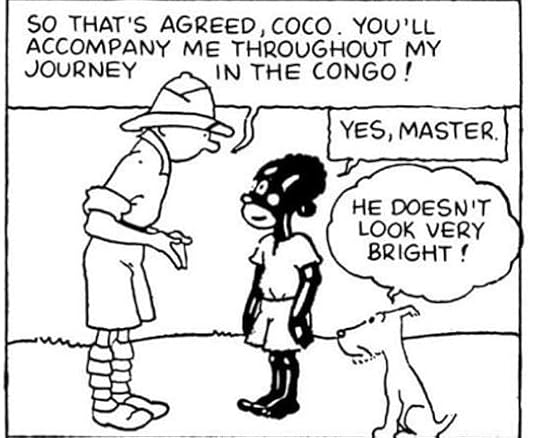
In his portrayal of the Belgian Congo, the young Hergé reflects the colonial attitudes of the time. [the book was first published in book form in 1931, and presented as a strip even before then] He himself admitted that he depicted the African people according to the bourgeois, paternalistic stereotypes of the period – an interpretation that some of today’s readers may find offensive. The same could be said of his treatment of big-game hunting.
The same could also be said of many other (and in some cases iconic) novels, such as King Solomon's Mines and Jock of the Bushveld. Again: I suggest reading Tintin in the Congo with a companion book like Tintin: Hergé and His Creation. The author himself wasn’t fond of this book, and especially of the treatment of wildlife.
So there it is. The first two Tintin books are important for their historical significance in the sense that Hergé was pioneering the European comic style that we take for granted today, but they are far from his best work. Thankfully, after this things start improving greatly. Hergé was about to “grow up”.
As with Tintin in the Land of the Soviets giving this more than three would not make sense given the greatness of what was to come.
از نگاه یک کودک، داستان «تنتن در کنگو» قطعا خیلی متفاوت از نگاه بزرگترهاس. به این معنی که کودک و بزرگسال، با دو نوع ذهنیت کاملاً متفاوت به داستان نگاه میکنن. چطور؟
کودک چی میبینه؟ کودکان معمولاً با حس کشف و تخیل به دنیا نگاه میکنن. یک کودک موقع خوندن تنتن در کنگو اینها به چشمش میان: ●مفاهیم ماجراجویانه و پرهیجان مثل سفر به سرزمینهای دور، دیدن حیوانات وحشی، فرار از خطر، پیدا کردن دشمن پنهانی.
●چیزهای بامزه یا دوستداشتنی مثل میلوی سفید و باهوش، یا لحظههایی که تنتن خرابکاری میکنه یا گم میشه.
●خرده داستانهای قهرمانمحور مثلا اینکه تنتن همیشه نجات میده، اشتباه نمیکنه، قوی و زرنگه و در نتیجه کودک اون رو دوست داره.
●رویدادهای فانتزی و غیرعادی جذاب مثل رئیس شدن یک سفیدپوست در روستایی آفریقایی که این برای کودک، غیرعادی، عجیب و جالبه، نه نشانهای از استعمار و نژادپرستی.
●در ذهن کودک، این داستان یک بازی پرهیجانه. مثل دیدن یک انیمیشن، اون فقط درگیر روایت سطحی میشه. همین!
اما بزرگسال؟ یک بزرگسال با ذهنی آموزشدیدهتر، تجربهمحورتر و حساس به مفاهیم اجتماعی، داستان رو از لایهی زیرینش میخونه. ●میبینه که چطور مردم بومی کنگو مثل کودک، خرافاتی یا وابسته نمایش داده شدهان.
●متوجه میشه که تصویر تنتن مثل یک قهرمان سفیدپوست نجاتدهنده (white savior) طراحی شده؛ انگار این مرد اروپایی اومده تا «تمدن» رو به مردم «عقبمانده» عطا کنه.
●نگران میشه از اینکه کشتن حیوانات وحشی با افتخار به تصویر کشیده میشه و کودک ممکنه اینو تقلید کنه.
●درک میکنه که این کتاب از دل فرهنگ استعماری بلژیک بیرون آمده؛ و یک ابزار رسانهای برای جا انداختن این تفکره که اروپا دانا و آفریقا نادان هستش.
خب نتیجهی این تفاوت نگاه چیه؟ کودک شاید این داستان رو دوست داشته باشه، اما دقیقاً به همین دلیل، مسئلهسازه. چون اگر کسی کنار کودک نباشه تا باهاش صحبت کنه، داستان میتونه کلیشهها رو در ذهن اون تثبیت کنه. کلیشههایی مثل اینکه «آفریقاییها سادهلوحن»، اینکه «سفیدپوستها همیشه قهرماناند»، اینکه «میشه برای سرگرمی حیوان کشت»، یا اینکه «کسی که ظاهرش با تو فرق داره، کمتر میفهمه». در واقع، کودک نمیفهمه که چه چیزهایی نژادپرستانهان یا استعماریان، اما با تصویرسازی و روایت، اون مفاهیم رو احساس میکنه و درونش نهادینه میشن؛ بدون اینکه بدونه واقعا از کجا اومدن.
پیشنهاد شما چیه سرکار خانم؟ مثل خیلی از کتابهای کودک که مفاهیم چندلایه و عمیق و یا حتی مثل این کتاب پیچیده غلطانداز دارن، خوندن این کتاب با راهنمایی بزرگترها میتونه تبدیل به فرصتی بشه برای آموزش درباره تفاوتها، عدالت، حقوق حیوانات و درباره اینکه قهرمان بودن فقط به رنگ پوست نیست. ممکنه من این جلد از کتاب تنتن رو برای بچه خودم نخونم، ولی اگه کسی این حساسیت هارو نداره، بنظرم بازم بهتره احتیاط کنه و کنارش درمورد این مسائل با کودکش حرف بزنه.
As a child, when I first read Hergé's Tintin comic books (graphic novels) in German, and when I still rather tended to enjoy even some of the more politically incorrect and problematic earlier instalments, already at that time (in the late 70s), Tintin au Congo regularly and generally tended to make me both physically and mentally cringe at the blatant stereotyping, the colonialism, the overt and nasty racism depicted (so much so, that I actually never managed to fully finish reading the book until I was a teenager, in 1982, usually giving up in disgust at both the content and the presented thematics of Tintin au Congo, as well as at the frustrating fact that when I would ask my parents about episodes and illustrations that I considered blatant racism, they generally simply claimed that it was a sign of the times and to therefore not worry so much about it). And while, perhaps, my parents were indeed somewhat correct in claiming the latter (that the racism depicted was indeed very much a sign of the times), that does in NO WAY excuse the unfortunate and nasty truth that Tintin au Congo is simply and utterly replete with questionable content and patently unacceptable loathsome euro-centric colonialist attitudes.
Furthermore, aside from the ever-present colonialism and ethnic stereotyping (making almost ALL of the native African characters appear as at best childishly simplistic and at worst corrupt and stupid, not to mention how they have been illustrated, with protruding caricature like lips, and speaking broken pidgin French), there are equally far far too many uncritical, condoning and even positive representations of so-called trophy hunting featured (as basically, Tintin is in Africa not only to tour the continent but also and obviously to seemingly "bag" as many species of animals as possible), and as such, an attitude that Africa as a continent is there for the taking, is there for the manifest destiny of European expansion and use/abuse is definitely to be found in Tintin au Congo (and whether politically or religiously, that really and truly matters not or at least should not matter). And while early children's literature (both novels and illustrated offerings) does indeed contain many similarly questionable details, the fact that Tintin au Congo contains such an all-encompassing amount of the same (massive amounts of dead, of deliberately slaughtered African animal species, as well as almost every page presenting Africans as simpletons, as almost lesser human beings), this in my opinion does make Tintin au Congo negatively and frustratingly stand hugely out.
Now I do well realise some readers as well as literary analysts have often claimed (or have tried to claim) that the overabundance of the ethnic stereotyping, that the colonialism, the over-eager (read extreme) hunting behaviour and practices in Tintin au Congo might, in fact, be of satiric intent, that Hergé (like Jonathan Swift) is showing, is presenting an expanded and hugely deliberately exaggerated portrait of Africa and colonialism in order to criticise, in order to hold up a mirror to society, to the crowned heads of Europe (so to speak). But while this might indeed be partially correct for some of the later Tintin graphic novels (where humour and satiric intent is definitely both present and easily appreciated, easily noticed), the storyline (even if at times somewhat over the top so to speak) of Tintin au Congo really never reads and never feels (at least my humble opinion) as being all that satirical or in any way much actively critical of colonialism (for in Tintin au Congo, the attitude towards Africa and towards Africans is at best massively paternalistic and as such both frustrating and so annoying that I can only and will only consider a one star rating maximum and in fact really would love to grant negative stars). And with regard to recommending Tintin au Congo, I would ONLY EVER and majorly grudgingly suggest Tintin au Congo to and for teenagers and adults (and even then SOLELY for historical and academic research and analysis purposes, for discussions and debates on colonialism and what should in fact NOT be included, should not be featured in children's literature).
Finally, considering recent medical advances (and the fact that we are now rather confident that repeated head injuries, that concussions and the like can and often will lead to serious and lasting cognitive issues and other health related problems), well, the vast amount of times that particularly Tintin throughout the series as a whole is knocked unconscious, is bonked on the head, is drugged, is rendered immobile, is seemingly seriously injured is also to and for me cause for both concern and need for discussion. For Tintin never seems to show ANY major post trauma ill effects, a scenario that is at best a bit naive and at worst potentially dangerous (as it could make readers, but especially children think that the dangers Tintin faces and the injuries he receives are not all that serious, and that therefore, concussions and the like are also not all that serious either, something that might have well been the general consensus when the Tintin books were first published, but an attitude that is definitely not so much the case nowadays, as in fact, rather the opposite seems to be the standard currently accepted position).
"সাদা চোখে" পড়তে বেশ মজার কিন্তু আফ্রিকা সম্বন্ধে লেখকের মনোভাব পুরোপুরি ঔপনিবেশিক। সাদারা কালোদের ঠিক যে চোখে দেখতো ( বা অন্যদের দেখাতে পছন্দ করতো) লেখক ঠিক সেভাবেই পুরো গল্প সাজিয়েছেন। বিশেষ করে কঙ্গোবাসীদের ছবি আঁকা হয়েছে বানরের আদলে, যা দেখে আমি রীতিমতো হতভম্ব হয়ে গেছি।
I’m giving this book 4 stars purely as a collectors edition to make up the full Tintin series & as a piece of literary history, otherwise it would have scored zero. It’s a terrible story. It’s horribly patronising towards Africans & for that alone was not stocked in book shops for years. Plus it features Tintin hunting beautiful animals, such as Elephants, that today are rightfully protected. I’ve explained these facts to my parents & they don’t want to read the book for fear of it tainting a character they have come to know & love as a hero. Such a shame this book was produced but at the same time it exhibits colonial European attitudes of yore that we would do well to remember & never repeat.
اصلا نتونستم این جلد رو دوست داشته باشم و به نظرم نژاد پرستی و تفاوت تنتن با بقیه آدمها ناراحت کننده بود. تنفگ تنتن هم دائم در حال شلیک کردن بود، و این استفاده مداوم از تفنگ، علاوه بر خیالی بودنش، خشونت آمیز بود و برای کتابی که کودک میخونه نامناسب بود! من ترجمهی این کتاب رو برای خواهر کوچولوم خریدم وبه نظرم مترجم قسمتهایی از کتاب رو دستکاریهایی کرده(که دلیلی برای سانسور و تغییر نداشته)و باعث شده بود از بامزه بودن کتاب کم بشه!(نمیدونم چرا)؟ به هر حال همین که امید دارم نژادپرستی و خشونت تو جلدهای بعدی کم میشه دلیل محکی برای ادامه دادن این مجموعه واسم هست.
"Je pense que des oeuvres racistes, qui dégradent les autres, ne doivent pas être diffusées"* Felwine Sarr In: Tintin et le trésor de la philosophie (Philosophie Magazine, hors-série)
Well, not that great a story. By the end Tintin knows he'd been targeted by Al Capone, the American gangster from Chicago, who had an interest in the diamonds business in Congo. As usual, Tintin managed to escape.
I have read other issues which are a lot better. Yes, true, this issue is full of stereotypes, ...yet, the pygmies love Tintin. 😉
سفر به افریقا با اختلاف نژاد پرستانه ترین اثر مجموعه تن تن هست و فکر میکنم هرگز امتیاز پخش تصویری در انیمیشنش رو هم نگرفت,نکته دیگه هم شکار بی شمار حیوانات بدون هیچ دلیل مشخصی هست,تشویق به منفجر کردن کرگدن ها هم برای یک کتاب کودکان مناسب نیست. البته قطعا این کتاب ها از شرایط زمانه خودشون جدا نیستند و قضاوت امروز ما بسیار متفاوت هست از نگاه و وضعیت آن زمان.
I’ve just read an online article that asks the question “Is chess racist?” after someone enquired as to why the white pieces move first. Seeing as the definition of racism, according to the Cambridge English dictionary is: “The belief that people's qualities are influenced by their race and that the members of other races are not as good as the members of your own, or the resulting unfair treatment of members of other races”, it would seem that the answer to the question “Is chess racist?” is no. Inanimate chess pieces or the concept of the game of chess itself cannot be prejudiced against people’s skin colour.
My point is: the meaning of racism is quickly changing. It now seems to have little to do with hatred, but everything to do with word-choice. I see that as dangerous, as word-control leads to suppressing free speech. And retaining free speech is every bit as important as stopping racism. We’ll soon be agreeing that 2 + 2 = 5 a la Orwell’s 1984.
Modern racism also has to do with banning things from previous times because they do not reflect our modern values towards racism, as we have recently seen.
Was I proud to see protestors taking down the statue of slave-trader Colston? Absofuckinglutely. Does that mean I think every statue that has tentative links to racism should be taken down? Not necessarily. These issues aren’t, um, black or white.
But what I do know is, many of the Twitter crowd of Lefties (who resemble little of “the Left” I once knew) seem to be addressing racism in all the wrong places. I don’t need to go into the very real and dangerous racism that is happening in the world right now. We’re all aware that racist cunts exist and hate. And they seem to be coming out of the woodwork like never before. Why, just last night I ended up shouting and swearing at my neighbour who believes England “is a white country”, and I will always stand up against racism when I hear it and I encourage everybody else to do the same. The problem, I believe, is that too many people are calling things racist when those things have absolutely nothing whatsoever to do with HATE.
It’s racist HATE we need to fight against. Forget everything else.
If you call for books, art, or recorded entertainment from bygone years when attitudes were different to be banned, I will stand against your beliefs just like I stand up to racists. And when Amazon, the BBC and others remove things like Gone with the Wind, Little Britain, and The League of Gentlemen because they apparently show racist views (the latter two don’t), they’re not banning them because they believe that. They’re banning them to show you that Amazon are a caring company who are down with the millennial Left. It’s bullshit. I do not, and will never, support the banning of books and art. And a brief look back at history will tell you why.
The very nature of society means its views are constantly changing and evolving. Everybody knows the views expressed in Ancient Rome were not the same as those expressed in Victorian times, and those expressed in Victorian times are not the same as those expressed in modern times. What good it does to ban past attitudes, I really don’t know. But I could list you hundreds of things for the bad it does. I mean, should we ban The Water Babies because it depicts child labour? Should we ban virtually every film of the 1940s for depicting sexism? Should we ban the Bible because it glorifies violence?
And yet, why you all call for things like the Gone with the Wind film to be banned, you can still (rightly so) buy and read Mein Kampf.
And in twenty years’ time, the new generation will be saying it was racist for people in the 2010s and 20s to always name black characters something that indicates they are black, such as The Dark Destroyer and Black Panther. And plenty of other future-phobic things that are currently not an issue.
So, rather than calling someone who doesn’t want chess rules changed (so that white pieces don’t always go first) a racist, and rather than condemning Matt Lucas and David Walliams for racism, and rather than condemning JK Rowling as transphobic, ask yourselves instead: DID THEY INTEND TO BE HATEFUL? If the answer is no, leave them the fuck alone and move on to calling out the actual racists and fascists and implementing ways to improve race (and cultural, and gender…) relations. I keep seeing too many good people on the side of good race relations being attacked by some of the very people they support. And those acts are unfortunately making more people become racist.
And so, finally, to Tintin in the Congo. A book that was unavailable for a long time because it depicts white supremacy views and the Congolese as almost-golliwogs. The editions that are now available come with a special caveat that states the book reflects the colonial attitudes of the time, and that Herge himself later regretted his depictions. I was pleased that the foreword also says “the same thing could be said of big game hunting” about the book’s portrayal of many senseless killings of beautiful African mammals.
Using a foreword to explain outdated concepts, particularly in children’s books, is of course the most sensible thing to do. Banning the book would not.
I decided to start reading all the Tintin books in order, but I don’t own them all, so I was delayed because I didn’t want to buy the Collector’s Edition of this second Tintin story - I wanted this early 2000s colour edition. The only thing is, this edition isn’t available to buy new and second-hand ones on ebay usually go for around £50. Well, I wasn’t going to fork out £50 for a racist Tintin book! Then a couple of weeks ago, I found an ebay seller who obviously didn’t know what they had, and I bought the book for under a tenner. Seeing as this was right in the middle of the BLM protests after the despicable killing of George Floyd, and people starting to knock down statues and ban movies left, right, and centre, the timing of me finally getting my mitts on a copy of this book seemed very synchronistic.
I guess I’m probably the last generation to have had golliwogs. As a young kid, I had a soft-toy one and the figurines that everyone collected from Robertson’s jam. I didn’t associate golliwogs with black people. But I’m still very glad golliwogs no longer have a place in society. But even as someone who had gollies as a kid, I was still shocked when I opened the first page of this Tintin book that depicted black people. They really do look more like golliwogs than people. Fuck, some even look more like monkeys. That actually shocked me! As did Tintin’s right wing behaviour. And the depictions of black people as simple, lazy, and white-master-loving.
As with the first book in the series, Tintin in the Land of the Soviets, which I reviewed recently, the Belgian reporter resembles little of the liberal hero of the later books. At times, I wanted to give Tintin a good slap. As for the story, there’s a bit more of one than in the predecessor but still nothing much happens. But this book does set the scene for the next book Tintin in America, which was where the Tintin series really began. After all, when I grew up, I didn’t even know Tintin in the Land of the Soviets and Tintin in the Congo existed. Like many, I always thought of Tintin in America as the first book.
I’ll leave you with this scene from the hilarious Richard Pryor and Gene Wilder film Silver Streak. Ask yourself: is it racist? ;)
Uh, this book is freaking terrible. And not just the racism--it lacks all semblance of a plot. You can read my review here, and instead of reading the actual book you can just read the notes I took while reading it:
Milou gets in a fight with a parrot, Milou gets surgery, Milou falls overboard, Tintin rescues him, Tintin gets attacked by a shark, Tintin arrives in Africa and everyone greets him at the dock and cheers and carries him around, Milou gets attacked by mosquitoes, a bunch of papers want to pay Tintin stupid money to write for them, Tintin gets a car and a servant named Coco, a crocodile tries to eat Milou, someone steals Tintin’s car while Coco is scared and hides in the bushes, Tintin gets car back and ties up thief, Tintin kills an entire herd of antelope (animal death toll: +10), A chimpanzee kidnaps Milou, Tintin kills another Chimpanzee (+11), skins it, and climbs into its skin to get Milou back, then scares Coco the useless servant, the thief escapes, Tintin’s car gets stuck on the railroad tracks and gets hit by a train, Tintin tells the people to fix the train and calls them lazy, and also doesn’t help, Tintin tows the train to the station and meets a tribal chief, Tintin gets attacked by a lion and milou rips the lion’s tail off, all the native people are afraid of the lion and impressed by Tintin’s bravery, a witch-doctor is jealous of Tintin’s popularity and says the Gods have told him Tintin needs to be sacrificed. He pairs up with the villain from before and they plot to kill Tintin, but Tintin escapes and films the two of them plotting, and then outs the witch-doctor to the rest of the tribe and he is run out of town, Tintin is like King Solomon of the native people, the angry witch-doctor and mysterious thief try to start a war with a rival tribe, but it backfires and they start worshipping Tintin instead the witch-doctor hears that Tintin is hunting leopards, so dresses as a leopard to scare Tintin even though that makes no sense, but then he is attacked by a snake and Tintin saves him and now he also worships Tintin, the thief who is now bearded attacks Tintin and dangles him above a bunch of crocodiles, another white man comes and shoots 8 or so crocodiles dead (+19), Milou gets eaten by a snake, but Tintin saves him (+20), Tintin goes to teach in an African school, but the kids are really dumb and can’t add 2+2, and then a leopard comes in the classroom but it’s ok, because Tintin scares it off, Tintin tries to shoot an elephant but fails, and then the elephant chases him, but a chimpanzee picks up his gun and shoots the elephant (+21), the newly bearded villain shows up again and, after knocking tintin unconcious, tries to push him in a canoe over a waterfall, but Tintin is saved at the last second by a dangling tree branch, Milou fetches the other white dude and they save Tintin, Tintin and the bearded villain fight and then fall off a cliff, and Tintin is saved because he bounces off a hippo like a trampoline, but the villain gets eaten by crocodiles, Milou becomes some pygmies god, Tintin pretends to be the dead beared villain and meets some other villains, Tintin finds out that the villains were all part of a gang of Chicago mobsters and round them up, Tintin needlessly harasses some more animals, including drilling a hole in a Rhino, sticking in a stick of dynamite, and blowing it up (+22) and also kiling a buffalo (+23), some people in a plane save him and he goes home, and all the Africans are sad because Tintin left.
This entire review has been hidden because of spoilers.
Tintin kills 1 monkey: to disguise in it's skin. Tintin kills 1 Elephant: for the ivory. Tintin kills 1 rhino: blew it up with dynamite. Tintin kills 1 buffalo: with stones. Tintin kills 15 antelopes: at once, mistaking 15 for ONE ANTELOPE. Tintin kills 1 python. And another 1 snake. In defense, this time.
Tintin is the worst fucking idiot in this book. And I was horrified throughout, seeing him kill the animals one after another. And though his reason for visiting Congo was something else, his activities from the day one made me think that he visited congo solely for hunting; which started with a lion-hunt, followed by a hunt for cheetahs.
Hergé couldn't flaunt his dark side enough in this 60-pages issue. Along with animal massacre, he drew the natives of Congo with sub-human intellect who do dumbest shits, while looking nothing like humans except for the two legs.
Este segundo álbum de las aventuras de Tintín comenzó a publicarse en “Le Petit Vingtième” en junio de 1930, tan solo un mes después de finalizarse Las aventuras de Tintín en el País de los Soviets. Aunque podríamos pensar que es fruto del pensamiento de su tiempo, este álbum fue polémico desde el mismo momento de su publicación. Y aún después del recorte que el propio Hergé le aplicó en 1946 (reduciendo las 110 planchas originales a las 62 que tienen las aventuras en la actualidad), se aprecia la razón en muchas de las viñetas.
Como el anterior volumen, es más una curiosidad que una buena historia, ni siquiera tiene un argumento cohesionado, y lo cierto es que el racismo latente y determinadas escenas de violencia gratuita hacia los animales llaman la atención aún sabiendo lo que te vas a encontrar, en palabras del propio Milú: no puedo soportar estas escenas de carnicería... (supongo que esto es un añadido a la versión original). Algunas de estas escenas fueron eliminadas o modificadas en otros países ya en la primera edición.
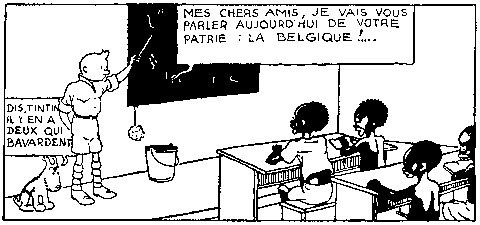
El dibujo, después de la edición de 1946 es ya en color, y mucho más detallado. Me habría encantado poder comparar esta edición moderna con la primera. Por la red circulan algunas curiosidades, como el momento en el que Tintín enseña cálculo en la escuela de una Misión, en la que en el original enseñaba cuál era la “madre patria” (Bélgica, por supuesto).
Con todo, me han gustado las 10 primeras páginas: el viaje en barco hacia el Congo (¡Milú! ¡Desgraciado! ¡Ten cuidado con la psitacosis!) y el cameo añadido a la primera versión de Hernández y Fernández (Dupont y Dupond) en la viñeta inicial.
I recently read TinTin in the Congo and found it a delightful book. The text is humorous and the artwork is (as always with Herge's works) well done and entertaining. I recommend this volume for any age; I especially recommend it as a fun book to read to your children or grandchildren. The hand wringing from the easily offended politically correct crowd to the contrary notwithstanding, this book accurately captures the impressions that anyone from an advanced country would have in travelling to remote areas of a more primitive culture. For all the heartburn of some westerners over "colonialism", I suspect that a trip to outback areas of the Congo in 2009 would present them with a rather unpleasant brush-up with reality. Read and enjoy!
As far as Tintin books go, and if we want to use the term, this one is the most “problematic”. Inaccuracies abound, dated views aplenty. The book was initially completed in 1931 in a format similar to the initial volume in Soviet Russia, but was later redrawn, heavily edited, coloured, and put out for publishing in 1946.
Hergé went on to “disown” this work as well, in a way. He viewed it as a youthful foray into the art of the bande dessinée. This particular adventure became an embarrassment for him in later days, and for good reason. The main sin, so to speak, is that of the abundant presence of “colonialist cliches”. As Farr puts it, “politically, he could hardly be less correct. Had this been the only or last Tintin adventure, he would be forgotten today.” When questioned about the book later, Hergé had this to say:
“For the Congo as with Tintin in the Land of the Soviets, the fact was that I was fed on the prejudices of the bourgeois society in which I moved… It was 1930. I only knew things about these countries that people said at the time… I portrayed these Africans according to such criteria, in the purely paternalistic spirit which existed then in Belgium.”
So, if anything, this could be read as an artifact of European views in the late 20s and early 30s toward Africa and colonialism in general.
Something else that is difficult to stomach for me now is the treatment of fauna – “modern sensibilities are likely to be most upset by the wholesale and gratuitous slaughter of wildlife.” The big game hunting is wild here. “Whether mowing down antelope, potting a monkey for his skin, wounding an elephant, blowing up a rhinoceros, baiting and stoning a buffalo, his bag is appalling.” The rhino episode is particularly disturbing if you have the original version – which I did, as a kid. I don’t think the Persian censors cared much about that bit – Tintin drills a hole in the back of the rhino and fills it with gunpowder… you know the rest. In the version I own currently, the animal merely runs away.
A hiccup-y start to the series for sure. The story itself will get much better from the 3rd and 4th volumes on, but we will have to remind ourselves of context and comparisons with modern day standards from time to time.
Tintin was one of the comic book heroes of my childhood. I'm going to read my way through the series again as I listen to a radio program about him, and his creator, Hergé. After the journey Tintin had taken to the Soviet, Hergé wanted to take his hero to America, but the editor wanted to use this popular character to show Belgian colonialism in a positive light by sending him to Congo instead. Which is why Tintin in the Congo is book number two in this series.
This book is at the same time better, and worse than Tintin in the Land of the Soviets. With more practice Hergé was getting better at drawing, and on top of that, this book was redrawn for publication in the book form. One difference between the first version and the redrawn one is that Thomson and Thompson show up for the first time. They only make it into one frame, and they don't contribute to the plot at all, but still, here they are. Anyway, because it is redrawn the artwork is better than in the first book.
As for the plot, it is still built up on the cliffhanger model, so Tintin goes from one dangerous situation to the next, but it still feels like a plot, and not as random collection of cliffhangers as in the first one. There is a thread running all the way through this book, and to the next one. In terms of story telling Hergé was getting better here.
However, this book was written with a specific agenda, so there is quite a bit of the great white hunter, and the white saviour. I don't actually know how many animals Tintin kills in this book, but if their heads were mounted on his wall, he'd need a very big house. I read the sanitised Scandinavian version, but it's still a lot.
The white saviour is also quite prominent in this book, and there is quite a bit of Tintin showing the childlike people in the Congo how to do things, playing king Solomon to bring peace and tranquility to people that can't do that for themselves, and so on. It is quite heavy handed actually.
I'm not saying that it is all bad. It is a fast-moving adventure story that one can even laugh at occasionally. Snowy still has a lot of the comic relief moments, and plot wise there is a clear improvement from Tintin in the Land of the Soviets, but it shows it age really, really badly.
Hmmm, this was a bit of a disappointment. I have heard how racist this book was, and Herge did choose to draw all of the African natives in a very sterotypical early 20th century way, and they aren't quite as smart as Tintin is, but from the three books of Herge's I've read now no one is really as smart as Tintin in the stories. They way the natives talk is a kind of stilted 'dumb' sort of way, but Herge also does this with the Soviets in the first Tintin book, and with the Mafia gangsters in the America story. Well not exactly the same way, but he uses gross sterotypes . I was expecting something more racist, this wasn't anymore racist than certain Bugs Bunny cartoons I can remember watching growing up. Then there is the cartoon-ish violence against animals and people who say that Tintin killed too many animals, which also seems to me sort of a knee-jerk PC reaction, again it's nothing worse than I can remember seeing in lots of cartoons growing up. If anything this whole book is just the stereotype of European colonialism and an entire set of beliefs about the 'dark continent' (dark not meaning skin color, which of course is obvious), and the heroic / machoism of big game hunting. But then isn't really a surprise after reading the book about the Soviet Union. Herge's treatment of the Soviets is also a big jumble of confused facts and stereotypes, I mean do you think anyone ever said, "Oh my Trotsky!", instead of "oh my god", especially in a Soviet Union in the Stalinist era? I guess I just wanted to be actually shocked at the content of the book and not at the sensitivity of people.
ثاني رحلات تان تان بعد رحلة موسكو والاولي التي يتم اعادة رسمها وتلوينها من قبل هيرجيه نفسه ولكن ربما لانها في بداية تجارب هيرجيه، فالرسوم ليست بدقة الرحلات التالية..كما ان القصة ركيكة للغاية بل وبالرغم من معارضتي لمنعها بحجة العنصرية قبل ان أقرأها فبعد قراءتها اعتقد انها عنصرية حقا...ووحشية مع الحيوانات بشكل بشع اكثر من حلقات Itchy & Scratchy واللي هي تنويعة ساخرة من العنف في توم وجيري بس بشكل ابشع باسلوب ساخر بمسلسل آل سيمسونز هيرجيه هنا تقريبا قدم رسوم اكثر بشاعة ابشع مليون مرة من حلقات ايتشي وسكراتشي مع حيوانات -والبشر-بالقارة الافريقية
ولكن علي كل حال، فاعتقد ان بنهايتها تلميح لأن رحلة تان تان لشيكاغو ،أمريكا ستكون مترتبة نوعا ما علي عقدة تلك القصة الركيكة
ওহ হো! এইটা দু নম্বরটা!! আমি ছোট থাকতে কখনো বুঝতে পারিনি এখানে রেসিজম ছিল। এমনকি আফ্রিকান অধিবাসীদের যে ড্রয়িং গুলো তা থেকে বুঝতেও পারিনি যে এরা মানুষ। ধরে নিয়েছিলাম অন্য কিছু একটা। দিস ইজ ডেফিনিটলি এ স্যাড থিং। এক ফোঁটা বিষ যেমন অনেকটা পানিকে বিষাক্ত করে ফেলে এই বই তে রেসিজমটা ঠিক একই কাজ করেছে। :(
باید تاسف خورد برای این دیدگاه هایی که در کتاب برای کودکان و نوجوانان ترویج شده. ملغمهای از نژاد پرستی، خودبرتربینی غربی و کشتار حیوانات در آفریقا ...
Like the last volume in the series, this one is another flop bearing no real resemblance to the themes, characters, or style of the later series. The whole thing is a haphazard cartoon filled with slapstick violence starring pugnacious jerk Tintin and his bad-joke-making dog.
Yeah, the treatment of Africans and big game hunting make H. Rider Haggard look tame and responsible in comparison, though I find it hard to argue that the stylized drawings of the Africans are racist, since it's not like the European characters are examples of detailed realism. I mean, when your main character's head is a mouthless blob with two pseudopods and tiny holes for eyes, it's hard to complain that other characters in the book are too simplistic.
But yeah, another read that's only interesting to completists and cultural historians.
Tintin in the Congo, while written for the children's section of a Belgian newspaper in 1930, is so full of Eurocentric racism and speciesism that it cannot be recommended as reading for young people. However, as an example of white supremacy attitudes of the time, it is an interesting document. The book has often been left out of Tintin collections or edited to soften its most egregious content. I found two English language black and white (and one Spanish language color) editions online at www.Scribd.com, a document sharing website. The English copies at Scribd state that this book was "first published in the U.S.A. in 2002." In the Forward the translators say the author "admitted that he depicted his Africans according to the bourgeois, paternalistic stereotypes of the period. The same may be said of his treatment of big-game hunting and his attitude towards animals."
After reading this, I felt something was off, particularly with how racism in Africa was portrayed. And, indeed, I wasn’t wrong. This work is known for its controversial and arguably racist depictions, like the portrayal of the Congolese tribe as unintelligent, with a scene where Tintin teaches 2+2=4, yet none of the children are able to answer correctly.
Perhaps this book ended up like this because it was released in the 1930s, a time when racist portrayals were more accepted (just look at cartoons like Tom and Jerry). Also, the themes it deals with are actually more suitable for older children, like those in middle school, rather than younger kids.
مشکل این داستان از مجموعه تن تن فقط نژادپرستی نیست (هرچند که یکی از بزرگترین مشکلاتشه) هرژه هنوز خیلی بیتجربه ست. مشکل روایی داستان واقعا زیاده. همه چیز اتفاقی پیش میاد و مدام شانس چیزیه که تن تن رو نجات میده. منطقی وجود نداره و قوانین معمولی به راحتی نقض میشن. هرژه فقط میخواد داستان پیش بره بدون اینکه براش مهم باشه چطوری. اینکه میدونم چه داستانهای شاهکاری منتظرمن باعث میشه این چند جلد اول رو تحمل کنم
Quizás Tintín en el país de los soviets fuese malo , pero Tintín en el Congo es espantoso. Es malo en un nivel que va más allá de lo artístico y de lo narrativo, y ni siquiera en esas áreas tiene todos los papeles en regla.
La historia del Congo es la más escandalosa y trágica de todas las que ha dejado el colonialismo europeo en África, y no por falta de buenos competidores. Entre 10 y 15 millones de personas de personas murieron en la época del Estado Libre, cuando su inmenso territorio era prácticamente la propiedad privada del rey Leopoldo II. Si bien las atrocidades disminuyeron de manera significativa con la creación del Congo Belga, en 1908, el país siguió otros cincuenta años bajo un opresivo régimen colonial. Para los belgas, la “misión civilizadora” que habían sido llamados a cumplir en esas tierras justificaba su explotación económica, y también el trato al que sometían a los nativos. El principio era “dominar para servir”, según lo resumió uno de los gobernadores de la región.
Tintín en el Congo, que se publicó entre 1930 y 1931, están tan empapado de ese mismo discurso paternalista, y de manera tan acrítica, que solo nos resta leerlo como un documento del período. Hergé, se dice, hizo un mínimo mea culpa e introdujo algunas modificaciones en la versión coloreada de 1946, pero el resultado sigue siendo bastante espantoso. Por ejemplo, en el original, Tintín estaba parado frente a un aula llena de nativos, y les decía “hoy voy a hablarles de su país… ¡Bélgica!”. Mientras tanto, el botón de Milou refunfuñaba porque dos alumnos estaban conversando. En la versión actualizada Milou sigue siendo un botón, pero Tintín ya no dice nada de Bélgica, sino que se dispone a enseñarles que 2+2 son 4, lo que parece todavía más ofensivo que lo anterior.
La infantilización de los nativos es, en efecto, una de las constantes de Tintín en el Congo. Su comportamiento oscila entre la brutalidad y la inocencia, y sólo se los considera redimibles en tanto sean capaces de adoptar el estilo de vida europeo. De hecho, al final, por acción del mesías blanco que es Tintín, vemos una aldea africana que burdamente imita algunos modelos occidentales; hay una choza con un cartel que dice “café”, y una mujer que viste cartera y sombrero. También hay tótems dedicados a Tintín y a Milou. Quizás este era todo el progresismo del que era capaz Hergé. Pintar a los nativos como civilizables era, a fin de cuentas, mejor que considerarlos unos salvajes sin remedio. En el último caso podríamos hablar de racismo; lo de Hergé es más bien un “mero” paternalismo eurocéntrico.
Como todavía quedaba espacio en este cómic para más viñetas insensibles, Tintín desembarca en África con traje de safari y un rifle, dispuesto a matar a todo bicho que camina. Entre sus víctimas hay una pila de venados, un leopardo, un elefante, al que por supuesto le corta los colmillos, un rinoceronte, al que asesina con un cartucho de dinamita, para más gore, y también un mono al que despelleja para hacerse un disfraz. Los monos, por cierto, hablan, y sospechosamente evocan en su aspecto físico a los nativos africanos.
Hay, como estos, muchos pasajes que dan vergüenza ajena. El discurso emerge por todas partes, a tal punto que es muy difícil encontrar algo rescatable en esta historieta. A veces se menciona que, entre las aventuras de Tintín, esta es una de las más populares en el África francófona, pero no creo que el dato la salve. En todo caso, serviría para medir hasta qué punto el discurso del colonialismo ha quedado implantado en la región.
The Tintin stories for anyone who has read them and understands their history can't be viewed as anything other than groundbreaking. The beginnings of these stories have been around as long as the Lord of the Rings, the illustration and environments in the Tintin books are accurate and extremely detailed. Anyone who has spent even a little time exploring Herge (Georges Remi) can see the painstaking research and adversity he worked through to compose the world around Tintin. His ideas were ahead of his time (Exploring the moon, Industrialization, South American political conflict, modern slave trade, extraterrestrial life) and he made certain every detail for every object would be realistic (after the third book at least). Herge's work can certainly be cited as an influence for any modern day graphic novel or comic book.
This particular installment of the series was not included in the collection I bought. I didn't know about it until a goodread friend inquired from me about it. I was very much curious as to know why it was omitted to be included in the collection. Now that I have read it, I know why it wasn't included; and I'm not surprised at all.
For a children's comic (or what I believe it to be), I'm surprised at the open racism and the animal cruelty that is shamelessly depicted throughout the story. Perhaps, at the time of his writing they were "accepted", but they are "outrageous" by modern standards. On top of it, there was absolutely no plot! It is such a poor excuse of a book!
I'm very much dismayed with the beginning of the series that had I not known that there followed more interesting work despite the poor beginning, I would have given up reading of the series.
I haven’t read in French since high school, so this was a double adventure. Always a pleasure to travel with TinTin and Snowy, even if some of the African representations are outdated and now considered racist.