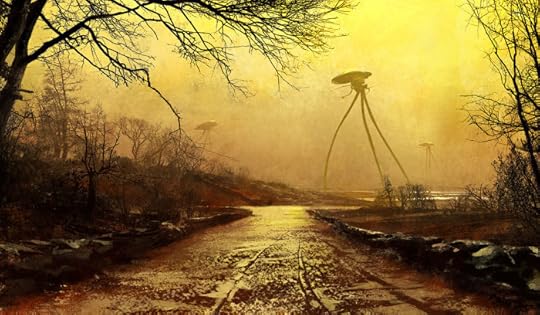
The New York Times bestselling author of The Map of Time returns with a mesmerizing novel casting H.G. Wells in a leading role, as the extraterrestrial invasion featured in The War of the Worlds is turned into a bizarre reality.
A love story serves as backdrop for The Map of the Sky when New York socialite Emma Harlow agrees to marry millionaire Montgomery Gilmore, but only if he accepts her audacious to reproduce the extraterrestrial invasion featured in Wells’s War of the Worlds . What follows are three brilliantly interconnected plots to create a breathtaking tale of time travel and mystery, replete with cameos by a young Edgar Allan Poe, and Captain Shackleton and Charles Winslow from The Map of Time . Praised for “lyrical storytelling and a rich attention to detail,” ( Library Journal , starred review), Palma again achieves the high standard set by The Map of Time .
Félix Jesús Palma Macías, was born in Sanlúcar de Barrameda, Spain on June 16, 1968. He attended Francisco Pacheco High School and studied Publicity at the University at Sevilla.
His first volume of stories, El Vigilante de la Salamandra (The Lizard's Keeper) showed his ability to introduce fantasy into the every day. He is also author of the storybooks: Métodos de Supervivencia (Methods of Survival), Las Interioridades (Interiors), Los Arácnidos (The Arachnid), and El Menor Espectáculo del Mundo (The World’s Smallest Show).
Palma has also published La Hormiga que Quiso ser Astronauta (The Ant that Wanted to Become an Astronaut), Las Corrientes Oceánicas (The Ocean Currents), and El Mapa del Tiempo (The Map of Time). The Map of Time was the first novel to be published in the United States.
His book have garned many awards. His Los Arácnidos won the Cádiz Latin American Story Award, Las Corrientes Oceánicas won the 2005 Luis Berenguer Award for Novel and El Mapa del Tiempo was awarded the Ateneo de Sevilla XL Prize in 2008.
His work has been translated into more than 25 languages and published in over 30 countries. Palma has also worked as a columnist, literary critic and has given creative writing workshops.
"Картата на небето" е очарователна и превъзходна история, достойно продължение и надграждане на тази разказана в "Картата на времето".
Авторът е страхотен познавач на творците и образите от Викторианската епоха. Майсторски ги премята из книгата, както грък на теферич посред жежко лято премята своята броеница. :)
Х. Дж. Уелс като главен герой отново е на познатото високо ниво и за да е пълно задоволството ми от трилогията се надявам в последната част да оживеят като минимум Марк Твен, Шерлок Холмс и доктор Уотсън. ;)
Не ще разкривам какво точно се случва, но изчетох тая тухла с огромен кеф и нито за момент не ми бе скучно!
Истината е, че нямам търпение да науча какво ми е подготвил испанският магьосник Феликс Палма в третата и последна част от трилогията. Но за съжаление, тя няма да бъде издадена на български... :(
Цитати:
"И сега не зная как да върна изгубеното време. Затова плачех - заради изгубеното време, заради изгубените мечти... Къде отиват немечтаните мечти? Има ли във Вселената място за тях?"
"Колкото и да е прекрасно да срещнеш истинската любов, да намериш приятел е също толкова хубаво."
Esta novela es todo un homenaje a la literatura de folletín y de aventuras, donde se dan lugar algunos de los grandes nombres de la Literatura Universal como son H.G. Wells y Edgar Allan Poe. Pero no estamos ante un libro donde la acción te conduce a una lectura frenética. La novela de Félix J. Palma es pura literatura, es un placer detenerse en cada párrafo de cada página, y donde sí, hay acción, suspense, romanticismo, viajes en el tiempo, terror, pero también una exquisita sensibilidad que requiere de una lectura más detenida. Resulta apasionante adentrarse en el laberinto de tramas que ha trazado este magnífico autor, y dejarse absorber por la historia que nos narra.
‘El mapa del cielo’ es la segunda novela de la llama Trilogía Victoriana, que comenzó con la estupenda ‘El mapa del tiempo’, y pueden leerse de manera independiente, ya que son de argumento cerrado, aunque es verdad que la una se entronca con la otra. Si ‘El mapa del tiempo’ era todo un homenaje a La máquina del tiempo de H.G. Wells, haciendo referencia también a la película Los pasajeros del tiempo y a la novela gráfica From Hell de Alan Moore, ‘El mapa del cielo’ homenajea esta vez a La guerra de los mundos de Wells, Narración de Arthur Gordon Pym, de Poe, y la película La cosa, de John Carpenter, con ciertos toques de Las puertas de Anubis, de Tim Powers.
Pero ‘El mapa del cielo’ es mucho más que un simple pastiche de historias y géneros. Palma podría haber fracasado en su sentido homenaje, convirtiéndose en una mera copia de los originales, obras maestras todas ellas. Sin embargo, Palma ha salido airoso del intento, consiguiendo sumergirte en su juego de sombras y engaños. Uno podría pensar también que Palma iba a repetir la exitosa fórmula de ‘El mapa del tiempo’, cayendo en el autoplagio. No es así en absoluto, porque ‘El mapa del cielo’ es igual de original y magnífica.
En cuanto al argumento de la novela, francamente, es mejor no contar nada y simplemente dejarse llevar por la historia. Es más, recomendaría no leer ciertas reseñas, ni tan siquiera la contraportada del libro, ya que es fácil caer en el spoiler y destripar parte de la trama, conociendo sin querer información que no aparece en las primeras páginas precisamente.
Personalmente, me ha gustado mucho ese viaje a la Antártida de la primera parte, así como la voz narradora de la historia, esa voz omnisciente que te va trasladando por los diversos argumentos y pensamientos de los protagonistas. Aquí es donde sale a relucir la gran inteligencia de Palma a la hora de construir la novela, ya que muestra únicamente la mínima información necesaria para mantener la tensión narrativa sin desvelar las sorpresas, como si de un mago se tratase, que distrae la atención del lector mientras realiza su truco. Solo puedo decir que he disfrutado de cada página, degustando los guiños que nos servía el autor y cayendo con placer en cada una de sus trampas.
Todos estos ingredientes, hacen de ‘El mapa del cielo’ una novela más que recomendable, que hará disfrutar no solo a los aficionados del género de fantástico y de ciencia ficción, sino también a los aficionados a la literatura general.
Podéis escuchar un comentario más desarrollado en el programa de Gabinete de Curiosidades Las 10 mejores novelas leídas en 2024: https://go.ivoox.com/rf/139787399
Me encanta Félix J. Palma. No se de cuál de sus facetas estoy más enamorado, si del cuentista o el novelista. Los cuentos de Palma son imaginativos y originales, versátiles, camaleónicos, no hay género que no haya trabajado sin ajustarse a la perfección en cuanto a tono, atmósfera y características definitorias. Pero es que sus novelas no les van a la zaga, pues destacan exactamente por lo mismo. Esta, su Trilogía Victoriana, es su gran carta de amor al folletín de aventura y protociencia ficción, que en aras de la economía del lenguaje pasaré a llamar romance científico.
Esta segunda entrega de la trilogía es, si cabe, más delirante, frenética y ambiciosa que la primera; el Palma novelista demuestra, una vez más, su capacidad todoterreno: es capaz de jugar con varios géneros a la vez ajustándose a sus normas sin, por ello, romper la coherencia tonal de la novela. Claro que cuando tu historia es así de loca el margen de maniobra es directamente una autovía. Aquí tenemos una romance científico, un folletín decimonónico de aventuras, una historia de terror cósmico y mundano y una historia de amor: un racimo de géneros con los que el ya habitual narrador de Palma, autoconsciente y cómplice, va haciendo malabares aplicando todos sus recursos literarios y llamando la atención sobre cada uno de ellos, como un mago que se reconoce tan bueno que no le importa destriparte el truco, pues ya sabe que es magistral. Con esto quiero decir que este narrador no solo te interpela, sino que te avisa cuando va a hacer una elipsis o analepsis, en vez de, sencillamente, hacerla, y encima se permite hacer uno o dos chistes sobre ello.
Pero esperad, que me acelero. De qué va la historia.
Si en su primera parte Palma hace un homenaje a la máquina del tiempo de H.G. Wells y hace del célebre escritor el protagonista de su historia, en esta segunda parte la obra a homenajear es La guerra de los mundos, una historia mucho más oscura y violenta que su crítica a la sociedad británica disfrazada de fantasía futurista. Pero, por supuesto, la aventura de Wells no es más que un hilo dentro de un entramado más grande y complejo, que tiene su inicio mucho antes del nacimiento del escritor, aunque la novela inicie con un Wells desairado porque, justo tras el estreno y éxito de su novela marciana, le ha salido un imitador americano; uno que, como buen yankee, ignora el subtexto de la obra que idolatra y le añade más patriotismo, más acción, más pistolas y, por supuesto, ¡MÁS EDISON! No contento con haber continuado de manera ilícita su historia, el admirador y neófito literato concierta una cita con Wells para conocer la opinión que le merece su obra, y allí que acude, con el fin de cantarle las cuarenta. Sin embargo, la cita ocurre en un pub, terreno hostil a anglosajones, y dos pintas son suficientes para aparcar la ira y dar paso a la melopea, estado ideal para el intercambio de confesiones. Y es que el beodo aspirante confiesa a Wells que los extraterrestres existen, y que si no le cree, que le acompañe a una sala escondida en el Museo de Historia Natural para comprobarlo por él mismo. Una vez allí, en ese gabinete de curiosidades de La liga de los hombres extraordinarios, pueden admirar la momia del alien, preservada en toda su monstruosidad en el sarcófago de hielo antártico en que quedo confinada. Antes de escabullirse del lugar sin levantar sospechas, la torpeza del alcoholizado Wells provoca que un poco de su sangre caiga sobre el aparente cadáver; sin percatarse, ha devuelto a la vida no a un grotesco alien, sino a... otro Wells.
Y este es solo el prólogo de la historia. Desde aquí, el narrador comienza hacer sus malabarismos y traslada la acción a la Antártida, al año 1835, fecha en que el alienígena cayó a la Tierra, para, inmediatamente después, explicarnos los motivos detrás de dicha expedición -que busca, ni más ni menos, que la entrada septentrional a la tierra hueca- y las luctuosas consecuencias de tan infausto primer contacto. Pero agarraos fuerte que el narrador cambia nuevamente el rumbo, esta vez al presente en que ocurre la novela, pero no a Inglaterra y a Wells, sino a unos florecientes Estados Unidos y a una joven aristócrata neoyorkina, bisnieta del hombre que engañó a toda la sociedad de su época haciéndoles creer que la Luna estaba habitada por toda clase de criaturas, e incluso por una raza de hombres voladores -os juro que esto ocurrió de verdad, buscad Great Moon Hoax-, que trata de deshacerse de un molesto y empecinado pretendiente proponiéndole un imposible: que haga soñar a toda la sociedad como hiciera su bisabuelo, en otras palabras: que recree la invasión marciana que Wells plasma en su novela. Por suerte para el pretendiente, de engaños y montajes sabe un rato.
Y voy a dejar de resumir por aquí. Si con esto no tenéis ganas de leer la novela es que por vuestras venas corre líquido refrigerante -que ya lo quisiera yo para mi, puto verano- y vuestra glándula de la aventura está atrofiada.
Si la premisa es delirante os podéis imaginar cómo es la ejecución. Palma escribe una aventura trepidante que salpimienta con multitud de guiños al lector que, a poco que sea perspicaz y tenga unas cuantas lecturas en su haber, dan pistas de que el universo de esta novela no es exactamente el nuestro. Y no diré más. Pero los guiños no paran ahí. También tenemos, como en la anterior novela, la aparición de figuras señeras de las letras inglesas; para esta ocasión, si tenemos un barco en la Antártida es fácil adivinar que bigotudo literato forma parte de la tripulación. Tambien tenemos apariciones estelares de personajes que aparecieron en la anterior novela, con papeles que van desde comparsas o cameos a casi protagónicos. Y de aquí tampoco diré más.
Qué coño, no pienso decir nada más de nada: es criminal destripar esta novela. Ya sabéis suficiente, sabéis de qué va, sabéis que es una aventura total construida con todos los géneros literarios existentes en un organismo vivo y funcional, sabéis que el narrador va a jugar con vosotros y que no os va a dar ni un respiro.
Leed a Félix J. Palma. No me sean ustedes mamarrachos.
Genial. Mind-blowing. Mehrere Jahre habe ich nach der Lektüre von „Die Landkarte der Zeit“ gewartet, bis ich diesen Folgeband zur Hand genommen habe. Warum nur? Wie schon der erste Teil war auch die Fortsetzung für mich ein Riesenspaß, sie hat mir sogar besser gefallen als Band 1. Wieder ist unser Protagonist der Schriftsteller H. G. Wells, der sich dieses Mal zunächst einmal mit einem Amerikaner herumschlagen muss, der allen Ernstes eine Fortsetzung seines „Krieg der Welten“ verbrochen hat. Natürlich ohne jegliche Berücksichtigung der sozialkritischen Absicht, die dieses Werk beinhaltet. Jener Mensch hat jedoch angeblich noch etwas anderes in petto: die Leiche eines waschechten Marsmenschen. In einer vermeintlichen Wunderkammer im naturgeschichtlichen Museum soll er liegen. Und in seiner Bierlaune stimmt Wells zu, sich die Kreatur mal anzuschauen…
Was folgt, ist ein spannendes Abenteuer, bei der nicht nur Montgomery Gilmore wieder mit von der Partie und sogar ein paar Sympathiepunkte sammelt, sondern auch ein paar Überraschungsgäste, die die komplexe Geschichte in ihrer Gesamtheit umso faszinierender werden lassen. So klärt sich schließlich auch auf, was genau es mit der Antarktisexpedition im Jahr 1829 auf sich hat, die einen Anteil des Buches einnimmt. Vor allem für Anhänger von Sci-Fi-Klassikern ein Genuss!
As I write more reviews, I realize that my favorite books are the devastating ones. The Map of the Sky by Félix J. Palma is devastating almost from the first page. So many times hope raises its meek head only to be struck down by ineffable powerlessness. I don't read sci-fi or horror, and some of the scenes are so terrifying that I sometimes wondered what I was doing reading this thing. Answer: I was compelled. The book addicted me completely and -- I'm not sure if it's because of the length or in spite of it -- I never wanted it to end. In this book the reader witnesses the complete genocide of earthlings, and yet the universe is full of awe, so that, like Emma, I want to look at this "map" and savor its imagination.
The plot itself is a virtuosic piece of mapping out a story. I could never tell exactly where it was going (and I just love that), but in the end the pieces fit together so well I thought I must have been distracted not to see that that was how it was going to turn out. I haven't read the first book, The Map of Time (but I will now, as soon as I can), but the references to the events of the first book were easily understandable in terms of plot.
Criticism? Perhaps one could say the female characters aren't well developed, but if you think about it, the males aren't that developed, either. Rather, the characters represent different concepts, as witnessed by a couple of different characters commenting on the "roles" they and their companions play during these crucial events. The represent things like love, the ability to dream, hope, strength, and also their corresponding opposites as well as the human capacity for redemption. The ending especially proved that the author knows real love. Some readers (those who haven't really loved) will probably find that the end rings a bit false, but it resonated strongly with me. Tied up in the philosophizing about love is something I've never seen before, which is a logical conclusion about what time travel would mean to the traveler, and that was simultaneously a delicious mental exercise and another devastating emotional experience.
It's clear that Palma and his able translator Nick Caistor love books from the Victorian period. The language is very much of this time, which some readers might find boring or impenetrable. I thought I would be one of those readers, but I wasn't. I couldn't resist a book in which H. G. Wells has the opportunity to speak with Edgar Allan Poe or Charles Dickens or -- well, I won't say any more, so as not to spoil it. This was one of those books my husband was astounded to see me read, and possibly more astounded as I told him about all the incredible occurrences and exciting ideas in it. If you're like me, you'll want to be in a discussion group for this one.
I take comfort knowing that in some alternate universe, I translated this book for the English-speaking market, and in another, I wrote the original version.
Palma parece ter encarnado vários grandes escritores nesta obra (como já comentei nos updates, lembrei-me de Salgari, London, Verne e Austen mas também de Arthur C. Clarke e de Ursula K. Le Guin), conseguindo produzir uma narrativa que é uma interessante e criativa sequela de O Mapa do Tempo e, ao mesmo tempo, uma história fantástica que vale por si própria. Uma história que são três, tal como no livro anterior, e que se completam e complementam entre si. E que nos fazem pensar, e sonhar, e duvidar, e arrepiar...
A escrita é cativante, absorvendo-nos para dentro do livro e fazendo-nos viver os acontecimentos com os personagens. Nem o facto de o narrador se desvendar de vez em quando, dirigindo-se directamente ao leitor, conseguiu quebrar o encantamento. Viciante, do início ao fim.
E, com tudo isto, porque não as 5 estrelas? Possivelmente porque ler em espanhol não é o mesmo que ler em português, e os "falsos amigos" às vezes tentam dar-nos a volta ao cérebro ("largo", "apenas", etc.) e esse esforço extra talvez me tenha impedido de desfrutar ao máximo este livro. Tenha sido essa a razão ou não, faltou-lhe a meia estrela.
Recomendado a toda a gente que esteja à vontade a ler em espanhol (ou em inglês).
What a ride! I'm (almost) speechless!
Palma seems to have embodied several great writers in this work (as I commented in the updates, I was reminded of Salgari, London, Verne and Austen, but also of Arthur C. Clarke and Ursula K. Le Guin), managing to produce a narrative that is an interesting and creative sequel to The Map of Time and, at the same time, a fantastic story that stands on its own. A story that is in fact three stories, as in the previous book, which complete and complement each other. And that make you think, and dream, and doubt, and shiver...
The writing is captivating, sucking you into the book and making you live through all the events along with the characters. Not even the fact that the narrator unveils himself from time to time, addressing the reader, has been able to break the spell. Addictive, from beginning to end.
So, after all, why not the 5 stars? Possibly because reading in Spanish is not the same as reading in Portuguese, and "false friends" sometimes try to twist your brain and that extra effort maybe has prevented me to enjoy this book to the fullest. Whatever the reason, it fell half a star short.
Recommended to everyone who can read Spanish (or English).
trabajo muy destacable. no puedo dejar de admirar la narrativa y el cómo está montada la historia, yendo y viniendo de manera que todo tiene muchísimo sentido.
esta vez la cosa va de una invasión extraterrestre nada más y nada menos. hay un punto en el que la historia adquiere toques de terror! no me lo esperaba, hasta ahora todo eran risas, timos y mucho morro pero en esta ocasión la historia se pone realmente seria.
I am completely in love with this series. Felix J. Palma is my hero. Seriously. I loved The Map of Time (which deals with H.G. Well's Time Machine) - so it was inevitable that I picked up The Map of the Sky with anticipation, and thoroughly expecting a story that dealt with Wells's sky-themed book like.. say.. War of the Worlds.
People, I cackled out loud several times as I read this story.
Something I've learned to appreciate, over the last year especially, is how a narrator can make or break a story. If you, as a writer, choose to write in the first person and the character you have speaking is unlikable or annoying in any way, the narration is going to get on the nerves of your readers. If you choose third-person and that intimate moment crops up when we need to be in the head of the character, then you've made a blunder there as well.
Then there are geniuses like Felix J. Palma who give us a third-person narrator who is a character in his own right. This book is like having Palma's voice in our heads, enjoying the story right there along with us, and guessing (correctly in my case) what are reactions will be and then calling them out in the text itself. It was downright spooky at times - but a good spooky!
I knew from The Map of Time that I could expect another story intricate in its weaving, and filled with misdirection. But even knowing all of that, the misdirection was not easy to spot, and when I did spot it, I fully expect that Palma intended it to happen at that time because just a page later it was brought to light so matter-of-factly I felt foolish for feeling a bit jubilant.
I am not going to talk about the plot, other than to tell you that in three distinct sections, Palma writes such a complete story that is committed to all of the details, that even if you are dying for the answers, it's impossible to not thoroughly enjoy the ride in getting to them.
This book was fun, pure and simple, and I am loving that the covers were flashy enough to catch my eye and make me pull them off the shelf.
I had the pleasure of reading Palma's book The Map of Time last year so I was excited to get my hands on his new release, The Map of the Sky. Palma has a distinct writing voice, one filled with deception, grace and melodic prose.
The Map of the Sky is told in three parts. H.G. Wells is perturbed about a sequel to his best-selling novel, The War of the Worlds. He didn't write it and he wants to meet the author. But the author shows Wells something that he has only imagined - an alien that was found earlier on an Antarctica expedition, one which Edgar Allen Poe was on.
Emma Harlow is consistently turning away male attention, until one such gentleman won't take no for an answer. His name is Montgomery Gilmore. He's wealthy and it's a good thing, because Emma issues him a challenge. Recreate the alien invasion from Well's book The War of the Worlds and she'll consider his proposal. Not to turn away from a challenge, Gilmore does just that.
As the aliens begin to descend upon London, is it fantasy or reality? Soon they are fighting and running for their lives and Palma does not let up with his blend of history and fantasy. From page one, the story will grab a hold of you and not let go until the final conclusion. Entranced? Absolutely! I loved this book! You don't have to read The Map of Time to read this one, but I highly urge it. It too is wonderful!
Очакванията ми към първата книга на Феликс Палма – “Картата на времето”, бяха чудовищни, испанските медии го бяха обявили за новия Карлос Руис Сафон и това силно невярно твърдение изкриви възможността да прочета романа по нормален начин. Сега, няколко години по-късно, си мисля колко несправедлив бях към него – и се радвам, че излезе толкова чаканото продължение, “Картата на небето”, която да покаже същинския чар на таланта на този автор. За щастие, преводът е отново на деликатната Светла Христова, която одухотворява всеки текст, до който се докосне.
Unfortunately, rather than improving on the best aspects of "The Map of Time", this novel exacerbates its worst features. Yes, length is one of them, but more worrying is the tendency to turn intertextuality into plagiarism. The entire first section set in Antarctica is a palimpsest of that SciFi horror movie classic "The Thing"; while the alternative 1900 set in a London colonised by evil aliens borrows heavily from "The Matrix"; not to mention the fact that both novels simply rework K. W. Jeter's foundational Steampunk novel "Morlock Night". Now I don't mind writers borrowing from anywhere if they can make something new and interesting from the material, particularly if an intertextual awareness of the original adds an extra layer of meaning to the new text (and often, in the best examples, adding to our understanding of the old as well). However, I feel that "The Map of the Sky" fails to achieve this. All that said, some of the episodes were excitingly written (both the one borrowed from "The Thing from Another World" and the re-imagining of "War of the Worlds" with H.G.Wells as a key character) and I liked the quirky commentary on the American Dream implied by use of Gilliam Murray's reinvention of himself as Montgomery Gilmore.
I was a really big fan of The Map of Time, which was three separate-but-connected stories about time travel starring H.G Wells as one of the characters. I stumbled across this sequel at the library - it's a bit of the same setup, but instead of using Wells' The Time Machine as the inspiration, this one is all about Martians and The War of the Worlds.
I liked this one a little less than The Map of Time, if only because the first book seemed a little more tightly constructed and clever. However, both are firmly in my "4 star" camp, and I completely recommend them to anyone who wants something unique and fun. This is supposed to be a trilogy, and I'm dying to know which of Wells' books the third one will involve (assuming the author follows this pattern). His website has the third book listed as a "?" for now.
Definitely, definitely read these in the order they were published. I wasn't expecting this to be a direct sequel, but there are characters and plot points that would make no sense if you hadn't read The Map of Time first. Reading them in order led to some awesome revelations throughout the story.
Великолепен роман, в който Феликс Палма за втори път сервира на читателя вкусния литературен миш-маш, познат му от Картата на времето, омесвайки по изключително остроумен начин научна фантастика, стийм пънк, фентъзи и хорър; главната сюжетна линия буквално разнищва пространствено-времевия континиум с множеството си разклонения, без темпото дори и за миг да спадне, при все че авторът е пищно многословен и описателен; по страниците, редом с фиктивните персонажи, скитат и реални исторически личности, а препратките към любими произведения са десетки. Шапка свалих!
#cifituits #EMDC Terminado. Me ha gustado más que el mapa del tiempo, aun así no termina de convencerme el estilo del autor, con ese narrador/cortador de rollo que se ha buscado. Creo sinceramente que es mucho mejor haber leido El mapa del tiempo antes, sino te pierdes buena parte de la historia, y a la vez es muy incongruente con la historia de Wells en el anterior libro.
No es que me sorprenda del todo, porque ya había leído anteriormente El mapa del tiempo, pero aquí Palma confirma lo que ya sabía; que es un genio de la escritura y un maestro de la narración, y que tiene un don especial para entrelazar las diferentes tramas que se van sucediendo para llegar a una sola. La primera parte de la novela me ha parecido espectacular, en ocasiones algo densa, pero no en el término negativo de la palabra. La verdad es que en cierto momento me quedé: "no entiendo por qué ha pasado esto". Pero cuando llegas a la última parte y se acerca el final del libro, todo se aclara. Una vez más, Wells es protagonista, y la verdad es que me fascina el retrato que Félix hace del mítico autor. Este libro me ha enamorado. Pensaba que me encontraría con una resolución similar a la del primer libro por lo que estaba pendiente de la "trampa", pero en este caso ha sido completamente diferente. Fantástico, de verdad.
I just cannot finish this book. I cannot. It's horrible. It's worse than Book One in the trilogy. I had such high hopes d/t the synopsis, but it is sluggish and nonsensical. I care about no one and nothing happening.
El mapa del cielo es la segunda parte de la trilogía victoriana de Felix J. Palma cuya reedición corre a cargo de planeta en edición de bolsillo. . Tras el frenético final de la novela anterior, seguiremos de nuevo los pasos de H. G. Wells, en un libro donde su obra La guerra de los mundos será el eje principal. . Es una novela con varias subtramas como ya ocurrió en el mapa del tiempo y todas son igual de interesantes, pero poco más puedo contar. . Me ha encantado reencontrarme con personajes de la novela anterior que vuelven a tener un gran protagonismo y que demostrarán una gran humanidad poniendo por delante sus propias vidas en esta nueva aventura. . Me ha gustado más que el anterior. Aquí los capítulos son más cortos y la lectura no es tan densa como en el primero, donde el autor se centraba mucho en la vida de cada personaje. Aquí lo que cuenta son los hechos y lo que va ocurriendo en cada momento. . En breve os traeré la reseña de El mapa del caos que espero sea un cierre a la altura de la trilogía.
Me encanto este libro tanto como el de El mapa del tiempo, me pareció muy original y ameno. Ahora , gracias a el, tengo mono de leer las obras de Wells, un autor que antes no me llamaba la atención. LLa prosa y el ritmo narrativo son impecables y el argumento logra atraparte desde la primera pagina. Con ganas de leer El mapa del caos.
The second novel in Felix J. Palma’s “Trilogía Victoriana” is just as ambitious as the first. While that first one heavily involved the concepts of HG Wells’ The Time Machine this one turns to Wells’ The War of the Worlds.
The novel is broken into three acts, with the character of HG Wells once again prominently in the middle of things. The first act delves into the events that were captured in the 1940’s novella, Who Goes There?, written by John W. Campbell Jr. before he became a legendary editor. The story is likely more familiar to today’s audience from the movie “The Thing” by John Carpenter where an Antarctic exploration crew is stranded near the South Pole and, one-by-one, are picked off by an alien creature that can perfectly mimic any other creature, including humans. But Palma adds two additional kickers to the story. First, he includes Edgar Allan Poe as one of the crew members and second, he depicts the alien creature as a Martian, who will act as the envoy to other Martians in their attack on Earth.
The second act focuses on HG Wells, himself along with a returning character from book one who was thought to be dead for the past two years. Here we see the beginnings of the Martian invasion itself. An unexpected romance occurs, a sweet thing to watch unfold, especially in the more brutal third act. Part three is told from a point in time after the Martian Invasion is largely complete, and all seems lost. Most of it is told in flashback form from a prisoner who is nearing his own death.
Fortunately, time travel still exists in this book as well so HG Wells has a chance to set things right by traveling back to the initial stranded Antarctic crew and killing the envoy before it all starts.
I enjoyed this one once again although the author does have a tendency to write three sentences when one will do. His storytelling, however, is very imaginative and the plots are as unpredictable as can be. Not everything is as it seems.
If I could be a world class writer, I would want to be a writer like Felix J. Palma or Carlos Ruiz Zafon. Both write beautiful, lyrical, intricate novels that are superbly spun and satisfying tales. Their books are long, so you can stay immersed in the fantastical world they create for a long time. often, i wish that their books would never end and that they could write far more quickly to accommodate my passion for their writing. Now to the story at hand. Make sure that you read The Map of Time before you read The Map of the Sky. Palma is an absolutely brilliant, lyrical writer who pays homage to the Victorian era in which his novels are places by writing stylistically in the manner of that time. He should really thank his interpreter, too, because the translator captures every nuance of the story that Palma tells.
The Map of the Sky is told in three parts, each distinct, but intertwined. Author H.G. Wells, plays a role in each. The dire events of this novel are kicked off innocuously, as Wells meets an American writer who has published a horribly written novel using The War of the Worlds as its basis, for lunch. Wells wants to tell the man off, but when his counterpart offers to show him a real Martian, Wells is hooked. The story rapidly moves from the preserved specimen in the British Museum to back story of the museum specimen- a horrific tale of the failure of an Antarctic adventure from which only two members survived.
The second section of the novel brings Wells to the center of the story, and reintroduces a character from the last book with a new name. It’s the man who created the time travel experience that angered Wells so much in the Map of Time. This millionaire has the impunity to ask Wells to help him create the beginning of The War of the Worlds to impress the young woman with whom he has fallen deeply in love so that she will marry him. Of course Wells refuses to even answer the letter but when the initial invasion occurs exactly as Wells wrote it, both Wells and his nemesis end up as suspects in the eyes of the Special Cases division of Scotland Yard. However, this is not the hoax that was planned but the real invasion of London and the rest of the world by aliens.
The third part of the novel takes place two years later, and here the story again revisits a secondary character from The Map of Time. In this section, his tale is the center of the story, but it serves to move the whole narrative towards its outstanding, complex and absolutely brilliant conclusion.
Im zweiten Teil seiner Trilogía Victoriana entführt uns Félix J. Palma wieder in das viktorianische London plus zusätzlichen Abstechern nach New York und in die Antarktis. Man trifft sowohl alte Bekannte wie auch neue Charaktere und verliert sich wieder genauso schnell in der wunderschönen Beschreibungen des allwissenden Erzählers wie schon in 'Die Landkarte der Zeit'. Obwohl der Roman eine eigenständige Geschichte erzählt ist es doch ratsam, die Bände in der richtigen Reihenfolge zu lesen, da einem sonst viele Andeutungen und Kleinigkeiten entgehen.
Ich bin wieder restlos begeistert. Palma schafft es, dass ich mich in seinen Geschichten verliere und jede Seite in vollen Zügen genieße. Seine Art Dinge zu beschreiben und der ungewöhnliche Aufbau seiner Geschichten beeindrucken mich immer wieder. Er spielt mit seinen Lesern und führt sie gerne aufs Glatteis nur um sie danach mit einer völlig unerwarteten Wendung zu überraschen.
Die Art der Geschichte ist dieses Mal viel düsterer und besonders zum Ende hin wirklich grausam. Mich hat es erstaunt, wie brutal und erschreckend ich viele Stellen fand, da dies im ersten Teil nicht in dem Ausmaß der Fall war wie wir es hier erleben. Obwohl, bei genauerer Überlegung, diese Grausamkeit eigentlich unvermeidlich war, da nun 'Krieg der Welten' von H.G. Wells im Vordergrund steht und sich Palma in seinem Roman perfekt an dessen Stimmung orientiert.
Mich hat der zweite Teil vollkommen überzeugt. Wer fantasievolle Geschichten mit überraschenden Wendungen, interessanten Charakteren und einem außergewöhnlichen Erzählstil mag sollte sich die Trilogía Victoriana auf jeden Fall einmal ansehen.
Just wow. HG Wells, Time Travel, "Martians", and more. This book was full of surprises.
The Map of the Sky by Felix J. Palma is a fascinating read. The author is a master storyteller, taking the theme of HG Well’s War of the Worlds and expanding upon that story to create a more frightening tale. What if “Martians” really did land on Earth? What if they really had those deadly tripod machines? What if the “Martians” really did take over Earth following HG Wells’ story?
The beauty of this book is the many connecting plots and intricate subplots. The reader must remain alert as to not miss any of the relevant details (and there are many). I loved hitting those “a-ha” moments as I read the book. The Map of the Sky is certainly filled with lots of surprises.
The Map of the Sky is a long book. Some parts were slower than others, while other parts just flew by. Depending on your tastes, some parts are more enjoyable than others. It’s hard to classify this book. It’s science fiction, historical, a horror story (yes, there is gore), a survival story, a post-apocalyptic story, and it even has romance.
The story is told in several parts. We first meet HG Wells peeved at the thought of meeting his nemesis, Serviss. Serviss takes Wells to see the actual body of a Martian. This visit sets off a chain of events leading to an alien invasion of the earth, “War of the Worlds” style.
The story flashes back to the discovery of the Martian. In 1830, the ill-fated ship, the Annawan is stuck in the Antarctic ice. The crew watches as the Martian spaceship crash lands on the ice. Queue the Aliens music. Be prepared for a surprise or two. Oh, this part gets a little gory. Nope, really gory. These “Martians” are vicious predators.
Another part of the book talks about the actual map of the sky and how it came into being. This map was passed down from mother to daughter. The last recipient Emma plays a role in this book. And what a strange and touching love story it becomes.
The time travel element was cleverly done, although thinking of the possibilities made my head hurt. I noticed that this book was marketed as steampunk. I didn’t catch too many steampunk elements, I saw it more as a historical novel with a few fancy inventions. Maybe I was too horrified by the aliens.
I liked how the narrator broke into the story every once in a while to give a new perspective on the scenes. This gave an added authenticity to the narrative.
The Map of the Sky is a one of kind book. It will entertain and surprise you. I’m going back to read the author’s first book The Map of Time.
Thank you to Edelweiss and Atria Books for a review copy of this book.
A few years back, I won a copy of The Map of Time through Goodreads, a time travel book that was more an homage to HG Wells than anything else. What started as a strange tribute to The Time Machine ended up being a really compelling story regarding fringe science, quackery, and misdirection that I absolutely loved. When I saw that The Map of the Sky was announced, I quickly preordered it and then basically forgot to read it for a year. Having some time on a plane, I finally gave it a shot, and I'm frankly kicking myself that I didn't just read it right away.
This essentially takes place in the same universe as The Map of Time, a few years later. In this case, the book we're acknowledging is War of the Worlds, the classic alien invasion tale. We spend a lot more time with HG Wells as his story inspires love, impacts Edgar Allen Poe, and throws the entire world into disarray.
I can't speak more highly about this book on a whole. The translation is expertly done, as the tone and the lyricism of the book certainly comes across in English. Once again, as with Time, the story is a great homage with a lot of fun twists and turns along the way, and if you have any love of War of the Worlds (which I do), the nods to the story and the reaction, as well as how the rest of this story goes, is sure to excite you.
I can't say this was better than The Map of Time, as it was different in a lot of ways. But given how great both books are, having to wait much longer for the final volume in this trilogy (which one has to assume will either be about The Invisible Man or The Island of Doctor Moreau) is going to be tough.
Sí, en cambio, me gustan las novelas fantásticas. La magia, la acción, las batallas épicas. Me gustan los escenarios inimaginables y los delicados decorados decimonónicos, también los personajes inolvidables. Supongo que El mapa del cielo tiene todos esos ingredientes pero... ¡es que habla sobre extraterrestres!
No es que me parezca mal, ojo, sólo que cada uno tira para lo suyo y no sé si los gustos son aprendidos o están condicionados genéticamente pero que vamos, es que a mí, ni fu ni fa ni chicha ni limoná. Como segunda parte de una saga cuyo primer volumen me encantó, me ha dejado un poco fría. Quizás por eso que os cuento o quizás, también, por un comienzo tan incomprensible como lento. Me dije que algo tenía que significar y, como siempre que intento darle vueltas a los motivos que conducen a un autor a escribir sobre algo aparentemente inconexo, acabo encontrando las claves del libro mucho antes de que pueda terminarlo.
Esperaba algo más grandioso, algo más inesperado, algo parecido a lo que el autor consiguió con El mapa del tiempo y que, pese a intentarlo, no creo que lo haya conseguido del todo.
Afortunadamente después, todo volvió a ser como se suponía que debía de ser.
Quizás un 4/5 es mucho, pero también digo que un 3/5 es poco. Me gustan los personajes que escribe y me gusta el Londres victoriano que relata. También que pese a ser una historia distinta a la que narra en el primer libro, sea capaz de relacionar personajes y momentos de una trama con otra. A rasgos generales creo que es una trilogía entretenida a la que es fácil cogerle cariño.
(Ay, casi se me saltan las lágrimas con los agradecimientos...) Enhorabuena, Félix J. Palma: Menudo novelón!! No me extraña que haya sido tan disfrutado y tan galardonado. Pensé que iba a ser difícil que esta segunda novela superase a la anterior, pero sin duda lo ha hecho y con creces. He cerrado la cubierta del libro completamente extasiada. Has movido algo dentro de mí. Ahora lo único que me queda es esperar a que escribas el tercer libro que cierre la trilogía. Uff, ¡seguro que la espera es ardua, aunque espero que no muy larga!
" No, durante un vasto océano de siglos, la Tierra fue del hombre, que llegó a creerse el dueño y señor del universo." " A todo se acostumbra uno, créame. Y cuando lo acepte, cuando acepte que en este mundo no todo tiene explicación, entonces podrá creer que lo imposible es posible. Sí, entonces podrá creer en la magia" "- Empiezo a creer que el amor es lo mejor que hemos inventado los hombres".
El mapa del cielo ha resultado ser una historia diferente a lo que me esperaba y, sobre todo, más compleja. Una novela de ciencia ficción quizá algo densa pero que logró atraparme por su maravillosa narración y lo bien desarrollada que está la trama.
En el 1º se quedo conmigo. En este he ido más atendo y esperando algun engaño de la misma forma que en el primero. Pero cuando pensaba lo que iba a ser y alfinal nada de eso... a sido otro palo.
No cabe duda de que son bastante originales sus obras. Ese juego de explicar la vida y sucesos del pasado mediante la fantasia y el engaño... muy chulo.