

What do you think?

Vessel
Liyana has trained her entire life to be the vessel of a goddess. She will dance and summon her tribe's deity, who will inhabit Liyana's body and use magic to bring rain to the desert. But when the dance ends, Liyana is still there. Her tribe is furious — and sure that it is Liyana's fault. Abandoned by her tribe, Liyana expects to die in the desert. Until a boy walks out of the dust in search of her.
Korbyn is a god inside his vessel, and a trickster god at that. He tells Liyana that five other gods are missing, and they set off across the desert in search of the other vessels. The desert tribes cannot survive without the magic of their gods. But the journey is dangerous, even with a god’s help. And not everyone is willing to believe the trickster god’s tale.
The closer she grows to Korbyn, the less Liyana wants to disappear to make way for her goddess. But she has no choice — she must die for her tribe to live. Unless a trickster god can help her to trick fate — or a human girl can muster some magic of her own.
Korbyn is a god inside his vessel, and a trickster god at that. He tells Liyana that five other gods are missing, and they set off across the desert in search of the other vessels. The desert tribes cannot survive without the magic of their gods. But the journey is dangerous, even with a god’s help. And not everyone is willing to believe the trickster god’s tale.
The closer she grows to Korbyn, the less Liyana wants to disappear to make way for her goddess. But she has no choice — she must die for her tribe to live. Unless a trickster god can help her to trick fate — or a human girl can muster some magic of her own.
424 pages, Hardcover
First published September 11, 2012
About the author
Sarah Beth Durst
48 books10.3k followersSarah Beth Durst is the New York Times bestselling author of over twenty-five books for adults, teens, and kids, including cozy fantasy The Spellshop. She's been awarded an American Library Association Alex Award, as well as a Mythopoeic Fantasy Award. Several of her books have been optioned for film/television, including Drink Slay Love, which was made into a TV movie and was a question on Jeopardy! She lives in Stony Brook, New York, with her husband, her children, and her ill-mannered cat. Visit her at sarahbethdurst.com.
Ratings & Reviews
Friends & Following
Create a free account to discover what your friends think of this book!
Community Reviews
Displaying 1 - 30 of 730 reviews

January 25, 2012
Wow! Where Durst has always placed her books at least partly in our world, this is an otherworld fantasy, where there are flying serpents made of unbreakable glass, wolves made of sand, and subsurface giant worms that live in salt! Here the gods are vanishing and humans are in the midst of a great drought and famine, blaming the vessels who are supposed to house the gods when the gods don't come. But the god Raven, a wonderfully strong-hearted girl vessel, a troubled young emperor, and a handful of other vessels are determined not to let their world die!
(Oh, sorry--the book doesn't come out till September 2012. Sometimes it's great to be me!)
(Oh, sorry--the book doesn't come out till September 2012. Sometimes it's great to be me!)

September 13, 2012
Creatively, Vessel hits all the right notes. Combining an intriguing premise - a girl’s raised to be a vessel for her goddess but is instead abandoned by her deity and her tribe - with a vividly stark desert landscape and plenty of moral questions, Sarah Beth Durst has certainly written one of the most highly original books I’ve ever read. Yet at the same time, the somewhat lacking characters and shallow plot really torpedoed what could’ve been a great book for me.
My problem with the characters can pretty much be summed up in three words, engaging, empathy, and development. Liyana has a great story, almost her whole life, she’s been raised as a vessel, not expected to do anything except give her life so her goddess can take her body and use it to provide for her tribe, but she never engaged me. She’s described as a practical character with a wry sense of humor, but those moments are few and far between. In the meantime, she shows her practical side with some pretty mean feats of desert survival after she’s left to her own devices, but, as a practical person, she just does exactly what’s necessary to live. Sure, she fights against the forces of the desert, snakes and sand wolves, heat and thirst, but I never got a sense of the desperate struggle for survival that would’ve drawn me to her story because she’s so darn practical she has everything calmly taken care of almost as soon as the danger passes.
Her personal story too, it could’ve been deep and meaningful, but it never goes anywhere. How can anyone live knowing that her entire purpose in life is to die, that her entire tribe depends on her to die, just so her goddess can live? That should’ve been the central question in Vessel, but instead Liyana’s quest to find her goddess sucks so much air out of the story that her own personal feelings about her role remains one of resigned acceptance. Maybe it’s her practical character again, but I couldn’t empathize with her, never got a sense that even a small part of her wanted to live. The entire book turns on the morality of gods taking vessels, and yet the driving character, rather than weighing her life and her tribe’s survival, is just ok with the whole thing? And, as the story progresses, as Liyana’s confronted with differing points of view, as situations put her in the position to judge the gods themselves, she never has second thoughts? That lack of development was just hugely disappointing for me.
Actually, a lot of other things are glossed over too. The first half of the book is just Liyana and Korbyn going from tribe to tribe recruiting vessels to rescue their gods, but, like Liyana, none of the other vessels feel like fully a formed character. Sure, Fennik’s tough and dedicated to his god; Pia’s blind, an excellent singer, and even more dedicated to her goddess; while Raan’s the rebel with the drinking problem who doesn’t want to be a vessel, wants to live, but not only does the story feel really repetitive, going from one tribe to the next, Korbyn giving the same our gods have been kidnapped and we need your vessel to join us speech to the mistrusting chief of each tribe every time, Fennik, Pia, and Raan never gave me the impression there was any more to their characters than their dedication (or sacrilege, in Raan’s case) to their gods. Rather, they’re all a single motivation each and free of second thoughts. Only Korbyn really kept me reading, not only because I’m a huge fan of mischievous but generally well meaning trickster gods, but because of his complicated relationship with Liyana and her goddess Bayla, because he made the backstory of the gods and the world generally interesting with the myths and stories, and because he’s the only character, god or mortal, to really address the morality of taking vessels, balancing the good of the vessel with the good of the tribe.
I thought the story would improve once the vessels gather and head off to save the gods, but for me, Vessel’s second half is even more underwhelming than its first. Durst writes some pretty amazing scenes of the desert, that’s something she gets right, but the villain of the story, the Crescent Empire, just failed to impress me. Rather than being the rich, magnificent, or even militarily powerful realm like all the characters swear it is, it came across to me as some vague, amorphous political unit. Leaving the desert was like a night and day moment because the setting immediately went from interesting to a blank canvas. And the leader of this Empire, the Emperor, while I understood his motivations completely, his reasons for doing what he did, like many things about Vessel, was just shallow and leads into one of the most convenient relationships I’ve ever read. The entire time, I didn’t feel like the conflict with the Empire had the same tight focus or level of detail as the journey through the desert.
Despite its unique premise, Vessel is a decidedly average fantasy for me. Nothing about the characters made me particularly invested in their stories, and what enthusiasm I had for the fairly imaginative desert scenes dropped off as the book leaves that interesting world behind.
My problem with the characters can pretty much be summed up in three words, engaging, empathy, and development. Liyana has a great story, almost her whole life, she’s been raised as a vessel, not expected to do anything except give her life so her goddess can take her body and use it to provide for her tribe, but she never engaged me. She’s described as a practical character with a wry sense of humor, but those moments are few and far between. In the meantime, she shows her practical side with some pretty mean feats of desert survival after she’s left to her own devices, but, as a practical person, she just does exactly what’s necessary to live. Sure, she fights against the forces of the desert, snakes and sand wolves, heat and thirst, but I never got a sense of the desperate struggle for survival that would’ve drawn me to her story because she’s so darn practical she has everything calmly taken care of almost as soon as the danger passes.
Her personal story too, it could’ve been deep and meaningful, but it never goes anywhere. How can anyone live knowing that her entire purpose in life is to die, that her entire tribe depends on her to die, just so her goddess can live? That should’ve been the central question in Vessel, but instead Liyana’s quest to find her goddess sucks so much air out of the story that her own personal feelings about her role remains one of resigned acceptance. Maybe it’s her practical character again, but I couldn’t empathize with her, never got a sense that even a small part of her wanted to live. The entire book turns on the morality of gods taking vessels, and yet the driving character, rather than weighing her life and her tribe’s survival, is just ok with the whole thing? And, as the story progresses, as Liyana’s confronted with differing points of view, as situations put her in the position to judge the gods themselves, she never has second thoughts? That lack of development was just hugely disappointing for me.
Actually, a lot of other things are glossed over too. The first half of the book is just Liyana and Korbyn going from tribe to tribe recruiting vessels to rescue their gods, but, like Liyana, none of the other vessels feel like fully a formed character. Sure, Fennik’s tough and dedicated to his god; Pia’s blind, an excellent singer, and even more dedicated to her goddess; while Raan’s the rebel with the drinking problem who doesn’t want to be a vessel, wants to live, but not only does the story feel really repetitive, going from one tribe to the next, Korbyn giving the same our gods have been kidnapped and we need your vessel to join us speech to the mistrusting chief of each tribe every time, Fennik, Pia, and Raan never gave me the impression there was any more to their characters than their dedication (or sacrilege, in Raan’s case) to their gods. Rather, they’re all a single motivation each and free of second thoughts. Only Korbyn really kept me reading, not only because I’m a huge fan of mischievous but generally well meaning trickster gods, but because of his complicated relationship with Liyana and her goddess Bayla, because he made the backstory of the gods and the world generally interesting with the myths and stories, and because he’s the only character, god or mortal, to really address the morality of taking vessels, balancing the good of the vessel with the good of the tribe.
I thought the story would improve once the vessels gather and head off to save the gods, but for me, Vessel’s second half is even more underwhelming than its first. Durst writes some pretty amazing scenes of the desert, that’s something she gets right, but the villain of the story, the Crescent Empire, just failed to impress me. Rather than being the rich, magnificent, or even militarily powerful realm like all the characters swear it is, it came across to me as some vague, amorphous political unit. Leaving the desert was like a night and day moment because the setting immediately went from interesting to a blank canvas. And the leader of this Empire, the Emperor, while I understood his motivations completely, his reasons for doing what he did, like many things about Vessel, was just shallow and leads into one of the most convenient relationships I’ve ever read. The entire time, I didn’t feel like the conflict with the Empire had the same tight focus or level of detail as the journey through the desert.
Despite its unique premise, Vessel is a decidedly average fantasy for me. Nothing about the characters made me particularly invested in their stories, and what enthusiasm I had for the fairly imaginative desert scenes dropped off as the book leaves that interesting world behind.

September 14, 2012
Originally reviewed on The Book Smugglers
REVIEW
Ana's Take:
Thousands of years ago, the people of the turtle made the desert their home and divided into several clans. It was a difficult way of life and many people died in the harsh desert. Those souls of the first dead wandered around our world until they found the Dreaming, where they remained.
But the souls could not rest in peace in the Dreaming when they could see how their people suffered in the desert. And so it has come to pass that the souls of the dead ancestors, using the magic of the Dreaming, created the Gods – one for each clan. And now, every hundred years they send the Gods’ souls to walk around their people so they can help them survive.
But the souls of the Gods cannot inhabit just anybody – they must enter the bodies of a Vessel, a person who has connections to the Dreaming and to magic. Liyana is the current Vessel of her clan and has prepared her whole life to be the vessel of her Goddess. She loves her life and her family but she is prepared to sacrifice herself and to die so that her clan can live, especially now with the Great Draught. The day arrives for her Goddess to come and Liyana says goodbye to her family and to her clan, then dances the night away calling for the Goddess.
But her Goddess never comes. And although she has done every single thing right, although she has danced with a pure heart, her clan deems her unworthy and leave her behind. She is devastated and expects to die alone in the desert.
Until a God walks into her life – he is Korbyn, the trickster God, inhabiting his own vessel. He brings news that some of the Gods (including Lilyana’s) have been kidnapped. They say need to find their vessels and then go in search of the missing Gods and Goddesses.
In the meantime, the Emperor of the people-not-of-the-desert is also finding a way for his own people to survive the Great Draught – and will stop at nothing to make it happen.
Vessel is an absolutely brilliant book and I found very little to criticise. It reads a lot like an old-fashioned adventure Fantasy and it features a very thought-provoking premise. Everything works here – the lovely writing, the well developed world-building, the vivid desert setting and the characters. Lilyana, is an absolutely fabulous character: ever so practical, determined to do her best for her family (especially her little brother) even as she is trapped between wanting to live and knowing she must sacrifice herself.
In that sense, the most striking aspect of Vessel is how thought-provoking it turned out to be. This is a story full of questioning and the author incorporated this questioning really well into the narrative – in the way that the story is told, with the way the characters interact with each other and with their world.
The premise – the thing that these Vessels MUST believe, as they have been told all their lives is that 1) the desert clans cannot survive without the magic of their Gods and 2) the Vessel must die so that the clans can carry on living. But are those things even true? I thought fascinating how, as the story progresses and as Lilyana and the other Vessels interacted, different facets of these “truths” were disclosed. From different ways of thinking and different ways of living to how each clan is different and how they treat their Vessels differently.
The Vessels themselves are portrayed with variety: there are those who don’t question anything, those who are completely dedicated to their Gods, those who do not want to die or even care about their Gods. And of course, there are the Gods themselves – to some they are benevolent creatures, to others they are but leeches. Although the better developed God-character is Korbyn (and who doesn’t love a trickster God) , the other Gods and Goddess all embody different aspects and act accordingly – some love the people they come to save, some only care about enjoying a body once again. Do the Gods even need the bodies of the Vessel to work their magic? Is there even logic to all of that?
In addition, there are great discussions about tradition, faith, destiny and survival. The presence of the Emperor – a young, charismatic leader - brings a bit of politics to the proceedings: should all the peoples unite against a common enemy? Or should they fight for their independence no matter what? There is no easy solution to this question and as such none is presented here.
There is also an incredible amount of importance given to stories and storytelling within this world. Often Lilyana will tell traditional stories of her people which in turn, bring up other questions. How do you interact with the stories and the myths – are they supposed to be seen as truth? Are they supposed to be lessons? What do you take from those lessons?
On the down side, the Emperor is not as a fleshed-out character as he should have been. And the romantic development (as “right” as it turned out to be) between certain characters was perhaps too abrupt and underdeveloped. Those things said, they did not detract at all from the reading experience.
In summation: I really, really loved Vessel and think it is a superior, welcome addition to the YA Fantasy ranks.
I also love how the author succinctly, perfectly described the book:
“Vessel is a story about losing your destiny and what happens after.”
Thea's Take:
I wholeheartedly agree with Ana - Vessel is a beautiful, thought-provoking, brilliant gem of a novel that I loved from beginning to end. In fact, I think I'll come out and say it - it easily makes my shortlist of notable reads of 2012, and may even hit the top 10 list. Suffice it to say: I loved this book.
Ana has already talked about the awesome writing and questions that the novel poses, observations that I echo. I love that while Vessel is a fantasy novel about a girl whose destiny is thwarted and who finds her own way to help her people, it is also a parable about growing up. When Liyana is young, she - like everyone else in her clan - unwaveringly accepts her tribe's way of life, their beliefs and traditions. She does not want to die, necessarily, but she knows that by letting her goddess Bayla use her body as a vessel, she will be saving the lives of her clan, as countless vessels have done before her. When Bayla doesn't come as summoned, however, everything that Liyana has held as simple truth, everything she has been taught and told is challenged. And isn't that the way it always works? Gods or Goddesses aside, Liyana's eye-opening journey about the history of her people and the infallibility of her deities and elders is one with any reader can identify.
Another standout feature of Vessel are the characters themselves: protagonist Liyana, the big-hearted trickster god Korbyn, the other vessels Pia, Fennick, Raan, and the mysterious Emperor himself. Liyana, our heroine, is sorely tested throughout - abandoned by her clan (but given a chance at survival by her loving family), abandoned by her goddess, she must fend for herself in order to survive. Even when she is joined by the trickster god Korbyn (who was able to make it to his vessel safely), Liyana remains calm and in control, grounded in her own sense of self and always remembering that she is a vessel and that she must find her goddess Bayla. I love how her perceptions of both her world and herself change over the course of the novel, as Liyana clings stubbornly to her desire to live - and why shouldn't she? The other vessels are also given life and depth, from Fennick of the horse tribe and his brawny pigheadedness - but with a heart of gold beneath his bluster - to Pia, the beautiful blind songstress who is a haughty princess at first, but a true pure and perceptive soul. Of course, my favorite other characters are Korbyn, the beguiling trickster who comes to care for Liyana as more than just the vessel for his beloved Bayla, and Raan, the stubborn, questioning contrarian of the group. Raan is the only one that voices her defiance of being a vessel, who questions why she must die - which comes into play in the pivotal climax of the novel.
And the plotting! Vessel is an adventure novel, spanning the desert and another empire, even to a forbidden lake of magic and the creatures that guard it. The plotting and worldbuilding in this book are truly masterful, unique and utterly memorable.
Ultimately, Vessel reminds me of the great sweeping works of adventure fantasy that made me fall in love with the genre - and Vessel will be placed on my beloved books shelf, right in between my collection of Jacqueline Carey and Rachel Neumeier novels.
Rating:
Ana: 8 - Excellent
Thea: I'll see Ana's 8 and raise it to a 9 - Damn Near Perfection
REVIEW
Ana's Take:
Thousands of years ago, the people of the turtle made the desert their home and divided into several clans. It was a difficult way of life and many people died in the harsh desert. Those souls of the first dead wandered around our world until they found the Dreaming, where they remained.
But the souls could not rest in peace in the Dreaming when they could see how their people suffered in the desert. And so it has come to pass that the souls of the dead ancestors, using the magic of the Dreaming, created the Gods – one for each clan. And now, every hundred years they send the Gods’ souls to walk around their people so they can help them survive.
But the souls of the Gods cannot inhabit just anybody – they must enter the bodies of a Vessel, a person who has connections to the Dreaming and to magic. Liyana is the current Vessel of her clan and has prepared her whole life to be the vessel of her Goddess. She loves her life and her family but she is prepared to sacrifice herself and to die so that her clan can live, especially now with the Great Draught. The day arrives for her Goddess to come and Liyana says goodbye to her family and to her clan, then dances the night away calling for the Goddess.
But her Goddess never comes. And although she has done every single thing right, although she has danced with a pure heart, her clan deems her unworthy and leave her behind. She is devastated and expects to die alone in the desert.
Until a God walks into her life – he is Korbyn, the trickster God, inhabiting his own vessel. He brings news that some of the Gods (including Lilyana’s) have been kidnapped. They say need to find their vessels and then go in search of the missing Gods and Goddesses.
In the meantime, the Emperor of the people-not-of-the-desert is also finding a way for his own people to survive the Great Draught – and will stop at nothing to make it happen.
Vessel is an absolutely brilliant book and I found very little to criticise. It reads a lot like an old-fashioned adventure Fantasy and it features a very thought-provoking premise. Everything works here – the lovely writing, the well developed world-building, the vivid desert setting and the characters. Lilyana, is an absolutely fabulous character: ever so practical, determined to do her best for her family (especially her little brother) even as she is trapped between wanting to live and knowing she must sacrifice herself.
In that sense, the most striking aspect of Vessel is how thought-provoking it turned out to be. This is a story full of questioning and the author incorporated this questioning really well into the narrative – in the way that the story is told, with the way the characters interact with each other and with their world.
The premise – the thing that these Vessels MUST believe, as they have been told all their lives is that 1) the desert clans cannot survive without the magic of their Gods and 2) the Vessel must die so that the clans can carry on living. But are those things even true? I thought fascinating how, as the story progresses and as Lilyana and the other Vessels interacted, different facets of these “truths” were disclosed. From different ways of thinking and different ways of living to how each clan is different and how they treat their Vessels differently.
The Vessels themselves are portrayed with variety: there are those who don’t question anything, those who are completely dedicated to their Gods, those who do not want to die or even care about their Gods. And of course, there are the Gods themselves – to some they are benevolent creatures, to others they are but leeches. Although the better developed God-character is Korbyn (and who doesn’t love a trickster God) , the other Gods and Goddess all embody different aspects and act accordingly – some love the people they come to save, some only care about enjoying a body once again. Do the Gods even need the bodies of the Vessel to work their magic? Is there even logic to all of that?
In addition, there are great discussions about tradition, faith, destiny and survival. The presence of the Emperor – a young, charismatic leader - brings a bit of politics to the proceedings: should all the peoples unite against a common enemy? Or should they fight for their independence no matter what? There is no easy solution to this question and as such none is presented here.
There is also an incredible amount of importance given to stories and storytelling within this world. Often Lilyana will tell traditional stories of her people which in turn, bring up other questions. How do you interact with the stories and the myths – are they supposed to be seen as truth? Are they supposed to be lessons? What do you take from those lessons?
On the down side, the Emperor is not as a fleshed-out character as he should have been. And the romantic development (as “right” as it turned out to be) between certain characters was perhaps too abrupt and underdeveloped. Those things said, they did not detract at all from the reading experience.
In summation: I really, really loved Vessel and think it is a superior, welcome addition to the YA Fantasy ranks.
I also love how the author succinctly, perfectly described the book:
“Vessel is a story about losing your destiny and what happens after.”
Thea's Take:
I wholeheartedly agree with Ana - Vessel is a beautiful, thought-provoking, brilliant gem of a novel that I loved from beginning to end. In fact, I think I'll come out and say it - it easily makes my shortlist of notable reads of 2012, and may even hit the top 10 list. Suffice it to say: I loved this book.
Ana has already talked about the awesome writing and questions that the novel poses, observations that I echo. I love that while Vessel is a fantasy novel about a girl whose destiny is thwarted and who finds her own way to help her people, it is also a parable about growing up. When Liyana is young, she - like everyone else in her clan - unwaveringly accepts her tribe's way of life, their beliefs and traditions. She does not want to die, necessarily, but she knows that by letting her goddess Bayla use her body as a vessel, she will be saving the lives of her clan, as countless vessels have done before her. When Bayla doesn't come as summoned, however, everything that Liyana has held as simple truth, everything she has been taught and told is challenged. And isn't that the way it always works? Gods or Goddesses aside, Liyana's eye-opening journey about the history of her people and the infallibility of her deities and elders is one with any reader can identify.
Another standout feature of Vessel are the characters themselves: protagonist Liyana, the big-hearted trickster god Korbyn, the other vessels Pia, Fennick, Raan, and the mysterious Emperor himself. Liyana, our heroine, is sorely tested throughout - abandoned by her clan (but given a chance at survival by her loving family), abandoned by her goddess, she must fend for herself in order to survive. Even when she is joined by the trickster god Korbyn (who was able to make it to his vessel safely), Liyana remains calm and in control, grounded in her own sense of self and always remembering that she is a vessel and that she must find her goddess Bayla. I love how her perceptions of both her world and herself change over the course of the novel, as Liyana clings stubbornly to her desire to live - and why shouldn't she? The other vessels are also given life and depth, from Fennick of the horse tribe and his brawny pigheadedness - but with a heart of gold beneath his bluster - to Pia, the beautiful blind songstress who is a haughty princess at first, but a true pure and perceptive soul. Of course, my favorite other characters are Korbyn, the beguiling trickster who comes to care for Liyana as more than just the vessel for his beloved Bayla, and Raan, the stubborn, questioning contrarian of the group. Raan is the only one that voices her defiance of being a vessel, who questions why she must die - which comes into play in the pivotal climax of the novel.
And the plotting! Vessel is an adventure novel, spanning the desert and another empire, even to a forbidden lake of magic and the creatures that guard it. The plotting and worldbuilding in this book are truly masterful, unique and utterly memorable.
Ultimately, Vessel reminds me of the great sweeping works of adventure fantasy that made me fall in love with the genre - and Vessel will be placed on my beloved books shelf, right in between my collection of Jacqueline Carey and Rachel Neumeier novels.
Rating:
Ana: 8 - Excellent
Thea: I'll see Ana's 8 and raise it to a 9 - Damn Near Perfection

September 14, 2012
3.5 stars - I have mixed feelings about this book. On one hand, I really liked the
story because it was unique and thought provoking.
On the other hand, I felt the
story progression kind of dragged, and I really didn't connect with any of the characters
- with the exception of Raan - until the last part of the book.
I was really impressed with the world Durst has created. The concept of training your whole life to be worthy as a vessel and sacrificing your life for the gods is beyond intriguing. And each clan had its own characteristic symbolic for their namesake animal, for them to all come together and set aside their differences for a common cause was truly admirable. On top of that, I liked that Durst didn't try to go TOO far-fetched. "Magic isn't about miracles. All we do is speed up or slow down what happens naturally."
And I liked how Durst threw in little fables and anecdotes to explain why things are - the story of the sun and the moon compromising and creating an island for the turtle people, the raven's trickery, even the horrible spider story. I admit, I didn't get them at first and thought a lot of the stories were irrelevant, especially when Korbyn and Liyana were sharing to fill the silence on their journey. But it was nice to see how the pieces all fell into place and how the stories truly were symbolic, as such with the story about the raven compromising with the moon.
HOWEVER, the pacing was kind of slow, and I struggled a bit instead of being sucked into the story. In fantasy stories, I'm usually intrigued by the adventures they have on their journey, and for some reason, in this book, the story just kind of dragged as we move from clan to clan and then to beyond (I didn't want to spoil the story). The story didn't really blow me away until the last 10 percent or so with the big twist.
And there were SO many inconsistencies in the book. For example, the beginning felt a bit weird because the Goat Clan had been at this settlement for a certain amount of time, and I didn't get the feeling that the people were in any danger (other than the drought) or that they were constantly being attacked by nature. But left alone, Liyana was immediately attacked by a cobra, the sand wolf (which was totally weird) and other harsh conditions. You would think that Bayla was trying to punish her, but no. Or, where was everyone else during the sandstorm in Chapter 17? And there were some sentences that just threw me off like "Pia's voice sounded as thought he slaughtered a kitten for dinner." This is coming from a girl whose singsong voice is sweet and beautiful.
And the romance was really weird in this book. For those who HAVE to have romance in their books, yes there is romance. However, ummm, how do I explain this without spoiling it? I'm not sure how to explain it. I guess you just have to read the book. But the romance doesn't drive the book, which I guess it is a good thing because there's more substance to the plot than just the romance, but at the same time, I found myself kind of annoyed whenever there WAS romance.
Like I said, I didn't START connecting with the characters until probably the last third of the book. I didn't really think they grew as the story developed - again with the exception of Raan - until near the very end, and by then, it was more than expected. Liyana possessed a lot of strength and was brave to just march up to people and demand their attention. But for some reason, I felt Liyana lacked "character" and was kind of flat, and she didn't make much of an impression on me to where I will probably easily forget her. And Korbyn was an oddball. I usually like people with weird personalities to set them apart, but there was just something about him that was awkward and didn't sit well with me.
I thought the book's strongest character was Raan, and I'm disappointed that she was the "youngest" character, being the last to be introduced in the book. I felt she was far more interesting and had far more layers and developed so much more as a character than anyone else - with her resistance to become the vessel, her temper tantrum and attempted escapes, what the Falcon Clan did to her and her struggles with Maara.
And the end was expected and predictable, but that doesn't make it less good.
Overall, I thought the story was pretty great. But the pacing, the lack of memorable characters and too many inconsistencies kept me from giving this book a higher rating.
I was really impressed with the world Durst has created. The concept of training your whole life to be worthy as a vessel and sacrificing your life for the gods is beyond intriguing. And each clan had its own characteristic symbolic for their namesake animal, for them to all come together and set aside their differences for a common cause was truly admirable. On top of that, I liked that Durst didn't try to go TOO far-fetched. "Magic isn't about miracles. All we do is speed up or slow down what happens naturally."
And I liked how Durst threw in little fables and anecdotes to explain why things are - the story of the sun and the moon compromising and creating an island for the turtle people, the raven's trickery, even the horrible spider story. I admit, I didn't get them at first and thought a lot of the stories were irrelevant, especially when Korbyn and Liyana were sharing to fill the silence on their journey. But it was nice to see how the pieces all fell into place and how the stories truly were symbolic, as such with the story about the raven compromising with the moon.
HOWEVER, the pacing was kind of slow, and I struggled a bit instead of being sucked into the story. In fantasy stories, I'm usually intrigued by the adventures they have on their journey, and for some reason, in this book, the story just kind of dragged as we move from clan to clan and then to beyond (I didn't want to spoil the story). The story didn't really blow me away until the last 10 percent or so with the big twist.
And there were SO many inconsistencies in the book. For example, the beginning felt a bit weird because the Goat Clan had been at this settlement for a certain amount of time, and I didn't get the feeling that the people were in any danger (other than the drought) or that they were constantly being attacked by nature. But left alone, Liyana was immediately attacked by a cobra, the sand wolf (which was totally weird) and other harsh conditions. You would think that Bayla was trying to punish her, but no. Or, where was everyone else during the sandstorm in Chapter 17? And there were some sentences that just threw me off like "Pia's voice sounded as thought he slaughtered a kitten for dinner." This is coming from a girl whose singsong voice is sweet and beautiful.
And the romance was really weird in this book. For those who HAVE to have romance in their books, yes there is romance. However, ummm, how do I explain this without spoiling it? I'm not sure how to explain it. I guess you just have to read the book. But the romance doesn't drive the book, which I guess it is a good thing because there's more substance to the plot than just the romance, but at the same time, I found myself kind of annoyed whenever there WAS romance.
Like I said, I didn't START connecting with the characters until probably the last third of the book. I didn't really think they grew as the story developed - again with the exception of Raan - until near the very end, and by then, it was more than expected. Liyana possessed a lot of strength and was brave to just march up to people and demand their attention. But for some reason, I felt Liyana lacked "character" and was kind of flat, and she didn't make much of an impression on me to where I will probably easily forget her. And Korbyn was an oddball. I usually like people with weird personalities to set them apart, but there was just something about him that was awkward and didn't sit well with me.
I thought the book's strongest character was Raan, and I'm disappointed that she was the "youngest" character, being the last to be introduced in the book. I felt she was far more interesting and had far more layers and developed so much more as a character than anyone else - with her resistance to become the vessel, her temper tantrum and attempted escapes, what the Falcon Clan did to her and her struggles with Maara.
And the end was expected and predictable, but that doesn't make it less good.
Overall, I thought the story was pretty great. But the pacing, the lack of memorable characters and too many inconsistencies kept me from giving this book a higher rating.

February 12, 2012
Okay, so what had happened was, I wrote a very glowing review of this last year after I read it, and apparently somewhere along the line, it got deleted. Couldn't tell you when, as it was around the holidays that it would have gone up (and who can focus on anything except yummy turkey dinners (mmm, gravy!*), ugly holiday sweaters and family dramz around the holidays?); all I know is that I went to link to it for something a few weeks ago and noticed it was no more. =/
[*But seriously, though? I am a gravy MASTER. So full of yumz, you want to pour that shiz on everything.]
I was going to try to rewrite it right then, but then I realized that, though it's not a fairy tale retelling, it has a strong folklore and mythology basis and style to it that actually makes it a really good fit for FTF!
And here we are.
So though it's now been months since I read this, and I'm sure I was dazzlingly witty the first time around, I'm just going to give you guys a quick rundown of why I think this book is awesomesauce, and you should pick it up.
I have to start, of course, with the world building, which is such a stunner that I'm pretty sure it will be what comes to mind first for just about everybody. It was so amazingly strong, detailed and unique; I think Durst really did a knockout job of creating a world that felt complete and utterly fascinating. It manages to be both realistic and completely fantastical; because Durst really built the world from the ground up, history and all, there's a really strong foundation that the story is rooted in, which allows the more fantastical elements to kind of play on top of that. Its strong real-world basis - a culture which felt really believable, with authentic customs, superstitions and interactions and a strong folkloric feel - just lures you right in, and makes you see everything that's going on, and the layering of the mythos on top of that was flawless. And the truly amazing thing, is that all of this fantastic world-building is done with almost no info-dumping. Everything about it just feels so utterly natural - from the first page, you're immediately plunged into this world that just feels right, and you don't event have to think about it. There's no overly-detailed infodump, and there's no confusion - just a beautifully realized world to immerse yourself in. The religion and fantasy elements Durst has created are unique and executed really well, and I think even if I hadn't connected to the characters, I still would have loved this book on the strength of the world alone.
But I did love the characters! The main character, Liyana, is easily one of my absolute fave female leads of recent memory. The same is true of the male lead, Korbyn. I defy you not to love Liyana and Korbyn. But it's not just them - I like even the not-likable characters. All of their interactions; their individual strengths and weaknesses; the way they related to their worlds, religions, clans and each other; they way they fit as pieces in the larger puzzle - all of it worked brilliantly for me. There's a perfect amount of different types of tension (a ticking clock, looming war, romantic tension and the kind that comes when clashing personalities have to work together), and it made for a really compelling reading experience that I could feel. I love it when a book makes me physically feel something.
There was a slight bobble at the end, when things began to feel a little more rushed or just...not as strong as the rest of an otherwise extremely strong book, I guess? But I still endorse it wholeheartedly; it ticks all of my boxes for a stand-out, reread-worthy fantasy:
Compelling world building with a believable real-world basis ✓
Believable, intelligently conceived and carried-out mythology and history ✓
Thoughtfulness and complexity ✓
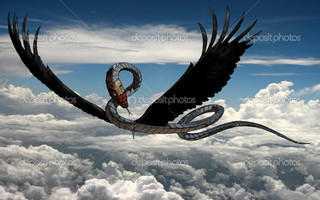
Unique "visual" elements, like sandwolves (ie, they are literally sand-wolves - they show up in sandstorms, and howl in the howling wind!) and flying glass serpents ✓
Strong, intelligent, competent female lead ✓
Intriguing male lead (who happens to be a trickster god!) ✓
a "love" story (dare I say, a triangle, even) that is complex and lacking in foregone conclusions ✓
Memorable-ness ✓
and tension, tension, glorious TENSION ✓
Durst gets stronger with every book, in my opinion, and has become one of my top authors to watch.
[*But seriously, though? I am a gravy MASTER. So full of yumz, you want to pour that shiz on everything.]
I was going to try to rewrite it right then, but then I realized that, though it's not a fairy tale retelling, it has a strong folklore and mythology basis and style to it that actually makes it a really good fit for FTF!
And here we are.
So though it's now been months since I read this, and I'm sure I was dazzlingly witty the first time around, I'm just going to give you guys a quick rundown of why I think this book is awesomesauce, and you should pick it up.
I have to start, of course, with the world building, which is such a stunner that I'm pretty sure it will be what comes to mind first for just about everybody. It was so amazingly strong, detailed and unique; I think Durst really did a knockout job of creating a world that felt complete and utterly fascinating. It manages to be both realistic and completely fantastical; because Durst really built the world from the ground up, history and all, there's a really strong foundation that the story is rooted in, which allows the more fantastical elements to kind of play on top of that. Its strong real-world basis - a culture which felt really believable, with authentic customs, superstitions and interactions and a strong folkloric feel - just lures you right in, and makes you see everything that's going on, and the layering of the mythos on top of that was flawless. And the truly amazing thing, is that all of this fantastic world-building is done with almost no info-dumping. Everything about it just feels so utterly natural - from the first page, you're immediately plunged into this world that just feels right, and you don't event have to think about it. There's no overly-detailed infodump, and there's no confusion - just a beautifully realized world to immerse yourself in. The religion and fantasy elements Durst has created are unique and executed really well, and I think even if I hadn't connected to the characters, I still would have loved this book on the strength of the world alone.
But I did love the characters! The main character, Liyana, is easily one of my absolute fave female leads of recent memory. The same is true of the male lead, Korbyn. I defy you not to love Liyana and Korbyn. But it's not just them - I like even the not-likable characters. All of their interactions; their individual strengths and weaknesses; the way they related to their worlds, religions, clans and each other; they way they fit as pieces in the larger puzzle - all of it worked brilliantly for me. There's a perfect amount of different types of tension (a ticking clock, looming war, romantic tension and the kind that comes when clashing personalities have to work together), and it made for a really compelling reading experience that I could feel. I love it when a book makes me physically feel something.
There was a slight bobble at the end, when things began to feel a little more rushed or just...not as strong as the rest of an otherwise extremely strong book, I guess? But I still endorse it wholeheartedly; it ticks all of my boxes for a stand-out, reread-worthy fantasy:
Compelling world building with a believable real-world basis ✓
Believable, intelligently conceived and carried-out mythology and history ✓
Thoughtfulness and complexity ✓
Unique "visual" elements, like sandwolves (ie, they are literally sand-wolves - they show up in sandstorms, and howl in the howling wind!) and flying glass serpents ✓
Strong, intelligent, competent female lead ✓
Intriguing male lead (who happens to be a trickster god!) ✓
a "love" story (dare I say, a triangle, even) that is complex and lacking in foregone conclusions ✓
Memorable-ness ✓
and tension, tension, glorious TENSION ✓
Durst gets stronger with every book, in my opinion, and has become one of my top authors to watch.
November 15, 2011
How does she do it?! None of Sarah Beth Durst's books are remotely similar in topic or style, yet they are all superb! She's done middle grade fractured fairy tales, contemporary vampire romance, and now this gorgeous fantasy set in a desert world where the gods walk among the tribes. Beautifully descriptive, with an interesting theme of the morality of sacrifice (both being sacrificed and accepting sacrifice).
I even liked the stories within the story! This is my pet peeve: when authors have someone tell a story, and the story is stupid, or doesn't work, or the moral of the story doesn't make sense. There's actually a YA author I cannot stand to read because storytelling figures prominently in their books, and the stories are jarringly stupid. But that is not the case here! Sarah Beth's stories were great, and truly enhanced the narrative. You can tell that she both knows trickster tales and traditional folk tales, and has her own innate sense of writing style.
Just a jewel of a novel!
I even liked the stories within the story! This is my pet peeve: when authors have someone tell a story, and the story is stupid, or doesn't work, or the moral of the story doesn't make sense. There's actually a YA author I cannot stand to read because storytelling figures prominently in their books, and the stories are jarringly stupid. But that is not the case here! Sarah Beth's stories were great, and truly enhanced the narrative. You can tell that she both knows trickster tales and traditional folk tales, and has her own innate sense of writing style.
Just a jewel of a novel!

January 15, 2012
I was surprised that this novel wasn’t more aggressively marketed because it has all the elements necessary for a blockbuster in the book world. I have been waiting for this novel for ages and it did not disappoint. Liyana is an extremely likable protagonist and following her journey is exhilarating and thrilling at times. The mythical world created by Durst is also fascinating with its different ecosystems, tribes, arts and religion. The desert is almost a character in its own right and I believe Durst is able to accurately portray the harsh conditions in which people survive in the desert.
The supporting characters are also well hewed with their own personalities and idiosyncrasies. All the vessels are unique but perhaps I most felt for the vessel-whose-name-I-can’t-remember and her struggle to live even when her soul is in danger of being consumed by the “God” living in her. The mythology is also very well constructed with things being logical and fantastical (see, it’s possible!). What I found really fascinating was the concept of ritual soul death that led to the emptying of the body (thus vessel) into which the God will pour themselves. Korbyn, the trickster God, is the only one of the Gods who manages to correctly fill his vessel but I don’t think the reader is able to forget at any time that the soul and body are different. Korbyn is intriguing – as Gods are wont to be – and though he is much easier to understand than N. K. Jemisin’s Gods, he is still fey and fickle.
His fascination with Liyana and her reciprocating his feelings has the air of a forbidden romance especially when you consider that Liyana is the vessel for Korbyn’s true love. Then you throw in a young Emperor trying to do his best in the circumstances for the people he rules, a nefarious wizard, magic and burgeoning feelings where there should be none. Yes, it is a rollercoaster journey. I loved the ending. I thought it was sufficiently postmodern and tuned in to contemporary expectations instead of traditional. The only thing that detracted from the novel for me was that a very important character, the prince, could have been developed much more than he was. His interactions with several key characters needed more building and depth. That is just a personal thought and other readers may be quite satisfied by the way that relationship is built. All in all, I heartily recommend this fantasy. It’s very entertaining in all the good ways.
The supporting characters are also well hewed with their own personalities and idiosyncrasies. All the vessels are unique but perhaps I most felt for the vessel-whose-name-I-can’t-remember and her struggle to live even when her soul is in danger of being consumed by the “God” living in her. The mythology is also very well constructed with things being logical and fantastical (see, it’s possible!). What I found really fascinating was the concept of ritual soul death that led to the emptying of the body (thus vessel) into which the God will pour themselves. Korbyn, the trickster God, is the only one of the Gods who manages to correctly fill his vessel but I don’t think the reader is able to forget at any time that the soul and body are different. Korbyn is intriguing – as Gods are wont to be – and though he is much easier to understand than N. K. Jemisin’s Gods, he is still fey and fickle.
His fascination with Liyana and her reciprocating his feelings has the air of a forbidden romance especially when you consider that Liyana is the vessel for Korbyn’s true love. Then you throw in a young Emperor trying to do his best in the circumstances for the people he rules, a nefarious wizard, magic and burgeoning feelings where there should be none. Yes, it is a rollercoaster journey. I loved the ending. I thought it was sufficiently postmodern and tuned in to contemporary expectations instead of traditional. The only thing that detracted from the novel for me was that a very important character, the prince, could have been developed much more than he was. His interactions with several key characters needed more building and depth. That is just a personal thought and other readers may be quite satisfied by the way that relationship is built. All in all, I heartily recommend this fantasy. It’s very entertaining in all the good ways.

September 26, 2012
Do not let my three-out-of five rating deceive you, this was a beautiful book, and I enjoyed it immensely. The world was rich in a mythology of its own, which added a touch of history to the culture and background that Durst created.
I appreciated many things in Vessel. The first being that it is a standalone fantasy novel. I've noticed an increasing amount of fantasy series, specifically marketed at a YA audience, and it's been difficult for me to find an enjoyable standalone novel in that genre. I truly recommend this for anyone looking for a fantasy read geared towards a younger audience, although not quite would I call this fantasy-lite per se, as it has more depth in terms of worldbuilding than YA fantasies such as Throne of Glass or even Seraphina . I suppose, for fans of The Emperor's Knife , you would find that Vessel by Sarah Beth Durst lies in the same vein.
Similar to The Emperor's Knife the world of Vessel takes us to a desert land, parched and scorched, although in this novel, we get more of a feel of the wastelands. The world is inhabited by nomad clans, whilst an empire stands upon its borders. In addition to the empire, we also visit five of the many clans, and catch brief glimpses of their different ways of life. The tribes, the peoples, are so different from one another, meaning also a variety of ethnics.
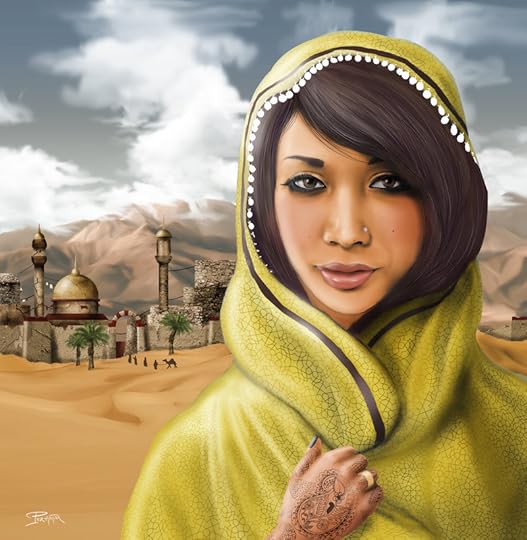
For this, I am truly appreciative of a non-white heroine .
The plot itself keeps us engaged. Although a fair amount of the beginning is spent on travels across barren wastelands, we are still prodded forwards with promises of a greater mystery : someone has stolen the gods and goddesses, preventing them from returning to the world and helping the clans from surviving a century-long drought that has been plaguing them. Who, and why, is up to our heroine and her band to discover.
If you read the synopsis, you may get the impression that this is a romance fantasy. To avoid any disappointments, I feel the need to clarify that, although we are presented with elements of romance -- and a vestige of the all-time dreaded love triangle -- romance is in no way a propelling force of this novel . And for that, I am greatful.
But here, I'm going to have to stop singing praises and get down to what I do best -- griping. I should make it clear that I liked the characters - I liked Korbyn, and I liked Liyana. I could definitely see their interactions leading towards a romance, and their meeting wasn't exactly laced with love-at-first-sight. These are all positive things, of course. However, I was not fully satisfied with the development of their relationship . I felt as if more time and more depth could have gone into their interactions, and more thought processes that went beyond He is so handsome and perfect and good looking and I love the way he laughs would have been preferable before Liyana started falling for him.
As it were, the relationship -- not only between those two in particular, but also between and amongst all the other characters -- seemed rushed and half-hearted.
Since I am on the topic of characters, I should also add that although I liked Liyana as a heroine; although she was resourceful, intelligent, and generally all-round likable, I just couldn't feel her. The same applies to Korbyn, and also to the emperor. I adored Korbyn, I really did. His witticism, his selflessness ... and the fact that he wasn't unbearable as a potential love interest. But I never grew attached to him. I'm not quite sure why, but I never felt connected to any of the characters - which is such a pity, as I liked most of them. Perhaps they felt a little too unreal? A little like fleeting shadows?
My Gripes end there, though. The ending was ...... touching. Sad. I felt as if I could have cried - but not quite there. Again, perhaps because of my investment on the characters weren't as rooted as I would have liked. But there you have it. Perhaps you'll feel more connected than I did; perhaps you'll enjoy it far more than I. At any rate, if you're looking for a quick fantasy read, one with a hint of romance, with adventure and monsters and a heroine who can fend for herself, then you should definitely give this one a chance.
I appreciated many things in Vessel. The first being that it is a standalone fantasy novel. I've noticed an increasing amount of fantasy series, specifically marketed at a YA audience, and it's been difficult for me to find an enjoyable standalone novel in that genre. I truly recommend this for anyone looking for a fantasy read geared towards a younger audience, although not quite would I call this fantasy-lite per se, as it has more depth in terms of worldbuilding than YA fantasies such as Throne of Glass or even Seraphina . I suppose, for fans of The Emperor's Knife , you would find that Vessel by Sarah Beth Durst lies in the same vein.
Similar to The Emperor's Knife the world of Vessel takes us to a desert land, parched and scorched, although in this novel, we get more of a feel of the wastelands. The world is inhabited by nomad clans, whilst an empire stands upon its borders. In addition to the empire, we also visit five of the many clans, and catch brief glimpses of their different ways of life. The tribes, the peoples, are so different from one another, meaning also a variety of ethnics.
For this, I am truly appreciative of a non-white heroine .
The plot itself keeps us engaged. Although a fair amount of the beginning is spent on travels across barren wastelands, we are still prodded forwards with promises of a greater mystery : someone has stolen the gods and goddesses, preventing them from returning to the world and helping the clans from surviving a century-long drought that has been plaguing them. Who, and why, is up to our heroine and her band to discover.
If you read the synopsis, you may get the impression that this is a romance fantasy. To avoid any disappointments, I feel the need to clarify that, although we are presented with elements of romance -- and a vestige of the all-time dreaded love triangle -- romance is in no way a propelling force of this novel . And for that, I am greatful.
But here, I'm going to have to stop singing praises and get down to what I do best -- griping. I should make it clear that I liked the characters - I liked Korbyn, and I liked Liyana. I could definitely see their interactions leading towards a romance, and their meeting wasn't exactly laced with love-at-first-sight. These are all positive things, of course. However, I was not fully satisfied with the development of their relationship . I felt as if more time and more depth could have gone into their interactions, and more thought processes that went beyond He is so handsome and perfect and good looking and I love the way he laughs would have been preferable before Liyana started falling for him.
As it were, the relationship -- not only between those two in particular, but also between and amongst all the other characters -- seemed rushed and half-hearted.
Since I am on the topic of characters, I should also add that although I liked Liyana as a heroine; although she was resourceful, intelligent, and generally all-round likable, I just couldn't feel her. The same applies to Korbyn, and also to the emperor. I adored Korbyn, I really did. His witticism, his selflessness ... and the fact that he wasn't unbearable as a potential love interest. But I never grew attached to him. I'm not quite sure why, but I never felt connected to any of the characters - which is such a pity, as I liked most of them. Perhaps they felt a little too unreal? A little like fleeting shadows?
My Gripes end there, though. The ending was ...... touching. Sad. I felt as if I could have cried - but not quite there. Again, perhaps because of my investment on the characters weren't as rooted as I would have liked. But there you have it. Perhaps you'll feel more connected than I did; perhaps you'll enjoy it far more than I. At any rate, if you're looking for a quick fantasy read, one with a hint of romance, with adventure and monsters and a heroine who can fend for herself, then you should definitely give this one a chance.

December 8, 2011
4.5 stars.
Holy crap, this book is amazeballs!
I have no idea why this book hasn’t received more hype than it did. I mean, there was a big rush of it when the cover first came out but then as the months went on, the chatter died down.
And that cover. Omg, that cover. Lemme salivate for a moment…

It’s one of the most GORGEOUS COVERS EVER! I swear! Holy shizz. I want to have a huge giant poster of it plastered on my wall. It’s THAT awesome.
Guys, I want to tell you how much I loved this book. It’s so awesome. The first thing that’s great? The world building! Okay, no it’s not maybe like, you know, George R.R. Martin or Tolkien style, but it’s still awesome. The way she crafted the desert lands and the monsters that roam them is so engaging, you are immediately immersed into it. I can feel the scorching heat, the grind of sand against skin, and the sweat that drips off my body. This is so wonderfully thought out and unique and original compared to the masses of generic medieval Europe type of setting. Even the clans have their own set of values, beliefs, and behaviors that can be a cause of conflict, concern, or admiration within them.
There are a lot of main characters in this story but they all shine and don’t become similar to the other. I was able to connect with each of them, even the gods! They all present different sort of views regarding their duty as a vessel and the author manages to deftly stay away from making them into clichéd tropes and realize them as actual characters that have emotions that live and breathe on the page. Even the bad guys in this story are developed so as not to be stock. I loved Liyana’s character growth. She can be soft, quiet, determined and driven, but also brutal and ruthless (a very good descriptor another/other reviewers have said) when she needs to be. I’m so happy she’s not a weak spined creature that gets jolted around by the plot and the administrations of men. And the way she develops from a character that acquiesces to what tradition tells her to do and into someone who realizes her own needs and wants but is always mindful of her clan and the people around her is just awesome.
The plot it just wow. There is no boredom here. It’s one smooth, swift journey that just builds and builds to the climax. And when you think the book is going to stray into the ho-hum of predictability it veers off in another direction you never expected. The ending of this story? Fabulous. I can’t tell you how much I enjoyed it. Instead of giving us the fluffy and expected, the author totally throws everything out the window and turns it into a logical, realistic, that’s perfect for the story.
So in other words? READ IT. READ IT NOW! It’s just too good for you to pass up!
Holy crap, this book is amazeballs!
I have no idea why this book hasn’t received more hype than it did. I mean, there was a big rush of it when the cover first came out but then as the months went on, the chatter died down.
And that cover. Omg, that cover. Lemme salivate for a moment…
It’s one of the most GORGEOUS COVERS EVER! I swear! Holy shizz. I want to have a huge giant poster of it plastered on my wall. It’s THAT awesome.
Guys, I want to tell you how much I loved this book. It’s so awesome. The first thing that’s great? The world building! Okay, no it’s not maybe like, you know, George R.R. Martin or Tolkien style, but it’s still awesome. The way she crafted the desert lands and the monsters that roam them is so engaging, you are immediately immersed into it. I can feel the scorching heat, the grind of sand against skin, and the sweat that drips off my body. This is so wonderfully thought out and unique and original compared to the masses of generic medieval Europe type of setting. Even the clans have their own set of values, beliefs, and behaviors that can be a cause of conflict, concern, or admiration within them.
There are a lot of main characters in this story but they all shine and don’t become similar to the other. I was able to connect with each of them, even the gods! They all present different sort of views regarding their duty as a vessel and the author manages to deftly stay away from making them into clichéd tropes and realize them as actual characters that have emotions that live and breathe on the page. Even the bad guys in this story are developed so as not to be stock. I loved Liyana’s character growth. She can be soft, quiet, determined and driven, but also brutal and ruthless (a very good descriptor another/other reviewers have said) when she needs to be. I’m so happy she’s not a weak spined creature that gets jolted around by the plot and the administrations of men. And the way she develops from a character that acquiesces to what tradition tells her to do and into someone who realizes her own needs and wants but is always mindful of her clan and the people around her is just awesome.
The plot it just wow. There is no boredom here. It’s one smooth, swift journey that just builds and builds to the climax. And when you think the book is going to stray into the ho-hum of predictability it veers off in another direction you never expected. The ending of this story? Fabulous. I can’t tell you how much I enjoyed it. Instead of giving us the fluffy and expected, the author totally throws everything out the window and turns it into a logical, realistic, that’s perfect for the story.
So in other words? READ IT. READ IT NOW! It’s just too good for you to pass up!

July 21, 2015
3,5
On the day she was to die, Liyana walked out of her family’s tent to see the dawn.

The people of the desert believe that every hundred years the gods/deities choose someone in their clans, a human vessel, to walk again.
Lyana is the vessel of the Goat Clan, but at her ceremony the goddess fails to appear. That. Is. Not. Good. The goddess means WATER, food, and the life of the clan.
Alas, is not that simple.
Original world building. Strong and practical heroine (believe or not)
So, what is lacking? Well, she thinks, she walks, she ride, she does. But she don't feel. Everything is entertaining, but is difficult to feel in depth with this book. Like a tale, and not a novel.
I like the other characters too, Korby (the trickster no one wants to believe), Pia, Fennick, Raam
The ending is a litle rushed as well.
----------------------
Pensaba encontrarme con algo semejante a Destiny's Star, pero no, lo único que tienen en común es la magia, caballos y curanderos.
A pesar de que hay algunos avances chico/chica, ese no es el nudo central de la historia. Sino los dioses y sus avatares, un modo de vida conservado por cientos de años. El cuestionamiento de las creencias, y como la tradición se conserva en las historias considerados mitos.
Lo que me gustó de Lyana es que a pesar del inevitable ser 'especial' de toda heroina, no es super omniciente, ni cae en eso de '¡todo esto es mi culpa!', de que adolecen gran cantidad de protagonistas femeninas en fantasia ultimamente y que dan ganas de darle un par y decirle: no todo es acerca de ti.
El fin si me parece demasiado arreglado. y me hubiera gustado algo más de drama (y es increible que yo diga eso)
Entretiene. Give it a try.
On the day she was to die, Liyana walked out of her family’s tent to see the dawn.
The people of the desert believe that every hundred years the gods/deities choose someone in their clans, a human vessel, to walk again.
Lyana is the vessel of the Goat Clan, but at her ceremony the goddess fails to appear. That. Is. Not. Good. The goddess means WATER, food, and the life of the clan.
“It sickens me,” Raan said. “Killing people so they can play at being human.”
Pia clucked her tongue but didn’t quit brushing her hair. “Without the gods, we’d perish. We need them to revitalize our clans — to fill our wells, bring life to our herds, and instill health in our children.”
Or we could simply move somewhere we don’t need gods,” Raan said. “Move to where there’s water. And fertile land. Leave the desert.”
Alas, is not that simple.
Original world building. Strong and practical heroine (believe or not)
So, what is lacking? Well, she thinks, she walks, she ride, she does. But she don't feel. Everything is entertaining, but is difficult to feel in depth with this book. Like a tale, and not a novel.
I like the other characters too, Korby (the trickster no one wants to believe), Pia, Fennick, Raam
The ending is a litle rushed as well.
----------------------
Pensaba encontrarme con algo semejante a Destiny's Star, pero no, lo único que tienen en común es la magia, caballos y curanderos.
A pesar de que hay algunos avances chico/chica, ese no es el nudo central de la historia. Sino los dioses y sus avatares, un modo de vida conservado por cientos de años. El cuestionamiento de las creencias, y como la tradición se conserva en las historias considerados mitos.
Lo que me gustó de Lyana es que a pesar del inevitable ser 'especial' de toda heroina, no es super omniciente, ni cae en eso de '¡todo esto es mi culpa!', de que adolecen gran cantidad de protagonistas femeninas en fantasia ultimamente y que dan ganas de darle un par y decirle: no todo es acerca de ti.
El fin si me parece demasiado arreglado. y me hubiera gustado algo más de drama (y es increible que yo diga eso)
Entretiene. Give it a try.

May 24, 2013
I am kind of a sucker for lore, and folklore, so i really liked this book for the believable world that was built. I think it could have used a bit more pacing, but overall, I really thought it was original, no vampires, yay!
This is set in a fantasy world with a nomadic people who sacrifice a child to be a "vessel" for the gods to come back to the earth (the gods take over their bodies), but Liyana, when they try to sacrifice her, doesn't disappear and become a goddess. This is a huge shame on her family, but part of a bigger story that's happening with the gods and the Clans around. Liyana is meant to die for her shame, but she survives due to help and unveils the greater plot against her people (which, of course she helps fight!)
I loved the storytelling here, it reminded me a lot of a YA Hundred Thousand Kingdoms by NK Jemisin. Amazingly detailed and very folklore-ish. If you think about the plot TOO HARD it...isn't good, haha, and the first 1/3 is definitely the strongest, but still, I really enjoyed it and recommend it for a change of pace from your average fantasy world.
This is set in a fantasy world with a nomadic people who sacrifice a child to be a "vessel" for the gods to come back to the earth (the gods take over their bodies), but Liyana, when they try to sacrifice her, doesn't disappear and become a goddess. This is a huge shame on her family, but part of a bigger story that's happening with the gods and the Clans around. Liyana is meant to die for her shame, but she survives due to help and unveils the greater plot against her people (which, of course she helps fight!)
I loved the storytelling here, it reminded me a lot of a YA Hundred Thousand Kingdoms by NK Jemisin. Amazingly detailed and very folklore-ish. If you think about the plot TOO HARD it...isn't good, haha, and the first 1/3 is definitely the strongest, but still, I really enjoyed it and recommend it for a change of pace from your average fantasy world.

December 14, 2012
4.5
Gods, Sacrifice, love and adventure all blend together in this wonderful fantasy. it follows an amazing heroine as she struggles to make a sacrifice to save her people.She meets and grows to know many gods, people and hear their stories. There is a lot of myth/story sharing which I loved.
Liyanna, she never weekend her beliefs, she does not cower in fear she charges into action even when all seems hopeless. She walks with the Trickster god- Raven, a fascinating man/god to spend time with. She is strong, smart and loyal. She had me cheering, sifting and laughing, just a fantastic character.
There is a bit of a love triangle but it is not what you have read before. This is an intelligent book with intelligent characters. Duty. logic and loyalty are at work here. I think it is a true unselfish love I wish we would see more of in books.
I loved it, I will search out books from this author in the future.
Gods, Sacrifice, love and adventure all blend together in this wonderful fantasy. it follows an amazing heroine as she struggles to make a sacrifice to save her people.She meets and grows to know many gods, people and hear their stories. There is a lot of myth/story sharing which I loved.
Liyanna, she never weekend her beliefs, she does not cower in fear she charges into action even when all seems hopeless. She walks with the Trickster god- Raven, a fascinating man/god to spend time with. She is strong, smart and loyal. She had me cheering, sifting and laughing, just a fantastic character.
There is a bit of a love triangle but it is not what you have read before. This is an intelligent book with intelligent characters. Duty. logic and loyalty are at work here. I think it is a true unselfish love I wish we would see more of in books.
I loved it, I will search out books from this author in the future.

September 10, 2012
Once every hundred years, the desert clans’ gods come to walk among them. One young man or woman from each clan is chosen to serve as the vessel for that clan’s deity. The human soul dies and returns to the Dreaming, while the god takes over the body. Now incarnate in the vessel’s body, the god works magic to help keep the clan alive in the harsh conditions of the desert.
Liyana has known for years that she is destined to be the vessel for the goddess Bayla. But Bayla never shows up. Believing the goddess has found Liyana unworthy, her clan abandons her to the elements, but soon she is found by the incarnate god Korbyn, who has shocking news for her. Five of the desert deities have been magically imprisoned, including Bayla, hence why she never appeared to claim Liyana’s body.
Now Liyana must help Korbyn find the other four vessels, traveling across the desert to the encampments of the other four clans, each of which reacts in a different way to its deity’s non-appearance. Once they’ve done that, they must learn where the deities are trapped and free them. This mission returns purpose to Liyana’s life, but it’s a bittersweet one, because if she succeeds it means sacrificing herself to Bayla. What’s more, Korbyn has personal reasons to wish for Bayla’s return.
Liyana evolves as a character throughout the novel. She starts out resigned to her fate (if not quite ready for it), actually becomes pretty ruthless for a little while in her determination to get the other vessels on board with the plan, and then begins to realize she doesn’t want to die. And to wonder if everything she’s been taught about the gods is accurate. The eventual resolution is carefully set up; Sarah Beth Durst gradually introduces similar situations to the reader so that the plan the characters try at the climax feels like a believable next step rather than a deus ex machina.
Durst spins a plot full of adventure and poignant tragedy (there are a couple of deaths that just knocked the wind out of me) and hope, and sets it in a wonderfully creative world. It’s a world not only of gods wearing human flesh, but sand-wolves and giant salt-worms and sky serpents made of glass that can cut through anything. The prose fully engages the senses, bringing to life the beauty of a gown or the terrifying maw of a sand-wolf. And at times it’s funny:
“Bayla, is this how you’ll kill me?” she asked out loud. “There are easier ways. You could send another snake. I am sorry I ate the first one.” Hearing her own voice made her feel braver. “He was delicious, though.”
There’s a romantic element to the novel, even a few overlapping love triangles, but Durst keeps a good balance between romance and the rest of the story. Then, in the romantic relationship that turns out to be the central one, I’m reminded of the romance from Durst’s earlier book Ice in that the most important aspect of the relationship is the partnership between the characters in their pursuit of a shared goal, rather than the swoony feelings of infatuation (which are fun, of course, but won’t sustain a relationship in the long term).
Vessel is one of the best and most creative novels I’ve read this year. It swept me away, kept me on the edge of my seat, and occasionally punched me in the gut. I highly recommend it to YA and adult readers.
www.fantasyliterature.com
Liyana has known for years that she is destined to be the vessel for the goddess Bayla. But Bayla never shows up. Believing the goddess has found Liyana unworthy, her clan abandons her to the elements, but soon she is found by the incarnate god Korbyn, who has shocking news for her. Five of the desert deities have been magically imprisoned, including Bayla, hence why she never appeared to claim Liyana’s body.
Now Liyana must help Korbyn find the other four vessels, traveling across the desert to the encampments of the other four clans, each of which reacts in a different way to its deity’s non-appearance. Once they’ve done that, they must learn where the deities are trapped and free them. This mission returns purpose to Liyana’s life, but it’s a bittersweet one, because if she succeeds it means sacrificing herself to Bayla. What’s more, Korbyn has personal reasons to wish for Bayla’s return.
Liyana evolves as a character throughout the novel. She starts out resigned to her fate (if not quite ready for it), actually becomes pretty ruthless for a little while in her determination to get the other vessels on board with the plan, and then begins to realize she doesn’t want to die. And to wonder if everything she’s been taught about the gods is accurate. The eventual resolution is carefully set up; Sarah Beth Durst gradually introduces similar situations to the reader so that the plan the characters try at the climax feels like a believable next step rather than a deus ex machina.
Durst spins a plot full of adventure and poignant tragedy (there are a couple of deaths that just knocked the wind out of me) and hope, and sets it in a wonderfully creative world. It’s a world not only of gods wearing human flesh, but sand-wolves and giant salt-worms and sky serpents made of glass that can cut through anything. The prose fully engages the senses, bringing to life the beauty of a gown or the terrifying maw of a sand-wolf. And at times it’s funny:
“Bayla, is this how you’ll kill me?” she asked out loud. “There are easier ways. You could send another snake. I am sorry I ate the first one.” Hearing her own voice made her feel braver. “He was delicious, though.”
There’s a romantic element to the novel, even a few overlapping love triangles, but Durst keeps a good balance between romance and the rest of the story. Then, in the romantic relationship that turns out to be the central one, I’m reminded of the romance from Durst’s earlier book Ice in that the most important aspect of the relationship is the partnership between the characters in their pursuit of a shared goal, rather than the swoony feelings of infatuation (which are fun, of course, but won’t sustain a relationship in the long term).
Vessel is one of the best and most creative novels I’ve read this year. It swept me away, kept me on the edge of my seat, and occasionally punched me in the gut. I highly recommend it to YA and adult readers.
www.fantasyliterature.com

August 3, 2013
Vessel is a book that seems so predictable at first that you seem to have all the cards about the story laid down.
You know who the bad guy is.
You know how the romance will phase out.
You can guess what the big mystery is.
You can predict how the characters are going to act throughout the book.
Aaand, you will probably be correct about that. Until the shit hits the fan, that is.
Vessel has everything one would want out of a fantasy YA book - a tough female protagonist, a sarcastic cocky hero, a well developed world, side characters whose personalities do not resemble a lamp and a journey across the vast unknown lands in a quest that seems impossible. And it does this quite beautifully.
So what sets this book apart from the rest of its brethren?
The Writing. Sarah Beth Durst is a miracle worker with words. Her description of things, be it Liyana's dance to summon the goddess, or the details in the simple things in the world around them - it was done wonderfully and smoothly. The dialogues were witty and engaging, the characters themselves well defined and interesting.
But the best part of the writing were the plottwists and how the fact that we had just been thrown a shocker of an info would not be clear to us until in hindsight. It all had been woven so beautifully to the narration that it did not seem sudden or surprising at alluntil you would find yourself in the middle of the night turning toward the ceiling and chanting 'Fuck. Fuck. Fuck.' like its some sort of a prayer to reclaim your sanity.
Liyana was one of the best female protagonists I have ever read about. She was beautiful and fierce and had a decidedly practical streak that made her a survivor at its best and a ruthless opportunist at its worst. And I loved her for it. Her feelings for Korbyn, her loyalty to her goddess Bayla, her dedication to the mission and her strength to accomplish it was apparent in every word of the book. It shaped her character and her decisions. She was not afraid to take chances and could handle anything that was thrown at her. She was bloody amazing.
And Korbyn, the trickster god. The lying raven. The god nobody trusts, save Liyana. Who is leading the vessels on the way to find their lost gods and yet is more lost than all of them. He hides behind his facade, his sarcasm and his snark but is afraid of failing all the same. His love for Bayla and later his feelings for Liyana show us another more honest side of him that we do not see very often, and is more precious because of that.
The secondary characters, Pia, Fennik, Raan as well as the gods had their own space and were wonderful. The Emperor especially was another character I loved - though not as much as Korbyn - his motives and his dedication to his Empire seen in his every step.
The plot was mindblowing. I actually dislike books that are too predictable, which Vessel is not. Yup, ya heard me. To a point it follows the stereotype and then at some point in the it breaks off from the expectedness. And boy does it ever break off..
I.
Totally.
Loved.
This.
Book.
Totally unexpected. Totally amazing. Perfect. I can find no flaws - yet.
5 Stars
Probably the best book I've read in 2013 so far. And trust me, I've read many.
You know who the bad guy is.
You know how the romance will phase out.
You can guess what the big mystery is.
You can predict how the characters are going to act throughout the book.
Aaand, you will probably be correct about that. Until the shit hits the fan, that is.
Vessel has everything one would want out of a fantasy YA book - a tough female protagonist, a sarcastic cocky hero, a well developed world, side characters whose personalities do not resemble a lamp and a journey across the vast unknown lands in a quest that seems impossible. And it does this quite beautifully.
So what sets this book apart from the rest of its brethren?
The Writing. Sarah Beth Durst is a miracle worker with words. Her description of things, be it Liyana's dance to summon the goddess, or the details in the simple things in the world around them - it was done wonderfully and smoothly. The dialogues were witty and engaging, the characters themselves well defined and interesting.
But the best part of the writing were the plottwists and how the fact that we had just been thrown a shocker of an info would not be clear to us until in hindsight. It all had been woven so beautifully to the narration that it did not seem sudden or surprising at all
Liyana was one of the best female protagonists I have ever read about. She was beautiful and fierce and had a decidedly practical streak that made her a survivor at its best and a ruthless opportunist at its worst. And I loved her for it. Her feelings for Korbyn, her loyalty to her goddess Bayla, her dedication to the mission and her strength to accomplish it was apparent in every word of the book. It shaped her character and her decisions. She was not afraid to take chances and could handle anything that was thrown at her. She was bloody amazing.
And Korbyn, the trickster god. The lying raven. The god nobody trusts, save Liyana. Who is leading the vessels on the way to find their lost gods and yet is more lost than all of them. He hides behind his facade, his sarcasm and his snark but is afraid of failing all the same. His love for Bayla and later his feelings for Liyana show us another more honest side of him that we do not see very often, and is more precious because of that.
The secondary characters, Pia, Fennik, Raan as well as the gods had their own space and were wonderful. The Emperor especially was another character I loved - though not as much as Korbyn - his motives and his dedication to his Empire seen in his every step.
The plot was mindblowing. I actually dislike books that are too predictable, which Vessel is not. Yup, ya heard me. To a point it follows the stereotype and then at some point in the it breaks off from the expectedness. And boy does it ever break off..
I.
Totally.
Loved.
This.
Book.
Totally unexpected. Totally amazing. Perfect. I can find no flaws - yet.
5 Stars
Probably the best book I've read in 2013 so far. And trust me, I've read many.
September 23, 2012
Meh. Another book I expected to love based on the cover and story blurb, but ended up being disappointed by. The funny thing is that the story itself is actually rather good.
A teenage girl has been raised to sacrifice herself to her dessert clan's goddess - allowing the goddess to come to life and save the people from drought. But when the clan performs the ceremony the goddess doesn't show up. The girl goes on a journey to find the abandoned vessels of the other dessert clans and together they face the Crescent Empire and the man who stole their gods. Only when they find him, he's not evil, just desperate to save his own people.
Sounds fun right? But the whole thing lacked luster. The dessert world was beautifully described, but the world-building had HUGE holes in it (Huge, huge, huge). The characters were rather shallow. The 'Gods' were your basic teenage arch-types, and I never quite believed that all these people would really let a teenage girl with no experience tell them what to do.
The Emperor's name drove me nuts too. Jarlath. It's a derivative of Corlath, the king in Robin McKinley's The Blue Sword (which the author states as a heavy influence). Jarlath just doesn't work for me though. I read it as Jughead EVERY time. Jarlath also never had much of a personality to me. He was one of the most interesting characters in the book, but he was totally forgettable. (unlike the original Corlath)
And lastly, the writing itself. It was plain to the point of boring. No rhythm, cadence, beauty. I kept wondering if it was just too young and the problem was me, but I don't think so. Many, many YA novels have lovely, sophisticated language.
So while I finished the book and it had a lot of promise, at the end this fell way short of being a great story.
A teenage girl has been raised to sacrifice herself to her dessert clan's goddess - allowing the goddess to come to life and save the people from drought. But when the clan performs the ceremony the goddess doesn't show up. The girl goes on a journey to find the abandoned vessels of the other dessert clans and together they face the Crescent Empire and the man who stole their gods. Only when they find him, he's not evil, just desperate to save his own people.
Sounds fun right? But the whole thing lacked luster. The dessert world was beautifully described, but the world-building had HUGE holes in it (Huge, huge, huge). The characters were rather shallow. The 'Gods' were your basic teenage arch-types, and I never quite believed that all these people would really let a teenage girl with no experience tell them what to do.
The Emperor's name drove me nuts too. Jarlath. It's a derivative of Corlath, the king in Robin McKinley's The Blue Sword (which the author states as a heavy influence). Jarlath just doesn't work for me though. I read it as Jughead EVERY time. Jarlath also never had much of a personality to me. He was one of the most interesting characters in the book, but he was totally forgettable. (unlike the original Corlath)
And lastly, the writing itself. It was plain to the point of boring. No rhythm, cadence, beauty. I kept wondering if it was just too young and the problem was me, but I don't think so. Many, many YA novels have lovely, sophisticated language.
So while I finished the book and it had a lot of promise, at the end this fell way short of being a great story.

Want to Read
December 28, 2011Glass serpents AND sand wolves? WHY DON'T I HAVE THIS ALREADY?!

February 15, 2013
Spoilers
-This was sort of a decent read. The premise and worldbuilding were great… they're the only reasons why I rated it 3 stars. The characters however were a huge let down. The heroine was really boring and so were the majority of the side characters.
-I liked the whole setting of the desert — it was described in a simple yet powerful way. I expected the writing to come across as overly flowery and lyrical but thankfully, that wasn't the case.
I absolutely loved the fables and tales that were told throughout the story — it was one of the best aspects of the book.
-Vessel revolved around a young girl (Liyana) who had to sacrifice herself so that her goddess (Bayla) could have use of a mortal body. When Liyana's soul would leave, Bayla would enter Liyana's 'empty' body and become mortal… it was all very engrossing. And there was even a legitimate reason for the sacrifice (I hate it when characters have to be martyrs for no good reason)… The only way for Liyana's clan to survive was for Bayla to become mortal so she could walk amongst them and use her magic to help with their day to day survival. I thought the whole concept was brilliant but sadly, there were a number of elements that really irritated me.
-When Liyana's goddess failed to show, Liyana was kicked out of her clan and left to survive the deadly desert on her own. It was a harsh and unfair punishment and I was angry that they fucked her over - I was expecting a showdown and maybe some revenge but sadly, it went in a different and less impactful direction.
-It was such a promising start but it went down hill rather fast. The main reason being, Liyana. I couldn't relate to her after the first few pages. Some characters I can't relate to yet am still able to enjoy them and be entertained by them if they have interesting enough personalities… Unfortunately, Liyana was positively dull.
-Liyana, the poor cow had to die and let some foreign entity take over her body yet instead of feeling some sense of doom and desperation about her fate, she felt very little at all. She had the emotional range of a plank of wood. Where was her fear? Where was her panic? Where was her anger and bitterness? Where was her rebellion? Sure, I could forgive her attitude to a certain extent since she'd been raised to think her sacrifice was an honour but she had so little emotion about the whole thing that I was actually kind of flabbergasted.
She was dying and leaving her family and her home forever, she'd never have a chance to have her own kids, never fall in love, never be remembered for anything other than her death… So I think it was only fair to expect some level of conflict and fear — but there was NOTHING. Where was her regret and craving for life? Where was her injustice at having to give up her life? She should have felt bitterness and anger instead she only felt slightly sad — as if her favourite dessert had run out rather than her life was about to end.
Also, when Liyana's goddess failed to take over her body, I expected her to be relieved that she was alive but instead she was mostly upset, apologetic and pissed at not dying. It was infuriating. If the protagonist doesn't give a shit about their own life, then why the hell would I?
I hate the martyr type characters, especially the ones that give up their life for people who 1. Wouldn't do the same for them and 2. Treat them like rubbish.
-Anyway, Liyana meets Korbyn (a god) and finds out that there are other desert clans having the same problems with their vessels. Korbyn and Liyana investigate and try to reach the other clans to warn them that their gods are missing… So basically the bulk of the story turned into a long boring journey with characters going from A to B to C. I didn't like it. I hate it when most of a story is comprised of characters traveling from place to place. I find it incomplex and uninspired.
-I was hoping that when Liyana met the other vessels they would show more personality. I wanted to meet vessels that were outraged at having to give up their lives — unfortunately most of them had the same if not worse beliefs that Liyana had. There was only one character (Raan) that reacted in a realistic and satisfying way.
-As I said before, Liyana was a dull character. She was too serious, too good and too much of a martyr.
I just can't connect with someone so self sacrificing.
-Bayla and Korbyn were decent enough characters - I mainly liked them because of their romance (even though very little was shown of it). I hated that Korbyn fell for boring Liyana… Why would he like bland Liyana when Bayla was more endearing and complex?
-I didn't care about Fennik or Pia, they were flat and pointless.
Raan was by far the best character - I loved her anger at having to give up her life. She was the only one that reacted in what I felt was a genuine and relatable way - I would have enjoyed Vessel more if she had narrated instead of Liyana.
-The arc with the missing gods had potential but was ruined by rubbish characters, it would have been more exciting if the characters had charm and complexity… And also if there had been less repetition in regard to Liyana and co journeying from one clan to the other.
I did figure out fairly early on who was behind the missing gods but I didn't clock on to the why of it… so yea, points for that.
-Oh and I didn't like the emperor stuff.
All in all, I was somewhat entertained by the premise, the writing and the worldbuilding but ultimately I had a hard time investing in the story because the characters lacked depth, attitude and realism.
-This was sort of a decent read. The premise and worldbuilding were great… they're the only reasons why I rated it 3 stars. The characters however were a huge let down. The heroine was really boring and so were the majority of the side characters.
-I liked the whole setting of the desert — it was described in a simple yet powerful way. I expected the writing to come across as overly flowery and lyrical but thankfully, that wasn't the case.
I absolutely loved the fables and tales that were told throughout the story — it was one of the best aspects of the book.
-Vessel revolved around a young girl (Liyana) who had to sacrifice herself so that her goddess (Bayla) could have use of a mortal body. When Liyana's soul would leave, Bayla would enter Liyana's 'empty' body and become mortal… it was all very engrossing. And there was even a legitimate reason for the sacrifice (I hate it when characters have to be martyrs for no good reason)… The only way for Liyana's clan to survive was for Bayla to become mortal so she could walk amongst them and use her magic to help with their day to day survival. I thought the whole concept was brilliant but sadly, there were a number of elements that really irritated me.
-When Liyana's goddess failed to show, Liyana was kicked out of her clan and left to survive the deadly desert on her own. It was a harsh and unfair punishment and I was angry that they fucked her over - I was expecting a showdown and maybe some revenge but sadly, it went in a different and less impactful direction.
-It was such a promising start but it went down hill rather fast. The main reason being, Liyana. I couldn't relate to her after the first few pages. Some characters I can't relate to yet am still able to enjoy them and be entertained by them if they have interesting enough personalities… Unfortunately, Liyana was positively dull.
-Liyana, the poor cow had to die and let some foreign entity take over her body yet instead of feeling some sense of doom and desperation about her fate, she felt very little at all. She had the emotional range of a plank of wood. Where was her fear? Where was her panic? Where was her anger and bitterness? Where was her rebellion? Sure, I could forgive her attitude to a certain extent since she'd been raised to think her sacrifice was an honour but she had so little emotion about the whole thing that I was actually kind of flabbergasted.
She was dying and leaving her family and her home forever, she'd never have a chance to have her own kids, never fall in love, never be remembered for anything other than her death… So I think it was only fair to expect some level of conflict and fear — but there was NOTHING. Where was her regret and craving for life? Where was her injustice at having to give up her life? She should have felt bitterness and anger instead she only felt slightly sad — as if her favourite dessert had run out rather than her life was about to end.
Also, when Liyana's goddess failed to take over her body, I expected her to be relieved that she was alive but instead she was mostly upset, apologetic and pissed at not dying. It was infuriating. If the protagonist doesn't give a shit about their own life, then why the hell would I?
I hate the martyr type characters, especially the ones that give up their life for people who 1. Wouldn't do the same for them and 2. Treat them like rubbish.
-Anyway, Liyana meets Korbyn (a god) and finds out that there are other desert clans having the same problems with their vessels. Korbyn and Liyana investigate and try to reach the other clans to warn them that their gods are missing… So basically the bulk of the story turned into a long boring journey with characters going from A to B to C. I didn't like it. I hate it when most of a story is comprised of characters traveling from place to place. I find it incomplex and uninspired.
-I was hoping that when Liyana met the other vessels they would show more personality. I wanted to meet vessels that were outraged at having to give up their lives — unfortunately most of them had the same if not worse beliefs that Liyana had. There was only one character (Raan) that reacted in a realistic and satisfying way.
-As I said before, Liyana was a dull character. She was too serious, too good and too much of a martyr.
I just can't connect with someone so self sacrificing.
-Bayla and Korbyn were decent enough characters - I mainly liked them because of their romance (even though very little was shown of it). I hated that Korbyn fell for boring Liyana… Why would he like bland Liyana when Bayla was more endearing and complex?
-I didn't care about Fennik or Pia, they were flat and pointless.
Raan was by far the best character - I loved her anger at having to give up her life. She was the only one that reacted in what I felt was a genuine and relatable way - I would have enjoyed Vessel more if she had narrated instead of Liyana.
-The arc with the missing gods had potential but was ruined by rubbish characters, it would have been more exciting if the characters had charm and complexity… And also if there had been less repetition in regard to Liyana and co journeying from one clan to the other.
I did figure out fairly early on who was behind the missing gods but I didn't clock on to the why of it… so yea, points for that.
-Oh and I didn't like the emperor stuff.
All in all, I was somewhat entertained by the premise, the writing and the worldbuilding but ultimately I had a hard time investing in the story because the characters lacked depth, attitude and realism.

January 20, 2013
3.5 stars. Vessel is the very best of young adult high fantasy - it's a thrilling and creative adventure with wonderful worldbuilding and a protagonist that is intelligent, sensible and extremely likeable. Actually, even the fact that this is young adult high fantasy, rather than paranormal or supernatural, wins brownie points; I can't remember the last time I'd read a good fantasy novel that didn't try to involve fae, vampires, werewolves and the like. Had the romance portion not left me ultimately disappointed (particularly since it is such a key part of the story), I would be inclined to rate this book even higher.
I love that Vessel departs from the Eurocentric setting that is the norm for young adult fantasy novels and takes us to a rich and vivid desert world where multiple clans fight to survive. Sarah Beth Durst has an incredible talent for transporting the reader to the desert and showing us both its beauty and dangers. Even more impressive is the fascinating mythology and magic that seems to be just another part of the desert people - the magic system is intricate, but is so well-grounded in the story that it feels almost... logical.
Our protagonist, Liyana, is really one-of-a-kind as far as recent young adult fantasy novels are concerned. She is beautiful, as vessels are supposed to be, but more importantly she is a survivor. She is intelligent, resourceful and so, so practical. It's frankly awesome how she takes things in stride, and I loved her development arc throughout the book as she learns that despite her love for her goddess, Bayla, and her clan, she loves life and her freedom enough to fight for both at the same time rather than forced to become an empty vessel.
Considering how important it is as a catalyst for Liyana's discovery of herself (as cliche as that sounds, it's fairly apt here), it's really a shame that the romance ended in such a disappointing manner. And I don't mean that I was unhappy at who ended up with whom, but the fact that it was "resolved" in such a slipshod manner.
It's really a shame that the romance could not have been more satisfactorily resolved, because it is so key to the development and ultimate happiness of Liyana. When a book ends with a tinge of disappointment, it really does colour one's perception. Despite this, Vessel remains a stellar example of young adult high fantasy with a world that inspires the imagination. I hope more authors consider expanding outwards from European-inspired settings and characters; Sarah Beth Durst proves with Vessel that it is perfectly possible and can have outstanding results.
I love that Vessel departs from the Eurocentric setting that is the norm for young adult fantasy novels and takes us to a rich and vivid desert world where multiple clans fight to survive. Sarah Beth Durst has an incredible talent for transporting the reader to the desert and showing us both its beauty and dangers. Even more impressive is the fascinating mythology and magic that seems to be just another part of the desert people - the magic system is intricate, but is so well-grounded in the story that it feels almost... logical.
Our protagonist, Liyana, is really one-of-a-kind as far as recent young adult fantasy novels are concerned. She is beautiful, as vessels are supposed to be, but more importantly she is a survivor. She is intelligent, resourceful and so, so practical. It's frankly awesome how she takes things in stride, and I loved her development arc throughout the book as she learns that despite her love for her goddess, Bayla, and her clan, she loves life and her freedom enough to fight for both at the same time rather than forced to become an empty vessel.
Considering how important it is as a catalyst for Liyana's discovery of herself (as cliche as that sounds, it's fairly apt here), it's really a shame that the romance ended in such a disappointing manner. And I don't mean that I was unhappy at who ended up with whom, but the fact that it was "resolved" in such a slipshod manner.
It's really a shame that the romance could not have been more satisfactorily resolved, because it is so key to the development and ultimate happiness of Liyana. When a book ends with a tinge of disappointment, it really does colour one's perception. Despite this, Vessel remains a stellar example of young adult high fantasy with a world that inspires the imagination. I hope more authors consider expanding outwards from European-inspired settings and characters; Sarah Beth Durst proves with Vessel that it is perfectly possible and can have outstanding results.

January 15, 2012
This novel was everything wonderful about fantasy in one go. Let's start with the worldbuilding, because holy wow is it stellar. The desert and its clans clearly have history. The myths the people have for their beginnings read like a genuine creation story, while the novel's actual premise and the magic involved are worked intricately into the lifestyle of the people. So the vessel concept is unique, yes, but it isn't just a hook; it has substance. It has meaning. And oh, there is a delicious twist concerning the vessels' lives, the deities who overtake them, and magic.
Liyana, we're told, is practical, and she is -- wonderfully so. Her pragmatism gives her an innate strength that makes her courageous and savvy, an excellent combination for the political dealings that pick up during the story. As a foil, Korbyn excels; he's good-natured on the surface, almost light-hearted, but with a level head and a rough yet protective side. With them together, there are moments of head-spinning emotion and instances of excellent humour.
The other characters, from the assorted vessels and clan members to the Crescent Empire personages, all fulfill their role with well-fleshed personalities; the growing relationship between Liyana and the Emperor stand out in particular. And the dynamics between the vessels are at their best in this quote:
The deities themselves are, surprisingly, also developed, and the relationship involving Liyana, Bayla (Liyana's clan's god) and Korbyn shifts constantly, believably, as does the relationship between the Crescent Empire and the desert clans. The villain is sufficiently evil with his dramatic ambition, but it's crux of these two key relationships that makes the ending so heartbreaking. Such an epic journey across the desert, with such a finale... I'm not going to lie. When I finished Vessel, I wanted to cry.
*Review originally published on Pass the Chiclets.
Liyana, we're told, is practical, and she is -- wonderfully so. Her pragmatism gives her an innate strength that makes her courageous and savvy, an excellent combination for the political dealings that pick up during the story. As a foil, Korbyn excels; he's good-natured on the surface, almost light-hearted, but with a level head and a rough yet protective side. With them together, there are moments of head-spinning emotion and instances of excellent humour.
The other characters, from the assorted vessels and clan members to the Crescent Empire personages, all fulfill their role with well-fleshed personalities; the growing relationship between Liyana and the Emperor stand out in particular. And the dynamics between the vessels are at their best in this quote:
As she got closer, Raan shouted a string of obscenities at them. Pia gasped with each one. Fennick looked disgusted.
"Impressive vocabulary," Korbyn said. "I feel as though I should take notes."
"I think she's making them up," Liyanna siad. "Half of them are not anatomically possible."
"And the rest is... ill-advised," Pia said.
(p. 189)
The deities themselves are, surprisingly, also developed, and the relationship involving Liyana, Bayla (Liyana's clan's god) and Korbyn shifts constantly, believably, as does the relationship between the Crescent Empire and the desert clans. The villain is sufficiently evil with his dramatic ambition, but it's crux of these two key relationships that makes the ending so heartbreaking. Such an epic journey across the desert, with such a finale... I'm not going to lie. When I finished Vessel, I wanted to cry.
*Review originally published on Pass the Chiclets.

May 22, 2012
There were aspects of this story that I really liked, and there were other aspects that weren't as strong for me.
I found Liyana to be very strong, and compelling especially in the beginning. I liked how practical, and blunt she could be. It was refreshing change from the whiny, self absorbed girls found in so much of ya literature. I liked her interactions with Korbyn. Their interplay helped keep the book interesting, and alive to me. However the secondary characters were weak, and ill formed. Apart from the vessel that didn't want to lose herself they seemed very thin, and shallow, and failed to hold my interest at all.
The travel between the tribes seemed formulaic, and repetitive. I would have preferred something that felt a little less RPG quest, and more distinct. I wasn't a fan of the love story either. It seemed added on at the last minute. Considering Liyana's personality I can see her considering the Emperor for practical reasons, but to trying to convince me that there is a love connection there was a failure. Maybe if they had better chemistry, or more time together, or anything that convinced me that there was a reason they liked each other let alone loved.
The magic is interesting, and well developed, and the religion of the tribes was unique, and interesting.
Overall a good story, but not a great one.
I found Liyana to be very strong, and compelling especially in the beginning. I liked how practical, and blunt she could be. It was refreshing change from the whiny, self absorbed girls found in so much of ya literature. I liked her interactions with Korbyn. Their interplay helped keep the book interesting, and alive to me. However the secondary characters were weak, and ill formed. Apart from the vessel that didn't want to lose herself they seemed very thin, and shallow, and failed to hold my interest at all.
The travel between the tribes seemed formulaic, and repetitive. I would have preferred something that felt a little less RPG quest, and more distinct. I wasn't a fan of the love story either. It seemed added on at the last minute. Considering Liyana's personality I can see her considering the Emperor for practical reasons, but to trying to convince me that there is a love connection there was a failure. Maybe if they had better chemistry, or more time together, or anything that convinced me that there was a reason they liked each other let alone loved.
The magic is interesting, and well developed, and the religion of the tribes was unique, and interesting.
Overall a good story, but not a great one.

May 18, 2013
Originally posted at Novel Idea Reviews
RATING: 4.5/5
This was one of those books that just had me completely spellbound from the first line. Vessel contains a beautifully constructed fantasy world of sweeping desert and volatile gods, of sand storms that darken the sun and dragons made of glass. Long before the end, Liyana had made it to my list of all-time favorite heroines and the ever expanding list of people I want to be when I grow up. (Uhh, whenever that miraculous event might occur… *cough*)
Are you ready? I’m going to list all the reasons why I love Liyana, the protagonist of this book. First of all, as she and others often observe throughout the story, she is so freaking practical. And by practicality, I mean she never wastes time on hysterics. It doesn’t matter what the situation is — she keeps a level head and does her best to work with what she can. I love a resourceful heroine. Even stranded in the desert, abandoned by her entire clan for something that was no fault of her own, Liyana manages to be a trooper. Sand wolves are ripping her tent to shreds?? NO PROBLEM SHE’LL JUST STAB THEM. All her allies have been captured by the enemy?? NO PROBLEM SHE’LL JUST DRESS HERSELF UP AND CALMLY NEGOTIATE FOR THEIR LIVES. I mean, seriously. How can you not appreciate a heroine who is so capable, who never allows herself to be hemmed in by limitations?
I also loved the relationship between Liyana and Korbyn, which was characterized by so much ease and compatibility despite how complicated it was. Picture this: Liyana is supposed to be the vessel of a goddess, the same goddess Korbyn has been in love with for centuries. But the goddess herself never came to take over Liyana’s body, and now the lines are beginning to blur. Does Korbyn have feelings for Liyana, or are they residual feelings from his relationship with the very similar Bayla? Can Liyana allow herself to care about someone when it’s highly likely the success of their quest will also mean her death?
And then there’s the not so simple matter of Liyana’s own acceptance of her fate. She’s lived almost her entire life knowing that she is only a vessel, that her existence is even more temporary than everyone else’s. Liyana’s life has never truly been hers to live. She was never allowed to do anything that might endanger the body she would have to give over to the goddess, never allowed to really be herself. Until she meets the others and sets out on this quest to fix whatever went wrong, she was content with the sacrifice she was born to make. But this sacrifice becomes harder and harder to make the longer Liyana remains in her own skin. She begins to long for the life she won’t be allowed to have once the goddess is rescued. That’s when things get really interesting, and when Liyana truly starts to shine — even more than she did when she was fighting off sand wolves with a knife.
Vessel revolves heavily around the theme of sacrifice — of what you might give up in order to save someone else. In Liyana’s case, she would be trading her own life for the survival of her people, because without the gods that return every one hundred years, the desert tribes would die. The gods cure the sick, grant boons to their people, and bring water to quench the desert drought. Liyana knows this, and yet her own strong will to live conflicts with the destiny that claimed her when she was only a child. She isn’t the only one faced with a difficult sacrifice, and the story hinges around some truly painful choices that need to be made. As well, it’s the story of how Liyana grows into herself, finally fitting into her own skin and into the life she didn’t expect to be allowed to keep.
Absolutely loved this book. I recommend it to anyone who loves fantasy and is looking for a unique, vividly conveyed world with an amazing heroine. Also great for those who liked N.K. Jemisin’s The Hundred Thousand Kingdoms, which also features the complicated relationship between gods and humans.
RATING: 4.5/5
This was one of those books that just had me completely spellbound from the first line. Vessel contains a beautifully constructed fantasy world of sweeping desert and volatile gods, of sand storms that darken the sun and dragons made of glass. Long before the end, Liyana had made it to my list of all-time favorite heroines and the ever expanding list of people I want to be when I grow up. (Uhh, whenever that miraculous event might occur… *cough*)
Are you ready? I’m going to list all the reasons why I love Liyana, the protagonist of this book. First of all, as she and others often observe throughout the story, she is so freaking practical. And by practicality, I mean she never wastes time on hysterics. It doesn’t matter what the situation is — she keeps a level head and does her best to work with what she can. I love a resourceful heroine. Even stranded in the desert, abandoned by her entire clan for something that was no fault of her own, Liyana manages to be a trooper. Sand wolves are ripping her tent to shreds?? NO PROBLEM SHE’LL JUST STAB THEM. All her allies have been captured by the enemy?? NO PROBLEM SHE’LL JUST DRESS HERSELF UP AND CALMLY NEGOTIATE FOR THEIR LIVES. I mean, seriously. How can you not appreciate a heroine who is so capable, who never allows herself to be hemmed in by limitations?
I also loved the relationship between Liyana and Korbyn, which was characterized by so much ease and compatibility despite how complicated it was. Picture this: Liyana is supposed to be the vessel of a goddess, the same goddess Korbyn has been in love with for centuries. But the goddess herself never came to take over Liyana’s body, and now the lines are beginning to blur. Does Korbyn have feelings for Liyana, or are they residual feelings from his relationship with the very similar Bayla? Can Liyana allow herself to care about someone when it’s highly likely the success of their quest will also mean her death?
And then there’s the not so simple matter of Liyana’s own acceptance of her fate. She’s lived almost her entire life knowing that she is only a vessel, that her existence is even more temporary than everyone else’s. Liyana’s life has never truly been hers to live. She was never allowed to do anything that might endanger the body she would have to give over to the goddess, never allowed to really be herself. Until she meets the others and sets out on this quest to fix whatever went wrong, she was content with the sacrifice she was born to make. But this sacrifice becomes harder and harder to make the longer Liyana remains in her own skin. She begins to long for the life she won’t be allowed to have once the goddess is rescued. That’s when things get really interesting, and when Liyana truly starts to shine — even more than she did when she was fighting off sand wolves with a knife.
Vessel revolves heavily around the theme of sacrifice — of what you might give up in order to save someone else. In Liyana’s case, she would be trading her own life for the survival of her people, because without the gods that return every one hundred years, the desert tribes would die. The gods cure the sick, grant boons to their people, and bring water to quench the desert drought. Liyana knows this, and yet her own strong will to live conflicts with the destiny that claimed her when she was only a child. She isn’t the only one faced with a difficult sacrifice, and the story hinges around some truly painful choices that need to be made. As well, it’s the story of how Liyana grows into herself, finally fitting into her own skin and into the life she didn’t expect to be allowed to keep.
Absolutely loved this book. I recommend it to anyone who loves fantasy and is looking for a unique, vividly conveyed world with an amazing heroine. Also great for those who liked N.K. Jemisin’s The Hundred Thousand Kingdoms, which also features the complicated relationship between gods and humans.

November 15, 2011
I wanted this to be AMAZING. Because it’s Sarah Beth Durst. And there’s a stunning Asian model on the cover. But VESSEL didn’t blow me out of the water, though it was still a fine and unique fantasy geared more towards younger fantasy fans rather than jaded, crotchety SFF readers with high demands for world-building, plot, and characterization (a.k.a. me).
Right out of the gate, VESSEL stands a head above others of its ilk because of its protagonist, Liyana. With her slightly snarky sense of humor, especially when she’s with family, Liyana drew me to her immediately…which helped through the rougher periods of the book, when the features that often drag down a quest-based plot—new characters introduced much too quickly to fully capture readers’ support, a whiplash-inducing quick pace that makes it more difficult for readers like me to remain invested in the story—reared their heads.
As with one of her previous books, Enchanted Ivy, in VESSEL, I sometimes found that I had difficulty keeping the thread of what was going on. Didn’t they just arrive in Place B, and why do they have to move on to Place C so quickly? Weren’t he and she fighting only a few pages ago? The constant barrage of questions going on in my head as I struggled to figure out which of the many minor characters introduced were truly significant, what romance to focus on, which interactions were actually important to the overall plot, really took me out of the story, so that at the end of this swashbuckling desert magic tale I closed the book with a little, “Huh.” It was a decent enough read for me, but several months on from when I read the book, I’m not sure how much of it stayed with me at all.
Right out of the gate, VESSEL stands a head above others of its ilk because of its protagonist, Liyana. With her slightly snarky sense of humor, especially when she’s with family, Liyana drew me to her immediately…which helped through the rougher periods of the book, when the features that often drag down a quest-based plot—new characters introduced much too quickly to fully capture readers’ support, a whiplash-inducing quick pace that makes it more difficult for readers like me to remain invested in the story—reared their heads.
As with one of her previous books, Enchanted Ivy, in VESSEL, I sometimes found that I had difficulty keeping the thread of what was going on. Didn’t they just arrive in Place B, and why do they have to move on to Place C so quickly? Weren’t he and she fighting only a few pages ago? The constant barrage of questions going on in my head as I struggled to figure out which of the many minor characters introduced were truly significant, what romance to focus on, which interactions were actually important to the overall plot, really took me out of the story, so that at the end of this swashbuckling desert magic tale I closed the book with a little, “Huh.” It was a decent enough read for me, but several months on from when I read the book, I’m not sure how much of it stayed with me at all.

June 25, 2012
Review to come. Oh wow. This was just as great as the cover would promise. I really enjoyed it. There were nitpicks I could make on certain details in the story, but honestly, it held my attention the whole way through and I loved the detail in the writing, albeit I read it slowly because I would pick it up during my commutes to and from work.
I'm going to have a thorough review of this book up sometime this weekend.
I'm going to have a thorough review of this book up sometime this weekend.

October 19, 2012
You all know that feeling of when a book is so wonderful, you love every moment and then, inexplicably the ending comes and totally, completely and utterly pisses you off? Yeah. I have that feeling right now.
Did I still love this book? Definitely. Do I want a copy of it in hard cover? Yes yes I do. Do I want to rip out the last chapters and rewrite my own ending? Hell yes. I want to become an author, perhaps this feeling is what I need to actually work harder at that dream to become a reality.
Of course the resolution is clearly important and what stopped me from giving this five stars. That and some of the characters. Anyway I shall stop ranting about that.
I absolutely love the world Durst created. The idea of people being groomed to become vessels for the gods to inhabit their body was unique and refreshing. The desert villages were all unique and well created and easily imagined. I would have liked more description of the Empire but alas. I loved all the small legends that were created inside that felt very real. Though I will admit sometimes I was like...is that the answer to everything? A story? Cause there are a lot of them.
There was a wealth of characters (a lot more than I expected from the summary) within the book and quite a bit of development. We start of course with the heroine, Liyana. She certainly had her faults (throughout the first half of the novel she was constantly complaining about how long everything was taking and how the other vessels were a burdern that would slow them down) but overall she was a strong female lead. She was resourceful, clever and easy to relate to. It was interesting to see her change from a girl who had given up her life, ready to sacrifice her body for her people to wanting to stay and live, make her own choices.
Then we have Korbyn. He was the Trickster God and honestly? The only God I liked in the novel. The rest of them came across as high and mighty/completely full of themselves, rude and awful. Definitely worth worshiping. Anyway I felt he really kept this book together. He was amusing, mysterious, mischevious, everything I would have expected in a trickster god. His story was also heart-wrenching and I would have loved to read more about it.
I suppose next is the Emperor Jarlath (I actually had to go back and look up his name because he left no impression on me). Jarlath was completely flat. I felt nothing for him at all, no sympathy, no anger, just...nothing.
What is with author's obsessions with love triangles? I'm sick of them and I hate them on principle. Yet they are popping up everywhere now as if having another person in there that never stood a chance is vital to the story. I blame Twilight. Especially within this novel, it was incredibly poorly done. Liyana never came off as caring about Jarlath at all, even once they meet over halfway through the book then suddenly in one chapter wham/bam/she suddenly gives a damn about him?
Of course there were the other vessels. Pia, Raan and Fennik. I felt that Raan was the most interesting. She had a strong character and presented the side of the vessel that the others didn't want to look at. She wanted to survive and not be killed so a god could inhabit her body. I really felt for Raan and yet another reason the resolution was angering.
Oh I almost forgot about our villain~! Though I felt as if Durst did too. In a way it was nice to see that there was in fact a reason for them being evil but there wasn't much to the final battle. A lot of the same but I was glad with the pacing. I didn't feel as if the battles dragged on.
On the other hand I loved the power of magic that the gods had. It was an interesting idea, definitely unique. I liked how it still had limits.
Even though I've complained about a lot, I still honestly enjoyed this book immensely. The ideas, the world, even the characters, was gripping. I think this was wonderful and stands strong on its own.
Did I still love this book? Definitely. Do I want a copy of it in hard cover? Yes yes I do. Do I want to rip out the last chapters and rewrite my own ending? Hell yes. I want to become an author, perhaps this feeling is what I need to actually work harder at that dream to become a reality.
Of course the resolution is clearly important and what stopped me from giving this five stars. That and some of the characters. Anyway I shall stop ranting about that.
I absolutely love the world Durst created. The idea of people being groomed to become vessels for the gods to inhabit their body was unique and refreshing. The desert villages were all unique and well created and easily imagined. I would have liked more description of the Empire but alas. I loved all the small legends that were created inside that felt very real. Though I will admit sometimes I was like...is that the answer to everything? A story? Cause there are a lot of them.
There was a wealth of characters (a lot more than I expected from the summary) within the book and quite a bit of development. We start of course with the heroine, Liyana. She certainly had her faults (throughout the first half of the novel she was constantly complaining about how long everything was taking and how the other vessels were a burdern that would slow them down) but overall she was a strong female lead. She was resourceful, clever and easy to relate to. It was interesting to see her change from a girl who had given up her life, ready to sacrifice her body for her people to wanting to stay and live, make her own choices.
Then we have Korbyn. He was the Trickster God and honestly? The only God I liked in the novel. The rest of them came across as high and mighty/completely full of themselves, rude and awful. Definitely worth worshiping. Anyway I felt he really kept this book together. He was amusing, mysterious, mischevious, everything I would have expected in a trickster god. His story was also heart-wrenching and I would have loved to read more about it.
I suppose next is the Emperor Jarlath (I actually had to go back and look up his name because he left no impression on me). Jarlath was completely flat. I felt nothing for him at all, no sympathy, no anger, just...nothing.
What is with author's obsessions with love triangles? I'm sick of them and I hate them on principle. Yet they are popping up everywhere now as if having another person in there that never stood a chance is vital to the story. I blame Twilight. Especially within this novel, it was incredibly poorly done. Liyana never came off as caring about Jarlath at all, even once they meet over halfway through the book then suddenly in one chapter wham/bam/she suddenly gives a damn about him?
Of course there were the other vessels. Pia, Raan and Fennik. I felt that Raan was the most interesting. She had a strong character and presented the side of the vessel that the others didn't want to look at. She wanted to survive and not be killed so a god could inhabit her body. I really felt for Raan and yet another reason the resolution was angering.
Oh I almost forgot about our villain~! Though I felt as if Durst did too. In a way it was nice to see that there was in fact a reason for them being evil but there wasn't much to the final battle. A lot of the same but I was glad with the pacing. I didn't feel as if the battles dragged on.
On the other hand I loved the power of magic that the gods had. It was an interesting idea, definitely unique. I liked how it still had limits.
Even though I've complained about a lot, I still honestly enjoyed this book immensely. The ideas, the world, even the characters, was gripping. I think this was wonderful and stands strong on its own.

August 3, 2013
Vessel was a real mixed bag for me. The first couple chapters—the part you get as the "sample"—were excellent and I immediately bought the book as soon as I got a wi-fi connection to do so, but almost immediately afterward through about the 60% mark, the story drags, to a point that I put the book down and didn't really feel like picking it up for a number of months. But I was determined to finish it.
The problem here is that the premise of the story promises epic adventure. Someone or thing is kidnapping gods, preventing them from being summoned to take over the mortal vessel bodies that enable them to use their magic to the benefit of their chosen clans. Liyana, our MC and one such vessel, sets off with the trickster god Korbyn (safely ensconced in his vessel body) to save them. But through the majority of the book, nothing really happens. The things that do happen are not all that exciting—Liyana and Korbyn going from clan to clan to contact other vessels to join them on their quest (but without any significant conflict)—and we don't get any real forward momentum on the overarching mystery of who kidnapped the gods or why until well past the halfway point. It's just kind of boring.
Once we get into who is responsible and why, the story picks up again, but even there, it's kind of an unsatisfying muddle. After having spent so much of the book building up the relationship between Liyana and Korbyn, the quickness with which Liyana's feelings turned toward Emperor Jarlath felt fake and forced, an overly easy resolution of the (interestingly complicated) triangle between Liyana, Korbyn, and Liyana's clan god Bayla.
As well, it's so late in the story by the time that we get to the plight of the Crescent Empire and the stories of Jarlath the Emperor and [name] the magician, it doesn't feel like we get to spend enough time with them, despite those stories being the reason everything else has happened.
Similarly, I don't feel like we got enough time with the most interesting part of the story, which is the relationship between the gods and their vessels, the fact that the vessels die when taken over by the gods. We obviously see some of that, particularly in the character of Raan, who doesn't want to be be a vessel, but Raan is the last vessel that they contact/pick up and the majority of the conflict about the vessels vs. the gods doesn't happen until the last third of the book, compressing and mixing it all up with the climax and denouement in a way that none of it really gets a chance to breathe. Which seems especially egregious, given the slow drag of the first two-thirds of the book.
And then my final complaint about it is that, though Durst does resolve the love rectangle of Bayla, Korbyn, Liyana and Jarlath (by killing off Korbyn and removing the gods entirely from the equation) and the war between the clans and the Crescent Empire (by removing the source of contention in the gods and the lake of magic), by removing the gods and magic, she does NOT resolve the larger problem facing the clans and Empire in the Great Drought—and attendant starvation and illness—that created the need for the gods and magic in the first place. And though her "three years later" epilogue hints at the return of magic, it doesn't give us any info or resolution on how the world has been surviving through that time. As well, the banishment of the gods makes Liyana's discovery that vessels don't have to die—and in fact, are stronger/more powerful for sharing body space with a god—pretty pointless. So, as a resolution, it all just doesn't really work. It doesn't hold together. And that's disappointing.
The thing about Vessel is that it has some really great ideas, fascinating ideas, in an interesting world with characters that have the potential to be just as interesting, but the execution leaves a lot to be desired and, as a whole, doesn't hold up. I give it three stars because of its potential, but in execution, it's more like a two.
The problem here is that the premise of the story promises epic adventure. Someone or thing is kidnapping gods, preventing them from being summoned to take over the mortal vessel bodies that enable them to use their magic to the benefit of their chosen clans. Liyana, our MC and one such vessel, sets off with the trickster god Korbyn (safely ensconced in his vessel body) to save them. But through the majority of the book, nothing really happens. The things that do happen are not all that exciting—Liyana and Korbyn going from clan to clan to contact other vessels to join them on their quest (but without any significant conflict)—and we don't get any real forward momentum on the overarching mystery of who kidnapped the gods or why until well past the halfway point. It's just kind of boring.
Once we get into who is responsible and why, the story picks up again, but even there, it's kind of an unsatisfying muddle. After having spent so much of the book building up the relationship between Liyana and Korbyn, the quickness with which Liyana's feelings turned toward Emperor Jarlath felt fake and forced, an overly easy resolution of the (interestingly complicated) triangle between Liyana, Korbyn, and Liyana's clan god Bayla.
As well, it's so late in the story by the time that we get to the plight of the Crescent Empire and the stories of Jarlath the Emperor and [name] the magician, it doesn't feel like we get to spend enough time with them, despite those stories being the reason everything else has happened.
Similarly, I don't feel like we got enough time with the most interesting part of the story, which is the relationship between the gods and their vessels, the fact that the vessels die when taken over by the gods. We obviously see some of that, particularly in the character of Raan, who doesn't want to be be a vessel, but Raan is the last vessel that they contact/pick up and the majority of the conflict about the vessels vs. the gods doesn't happen until the last third of the book, compressing and mixing it all up with the climax and denouement in a way that none of it really gets a chance to breathe. Which seems especially egregious, given the slow drag of the first two-thirds of the book.
And then my final complaint about it is that, though Durst does resolve the love rectangle of Bayla, Korbyn, Liyana and Jarlath (by killing off Korbyn and removing the gods entirely from the equation) and the war between the clans and the Crescent Empire (by removing the source of contention in the gods and the lake of magic), by removing the gods and magic, she does NOT resolve the larger problem facing the clans and Empire in the Great Drought—and attendant starvation and illness—that created the need for the gods and magic in the first place. And though her "three years later" epilogue hints at the return of magic, it doesn't give us any info or resolution on how the world has been surviving through that time. As well, the banishment of the gods makes Liyana's discovery that vessels don't have to die—and in fact, are stronger/more powerful for sharing body space with a god—pretty pointless. So, as a resolution, it all just doesn't really work. It doesn't hold together. And that's disappointing.
The thing about Vessel is that it has some really great ideas, fascinating ideas, in an interesting world with characters that have the potential to be just as interesting, but the execution leaves a lot to be desired and, as a whole, doesn't hold up. I give it three stars because of its potential, but in execution, it's more like a two.

April 27, 2014
I've opted not to read other novels by SBD given many readers' comments on Goodreads or Amazon, as well as brief plot descriptions that didn't appeal to me very much. I suppose I'll give at least one more of them a try after this, though, because Vessel is absolutely fantastic! Either this is Durst's masterpiece that she will never match, or she has some surprising way of making the other unappealing plots much more interesting and engaging than you expect. We shall see.
But for the book at hand. I was impressed immediately by Liyana's interactions with her family -- her heart and her humanity. I was impressed again by the chapters immediately following her abandonment -- it's not just that she was a likeable, strong, and resourceful heroine -- I was truly moved by her. Then we start meeting the other vessels, and I was still more impressed because of the vivid diversity that Durst brings to her character writing! It became difficult to read this book because I was so impatient to find out what more the author had in store, and I was so excited each subsequent time I was surprised.
I think the nature of the gods was a little bit predictable (if you’re a humanist), and I’m not SURE the Bad Guy is quite as forgivable as Durst had decided he is, but I went along with her all the way to the end. (And hey – sometimes it is pretty great to read a book that actually ends. Yeah, trilogies are great if you love them and you come to them after the fact, but waiting two years to finish one is no one’s favorite…) While I can’t say I was utterly in love with the endings that she chose for a couple of the important characters, I would still say I respect her choices and that the overall feeling of the end is more-happy-than-sad, if melancholy in one major way (and a couple of minor ways).
Liyana really is just amazing in the landscape of YA female leads. She is Good. There’s never any doubt about that -- not just good, but Good. But she’s also smart and strong and determined and creative and loving. She doesn’t just manage to seem Good because she does so little that she doesn’t have a chance to be lame or bad. She’s good because she is always trying, and no matter how difficult or complicated circumstances get, she doesn’t waver in her belief that she wants to try and that she can’t and shouldn’t count on someone else to do it if she doesn’t. I certainly can’t imagine a better role model, but I also don’t want to make anyone concerned that she’s some sort of unreasonable or ridiculous goody goody who will just make readers gag. She’s a character anyone would aspire to be – but also one that anyone would actually like to know. A most excellent protagonist.
Overall, I would highly recommend this book to a variety of readers: YA, fantasy, feminist, even fairy tale. To be fair in critiquing it (SPOILER) I would say that I don’t think the Emperor is well enough developed as a sympathetic character before you’re meant to buy into him as part of a Happy Ending – especially if you’re supposed to accept him as an alternative to Korbyn. But Liyana’s journey is the central focus of the book, and that is written incredibly well. I will definitely keep this book and read it again.
But for the book at hand. I was impressed immediately by Liyana's interactions with her family -- her heart and her humanity. I was impressed again by the chapters immediately following her abandonment -- it's not just that she was a likeable, strong, and resourceful heroine -- I was truly moved by her. Then we start meeting the other vessels, and I was still more impressed because of the vivid diversity that Durst brings to her character writing! It became difficult to read this book because I was so impatient to find out what more the author had in store, and I was so excited each subsequent time I was surprised.
I think the nature of the gods was a little bit predictable (if you’re a humanist), and I’m not SURE the Bad Guy is quite as forgivable as Durst had decided he is, but I went along with her all the way to the end. (And hey – sometimes it is pretty great to read a book that actually ends. Yeah, trilogies are great if you love them and you come to them after the fact, but waiting two years to finish one is no one’s favorite…) While I can’t say I was utterly in love with the endings that she chose for a couple of the important characters, I would still say I respect her choices and that the overall feeling of the end is more-happy-than-sad, if melancholy in one major way (and a couple of minor ways).
Liyana really is just amazing in the landscape of YA female leads. She is Good. There’s never any doubt about that -- not just good, but Good. But she’s also smart and strong and determined and creative and loving. She doesn’t just manage to seem Good because she does so little that she doesn’t have a chance to be lame or bad. She’s good because she is always trying, and no matter how difficult or complicated circumstances get, she doesn’t waver in her belief that she wants to try and that she can’t and shouldn’t count on someone else to do it if she doesn’t. I certainly can’t imagine a better role model, but I also don’t want to make anyone concerned that she’s some sort of unreasonable or ridiculous goody goody who will just make readers gag. She’s a character anyone would aspire to be – but also one that anyone would actually like to know. A most excellent protagonist.
Overall, I would highly recommend this book to a variety of readers: YA, fantasy, feminist, even fairy tale. To be fair in critiquing it (SPOILER) I would say that I don’t think the Emperor is well enough developed as a sympathetic character before you’re meant to buy into him as part of a Happy Ending – especially if you’re supposed to accept him as an alternative to Korbyn. But Liyana’s journey is the central focus of the book, and that is written incredibly well. I will definitely keep this book and read it again.

April 18, 2013
How many books have you read with a desert setting? I’ve read more than I thought – I kept recalling more titles, more stories, all disparate but with the common thread of a background in a dry and parched land. My latest read conjured memories of Robin McKinley’s Daria, Robert Jordan’s Wheel of Time series, the 1990 Newbery Honor book Shabanu: Daughter of the Wind, Leon Uris’ The Haj and James Michener’s The Source. Of course, it is not really like any of those books. But it turns out that if you combine a desert, fantasy, mythology, and a uniquely beautiful cover, I’m hooked. I certainly couldn’t turn down Sarah Beth Durst’s Vessel.
Ever since her Dreamwalk, Liyana has known her fate: she’ll serve as a vessel for the goddess of her nomadic desert clan. She learned the dances, she has the ritual tattoos, and today is the day to give up life to serve Bayla and her people. Liyana’s world is shattered when she performs the ritual but the goddess doesn’t come. Abandoned by her clan to face the desert alone, she joins forces with Korbyn, who claims he is the manifestation of the Crow god. Korbyn brings news that the gods are disappearing from the desert, and unless Liyana and he can discover why, the desert people are doomed.
The mythology, storytelling and traditional folklore in Vessel were its high points. Durst created a unique world with a fractured history and thousands of years of backstory. This lent the novel an epic air, all while Liyana and her companions were facing immediate challenges to their survival, among them gathering enough water and avoiding the desert’s other dangers.
Vessel’s opening scene is one of the finest I’ve read in a YA title in a long while. It features Liyana’s last day before fulfilling her fate and becoming her clan’s willing sacrifice to their deity. She says goodbye to each member of her clan, bottling emotion, keeping her thoughts in check, and savoring the last of the world she believes she’ll see. Unfortunately, Durst’s pacing through the rest of the book is a bit uneven. The basis of the plot movement is a cross-desert journey, and at times emotion or action flag (or even seem misplaced).
Another weakness (which we might put down to personal preference) was the inclusion of a second viewpoint. The story, while it hit a rough patch or two, was still fairly focused to that time, and I felt that the additional voice threw it sideways a couple of steps. My final grumble was due to a resolution that was just a little faster than I wanted. (again, personal preference).
While I cannot claim that my reading experience was perfect, Vessel and Liyana surprised and impressed me in many ways. The mythology and interplay of god/human relations was fascinating, the setting distinctive, and the description of Liyana’s emotion and character clear and direct.
Recommended for: fans of Kristin Cashore’s Graceling and Alexandra Bracken’s Brightly Woven, and anyone with an interest in unusual mythology and setting combined with young adult fantasy.
Ever since her Dreamwalk, Liyana has known her fate: she’ll serve as a vessel for the goddess of her nomadic desert clan. She learned the dances, she has the ritual tattoos, and today is the day to give up life to serve Bayla and her people. Liyana’s world is shattered when she performs the ritual but the goddess doesn’t come. Abandoned by her clan to face the desert alone, she joins forces with Korbyn, who claims he is the manifestation of the Crow god. Korbyn brings news that the gods are disappearing from the desert, and unless Liyana and he can discover why, the desert people are doomed.
The mythology, storytelling and traditional folklore in Vessel were its high points. Durst created a unique world with a fractured history and thousands of years of backstory. This lent the novel an epic air, all while Liyana and her companions were facing immediate challenges to their survival, among them gathering enough water and avoiding the desert’s other dangers.
Vessel’s opening scene is one of the finest I’ve read in a YA title in a long while. It features Liyana’s last day before fulfilling her fate and becoming her clan’s willing sacrifice to their deity. She says goodbye to each member of her clan, bottling emotion, keeping her thoughts in check, and savoring the last of the world she believes she’ll see. Unfortunately, Durst’s pacing through the rest of the book is a bit uneven. The basis of the plot movement is a cross-desert journey, and at times emotion or action flag (or even seem misplaced).
Another weakness (which we might put down to personal preference) was the inclusion of a second viewpoint. The story, while it hit a rough patch or two, was still fairly focused to that time, and I felt that the additional voice threw it sideways a couple of steps. My final grumble was due to a resolution that was just a little faster than I wanted. (again, personal preference).
While I cannot claim that my reading experience was perfect, Vessel and Liyana surprised and impressed me in many ways. The mythology and interplay of god/human relations was fascinating, the setting distinctive, and the description of Liyana’s emotion and character clear and direct.
Recommended for: fans of Kristin Cashore’s Graceling and Alexandra Bracken’s Brightly Woven, and anyone with an interest in unusual mythology and setting combined with young adult fantasy.

November 23, 2011
Originally reviewed on my blog Reading the Best of the Best.
4.5 on blog. Rounded up
Having read and loved all of Sarah Beth Durst’s books, I can safely say that this was my most anticipated novel of hers. I didn’t read it for the longest time because I didn’t want to be disappointed. Yet all of the positive reviews seemed to be mocking me so I caved in and read Vessel. Vessel is by far Sarah Beth Durst’s best novel to date. It’s intriguing, beautiful, the setting is amazing and the characters endearing. The romance (much to this die-hard romantic’s pleasure) was slow building yet wonderful. While I was a little upset about some aspect of this novel, Vessel was on of the best books I read in 2012. I am desperately hoping for a sequel that will probably never come to be.
Lets talk about Liyana, our protagonist, who was fantastic. While the world itself was fictional (I mean, vessel for Gods?), Liyana felt like such a real girl. While none of my friends are vessels, I felt like Liyana could have easily been one of my friends. She’s strong and independent but she’s flawed too. She never calls herself a completely strong person and it seemed that Liyana’s flaws made her even more determined to find her Goddess. Her voice fit the story and world perfectly but it was also unique. Reading the book will make the reader appreciate her determination and wonderful personality.
The plot itself was pretty great. While I guessed some minor aspects, the larger aspects remained a mystery and I appreciated that. Sarah Beth Durst had great control over the plot and she only revealed little bits of importation, enough to satisfy the readers yet enough to make the curious. I have to say, the world reminded me a lot of Northeast Africa/Middle East, which was refreshing; it’s not something I see often in YA. The mythology and clans were all explained in enough details for me to understand what was happening but not too much where I might be bored. While I personally wish more had been explained, I know that it would not have suited the story.
The only real complaint I had was that the romance didn’t go as planned. While I liked the guy she ended up with well enough, I didn’t think their relationship was developed enough. Mind you it wasn’t insta love but I wanted a little more development. Overall, Vessel was such a great read that I finished it in two hours. The pages flew by because the plot was fast enough for me to not get bored but slow enough for Liyana (and the other characters) to be well developed. Sarah Beth Durst’s writing gets better and better and I can’t wait to see what she has next!
4.5 on blog. Rounded up
Having read and loved all of Sarah Beth Durst’s books, I can safely say that this was my most anticipated novel of hers. I didn’t read it for the longest time because I didn’t want to be disappointed. Yet all of the positive reviews seemed to be mocking me so I caved in and read Vessel. Vessel is by far Sarah Beth Durst’s best novel to date. It’s intriguing, beautiful, the setting is amazing and the characters endearing. The romance (much to this die-hard romantic’s pleasure) was slow building yet wonderful. While I was a little upset about some aspect of this novel, Vessel was on of the best books I read in 2012. I am desperately hoping for a sequel that will probably never come to be.
Lets talk about Liyana, our protagonist, who was fantastic. While the world itself was fictional (I mean, vessel for Gods?), Liyana felt like such a real girl. While none of my friends are vessels, I felt like Liyana could have easily been one of my friends. She’s strong and independent but she’s flawed too. She never calls herself a completely strong person and it seemed that Liyana’s flaws made her even more determined to find her Goddess. Her voice fit the story and world perfectly but it was also unique. Reading the book will make the reader appreciate her determination and wonderful personality.
The plot itself was pretty great. While I guessed some minor aspects, the larger aspects remained a mystery and I appreciated that. Sarah Beth Durst had great control over the plot and she only revealed little bits of importation, enough to satisfy the readers yet enough to make the curious. I have to say, the world reminded me a lot of Northeast Africa/Middle East, which was refreshing; it’s not something I see often in YA. The mythology and clans were all explained in enough details for me to understand what was happening but not too much where I might be bored. While I personally wish more had been explained, I know that it would not have suited the story.
The only real complaint I had was that the romance didn’t go as planned. While I liked the guy she ended up with well enough, I didn’t think their relationship was developed enough. Mind you it wasn’t insta love but I wanted a little more development. Overall, Vessel was such a great read that I finished it in two hours. The pages flew by because the plot was fast enough for me to not get bored but slow enough for Liyana (and the other characters) to be well developed. Sarah Beth Durst’s writing gets better and better and I can’t wait to see what she has next!

December 26, 2012
2.5 stars.
Before reading: WOOOHOO, I want to be at this party!
After reading: I want to go home.
It started like most books, with hope of discovering your new favorite book. I was pretty excited for everything because everything was going well. It wasn't like anything I'd read (unless you count me constantly worrying that Durst would pull a Walt/Anubis like Uncle Rick), I liked the characters, and it had a intriguing story. But then it got so boring. And as J.R.R. Tolkien says "I warn you, if you bore me, I shall take my revenge." My revenge being displeased with it, in this case. It dragged on and on and on. And on. Now if only I'd written notes or written this review faster instead of being a lazy girl and moving on to the next book. But I didn't so I'll skip all the middle boring stuff and go right to the end.
Before reading: WOOOHOO, I want to be at this party!
After reading: I want to go home.
It started like most books, with hope of discovering your new favorite book. I was pretty excited for everything because everything was going well. It wasn't like anything I'd read (unless you count me constantly worrying that Durst would pull a Walt/Anubis like Uncle Rick), I liked the characters, and it had a intriguing story. But then it got so boring. And as J.R.R. Tolkien says "I warn you, if you bore me, I shall take my revenge." My revenge being displeased with it, in this case. It dragged on and on and on. And on. Now if only I'd written notes or written this review faster instead of being a lazy girl and moving on to the next book. But I didn't so I'll skip all the middle boring stuff and go right to the end.

February 12, 2012
This book would definitely appeal to fans of Tamora Pierce. I was actually reminded of The Immortals quartet as I read this one. Definitely recommended to MG/YA fantasy readers.
Displaying 1 - 30 of 730 reviews