

What do you think?

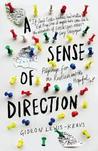
A Sense of Direction: Pilgrimage for the Restless and the Hopeful
In medieval times, a pilgrimage gave the average Joe his only break from the daily grind. For Gideon Lewis-Kraus, it promises a different kind of escape. Determined to avoid the kind of constraint that kept his father, a gay rabbi, closeted until midlife, he has moved to anything-goes Berlin. But the surfeit of freedom there has begun to paralyze him, and when a friend extends a drunken invitation to join him on an ancient pilgrimage route across Spain, he grabs his sneakers, glad of the chance to be committed to something and someone. Irreverent, moving, hilarious, and thought-provoking, A Sense of Direction is Lewis-Kraus's dazzling riff on the perpetual war between discipline and desire, and its attendant casualties. Across three pilgrimages and many hundreds of miles - the thousand-year-old Camino de Santiago, a solo circuit of eighty-eight Buddhist temples on the Japanese island of Shikoku, and, together with his father and brother, an annual
352 pages, Hardcover
First published January 1, 2012
About the author
Gideon Lewis-Kraus
6 books22 followersGideon Lewis-Kraus, a staff writer at The New Yorker, grew up in New Jersey and graduated from Stanford. He writes reportage and criticism and is the author of the digressive travel memoir A Sense of Direction as well as the Kindle Single No Exit. Previously, he was a writer-at-large at the New York Times Magazine, a contributing editor at Harper's magazine, and a contributing writer at WIRED magazine. Gideon co-edited, with Arnie Eisen, Philip Rieff's Sacred Order/Social Order III, and edited Richard Rorty's Philosophy as Cultural Politics. He teaches a reporting seminar in the Graduate Writing Program at Columbia. He has lived in San Francisco, Berlin (where he was a 2007–8 Fulbright Fellow), and Shanghai, and now lives in Brooklyn with his wife and two small children.
Ratings & Reviews
Friends & Following
Create a free account to discover what your friends think of this book!
Community Reviews
Displaying 1 - 30 of 126 reviews

April 11, 2012
The danger of reviewing a book about a secular essayist who walks the 500 mile Santiago de Camino pilgrimage with a heretic friend, then goes on a longer and more difficult one by himself in Shikoku, then plans another one in the Ukraine with his brother and his Rabbi father (the person who haunts all his pilgrimages, as he hasn't come to terms with the emotional pain his father caused when he came out of the closet when Gideon was nineteen and revealed, essentially, that his life had been, to his son, obscure) is: relevance. I do not want to cull its deep meaning, or relate its heartfelt epiphanies (that are often the pat formula of Hollywood movies about pilgrimages), or take the act of reading this radiant memoir and subordinate it to some communal bonding experience or spiritual raison d'être. Nor do I want to press it into any subjective and universal poignancy. Well, okay, ancient roads beckon a young man.
The title of the book is the best place to start, and to be--as in, physical navigation from one fixed point to the next. It also addresses the form of the text; the title is both meditative and concrete. From the first impudent page of the book, I want to be with Gideon--temporally, actively, while it moves from here to there. At times, I wanted to whisper softly in his ear, howl, snort, and tell him that I savored every luminous passage, and adore the David Foster Wallace quote.
The one unifying experience that the pilgrim has with everyone else on a pilgrimage is movement and forwardness to the next point (and often, blisters and other bodily pains). The author's talent of shaping his odysseys into a coherent and thematic story beguiled and compelled me from start to finish.
Whatever higher ground and questions you start out with on a 790 km pilgrimage will bump up against physical exertions, discomfort, and pain that tethers you to real time as you are moving in a geographical direction. You are grounded in the present. The crises of the past and the crossroads of the future are not as urgent as putting one foot in front of the other. There are riveting moments that peel Gideon down to doubt. Lewis-Kraus avoids sweeping clichés about destiny and keeps it real. Getting a grasp of "why" he is doing this creates some arch ruminations about his journey. Part of the purpose of the sojourn is to heal the wounds with his father and move on.
Gideon's terse wit and vigorous pace steer the reader into the story, which unfolds more like a novel than a memoir. That's another reason it worked so well for me (I usually prefer fiction). I was taken by the crisp velocity of a storyline structure, and relieved by the bustling absence of earnest messages. The book opens to Gideon's disaffected years in the Berlin bars and art scene, the hearty glimpses into his profligate stagnation. He describes living in the city as "an infinitely long weekend with your parents out of town ... The old crimes licensed you to ignore the claims of the past; the low cost of living licensed you to ignore the demands of the present; and the future was something that would happen when we moved back to New York, where many of us would once more live in uncomfortable proximity to our actual parents."
His drunk decision to embark on the Camino jump-starts his triumph over inertia. Once you start reading, I can't imagine anywhere you'd rather be than on the itinerant heels of Gideon's brio and in the footfalls of his ambivalence. He has a candid, lyrical way of honoring language and worldview as partners in the fungible context of life and also of provoking you like an impish pied piper. It's a disobedient mix of irreverence and gravitas which will appeal to iconoclasts and offspring and dads of all ages.
I won this book in a lottery giveaway on Shelf Awareness. The review is not biased; it is my own true response.
The title of the book is the best place to start, and to be--as in, physical navigation from one fixed point to the next. It also addresses the form of the text; the title is both meditative and concrete. From the first impudent page of the book, I want to be with Gideon--temporally, actively, while it moves from here to there. At times, I wanted to whisper softly in his ear, howl, snort, and tell him that I savored every luminous passage, and adore the David Foster Wallace quote.
The one unifying experience that the pilgrim has with everyone else on a pilgrimage is movement and forwardness to the next point (and often, blisters and other bodily pains). The author's talent of shaping his odysseys into a coherent and thematic story beguiled and compelled me from start to finish.
Whatever higher ground and questions you start out with on a 790 km pilgrimage will bump up against physical exertions, discomfort, and pain that tethers you to real time as you are moving in a geographical direction. You are grounded in the present. The crises of the past and the crossroads of the future are not as urgent as putting one foot in front of the other. There are riveting moments that peel Gideon down to doubt. Lewis-Kraus avoids sweeping clichés about destiny and keeps it real. Getting a grasp of "why" he is doing this creates some arch ruminations about his journey. Part of the purpose of the sojourn is to heal the wounds with his father and move on.
Gideon's terse wit and vigorous pace steer the reader into the story, which unfolds more like a novel than a memoir. That's another reason it worked so well for me (I usually prefer fiction). I was taken by the crisp velocity of a storyline structure, and relieved by the bustling absence of earnest messages. The book opens to Gideon's disaffected years in the Berlin bars and art scene, the hearty glimpses into his profligate stagnation. He describes living in the city as "an infinitely long weekend with your parents out of town ... The old crimes licensed you to ignore the claims of the past; the low cost of living licensed you to ignore the demands of the present; and the future was something that would happen when we moved back to New York, where many of us would once more live in uncomfortable proximity to our actual parents."
His drunk decision to embark on the Camino jump-starts his triumph over inertia. Once you start reading, I can't imagine anywhere you'd rather be than on the itinerant heels of Gideon's brio and in the footfalls of his ambivalence. He has a candid, lyrical way of honoring language and worldview as partners in the fungible context of life and also of provoking you like an impish pied piper. It's a disobedient mix of irreverence and gravitas which will appeal to iconoclasts and offspring and dads of all ages.
I won this book in a lottery giveaway on Shelf Awareness. The review is not biased; it is my own true response.

August 30, 2013
i picked this up misshelved with the fiction, so i spent the first half of the book thinking it was fiction. i wish it had been.
it's a kind of travel book without any of the things you read a travel book for: description, a sense of dislocation. what things look like Over There. how being knocked clean out of one's usual routines makes one see something anew.
but not for our Gideon.
most of the book he spends whining. whining about his paternal unit, his lack of love, his physical discomforts. he displays his cleverness, writes endlessly about his emails and Facebook postings and how he disdains the people who don't read to the bitter end of all his missives.
the first chapters of the book are about Gideon's appallingly self-involved adventures in various places, ending in Berlin. he decides the solution to his various over-prolonged teenaged angsts are to take a walk, go on a pilgrimage.
the first pilgrimage part of the book is about the Camino de Santiago in northern Spain. you, the reader, will end up with almost no feeling for what being on an ancient Spanish pilgrimage looked like, smelled like, sounded like.
the middle part of the book is about his pilgrimage around Shikoku, the 88 Temples. it's a 1,200-kilometer pilgrimage--no mean feat. reading Gideon's description of it will leave you with approximately three fleeting mental images of the place. you are better off having looked it up in wikipedia.
couldn't handle reading the third part, where he goes on a walk with his dad, whom he doesn't much seem to like. i fear he's going to rake the poor guy over more coals than i can stand to observe.
the entire book tells you absolutely nothing noteworthy about any of the places he goes; the camera is always relentlessly focused on him, him, him. and the fact is, he's boring. how on earth can you walk around to 88 temples and find not one thing to offer up a prayer, a wish, a gee-it's-good-to-be-alive moment? but between checking his daily mileage and composing the emails he will send when he gets to the next wi-fi spot, he doesn't seem to see much of anything, or at least nothing he cares to relate.
a much, much, much better version of this kind of writing is Cheryl Strayed's Wild: From Lost to Found on the Pacific Crest Trail. give Gideon a miss.
it's a kind of travel book without any of the things you read a travel book for: description, a sense of dislocation. what things look like Over There. how being knocked clean out of one's usual routines makes one see something anew.
but not for our Gideon.
most of the book he spends whining. whining about his paternal unit, his lack of love, his physical discomforts. he displays his cleverness, writes endlessly about his emails and Facebook postings and how he disdains the people who don't read to the bitter end of all his missives.
the first chapters of the book are about Gideon's appallingly self-involved adventures in various places, ending in Berlin. he decides the solution to his various over-prolonged teenaged angsts are to take a walk, go on a pilgrimage.
the first pilgrimage part of the book is about the Camino de Santiago in northern Spain. you, the reader, will end up with almost no feeling for what being on an ancient Spanish pilgrimage looked like, smelled like, sounded like.
the middle part of the book is about his pilgrimage around Shikoku, the 88 Temples. it's a 1,200-kilometer pilgrimage--no mean feat. reading Gideon's description of it will leave you with approximately three fleeting mental images of the place. you are better off having looked it up in wikipedia.
couldn't handle reading the third part, where he goes on a walk with his dad, whom he doesn't much seem to like. i fear he's going to rake the poor guy over more coals than i can stand to observe.
the entire book tells you absolutely nothing noteworthy about any of the places he goes; the camera is always relentlessly focused on him, him, him. and the fact is, he's boring. how on earth can you walk around to 88 temples and find not one thing to offer up a prayer, a wish, a gee-it's-good-to-be-alive moment? but between checking his daily mileage and composing the emails he will send when he gets to the next wi-fi spot, he doesn't seem to see much of anything, or at least nothing he cares to relate.
a much, much, much better version of this kind of writing is Cheryl Strayed's Wild: From Lost to Found on the Pacific Crest Trail. give Gideon a miss.

March 12, 2013
Rating: 3.8* of five
The Book Description: In medieval times, a pilgrimage gave the average Joe his only break from the daily grind. For Gideon Lewis-Kraus, it promises a different kind of escape. Determined to avoid the kind of constraint that kept his father, a gay rabbi, closeted until midlife, he has moved to anything-goes Berlin. But the surfeit of freedom there has begun to paralyze him, and when a friend extends a drunken invitation to join him on an ancient pilgrimage route across Spain, he grabs his sneakers, glad of the chance to be committed to something and someone.
Irreverent, moving, hilarious, and thought-provoking, A Sense of Direction is Lewis-Kraus's dazzling riff on the perpetual war between discipline and desire, and its attendant casualties. Across three pilgrimages and many hundreds of miles - the thousand-year-old Camino de Santiago, a solo circuit of eighty-eight Buddhist temples on the Japanese island of Shikoku, and, together with his father and brother, an annual mass migration to the tomb of a famous Hasidic mystic in the Ukraine - he completes an idiosyncratic odyssey to the heart of a family mystery and a human dilemma: How do we come to terms with what has been and what is - and find a way forward, with purpose?
My Review: Another year-old LibraryThing Early Reviewers win, what the hell happened to me last year? Did I have a stroke and forget stuff? Damn. I hate that I didn't write these reviews on time.
This is a book by a David Foster Wallace-readin' straight twentysomething son of a gay father whose selfish and self-absorbed life erupts after he goes on the Sacred Road pilgrimage in Spain. He then goes on a Buddhist pilgrimage in Japan...alone...speaking no Japanese. What could go wrong? ::eyeroll:: And then, after Pilgrimania has fully gripped him, his pop and he (plus an ignorable sibling) go on some Hasidic hoo-rah that really sets the ducks in the shootin' gallery.
Target rich environment! Set phasers on devastate, Mr. Sulu, we're gonna skewer this kid!!
And, well, maybe I could and perhaps I should, but for all the whingeing whiney crap, the kid writes from whatever soul he has and he is honest. Sometimes to a fault. I get it, I get it, Dad coming out when you were at a delicate age had some troublesome aspects for you. But despite the fact that we dwell in Gideon's overprivileged head, we do so with a very witty host. He makes funny lines, but you know something weird? They aren't funny outside the book. Can't quote 'em. He's good for a grin, though.
I enjoyed reading this book, and I think it will be a good first book for his CV. Don't sprain anything running out to get one.
The Book Description: In medieval times, a pilgrimage gave the average Joe his only break from the daily grind. For Gideon Lewis-Kraus, it promises a different kind of escape. Determined to avoid the kind of constraint that kept his father, a gay rabbi, closeted until midlife, he has moved to anything-goes Berlin. But the surfeit of freedom there has begun to paralyze him, and when a friend extends a drunken invitation to join him on an ancient pilgrimage route across Spain, he grabs his sneakers, glad of the chance to be committed to something and someone.
Irreverent, moving, hilarious, and thought-provoking, A Sense of Direction is Lewis-Kraus's dazzling riff on the perpetual war between discipline and desire, and its attendant casualties. Across three pilgrimages and many hundreds of miles - the thousand-year-old Camino de Santiago, a solo circuit of eighty-eight Buddhist temples on the Japanese island of Shikoku, and, together with his father and brother, an annual mass migration to the tomb of a famous Hasidic mystic in the Ukraine - he completes an idiosyncratic odyssey to the heart of a family mystery and a human dilemma: How do we come to terms with what has been and what is - and find a way forward, with purpose?
My Review: Another year-old LibraryThing Early Reviewers win, what the hell happened to me last year? Did I have a stroke and forget stuff? Damn. I hate that I didn't write these reviews on time.
This is a book by a David Foster Wallace-readin' straight twentysomething son of a gay father whose selfish and self-absorbed life erupts after he goes on the Sacred Road pilgrimage in Spain. He then goes on a Buddhist pilgrimage in Japan...alone...speaking no Japanese. What could go wrong? ::eyeroll:: And then, after Pilgrimania has fully gripped him, his pop and he (plus an ignorable sibling) go on some Hasidic hoo-rah that really sets the ducks in the shootin' gallery.
Target rich environment! Set phasers on devastate, Mr. Sulu, we're gonna skewer this kid!!
And, well, maybe I could and perhaps I should, but for all the whingeing whiney crap, the kid writes from whatever soul he has and he is honest. Sometimes to a fault. I get it, I get it, Dad coming out when you were at a delicate age had some troublesome aspects for you. But despite the fact that we dwell in Gideon's overprivileged head, we do so with a very witty host. He makes funny lines, but you know something weird? They aren't funny outside the book. Can't quote 'em. He's good for a grin, though.
I enjoyed reading this book, and I think it will be a good first book for his CV. Don't sprain anything running out to get one.

June 4, 2012
This book gets a resounding "meh" from me. I picked it up because a friend had gotten an advance review copy, and since both of us studied Medieval Lit and have wanted to do the walk to Santiago de Compostela, the book sounded promising.
And, truthfully, the parts of Lewis-Kahn's memoir that are more travelogue than navel-gazing are really, really great. He's got an eye for detail, and a sharp ability to capture the essence of a scene with the sketch of a few words. (There's a fantastic image early in the book where he finds himself at a party with an artist who became famous for his "cave of dicks", which Lewis-Kahn describes as being a cave with multiple penises dangling from "unsuckably distant" glory holes.) I really enjoyed his portraits of his companions on both the Camino and the Shikoku pilgrimages, and I thought he captured the day-to-day rhythm of a long backpacking trip beautifully.
Where the book really fell down, however (and you couldn't go more than a few pages without coming across this) was in Lewis-Kahn's obsessive narcissism. He spends most of the book holding a tremendous grudge against his gay father for being an imperfect human being -- coming out late, cheating/not cheating on his mom with men, being kind of weird as he got older because he has to make everything "gay". Lewis-Kahn is sure that he has been profoundly damaged by his dad, and wants nothing more than a line-by-line accounting of every mis-deed, and an apology for each, without recognizing that maybe he owns some of the douchebaggery in the relationship too.
I just got so fed up by the end. I wanted to shake him and say, "grow the eff up." Parents aren't perfect, and we don't usually get to choose to have a perfect relationship with them, and sometimes the best possible relationship is still a far cry from what you want to have. Deal with it. Life's too short to be holding grudges for decades for imagined slights.
If you can handle the personal melodrama, the travelogues in the book are great. If you can't, save yourself the desire to bash in Lewis-Kahn's head, and read something else instead.
And, truthfully, the parts of Lewis-Kahn's memoir that are more travelogue than navel-gazing are really, really great. He's got an eye for detail, and a sharp ability to capture the essence of a scene with the sketch of a few words. (There's a fantastic image early in the book where he finds himself at a party with an artist who became famous for his "cave of dicks", which Lewis-Kahn describes as being a cave with multiple penises dangling from "unsuckably distant" glory holes.) I really enjoyed his portraits of his companions on both the Camino and the Shikoku pilgrimages, and I thought he captured the day-to-day rhythm of a long backpacking trip beautifully.
Where the book really fell down, however (and you couldn't go more than a few pages without coming across this) was in Lewis-Kahn's obsessive narcissism. He spends most of the book holding a tremendous grudge against his gay father for being an imperfect human being -- coming out late, cheating/not cheating on his mom with men, being kind of weird as he got older because he has to make everything "gay". Lewis-Kahn is sure that he has been profoundly damaged by his dad, and wants nothing more than a line-by-line accounting of every mis-deed, and an apology for each, without recognizing that maybe he owns some of the douchebaggery in the relationship too.
I just got so fed up by the end. I wanted to shake him and say, "grow the eff up." Parents aren't perfect, and we don't usually get to choose to have a perfect relationship with them, and sometimes the best possible relationship is still a far cry from what you want to have. Deal with it. Life's too short to be holding grudges for decades for imagined slights.
If you can handle the personal melodrama, the travelogues in the book are great. If you can't, save yourself the desire to bash in Lewis-Kahn's head, and read something else instead.

June 22, 2012
I received an ARC in e-book format from the publisher in exchange for reading and reviewing it.
Gideon Lewis-Kraus writes a travel memoir about pilgrimages. He undertakes three very different ones. The first is the Camino de Santiago in Spain, a more traditional style pilgrimage, during which he is accompanied by a friend and meets many people along the way. The second is to 88 temples around the perimeter of Shikoku, Japan, which he undertakes mostly alone. Then the third is a single event in a Ukrainian village for the celebration of Rosh Hashanah, where he is accompanied by his father and brother.
While I generally tend to enjoy travel memoirs, it’s very possible that this book just wasn’t for me. Part of the reason for that was that the travel part of the book is more of a backdrop for the author to work out all the issues troubling him about his life. Lewis-Kraus certainly seemed to have been searching for a sense of direction. He clearly didn’t have one at the start of the book, but unfortunately didn’t seem to find one at the end either – at least not as far as I could tell.
His style of writing mostly irritated me, and I definitely did not like the author at all. The world is made up of all types, but this restless, disaffected, tired-of-the-hedonistic-lifestyle sense of entitlement that the author appears to have made me spend most of my reading time annoyed by him. He seems very proud of his ability to write long, self-indulgent, convoluted sentences. However, he doesn’t do it very well. For that kind of style to work, you have to be engaging enough to keep the reader captivated throughout and wanting to read more. Lewis-Kraus does not do that for me at all.
Ironically, the author writes extremely well about other people. When he was describing interactions with people during the Camino and Uman sections, there were moments when I found myself quite caught up in the narrative. However, just when I found myself actually interested, Lewis-Kraus once again began to ramble about himself, and I lost interest … again
A single, bright gem of a sentence pops out here and there, but in the end, that turned out not to be sufficient. I only finished the book out of an obligation to review it, and it’s not something to which I will ever return.
Gideon Lewis-Kraus writes a travel memoir about pilgrimages. He undertakes three very different ones. The first is the Camino de Santiago in Spain, a more traditional style pilgrimage, during which he is accompanied by a friend and meets many people along the way. The second is to 88 temples around the perimeter of Shikoku, Japan, which he undertakes mostly alone. Then the third is a single event in a Ukrainian village for the celebration of Rosh Hashanah, where he is accompanied by his father and brother.
While I generally tend to enjoy travel memoirs, it’s very possible that this book just wasn’t for me. Part of the reason for that was that the travel part of the book is more of a backdrop for the author to work out all the issues troubling him about his life. Lewis-Kraus certainly seemed to have been searching for a sense of direction. He clearly didn’t have one at the start of the book, but unfortunately didn’t seem to find one at the end either – at least not as far as I could tell.
His style of writing mostly irritated me, and I definitely did not like the author at all. The world is made up of all types, but this restless, disaffected, tired-of-the-hedonistic-lifestyle sense of entitlement that the author appears to have made me spend most of my reading time annoyed by him. He seems very proud of his ability to write long, self-indulgent, convoluted sentences. However, he doesn’t do it very well. For that kind of style to work, you have to be engaging enough to keep the reader captivated throughout and wanting to read more. Lewis-Kraus does not do that for me at all.
Ironically, the author writes extremely well about other people. When he was describing interactions with people during the Camino and Uman sections, there were moments when I found myself quite caught up in the narrative. However, just when I found myself actually interested, Lewis-Kraus once again began to ramble about himself, and I lost interest … again
A single, bright gem of a sentence pops out here and there, but in the end, that turned out not to be sufficient. I only finished the book out of an obligation to review it, and it’s not something to which I will ever return.

July 2, 2012
i was lent this book by a friend because of its relevance to my recent experiences on the pacific crest trail. after i read it i found online a rather brutal but accurate review of this by choire sicha in slate magazine, to which i have very little to add. pretty transparently, he went on the pilgrimages desperate to generate a book. the second pilgrimage, in japan, was a mistake because he didnt know the language and went alone. the third, a hasidic outing (and not really a pilgrimage), was the most successful for him, because it was thick with people to write about, there was family drama (hes still all caught up in that), and it was a culture he somewhat understood. he shows off "good writing" in a way that i find unbecoming in an artist. but mainly, he finally turns out to be his rabbi father's son: the point of writing books, it seems to him, is to analyze and draw morals and articulate complex conclusions from his experiences, which in the last few pages he does: the sumup sermon. well, he's young.
May 22, 2012
Gideon Lewis-Kraus arrives with the potential of any young writer-- that he'll write work that transcends his own experience, that he'll illuminate something about the larger world. This book attempts that, but ultimately becomes an act of immature self-indulgence and immense ego (which would match his persona, if his author appearances are any indication). The "restless and hopeful" mentioned is, predictably, himself, and the book reads like another flimsy MFA thesis about ME ME ME, which results in, for the reader, YAWN YAWN YAWN.
January 14, 2013
"A sense of direction" is what all good stories need to carry the reader through, and this book never finds one. The author seems more set on impressing his readers with his graduate level vocabulary and his bohemian lifestyle than telling a compelling story. Too many good books await to waste any more time with this one.
Let's face it- I'm never going to finish this book and there are so many others more deserving of my time.
Let's face it- I'm never going to finish this book and there are so many others more deserving of my time.

September 21, 2014
I was drawn to this book because of the pilgrimage theme. I went to Santiago a few years ago and saw the pilgrims at the cathedral. A few friends have walked sections of the Camino, and I am fascinated by this as an ongoing practice-however the meanings have changed. I was also curious with this book as a parallel to Elizabeth Gilbert’s extremely popular, Eat, Pray, Love. GLK is a young writer –27 when, lost, without a sense of direction, but full of angst—he lands in Berlin with a Fulbright. As he tells the story, after months of hanging around the young international art scene, in a night of drunken debauchery in Tallin he commits to walking the Camino with fellow writer, Tom Bissell. He is taken with the idea of walking as a devotional practice, and reflects a great deal about the differences between pilgrimage and tourism—although by the end of the book, the division seems more difficult to establish. While walking the Camino, he learns about and decides to visit a Japanese pilgrimage site, Shikoku. It is a circuit of 88 temples associated with the Buddhist monk, Kukai on the island of Shikoku. While I can imagine doing the Camino, this seemed intimidating to me; it is not really set up for international tourists, and, for those who actually walk it, it is rather grueling. (Lots of descriptions of bad things that can happen to one’s feet in this book.) He does this pilgrimage mostly alone, although his father’s father, Max, joins him for a short time. Finally, he convinces his father and brother to join him in Uman, Ukraine,for a very different kind of pilgrimage (no walking), where male Hasidic Jews from the Breslover sect go on Rosh Hashana. Part of the story is a story about family reconciliation. Gideon’s father was a Reform Rabbi who left his family in middle age to live a new life as a gay man. Gideon’s anger and resentfulness toward his father is at the emotional core of the book. I liked the Berlin section the least, but I got more engaged as I moved through the book. In some ways the Uman section does not quite fit with the two walking sections, and in fact our guys –not themselves Orthodox—bail towards the end, opting for a more touristic vacation together. But it is necessary because it is at Uman, that Gideon and his brother Michael confront their father with their questions about his past behaviors. It is there that Gideon realizes that had his father been able to recognize his gay identity earlier that perhaps he (Gideon) would not have been born. It is also in Uman the distinction between pilgrimage and tourism is most fully blurred. I found the father interesting, and had more tolerance for him than some readers whose reviews I read. I appreciated his charisma and ways of pushing the boundaries, but also heard the voice of the son who felt like he never had the father he needed. (I am less sure that this has as much to go with his gayness as Gideon thinks.) Gideon’s loving but also competitive relationships with his brother and some of his writer friends is also interesting. For a book that is so much concerned with a potentially solitary spiritual discipline, like its predecessor Eat Pray Love, it has a lot to say about relationships.

October 29, 2014
Have you ever started eating something, and the first bite you think 'NOTHING HAS EVER BEEN THIS GOOD.' and you immediately eat like, a pound of it, and then, at some point as you're shoveling, you think to yourself 'I may have made a terrible mistake,' but you're already a pound in, so you might as well finish the next pound, and then afterward you feel sick, and vaguely confused by the whole ordeal, and then you're not even sure if that first bite really was so great, like you have to retroactively re-evaluate the worth of that bite because of how upsetting all the other bites were.
That's what this was like to read, and, I'm pretty sure, what it was like to write. It starts off with such ambition! Such wonderment! Such adventurous spirit! Answers and meaning seem completely lost, but Lewis-Kraus will find them! Yes! He will find them, and he will take Tom Bissell (it keeps getting better!!!)! And it is exciting and wonderful... for awhile. The problem, I think, is that he started to run out of things to say. I imagine he thought there would be much more to say, or much more to illuminate, but what he found was much that was already sort of lit and a lot of things he didn't really feel like talking about. Which happens.
I would like to point out that the Camino de Santiago sections ARE amazing. They really are. Tom and Gideon's relationship is astounding, and it is the sort that makes you longingly ache for something so comical and farcical in your own life. But the problem is this sets itself up as a bit more than just a travelogue. This sets itself up to answer and fix so many of Lewis-Kraus' problems (and boy does he have some). The beginning reads out like the start of a film, and we bound into it with all the enthusiasm of a popcorn munching soda swilling audience, but by the end of it, I feel what I imagine Lewis-Kraus - Okay, that's it. I'm not writing that anymore. Heretofore he is Gideon and we pretend he and I are intimate like that - Anyway, I'm pretty sure GIDEON was just as sick and confused as I was. In fact, I think the reason I felt that way was because he felt that way.
The Camino de Santiago was supposed to have answers, but it had none. It was supposed to have a purpose, or provide one, but it didn't. What it did have was pain, and, as the book points out at one point - that was the purpose. No one enjoys it, Gideon is told at one point - and it's hard not to feel as crestfallen as he is. The mystical journey has no other reward than a pat on the back from yourself, certainly not anyone else. No one cares. Tom (yeah, we're close too) doesn't seem especially surprised by this either. He simply gets to the end, looks at his broken feet, and seems to transmit in waves of honest, heart-felt feeling, 'fuck this place forever,' and he leaves, not exactly angry at Gideon, but seemingly fed up with all of the idiot pilgrims that somehow made him come.
After that, Gideon goes on a tour de force of pilgrimages and self-discovery, but what he discovers is the same unsatisfying truth all of us probably already know - fixing your problems isn't as easy as beating yourself up until life takes pity. There's a reason self-flagellation fell out of fashion.
He seems to also continue to make the same mistake so many of us do. He perpetually falls in love with women he shouldn't, makes mistakes with them he shouldn't, and pines for them in ways which are all too familiar and he definitely shouldn't. None of his journeys really help with that, and, unfortunately, after the Camino de Santiago, I think we knew, because Gideon knew, that the rest of this journey was really a farce. It was trying desperately to turn the water into wine and knowing deep inside that it simply wasn't going to happen.
I don't want to get started, by the way, on how abysmally depressing the temple pilgrimage (whose name I have clearly forgotten) was. Lord have mercy. At least the Camino had other human beings, and wasn't on the side of a highway. If anything killed my spirit of journey and pilgrimage, it was reading about Gideon hiking a lonely, desolate course through rural Japan and eating at depressing village gas stations. I don't know how either of us made it through the ordeal.
I think somewhere along the way, Gideon lost his desire, or lacked the material, to write everything about the Camino, and when he lost that, he lost the book. The book was about his preparation and then exploration of THAT. THAT was a journey with his friend. THAT was a journey I wanted to follow. THAT was filled with other exciting characters. But it passed in a far too quickly moving blur, and all the things I wanted more of, Tom's snarky comments and bitching, Gideon's late night banter with other pilgrims, fell to the side, and I was left with a book unfinished, and a tale that sort of rambled on like a descent into inebriation.
It pains me to say I didn't like it a great deal, because I like him a great deal and because he is a talented writer (talking about Gideon here, keep up), but the truth is that this should have been about only the Camino. I mean, non-fiction has to stop somewhere. We can't just keep following the writer as he eventually admits 'and now I have nothing else to talk about except this huge shit I just took.'
... and now I don't know how to end this.
Why don't we just save both of us the pain and I'll end it now, yeah?
Yeah.
That's what this was like to read, and, I'm pretty sure, what it was like to write. It starts off with such ambition! Such wonderment! Such adventurous spirit! Answers and meaning seem completely lost, but Lewis-Kraus will find them! Yes! He will find them, and he will take Tom Bissell (it keeps getting better!!!)! And it is exciting and wonderful... for awhile. The problem, I think, is that he started to run out of things to say. I imagine he thought there would be much more to say, or much more to illuminate, but what he found was much that was already sort of lit and a lot of things he didn't really feel like talking about. Which happens.
I would like to point out that the Camino de Santiago sections ARE amazing. They really are. Tom and Gideon's relationship is astounding, and it is the sort that makes you longingly ache for something so comical and farcical in your own life. But the problem is this sets itself up as a bit more than just a travelogue. This sets itself up to answer and fix so many of Lewis-Kraus' problems (and boy does he have some). The beginning reads out like the start of a film, and we bound into it with all the enthusiasm of a popcorn munching soda swilling audience, but by the end of it, I feel what I imagine Lewis-Kraus - Okay, that's it. I'm not writing that anymore. Heretofore he is Gideon and we pretend he and I are intimate like that - Anyway, I'm pretty sure GIDEON was just as sick and confused as I was. In fact, I think the reason I felt that way was because he felt that way.
The Camino de Santiago was supposed to have answers, but it had none. It was supposed to have a purpose, or provide one, but it didn't. What it did have was pain, and, as the book points out at one point - that was the purpose. No one enjoys it, Gideon is told at one point - and it's hard not to feel as crestfallen as he is. The mystical journey has no other reward than a pat on the back from yourself, certainly not anyone else. No one cares. Tom (yeah, we're close too) doesn't seem especially surprised by this either. He simply gets to the end, looks at his broken feet, and seems to transmit in waves of honest, heart-felt feeling, 'fuck this place forever,' and he leaves, not exactly angry at Gideon, but seemingly fed up with all of the idiot pilgrims that somehow made him come.
After that, Gideon goes on a tour de force of pilgrimages and self-discovery, but what he discovers is the same unsatisfying truth all of us probably already know - fixing your problems isn't as easy as beating yourself up until life takes pity. There's a reason self-flagellation fell out of fashion.
He seems to also continue to make the same mistake so many of us do. He perpetually falls in love with women he shouldn't, makes mistakes with them he shouldn't, and pines for them in ways which are all too familiar and he definitely shouldn't. None of his journeys really help with that, and, unfortunately, after the Camino de Santiago, I think we knew, because Gideon knew, that the rest of this journey was really a farce. It was trying desperately to turn the water into wine and knowing deep inside that it simply wasn't going to happen.
I don't want to get started, by the way, on how abysmally depressing the temple pilgrimage (whose name I have clearly forgotten) was. Lord have mercy. At least the Camino had other human beings, and wasn't on the side of a highway. If anything killed my spirit of journey and pilgrimage, it was reading about Gideon hiking a lonely, desolate course through rural Japan and eating at depressing village gas stations. I don't know how either of us made it through the ordeal.
I think somewhere along the way, Gideon lost his desire, or lacked the material, to write everything about the Camino, and when he lost that, he lost the book. The book was about his preparation and then exploration of THAT. THAT was a journey with his friend. THAT was a journey I wanted to follow. THAT was filled with other exciting characters. But it passed in a far too quickly moving blur, and all the things I wanted more of, Tom's snarky comments and bitching, Gideon's late night banter with other pilgrims, fell to the side, and I was left with a book unfinished, and a tale that sort of rambled on like a descent into inebriation.
It pains me to say I didn't like it a great deal, because I like him a great deal and because he is a talented writer (talking about Gideon here, keep up), but the truth is that this should have been about only the Camino. I mean, non-fiction has to stop somewhere. We can't just keep following the writer as he eventually admits 'and now I have nothing else to talk about except this huge shit I just took.'
... and now I don't know how to end this.
Why don't we just save both of us the pain and I'll end it now, yeah?
Yeah.
November 3, 2024
Reading this book was a pilgrimage. This is a topic I'm personally very interested in, but it's also a travel memoir of someone neurotic and self absorbed who loves to use vocabulary words and obscure references. He makes some astute points along the way however, and if you're interested in pilgrimage it's worth a read if you can hack it.

March 7, 2014
 BOTW
BOTWDescription: The author Gideon Lewis-Kraus describes leaving America for life in Berlin, to ease the sadness after his father abandoned the family home. But Berlin isn't enough and only embarking on a series of world-wide pilgrimages will help him. The journeys turn out both amusing and moving, and are abridged in five episodes by Katrin Williams.
Reader Patrick Kennedy
Producer Duncan Minshull.


 1. It's on a trip to Tallin that that Gideon agrees with his friend Tom to walk the Camino in Spain. Later, reality bites!
 This is on in this slot because it is being re-launched with a new cover and EVFring. The original description:
 In medieval times, a pilgrimage gave the average Joe his only break from the daily grind. For Gideon Lewis-Kraus, it promises a different kind of escape. Determined to avoid the kind of constraint that kept his father, a gay rabbi, closeted until midlife, he has moved to anything-goes Berlin. But the surfeit of freedom there has begun to paralyze him, and when a friend extends a drunken invitation to join him on an ancient pilgrimage route across Spain, he grabs his sneakers, glad of the chance to be committed to something and someone.
Irreverent, moving, hilarious, and thought-provoking, A Sense of Direction is Lewis-Kraus's dazzling riff on the perpetual war between discipline and desire, and its attendant casualties. Across three pilgrimages and many hundreds of miles - the thousand-year-old Camino de Santiago, a solo circuit of eighty-eight Buddhist temples on the Japanese island of Shikoku, and, together with his father and brother, an annual mass migration to the tomb of a famous Hasidic mystic in the Ukraine - he completes an idiosyncratic odyssey to the heart of a family mystery and a human dilemma: How do we come to terms with what has been and what is - and find a way forward, with purpose?
1. It's on a trip to Tallin that that Gideon agrees with his friend Tom to walk the Camino in Spain. Later, reality bites! 2. Travel on the Camino continues. There are hardships, but also rewarding friendships with Roman and David, and the lovely Nora and Alina. 3. The next adventure is Shikoku, Japan. It's a temple pilgrimage that goes round and round,and in the wettest of weather.
4. Grandfather Max has gone back to America, so the author proceeds alone on his circular Temple trail. 5. It's to Uman in Ukraine to celebrate Rosh Hashanah withbrother Micah - and their elusive father!
 And this is so different from countless other tomes about 'now-atoning dissolute rakes' down the centuries how exactly!? Poor little rich boy goes walk about to navel gaze, and as Shania points out: 'That Don't Impress Me Much'.
February 9, 2013
A Sense of Direction by Gideon Lewis-Kraus is a report of three pilgrimages taken by the author, a man in in his 30's seeking direction, forgiveness and the gift of forgiving.
At the start, Gideon is rootless, aimless and essentially hedonistic. His divorced parents are both rabbis. His father is gay and divorced his mother when Gideon was 19. Gideon is estranged from his father. Gideon is an accomplished professional writer with attachment issues concerning places, fixed abode and his father. He goes from the aimless life he is leading in Berlin on the Camino de Santiago, an 800 kilometer pilgrimage in Spain, with his friend, Tom. The pilgrimage is a 1000 year old Catholic tradition, but in the present it is taken for secular reasons. Certainly Gideon, a secular Jew takes it for reasons having nothing to do with religion and everything to do with the idea of pilgrimage itself.
When Gideon finishes the Camino, he hears of an even longer and more arduous 1200 kilometer pilgrimage, the Shikoku , in rural Japan. This is a much less well-traveled route, one most generally taken by retired Japanese. It goes past 88 temples. Gideon does this one alone, although he meets and travels for short periods with other pilgrims. His isolation and unfamiliarity with Japan language and culture lead him further on the road to self-knowledge.
After Gideon completes the Shikoku, he enlists his brother and father to go to Uman, Ukraine for the mass Rosh Hashanah gathering of 40,000 hassidic disciples of the Bratslaver Rebbe, Nachman. Uman is the site where thousands of Jews were slaughtered during pogroms and Ukraine is a country that exceeded all others in the slaughter of Jews during the Holocaust. This is a pilgrimage of yet another sort, one in which Gideon grows further and comes to better understand forgiveness.
Gideon chooses to go on this pilgrimage with his brother and father in the hopes that there can be some resolution of their long-standing issues.
When I started the book I was impressed by the writing and thought that Gideon was bright, gifted and aimless, completely filled with himself and his own problems. I braced myself for a well-written exercise in "i'm more intelligent than you; I'm more ironic than you, I'm more alienated than you. I could not have been more wrong. Gideon grows by first mindlessly following the arrows pointing the way on the Camino and then by the more circuitous and ambiguous directions of the Shikoku. He comes to a sense of completion with the Rosh Hashanah, the Jewish New Year where iin Jewish tradition is said that we are written in the Book of Life for the New Year. Gideon becomes that work in progress that marks a real mensch.
At the start, Gideon is rootless, aimless and essentially hedonistic. His divorced parents are both rabbis. His father is gay and divorced his mother when Gideon was 19. Gideon is estranged from his father. Gideon is an accomplished professional writer with attachment issues concerning places, fixed abode and his father. He goes from the aimless life he is leading in Berlin on the Camino de Santiago, an 800 kilometer pilgrimage in Spain, with his friend, Tom. The pilgrimage is a 1000 year old Catholic tradition, but in the present it is taken for secular reasons. Certainly Gideon, a secular Jew takes it for reasons having nothing to do with religion and everything to do with the idea of pilgrimage itself.
When Gideon finishes the Camino, he hears of an even longer and more arduous 1200 kilometer pilgrimage, the Shikoku , in rural Japan. This is a much less well-traveled route, one most generally taken by retired Japanese. It goes past 88 temples. Gideon does this one alone, although he meets and travels for short periods with other pilgrims. His isolation and unfamiliarity with Japan language and culture lead him further on the road to self-knowledge.
After Gideon completes the Shikoku, he enlists his brother and father to go to Uman, Ukraine for the mass Rosh Hashanah gathering of 40,000 hassidic disciples of the Bratslaver Rebbe, Nachman. Uman is the site where thousands of Jews were slaughtered during pogroms and Ukraine is a country that exceeded all others in the slaughter of Jews during the Holocaust. This is a pilgrimage of yet another sort, one in which Gideon grows further and comes to better understand forgiveness.
Gideon chooses to go on this pilgrimage with his brother and father in the hopes that there can be some resolution of their long-standing issues.
When I started the book I was impressed by the writing and thought that Gideon was bright, gifted and aimless, completely filled with himself and his own problems. I braced myself for a well-written exercise in "i'm more intelligent than you; I'm more ironic than you, I'm more alienated than you. I could not have been more wrong. Gideon grows by first mindlessly following the arrows pointing the way on the Camino and then by the more circuitous and ambiguous directions of the Shikoku. He comes to a sense of completion with the Rosh Hashanah, the Jewish New Year where iin Jewish tradition is said that we are written in the Book of Life for the New Year. Gideon becomes that work in progress that marks a real mensch.

May 16, 2012
Transcends traditional travelogue -- NOT a run-of-the-mill memoir either.
I LOVED this BOOK! It was REFRESHING-- INSPIRING -- ENTERTAINING!!
I don't read tons of 'travel' type books to begin with (I prefer Paul Theroux over Bill Bryson) ---
but if more 'travel/memoir' books were THIS much fun --I might read more.
I couldn't help but fall in love with the author of this book -- I enjoyed his humor, his intelligence, his wisdom, his compassion, his very soul as a human being. I also will extend that love to include his family and friends.
As a reader --I felt 'included' ---(as if to sit and chat with any one of the wickedly fabulous characters in the book would be very natural).
Gideon Lewis-Kraus is talented & insightful....
engaging us with honesty that feels genuinely satisfying. He writes with fluency, vibrancy, and expresses himself gorgeously.
NOTE: .... I felt my body getting excited on the journey in Shikoku. (it was the trail I 'personally' wanted to 'jump' to do most myself).
I LOVED this BOOK! It was REFRESHING-- INSPIRING -- ENTERTAINING!!
I don't read tons of 'travel' type books to begin with (I prefer Paul Theroux over Bill Bryson) ---
but if more 'travel/memoir' books were THIS much fun --I might read more.
I couldn't help but fall in love with the author of this book -- I enjoyed his humor, his intelligence, his wisdom, his compassion, his very soul as a human being. I also will extend that love to include his family and friends.
As a reader --I felt 'included' ---(as if to sit and chat with any one of the wickedly fabulous characters in the book would be very natural).
Gideon Lewis-Kraus is talented & insightful....
engaging us with honesty that feels genuinely satisfying. He writes with fluency, vibrancy, and expresses himself gorgeously.
NOTE: .... I felt my body getting excited on the journey in Shikoku. (it was the trail I 'personally' wanted to 'jump' to do most myself).

January 14, 2022
A friend gave this to me and I was hopeful for a travel story, I love those, but I felt most was utter annoyance at the writer. I can't remember the last time it took me so long to finish a book, let alone a book about travel and pilgrimages. That being said, if my rants are anything to go by, I'm obsessed with this book as well. So, if you're looking for a travel guide, there's better out there. If you're looking for a coming of age story about a guy who is trying to find himself, there's also better out there. But it is well written and honest, and for that, 3 stars. Tbh, I'm just glad it's over and I made it!
November 4, 2022
While the title may lead one to hope, I found the writing shallow and trite. Would have rated it 2 1/2 but honestly couldn't think of any redeeming value in the story versus my time invested reading this book.

April 30, 2014
GLK is such a thoughtful person, without the usual humdrum trappings that over thinkers tend to have. I am glad to have a slight peek into his life, and to have been to the Berlin that he lived in.

March 27, 2022
Travel memoir of three pilgrimages--Camino de Santiago, the 88 Buddhist temples of Shikoku, and the annual Hasidic event in Uman, Ukraine --as a meditation on the precarious balance between the comfort of structure and the anxieties of autonomy. Sharply written with a hilarious eye for character and compelling storytelling.
(Disclaimer: the author is a friend of my partner, so this has been on our shelves for many years, but just picked it up now! Uncanny timing, it turns out...)
(Disclaimer: the author is a friend of my partner, so this has been on our shelves for many years, but just picked it up now! Uncanny timing, it turns out...)

April 2, 2022
I chose this ebook in my kindle (much lighter that the actual book, I imagine) on my way to 2 weeks of walking the Portuguese Camino de Santiago: the title is powerful and made sense for the occasion, and also because a long chapter was dedicated to a different route of this voyage that I was walking. I guess the good part of this read was that I felt I actually got to know the personality of the author from reading his work. The bad part is that he comes off as someone I wouldn't enjoy being friends with, to put it lightly. And I write this realizing how unfair it is, not knowing him personally, and how bad if makes me look saying this about him.
The book is carefully written, and the idea underneath it is interesting (three different pilgrimages of three different religions). I enjoyed most of the parts that focused on the journeys themselves, the hardships, the people met, the authors' impressions. But all of this is placed in between a very personal story of a son (the author) dealing with his disappointments of his fathers' actions, and the process of forgiving him. I tried from the beggining to empathize with his plight, but unfortunately to me it comes off in the end as a biased view of a family issue (the reader only knows the author's side), and as if the author is somehow looking for applause or redemption for, in the end, learning how to forgive his father. I remembered an episode of It's Always Sunny in Philadelphia where two of the main characters, on different occasions, wait to be congratulated after doing something woke, that they believe deserves praise. This book is about a very intimate familiar situation, and because of that it is honest and beautiful, but the take away feels more self-serving than enlightened. Maybe because it is so intimate and familiar. Or maybe because my own daddy issues don't allow me to look beyond my own story, and the relationship I had with my dad.
I laughed a few times during the Shikoku ordeals, I admit that doesn't happen a lot when reading. I enjoyed the references, and there did seem to be an actual search for answers in modern day and secular pilgrimages. But everything that happened off the travel log for me didn't work.
The book is carefully written, and the idea underneath it is interesting (three different pilgrimages of three different religions). I enjoyed most of the parts that focused on the journeys themselves, the hardships, the people met, the authors' impressions. But all of this is placed in between a very personal story of a son (the author) dealing with his disappointments of his fathers' actions, and the process of forgiving him. I tried from the beggining to empathize with his plight, but unfortunately to me it comes off in the end as a biased view of a family issue (the reader only knows the author's side), and as if the author is somehow looking for applause or redemption for, in the end, learning how to forgive his father. I remembered an episode of It's Always Sunny in Philadelphia where two of the main characters, on different occasions, wait to be congratulated after doing something woke, that they believe deserves praise. This book is about a very intimate familiar situation, and because of that it is honest and beautiful, but the take away feels more self-serving than enlightened. Maybe because it is so intimate and familiar. Or maybe because my own daddy issues don't allow me to look beyond my own story, and the relationship I had with my dad.
I laughed a few times during the Shikoku ordeals, I admit that doesn't happen a lot when reading. I enjoyed the references, and there did seem to be an actual search for answers in modern day and secular pilgrimages. But everything that happened off the travel log for me didn't work.

March 25, 2012
Lewis-Kraus's pilgrimage might have been yet another young man in search of himself, a modern Kerouac with more direction, but I had the sense that the author was more in search of something other than himself. As Huston Smith warned in his work on the world's religions, "The self is too small an object for perpetual enthusiasm." After a few years caught up in the live for the moment decadence of Berlin, Lewis-Kraus craved something more, something that would at once take him inward and outward. For one, he deals with a long simmering discontent with his relationship with his father, a gay former rabbi whose "coming out of the closet" left his son with a sense of abandonment, possibly of even never having been wanted. I do not want to reveal what the author finds out on his journeys since these unfolding revelations, along with his trenchant often self-deprecating humor, are the glories of this book. His new found sense of self, family and kinship with the world outside himself is hard fought for and seems to have cost him about a pound of flesh, mostly from his feet. Of the pilgrimages, the one he makes to Uman with his father and brother delighted me the most, but all are well pace, funny and thoughtful. Lewis-Kraus is by terms endearing, obnoxious, generous, bigoted, peevish, but always searching. Odd thing happened when I was reading the Uman section, though this really says more about another book than this one, I am sharing it since shows what really good writing can do. As Lewis-Kraus and his father deal with the mass of Hasidic Jews I wondered if he knew Cass Seltzer since they were both writers who had dealt with the theme of messianic Judaism. Mind jogged on a bit to remember that this was impossible since Seltzer was the ficitonal creation of Rebecca Newberger Goldstein. I was so wound up in the very real account of Gideon's bewilderment with all that was around him that my brain lapsed into that space were the real and imagined collide. And of course, ever since I first met him, Cass Seltzer, despite his non-existence, has always been a real to me as if he were so.

March 27, 2012
In a book on pilgrimage, I expected religious blather and arrogant piety ... but what I found in A Sense of Direction was a lot of sore feet and humor. It begins with a somewhat listless existence in Berlin, then during a drunken weekend the author agrees to embark on a 600 mile pilgrimage across Spain with a friend. It becomes a sort of vacation from the care-free Berlin scene, a chance to find purpose yet avoid responsibility. While on that pilgrimage, he hears of another - longer, more treacherous, less traveled - and a strange spark flares in him. He decides to do it as well, and then a third. And beyond the pain and often inhospitable weather runs a sort of large-scale introspection on why anyone would choose to participate in such formidable treks, what the pilgrim can gain or lose or discover or reinvent there on the trail. As one pilgrimage leads to another more of the author's backstory also comes to light, and what he seeks - or thinks he seeks - in those hard miles.
For the reader, it is an enjoyable and sometimes thought-provoking journey. I never expected to laugh so much or feel as near to being there. At times the author bugged me, annoyingly pompous and egocentric, but it was good to see him as flawed as any of us and not editing it out. In the long-run it added to the experience and made for an interesting and surprising book I would recommend to anyone.
For the reader, it is an enjoyable and sometimes thought-provoking journey. I never expected to laugh so much or feel as near to being there. At times the author bugged me, annoyingly pompous and egocentric, but it was good to see him as flawed as any of us and not editing it out. In the long-run it added to the experience and made for an interesting and surprising book I would recommend to anyone.

September 21, 2017
This book is frequently on lists for those who experience, or like to read about, wanderlust. I feel this book should be removed from all lists, and that it shouldn't have been published in the first place.
I would have really liked the author to acknowledge, just once, his white, male privilege. He graduated from Stanford, got tired of San Francisco, partied in Berlin, tried to find himself walking across Spain, went back to partying in Berlin, still feeling lost, walked around an island in Japan. At that point, he decides he'll write a book about pilgrimages and forces his brother and father into going to one in Kiev. He complains endlessly about his lack of purpose, his stupidity in regard to a girl he fell in love with (after one evening) in China who didn't feel the same, etc. He never once stops to acknowledge that he's living a life most people could never have due to gender, race, and/or financial constraints.
The dialogue is all very forced and ends up reading like really fake monologues. The author is not likable. It's particularly annoying that his biggest life crisis is his inability to accept that his father is gay.
The author learns nothing, finds no "sense of direction". His third pilgrimage is an obvious attempt to make a longer book. There is nothing to be gained from reading this book.
I would have really liked the author to acknowledge, just once, his white, male privilege. He graduated from Stanford, got tired of San Francisco, partied in Berlin, tried to find himself walking across Spain, went back to partying in Berlin, still feeling lost, walked around an island in Japan. At that point, he decides he'll write a book about pilgrimages and forces his brother and father into going to one in Kiev. He complains endlessly about his lack of purpose, his stupidity in regard to a girl he fell in love with (after one evening) in China who didn't feel the same, etc. He never once stops to acknowledge that he's living a life most people could never have due to gender, race, and/or financial constraints.
The dialogue is all very forced and ends up reading like really fake monologues. The author is not likable. It's particularly annoying that his biggest life crisis is his inability to accept that his father is gay.
The author learns nothing, finds no "sense of direction". His third pilgrimage is an obvious attempt to make a longer book. There is nothing to be gained from reading this book.

June 29, 2012
A Great Travel Memoir on One Young Man’s Search for Himself
One of the best examples of travel memoir which I have read over the last few years, Gideon Lewis-Kraus’s “A Sense of Direction” is a fine literary debut that ranks alongside great travel memoirs like Susan Gilman’s “Undress Me in the Temple of Heaven”. Hoping to escape a most banal existence as a young American expatriate living in Berlin, Gideon teams up with a friend on a series of treks across Europe, starting with their epic journey retracing the route of an old Roman road in Spain. These are journeys not just through the physical landscapes of Europe, but also those within Gideon’s soul, as he learns how to deal effectively with the yin and yang of desire and discipline. Told strictly from a first-person account in compelling, often elegant, prose, “A Sense of Direction” will be most uplifting to those interested in reading it. Its underlying message of a young man seeking to make some sense out of his life is one surely to resonate with many readers who will be enthralled with Gideon’s brilliant, witty and often humorous account. Without a doubt, “A Sense of Direction” is a notable memoir worthy of the favorable praise it has earned from the likes of Gary Shteyngart, Dave Eggers and Sam Lipsyte.
One of the best examples of travel memoir which I have read over the last few years, Gideon Lewis-Kraus’s “A Sense of Direction” is a fine literary debut that ranks alongside great travel memoirs like Susan Gilman’s “Undress Me in the Temple of Heaven”. Hoping to escape a most banal existence as a young American expatriate living in Berlin, Gideon teams up with a friend on a series of treks across Europe, starting with their epic journey retracing the route of an old Roman road in Spain. These are journeys not just through the physical landscapes of Europe, but also those within Gideon’s soul, as he learns how to deal effectively with the yin and yang of desire and discipline. Told strictly from a first-person account in compelling, often elegant, prose, “A Sense of Direction” will be most uplifting to those interested in reading it. Its underlying message of a young man seeking to make some sense out of his life is one surely to resonate with many readers who will be enthralled with Gideon’s brilliant, witty and often humorous account. Without a doubt, “A Sense of Direction” is a notable memoir worthy of the favorable praise it has earned from the likes of Gary Shteyngart, Dave Eggers and Sam Lipsyte.
July 30, 2022
…writes good sentences…dialogue is all corny jokes in the same register…by the end you realize that he realizes he’s writing a book and all the vitality evaporates…I judge him to be selfish and wonder if others would feel the same…he uses people to stave off boredom and I know I do as well…keeps repeating his thesis around the value of having a sense of purpose without expanding on it…isn’t that curious about others, key secondary characters (eg Tom) are not fleshed out…no interesting characters besides him…dialogue feels like Socrates, in a bad way…it always sets up a lesson…it condenses his takeaway from the conversation but gives us no sense of the other person…everyone sounds the same except a few of them have accents…book underrates power of endorphins…how much of what he attributes to walking pilgrimages has to do with getting 10 hours of exercise a day…he misses the key physical component of these pilgrimages which makes them (potentially) different than other goals you might set…everyone is a guru or an idiot (or both, like Tom)..,the power of identity is to be bound to other people and there is some inherent satisfaction in being bound to people who have died…viewed from a distance, there is a way in which all lives can seem happy…

September 17, 2017
I bought this on a whim a couple of years ago, because I was drawn by the title and the curious trajectory followed by the author (Tallinn, San Francisco, Berlin, Santiago de Compostela, Shanghai, Kiev). A travel memoir can be both the best and worst of autobiographical writing and this one, unfortunately, offers little in terms of a gripping, or contemplative story. I never managed to get into the overtly self-centred, diary-like tone, and fairly superficial treatment of the space in which the author moved (although I can imagine for someone who never visited Estonia or Ukraine, this might suffice as warm-felt introduction). All in all, GLK and his circle of artsy friends bring no sense of direction to the story, one about restlessness and journeying in search of purpose, which in theory could make a fine read but in practice rarely captivates and never fulfils its raison d'etre.
August 5, 2013
I really wanted to like this book; after all, it has the magic p-word (pilgrimage) in the title, and I had heard the author interviewed on NPR and found him funny and engaging.
And in the parts of the book where he actually speaks about pilgrimage, he can be interesting and insightful. However, he spends way too much time whining about how his father's coming out ruined his life. I really just wanted to shake the author and tell him to grow up. Nobody's parents are perfect, and given that he has the education and money to travel the world and write about it, Lewis-Kraus' parents didn't do all that badly by him. Ultimately he came across as narcissistic and annoying.
I finished the book, but don't feel enriched by the experience. My advice is to just skip it.
And in the parts of the book where he actually speaks about pilgrimage, he can be interesting and insightful. However, he spends way too much time whining about how his father's coming out ruined his life. I really just wanted to shake the author and tell him to grow up. Nobody's parents are perfect, and given that he has the education and money to travel the world and write about it, Lewis-Kraus' parents didn't do all that badly by him. Ultimately he came across as narcissistic and annoying.
I finished the book, but don't feel enriched by the experience. My advice is to just skip it.

November 8, 2024
So I finished this book about a month ago while walking the Camino de Santiago and thought I should reflect a little bit on it since in the book he also did the Camino. Overall, I really enjoyed the book. I don't know if I would have actually finished it though if I wasn't on the Camino because you really have to have a connection to get into it. Once there was a connection, I felt I could relate so much to what he was writing about. Below are some of my favorite quotes from the book that I think I will reflect on:
"'So on the one hand you want to go to Berlin to do nothing at all, and on the other hand you want to go to further your ambition. You're an idiot'" (Pg. 15)
One of the things the author struggles with is finding his purpose and ambition. I think many people could relate to his struggle of trying to find our placing in the world. As a young college student, I could understand the idea of wanting to go somewhere for just the sake of going. I think sometimes we all hope that if we end up in this new and exciting place that our life will somehow become new and exciting, and then we will feel our ambition kick in and life will be perfect. Though as the author and I have learned, this is rarely the case.
"When the angel wakes up as a mortal, he strides away from the Wall with the assurance and the joy of convalescents. He's so giddy to have time- to have finite time, time that now counts for precisely something because its quantity is fixed- that he knows just how he is going to use it" (Pg. 21).
In the beginning of the book, Gideon talks about this movie he sees with an angel who wakes up as a mortal. I found the story so intriguing since it put time in a new perspective for me. Sometimes it's hard to appreciate time and no doubt, sometimes we all feel like we want forever to live. I guess I always thought infinite amount of time was a good thing, but when I read this quote it made me think quite a bit. Having finite time IS a good thing.
"Just being there felt glorious, more than glorious, it felt like enough" (Pg. 22).
This quote was probably one of my favorites in the entire book. It was so simple but it expressed so much for me. At the time, I was not quite sure how I was feeling about being abroad. I knew I was enjoying myself, but nothing really felt quite out of the ordinary or spectacular. Then, as I was reading this book, I read this and it was exactly it. My experience felt like enough and some times that's what you need rather than something spectacular and over the top.
"'Of course you're having a crisis. Look, everybody is having a crisis all of the time. You either feel like you're too tied up and thus prevented from doing what you want to do, or you feel like you're not tied up enough and have no idea what you want to do. The only thing that allows us any relief is what we tend to call purpose, or what I think about in terms of direction" (Pg. 48). / "Life is the crisis of doing what you want" (Pg. 48).
A lot of the time, we are blind to other peoples' crisis and no matter what something is happening whether we like it or not. Most of the time, I am pretty good about shrugging it off and it was funny reading about the crisis of the author and how it couldn't quite shake it off.
"You trust that the people you meet along the way must have some reason somewhere, even one that's largely obscure to them, and in turn you trust that you've got a pressing motive of you own" (Pg. 42).
"When no sign manifests itself, it is provoked..." (Pg. 91)
In these quotes, the author was talking about the Camino de Santiago. Along the Camino everyone has their own reason for walking and most of the time, no one really knows until the last couple towns what was the real drive behind their motive. The idea that everyone around you has some collective reason for walking in itself keeps you walking. Gideon manages to capture that idea well as he discusses the Camino. Another thing he discusses a lot are the little yellow arrows along the way. In this reflexion of signs, he mentions the second quote. I thought it was pretty interesting that he would say this because often times, when we're out of hope and feeling restless, every thing becomes a sign. It is almost comical the way we, as humans, search for signs and if there is no sign, we create one.
Here he talks about the feeling of finishing the Camino:
"I know that no matter where you started, right now, just as you're about to finish, you're feeling the same dislocation, the same peculiar coil of wonder and dread, the same anxiety about what this has meant and who you were and who you now might be and what comes next, what life will be like at home without the yellow arrows, and it really doesn't matter where you started. You still did the Camino. We did the Camino and so did they, so did everybody" (Pg. 152).
"Both are in search of a spell of unusually memorable days" (Pg. 255).
In this quote, Gideon talks about what pilgrims and tourists have in common. I am a tourist. There's no doubt about that and this quote really hit me. I really love my memories and creating new ones as well as exploring the memories of others (I guess that explains why I enjoy history so much!), so when he put what I search for in such a beautiful phrase, I knew I had to include it in this post.
And one that does not need much reflecting...
"All the world is a very narrow bridge, and the most important thing is to not be afraid" (Pg. 336).
"'So on the one hand you want to go to Berlin to do nothing at all, and on the other hand you want to go to further your ambition. You're an idiot'" (Pg. 15)
One of the things the author struggles with is finding his purpose and ambition. I think many people could relate to his struggle of trying to find our placing in the world. As a young college student, I could understand the idea of wanting to go somewhere for just the sake of going. I think sometimes we all hope that if we end up in this new and exciting place that our life will somehow become new and exciting, and then we will feel our ambition kick in and life will be perfect. Though as the author and I have learned, this is rarely the case.
"When the angel wakes up as a mortal, he strides away from the Wall with the assurance and the joy of convalescents. He's so giddy to have time- to have finite time, time that now counts for precisely something because its quantity is fixed- that he knows just how he is going to use it" (Pg. 21).
In the beginning of the book, Gideon talks about this movie he sees with an angel who wakes up as a mortal. I found the story so intriguing since it put time in a new perspective for me. Sometimes it's hard to appreciate time and no doubt, sometimes we all feel like we want forever to live. I guess I always thought infinite amount of time was a good thing, but when I read this quote it made me think quite a bit. Having finite time IS a good thing.
"Just being there felt glorious, more than glorious, it felt like enough" (Pg. 22).
This quote was probably one of my favorites in the entire book. It was so simple but it expressed so much for me. At the time, I was not quite sure how I was feeling about being abroad. I knew I was enjoying myself, but nothing really felt quite out of the ordinary or spectacular. Then, as I was reading this book, I read this and it was exactly it. My experience felt like enough and some times that's what you need rather than something spectacular and over the top.
"'Of course you're having a crisis. Look, everybody is having a crisis all of the time. You either feel like you're too tied up and thus prevented from doing what you want to do, or you feel like you're not tied up enough and have no idea what you want to do. The only thing that allows us any relief is what we tend to call purpose, or what I think about in terms of direction" (Pg. 48). / "Life is the crisis of doing what you want" (Pg. 48).
A lot of the time, we are blind to other peoples' crisis and no matter what something is happening whether we like it or not. Most of the time, I am pretty good about shrugging it off and it was funny reading about the crisis of the author and how it couldn't quite shake it off.
"You trust that the people you meet along the way must have some reason somewhere, even one that's largely obscure to them, and in turn you trust that you've got a pressing motive of you own" (Pg. 42).
"When no sign manifests itself, it is provoked..." (Pg. 91)
In these quotes, the author was talking about the Camino de Santiago. Along the Camino everyone has their own reason for walking and most of the time, no one really knows until the last couple towns what was the real drive behind their motive. The idea that everyone around you has some collective reason for walking in itself keeps you walking. Gideon manages to capture that idea well as he discusses the Camino. Another thing he discusses a lot are the little yellow arrows along the way. In this reflexion of signs, he mentions the second quote. I thought it was pretty interesting that he would say this because often times, when we're out of hope and feeling restless, every thing becomes a sign. It is almost comical the way we, as humans, search for signs and if there is no sign, we create one.
Here he talks about the feeling of finishing the Camino:
"I know that no matter where you started, right now, just as you're about to finish, you're feeling the same dislocation, the same peculiar coil of wonder and dread, the same anxiety about what this has meant and who you were and who you now might be and what comes next, what life will be like at home without the yellow arrows, and it really doesn't matter where you started. You still did the Camino. We did the Camino and so did they, so did everybody" (Pg. 152).
"Both are in search of a spell of unusually memorable days" (Pg. 255).
In this quote, Gideon talks about what pilgrims and tourists have in common. I am a tourist. There's no doubt about that and this quote really hit me. I really love my memories and creating new ones as well as exploring the memories of others (I guess that explains why I enjoy history so much!), so when he put what I search for in such a beautiful phrase, I knew I had to include it in this post.
And one that does not need much reflecting...
"All the world is a very narrow bridge, and the most important thing is to not be afraid" (Pg. 336).

May 22, 2012
Having seen "The Way" about one man's pilgrimage on "Camino de Santiago", I found this segment on Gideon's book the most interesting for its contrast to the film. By the time I got through Shikoku I was getting a bit tired of his whining about his sore feet (seems like he could've trained a bit more these efforts). As I'm neither Jewish nor was ever estranged from my loving father, I found the last event in Uman a bit tiresome. Gideon is, however, a good enough writer to hold your interest.

August 17, 2012
Do you want to read a book about profound, timeless pilgrimage routes as experienced by a whiny, well-to-do hipster who just can't seem to figure out what to do with his life, despite having his pick of choices? (But don't judge too quickly, because his family has issues. Get in line, buddy.)
Of course you wouldn't. Go read something else.
Of course you wouldn't. Go read something else.

Displaying 1 - 30 of 126 reviews