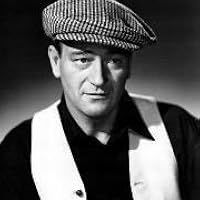
"John Wayne's popularity with audiences has confounded film critics for decades. Even years after his death, he has been ranked by the public among the top ten stars in Hollywood. Unable to dispute his box office success, detractors have focused on his right-wing politics and the fact that - despite starring in gung-ho war films - he didn't sign up for military service in World War II." "Now, in John The Man Behind the Myth, Michael Munn takes on the critics. Drawing on time spent with Wayne on the set of Brannigan - and almost one hundred interviews with those who knew him - he provides a rare look at the actor's film roles through unforgettable, behind-the-scenes anecdotes that will delight admirers and fascinate a new generation of fans. Munn sets the record straight on director John Ford's contribution to Wayne's career, reveals the truth about why the actor was unable to enlist, and debunks other myths surrounding a life that needs no embellishment. He details the megastar's highs and lows, three failed marriages - and two desperate battles with cancer." But the most stunning revelation is the first-ever public disclosure of Soviet dictator Joseph Stalin's plot to have Wayne assassinated because of his aggressive - and potentially influential - anti-Communist views. In these pages, Munn proves that - while facing attempts on his life that were kept secret even from his family - the man he calls "the absolute all-time movie star" was as much a hero in real life as he ever was on-screen.
John Wayne was only his stage name. Named after his grandfather, Marion Mitchell Morrison, he was born on 26 May 1907 in Winterset, Iowa, as Marion Robert Morrison. But, four years later, his name was "unofficially" changed to Marion Michael Morrison because his parents wanted to call their second born, whom his mother favored, Robert. I wonder how he really felt about that?
The author, Michael Munn, had the opportunity to work with him towards the end of his life on the set “Brannigan” filmed in London, and interview and talk with him often for the eventual publication of this book. Plus, John Wayne gave Munn a list of names of people to contact who could also tell stories and to help set the record straight on separating fact from fiction when it comes to his life, which publicists have glamorized over the years. Let's just say, this biography brings John Wayne back down to earth. There are so many myths put out by his early publicists, that it's really unfortunate that John Wayne never got around to writing his own autobiography. In any case, this biography focuses more on John Wayne's acting career. I just find it strange all the quotes from John Wayne and other actors, actresses and film directors were from way back in the 1970's, but the book wasn't published until 2003.
I really enjoyed this book and seeing what really goes on inside Hollywood when filming movies. John Wayne did not have it easy and was considered an outcast for his outspoken beliefs in the war efforts. But, he stood his ground as the critics ripped him apart and the American people stood by his side. He is truly an American legend that will always be remembered for his own patriotism anytime America is attacked by outsiders. That is what he stood for! Now to watch some of those old movies to see if I can recognize any of the things mentioned in the book. I'm sure I will appreciate "The Alamo" more now that I know that was his personal baby he was most proud of...even though the critics tore it apart. John Wayne's famous quote in the movie, The Alamo, which he tried to live by: "It's good to feel useful in this old world. To hit a lick against what's wrong or to say a word for what's right, even though you might get walloped for saying that word I may sound like a Bible-beater yelling up a revival at a river-crossing camp meeting, but that don't change the truth none: there's right and there's wrong. You've gotta do one or the other. You do the one and you're living. You do the other and you may be walking around, but you're dead as a beaver hat." ---------- **spoilers below** ---------- EXTRA NOTES FROM THE BOOK:
The Morrison family moved to Antelope Valley, California, and took over his grandfather's homestead, which was nothing more than a rundown shack with no electricity, when Marion (John Wayne) was 7-years-old, in 1914. He hated it there and so did his mother. It was just too primitive and seemed to have rattlesnakes everywhere. His father failed at growing crops and two years later he moved the family to Glendale, California, where he would get a job as a clerk in the Glendale Pharmacy. Marion loved it in Glendale. He made friends and acquired his first dog, Duke. The dog went with him everywhere, and everyone started calling the dog Little Duke and he was called Big Duke. He was happy to be rid of the name "Marion". His new "official" name was now Duke Morrison. He graduated Glendale High as class president in 1925. Here, he was introduced to acting, which he really wasn't that good at. He worked for a few years as a prop man and was noticed by a producer looking for a fresh young face for the movie, "The Big Trail". He accepted his first movie role, but they didn't like his name, so came up with John Wayne, named after Mad Anthony Wayne, a Revolutionary War Hero. This is the accepted story. Anyhow, the movie was a flop and he was stuck in B Western movies until his role in "Stagecoach", in 1938. He wouldn't get a lead role until around 1948/49 in She Wore a Yellow Ribbon. In spite of all the critics saying he couldn't act, in 1950, he became among one of the top ten actors/actresses and remained so for the next 20 years. He dabbled in directing a few movies of his own without great success. But, his biggest dream had always been to direct "The Alamo".
His love and study of American history taught him the value of this country and its freedoms. He was an avid reader and read what happened to Russia in 1917 when the Communists took over. In 1947, President Truman put out a witch hunt for Anti-American sentiments and known Communists, and that included ten big-name producers and directors in Hollywood. John Wayne grew such a strong, open voice and stance against Communism, inside and outside of Hollywood, that he became the symbol of American Patriotism. Not only did many in Hollywood turn their backs on him, but, in 1947, even Joseph Stalin in Russia had a hit out on John Wayne for his life because he believed he was leading the fight to destroy Communism in America and in the film industry.
Frank Sinatra and John Wayne did not get along. Frank was in the mafia and also had hired one of the Hollywood Ten communist producers to produce a film, The Execution of Private Slovak, a story of the only American to be executed as a deserter during the second World War. Once the critics got a hold of this knowledge, and Senator John Kennedy put a lot of pressure on Frank, he ended up paying the producer $75,000 to NOT produce the film.
Later, at a children's benefit, Frank Sinatra had been heavily drinking and approached John Wayne trying to start a fight over the reason why John disliked and disagreed with him. John said they could discuss it at a later time. This pissed off the drunk Frank and several men had to drag him away to avoid a fight at the benefit.
In 1966, John Wayne did a 3-week tour in Vietnam. Even there, a sniper had it out specifically for him. Word was out that the great American was there and Chairman Mao had put out a reward for his life. The sniper was captured in John Wayne's presence before being taken away.
In 1974, the Harvard Lampoon sent him a letter calling John Wayne the biggest fraud in history and challenged him to come speak to 1600 Harvard students. So, he met their challenge and drove into campus in a tank to avoid being hit in the kisser by flying eggs. But, his wit and quick humor won over the students and they ended up loving him. He gave a speech that our young adults NEED to hear today. He told them that a university should be a quiet place where people go to learn, not to destroy property that belongs to someone else. He said that teachers and professors were people and should be treated with respect. Education was a privilege, not a right. And that they were not going to sit by and let the students destroy the schools and the system.
In 1964, John Wayne had been treated for, and survived, lung cancer. He takes full blame for the cancer because he was a smoker, as were most other actors back then. 1964 was a bad year all around for John Wayne. He did John Ford's last film, which he was all wrong for; he played a Roman soldier, which he was all wrong for; and did the worst circus film, Circus World, ever made. Then he began coughing up blood. After the filming of In Harm's Way, he was diagnosed with lung cancer. He had the golf ball sized tumor removed on 16 Set 1964, and 4 months later he was filming The Sons of Katie Elder.
Besides his home in Newport, John Wayne invested in a twenty-six bar ranch in Arizona that was quite successful and he also owned a farm near Stranfield, Arizona, growing cotton and grain. He loved being out at the Arizona ranch, but he still hated horses and drove everywhere in his truck.
In 1976, he went in to have some kind of corrective surgery on his prostrate gland when, by chance, they discovered a problem with the mitral valve to his heart due to his coughing fits. He was left filming commercials. But as his voice grew weaker and weaker, in 1978 he admitted himself into the hospital thinking he had bronchitis. But it was the faulty valve. At age 70, and with only one lung, he had the valve replaced from a pig's heart in a 12 hour long operation where his heart was removed from his body and kept alive with a pump. He made it out alive, but his greatest fear was having the cancer return. And in December 1978, he started having severe stomach pains. In January 1979, he had exploratory surgery and found he had stomach cancer. They removed his entire stomach in a 9-hour operation. He survived this but didn't have much of a life left. Everything he ate went straight to his intestines. He could hardly eat a thing, just minute amounts of bland food. His drinking days were over. He was going through daily radiation treatments when he stepped onto the stage for the last time at the Oscars at the Los Angeles Music Center to announce the Best Film of 1978 award. He was bone thin and looked emaciated. He would die just 2 months later.
On his death bed, Maureen O'Hare spent 3 days with him in his home talking of old times to keep his spirits up, but when she left, she knew she would never see him again. On May 2, 1969, he collapsed on the ground in agony and his son Ethan drove him to UCLA Medical Center. They found that the cancer cells had multiplied into his colon. He underwent another fruitless operation in which they removed most of his colon. But within 10 days he had another major blockage. At this point, he was morphined up and the family were called together. He would die, age 72, on 11 June 1979, at 5:23 pm. The Duke was buried in an unmarked grave on a hilltop in Pacific View Memorial Park, overlooking the ocean.
Note on his stomach cancer in 1979: A lot of critics would like to blame the setting where the film, "The Conqueror", was filmed in Snow Canyon in where radioactive dust had settled 140 miles from the atomic blast was tested in Nevada. About half the crew on that film ended up with, and survived or died, of some form of cancer, including the leading actress, Susan Hayward. She also smoked, but ended up with a brain tumor, skin cancer and uterus and breast cancer.
NOTE: John Wayne was good friends with James Arness of Gunsmoke and was able to secure roles for him in up and coming movies, such as "Sea Chase" in 1954. In fact, John Wayne was offered the part as Marshal Matt Dillon in Gunsmoke, but he turned it down. James Arness was under contract with John Wayne's company, Batjac, and offered to release him for the role. John felt James Arness wouldn't become a star in films but would do good in television. James Arness died in 2011. ---------- FILMS AND NOTES ABOUT THE SHOOTING OF THE MOVIE & THINGS TO LOOK FOR: ---------- Stagecoach
1948 - Fort Apache 1948 - Red River put John Wayne on the map 1949 - She Wore a Yellow Ribbon - his first lead cast directed by John Ford 1952 - The Quiet Man with Maureen O'Hare in Ireland 1955 - Sea Chase - filmed in Hawaii - John Wayne had a severe ear infection for 2 whole months from scuba diving with Pilar before filming started. He was on heavy pain meds. Also, Lana Turner, the leading lady, was an alcoholic and hated everything and everyone. The love scene comes off very fakey because she kept telling John Wayne not to mess up her hair or her makeup. He was pissed. How's he to make love to a woman who won't let him touch her. 1956 - The Searchers - claimed to be one of John Wayne's best performances. It was a totally new act for him. The hate in his eyes comes from him imagining the KGB threatening him and his family, which another threat had been thwarted just begore this film. About 10 Russians who had settled in Hollywood were found out, beaten and sent on planes back to Russia. 1959 - Rio Bravo with Dean Martin and Angie Dickinson...sounds really good. 1959 - The Horse Soldiers- filmed in Louisiana. Pilar and Aissa were there in Alexandria so John Wayne could keep an eye on Pilar, who was addicted to sleeping pills. John Ford was on the wagon for alcoholism and wouldn't allow John Wayne to drink ...treated him like shit the whole time. A stuntman, Fred Kennedy, died on the scene. He was 50 and really was too old but begged to perform a stunt for extra money. When he fell off the horse, he broke his neck and died on the way to the hospital. This threw John Ford back off the wagon and he couldn't finish the film. John Wayne had to rewrite and finish it up. 1960 - In North to Alaska, John Wayne finally becomes a big box-office star. This began as a title with no movie. Producers scrambled to get at least a story going before John Wayne showed up. This was his first comedy romance, and he found he was a natural and the public loved him. 1961 - The Comancheros 1962 - Hatari 1963 - Donovan's Reef 1965 - The Greatest Story Ever Told - the movie was a flop and needed some big names to bring in the viewers. So, during the last 15 minutes of the movie you will see John Wayne, Sidney Porter, and Pat Boone. Still, the movie was a flop. 1966 - El Dorado - same story as Rio Bravo with slight differences 1971 - The Cowboys 1972 - The Train Robbers 1974 - McQ - John Wayne turned down the role of Dirty Harry because they first offered it to Frank Sinatra who had to turn it down because he hurt his hand. When it became a huge success played by Clint Eastwood, then John Wayne decided to produce a watered-down rip-off version called McQ. John Wayne didn't have his usual friends and co-stars around him this time and he was living alone on his yacht. Pilar and his daughter came to visit but left early. It was believed he was having a fling with his secretary Pat Stacy, who was about 35 years old, half his age. She wrote a book "Duke: A Love Story" (which I have not read yet) that shows Dukes warm, generous, and courageous character as stated by James Stewart. But, he was about 67 years old at this time...he couldn't run...he couldn't fight...he couldn't even breathe properly...and he wore a toupee that was too dark for him. His marriage was over. John Wayne was a lonely man. When he returned home to Newport, Pilar and all her belongings were gone. 1976 - The Shootist - John Wayne’s last film. His illness was getting to him, plus he contracted another ear infection that left him bedridden for a week or so during filming. He had major temper outbursts, then crying and apologizing to the people he was hurting. He was angry because he couldn't drink, smoke or have any fun anymore. His coughing fits wracked his whole body!
Some films produced by John Wayne's Backjac company, which the critics gave mostly bad reviews, but the public must have loved because they all made good profits:
Blood Alley The Sea Chase The Conqueror The Searchers The Wings of Eagles Jet Pilot Legend of the Lost The Barbarian and the Geisha 1960 - The Alamo - John Wayne's dream film. He prepared for 10 years. But when he was ready, no producer wanted to produce it. They all turned him down unless John Ford directed it. But this was John Wayne's dream; he wanted to direct it. So finally he was able to get financing as long as he, himself, agreed to play the leading role of Davie Crockett and pitch in the other million dollars. Once all the logistics was established, he found he couldn't get any top American actors to play the other leading men of Travis or Bowie. Charlton Heston and Laurence Olivier didn't want to work for him and turned down the parts. So he hired a British actor, Laurence Harvey, to play the part of Bowie. John Wayne's son, Patrick was cast as Captain James Butler Bonham and his youngest daughter, Aissa, played Captain Dickinson's daughter. Costs added up quickly with the stars, co-stars, supporting actors, and the 2000 extras. The money ran out before the first single foot of film was rolled out, and John Wayne mortgaged his house, his production business-Backjac, family cars, everything to produce The Alamo. P. 405-406: - John Wayne's words to the press regarding The Alamo: "I hope that seeing the battle of the Alamo will remind Americans that liberty and freedom don't come cheap. I hope our children will get a sense of our glorious past, and appreciate the struggle our ancestors made for the precious freedom we enjoy - and sometimes take for granted." The Alamo was shot in 81 days. It was so stressful on John Wayne that he lost 35 pounds and went from 60 cigarettes a day to a hundred Camels a day and developed a smoker's cough. In the end, the critics tore the film and John Wayne apart because of his politics. After filming of The Alamo, John Wayne found himself in debt worse than he thought. He found his accountant basically lost millions of his dollars due to bad investments and frivolous spending over the past 20 years, and he wasn't the only one hosed. Other actors also found themselves screwed by this guy, Bo Roos. But John Wayne's lawyer told him it was useless to sue a broke man and that he would be the one looking like a fool for not even inquiring about his finances for 20 years. 1963 - McLintock! #2 in the top ten box-office stars 1969 - The Green Berets - critics, as usual gave it the worst reviews ever, but the public loved...another box-office hit that made millions. 1969 - The Undefeated - During shooting John Wayne fell and fractured a couple of ribs, then tore a ligament in his shoulder, on top of having to use oxygen to breath because they were shooting at a higher elevation in Colorado. Pilar had gone with him to Colorado, but they fought and she ended up leaving. Pilar had joined a cult...Christisn Science, and they were growing apart. 1969 - True Grit - kept John Wayne in the box-office. Clint Eastwood was now his new competition with his new, fresh style of westerner movies. Critics say he was overacting in the film, but he finally did win the golden globe award for acting in True Grit, presented to him by Barbara Streisand. 1970 - Chisum 1970 - Big Jake - his son Ethan plays his grandson in the movie Brannigan - John Wayne was a dying man. His coughing fits were BAD and frequent. Here, is where the author of this book meets and talks with him, and even plays an extra as a number of people walking down the street. But, it was so crowded you can't see him at all in the movie.
This entire review has been hidden because of spoilers.
Having grown up with John Wayne movies always in my home, there was a place in my heart for this man. But after reading the wonderful book, I have an entirely new respect for him. It was well written and I believe, as accurate as they come. Most of it was straight from John Wayne's mouth and from those closest to him. He told the story wonderfully.
While reading a review of True Grit by a friend today, she said she hadn't seen the John Wayne version. Well, that reminded me that I am a big John Wayne fan and grew up watching his movies. Then I remembers that I read this book last year and was way behind on my reviews. So.
Sometimes you don't want to know so much about the stars you grew up idolizing and wanting to be like. I guess it was his characters that I liked so much. Stoic, bold, honest, willing to stand up when everyone else runs for cover. I like those things and the model of John Wayne was important to my development. But, little by little, I've grown curious about his life, so I bought this book. It was my first iPad book.
The writing is good and the author is very much a fan. He's also not afraid to write about the untidy parts of John Wayne's life. Some authors indulge in the weakness of their subjects, but I thought he had the right balance of honesty and perspective. He life is interesting and there are some great stories in the book. I still enjoy my John Wayne movies, and have a bit more appreciation for the man who made them.
Today, John Wayne is a small island of old-fashioned idealism in an ocean of political correctness; and ocean levels are rising.
I can foresee in the next generation, or two, people will land at John Wayne Airport and wonder who he was. They'll see the cancer ward at UCLA that bears his name, and wonder what he was like. Not everyone though. I trust there'll be sentimentalists like me still around, who cherish his memory; who've seen his films and who have read this book.
Michael Munn has written a brilliant biography, and even if you have just a passing interest, or are an avid fan of The Duke, I'm sure you will learn something new about this giant of a man. What I learned was: JW had strong right-wing political views (which trounced my idea that Mr Wayne was too busy making movies to be political); he had many faults – excessive smoking and drinking and philandering among them; his attitudes were black and white – no shades of grey; he was bad-tempered, he put up with John Ford's shit; he hated Communists so much, they tried to assassinate him – three times!
JW made over 200 films in his 50 years of acting (hard-working is an understatement). Unfortunately only a handful were considered good. True Grit, is my favourite; The only one to earn Duke an Oscar – and well deserved it was. It is closely followed by The Shootist and The Searchers. I immensely enjoyed this book and even though Duke is a bit of a dinosaur in today's world, and his acting was not brilliant, I just loved reading about my childhood hero. Almost as much as watching his movies - B Grade or whatever - I don't care. Good work Mr Munn!
(In a slow Southern drawl): Baby sister, I was born game and I intend to go out that way. Rooster Cogburn
This is a conversational narrative comprised of interviews given by Wayne and his friends over the years, many conducted by the author (Michael Munn) himself. It takes a lot of hidden skill to make such a book work as the bridges and segues make the difference in a smooth narrative and a Hodge-podge. Munn does an excellent job.
The book itself is mostly about the work but also enough of his personal life sprinkled in to give the reader an idea of the challenges Duke faced throughout his career. I am too young to remember the controversial Wayne as an opposition figure to communism and the student protests of the 1960s. This theme and Wayne's role does come up in other books I have read, of which Peter Fonda's Don't Tell Dad is most vivid in my mind. The young Fonda was a sailor much like Duke and the old cowboy befriended Peter at the same time he was making counter culture movies like Easy Rider. It was telling that Peter had not an unkind word to say about him. That's much the case here. Wayne's political critics were the people that didn't know him. His co-stars no matter how opposed politically typically liked or even loved him for his sincerity and kindness.
I'm a fan of older movies from the Golden Age so I am lucky to have seen nearly all of the older classic Duke movies while I have avoided so many of his other movies from the era that seemed more formulaic or vehicle driven. Munn has convinced me that some of those early films are worth going back to, namely Flying Leathernecks, Wake of the Red Witch, and Angel and the Badman. I'm also going to take a look at the later film, The Cowboys, that had such a generic title I had assumed it to be another self-parody pot-boiler. There are probably a dozen other movies The DVR will be instructed to gobble up on TCM going forward.
So much of the book is going to naturally be about Wayne's relationship with John Ford. It's hard to come away from the book not thinking Ford was one of the most sadistic directors in Hollywood. You really have to wonder why Wayne kept coming back to work with Ford after the horrible treatment he got on each picture. When you consider that Raoul Walsh gave Marion Morrison his first starring part and the new name, and Howard Hawks made him a star in Red River, what was the loyalty to Ford?
I have met my share of celebrities off-stage and they are mostly underwhelming people who have a specific talent that shines brighter than their whole. A few will surprise you by their nonchalance or their manners. With maturity some of them overcome their image insecurities and although some get worse. Many are just people to be tolerated because we all have a job to do. The way that John Wayne is described seems to be something else entirely. His hardscrabble efforts to make a career out of Hollywood gave him a grounded outlook on life and career. I think he would have been a pleasure to know.
I recently watched several John Wayne movies for the first time and then felt compelled to read a biography on this famous actor. I instantly loved the inclusion of so many direct quotes from Wayne that gave this a personal flair. I was surprised by the revelation in the first few pages that Marion Morrison née the Duke was bullied as a child and grew up very poor.
This was exactly the kind of biography I like- focused on the actor with an informative background that doesn’t include tangents of all the other people associated with each movie. I enjoyed learning about who John Wayne was as a man, an actor, and a friend through stories of how he responded to different issues on set. His personality came through so well in this book. Quotes from him and his friends provided a unique insight into his thoughts and feelings.
The author gave detailed background about each of Wayne’s movies and explained his relationship with the director and how that impacted his performance. I was dying to see how he would interact with his female costars, and who he had a romance with. I also found it incredibly interesting that Hollywood was so new that many of cowboys in his early movies were actual unemployed cowboys, and he learned their nuances and incorporated those authentic details into his own characters.
It was clear that this author admired Wayne and tried to give a positive but accurate portrayal of his life and work. The author went to great lengths to interview many people who knew and worked with Duke. It was clear that the author liked John Wayne, and I was even more impressed when he disclosed that he met Duke and called him a friend. This was a refreshing read that made me like Wayne even more than I already did and admire his fervent passion for being an American and expressing that through his roles. John Wayne was tough, kind, and really did have true grit.
Truth be told, I've never been much of a John Wayne fan. I own hundreds of movies on DVD, and none of them feature Wayne. However, reading David Morrell's essay "John Wayne: The Westerns" made me realize that Wayne's persona and fifty-year career are quite fascinating in and of themselves. You don't have to be a fan to appreciate that John Wayne was a one-of-a-kind. A legend. Biographies of celebrities are difficult because each reader is likely to enjoy a different sort of emphasis and level of detail. Speaking personally, I prefer biographies that don't spend much time on the subject's childhood. I also prefer a stronger focus on the subject's professional--rather than personal--life. JOHN WAYNE: THE MAN BEHIND THE MYTH met both these criteria. John Wayne made a lot of movies, and author Michael Munn does a great job giving them adequate attention without going too in-depth. If I was a bigger fan, I might've been disappointed by the book's relative brevity, but, as things currently stand, I found the pacing just right. In addition to his personal conversations with Wayne, the author relies heavily on interviews conducted with people Wayne was famous for working with. This makes for a fairly balanced perspective, because not everyone who worked with Wayne was an admirer (*cough* John Huston *cough*). It's also interesting to hear Wayne's thoughts on his various co-stars and directors, especially when it comes to people like John Ford and Kirk Douglas. The author is a fan, but, like Wayne himself, only thinks highly of a handful of The Duke's films. He often inserts his own opinions (i.e. Wayne's performance in TRUE GRIT was vastly overrated) but never comes across as being intrusive in doing so. I get the sense that he and Wayne didn't see eye-to-eye politically, but there is always a definite feeling of respect. The book also explores a great deal about Wayne's personal life, both the good and the bad: his rigid moral code, his patriotism, his failed marriages, his temper, his charity work, his business failings, etc., etc., etc. Devoted fans might find this book somewhat lacking in detail. Academics might find it too breezy and conversational. Others might complain that not enough time is spent on Wayne's childhood. For me, it was the perfect overview of one man's amazing career making mostly forgettable movies.
A very good biography of the iconic actor. It is distinguished from many other biographies by the majority of the book being constructed of direct quotes from colleagues, friends and family rather than interpretations and paraphrases of quotes. This adds more wait to the subject matter and gives a more complete portrait of the man. In addition to this the author managed to conduct a candid interview with Duke in the early 1970's that clearly demonstrates how the actor felt about key events in his life time. The end result is the most complete biography of an American icon that is both informed and fun to read.
Wayne's "clear-cut sense of right an wrong" on screen didn't always find it's way off screen. If you can accept that you'll enjoy the book for the insights, highlights and trivia it offers on Wayne and his movies.
Discusses many aspects of Wayne the man and the career. Included are the 2 battles with cancer, his marriages, and the contribution that John Ford made to the Duke's career. Great reading for Duke fans.
Well-written biography of Duke Wayne. While Wayne was what he was on the big screen, he was much much more--and much much less. Munn's book shows the human frailties and the heroic qualities of America's movie star.
I absolutely loved this book. If anyone is a fan of John Wayne, this would be the biography to read. It goes into details and stories about the Duke that haven't been told anywhere else. Just a little hint, assassins.
An admirable and objective biography, a quick and easy read, perfect for a movie lover or a Duke lover. Munn makes no secret of his admiration for JW but presents potentially unflattering details in a fair light. A loving portrait fairly told. I loved it and will likely read it again.
When you think about a cowboy, most likely your image of a cowboy would be influenced by John Wayne, either directly or not. And for me, John Wayne is the quintessential cowboy, true man of the Western movie. As Archie Bunker from TV Serials All in The Family would call him, The Duke, exudes some kind of confidence and charisma that only him can exudes. This book chronicles his life and career, and the personal bond formed, very unlikely, between the author and Duke.
Born Marion Robert Morrison, he began his career as an actor after his lagging American Football player record went nowhere. During his early career, he made hundreds, western, movies, with himself playing in most of the stunts, with destructive future consequences. As no one would believe in a cowboy named Marion, or indeed, everyone named that way, his named was changed into an icon we know today. First he called himself Duke Morrison, then John Wayne, the nickname Duke reserved for his closest friends and admirers.
Throughout the book, we were served with various faces of Duke: Duke the daredevil, Duke the perfectionist, Duke the gregarious, and even Duke the fierce American. However, there are some characteristics that I think, formed his personality. First, he was a man wrecked by guilt, as shown in his broken marriages and his efforts to make it up to his ex-wives and children. And second, his sense of Patriotism, which manifested in his fierce opposition to communism and supports to Vietnam War. While he was most recognized for his works in Western genre, during his peak he also starred in various movies such as WWII and historic epics (with arguably deadly consequences), and even romantic comedies.
As time go on, The Duke career had spanned five decades. His dominance in Western was toppled by Clint Eastwood as the new generation of actor. While people's preferences for western changed for Police drama, which, again, played into the hands of Eastwood. Even here, Duke would try his best to not cede his throne to him, playing in some rather okay-ish police movies, while audiences would be attracted by the power of his name. Meanwhile, as his career faded, Duke struggled against numerous cancers, first lung cancer then stomach cancer. This was the part of the book I found really sad.
Overall, John Wayne, without a doubt, is one of the most influential actor in Hollywood history. despite his shortcomings, he was surrounded by people who loved and respected him, even Frank Sinatra. His ultraconservative political views would put him into a pariah in today's Hollywood, but then again, he was product of his time. A very interesting book about a very interesting man that was The Duke.
Personally, I think that this book was incredibly interesting. I think that because in the duration of my reading the book I was taught many different things I never knew about the man himself, John Wayne. I learned his entire back story and how he struggled to gain an important spot in a film. I learned many things about his childhood and his life at home, as well as his life in college. I chose this book because I grew up always watching old westerns with my father, John Wayne westerns in particular. I have always been fascinated by his movies and how realistic I pictured them to be. I would like to inform you about how descriptive the book is. The book goes over every little detail about John Wayne's life you could possibly imagine. It doesn’t skip a beat. It is so accurate because the author of the book went back and interviewed all of his old friends who were still alive from college and from the film industry. I also would like to mention how organized the book is. All of the chapters in the book end at good points when enough information has been gone over. I was satisfied after each and every chapter I read on how much information was discussed and was gone through. During the time I was reading the book I learned so much about John Wayne. I learned things I would have never even imagined about him. All in all, I find that this book has been a very interesting book and has kept me interested throughout the entire read. This book was a moderate read, but if you had the desire to learn about a legend it would be a great book for you. If I were to recommend this book to anyone it would be towards someone who grew up watching old westerns. In the Western movie genre, John Wayne is an icon and is seen as a legend.
Was okay, had to force myself to finish the book but it there were times where reading was graceful and enjoyable. The interactions John Wayne has had with others are sometimes really funny.
There are dozens of John Wayne biographies to choose from, including memoirs written by his widow Pilar and daughter Aissa, but I urge you to read only one: Michael Munn’s The Man Behind the Myth. Simply put, with all the research Munn conducted (over decades, mind you), there’s no reason to read any other book. This is the most thorough accounting you’re going to find, and since Mann drew from interviews of nearly one hundred people, it’s far more accurate than Pilar’s and Aissa’s. In fact, I was so disgusted with the first couple of chapters of the latter’s book, I couldn’t even finish it. It was a pack of lies, fed to her by her mother. Pilar was a horrible woman who manipulated her child with lies and turned her against her father at an early age. In Munn’s research, you can learn the truth.
There’s always a risk, when you read a biography or memoir of one of your favorite stars, that he or she will topple from their onscreen pedestal. But with John Wayne, what you see is what you get. There will be some surprises in the book, but not about his character. He was John Wayne on the screen, and he was John Wayne off the screen. He was moral, upstanding, patriotic, strong, steady, respectful, loyal, tough, and decent. He was repeatedly attacked because of his politics, but he never wavered and never apologized. There won’t be a single reader who becomes disillusioned by the subject of this book – in fact, just the opposite. When you learn what he lived through, you’ll love him even more. He’s so easy to love! And he was so incredibly strong. I won’t spoil the big surprise, but he knew there was a certain danger in being John Wayne, and rather than cower in fear, he remained as tough as any onscreen character he portrayed. The only concern he showed was for his family’s safety, and it’s tragic that Aissa was so misinformed about her father’s behavior. She complained that she wasn’t allowed to have sleepovers with her friends, completely unaware that her father kept her close to home because he didn’t want her to get kidnapped by his enemies.
Biographies are my favorite books to read; I’ve read dozens. Munn’s labor of love is one of the best. Similar to Graham Lord’s Niv, it’s more thorough than you can imagine. Also similar, when your beloved star starts his decline from his terrible illness, you might want to close the book. It’s extremely sad to read about the end of Duke’s life, and if you love him as much as I do (and you absolutely will by that time in the book), your heart will break if you learn the details.
John Wayne was a wonderful, genuine man. Yes, he created and perfected his onscreen mannerisms. His famous walk wasn’t really how he walked. But as an actor, that was his job. To Munn, Duke revealed his top career goal: to never disappoint his fans and never do anything on the screen that would make them feel bad. It was a lovely, noble goal. He always wore his hairpiece, he refused to shoot a character in the back, and he never played anyone unscrupulous. Even Randolph Scott played a scoundrel in Follow the Fleet. Even Fred Astaire played a depressed drunk in On the Beach. No one felt as accountable to his fans as John Wayne, and no one pleased them so much so consistently.
Michael Munn, 'John Wayne: The Man Behind The Myth' (London: Robson, 2004).
In a dramatic opening Munn rebukes the critics who savaged John (Duke) Wayne's 'The Alamo' (1960) by quoting Laurence Olivier saying, “Critics, laddie, know #### all!” (p.ix)
Two things make this biography different from many others. Firstly, Duke wanted Munn to write his biography and gave him personal interviews and many contacts to follow up. Secondly, Munn describes in detail the communist conspiracy to kill Wayne as ordered by Mao Tse-Tung (Chinese Communist revolutionary and the founding father of the People's Republic of China) and the Russian politician Nikita Khrushchev. The dramatic clash between Wayne's stunt friends and Stalinists in Burbank, California, is quite incredible (p1-6,180-186).
The incident fueled his performance in 'The Searchers' (1956). “Wayne told me the secret of how he found that dark place he'd reach down to for his performance as Ethan. 'I Just thought of the Apaches not as Indians but as the Communists who's been trying to kill me. I thought, What if the commies were the ones who had done this? What if they had managed to burn down my home and kill my family? You see, I can be a method actor too.'” (p186)
I was interested to read that for the movie 'Blood Alley' (1955) produced by his company Batjac, Duke said, “I'd really wanted Humphrey Bogart to play the part [of the captain], and for Betty [Lauren Bacall] to play the leading lady.” (p178)
Another interesting insight is how when it came out to those within Hollywood that actor Rock Hudson was gay he was shunned by the industry. In 1969, Duke offered Hudson a leading role in his film 'The Undefeated' (1969). Later, Munn interviewed both men.
JW interview (1974): “Rock's a homosexual, yes I know. Who the hell cares if he's a queer? The man plays great chess. And what a good looking man. I admit, I couldn't understand how a guy with those looks and that build and the 'manly' way he has about him could have been a homosexual, but it never bothered me. Life's too short... All I cared about was he was on set on time every day, and at the end of day he'd say, 'Care for a little chess, Duke?' and I'd say, 'You wanna get beat, again?'”
RH interview (1980) after Wayne had died: “I was grateful to Duke Wayne because my career was going down the toilet at that time. Then I get a call.. '..you want to make a movie?' I wanted to fall to the ground and give praise, but I didn't want to sound desperate. What a great time I had doing that film. John Wayne was then 'the' Hollywood legend, and I was on screen with him. The guy is an angel. He saved my life back when no other film maker wanted to know me.” (p308).
I read a lot of biographies and was really excited to read this John Wayne book. This one had some great facts and gave some new information I hadn't known about. However, this may be the slowest book I've ever read about someone famous. It delves heavily into each director, actor, and stuntman Wayne has ever worked with. Although it begins with insight into his films, the details dragged on and I found it to be a chore to finish. Just depends what you are looking for in a biography. I prefer a little more on the personal side and a little less detail to the professional side.
My dad would watch a John Wayne western eveytime it was on TV. You could count on some channels even having a John Wayne weekend. I don't have cable so I am not sure if that is still a thing. We even bonded over the comical aspects of Rio Bravo. That was all I knew of the legend, just what my dad would watch over and over again. The only thing that drew me in was that Stalin tried to have him killed. Then the Chinese followed by the Vietnamese. An interest read to say the least.
The Cult of the Duke lives on. A light read full of gossip and movie lore. Adoring, reverent, one dimensional, popcorn fun; not to be taken too seriously but still full of interesting details re: the studio system and Wayne's hard stand against communism, peppered with plenty of Wayne's salty quotes - yet one has the feeling that there is a "real" book here that has been sacrificed at the fan-boy's altar.
This was more a book about John Wayne's relationship w/ Directors and fellow actors, not necessarily about the man and his personal life. Was an OK book, but will not really change your opinion about Wayne based on what is was before reading this.
This book is not for those who have put duke on a pedestel, but rather for those who want to know the actual john wayne. This book doesn't hide his warts, but shows his bad choices and reasons for them. I highly recommend this book for all real wayne fans.
Interesting background on the man, the movies he made, the people he worked with. Munn used interviews with Duke and family and fellow movie business people to write a book that was interesting without being gossipy and trite. If you're looking for a tell-all or inside gossip, this isn't the book.
This book cleared up a lot of myths that I always heard about John Wayne. A very interesting read about a true American icon. It's a shame that the one thing he's always wanted to do, he never got a chance to; if you want to know what that is, read the book.
Living Legend and American Hero! His films said it all about his Character. Too bad his personal life wasn't alway happy. I enjoy "The Quiet Man" and "True Grit" the best!