

What do you think?

Comoediae: Andria, Heauton Timorumenos, Eunuchus, Phormio, Hecyra, Adelphoe
Contents include: Andria, Heauton Timorumenos, Eunuchus, Phormio, Heyra, Adelphoe.
344 pages, Hardcover
First published January 1, 161
About the author
Terence
875 books60 followersPublius Terentius Afer (c. 195/185–159 BC), better known in English as Terence, was a playwright of the Roman Republic, of North African descent. His comedies were performed for the first time around 170–160 BC. Terentius Lucanus, a Roman senator, brought Terence to Rome as a slave, educated him and, later on, impressed by his abilities, freed him. Terence, apparently, died young, probably in Greece or on his way back to Rome. His six verse comedies, that were long regarded as models of pure Latin, form the basis of the modern comedy of manners.
One famous quotation by Terence reads: "Homo sum, humani nihil a me alienum puto", or "I am a human being, I consider nothing that is human alien to me." This appeared in his play, Heauton Timorumenos.
One famous quotation by Terence reads: "Homo sum, humani nihil a me alienum puto", or "I am a human being, I consider nothing that is human alien to me." This appeared in his play, Heauton Timorumenos.
Ratings & Reviews
Friends & Following
Create a free account to discover what your friends think of this book!
Community Reviews
Displaying 1 - 30 of 47 reviews
March 7, 2022
So I just finished this book and... uh... I... Give me a sec.
Okay I'm back. Where was I? Oh, yes. Terence. In particular, we are talking about all six plays that African dramatist Publius Terentius Afer wrote in his short career before he disappeared at the tender age of 25. I'm certainly no expert on the poets of antiquity, but the works offered here are not what I expected at all. In what way, you ask?
Well, rather than write an overly lengthy review of all six plays, let's focus on a prime example that I think captures the essence of what you'll find here. The one I'm thinking of is called "The Mother-in-law," originally known as "Hecyra" from 165 B.C. Here is my humble attempt at consolidating the play to the basics.
A young man is forced to marry his next door neighbor by his parents, a girl he doesn't much care for because he is really in love with a prostitute. So he doesn't bother to consumate the marriage. Oh, but it gets better. His new wife gets pregnant anyway. Turns out, she had been raped by a drunken frat boy in the street seven months ago. This very much offends the new husband who wants to disavow this harlot of a woman and her unborn child. He didn't sign up to raise some deadbeat dad's kid! He is considering divorce until he is reminded that he once raped a girl that looked an awful lot like his wife, and stole a ring from her in order to give it to his prostitute. The prostitute shows up wearing the ring that he stole, and the poor pregnant wife's mother recognizes it as belonging to her daughter. DOH! Yep, the baby is his after all! And they live happily ever after.
I know this was over 2100 years ago, but just what is supposed to be the message of this play? Was there supposed to be a moral lesson to young Roman boys to keep their salami in their pants until marriage? Or to know how to hold their liquor? Was this a commentary that was ahead of it's time about the treatment of women in society or the double-standards between the promiscuity of the sexes? Nobody really seems to know. I certainly don't. And I guess that's what keeps people thinking and talking about these plays centuries later.
All six plays have similar themes and characteristics. Hell, they even have the same character names, with monikers like Pamphilus, Bacchis, Chremes, and Philumena attached to different people from multiple plays. The stories all center around some family intrigue. Fathers, mothers, sons, and servants are always scheming and hiding things from each other. The center of the intrigue is always a woman, a stock character known as the "Virgo" who is the main topic of conversation but who, in some plays, never actually appears in any scene on stage. The "Virgo" is always of questionable repute. Like Obama, her citizenship could be under dispute. Or she could be a prostitute, or simply have grown up on the wrong side of the tracks. Four of the stories features rape (or ravishment) of some kind. U.S. President John Adams supposedly praised Terence for his "good morals." Far be it for me to question the morals of American founding fathers, but I just don't see the positive messages that Adams saw.
Perhaps the most striking similarity, however, is that the plays do not deal with grand matters of the aristocracy or political figures. Terence chose very intimate settings involving everyday bourgeois families and their neighbors, the bones of which came from stitching together older Greek source material. So instead of Julius Caesar, we get the Roman equivalent of suburban Jerry Springer drama. In the play "Adelphoe," a father, upon hearing the news that one of his sons had broken into someone's house, beat up the inhabitants, and carried off a girl he was in lust with, essentially responds with "boys will be boys." Yes, two thousand years ago, teenage boys were still high, horny, and hypomanic before settling down for a job in middle management.
I would like to see these plays enacted as faithfully as possible to their original delivery. Though we can't appreciate this from a translation, Roman comedy utilized various metres to help get across certain moods. I actually listened to a demonstration of metre in Terence's play "The Brothers" and was shocked to find that the accented syllables we're stressed in the same rythym as my Sicilian grandmother used to chant her religious prayers. It was eerie to discover a remnant of ancient Roman poetry being spoken in my own family, and I'm sure there is a connection, because like Terence, my grandmother did not stress the natural accents but the verse accents in much the same way.
So I guess you could say these plays were more like musicals. And indeed, certain metres were delivered in accompaniment to music. Terence had his buddy Flaccus provide the musical score on the tibia (aulos), which was a pair of reed flutes. It is likely these flutes evolved into modern bagpipes as well as the double reed flute family. They really have a beautiful sound, and you should search online for performances on these wonderful instruments. Though reading these plays can be a literary joy in themselves, I know that I am missing a great deal of the emotional nuance without hearing the lines chanted in their proper metre and without the appropriate music. Imagine "Jaws" or "Star Wars" without John Williams.
However, he Delphi version of "The Comedies" contains the original Latin texts as well as the English translations, so those of you with working knowledge of the extinct language may get some sense of the prosody and rhythm.
I do not know any Latin, so I can only suppose that the poetry and subject matter translates fairly well into the English language, because these were some of the most understandable and accessible of the classical writings I've encountered. Despite the linguistic gulf between Roman Latin and modern English, the clever wordplay and rich innuendo still shines, a testament to the talent of this poet. The Delphi and Penguin editions are by different translators, but I've not read both so I can't recommend one over the other.
But do I recommend a reading of Terence's comedies overall? Well, actually yes. But be forewarned. They are batshit crazy. They may offend some modern readers. They may leave you wondering just what on earth you just read. And I've even heard that Terence's plays are much tamer than his contemporary Plautus, who really turned up the dirty jokes and the insanity to eleven. But if you are not a typical scholar of the Greek and Roman period, I would say Terence's comedies are a good place to start, and you may find yourself being pleasantly surprised by these plays and hungry to explore more of the classical period. That's a good thing.
SCORE: Despite my initial misgivings, I couldn't help but rate this a 3.5/5, rounded up to four. So wrap up in your favorite toga, help yourself to a bowl of peeled grapes, and experience the misadventures of six Roman pretty boys in need of a damned good thrashing!
Okay I'm back. Where was I? Oh, yes. Terence. In particular, we are talking about all six plays that African dramatist Publius Terentius Afer wrote in his short career before he disappeared at the tender age of 25. I'm certainly no expert on the poets of antiquity, but the works offered here are not what I expected at all. In what way, you ask?
Well, rather than write an overly lengthy review of all six plays, let's focus on a prime example that I think captures the essence of what you'll find here. The one I'm thinking of is called "The Mother-in-law," originally known as "Hecyra" from 165 B.C. Here is my humble attempt at consolidating the play to the basics.
A young man is forced to marry his next door neighbor by his parents, a girl he doesn't much care for because he is really in love with a prostitute. So he doesn't bother to consumate the marriage. Oh, but it gets better. His new wife gets pregnant anyway. Turns out, she had been raped by a drunken frat boy in the street seven months ago. This very much offends the new husband who wants to disavow this harlot of a woman and her unborn child. He didn't sign up to raise some deadbeat dad's kid! He is considering divorce until he is reminded that he once raped a girl that looked an awful lot like his wife, and stole a ring from her in order to give it to his prostitute. The prostitute shows up wearing the ring that he stole, and the poor pregnant wife's mother recognizes it as belonging to her daughter. DOH! Yep, the baby is his after all! And they live happily ever after.
I know this was over 2100 years ago, but just what is supposed to be the message of this play? Was there supposed to be a moral lesson to young Roman boys to keep their salami in their pants until marriage? Or to know how to hold their liquor? Was this a commentary that was ahead of it's time about the treatment of women in society or the double-standards between the promiscuity of the sexes? Nobody really seems to know. I certainly don't. And I guess that's what keeps people thinking and talking about these plays centuries later.
All six plays have similar themes and characteristics. Hell, they even have the same character names, with monikers like Pamphilus, Bacchis, Chremes, and Philumena attached to different people from multiple plays. The stories all center around some family intrigue. Fathers, mothers, sons, and servants are always scheming and hiding things from each other. The center of the intrigue is always a woman, a stock character known as the "Virgo" who is the main topic of conversation but who, in some plays, never actually appears in any scene on stage. The "Virgo" is always of questionable repute. Like Obama, her citizenship could be under dispute. Or she could be a prostitute, or simply have grown up on the wrong side of the tracks. Four of the stories features rape (or ravishment) of some kind. U.S. President John Adams supposedly praised Terence for his "good morals." Far be it for me to question the morals of American founding fathers, but I just don't see the positive messages that Adams saw.
Perhaps the most striking similarity, however, is that the plays do not deal with grand matters of the aristocracy or political figures. Terence chose very intimate settings involving everyday bourgeois families and their neighbors, the bones of which came from stitching together older Greek source material. So instead of Julius Caesar, we get the Roman equivalent of suburban Jerry Springer drama. In the play "Adelphoe," a father, upon hearing the news that one of his sons had broken into someone's house, beat up the inhabitants, and carried off a girl he was in lust with, essentially responds with "boys will be boys." Yes, two thousand years ago, teenage boys were still high, horny, and hypomanic before settling down for a job in middle management.
I would like to see these plays enacted as faithfully as possible to their original delivery. Though we can't appreciate this from a translation, Roman comedy utilized various metres to help get across certain moods. I actually listened to a demonstration of metre in Terence's play "The Brothers" and was shocked to find that the accented syllables we're stressed in the same rythym as my Sicilian grandmother used to chant her religious prayers. It was eerie to discover a remnant of ancient Roman poetry being spoken in my own family, and I'm sure there is a connection, because like Terence, my grandmother did not stress the natural accents but the verse accents in much the same way.
So I guess you could say these plays were more like musicals. And indeed, certain metres were delivered in accompaniment to music. Terence had his buddy Flaccus provide the musical score on the tibia (aulos), which was a pair of reed flutes. It is likely these flutes evolved into modern bagpipes as well as the double reed flute family. They really have a beautiful sound, and you should search online for performances on these wonderful instruments. Though reading these plays can be a literary joy in themselves, I know that I am missing a great deal of the emotional nuance without hearing the lines chanted in their proper metre and without the appropriate music. Imagine "Jaws" or "Star Wars" without John Williams.
However, he Delphi version of "The Comedies" contains the original Latin texts as well as the English translations, so those of you with working knowledge of the extinct language may get some sense of the prosody and rhythm.
I do not know any Latin, so I can only suppose that the poetry and subject matter translates fairly well into the English language, because these were some of the most understandable and accessible of the classical writings I've encountered. Despite the linguistic gulf between Roman Latin and modern English, the clever wordplay and rich innuendo still shines, a testament to the talent of this poet. The Delphi and Penguin editions are by different translators, but I've not read both so I can't recommend one over the other.
But do I recommend a reading of Terence's comedies overall? Well, actually yes. But be forewarned. They are batshit crazy. They may offend some modern readers. They may leave you wondering just what on earth you just read. And I've even heard that Terence's plays are much tamer than his contemporary Plautus, who really turned up the dirty jokes and the insanity to eleven. But if you are not a typical scholar of the Greek and Roman period, I would say Terence's comedies are a good place to start, and you may find yourself being pleasantly surprised by these plays and hungry to explore more of the classical period. That's a good thing.
SCORE: Despite my initial misgivings, I couldn't help but rate this a 3.5/5, rounded up to four. So wrap up in your favorite toga, help yourself to a bowl of peeled grapes, and experience the misadventures of six Roman pretty boys in need of a damned good thrashing!

February 13, 2021
This one is tough to rate. I'm no expert (or even well-read) of Roman Literature or ancient comedy, so this was a fairly new experience. I picked it up to follow along with the excellent History and Literature podcast. If one wants to read this, its going to be especially important to read it in context of the time it was written due to its treatment of women. It's been 2000 years, and we've a long way to go yet, but it's good to see that we have made *some* progress in that time.
The Girl from Andros:
I enjoyed this one. The scheming between the characters plus the dramatic irony of the different plots was pretty fun. While it didn't make me laugh, I think if staged right, this could be pretty funny in person.
The Mother in Law:
This one was almost funny in how ridiculous its treatment of the wife was in this play. "Oh no, my wife who I hated at first and didn't consummate the marriage for awhile because I was in love with a prostitute, is pregnant when we've only been together for 7 months! Oh you say she was raped 9 months ago? That's even worse! I must abandon the baby and divorce her for my honor. Oh wait! I remembered I raped a girl 9 months ago while I was drunk and it was dark. Turns out the kid was mine all along!" 😑
The Self-Tormentor:
I must have been really tired when I read this, I had no idea what was going on after the beginning.
The Eunuch:
Another story revolving around a rape. I don't think I have much to say about this one.
Phormio:
I liked this one. You can tell Romans and Greeks loved their "surprise, she's actually a citizen, so everything is ok now" plot device. But it was fun to see more scheming to get what everyone wants.
The Brothers:
My favorite of them all, and the reason I picked this up. Fun to see that even 2000 years later, we still have a divide between urban and rural folk, as well as how to raise children. While some of the details of the play are hard to relate to (spoiler, there's another rape in this one), its very easy to imagine the main theme of the play transplanted to today. I think a modern adaptation of this one could be really interesting.
The Girl from Andros:
I enjoyed this one. The scheming between the characters plus the dramatic irony of the different plots was pretty fun. While it didn't make me laugh, I think if staged right, this could be pretty funny in person.
The Mother in Law:
This one was almost funny in how ridiculous its treatment of the wife was in this play. "Oh no, my wife who I hated at first and didn't consummate the marriage for awhile because I was in love with a prostitute, is pregnant when we've only been together for 7 months! Oh you say she was raped 9 months ago? That's even worse! I must abandon the baby and divorce her for my honor. Oh wait! I remembered I raped a girl 9 months ago while I was drunk and it was dark. Turns out the kid was mine all along!" 😑
The Self-Tormentor:
I must have been really tired when I read this, I had no idea what was going on after the beginning.
The Eunuch:
Another story revolving around a rape. I don't think I have much to say about this one.
Phormio:
I liked this one. You can tell Romans and Greeks loved their "surprise, she's actually a citizen, so everything is ok now" plot device. But it was fun to see more scheming to get what everyone wants.
The Brothers:
My favorite of them all, and the reason I picked this up. Fun to see that even 2000 years later, we still have a divide between urban and rural folk, as well as how to raise children. While some of the details of the play are hard to relate to (spoiler, there's another rape in this one), its very easy to imagine the main theme of the play transplanted to today. I think a modern adaptation of this one could be really interesting.

February 19, 2021
I have Betty Radice’s translation. This is a prime example of what the Penguin Classics were doing back in the ‘60s. Just three or four one line notes per play, mostly on the original staging. The translation is in prose with most of the rhetoric stripped out. I suspect this may have altered the character of the plays somewhat, but there’s no denying the writing is lively and enjoyable. Perhaps not the best edition if you’re studying the plays, but great if you’re reading for fun.
I’ve read all the surviving European plays up to this point in time and I’ve noticed that each playwright adds some feature or another that we have retained in modern drama. At the start of Andria, instead of some god or whoever delivering the prologue and explaining the plot, Terence uses this to settle some literary scores and the opening scene is two characters engaging in actual expository dialogue. It’s clunky exposition by modern standards, but exposition it is. There are lots of features to the plays which seem old-fashioned now, like asides and monologues etc, but I got the feeling that with these Terence was breaking the fourth wall. Plautus always gave me the impression that there was no fourth wall. I sometimes got the sense that the characters were actual personalities trapped inside stock characters, rather than (with Plautus) stock characters waiting for an actor to bring them to life. These are the first plays which feel modern in some sense.
Terence’s structuring is excellent and all the plays are good, Phormio especially, with two exceptions. The Self-Tormentor is a total mess. Really quite shocking that anyone would have the gall to stage something like that. I have knocked off a rating star.
At the other end of the scale is The Eunuch. I’m going to stick my neck out and suggest this is a masterpiece and a classic for all time. Excellent construction and pacing. Some scenes comic, some shocking. It takes a very conventional Greco-Roman plot, spins it, transcends it, and manages to say something about the human condition. All the characters are compromised in some way, whether it be morally, socially etc etc. Some of these compromises are imposed by living in a society riven by enormous social problems like slavery and oligarchy, but all the main characters compromise themselves in some way, and are thus become morally low. The whole comedy is a kind of inverse tragedy. I would suggest that the main character is Pamphila, who appears only once on stage and never speaks a word. Abducted as a toddler, repeatedly bought and sold as a slave, used by the one woman she should have been able to trust, raped, and finally married to her rapist as no-one else will have her. She’s basically the tragic figure that suffers, not because of her own flaws, but because of the flaws of those around her. Hilarious.
I’ve read all the surviving European plays up to this point in time and I’ve noticed that each playwright adds some feature or another that we have retained in modern drama. At the start of Andria, instead of some god or whoever delivering the prologue and explaining the plot, Terence uses this to settle some literary scores and the opening scene is two characters engaging in actual expository dialogue. It’s clunky exposition by modern standards, but exposition it is. There are lots of features to the plays which seem old-fashioned now, like asides and monologues etc, but I got the feeling that with these Terence was breaking the fourth wall. Plautus always gave me the impression that there was no fourth wall. I sometimes got the sense that the characters were actual personalities trapped inside stock characters, rather than (with Plautus) stock characters waiting for an actor to bring them to life. These are the first plays which feel modern in some sense.
Terence’s structuring is excellent and all the plays are good, Phormio especially, with two exceptions. The Self-Tormentor is a total mess. Really quite shocking that anyone would have the gall to stage something like that. I have knocked off a rating star.
At the other end of the scale is The Eunuch. I’m going to stick my neck out and suggest this is a masterpiece and a classic for all time. Excellent construction and pacing. Some scenes comic, some shocking. It takes a very conventional Greco-Roman plot, spins it, transcends it, and manages to say something about the human condition. All the characters are compromised in some way, whether it be morally, socially etc etc. Some of these compromises are imposed by living in a society riven by enormous social problems like slavery and oligarchy, but all the main characters compromise themselves in some way, and are thus become morally low. The whole comedy is a kind of inverse tragedy. I would suggest that the main character is Pamphila, who appears only once on stage and never speaks a word. Abducted as a toddler, repeatedly bought and sold as a slave, used by the one woman she should have been able to trust, raped, and finally married to her rapist as no-one else will have her. She’s basically the tragic figure that suffers, not because of her own flaws, but because of the flaws of those around her. Hilarious.

maybe
September 25, 2020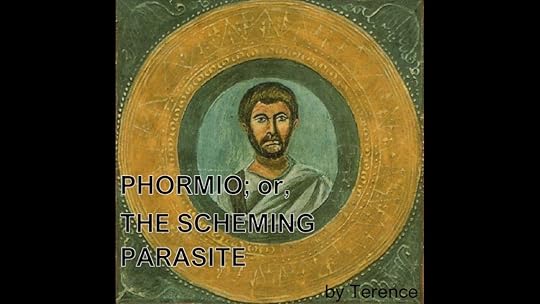
"Chremes and Demipho are two aged Athenians, brothers. Nausistrata, the wife of Chremes, is a wealthy woman, possessed of large estates in the island of Lemnos. Chremes, who goes thither yearly to receive the rents, meets with a poor woman there, whom he secretly marries, and has by her a daughter called Phanium: while engaged in this intrigue, Chremes passes at Lemnos by the name of Stilpho. By his wife, Nausistrata, at Athens, Chremes has a son, named Phædria, and his brother has a son, named Antipho." Got all that? And so now, "Phanium having now arrived at her fifteenth year, the two brothers privately agree that she shall be brought to Athens and married to Antipho." - Summary by Translator and ToddHW

November 2, 2010
READING THEM ALL = SUCH TEDIUM DEAR GOD
but if you evaluate them one by one, they're relatively good. better than menander? plautus is much more fun. i suppose terrence is much more intelligent and has a better perspective on women...
but if you evaluate them one by one, they're relatively good. better than menander? plautus is much more fun. i suppose terrence is much more intelligent and has a better perspective on women...

October 8, 2024
A collection of six enjoyable plays from a Roman author who drew on Greek New Comedy sources. They differ somewhat in style from Plautus even though both drew from the same sources. It is apparent how they were found to be inspirational for later playwrights.

October 4, 2022
Six plays, all of them are enjoyable middle of the road.

December 10, 2025
3.75
no offense charlie but hecyra was the worst play of these #eunuchusforlife
no offense charlie but hecyra was the worst play of these #eunuchusforlife

April 13, 2023
Terence was an incredibly dynamic writer, introducing a depth to comedy that had previously been lacking in the works of his contemporaries. His plays don’t seem to go for cheap laughter, rather they are compelling and pensive, allowing readers to engage with his protagonists on a multidimensional level. I’d say my favorite play in this collection was The Brothers, my heart really goes out to Demea and Micio. They’re both just doing their best in a way.

August 12, 2026
I only read Phormio from this book, but it was so chaotic and scheming and I loved it. Definitely one of my favorite comedies that I have read. There were some parts that I was thoroughly confused on, but I eventually figured it out (p.s. it helps to read the summary provided in the introduction as well as the character list and how they are related😭). Also, Chremes deserved all the crap that came his way. 🤷🤭
April 27, 2017
*Leí: El atormentador de sí mismo y sólo puedo decir: WTF con el final!

April 7, 2024
Not the worst comedy of Plauto I’ve read by far, but maybe in romans time they found it interesting…

February 4, 2016
Oxford edition has all of the Terentian plays (6) along with introductory notes at the beginning of each one.
When it comes to Roman Comedy I tend to see Plautus's work like a gently flowing clear stream, while his later successor Terence seems to resemble more of a loose faucet that can only be repaired through severe attention to the leaking details. Terence stuffs so much into his plays, if you aren't paying undivided attention it's genuinely hard to render his stream of writing cohesively in your head; even if you are familiar with all of the Roman troupes and stock characters frequently employed in the genre.
Indeed, Terence's plan of attack usually revolves around creating as much conflict and hidden social connections as humanely possible, before wrapping it all up at the end by pairing males off with there 'appropriate' counterpart (i.e. heads of households must go to other notable women, secondary males may take prostitutes, etc). Themes of retrieved 'lost children', mischievous slaves, and sons yearning for women their social class cannot permit them to marry are abundant here.
Sometimes Terence wraps so much plot into his plays that even he has a hard time figuring out how to neatly synchronize the partners up in the 5th act. An example of this can be found in Eunuchus where the element of makes the final pairing that much messier.
Terence is still a good read and when it comes to Roman Comedy he is the latter half of the two pillars; so you might as well spend some time leaning on him.
When it comes to Roman Comedy I tend to see Plautus's work like a gently flowing clear stream, while his later successor Terence seems to resemble more of a loose faucet that can only be repaired through severe attention to the leaking details. Terence stuffs so much into his plays, if you aren't paying undivided attention it's genuinely hard to render his stream of writing cohesively in your head; even if you are familiar with all of the Roman troupes and stock characters frequently employed in the genre.
Indeed, Terence's plan of attack usually revolves around creating as much conflict and hidden social connections as humanely possible, before wrapping it all up at the end by pairing males off with there 'appropriate' counterpart (i.e. heads of households must go to other notable women, secondary males may take prostitutes, etc). Themes of retrieved 'lost children', mischievous slaves, and sons yearning for women their social class cannot permit them to marry are abundant here.
Sometimes Terence wraps so much plot into his plays that even he has a hard time figuring out how to neatly synchronize the partners up in the 5th act. An example of this can be found in Eunuchus where the element of makes the final pairing that much messier.
Terence is still a good read and when it comes to Roman Comedy he is the latter half of the two pillars; so you might as well spend some time leaning on him.
August 10, 2020
Este es un libro con obras de teatro ya muy viejas, alrededor del 150 a.C. Así que se debe entender eso antes de comenzar su lectura, y tener expectativas acordes. No es un mal libro, y yo disfruté su lectura, las temáticas que abarcaban cada una de las obras, y los conflictos, y sus soluciones, que traían consigo. Pero no creo que sea un libro que cualquiera pueda disfrutar. Tanto por ser teatro, como por ser viejo, y otro tanto por el lenguaje utilizado (expresiones en español antiguo).
Otro aspecto a considerar es que uno no se debe dejar llevar por el título, ya que lo que hoy día entendemos por "comedias" es muy distinto a lo que se entendía hace dos mil años. Por ello, no esperen cosas en demasía graciosas, sino más bien enredos en la trama propuesta.
Como aspecto curioso de esta obra, que se explica en el prólogo del libro, a Terencio se le acusó (de manera informal) de plagio por esta obras, pero al no haber una ley en contra de ello en aquel tiempo, no pasó a mayores. Y, por otro lado, el autor mencionaba que no hizo más que lo que otros autores hacían, tomar algo ya hecho y adaptarlo y tal vez mejorarlo.
Otro aspecto a considerar es que uno no se debe dejar llevar por el título, ya que lo que hoy día entendemos por "comedias" es muy distinto a lo que se entendía hace dos mil años. Por ello, no esperen cosas en demasía graciosas, sino más bien enredos en la trama propuesta.
Como aspecto curioso de esta obra, que se explica en el prólogo del libro, a Terencio se le acusó (de manera informal) de plagio por esta obras, pero al no haber una ley en contra de ello en aquel tiempo, no pasó a mayores. Y, por otro lado, el autor mencionaba que no hizo más que lo que otros autores hacían, tomar algo ya hecho y adaptarlo y tal vez mejorarlo.

October 20, 2017
The plays of Terence have been highly evaluated not only for their technical innovation (the "double plot"), but also for the smoothness of their writing, which is evident even in translation, and for the human element that they bring to stock characters. They are also entertaining to read on the page - with the exception of The Self-Tormentor (Heauton Timorumenos), which I found to be convoluted almost past the limit of comprehensibility - and would probably be so on stage, although necessarily limited by the dramatic conventions of their theatrical origins. But Terence's world is a world in which the buying, selling, and giving away of human beings is a simple fact of life; and in which sexual violence against women is not even "just" something that happens, but something that can be used to resolve a plot (and in more than one play) to everyone's apparent satisfaction. Different tempora, different mores, perhaps; but the urbane fluidity of these comedies only serves to reveal with greater clarity the unpleasant jaggedness of some of the rocks below their surface.

February 20, 2026
وقتی حرف از نمایشنامههای کلاسیک میشود، فورا ذهنم میرود سمت تراژدی نویسانی چون آیسخولیس، سوفوکل و اورپید با آن شاهکارهای حیرت انگیز پر از انتقام و اشک و وحشتشان؛ یا نهایتا آریستوفان کمدی نویس که اشکها و لبخندها را باهم به چهره مینشاند.
پس باید با شرمساری اعتراف کنم این اولینبار است که کمدی ترنس را خواندهم، و صادقانه بگویم حتی اسم این نمایشنامه نویس را تا دو روز قبل هم نشنیده بودم و خجالت آورتر ست اگر بگویم تا همبن چند وقت پیش نمیدانستم که روم هم نمایشنامه نویسان کلاسیک مهمی داشته. البته خب شاید هم نباید به خودم خیلی سخت بگیرم؛ چون هرجه نباشد هنوز در حال آموختنم و راه درازی در پیش دارم- احتمالا تا آخر عمر.
از سرزنش کردن خودم که بگذریم، خواندن نمایشنامه های کمدی رومی از پلوتوس در همخوانی قبلی گروه هامارتیا و تورنس در همخوانی این روزها، بسیار من را تحت تاثیر قرار داد. در مورد ترنس حقیقتش بیشتر جذب ظرافت زبان و تقلیدش از سنت یونانی شدم اما هرچه بیشتر به زمینه حقوقی و اجتماعی رم آن زمان یعنی قرن ۲ پیش از میلاد فکر کردم، احساس کردم شاید بتوانم به آنچه که خواندم جور دیگری هم نگاه کنم.
حالا عرض میکنم چطور!
برای درک حرف من اول باید بستر تولید نمایشنامه هارا بشناسیم.
در روم باستان، داشتن حق ازدواج قانونی فقط برای شهروندان رومی معتبر بود و بدون اصالت شهروندی نه ازدواج رسمیت داشت و نه فرزندان مشروع محسوب میشدند و ته ارثی به آنها میرسید. علاوه بر آن، قوانین سختگیرانه پدرسالاری به پدر اختیارات گستردهای برای تعیین سرنوشت مادی و معنوی و احساسی فرزندان میداد و حتی آنها مستقیما کیس ازدواج را برای فرزندان خود انتخاب میکردند. همه اینها یعنی اینکه ازدواج بیش از آنکه یک مسئله عاطفی باشد، بیشتر شبیه قرارداد انتقال داراییها و تثبیت موقعیت اجتماعی پدران بود.
خب حالا اگر این بستر اجتماعی و سیاسی و فرهنگی را بگذاریم کنار زندگی شخصی تورنس، میبینیم آثار او معنی دیگری پیدا میکنند.
تورنس کسیست که زمانی برده بوده و بخاطر هوش و لیاقت و کاردانی ش آزاد شده، پس بطور طبیعی تجربه زیستن در حاشیه نظام شهروندی روم را داشته است. نمیخواهم سادهانگارانه زندگی شخصی او را مستقیم به متن نمایشنامه ها وصل کنم، این کار چندان حرفه ای نیست. اما سخت است باور کنیم این تجربه زیستی هیچ تأثیری در حساسیت او نسبت به مسئله هویت حقوقی نداشته باشد.
واضح است که ترنس در خلأ نمینوشته (چه کسی در خلاُ مینویسد؟). او آشکارا از سنت کمدی نو یونانی تأثیر گرفته بوده، بهویژه از آثار مناندر. در آثار مناندر، الگوی آشنایی دیده میشود; جوانی عاشق دختری با هویت نامعلوم میشود، بحران خانوادگی و اجتماعی شکل میگیرد، و در پایان با کشف ناگهانی اصل و نسب پاک و پاکیزه دختر، نظم خانوادگی بازمیگردد. بنابراین میتوان گفت الگوی "کشف هویت در پایان" پیش از ترنس وجود داشته و بخشی از قرارداد ژانری بوده است. اما همین ژانر وقتی وارد فضای رم میشود، کمی پیچیدهتر و کمی ترسناکتر است.
در نمایشنامه آندریا، بحران دقیقاً روی همین مسئله تکراری شکل میگیرد. جوانی عاشق دختری است که ظاهراً جایگاه مدنی ندارد و این موضوع آینده عاطفی و حقوقی پسر را تهدید میکند. راستش هنگام خواندن این نمایشنامه خیلی با احساس اضطراب شخصیتها همذات پنداری کردم (خب البته من همیشه اضطراب دارم) بخصوص با دختر که چه میکشد با اینهمه توهین و تحقیر و نگاه از بالا به پایین و فشار مردسالاری و فلان و فلان... ولی خب خداراشکر بعد از کلی کش و قوس و ماجرا معاوم میشود دختر داستان در واقع شهروند مشروع رومی از خانواده اصیل است و ناگهان همه چیز به خیر و خوشی میگذرد. این لحظه، هم رضایتبخش ست و هم کمی مضحک؛ چون همه اضطرابها یکباره تمام میشود و همه چیز به یک اسم خانوادگی معتبر بستگی دارد.
در فورمیو موضوع حتی روشنتر است. او که شخصیتی از طبقه پایین جامعه است همان قوانین رسمی ازدواج و سرپرستی را که مانع رسیدن وی به معشوق اش است را علیه پدران مغرور و سلطه گر به کار میگیرد. اینجا قانون در دستان جوانک باهوش داستان شبیه آچاری است که بسته به دست استفادهکننده، کارکردش عوض میشود.
درست در همین بخشها داشتم فکر میکردم شاید ترنس حتی اگر قصد نقد آگاهانه هم نداشته، شاید داشته شکنندگی ساختارهای قانونی و اجتماعی حاکم بر جامعه را نشان میداده. خیلی هیجان انگیز است اگر اینطور باشد مگر نه؟
شاید هم او فقط در چارچوب قراردادهای ژانری حرکت کرده باشد. اما حتی اگر اینطور باشد هم ساختار روایتهایش امکان خوانشی انتقادی را فراهم میکند.
اصلا شاید بتوان گفت کمدیهای ترنس در مرز میان تأیید و تردید اند و در سطحی هستند که نظم مدنی را بازمیسازند؛ و در سطحی دیگر وابستگی ارزش انسانی به وضعیت حقوقی را بولد و نقد میکنند. من واقعاً مطمئن نیستم این دوگانگی کاملاً آگاهانه بوده باشد، ولی وقتی با نگاه خودم و پسزمینه حقوقی جامعه رم به آنها نگاه میکنم، پایان نمایشنامه ها دیگر فقط یک پایان خوش مشتری پسند بهنظر نمیآیند؛ و بیشتر شبیه انتقاد به این هستند که در آن جهان، عشق بدون هویت پذیرفته شده، تقریباً هیچ جایگاهی نداشته و پدرسالاری پدر جوانان را درمیآورده است.
و این نوع خوانش حداقل برای من خیلی جذاب و هیجان انگیزاست چون باعث میشود بعد از این کمدیها برایم جدیتر و نفسگیرتر جلوه کنند.
پس باید با شرمساری اعتراف کنم این اولینبار است که کمدی ترنس را خواندهم، و صادقانه بگویم حتی اسم این نمایشنامه نویس را تا دو روز قبل هم نشنیده بودم و خجالت آورتر ست اگر بگویم تا همبن چند وقت پیش نمیدانستم که روم هم نمایشنامه نویسان کلاسیک مهمی داشته. البته خب شاید هم نباید به خودم خیلی سخت بگیرم؛ چون هرجه نباشد هنوز در حال آموختنم و راه درازی در پیش دارم- احتمالا تا آخر عمر.
از سرزنش کردن خودم که بگذریم، خواندن نمایشنامه های کمدی رومی از پلوتوس در همخوانی قبلی گروه هامارتیا و تورنس در همخوانی این روزها، بسیار من را تحت تاثیر قرار داد. در مورد ترنس حقیقتش بیشتر جذب ظرافت زبان و تقلیدش از سنت یونانی شدم اما هرچه بیشتر به زمینه حقوقی و اجتماعی رم آن زمان یعنی قرن ۲ پیش از میلاد فکر کردم، احساس کردم شاید بتوانم به آنچه که خواندم جور دیگری هم نگاه کنم.
حالا عرض میکنم چطور!
برای درک حرف من اول باید بستر تولید نمایشنامه هارا بشناسیم.
در روم باستان، داشتن حق ازدواج قانونی فقط برای شهروندان رومی معتبر بود و بدون اصالت شهروندی نه ازدواج رسمیت داشت و نه فرزندان مشروع محسوب میشدند و ته ارثی به آنها میرسید. علاوه بر آن، قوانین سختگیرانه پدرسالاری به پدر اختیارات گستردهای برای تعیین سرنوشت مادی و معنوی و احساسی فرزندان میداد و حتی آنها مستقیما کیس ازدواج را برای فرزندان خود انتخاب میکردند. همه اینها یعنی اینکه ازدواج بیش از آنکه یک مسئله عاطفی باشد، بیشتر شبیه قرارداد انتقال داراییها و تثبیت موقعیت اجتماعی پدران بود.
خب حالا اگر این بستر اجتماعی و سیاسی و فرهنگی را بگذاریم کنار زندگی شخصی تورنس، میبینیم آثار او معنی دیگری پیدا میکنند.
تورنس کسیست که زمانی برده بوده و بخاطر هوش و لیاقت و کاردانی ش آزاد شده، پس بطور طبیعی تجربه زیستن در حاشیه نظام شهروندی روم را داشته است. نمیخواهم سادهانگارانه زندگی شخصی او را مستقیم به متن نمایشنامه ها وصل کنم، این کار چندان حرفه ای نیست. اما سخت است باور کنیم این تجربه زیستی هیچ تأثیری در حساسیت او نسبت به مسئله هویت حقوقی نداشته باشد.
واضح است که ترنس در خلأ نمینوشته (چه کسی در خلاُ مینویسد؟). او آشکارا از سنت کمدی نو یونانی تأثیر گرفته بوده، بهویژه از آثار مناندر. در آثار مناندر، الگوی آشنایی دیده میشود; جوانی عاشق دختری با هویت نامعلوم میشود، بحران خانوادگی و اجتماعی شکل میگیرد، و در پایان با کشف ناگهانی اصل و نسب پاک و پاکیزه دختر، نظم خانوادگی بازمیگردد. بنابراین میتوان گفت الگوی "کشف هویت در پایان" پیش از ترنس وجود داشته و بخشی از قرارداد ژانری بوده است. اما همین ژانر وقتی وارد فضای رم میشود، کمی پیچیدهتر و کمی ترسناکتر است.
در نمایشنامه آندریا، بحران دقیقاً روی همین مسئله تکراری شکل میگیرد. جوانی عاشق دختری است که ظاهراً جایگاه مدنی ندارد و این موضوع آینده عاطفی و حقوقی پسر را تهدید میکند. راستش هنگام خواندن این نمایشنامه خیلی با احساس اضطراب شخصیتها همذات پنداری کردم (خب البته من همیشه اضطراب دارم) بخصوص با دختر که چه میکشد با اینهمه توهین و تحقیر و نگاه از بالا به پایین و فشار مردسالاری و فلان و فلان... ولی خب خداراشکر بعد از کلی کش و قوس و ماجرا معاوم میشود دختر داستان در واقع شهروند مشروع رومی از خانواده اصیل است و ناگهان همه چیز به خیر و خوشی میگذرد. این لحظه، هم رضایتبخش ست و هم کمی مضحک؛ چون همه اضطرابها یکباره تمام میشود و همه چیز به یک اسم خانوادگی معتبر بستگی دارد.
در فورمیو موضوع حتی روشنتر است. او که شخصیتی از طبقه پایین جامعه است همان قوانین رسمی ازدواج و سرپرستی را که مانع رسیدن وی به معشوق اش است را علیه پدران مغرور و سلطه گر به کار میگیرد. اینجا قانون در دستان جوانک باهوش داستان شبیه آچاری است که بسته به دست استفادهکننده، کارکردش عوض میشود.
درست در همین بخشها داشتم فکر میکردم شاید ترنس حتی اگر قصد نقد آگاهانه هم نداشته، شاید داشته شکنندگی ساختارهای قانونی و اجتماعی حاکم بر جامعه را نشان میداده. خیلی هیجان انگیز است اگر اینطور باشد مگر نه؟
شاید هم او فقط در چارچوب قراردادهای ژانری حرکت کرده باشد. اما حتی اگر اینطور باشد هم ساختار روایتهایش امکان خوانشی انتقادی را فراهم میکند.
اصلا شاید بتوان گفت کمدیهای ترنس در مرز میان تأیید و تردید اند و در سطحی هستند که نظم مدنی را بازمیسازند؛ و در سطحی دیگر وابستگی ارزش انسانی به وضعیت حقوقی را بولد و نقد میکنند. من واقعاً مطمئن نیستم این دوگانگی کاملاً آگاهانه بوده باشد، ولی وقتی با نگاه خودم و پسزمینه حقوقی جامعه رم به آنها نگاه میکنم، پایان نمایشنامه ها دیگر فقط یک پایان خوش مشتری پسند بهنظر نمیآیند؛ و بیشتر شبیه انتقاد به این هستند که در آن جهان، عشق بدون هویت پذیرفته شده، تقریباً هیچ جایگاهی نداشته و پدرسالاری پدر جوانان را درمیآورده است.
و این نوع خوانش حداقل برای من خیلی جذاب و هیجان انگیزاست چون باعث میشود بعد از این کمدیها برایم جدیتر و نفسگیرتر جلوه کنند.

February 3, 2022
I really enjoyed this translation of Terence's complete comedies. I mostly knew Terence for the choice quote that "I am human, therefore nothing human is alien to me." The comedies overall still hold up and this translation makes them eminently readable and relatable. Typically the set up is that a son has chosen a wife that he knows will upset his father, and various attempts to hide this fact or scheme around it (typically plotted by the son's dutiful slave). Typically, the situation comes to a boil but is then timely resolved by some deus ex machina, where the woman is revealed to be secretly a citizen (and therefore an acceptable wife) or something of this theme. The comedies frequently involve mistaken identities, wrongful assumptions that lead to hijinks. They are eminently entertaining, but also full of good cheer with happy endings. We meet strict fathers, and lenient ones. Noble sons following their heart, and free riders who plot to groom egos in return for free dinners. The situations (i.e. rambling fathers, and bored listeners) and characters still mostly hold true today, which is somewhat surprising considering the age of the plays. I particularly enjoyed one line that that when we are well, we always have good advice for the sick. Of course, being so old the plays do depict certain social conventions that did not age so well. In particular, in two of the plays, the rape of a character's affection is cured in the first by marriage and the second by the fact that the rapist ended up being the woman's husband (unbeknownst to both of them until at the play's climax). Terence is sometimes copying Greek models, but one has to wonder if the endings are so happy for the secondary characters in those plays.

April 18, 2022
Perhaps it is unsurprising that a poet largely translating Menander might produce works similar to Menander. Certainly, Terence swings closer than Plautus, even if his is frequently accused of disturbing the original contents of the plays (for which we can only be glad). Against Plautus Terence seems to be the more measured artist: he will enter upon farce but never the ridiculous, and in The Mother-in-Law he will strip back even the absurd shenanigans enacted by the various slave characters. (That play becomes a more domestic variation on Menander’s The Arbitration in its finale; it is a shame that such a satisfying model is completely marred by its necessitating rape and the forgiveness of rape. Perhaps some modern edition could feature a melange at a masked ball to save the story from its innate repulsiveness.) I must admit a preference to the caricatured absurdity of Plautus, but these plays are smooth in their passage and – with a few exceptions – plotted with easy grace. The Self-Tormentor appeals least to that acclamation: it becomes all tussle, all knots, with a meek satisfaction in the loosening. Phormio (and maybe half of The Eunuch) represent the opposite extreme: flighty, pacy schemes and edifying coincidences for all.

February 9, 2023
Terence wasn't a mere translator of his Greek models, he showed both originality and skill in the incorporation of material from secondary models, as well as occasionally perhaps in material of his own invention. Second, his Greek models probably had expository prologues, informing their audiences of vital facts, but Terence cut them out, leaving his audiences in the same ignorance as his characters. This omission increases the element of suspense.
Striving for a refined but conventional realism, Terence eliminated or reduced such unrealistic devices as the actor’s direct address to the audience. He preserved the atmosphere of his models with a nice appreciation of how much Greekness would be tolerated in Rome, omitting the unintelligible and clarifying the difficult. His language is a purer version of contemporary colloquial Latin, at times shaded subtly to emphasize a character’s individual speech patterns. Because they are more realistic, his characters lack some of the vitality and panache of Plautus’ adaptations; but they are often developed in depth and with subtle psychology.
Striving for a refined but conventional realism, Terence eliminated or reduced such unrealistic devices as the actor’s direct address to the audience. He preserved the atmosphere of his models with a nice appreciation of how much Greekness would be tolerated in Rome, omitting the unintelligible and clarifying the difficult. His language is a purer version of contemporary colloquial Latin, at times shaded subtly to emphasize a character’s individual speech patterns. Because they are more realistic, his characters lack some of the vitality and panache of Plautus’ adaptations; but they are often developed in depth and with subtle psychology.

April 12, 2025
Andria, la primera comedia de Terêncio, fue también mi primera lectura suya… y me temo que será la última, al menos por una buena temporada.
No es que esperara carcajadas, pero sí un mínimo de ritmo, de ingenio, de enredo con chispa. Y sin embargo, lo que me encontré fue una sucesión de diálogos planos, un enredo previsible y personajes tan intercambiables como las monedas en una bolsa romana. Todo gira en torno al clásico conflicto amoroso —joven enamorado de muchacha de dudoso origen, padre que quiere casarlo con otra—, pero sin el vuelo cómico de Plauto ni la profundidad emocional que uno podría encontrar en una tragedia.
Ni la muchacha emociona, ni el joven convence, ni el anciano impone. Y el tan alabado estilo elegante de Terencio se me antoja aquí más bien como una elegancia hueca, de salón vacío.
🔹 Lo mejor: Que dura poco.
🔹 Lo peor: Lo demás. La trama, los personajes, el tono… todo tan correcto como olvidable.
Una lectura que me dejó indiferente cuando no aburrida. Hay comedias antiguas que aún vibran hoy. Esta no es una de ellas.
No es que esperara carcajadas, pero sí un mínimo de ritmo, de ingenio, de enredo con chispa. Y sin embargo, lo que me encontré fue una sucesión de diálogos planos, un enredo previsible y personajes tan intercambiables como las monedas en una bolsa romana. Todo gira en torno al clásico conflicto amoroso —joven enamorado de muchacha de dudoso origen, padre que quiere casarlo con otra—, pero sin el vuelo cómico de Plauto ni la profundidad emocional que uno podría encontrar en una tragedia.
Ni la muchacha emociona, ni el joven convence, ni el anciano impone. Y el tan alabado estilo elegante de Terencio se me antoja aquí más bien como una elegancia hueca, de salón vacío.
🔹 Lo mejor: Que dura poco.
🔹 Lo peor: Lo demás. La trama, los personajes, el tono… todo tan correcto como olvidable.
Una lectura que me dejó indiferente cuando no aburrida. Hay comedias antiguas que aún vibran hoy. Esta no es una de ellas.

May 29, 2018
If I went into The Eunuchs kicking – its plot turns on a rape that cannot translate in modern comedy – I read it happily, another book I would never know without book clubbe. For one, Judd Apatow’s awful Knocked Up, where hating women is central to the laugh, had to have precedent. Here it is, direct from 161 BC. But we mostly talked about the Elizabethan rewrite this play could have earned – how Thais and her second, Pythias, would have been extraordinary in Shakespeare, how silent Pamphila would have been given a soliloquy, how the vices of power (Chaerea’s stupid youth, Phaedria’s right to love) would have been made into obvious outrages. Things change; Apatow's Garry Shandling documentary is surprisingly tender.
Peter Brown’s UOP translation is also ecstatic, made this more fun to read than Aristophanes’s more famous comedy, made Terence's witty slave-girls and soldiers as vivid as all the Boys in Shakespeare.
Peter Brown’s UOP translation is also ecstatic, made this more fun to read than Aristophanes’s more famous comedy, made Terence's witty slave-girls and soldiers as vivid as all the Boys in Shakespeare.

May 10, 2017
Honestly, I enjoy Plautus much more. I don't know if it was Frank O. Copley's translation or what, but I found Terence's stock characters like, well, cardstock characters. Plautus' stock characters were more interesting to me. I also found the plots to be excessively predictable and sometimes difficult to swallow. I don't remember the treatment of women being quite so horrible in Plautus. "The Eunuch" was rather horrifying. I will say I absolutely loved the introduction, and that alone made this translation worth reading.

April 23, 2025
He reseñado cada una de las obras individualmente, en cuanto al conjunto me da la sensación como que las mejores comedias plautinas o aristofánicas (incluso menandreas, siendo ellas diferentes entre sí, claro) pueden tener algo parecido a esto y un plus que Terencio no tiene, sea en comicidad, genio, u otros. Tampoco quiero que no se me entienda, sus comedias no está mal, no se hacen aburridas y Terencio es uno de los autores más influyentes de la historia de la literatura, con lo que la recomiendo junto con su breve obra.
February 11, 2024
"ME. Chreme, tantumne ab re tuast oti tibi
aliena ut cures ea quae nil ad te attinent?
CH. homo sum: humani nil a me alienum puto.
vel me monere hoc vel percontari puta:
rectumst ego ut faciam; non est te ut deterream."
aliena ut cures ea quae nil ad te attinent?
CH. homo sum: humani nil a me alienum puto.
vel me monere hoc vel percontari puta:
rectumst ego ut faciam; non est te ut deterream."

October 22, 2017
Los hermanos: 2/5
Read
February 13, 2019Read:
The Girl from Andros (Andria)
The Mother-in-Law (Hecyra)
The Eunuch (Eunuchus)
The Girl from Andros (Andria)
The Mother-in-Law (Hecyra)
The Eunuch (Eunuchus)
April 28, 2022
An excellent read to get a social and cultural view of Greece but altered to be Latin and more of a Roman view.
February 9, 2023
Better and tighter plots than Plautus but lacking the slap stick antics and verbal dress downs in Plautus. Though this could be a result of translations.
August 3, 2024
Every play had the same structure, ending and comedy

Displaying 1 - 30 of 47 reviews