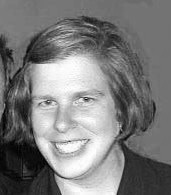
The courageous story of the woman at the center of the historic discrimination case that inspired the Lilly Ledbetter Fair Pay Restoration Act--her fight for equal rights in the workplace, and how her determination became a victory for the nation.
Lilly Ledbetter was born in a house with no running water or electricity in the small town of Possum Trot, Alabama. She knew that she was destined for something more, and in 1979, Lilly applied for her dream job at the Goodyear tire factory. Even though the only women she’d seen there were secretaries in the front offices where she’d submitted her application, she got the job—one of the first women hired at the management level.
Though she faced daily discrimination and sexual harassment, Lilly pressed onward, believing that eventually things would change. Until, nineteen years later, Lilly received an anonymous note revealing that she was making thousands less per year than the men in her position. Devastated, she filed a sex discrimination case against Goodyear, which she won—and then heartbreakingly lost on appeal. Over the next eight years, her case made it all the way to the Supreme Court, where she lost again: the court ruled that she should have filed suit within 180 days of her first unequal paycheck--despite the fact that she had no way of knowing that she was being paid unfairly all those years. In a dramatic moment, Justice Ruth Bader Ginsburg read her dissent from the bench, urging Lilly to fight back.
And fight Lilly did, becoming the namesake of President Barack Obama's first official piece of legislation. Today, she is a tireless advocate for change, traveling the country to urge women and minorities to claim their civil rights. Both a deeply inspiring memoir and a powerful call to arms, Grace and Grit is the story of a true American icon.
Lilly McDaniel Ledbetter was an American activist who was the plaintiff in the United States Supreme Court case Ledbetter v. Goodyear Tire & Rubber Co. regarding employment discrimination. Two years after the Supreme Court decided that Title VII of the Civil Rights Act of 1964 does not allow employers to be sued for pay discrimination more than 180 days after an employee's first paycheck, the United States Congress passed a fair pay act in her name to remedy this issue, the Lilly Ledbetter Fair Pay Act of 2009. Subsequently, she become a women's equality activist, public speaker, and author. In 2011, Ledbetter was inducted into the National Women's Hall of Fame.
This is one of those books that leaves you struggling with whether to rate it based on the quality of the writing or on the story itself. I chose the latter.
Lilly Ledbetter went to work for Goodyear tires in 1979, and although that may seem fairly recent along the timeline of the women’s equality movement it was still a time when such factory work was undeniably a man’s world, when sexual harassment was only recently legally defined and the laws rarely enforced, and women were expected to either stay at home or take traditionally female jobs and be grateful that they were allowed to work at all.
Throughout her time at Goodyear Lilly endured what most of us will never have to face. She was blamed for mistakes she didn’t make; she showed up early, stayed late, and had excellent production numbers while her supervisors searched for any possible reason to discipline her; and she was constantly sexually harassed, one supervisor going so far as to tell her that if she wanted a higher performance review she ought to meet him at the Ramada Inn. She dealt with all these stresses while caring first for her Mother, then her Husband in their battles against cancer. Still she fought on, wearing herself out mentally and physically to hear Goodyear tell her “Well done.” The words never came.
Instead, what came was an anonymous note tucked into her mailbox listing her salary compared with the salaries of the males in comparable positions. Lilly earned as much as forty percent less. When she brought it to the attention of her supervisors they had various reasons and explanations, none of which held water. What was left unsaid but undeniably implied was that she was paid less because of her gender.
So she sued.
Goodyear fought her at every step, offering her measly buyouts and utilizing every trick on the law books to delay her case and make it cost and time prohibitive to continue. Still, she fought on for what she knew in her heart was right. She fought all the way to the supreme court and although she lost her case, she drew unprecedented national attention to her cause. The first act President Obama signed when he took office was the Lilly Ledbetter fair pay act which states that an employee’s statue of limitations for pay discrimination begins anew with each new discriminatory paycheck. Employees are no longer bound to take legal action within 180 days of the first instance of discrimination that they likely didn’t even know was happening, as was the case with Lilly.
These days, she spends her time making speeches and working with various women’s equality groups to further the cause of equal pay for equal work.
This is not a particularly well-written book. It will not win any awards for its prose and it will not have you re-reading sentences to fully absorb their poetic beauty. But it’s a story that needs to be told, a story that everyone who believes in equality should read, and for this reason I’ve given it four stars.
Every woman owes a debt of gratitude to Lilly Ledbetter.
Lilly Ledbetter worked at Goodyear for 19 years for significantly less pay than men in the same roles that she had. A list with salary information that included Lilly and several of her peers was anonymously left in her mail cubby at work.
That's when she knew she needed to take action. She started with filing an EEOC complaint. The legal process almost took ten years. The overall result was President Obama signing the Lilly Ledbetter Fair Pay Restoration Act on January 29, 2009. The book includes President Obama's speech on the day the Act was passed.
This is the infuriating, and then semi-triumphant, tale of Lilly Ledbetter, the woman whose epic quest to recoup the pay that was owed to her by Goodyear eventually inspired the Lilly Ledbetter Fair Pay Act of 2009. My only fear is that this will be turned into a movie and, because the heroine is Southern, we will have to endure Julia Roberts in a wig and '70s pantsuit.
I read "Grace and Grit" because it is on the United Methodist Women's Leadership reading list and we will be discussing it in January. I thought it might take a while to read but found that it was a very interesting and easy read. I highly recommend this book to all women and girls starting out in the work field. It is the autobiography of a woman from Alabama who just wanted to make money so her children would be able to have things she never had and she wanted to do the best she could working at Good Year.From the moment she walked into Good Year through the U.S. Courts System and onto the Supreme Court she faced blatant discrimination and unequal pay for her work performance. As a young child she always wondered what she might contribute to society. Her transformation from an unknown tire manager facing all types of discrimination to now being known as the "Grandmother of Pay Equity" took true grit and forms the basis of this book. She found that we need to have more female Supreme Court Justices like Justice Ruth Bader Ginsburg who along with three others Justices wrote, "...The Court does not comprehend or is indifferent to, the insidious way in which women can be victims of pay discrimination..." Their recommendation is to sue early.
Lilly Ledbetter has lived a hardscrabble life. Her desire for working hard as the men doing the same work at Goodyear was met with derision and hostility. She persevered for 19 years thinking if she kept doing her best she would when over the men who didn't think women could do the job. She found out through an anonymous note that she was being payed 40% less then the men in her same position, which affected her current standard of living and her retirement. She sued. She won, then lost on appeal. The Supreme Court ruling for Goodyear led by Justice Alito is a testament to how the attitude of the country has gone to support the corporate culture and mocks the efforts of the workers for a decent wage. Thanks to some good counsel from the dissenting opinion led by Justice Ginsberg defeat was a road block. The Lilly Ledbetter Fair Pay Act was signed by President Obama in 2009. One the most interesting things about this book is that Lilly tells you the good, bad, and the ugly. You don't feel like there is a skeleton hiding in the closet ready to jump out. This kind of book fires me up.
Had I been aware of Goodyear’s disgraceful labor practices back in the day, I would have bought my tires elsewhere. I’m still buying their tires, assuming the company has changed its ways since passage of The Lilly Ledbetter Fair Pay Restoration Act.
Amazing Women! Thank you for all you tried to do and did for women!!! How a company like Goodyear Tire allowed an employee like Lilly Ledbetter be treated like she was and cheat her like they did is so awful! What a horrible company! Her estate should be compensated and a formal apology should be given to her heirs by Goodyear. Thank you to RBG and others who did the right thing!
I had the honor of meeting Lilly Ledbetter at the ACLU of Massachusetts' 2013 Bill of Rights Dinner, and, well, I just love her. To paraphrase Ted Kennedy speaking about his brother Bobby, Lilly Ledbetter "is a good and decent women who sees wrong and tries to right it." Our country is a better place because she decided to fight injustice instead of accepting it!
You'll enjoy this book if you're interested in this information:
The ACLU Foundation of Massachusetts is honored to present the 2013 Roger Baldwin Award to Lilly Ledbetter, for her courage and determination in the struggle for equal pay and equal rights for all women.
Lilly Ledbetter was born in a house with no running water or electricity in the small town of Possum Trot, Alabama. She knew that she was destined for something more, and in 1979, with two young children at home and over the initial objections of her husband Charles, Lilly applied for her dream job at the Goodyear tire factory. Even though the only women she’d seen there were secretaries in the front offices where she’d submitted her application, she got the job—one of the first women hired at the management level.
Though she faced daily gender prejudice and sexual harassment, Lilly pressed onward, believing that eventually things would change -- until, nineteen years after her first day at Goodyear, Lilly received an anonymous note revealing that she was making thousands less per year than the men in her position.
Devastated, she filed a sex discrimination case against Goodyear, which she won—and then heartbreakingly lost on appeal. Over the next eight years, her case made it all the way to the Supreme Court, where she lost again in a 5-4 vote: the court ruled that she should have filed suit within 180 days of her first unequal paycheck, despite the fact that she had no way of knowing that she was being paid unfairly all those years. In a dramatic moment, Justice Ruth Bader Ginsburg read her dissent from the bench, urging Lilly to fight back.
And fight she did, sparring with the Supreme Court and lobbying Capitol Hill for 10 years to close the gap between women’s and men’s wages. Her efforts resulted in the passage of the Lilly Ledbetter Fair Pay Act, the first bill signed into law by President Barack Obama, on January 29, 2009. Among the law's provisions is a broadening of the scope for workers to challenge unfair workplace practices in court, and an alteration of the statute of limitations rule so that a new 180-day period begins after each paycheck is issued.
Today, she is a tireless advocate for change, working with the ACLU and others for passage of the Paycheck Fairness Act, and traveling the country to urge women and minorities to claim their civil rights. Ledbetter will never receive restitution from Goodyear, but she said, "I'll be happy if the last thing they say about me after I die is that I made a difference."
I have an opportunity to see the author at an upcoming event. Her story is so genuine, so honest, and so heartbreaking. Born into poverty, she wanted more for her life. With a husband, house, and kids, we can identify with her motivation to work and make enough to keep them out of poverty and actually give them more. Her hiring by Goodyear seemed to promise this.
But being a woman in a mostly-male environment was a challenge: she was routinely denied pay and benefits - but the company refused to show her the audits with the below-grade information. She knew she was keeping up with her male colleagues but accused of not making the grade. She was propositioned and suffered the consequences of her refusal to accept that his favor could be bought with a visit to a hotel. Someone finally left her an anonymous slip of paper showing her salary compared to the other male managers, and she was devastated to learn that she was paid much less for the same work, even though she had seniority.
Lilly Ledbetter decided to take Goodyear to court. Over the next several years, she attended her trial but eventually she won - only to be denied on appeal by the Supreme Court. President Obama signed legislation for equal pay and, although she never personally benefited, she continued to advocate for stricter laws against discrimination in hiring and pay issues.
A special section in the back includes the Supreme Court Bench Announcement of the dissenters in the case (Justice Ginsberg was the author). Also, President Obama's speech upon the signing of the Lilly Ledbetter Fair Pay Restoration Act in January 2009 and a copy of the Restoration Act, and a copy of the Paycheck Fairness Act. Finally, the book ends with a list of resources for advocacy in the event that someone may have a case. I love primary documents and had a good time reviewing these special inclusions.
2009 seems a little late for equal pay for women. I take this issue seriously and already anticipate that I'll make every effort to avoid Goodyear tires in the future. It may not make a difference in the big picture, but perhaps other readers of this story may feel the same.
I attended a lecture by Mrs. Ledbetter earlier in the year which led me to read her book. An unlikely heroine, she epitomizes grit and fighting for one’s rights. Her story infuriates and encourages and shows what one person can achieve with persistence. What a woman!
It seems logical that if two people do the same job they should get the same pay, but as most women know, this is often not the case. Lilly Ledbetter seemed to break through a glass ceiling when she was hired for a management position at a Goodyear tire factory in Alabama in the late 1970's. As one of the only women managers, she experienced a near-constant state of bullying and sexual harassment, only to learn after nearly 20 years of service that she was also paid considerably less than all of her male colleagues - even those hired after her. She sued Goodyear for sex discrimination and won her case but lost on appeal. Not willing to give up, her case was eventually argued before the Supreme Court, where it was decided that if she had wanted to sue Goodyear, she should have done so within 180 days of issuance of the first unequal check. Goodyear had cultivated a climate where neither salary nor benefits could be discussed, and so this requirement would have been impossible. Incensed at the unfairness of the verdict, Ledbetter decided that if she could not win in the courts then she would work to change the law. The Lilly Ledbetter Fair Pay Restoration Act was the first piece of legislation signed into law by newly-elected President Obama. I had the pleasure of meeting Ms. Ledbetter at an event in the spring of 2012 and her words as well as her actions are an inspiration to women everywhere.
This clearly written and heart felt book is must reading for everyone who believes in justice and fair play. It is the story of Lilly Ledbetter, a woman who worked hard to better her family and herself, yet she was cheated out of more than $200,000 in salary and even more in pension funds and social security. Because she was a woman, she was paid considerably less than male managers at the Goodyear plant in Alabama. President Barack Obama first act as president of the United States was to sign the Lilly Ledbetter Fair Pay Act into law. It was both fitting and ironic that the country's first president would sign a law that would benefit another disenfranchised group: women. As a father of two daughters, Obama understood the importance of insuring fairness and pay equity for women. We cannot have any second class citizens in America if we want this nation to live up to the lofty ideals stated in the Declaration of Independence. Buy this book, read this book, study this book. Lilly Ledbetter is another "American Who Tells the Truth." In fighting for justice and fairness, this humble woman reminds us all of what we should strive to be. We all want this to "a nation...with liberty and justice for all."
The story of Lilly Ledbetter was and still is remarkable. It is the story of a woman who worked for years at Goodyear yet made significantly less money than the men in the same or similar jobs. I wish I could say that I am shocked but I cannot. It seems so true both then and could easily be true today. Because of that fact, I enjoyed the book. It was clearly written as she explained the day to day issues that she faced. Those included being passed up for pay increases and promotions and routinely being subject to discrimination.
This story is enlightening not only because of the trials she experienced daily but also because of what she went through after she discovered that she had been paid far less than others. She could never have imagined the impact she could have on the U.S. court system and other women being paid unfairly. It is a great story to hear.
I truly wish I could have scored it higher. The subject is fascinating and has a historical impact. The writings were ok but I would have expected more. It almost came across as someone writing in third person. The emotions and the feeling of others were left off of the table. This is a good book telling a great story.
This book was infuriating and sad, but inspiring. The story of Lilly Ledbetter, whose name is on the first legislation signed by President Obama upon taking office.
Ledbetter, determined to have a more stable life than what she was exposed to in rural Alabama, aspired to be in management at the nearby Goodyear plant - a place limited in opportunity and a candidate without a college education. She endured unspeakable, continuous harrassment and humiliation until after nineteen years, learned she had been paid far less then her male colleagues, also hired in 1979.
She sued Goodyear and won, lost on appeal, took her fight to the Supreme Court. The divided court's opinion addressed the statut red of limitations to sue a business on grounds of discrimination.
The Lilly Ledbetter Fair Pay Act expanded the opportunity and window for employees to sue for pay discrimination, so it was a partial victory.
This book really makes one think about what is truly important, and spending years at a company and missing out on key experiences in life, as Ledbetter did, would be a tough regret to bear - in addition to the conditions she suffered.
If you've ever once been discriminated against, whether it's because you are a woman or a minority or a Martian, this book will resonate with you. Lilly Ledbetter tells the story without feeling a great deal of sympathy for herself or her plight - it's just a forthright narrative of what it's like to be treated poorly day after day when you are performing a job well and many times better than the person standing next to you who is getting higher pay or better benefits. Lilly Ledbetter is the poster girl for PAY EQUITY, and once you've read her story you'll wonder what could possibly justify paying less to a person because she's a woman (or any other kind of discrimination). She is a soft-spoken heroine who is an inspiration to her generation and all of those coming up behind! Because pay inequity not only affects the woman while she's on the job, it brings less money to her family, and the inequality continues all the way through benefits earned and eventually through to retirement benefits: because she's made less all through her career, she'll be paid less in all retirement benefits. Just not fair.
As an AAUW member, I am well acquainted with the legal battle Lilly Ledbetter fought against Goodyear for paying her less than men doing the same work for nearly 20 years, as well as the shameful Supreme Court decision against her that precipitated the passage of the Lilly Ledbetter Fair Pay Act (the first law signed by newly elected President Obama). But I was shocked at just how toxic Ledbetter's workplace was for her and other females. Ledbetter points out that the company's culture of harassment worked against its own interests. She had the skills and energy to make a real difference in improving employee productivity if they had just given her half a chance to do her job. Her story is often cringe-inducing, especially for any woman who has experienced similar harassment and discrimination. And that's why it's so important that her story needs to be told... and people need to read it.
Lilly Ledbetter is every woman in America who has held a job and found that she was getting paid less for doing the same (and most likely more) work as a man with the same job description and title. She is every woman who discovered after the fact that although that man was doing the same work, he often was given a loftier title to justify his salary. She is every woman who was told that, after all, he should be paid more because he had a wife and children to feed. I guess having a husband and children to feed doesn't count for much in this world. She is every woman who has been harassed just because she is a woman, and a married one at that.
Although she is physically small in stature, the image of her "man"-handling the sizable tires at the Goodyear Plant, as well as the image of her taking on Goodyear makes her a giant in my eyes! God give us all (female and male) the fortitude to stand up for what is right.
A steady grit first gained in the 1940s when Lilly Ledbetter was picking cotton on her grand-father's farm in Alabama and lasting through a very long journey that ended in January 2009 when President Obama signed the Lilly Ledbetter Fair Pay Restoration Act. It should be noted that the issues of discrimination and harassment Lilly described at length are still present at several levels in today's work place. As Lilly kept giving 100% at her job hoping that Goodyear would recognize her for the manager she was, "I faced the painful fact that I'd let Goodyear become the family I kept trying to please, neglecting my real family. I found that realization devastating, and I knew I needed to make amends..." A loss that cannot be quantified, and a still a reality for many.
WHAT I LIKED: I knew very little about Lilly Ledbetter before hearing about the Lilly Ledbetter Act. I saw her interview on The Colbert Report and decided I should read the book. Some of it is pretty difficult to take and just makes you angry. Really, Supreme Court, you have to know about the discrimination the first time it happens? So that means it's OK for a company to discriminate just because they've done it for a long time.
WHAT I DIDN'T LIKE: Enough with the similes and metaphors, really. This may just be part of the biography genre, but I find all those literary additions unnecessary and distracting. It'd be a lot simpler to just stick to the important information.
Apt title for Lily. Lily made it into and stayed in management because of her Grit. It was unusual for women to be in management during that time. Lily definitely suffered from discrimination and unfortunately, the court didn't fix it. President Obama fixed the issue for those following but Lily lives with the unfairness of a reduced Social Security, pension, 401k because she wasn't paid fairly when she worked.
If you work and are not harassed or discriminated against and are paid fairly, you can thank Lily (and the numerous other ground breaking women who plowed the way for those who follow.
This book was very poignant. As expected, I learned a lot of interesting stuff about Lilly Ledbetter. I heard her name in passing before, but I've never knew anything about her. The discrimination and harassment she endured was unimaginable. If I endured half of the stuff she did, I don't think I would be able to live with myself. I'd be scarred for life!
I really admired the fact that she fought back hard to gain justice. She is a big inspiration to young women all over the world. Women are underrepresented in all aspects of life, such as pay equity and health care. She was and still is working tirelessly for women to be equal in the workforce and beyond. She is a hero in my eyes! :).
Given what I do for a living, I had to read this book, and I read it at a conference surrounded by the type of employment lawyers who represented Ms. Ledbetter. I was fairly familiar with her case, but reading all the details in her voice never fails to infuriate me, between the assholes that harassed her for nearly 20 years, and those on the 11th Circuit and Supreme Court who ensured that she will never see justice. We all owe her for fighting back, when it would have been so much better for her personally not to, and for the bill named after her.
This is an amazing story about an amazing woman whose pride and courage will make a difference to so many lives. She's the Rosa Parks of the factory floor. I saw her interviewed on the Colbert Report and put her book into my Kindle immediately. I could not put it down once I started it. An amazing example of somebody who knows the difference between right and wrong and her motivation for justice is for others not just herself. Read this book and you'll learn something that will stay with you for the rest of your life. Thank you for sharing your story Lilly.
Background information on the personal and professional life of Lilly Ledbetter. There are times when you question why there is so much information related to her childhood and early marriage, but then you start to see she is showing how she grew up tough and poor. People, women in this case, could not have made it in these extremely toxic work conditions unless they were made of tough stuff.
People are quick to discuss the decline in loyalty from employees - read this book and you'll get why that has occurred.
I'll admit, I got a bit lost in the legal part of this book and wish more explanation had been given around some of the terms, etc. Also, there were so many managers names mentioned and job transfers that I couldn't keep it straight; I wish this had been timelined.
But putting the book editing aside, and focusing on the story, I found it disgusting what Lilly endured at Goodyear. As a working woman today, I can't fathom putting up with what she was dealt - or dealing with it for so long.
Engaging story. Amazing woman. Inspiring journey. As a memoir, the story loses some momentum towards the end. The last 4 chapters are transcripts from speeches (both which i'd already heard) and legislation, so the personal narration is overshadowed, which I found disappointing. However, I'd still recommend this book if you're interested in how a single individual can make a real difference in society.
This entire review has been hidden because of spoilers.
An amazing story...what Lilly put up with for almost twenty years as a female in management at a Goodyear tire plant. The ramifications of her fight against the harassment and even more the differential in pay compared to the men, are enormous. How many of us would be willing to put up the fight she did. thank goodness for the many organizations that helped her in her fight to the Supreme Court and then to get an amendment to the Fair Pay law.
What I got from Grace and Grit: - Goodyear is a terrible company. I will not be buying any tires from them. - The courts can also be pretty terrible. - Women should discuss how much they're being paid. This is how we'll know whether or not we're being paid fairly. Also, you only get backpay for the past two years you were underpaid. - Lilly Ledbetter is awesome. She stood up to a multibillion dollar company in her 70s.