

What do you think?

Library of America #226
Novels & Stories 1950–1962: Player Piano / The Sirens of Titan / Mother Night / Stories
Kurt Vonnegut’s signature qualities as a writer—what John Updike called “his free flow of invention, the surreal beauty of his imagery, and a colloquial American style justly ranked with Mark Twain’s”—are everywhere on display in this authoritative collection of his early fiction. So too are his abiding themes: the madness of war, the vanity of human striving, and the social costs of technological innovation.
Vonnegut’s first novel, Player Piano (1952), is the story of Dr. Paul Proteus, chief engineer at the Ilium Works, an electronics company in upstate New York. Ill at ease with himself and his changing times, Proteus must choose sides in a looming civil war that threatens the brave new world he has helped to create. A kind of postwar Metropolis, Player Piano is at once a witty satire on the culture of General Electric headquarters, where Vonnegut once worked as a publicist, and a profound meditation on the dignity and necessity of work.
Set on Earth, Mars, Mercury, and the moons of Saturn, The Sirens of Titan (1959) is a vertiginous ride down a funnel in space-time with a trio of stuffed shirts spoiling for their pratfalls: Winston Niles Rumfoord, a patrician New Englander and paragon of style; his beautiful touch-me-not wife, Beatrice; and Malachi Constant, the world’s luckiest, wealthiest man. Are they really what they imagine themselves to be, the perfected products of a benevolent universe? Or does somebody up there despise them? Only Salo, the gentleman-robot from the planet Tralfamadore, knows for sure.
In 1961 a German American named Howard W. Campbell, Jr.—the Tokyo Rose of the Third Reich—is discovered in Manhattan by a team of Nazi hunters and brought to Jerusalem to stand trial. Mother Night (1962) presents Campbell’s prison-cell confessions, revealing him to be a double agent who infiltrated the highest echelons of the Nazi propaganda ministry in order to broadcast intelligence to the Allies. But as he awaits his date with justice, Campbell faces an even more rigorous trial in the court of his own conscience.
Rounding out the volume are six of Vonnegut’s best science fiction stories, including “Report on the Barnhouse Effect,” “EPICAC,” “Tomorrow and Tomorrow and Tomorrow,” and “Harrison Bergeron,” the fantasy that skewered “political correctness” before there was a name for it.
Vonnegut’s first novel, Player Piano (1952), is the story of Dr. Paul Proteus, chief engineer at the Ilium Works, an electronics company in upstate New York. Ill at ease with himself and his changing times, Proteus must choose sides in a looming civil war that threatens the brave new world he has helped to create. A kind of postwar Metropolis, Player Piano is at once a witty satire on the culture of General Electric headquarters, where Vonnegut once worked as a publicist, and a profound meditation on the dignity and necessity of work.
Set on Earth, Mars, Mercury, and the moons of Saturn, The Sirens of Titan (1959) is a vertiginous ride down a funnel in space-time with a trio of stuffed shirts spoiling for their pratfalls: Winston Niles Rumfoord, a patrician New Englander and paragon of style; his beautiful touch-me-not wife, Beatrice; and Malachi Constant, the world’s luckiest, wealthiest man. Are they really what they imagine themselves to be, the perfected products of a benevolent universe? Or does somebody up there despise them? Only Salo, the gentleman-robot from the planet Tralfamadore, knows for sure.
In 1961 a German American named Howard W. Campbell, Jr.—the Tokyo Rose of the Third Reich—is discovered in Manhattan by a team of Nazi hunters and brought to Jerusalem to stand trial. Mother Night (1962) presents Campbell’s prison-cell confessions, revealing him to be a double agent who infiltrated the highest echelons of the Nazi propaganda ministry in order to broadcast intelligence to the Allies. But as he awaits his date with justice, Campbell faces an even more rigorous trial in the court of his own conscience.
Rounding out the volume are six of Vonnegut’s best science fiction stories, including “Report on the Barnhouse Effect,” “EPICAC,” “Tomorrow and Tomorrow and Tomorrow,” and “Harrison Bergeron,” the fantasy that skewered “political correctness” before there was a name for it.
834 pages, Hardcover
First published January 1, 2012
About the author
Kurt Vonnegut Jr.
704 books38.2k followersKurt Vonnegut, Junior was an American novelist, satirist, and most recently, graphic artist. He was recognized as New York State Author for 2001-2003.
He was born in Indianapolis, later the setting for many of his novels. He attended Cornell University from 1941 to 1943, where he wrote a column for the student newspaper, the Cornell Daily Sun. Vonnegut trained as a chemist and worked as a journalist before joining the U.S. Army and serving in World War II.
After the war, he attended University of Chicago as a graduate student in anthropology and also worked as a police reporter at the City News Bureau of Chicago. He left Chicago to work in Schenectady, New York in public relations for General Electric. He attributed his unadorned writing style to his reporting work.
His experiences as an advance scout in the Battle of the Bulge, and in particular his witnessing of the bombing of Dresden, Germany whilst a prisoner of war, would inform much of his work. This event would also form the core of his most famous work, Slaughterhouse-Five, the book which would make him a millionaire. This acerbic 200-page book is what most people mean when they describe a work as "Vonnegutian" in scope.
Vonnegut was a self-proclaimed humanist and socialist (influenced by the style of Indiana's own Eugene V. Debs) and a lifelong supporter of the American Civil Liberties Union.
The novelist is known for works blending satire, black comedy and science fiction, such as Slaughterhouse-Five (1969), Cat's Cradle (1963), and Breakfast of Champions (1973)
He was born in Indianapolis, later the setting for many of his novels. He attended Cornell University from 1941 to 1943, where he wrote a column for the student newspaper, the Cornell Daily Sun. Vonnegut trained as a chemist and worked as a journalist before joining the U.S. Army and serving in World War II.
After the war, he attended University of Chicago as a graduate student in anthropology and also worked as a police reporter at the City News Bureau of Chicago. He left Chicago to work in Schenectady, New York in public relations for General Electric. He attributed his unadorned writing style to his reporting work.
His experiences as an advance scout in the Battle of the Bulge, and in particular his witnessing of the bombing of Dresden, Germany whilst a prisoner of war, would inform much of his work. This event would also form the core of his most famous work, Slaughterhouse-Five, the book which would make him a millionaire. This acerbic 200-page book is what most people mean when they describe a work as "Vonnegutian" in scope.
Vonnegut was a self-proclaimed humanist and socialist (influenced by the style of Indiana's own Eugene V. Debs) and a lifelong supporter of the American Civil Liberties Union.
The novelist is known for works blending satire, black comedy and science fiction, such as Slaughterhouse-Five (1969), Cat's Cradle (1963), and Breakfast of Champions (1973)
Ratings & Reviews
Friends & Following
Create a free account to discover what your friends think of this book!
Community Reviews
Displaying 1 - 30 of 33 reviews

February 3, 2020
I've bought into the idea of reading Vonnegut's novels in the order laid out in the blog below from the Vonnegut Library and Museum in Indianapolis.
https://www.vonnegutlibrary.org/rache...
Thoughts to come.
Player Piano - 5 Stars - A great satire, even more impressive for an author's first novel. Quietly and favorably reviewed in 1952 it foretells many great stories to come. Vonnegut lays out a world divided into two classes, a ruling class of Managers and Engineers who run a monolithic corporation that runs the country and a Government supported class of workers idled by automation in a Reconstruction and Reclamation corps, the Reeks and Wrecks. Vonnegut's take on one possible future society provides cutting humor and insight to where we have landed almost 70 years in the future. On to God Bless You, Mr. Rosewater.
Sirens of Titan - 4 stars - Vonnegut's first published works were short stories written for Science Fiction magazines and Colliers. These stories included in the end of this volume and Sirens of Titan combine wit, plot twists and originality that make a wry commentary on humanity.
Mother Night - 4 stars - Howard Campbell Jr., Vonnegut's American Nazi propagandist from Slaughterhouse 5 was the centerpiece of this earlier book. It turns out Campbell was a an American spy planted in the highest levels of the German Nazi government, so he could release coded wartime messages back to the US through his propaganda broadcasts. Only three other people kn0w his role. Vonnegut's moral is we all become what we pretend to be, so be very careful about what you pretend to be. Campbell starts out the story imagining that he and his wife are a nation of two allowing him to turn a blind eye to the growing Nazi menace. Vonnegut points out how dangerous and damaging it is to turn inwards and to ignore or disregard humanity.
https://www.vonnegutlibrary.org/rache...
Thoughts to come.
Player Piano - 5 Stars - A great satire, even more impressive for an author's first novel. Quietly and favorably reviewed in 1952 it foretells many great stories to come. Vonnegut lays out a world divided into two classes, a ruling class of Managers and Engineers who run a monolithic corporation that runs the country and a Government supported class of workers idled by automation in a Reconstruction and Reclamation corps, the Reeks and Wrecks. Vonnegut's take on one possible future society provides cutting humor and insight to where we have landed almost 70 years in the future. On to God Bless You, Mr. Rosewater.
Sirens of Titan - 4 stars - Vonnegut's first published works were short stories written for Science Fiction magazines and Colliers. These stories included in the end of this volume and Sirens of Titan combine wit, plot twists and originality that make a wry commentary on humanity.
Mother Night - 4 stars - Howard Campbell Jr., Vonnegut's American Nazi propagandist from Slaughterhouse 5 was the centerpiece of this earlier book. It turns out Campbell was a an American spy planted in the highest levels of the German Nazi government, so he could release coded wartime messages back to the US through his propaganda broadcasts. Only three other people kn0w his role. Vonnegut's moral is we all become what we pretend to be, so be very careful about what you pretend to be. Campbell starts out the story imagining that he and his wife are a nation of two allowing him to turn a blind eye to the growing Nazi menace. Vonnegut points out how dangerous and damaging it is to turn inwards and to ignore or disregard humanity.

February 8, 2025
Player Piano and Mother Night are the better of the batch. They hold up well and speak of today, and yet what Vonnegut gets wrong in his futures is his insistence that the Government will make sure people have jobs or that all people will be equal, even forced to be.

September 5, 2018
I've already logged the three novels included individually, so this review is specifically about the stories and supplemental material.
The short stories here are okay. They're early Vonnegut, and not his best work (as he acknowledges in the included introduction from a previous collection). But they're clever, and interesting, and show a developing voice.
The other material is also a good read for fans. "Science Fiction," contains his thoughts on the genre which he inadvertently found himself filed under. As you might expect, he resented it. And the introduction to "Bagombo Snuff Box" has his thoughts on his early career.
All good stuff, and all interesting for the Vonnegut completest.
The short stories here are okay. They're early Vonnegut, and not his best work (as he acknowledges in the included introduction from a previous collection). But they're clever, and interesting, and show a developing voice.
The other material is also a good read for fans. "Science Fiction," contains his thoughts on the genre which he inadvertently found himself filed under. As you might expect, he resented it. And the introduction to "Bagombo Snuff Box" has his thoughts on his early career.
All good stuff, and all interesting for the Vonnegut completest.

January 31, 2014
Everyone should read Kurt Vonnegut. He is not a just science fiction writer - all his stories are about what is happening in the world good and bad. Although the pieces in this collection were written between 1950 - 1962 the topics area as relevant today as they were back then ( just after WW11).
The man was a genius.
The man was a genius.
February 1, 2021
read: Player Piano.

August 22, 2013
Player Piano: Loved it. Everything about it. The writing is fantastic and the story is something that I think about a lot. There are concepts that I will always take with me and I really enjoy discussing and digging into the idea of technology progressing to the point of replacing most manual jobs. I don't think we will get to the point of only people making and managing machines, but I think that those that do not keep up and/or attain the necessary skill sets will always be pushed to the outskirts of economic society.
Sirens of Titans: This took some time for me to get used to. It is a more artistic approach in style and theme than Player Piano, but when I got comfortable (getting used to the repetition and the 1-sentence paragraphs - some of which were only 5 words), I started to enjoy it. I really liked the take on religion and fate, and that is what I find appealing about Vonnegut - his take on the "bigger" questions. Overall, I think this is a book I need to read a few times before I fully "get" everything, but I liked it on the first go, just as well.
Mother Night: Incredible. It is unfortunate and borderline disrespectful that I must exclaim the joy of this story with comparatively feeble words. But, I'll give it a go nonetheless. This takes on great questions around why people do the things they do, if rewards and recognition are necessary, why a man who can recite poetry with such a lovely tone and sophistication can also spout out hatred towards a group people based on his gut belief. This is definitely a book worth promoting, sharing, pondering, and discussing.
Sirens of Titans: This took some time for me to get used to. It is a more artistic approach in style and theme than Player Piano, but when I got comfortable (getting used to the repetition and the 1-sentence paragraphs - some of which were only 5 words), I started to enjoy it. I really liked the take on religion and fate, and that is what I find appealing about Vonnegut - his take on the "bigger" questions. Overall, I think this is a book I need to read a few times before I fully "get" everything, but I liked it on the first go, just as well.
Mother Night: Incredible. It is unfortunate and borderline disrespectful that I must exclaim the joy of this story with comparatively feeble words. But, I'll give it a go nonetheless. This takes on great questions around why people do the things they do, if rewards and recognition are necessary, why a man who can recite poetry with such a lovely tone and sophistication can also spout out hatred towards a group people based on his gut belief. This is definitely a book worth promoting, sharing, pondering, and discussing.

May 25, 2013
PLAYER PIANO (****)
Sooner or later someone's going to catch the imagination of these people with some new magic. At the bottom of it will be a promise of regaining the feeling of participation, the feeling of being needed on earth - hell dignity. (88)
He has a complete security package, said Halyard.
His standard of living is constantly rising, and he and the country at large are protected from the old economic ups and down by the orderly, predictable consumer habits the payroll machine give him. (153)
Whatever there is to see. The line painters, the man running the hydrant, the people watching him, the little boy making boats, the old men in the saloon. Just keep looking around. There's plenty to see. (160)
"That's what you're here for, to get to know new people, to broaden your horizons," said the loudspeaker. (178)
"The sovereignty of the United States resides in the people, not in the machines, and it's the people's to take back, if they so wish. The machines," said Paul, "have exceeded the personal sovereignty willingly surrendered to them by the American people for good government. Machines and organization and pursuit of efficiency have robbed the American people of liberty and the pursuit of happiness." (282)
THE SIRENS OF TITAN (*****)
Everyone now knows how to find the meaning of life within himself.
But mankind wasn't always so lucky. Less than a century ago men and women did not have easy access to the puzzle boxes within them.
They could not name even one of the fifty-three portals to the soul. (313)
The only controls available to those on board were two push-buttons on the center post of the cabin - one labeled on and one labeled off. The on button simply started a flight from Mars. The off button was connected to nothing. It was installed at the insistence of Martial mental-health experts, who said that human beings were always happier with machinery they thought they could turn off. (426)
"O Lord Most High, Creator of the Cosmos, Spinner of Galaxies, Soul of Electromagnetic Waves, Inhaler and Exhaler of Inconceivable Volumes of Vacuum, Spitter of Fire and Rock, Trifler with Millennia - what could we do for Thee that Thou couldst not do for Thyself one octillion times better? Nothing. What could we do or say that could possibly interest Thee? Nothing. Oh, Mankind, rejoice in the apathy of our Creator, for it makes us free and truthful and dignified at last. No longer can a fool like Malachi Constant point to a ridiculous accident of good luck and say, 'Somebody up there likes me.' And no longer can a tyrant say, 'God wants this or that to happen, and anybody who doesn't help this or that to happen is against God.' O Lord Most High, what a glorious weapon is Thy Apathy, for we have unsheathed it, have thrust and slashed mightily with it, and the claptrap that has so often enslaved us or driven us into the madhouse lies slain!"
THE REVEREND C. HORNER REDWINE (459)
The sermon of the panorama was that even a man without a friend in the Universe could still find his home planet mysteriously, heartbreakingly beautiful. (490)
Salo was punctual - that is, he lived one moment at a time - and he liked to tell Rumfoord that he would rather see the wonderful colors at the far ends of the spectrum than either the past or the future. (495)
"In a very short time," said Rumfoord, "an explosion is going to blow the terminal of my spiral clear off the Sun, clear out of the Solar System."
"No!" cried Salo. "Skip! Skip!"
"No, no - no pity, please," said Rumfoord, stepping back, afraid of being touched. "It's a very good thing, really. I'll be seeing a lot of new things, a lot of new creatures." He tried to smile. "One gets tired, you know, being caught up in the monotonous clockwork of the Solar System."
"You finally fell in love, I see," said Salo.
"Only an Earthling year ago," said Constant. "It took us that long to realize that a purpose of human life, no matter who is controlling it, is to love whoever is around to be loved." (528)
MOTHER NIGHT (*****)
In Goethe’s Faust, Mephistopheles says:
I am a part of the part that at first was all, part of the darkness that gave birth to light, that supercilious light which now disputes with Mother Night her ancient rank and space, and yet cannot succeed; no matter how it struggles, it sticks to matter and can’t get free. Light flows from substance, makes it beautiful; solids can check its path, so I hope it won’t be long till light and the world’s stuff are destroyed together.
Basically, the book is all about identity – how we forge our own personal identities, how we put on a false identity for others, and how those two (or more) identities can remain separate while either coexisting peacefully or clashing violently. (http://www.vonnegutlibrary.org/readin...).
We are what we pretend to be, so we must be careful about what we pretend to be. (535)
“Howard- “ he said to me, “ future civilizations-better civilizations than this one-are going to judge all men by the extent to which they’ve been artists. You and I, if some future archaeologist finds our works miraculously preserved in some city dump, will be judged by the quality of our creations. Nothing else about us matter.”
“Um,” I said. (580)
“You hate America, don’t you?” she said.
“That would be as silly as loving it,” I said. “It’s impossible for me to get emotional about it, because real estate doesn’t interest me. It’s no doubt a great flaw in my personality, but I can’t think in terms of boundaries. Those imaginary lines are as unreal to me as elves and pixies. I can’t believe that they mark the end or the beginning of anything of real concern to a human soul. Virtues and vices, pleasures and pains cross boundaries at will.” (625)
“Most things in this world don’t work-” he said, “but aspirin do.” (636)
As a friend of the court that will try Eichmann, I offer my opinion that Eichmann cannot distinguish between right and wrong - that only right and wrong, but truth and falsehood, hope and despair, beauty and ugliness, kindness and cruelty, comedy and tragedy, are all processed by Eichmann’s mind indiscriminately, like birdshot through a bugle. (645)
An agent took me down on an elevator and out onto the sidewalk restoring me to the mainstream of life. I took perhaps fifty steps down the sidewalk, and then I stopped.
I froze.
It was not guilt that froze me. I had taught myself never to feel guilt.
It was not a ghastly sense of loss that froze me. I had taught myself to covet nothing.
It was not a loathing of death that froze me. I had taught myself to think of death as a friend.
It was not heartbroken rage against injustice that froze me. I had taught myself that a human being might as well look for diamond tiaras in the gutter as for reward and punishment that were fair.
It was not the thought that I was so unloved that froze me. I had taught myself to do without love.
It was not the thought that God was cruel that froze me. I had taught myself never to expect anything from Him.
What froze me was the fact that I had absolutely no reason to move in any direction. What had made me move through so many dead and pointless years was curiosity.
Now even that had flickered out. (685)
REPORT ON THE BARNHOUSE EFFECT (***)
Dear Sir:
I have discovered a new force which costs nothing to use, and which is probably more important than atomic energy I should like to see it used most effectively in the cause of peace, and am, therefore, requesting your advice as to how this might best be done.
Yours truly,
A. Barnhouse.
EPICAC (****)
De mortuis nil nisi bonum. (733)
UNREADY TO WEAR (***)
The mind is the only thing about human beings that's worth anything. Why does it have to be tied to a bag of skin, blood, hair, meat, bones, and tubes? No wonder people can't get anything done, stuck for life with a parasite that has to be stuffed with food and protected from weather and germs all the time. And the fool thing wears out anyway - no matter how much you stuff and protect it! (737)
At first, Madge's and my psyches were clumsy at getting along outside our bodies, like the first sea animals that got stranded on land millions of years ago, and who could just waddle and squirm and gasp in the mud. But we became better at it with time, because the psyche can naturally adapt so much faster than the body. (739)
TOMORROW AND TOMORROW AND TOMORROW (****)
"We'd hop in, and Pop's drive up to a filling station and say, 'Fillerup!'"
"That was the nuts, wasn't it - before they'd used up all the gasoline." (750)
"Hell!" said Gramps. "We said that a hundred years ago!" (753)
HARRISON BERGERON (****)
"If I tried to get away with it," said George, "then other people'd get away with it - and pretty soon we'd right back to the dark ages again, with everybody competing against everybody else. You wouldn't like that, would you?"
"I'd hate it," said Hazel.
"There you are," said George. "The minute people start cheating on laws, what do you think happens to society?" (765)
2BR02B (****)
"A drupelet, Mr. Wehling, is one of little knobs, one of the little pulpy grains, of a blackberry," said Dr. Hitz. "Without population control, human beings would now be packed on the surface of this old planet like drupelets on a blackberry! Think of it!" (775)
INTRODUCTION TO "BAGOMBO SNUFF BOX"
8. Give your readers as much information as possible as soon as possible. To heck with suspense. Readers should have such complete understanding of what is going on, where and why, that they could finish the story themselves, should cockroaches eat the last few pages. (793)
Sooner or later someone's going to catch the imagination of these people with some new magic. At the bottom of it will be a promise of regaining the feeling of participation, the feeling of being needed on earth - hell dignity. (88)
He has a complete security package, said Halyard.
His standard of living is constantly rising, and he and the country at large are protected from the old economic ups and down by the orderly, predictable consumer habits the payroll machine give him. (153)
Whatever there is to see. The line painters, the man running the hydrant, the people watching him, the little boy making boats, the old men in the saloon. Just keep looking around. There's plenty to see. (160)
"That's what you're here for, to get to know new people, to broaden your horizons," said the loudspeaker. (178)
"The sovereignty of the United States resides in the people, not in the machines, and it's the people's to take back, if they so wish. The machines," said Paul, "have exceeded the personal sovereignty willingly surrendered to them by the American people for good government. Machines and organization and pursuit of efficiency have robbed the American people of liberty and the pursuit of happiness." (282)
THE SIRENS OF TITAN (*****)
Everyone now knows how to find the meaning of life within himself.
But mankind wasn't always so lucky. Less than a century ago men and women did not have easy access to the puzzle boxes within them.
They could not name even one of the fifty-three portals to the soul. (313)
The only controls available to those on board were two push-buttons on the center post of the cabin - one labeled on and one labeled off. The on button simply started a flight from Mars. The off button was connected to nothing. It was installed at the insistence of Martial mental-health experts, who said that human beings were always happier with machinery they thought they could turn off. (426)
"O Lord Most High, Creator of the Cosmos, Spinner of Galaxies, Soul of Electromagnetic Waves, Inhaler and Exhaler of Inconceivable Volumes of Vacuum, Spitter of Fire and Rock, Trifler with Millennia - what could we do for Thee that Thou couldst not do for Thyself one octillion times better? Nothing. What could we do or say that could possibly interest Thee? Nothing. Oh, Mankind, rejoice in the apathy of our Creator, for it makes us free and truthful and dignified at last. No longer can a fool like Malachi Constant point to a ridiculous accident of good luck and say, 'Somebody up there likes me.' And no longer can a tyrant say, 'God wants this or that to happen, and anybody who doesn't help this or that to happen is against God.' O Lord Most High, what a glorious weapon is Thy Apathy, for we have unsheathed it, have thrust and slashed mightily with it, and the claptrap that has so often enslaved us or driven us into the madhouse lies slain!"
THE REVEREND C. HORNER REDWINE (459)
The sermon of the panorama was that even a man without a friend in the Universe could still find his home planet mysteriously, heartbreakingly beautiful. (490)
Salo was punctual - that is, he lived one moment at a time - and he liked to tell Rumfoord that he would rather see the wonderful colors at the far ends of the spectrum than either the past or the future. (495)
"In a very short time," said Rumfoord, "an explosion is going to blow the terminal of my spiral clear off the Sun, clear out of the Solar System."
"No!" cried Salo. "Skip! Skip!"
"No, no - no pity, please," said Rumfoord, stepping back, afraid of being touched. "It's a very good thing, really. I'll be seeing a lot of new things, a lot of new creatures." He tried to smile. "One gets tired, you know, being caught up in the monotonous clockwork of the Solar System."
"You finally fell in love, I see," said Salo.
"Only an Earthling year ago," said Constant. "It took us that long to realize that a purpose of human life, no matter who is controlling it, is to love whoever is around to be loved." (528)
MOTHER NIGHT (*****)
In Goethe’s Faust, Mephistopheles says:
I am a part of the part that at first was all, part of the darkness that gave birth to light, that supercilious light which now disputes with Mother Night her ancient rank and space, and yet cannot succeed; no matter how it struggles, it sticks to matter and can’t get free. Light flows from substance, makes it beautiful; solids can check its path, so I hope it won’t be long till light and the world’s stuff are destroyed together.
Basically, the book is all about identity – how we forge our own personal identities, how we put on a false identity for others, and how those two (or more) identities can remain separate while either coexisting peacefully or clashing violently. (http://www.vonnegutlibrary.org/readin...).
We are what we pretend to be, so we must be careful about what we pretend to be. (535)
“Howard- “ he said to me, “ future civilizations-better civilizations than this one-are going to judge all men by the extent to which they’ve been artists. You and I, if some future archaeologist finds our works miraculously preserved in some city dump, will be judged by the quality of our creations. Nothing else about us matter.”
“Um,” I said. (580)
“You hate America, don’t you?” she said.
“That would be as silly as loving it,” I said. “It’s impossible for me to get emotional about it, because real estate doesn’t interest me. It’s no doubt a great flaw in my personality, but I can’t think in terms of boundaries. Those imaginary lines are as unreal to me as elves and pixies. I can’t believe that they mark the end or the beginning of anything of real concern to a human soul. Virtues and vices, pleasures and pains cross boundaries at will.” (625)
“Most things in this world don’t work-” he said, “but aspirin do.” (636)
As a friend of the court that will try Eichmann, I offer my opinion that Eichmann cannot distinguish between right and wrong - that only right and wrong, but truth and falsehood, hope and despair, beauty and ugliness, kindness and cruelty, comedy and tragedy, are all processed by Eichmann’s mind indiscriminately, like birdshot through a bugle. (645)
An agent took me down on an elevator and out onto the sidewalk restoring me to the mainstream of life. I took perhaps fifty steps down the sidewalk, and then I stopped.
I froze.
It was not guilt that froze me. I had taught myself never to feel guilt.
It was not a ghastly sense of loss that froze me. I had taught myself to covet nothing.
It was not a loathing of death that froze me. I had taught myself to think of death as a friend.
It was not heartbroken rage against injustice that froze me. I had taught myself that a human being might as well look for diamond tiaras in the gutter as for reward and punishment that were fair.
It was not the thought that I was so unloved that froze me. I had taught myself to do without love.
It was not the thought that God was cruel that froze me. I had taught myself never to expect anything from Him.
What froze me was the fact that I had absolutely no reason to move in any direction. What had made me move through so many dead and pointless years was curiosity.
Now even that had flickered out. (685)
REPORT ON THE BARNHOUSE EFFECT (***)
Dear Sir:
I have discovered a new force which costs nothing to use, and which is probably more important than atomic energy I should like to see it used most effectively in the cause of peace, and am, therefore, requesting your advice as to how this might best be done.
Yours truly,
A. Barnhouse.
EPICAC (****)
De mortuis nil nisi bonum. (733)
UNREADY TO WEAR (***)
The mind is the only thing about human beings that's worth anything. Why does it have to be tied to a bag of skin, blood, hair, meat, bones, and tubes? No wonder people can't get anything done, stuck for life with a parasite that has to be stuffed with food and protected from weather and germs all the time. And the fool thing wears out anyway - no matter how much you stuff and protect it! (737)
At first, Madge's and my psyches were clumsy at getting along outside our bodies, like the first sea animals that got stranded on land millions of years ago, and who could just waddle and squirm and gasp in the mud. But we became better at it with time, because the psyche can naturally adapt so much faster than the body. (739)
TOMORROW AND TOMORROW AND TOMORROW (****)
"We'd hop in, and Pop's drive up to a filling station and say, 'Fillerup!'"
"That was the nuts, wasn't it - before they'd used up all the gasoline." (750)
"Hell!" said Gramps. "We said that a hundred years ago!" (753)
HARRISON BERGERON (****)
"If I tried to get away with it," said George, "then other people'd get away with it - and pretty soon we'd right back to the dark ages again, with everybody competing against everybody else. You wouldn't like that, would you?"
"I'd hate it," said Hazel.
"There you are," said George. "The minute people start cheating on laws, what do you think happens to society?" (765)
2BR02B (****)
"A drupelet, Mr. Wehling, is one of little knobs, one of the little pulpy grains, of a blackberry," said Dr. Hitz. "Without population control, human beings would now be packed on the surface of this old planet like drupelets on a blackberry! Think of it!" (775)
INTRODUCTION TO "BAGOMBO SNUFF BOX"
8. Give your readers as much information as possible as soon as possible. To heck with suspense. Readers should have such complete understanding of what is going on, where and why, that they could finish the story themselves, should cockroaches eat the last few pages. (793)
March 25, 2026
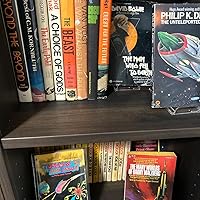
This is a review for mainly the stories and supplements. I enjoyed all three of his first novels but Sirens was my favorite. I have individual reviews for each of those books separately. However, I wanted to review the stories and well as give some praise for the LOA edition itself.
Report on the Barnhouse Effect - A military story focused on psychic disarmament of the world. It’s a neat little story told with wit and humor and a pleasant read.
EPICAC - A quick story with a satirical punch at the end that felt like Vonnegut through and through.
Unready to Wear - This is where I see the “Vonnegut” style really take hold. It’s a unique an wild idea, told in an odd setting that’s not too far off from present day (subjective), with a satirical and satisfying ending. An excellent story.
Tomorrow and Tomorrow and Tomorrow - An excellent short story with lots of commentary about life, family, materialism, aging and more. It’s a lot packed in here but it reads easy and moves at a quick pace. Very good story.
Harrison Bergeron - A simple story about the not too impossible future where we handicap humanity itself. A great example of expressive short fiction.
2BR02B - A continuation of Tomorrow and Tomorrow and Tomorrow. Taken even further into the future with the ramifications of society managing life as a resource.
Appendix -
Science Fiction - A short essay from 1965 giving his thoughts on being classified as a sf writer and the state of the field. A nice bit to flesh out KV as a person and a writer.
Introduction to Bagombo Snuff Box - the intro taken from his short story collection. The intro written in 1999 is part mini biography and part “how does my creative writing brain work.” It was fascinating to read and learn a little more about the author.
Chronology, notes , etc. - Such a cool addition for reference and/or a way to learn a little bit more about the text and the publication history- for a book nerd like myself I appreciate these supplements being included.
All in all this is my first Library of America box set and if this volume is a guide I am very happy with my purchase. The pages are very thin, but it allows them to include a great number of pages in a not so thick volume. I didn’t have any page rip or tear and it was a comfortable reading experience. I will be looking at more of their editions after I finish the Vonnegut box.
Report on the Barnhouse Effect - A military story focused on psychic disarmament of the world. It’s a neat little story told with wit and humor and a pleasant read.
EPICAC - A quick story with a satirical punch at the end that felt like Vonnegut through and through.
Unready to Wear - This is where I see the “Vonnegut” style really take hold. It’s a unique an wild idea, told in an odd setting that’s not too far off from present day (subjective), with a satirical and satisfying ending. An excellent story.
Tomorrow and Tomorrow and Tomorrow - An excellent short story with lots of commentary about life, family, materialism, aging and more. It’s a lot packed in here but it reads easy and moves at a quick pace. Very good story.
Harrison Bergeron - A simple story about the not too impossible future where we handicap humanity itself. A great example of expressive short fiction.
2BR02B - A continuation of Tomorrow and Tomorrow and Tomorrow. Taken even further into the future with the ramifications of society managing life as a resource.
Appendix -
Science Fiction - A short essay from 1965 giving his thoughts on being classified as a sf writer and the state of the field. A nice bit to flesh out KV as a person and a writer.
Introduction to Bagombo Snuff Box - the intro taken from his short story collection. The intro written in 1999 is part mini biography and part “how does my creative writing brain work.” It was fascinating to read and learn a little more about the author.
Chronology, notes , etc. - Such a cool addition for reference and/or a way to learn a little bit more about the text and the publication history- for a book nerd like myself I appreciate these supplements being included.
All in all this is my first Library of America box set and if this volume is a guide I am very happy with my purchase. The pages are very thin, but it allows them to include a great number of pages in a not so thick volume. I didn’t have any page rip or tear and it was a comfortable reading experience. I will be looking at more of their editions after I finish the Vonnegut box.
May 11, 2026
Player Piano - 5/5
The Sirens of Titan - 5/5
Mother Night - 5/5
Stories - Varied ratings between 3 and 5.
It's actually insane how highly I rate Kurt Vonnegut books, like I adore them, I can't even remotely rate them rationally. He has such a singular voice, it is good in these American Library editions seeing the humour in him develop across these three stories, Player Piano has far less of it, or rather a more dry subtle version of it, and it just blossoms and unfolds with the next two books.
Player Piano however, despite that more serious tone (for a Vonnegut novel), for me is the surprise favourite of these novels and stories, It is a book that should be talked about in the same circles as Fahrenheit 451, Brave New World, 1984, We and V for Vendetta. It isn't as overt a dystopia as those books but it is still dystopian, a far more mundane one, one I see being lived out in our worlds in many ways, and can see, with AI exploding like it is, becoming even more likely.
The Sirens of Titan is where you see Vonnegut really BECOME the version of himself we all know and love. Mostly it asks questions about free will, the main man tries to avoid his fate and yet cannot, and talks about the absurdity of religious organisations. I love his weird religious cults they show up a lot in his books and they're always great. This one is the Church of God the Utterly Indifferent, they're pretty much an atheist movement that teaches that you should stop looking for meaning or enlightenment. They're sillier than they sound. Also I am pretty sure the Aliens mention here are seen elsewhere in his works, the tralfamadorians, I swear they show up all over the place.
Mother Night, the only one of these I had previously read, is about identity and morality. A spy realising what he does matters regardless of the guise he is under; Essentially what you do matters, and who you pretend to be outwardly, if it effects others, is who you are. I liked it a lot more this time around than the first time, I'm a little older, I guess.
I tried to keep this all vague, and there for have done a bad job most likely describing the books in this omnibus edition. But I think most of Vonnegut stuff is best left just discovered raw, thats how I found it. I tend to find you either bounce off it or become an absolute fanboy like I am.
The Sirens of Titan - 5/5
Mother Night - 5/5
Stories - Varied ratings between 3 and 5.
It's actually insane how highly I rate Kurt Vonnegut books, like I adore them, I can't even remotely rate them rationally. He has such a singular voice, it is good in these American Library editions seeing the humour in him develop across these three stories, Player Piano has far less of it, or rather a more dry subtle version of it, and it just blossoms and unfolds with the next two books.
Player Piano however, despite that more serious tone (for a Vonnegut novel), for me is the surprise favourite of these novels and stories, It is a book that should be talked about in the same circles as Fahrenheit 451, Brave New World, 1984, We and V for Vendetta. It isn't as overt a dystopia as those books but it is still dystopian, a far more mundane one, one I see being lived out in our worlds in many ways, and can see, with AI exploding like it is, becoming even more likely.
The Sirens of Titan is where you see Vonnegut really BECOME the version of himself we all know and love. Mostly it asks questions about free will, the main man tries to avoid his fate and yet cannot, and talks about the absurdity of religious organisations. I love his weird religious cults they show up a lot in his books and they're always great. This one is the Church of God the Utterly Indifferent, they're pretty much an atheist movement that teaches that you should stop looking for meaning or enlightenment. They're sillier than they sound. Also I am pretty sure the Aliens mention here are seen elsewhere in his works, the tralfamadorians, I swear they show up all over the place.
Mother Night, the only one of these I had previously read, is about identity and morality. A spy realising what he does matters regardless of the guise he is under; Essentially what you do matters, and who you pretend to be outwardly, if it effects others, is who you are. I liked it a lot more this time around than the first time, I'm a little older, I guess.
I tried to keep this all vague, and there for have done a bad job most likely describing the books in this omnibus edition. But I think most of Vonnegut stuff is best left just discovered raw, thats how I found it. I tend to find you either bounce off it or become an absolute fanboy like I am.

August 21, 2019
Este es el primer tomo de la colección publicada por la Librería de América dedicada a
Kurt VONNEGUT
. Abarca sus primeras novelas, así como algunas de las historias que publicó entre 1950 y 1962:
Finalmente, se incluyen seis historias de ciencia ficción, “Report on the Barnhouse Effect,” “EPICAC,” "Unready to Wear", “Tomorrow and Tomorrow and Tomorrow,” “Harrison Bergeron” y "2BR02B". Las tres primeras fueron las que me gustaron más, las otras tres, no tanto.
Player Piano (1952): es la historia del Dr. Paul Proteus, un ingeniero en un mundo donde los ingenieros son la clase privilegiada. Es una sátira ingeniosa sobre la cultura organizacional de las grandes corporaciones, y al mismo tiempo una reflexión sobre la dignidad personal y la necesidad del trabajo. Ya se pueden distinguir algunos de los rasgos que serán característicos del estilo del escritor.
The Sirens of Titan (1959): una novela que parece absurda, pero que esconde una crítica irónica del mundo del dinero y de la religión, y la falta de libre albedrío, o al menos de la incapacidad del ser humano de decidir su futuro. Hice un comentario más extenso aquí.
Mother Night (1962) es muy interesante y divertida, y mucho más accesible que la novela anterior. Narra la historia de un agente doble que se infiltró en los niveles más altos del ministerio de propaganda nazi para transmitir inteligencia a los aliados.
Finalmente, se incluyen seis historias de ciencia ficción, “Report on the Barnhouse Effect,” “EPICAC,” "Unready to Wear", “Tomorrow and Tomorrow and Tomorrow,” “Harrison Bergeron” y "2BR02B". Las tres primeras fueron las que me gustaron más, las otras tres, no tanto.

August 30, 2020
Vonnegut 's short stories are worth buying the book; they cover such visionary topics as overpopulation, the consequences of indefinitely extending life, using god-like powers to force nations into peace, intelligent computers that refuse to work without a meaning or purpose to their toils, and moving beyond the limitations of our bodies so we can truly grow rather than spending all our time serving a poorly designed organic machine. These are heady topics for short stories, but Vonnegut fleshes them out with confidence. If that is not enough, you also receive three of his early novels including his first and the fun “The Sirens of Titan”.

January 24, 2018
Vonnegut's first three novels show an amazingly rapid progression from the simplistic dystopian sci-fi of Player Piano, through The Sirens of Titans complex space opera, to the darkly funny observations Mother Night makes about war and ideology.

May 24, 2019
These are all rereads for me, I read pretty much everything by Vonnegut back toward the turn of the century. They still hold up well, I think. The details of some of the stories may be firmly rooted in the 20th century but the observations of humanity seem more spot on than ever.
This entire review has been hidden because of spoilers.

October 18, 2019
Vonnegut is a breath of fresh air. I love his writing and sense of humour, he has this careful but kind of casually adventurous way of writing.
Player Piano was pretty good. The ending felt rushed and a bit bare bones, but I loved how well Vonnegut integrated and played with the themes. Great themes of automation, replacement, and social role.
The Sirens of Titan was also a lot of fun. I really enjoyed Mercury and the Harmoniums, it was very inventive. I thought that the book was a bit hectic, especially near the end. Everything kind of happens quickly and it felt like thematic overload. The climax strains belief; convoluted and could have been done quicker . The themes of manipulation and free will was fine. Beatrice got a bum rap, she didn't deserve the ending she got. Another great story.
Mother Night feels awfully appropriate for this era. I thought it was clever and smart, but at the very end, the moral of the story felt too direct. I thought it asked some really interesting questions, I liked the bit about the father in law.
The short stories, I was not a fan of. I saw some of the same rehashing of ideas and themes from his novels, but with less love for the characters.
Player Piano was pretty good. The ending felt rushed and a bit bare bones, but I loved how well Vonnegut integrated and played with the themes. Great themes of automation, replacement, and social role.
The Sirens of Titan was also a lot of fun. I really enjoyed Mercury and the Harmoniums, it was very inventive. I thought that the book was a bit hectic, especially near the end. Everything kind of happens quickly and it felt like thematic overload. The climax strains belief; convoluted and could have been done quicker . The themes of manipulation and free will was fine. Beatrice got a bum rap, she didn't deserve the ending she got. Another great story.
Mother Night feels awfully appropriate for this era. I thought it was clever and smart, but at the very end, the moral of the story felt too direct. I thought it asked some really interesting questions, I liked the bit about the father in law.
The short stories, I was not a fan of. I saw some of the same rehashing of ideas and themes from his novels, but with less love for the characters.
Read
May 16, 2023(Re-?)Read Sirens of Titan

April 17, 2025
(just read the short story collection @ end) finally back to vonnegut my favorite author i love you kurt
September 4, 2020
It's been one hell of a year, so I figured I might catch up on Vonnegut, an author I read quite a lot some 40 or so years ago. I read Vonnegut back then because he was quirky, quick and fun. If he was deep, 20something me wasn't smart enough to pick up on it. But my son, who has "and so it goes" tattooed on one bicep, is a lot deeper than I am, so I figured why not? Maybe retired me will pick up whatever got me just-starting-a-family-and-career me.
I've gotta say, reading Vonnegut in the year 2020 is a bit surreal. These, his earliest works, are creepily predictive in an age of AI, pandemic and social unrest. His first novel, "Player Piano," describes a world where machines have taken the reins from humankind and are enforcing political correctness by cancelling anyone of strays from the party line. Sound familiar. "Player Piano" is the only early Vonnegut novel I didn't read back then. Good thing, for it probably would have turned me off on him altogether. It reads like a first novel (because it is), and it lacks Vonnegut's trademark wry humor.
Things pick up with "The Sirens of Venus," though it, too, is a bit spooky in how it manages to foretell cultural trends 60 years in advance. "Mother Night," while largely ignored at the time of its publication, has always been my favorite and most underrated Vonnegut novel.
While all three novels are worthwhile reads, the highlights of this anthology are the short stories and the appendix. Of the six short stories, all of which are entertaining and thought-provoking, "Harrison Bergeron" stands out as the classic in the vein of Shirley Jackson's "The Village." That Vonnegut, a self-professed socialist, came up with such a scathing indictment of the equal outcomes canard boggles the mind.
For me, though, Vonnegut's "Introduction to 'Bagombo Snuff Box'" is the true jewel here. If you want to understand Vonnegut and/or his works, or if you just want to be a better fiction writer, you've got to seek this out. You're welcome.
I've gotta say, reading Vonnegut in the year 2020 is a bit surreal. These, his earliest works, are creepily predictive in an age of AI, pandemic and social unrest. His first novel, "Player Piano," describes a world where machines have taken the reins from humankind and are enforcing political correctness by cancelling anyone of strays from the party line. Sound familiar. "Player Piano" is the only early Vonnegut novel I didn't read back then. Good thing, for it probably would have turned me off on him altogether. It reads like a first novel (because it is), and it lacks Vonnegut's trademark wry humor.
Things pick up with "The Sirens of Venus," though it, too, is a bit spooky in how it manages to foretell cultural trends 60 years in advance. "Mother Night," while largely ignored at the time of its publication, has always been my favorite and most underrated Vonnegut novel.
While all three novels are worthwhile reads, the highlights of this anthology are the short stories and the appendix. Of the six short stories, all of which are entertaining and thought-provoking, "Harrison Bergeron" stands out as the classic in the vein of Shirley Jackson's "The Village." That Vonnegut, a self-professed socialist, came up with such a scathing indictment of the equal outcomes canard boggles the mind.
For me, though, Vonnegut's "Introduction to 'Bagombo Snuff Box'" is the true jewel here. If you want to understand Vonnegut and/or his works, or if you just want to be a better fiction writer, you've got to seek this out. You're welcome.
July 10, 2021
Mother Night: The Confessions of Howard W. Campbell. This is an extremely interesting book in my opinion. The written confessions of an American-born, German-married, Nazi war sympathizer: a German Tokyo Rose. The reader is primed to dislike this character - why should we root for a Nazi propagandist?
But the novel then proceeds to muddy the waters. He claims to be an American patriot, sending out coded messages in his broadcasts, though he himself doesn't know what the coded messages were; he was given the words he had to broadcast by other operatives. He claims to have never really believed in the Nazi cause, but he did benefit from the regime.
There are a number of other incidences all of which work to make Howard W. Campbell a most beguiling protagonist. However, always lurking in the back of the reader's mind is the basic question: can I really belief what this guy is saying? How much of these confessions, this memoir, is truth and how much is revisionist history?
How to approach a work based on the knowledge that the "author" is unreliable and a skilled narrator and propagandist.
A wonderful book that is surprisingly deep and difficult to classify in my mind.
Highly recommended.
2BR02B
A short story about a world under very strict population control and which has also achieved life-lengthening technology. Now, in order to have a child, a couple must find someone who is willing to end their life for that child to be born. Edward Wehling's wife is about to have triplets. Of which, two are scheduled to be eliminated, assuming Wehling can convince his grandfather to end his life. But, Wehling doesn't want his grandfather to submit to suicide, and he doesn't want his other children to be killed. What is a man to do?
A wonderfully bleak story about a man trying to do the best he can for his family. I would go to any length to protect my children, so I can easily put myself in his position. His decisions make perfect sense to me.
But the novel then proceeds to muddy the waters. He claims to be an American patriot, sending out coded messages in his broadcasts, though he himself doesn't know what the coded messages were; he was given the words he had to broadcast by other operatives. He claims to have never really believed in the Nazi cause, but he did benefit from the regime.
There are a number of other incidences all of which work to make Howard W. Campbell a most beguiling protagonist. However, always lurking in the back of the reader's mind is the basic question: can I really belief what this guy is saying? How much of these confessions, this memoir, is truth and how much is revisionist history?
How to approach a work based on the knowledge that the "author" is unreliable and a skilled narrator and propagandist.
A wonderful book that is surprisingly deep and difficult to classify in my mind.
Highly recommended.
2BR02B
A short story about a world under very strict population control and which has also achieved life-lengthening technology. Now, in order to have a child, a couple must find someone who is willing to end their life for that child to be born. Edward Wehling's wife is about to have triplets. Of which, two are scheduled to be eliminated, assuming Wehling can convince his grandfather to end his life. But, Wehling doesn't want his grandfather to submit to suicide, and he doesn't want his other children to be killed. What is a man to do?
A wonderfully bleak story about a man trying to do the best he can for his family. I would go to any length to protect my children, so I can easily put myself in his position. His decisions make perfect sense to me.
April 19, 2014
Before winning international fame with Cat’s Cradle and Slaughterhouse-Five, Kurt Vonnegut was a master of the drugstore paperback and the popular short story. This authoritative collection of his brilliant early work opens with Player Piano (1952), a Metropolis-like parable of breakneck technological innovation and its effect on those it robs of their livelihoods. The Sirens of Titan (1959), the interplanetary adventures of the world’s wealthiest and most despised man, is both a pulp-fiction space opera and a satire on the vanity of human striving. The confessions of a German-American double agent well placed among the Nazi elite, Mother Night (1962) is a cautionary tale with a famous moral: “We are what we pretend to be, so we must be careful about what we pretend to be.” Here too are six of Vonnegut’s best short stories, gems that display his matchless talent for hilarious invention and caustic social criticism.
A companion volume, Kurt Vonnegut: Novels & Stories 1963–1973, collects Cat’s Cradle; God Bless You, Mr. Rosewater; Slaughterhouse-Five; Breakfast of Champions; and three short stories, including “Welcometo the Monkey House.”
**

December 10, 2016
I really loved this Library of America collection. Player Piano is a fantastic debut novel that still reads well and carries its resonance forward to today's reading audience. The battle of an advanced technological society against the needs of a human populace still searching for meaning in its decreasing "space" of fulfillment should provide ample pause and question as to our own present and future path along disturbingly similar nonfictional circumstances. Sirens of Titan, I feel, is KV's first real science fiction novel worthy of the title. Douglas Adams's Hitchhiker really drew inspiration from this amusing, thoughtful and scattered work. Of all the marvelous novels in this collection, this one deserves a second read from me. Mother Night is a great film, but it began as a great novel; Vonnegut's third. This volume gives true value for the price, and Vonnegut's early work is anything but juvenile.

February 16, 2013
I reviewed the three main novels (Player Piano, the Sirens of Titan, and Mother Night) separately. The short stories are also worth a read. In them, like in Player Piano, Vonnegut tends to explore what happens if we get too much of a good thing. For example, Piano asked, if automated machines can produce products faster, cheaper, and better than people, what effect does this have on people? Harrison Bergeron explored the result of too much equality, and two of the other stories asked, once we get used to it, what would be the effect on people if aging (and thus death by old age) can be prevented or reversed?

August 27, 2015
This compilation was not one book but three novels, Player Piano, The Sirens of Titan and Mother Night, plus several short stories. The novels were good - not as good as Slaughterhouse Five or Breakfast of Champions. I liked Mother Night best of the three. There were themes of machinery taking over from man and the resulting ennui and, improbably, friendship. They were unrelentingly fatalistic.
December 1, 2014
Five stars because of Player Piano. What an absolutely fantastic story. Dystopian, misleading, heartwarming, and heartbreaking. Things are never what they seem. Appreciate simplicity. And lastly, always be careful what you wish for.
March 12, 2015
Player Piano and Sirens of Titan are phenomenal. And I will always love the tale of Harrison Bergeron. The look into the mind of a classic American writer is well worth all the time and money you'll spend on this collection

June 12, 2015
keeping track of the ratings for the short stories. the novels will be rated separately.
4 - Report on the Barnhouse Effect
4 - EPICAC
5 - Unready to Wear
3 - Tomorrow and Tomorrow and Tomorrow
3 - Harrison Bergeron
3 - 2BR02B
4 - Report on the Barnhouse Effect
4 - EPICAC
5 - Unready to Wear
3 - Tomorrow and Tomorrow and Tomorrow
3 - Harrison Bergeron
3 - 2BR02B
June 14, 2019
Read The Sirens of Titan. Slow start, but enjoyed it by the end. Almost surealist writing style. An interesting take on the God influence/free will debate. My first Vonnegut novel. I'll probably read more, though I'm not sure I would read this one again.
February 13, 2020
Of his three earliest novels, The Sirens of Titan was my definitely my favorite. However, all three had cool endings.
Player Piano - 3/5 Stars
The Sirens of Titan - 4/5 Stars
Mother Night - 4/5 Stars
Player Piano - 3/5 Stars
The Sirens of Titan - 4/5 Stars
Mother Night - 4/5 Stars
June 18, 2012
I found the plot of Sirens of Titan disappointing, but all of Vonnegut's writing is still enjoyable to read. Player Piano was a treat.

August 10, 2012
Having already read most of his famous works, it was interesting to see where he stole ideas from himself that eventually made it into future novels . . .

October 13, 2014
Love him or hate him....he makes you look at the world in a different way.
Displaying 1 - 30 of 33 reviews