

What do you think?

La Comédie Humaine #82
L'Auberge Rouge
Dans une auberge au bord du Rhin sont réunis par le hasard deux jeunes Français et un riche négociant allemand qui passent une agréable soirée avant d'aller se coucher. Au petit matin, on retrouve le négociant décapité... Dans les brumes de l'Allemagne romantique, l'inspecteur Balzac mène l'enquête !
66 pages, Mass Market Paperback
First published January 1, 1831
About the author
Honoré de Balzac
10.2k books4,565 followersFrench writer Honoré de Balzac (born Honoré Balzac), a founder of the realist school of fiction, portrayed the panorama of society in a body of works, known collectively as
La comédie humaine
.
Honoré de Balzac authored 19th-century novels and plays. After the fall of Napoléon in 1815, his magnum opus, a sequence of almost a hundred novels and plays, entitled, presents life in the years.
Due to keen observation of fine detail and unfiltered representation, European literature regards Balzac. He features renowned multifaceted, even complex, morally ambiguous, full lesser characters. Character well imbues inanimate objects; the city of Paris, a backdrop, takes on many qualities. He influenced many famous authors, including the novelists Marcel Proust, Émile Zola, Charles John Huffam Dickens, Gustave Flaubert, Henry James, and Jack Kerouac as well as important philosophers, such as Friedrich Engels. Many works of Balzac, made into films, continue to inspire.
An enthusiastic reader and independent thinker as a child, Balzac adapted with trouble to the teaching style of his grammar. His willful nature caused trouble throughout his life and frustrated his ambitions to succeed in the world of business. Balzac finished, and people then apprenticed him as a legal clerk, but after wearying of banal routine, he turned his back on law. He attempted a publisher, printer, businessman, critic, and politician before and during his career. He failed in these efforts From his own experience, he reflects life difficulties and includes scenes.
Possibly due to his intense schedule and from health problems, Balzac suffered throughout his life. Financial and personal drama often strained his relationship with his family, and he lost more than one friend over critical reviews. In 1850, he married Ewelina Hańska, his longtime paramour; five months later, he passed away.
Honoré de Balzac authored 19th-century novels and plays. After the fall of Napoléon in 1815, his magnum opus, a sequence of almost a hundred novels and plays, entitled, presents life in the years.
Due to keen observation of fine detail and unfiltered representation, European literature regards Balzac. He features renowned multifaceted, even complex, morally ambiguous, full lesser characters. Character well imbues inanimate objects; the city of Paris, a backdrop, takes on many qualities. He influenced many famous authors, including the novelists Marcel Proust, Émile Zola, Charles John Huffam Dickens, Gustave Flaubert, Henry James, and Jack Kerouac as well as important philosophers, such as Friedrich Engels. Many works of Balzac, made into films, continue to inspire.
An enthusiastic reader and independent thinker as a child, Balzac adapted with trouble to the teaching style of his grammar. His willful nature caused trouble throughout his life and frustrated his ambitions to succeed in the world of business. Balzac finished, and people then apprenticed him as a legal clerk, but after wearying of banal routine, he turned his back on law. He attempted a publisher, printer, businessman, critic, and politician before and during his career. He failed in these efforts From his own experience, he reflects life difficulties and includes scenes.
Possibly due to his intense schedule and from health problems, Balzac suffered throughout his life. Financial and personal drama often strained his relationship with his family, and he lost more than one friend over critical reviews. In 1850, he married Ewelina Hańska, his longtime paramour; five months later, he passed away.
Ratings & Reviews
Friends & Following
Create a free account to discover what your friends think of this book!
Community Reviews
Displaying 1 - 30 of 131 reviews

October 10, 2022
من آلمان را میان موهای بلند بور و چشمان آبی او میدیدم. او تصویر تمامنمای کشور از پا درآمدۀ من بود

December 22, 2021
بدون شک بالزاک نویسنده بزرگیه و تواناییش در توصیفات دقیق جزئیات محیط در داستان هاش خواننده رو به تحسین وادار میکنه. با اینحال این داستان علی رغم دو سوم پر التهاب و جذابش، در یک سوم پایانی دچار افول شد و یکباره از شور افتاد.
این کتاب داستان در داستان روایت میشه و مضمون اخلاقی و اجتماعی داره. داستانش درباره یک جنایت و بحث های اخلاقی پشت اونه. کوتاهه و سرگرم کننده .
برای آشنایی اولیه با سبک رئالیسم اجتماعی و آثار بالزاک، میتونه شروع خوبی باشه و علاقمند کنه مخاطب رو برای خوندن بیشتر از این نویسنده.
این کتاب داستان در داستان روایت میشه و مضمون اخلاقی و اجتماعی داره. داستانش درباره یک جنایت و بحث های اخلاقی پشت اونه. کوتاهه و سرگرم کننده .
برای آشنایی اولیه با سبک رئالیسم اجتماعی و آثار بالزاک، میتونه شروع خوبی باشه و علاقمند کنه مخاطب رو برای خوندن بیشتر از این نویسنده.

December 5, 2024
به نظرم داستانی بود که در آن به بررسی زندگی و روابط اجتماعی افراد در جامعهای میپردازد که تحت تأثیر تغییرات اجتماعی و اقتصادی قرار دارد. داستان در یک مسافرخانه روایت میشود که محل ملاقات شخصیتهای مختلفی از طبقات اجتماعی گوناگون است. که هر شخصیت نمایندهای از نوعی زندگی و چالشهای خاص خود است. شخصیت اصلی داستان، یک جوان به نام "نیکولا" است که به مسافرخانه میآید و با دیگر مهمانان آشنا میشود.... هر یک از این شخصیتها داستانها و مشکلات خاص خود را دارند که به تدریج در طول داستان آشکار میشود. بالزاک با جزئیات دقیق و توصیفهای عمیق، به تحلیل رفتارها و انگیزههای انسانها میپردازد. این کتاب میتونه نشاندهندهی مهارت بالزاک در خلق شخصیتهای عمیق و واقعگرایانه و تحلیلهای اجتماعی باشه.

November 22, 2019
Το διήγημα με τίτλο "L'Auberge rouge" (Το κόκκινο πανδοχείο) δημοσιεύτηκε για πρώτη φορά στο περιοδικό Revue de Paris (Επιθεώρηση των Παρισίων), σε δύο συνέχειες στις 21 και 28 Αυγούστου 1831 και την επόμενη χρονιά στη συλλογή διηγημάτων Nouveaux contes philosophiques εκδ. C. Gosselin (που περιελάμβανε επίσης το Maître Cornélius, Madame Firmiani και το Louis Lambert).
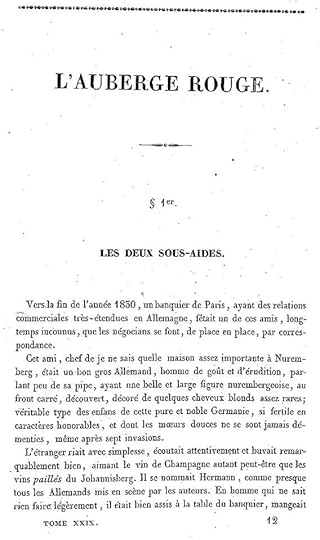
αρχή του διηγήματος 21 Αυγούστου 1831 περιοδικό Revue de Paris:
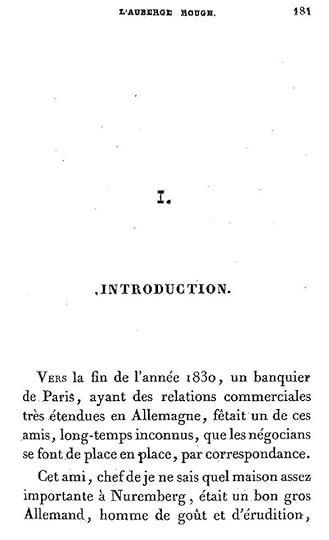
πρώτη σελίδα του διηγήματος από τις Nouveaux contes philosophiques 1832:
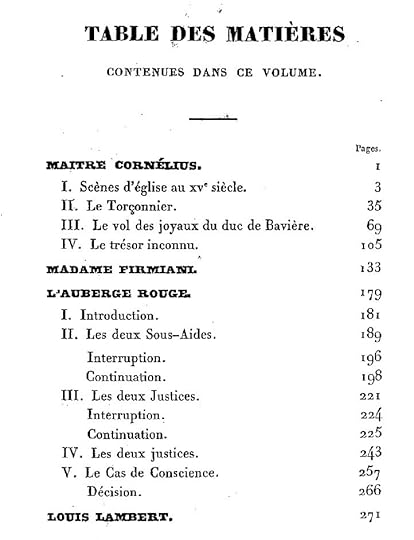
Ο διαχωρισμός των κεφαλαίων είναι ενδεικτικός των προθέσεων του συγγραφέα, καθώς τιτλοφορεί το τρίτο και τέταρτο μέρος ως Les deux Justices (Οι δύο δικαιοσύνες) και το πέμπτο μέρος ως Le Cas de Conscience (Το ζήτημα της συνείδησης). Αργότερα (και αυτό είναι ενδεικτικό της αμφισημίας την οποία επιθυμεί να προσδώσει στο έργο αυτό ο Balzac) το κείμενο θα καταλήξει να διαχωριστεί σε δύο μόνο μέρη: L'idée et le fait (Η ιδέα και το γεγονός ή πράξη) και Les deux Justices (Οι δύο δικαιοσύνες):
περιεχόμενα πρώτης έκδοσης Nouveaux contes philosophiques 1832:
Πηγή: gallica.bnf.fr
Η πιο σημαντική διαφορά ανάμεσα σε αυτές τις δύο πρώτες δημοσιεύσεις και στις μεταγενέστερες είναι το όνομα του τραπεζίτη Mauricey όπου αργότερα προκειμένου να ενταχθεί οργανικά το κείμενο στο σύνολο της Ανθρώπινης Κωμωδίας γίνεται Taillefer.
Αρχικό:
"— Comment se nomme le fournisseur?.... demandai-je à ma complaisante voisine.
— Mauricey !.... me répondit-elle".
Τελικό:
"— Comment se nomme l’ancien fournisseur, demandai-je à ma complaisante voisine.
— Taillefer, me répondit-elle".
Εδώ λοιπόν έχουμε ένα κείμενο που συνεχώς κινείται σε δύο διαφορετικά επίπεδα. Στο πρώτο μέρος έχουμε μια διήγηση που λαμβάνει χώρα σε ένα Παρισινό σουαρέ, στο σπίτι ενός πλούσιου τραπεζίτη, στα 1830 όπου ένας Γερμανός καλεσμένος ονόματι Hermann ξεκινάει την εξιστόρηση μιας αλλόκοτης και μυστηριώδους υπόθεσης που συνέβη στο παρελθόν, το Οκτώβρη του 1799, στο Κόκκινο Πανδοχείο, στις όχθες του Ρήνου, κοντά στο Andernach της Γερμανίας, όπου δύο νεαροί Γάλλοι στρατιωτικοί χειρούργοι κι ένας Γερμανός έμπορος ονόματι Wahlenfer βρίσκουν προσωρινό κατάλυμα.
Τα περιστατικά που συμβαίνουν μέσα στη διήγηση του Hermann στα 1799 και εκείνα που παρατηρεί ο ανώνυμος αφηγητής κατά τη διάρκεια του σουαρέ στα 1830, αρχίζουν να περιπλέκονται και σχηματίζουν μια τρίτη ιστορία η οποία αποτελεί το περιεχόμενο του δεύτερου μέρους, όπου στην ουσία πρόκειται για ένα debate, μια αντιπαράθεση επιχειρημάτων γύρω από ένα ηθικό δίλημμα. Κι αν αξίζει να διαβαστεί για κάποιο λόγο αυτή η ιστορία είναι ακριβώς γι' αυτό: Για να δώσει ο καθένας τη δική του απάντηση, για το πώς θα έπραττε αν βρισκόταν στη θέση του αφηγητή.
Για παράδειγμα προσωπικά θα έπραττα ως εξής:
αρχή του διηγήματος 21 Αυγούστου 1831 περιοδικό Revue de Paris:
πρώτη σελίδα του διηγήματος από τις Nouveaux contes philosophiques 1832:
Ο διαχωρισμός των κεφαλαίων είναι ενδεικτικός των προθέσεων του συγγραφέα, καθώς τιτλοφορεί το τρίτο και τέταρτο μέρος ως Les deux Justices (Οι δύο δικαιοσύνες) και το πέμπτο μέρος ως Le Cas de Conscience (Το ζήτημα της συνείδησης). Αργότερα (και αυτό είναι ενδεικτικό της αμφισημίας την οποία επιθυμεί να προσδώσει στο έργο αυτό ο Balzac) το κείμενο θα καταλήξει να διαχωριστεί σε δύο μόνο μέρη: L'idée et le fait (Η ιδέα και το γεγονός ή πράξη) και Les deux Justices (Οι δύο δικαιοσύνες):
περιεχόμενα πρώτης έκδοσης Nouveaux contes philosophiques 1832:
Πηγή: gallica.bnf.fr
Η πιο σημαντική διαφορά ανάμεσα σε αυτές τις δύο πρώτες δημοσιεύσεις και στις μεταγενέστερες είναι το όνομα του τραπεζίτη Mauricey όπου αργότερα προκειμένου να ενταχθεί οργανικά το κείμενο στο σύνολο της Ανθρώπινης Κωμωδίας γίνεται Taillefer.
Αρχικό:
"— Comment se nomme le fournisseur?.... demandai-je à ma complaisante voisine.
— Mauricey !.... me répondit-elle".
Τελικό:
"— Comment se nomme l’ancien fournisseur, demandai-je à ma complaisante voisine.
— Taillefer, me répondit-elle".
Εδώ λοιπόν έχουμε ένα κείμενο που συνεχώς κινείται σε δύο διαφορετικά επίπεδα. Στο πρώτο μέρος έχουμε μια διήγηση που λαμβάνει χώρα σε ένα Παρισινό σουαρέ, στο σπίτι ενός πλούσιου τραπεζίτη, στα 1830 όπου ένας Γερμανός καλεσμένος ονόματι Hermann ξεκινάει την εξιστόρηση μιας αλλόκοτης και μυστηριώδους υπόθεσης που συνέβη στο παρελθόν, το Οκτώβρη του 1799, στο Κόκκινο Πανδοχείο, στις όχθες του Ρήνου, κοντά στο Andernach της Γερμανίας, όπου δύο νεαροί Γάλλοι στρατιωτικοί χειρούργοι κι ένας Γερμανός έμπορος ονόματι Wahlenfer βρίσκουν προσωρινό κατάλυμα.
Τα περιστατικά που συμβαίνουν μέσα στη διήγηση του Hermann στα 1799 και εκείνα που παρατηρεί ο ανώνυμος αφηγητής κατά τη διάρκεια του σουαρέ στα 1830, αρχίζουν να περιπλέκονται και σχηματίζουν μια τρίτη ιστορία η οποία αποτελεί το περιεχόμενο του δεύτερου μέρους, όπου στην ουσία πρόκειται για ένα debate, μια αντιπαράθεση επιχειρημάτων γύρω από ένα ηθικό δίλημμα. Κι αν αξίζει να διαβαστεί για κάποιο λόγο αυτή η ιστορία είναι ακριβώς γι' αυτό: Για να δώσει ο καθένας τη δική του απάντηση, για το πώς θα έπραττε αν βρισκόταν στη θέση του αφηγητή.
Για παράδειγμα προσωπικά θα έπραττα ως εξής:

August 17, 2020
این سه ستاره قطعا به منزلهی پنج ستاره برای بخش اول داستان است. تا آنجایی که هافمن آلمانی در حال تعریف کردن داستان دوسرباز فرانسوی است که شبی را درمسافرخانه میگذرانند همه چیز فوقالعاده بود. توصیفات و ریز بینی بالزاک مرا مست میکرد؛ از خواندن توصیف لحظهی بعد از تمام شدن غذا سیر نمیشدم، از توجهی که به جزییات فضای داستان داشت دیوانه میشدم. برای بالزاک خیلی مهم بود که این مسافرخانه دقیقا از دور چه منظرهای دارد، مسافرانش چه افرادی هستند، حتی جزییات تنها پنجرهی فلزی سالن این مسافرخانه هم مهم بود! تمام اینها به علاوهی دینامیک جذاب داستان کشته شدن بازرگان واقعا لذت بخش بود. اما ناگهان وقتی داستان هافمن تمام شد و به فضایی برگشتیم که افراد دور میزی داستان او را گوش میدادند، انگار نویسنده ار روی بخش بزرگی ازداستان پریده بود. بخش دوم راه خودش راه میرفت جدا از بخش اول! ولی این از این نکته مطمینم که این ذهن وسواس بالزاک در توصیفات است که او را به نویسندگان عالی قرن۱۹ فرانسه پیوند میدهد! :)

November 19, 2024
یه داستان کوتاه یک شبهای به سبک بالزاک که خیلی خوب بود.
ترجمه آقای نجابتی هم مثل همیشه درجه یک بود.
پ.ن: بعد از یه میان ترم که تقریبا یک هفته براش داشم میخوندم ، بالزاک خستگی امتحان رو از تنم جدا کرد.
پ.ن 2 : از نظر من بالزاک مهم ترین نویسنده تاریخ ادبیات فرانسهست.
ترجمه آقای نجابتی هم مثل همیشه درجه یک بود.
پ.ن: بعد از یه میان ترم که تقریبا یک هفته براش داشم میخوندم ، بالزاک خستگی امتحان رو از تنم جدا کرد.
پ.ن 2 : از نظر من بالزاک مهم ترین نویسنده تاریخ ادبیات فرانسهست.

July 21, 2018
مجموعه پانوراما کتابای کمحجمی رو شامل میشه که سعی دارن اوقات مُردۀ ما رو با ادبیات پر کنن، در ضمن، یه «تمامنما» هم از هر نویسنده ارائه بدن. مسافرخانۀ سرخ به معنی واقعی کلمه «پانورامای» آثار بالزاک محسوب میشه. توجه به خُلقیّات ناپسند آدمها و زشتیهایی که در ظاهر زندگی اجتماعی پنهان شدن مضمون کلی آثار بالزاک رو تشکیل میدن؛ شخصیتها معمولاً یا حسودن، یا خسیس، یا دغلکار، یا زیادی سادهدل؛ عاشقومعشوقها اغلب هزارویک مانع سر راهشون سبز میشه و... مسافرخانۀ سرخ همۀ این موارد رو در خودش جا داده. در ضمن، چند داستان بلند و یک رمان بالزاک رو میتونیم جز آثار پلیسی-جنایی محسوب کنیم که مسافرخانۀ یکی از این آثار بهحساب میاد و با خوندنش با بالزاک پلیسینویس هم مواجه میشین که در نوع خودش تازگی داره. از طرف دیگه، مشهوره که بالزاک به دلیل اینکه همیشه بدهکار بوده داستانهاش رو تا جای ممکن کِش میداده تا از ناشر پول بیشتری بگیره، به نظرم، مسافرخانۀ سرخ از این مسئله هم مستثنی نیست و بخش آخر کتاب کاملاً در همین جهت نوشته شده.
خلاصه، اگر میخواین شروع به خوندن آثار بالزاک بکنین مسافرخانۀ سرخ قطعاً مقدمۀ خوبی خواهد بود؛ اگر هم فرصت خوندن رمانهای حجیمش رو ندارین میتونین فقط همین اثر کمحجم رو بخونین و تاحدی با حالوهوای آثار بالزاک آشنا بشین.
خلاصه، اگر میخواین شروع به خوندن آثار بالزاک بکنین مسافرخانۀ سرخ قطعاً مقدمۀ خوبی خواهد بود؛ اگر هم فرصت خوندن رمانهای حجیمش رو ندارین میتونین فقط همین اثر کمحجم رو بخونین و تاحدی با حالوهوای آثار بالزاک آشنا بشین.

September 15, 2026
✔️ چقدر توصیفات کتاب ریز و دقیق هستش و در این حجم کم بهتر از این نمیشد وجدان ، طمع و حس ندامت انسان رو به تصویر کشید .
✔️ خیلی منسجم و خوب نوشته شده و از نظر ارتباط گیری هم خیالتون راحت باشه 👌 به بهترین وجه ممکن روایت شده .
✔️ برای شروع مطالعه آثار بالزاک این کتاب به شدت پیشنهاد میشه .
📝 ترجمه آقای نجاتی هم خیلی خوب بود 👍 روان و بی عیب .
📖 بریده ای از کتاب :
فکر جنایت شاید خودِ جنایت است .
🗯 پ.ن : یه داستان کوتاه ۵۰ صفحه ای خیلی زیبا و فوق العاده جذاب . کشش داستان جوریه که تا انتها پیش میرید و دوست ندارید وقفه بیفته بین خوندنش 👌 تنها ایرادم جمع بندی داستانه که جالب بود و میتونست خیلی بهتر تمام بشه .
🗓 05/06/24
✔️ خیلی منسجم و خوب نوشته شده و از نظر ارتباط گیری هم خیالتون راحت باشه 👌 به بهترین وجه ممکن روایت شده .
✔️ برای شروع مطالعه آثار بالزاک این کتاب به شدت پیشنهاد میشه .
📝 ترجمه آقای نجاتی هم خیلی خوب بود 👍 روان و بی عیب .
📖 بریده ای از کتاب :
فکر جنایت شاید خودِ جنایت است .
🗯 پ.ن : یه داستان کوتاه ۵۰ صفحه ای خیلی زیبا و فوق العاده جذاب . کشش داستان جوریه که تا انتها پیش میرید و دوست ندارید وقفه بیفته بین خوندنش 👌 تنها ایرادم جمع بندی داستانه که جالب بود و میتونست خیلی بهتر تمام بشه .
🗓 05/06/24

March 24, 2023
Diese Erzählung, deren traute Runde mit dem Täter am Tisch die klassischen Krimis vorweg nimmt, entstand vor dem Chagrinleder und Vater Goriot. Ein Gast aus Deutschland unterhält seine Zuhörer mit der Geschichte eines Verbrechens, für das der Falsche hingerichtet wurde. Die Erzählung gerät zum nachträglich vollstreckten Todesurteil, das sich für den Betroffenen aber wie eine Erlösung anfühlt.
Das letzte Drittel behandelt die Frage, ob man die reiche Erbin heiraten darf, auch wenn man den Grundstock des Vermögens kennt.
Wer die beiden Klassiker noch nicht kennt, sollte diese Erzählung zuerst lesen und das Vorwissen genießen. Gerade beim Vater Goriot, in dessen Verlauf für ausgleichende Gerechtigkeit gesorgt wird.
Unter dem Titel Die rothe Schenke gibt es die deutsche Übersetzung bei Izzys freier Bibliothek im Internet als epub.
Das letzte Drittel behandelt die Frage, ob man die reiche Erbin heiraten darf, auch wenn man den Grundstock des Vermögens kennt.
Wer die beiden Klassiker noch nicht kennt, sollte diese Erzählung zuerst lesen und das Vorwissen genießen. Gerade beim Vater Goriot, in dessen Verlauf für ausgleichende Gerechtigkeit gesorgt wird.
Unter dem Titel Die rothe Schenke gibt es die deutsche Übersetzung bei Izzys freier Bibliothek im Internet als epub.

September 27, 2023
وقتی کتاب رو تموم کردم این سوال برام پیش اومد که "دوستی" به چه معناست؟
سری به فرهنگنامهی دهخدا زدم و به این برخوردم:
"(ص، اِ)( 1) محب و يکدل و يکرنگ (ناظم الاطباء) (برهان) خيرخواه و يار و رفيق (ناظم الاطباء) يار (شرفنامهء منيري) مقابل دشمن"
چه عاملی باعث میشه یکی رو دوست خطاب کنیم و او را همراز و همراه خود قلمداد کنیم؟
واقعا پاسخ دادن به این سوالات سخته و تا حدودی غیر قابل درک و باوره که گاهی دوستی از یک دشمن آزارهایش بیشتر شه و همچنان از او دفاع کنیم.
دربارهی کتاب هم باید بگم اولین کتابی بود که از بالزاک خوندم و خوب بود و میشه گفت از قلمش خوشم اومد.
سری به فرهنگنامهی دهخدا زدم و به این برخوردم:
"(ص، اِ)( 1) محب و يکدل و يکرنگ (ناظم الاطباء) (برهان) خيرخواه و يار و رفيق (ناظم الاطباء) يار (شرفنامهء منيري) مقابل دشمن"
چه عاملی باعث میشه یکی رو دوست خطاب کنیم و او را همراز و همراه خود قلمداد کنیم؟
واقعا پاسخ دادن به این سوالات سخته و تا حدودی غیر قابل درک و باوره که گاهی دوستی از یک دشمن آزارهایش بیشتر شه و همچنان از او دفاع کنیم.
دربارهی کتاب هم باید بگم اولین کتابی بود که از بالزاک خوندم و خوب بود و میشه گفت از قلمش خوشم اومد.

November 22, 2023
داستانی کوتاه در باب یک جنایت و روانکاوی آن. تا حدودی منو یاد جنایت و مکافات داستایفسکی انداخت!
اما آن کجا و این کجا!!!
توصیفات ناتورالیستی بالزاک از کتاب رو دوست داشتم و اولین کتاب بود که از بالزاک میخوندم بزودی سراغ شاهکارهاش خواهم رفت، در کل ناامیدم نکرد!
اما آن کجا و این کجا!!!
توصیفات ناتورالیستی بالزاک از کتاب رو دوست داشتم و اولین کتاب بود که از بالزاک میخوندم بزودی سراغ شاهکارهاش خواهم رفت، در کل ناامیدم نکرد!

September 23, 2018
مجموعه پانورامای ققنوس شامل کتاب های کم حجم میشود. مجموعه ی با ارزشی است از آن جهت که میانگین کتابخوانی مملکت اسف بار و بیشترین بهانه برای کتاب نخواندن کمبود وقت و حوصله است. ممنونم از محمد نجابتی که اگر ترجمه از او نبود شاید هیچوقت با این اثر بالزاک آشنا نمیشدم. ابایی ندارم که بگویم خیلی بیشتر از باباگوریو دوستش داشتم. داستان تم جنایی داشت برایم جذاب بود و باعث شد واداردم کند در مورد ذات بشر فکر کنم و خودم را جای راوی داستان بگذارم. این برای من بس است.
در زمینه ترجمه خیلی رک هستم، ترجمه خیلی خوب و روان بود. از پانویس ها مشخص بود که وقت گذاشته شده بود تا کامل در جریان داستان قرار بگیری و از این بابت متشکرم آقای نجابتی.
در زمینه ترجمه خیلی رک هستم، ترجمه خیلی خوب و روان بود. از پانویس ها مشخص بود که وقت گذاشته شده بود تا کامل در جریان داستان قرار بگیری و از این بابت متشکرم آقای نجابتی.

May 6, 2023
A story within a story about morality and choices. Unfortunately I found the ending weak and abrupt although the middle part is really compelling.

April 8, 2021
دیگه کسی نیست که بالزاک رو دوست نداشته باشه، توصیف های و تصویرسازی ریز به ریزش زبان زد شده .
اما چرا سه ستاره دادم، چون نسبت به بقیه کارای که ازش خوندم امتیاز دادم .
شاهکاری مثل بابا گوریو و اوژنی گرانده .
اما چرا سه ستاره دادم، چون نسبت به بقیه کارای که ازش خوندم امتیاز دادم .
شاهکاری مثل بابا گوریو و اوژنی گرانده .

July 23, 2026
چیزی که پس از خواندن با من ماند، بیشتر کیفیت حضور در جهان کتاب بود تا یک اتفاق منفرد. با توجه به عنوان «مسافرخانه سرخ»، همین فضا به نظرم انتخاب درستی بود. خوبیاش اینه که زور نمیزند همهچیز را توضیح بدهد و برای برداشت خود خواننده جا میگذارد. از بین نوشتههای Honoré de Balzac، «مسافرخانه سرخ» برای من بیشتر با فضای خودش جواب داد تا با نتیجهگیریهای آماده.

February 18, 2013
(The Human Comedy #06/98)
This was okay. When I began my long and slow task of reading Balzac's Human Comedy, I didn't realise quite how many very run of the mill short stories I'd have to scrap through. This, however, is one of the better ones - although not exactly high quality. The story is a tale within a tale, which is an interesting conceipt. Travellers meet up in an inn (the Red Inn of the title) and a German tells a story of a prisoner he'd met during the French revolution years, wrongly accused of murder.
There's a (slight) twist in the tale - especially as it explains the ill-acquired fortune of one of the families in Pere Goriot - and it kept my interest for its relatively short length - although I'm glad it was no longer.
Have to say that I'm glad that Balzac's work is available for free on Kindle, or I'd be seriously considering shelving this Human Comedy marathon.
This was okay. When I began my long and slow task of reading Balzac's Human Comedy, I didn't realise quite how many very run of the mill short stories I'd have to scrap through. This, however, is one of the better ones - although not exactly high quality. The story is a tale within a tale, which is an interesting conceipt. Travellers meet up in an inn (the Red Inn of the title) and a German tells a story of a prisoner he'd met during the French revolution years, wrongly accused of murder.
There's a (slight) twist in the tale - especially as it explains the ill-acquired fortune of one of the families in Pere Goriot - and it kept my interest for its relatively short length - although I'm glad it was no longer.
Have to say that I'm glad that Balzac's work is available for free on Kindle, or I'd be seriously considering shelving this Human Comedy marathon.

January 5, 2020
روایت کتاب به نظرم میومد که درباره یک داستان جنایی باشه ولی در اصل باید بیشتر به روابط انسانیای که پشت هر موضوعی توی این کتاب بود ، توجه کرد.

March 12, 2021
اگر قرار بود دنبال این بگردیم که هر کس اموالش را از کجا به دست آورده، سر از چه جاهایی که در نمیآوردیم.

October 11, 2025
Breve ma intenso giallo, la trovata è importante, uno come Dumas ci avrebbe costruito su un tomo da mille pagine, invece quel genio che era Honoré de Balzac l'ha concentrato in un romanzo breve. I francesi Maignan e Frederic sono in Germania, vedono un albergo rosso sul loro sentiero e ci si fermano per la notte, non potendo raggiungere la base militare che li aspetta. Una serie di circostanze fanno sì che quella notte diventi un punto di svolta. Sarà una svolta giusta o ingiusta? Quella carpa di fiume sarà stata indigesta?

September 12, 2019
נובלה עם סוף ״פתוח״ ובכל זאת מדובר בבלזק במיטבו.

May 9, 2018
The secret of a great success for which you are at a loss to account is a crime that has never been found out, because it was properly executed." -- Vautrin in Père Goriot
L'auberge rouge (1831) is a fascinating story in Balzac's La Comédie humaine. Published roughly 4 years before Père Goriot it tells the backstory of two characters that we encounter in the latter work, Jean-Frederic Taillefer and his daughter, Victorine. This work is set in "I know not what year," but it takes place sometime after the events of Goriot, which is set in 1819 Paris.
In Père Goriot Victorine is one of the boarders at Madame Vauquer's pension, the disowned daughter of the wealthy Jean-Frederic Taillefer. Her cruel father plans to remove her from his will in favor of Victorine's brother, Frederic. Victorine is sad but pretty (the Romantic heroine that she is) and could potentially, if Fate turns in her favor, become one of the richest women in all of Paris. Meanwhile, Eugene Rastignac, a young law student at the boarding house, becomes enamored with the greedy daughters of Père Goriot, considered very fine women in society. Due to his low status, Eugene finds it difficult to penetrate high society, and relies on the connection of his rich, celebrated cousin, Mme. de Beauséant, also pleading with his family for money to help him rise like the cream he supposes he is. Vautrin, one of the first homosexual characters in French literature, has an eye for Rastignac, but also sees something of himself in the young student, both possessing a desire to make it to the top no matter the cost. The scheming criminal Vautrin, a Mephistophelean character, tries to appeal to Eugene's ambition, encouraging him to woo Victorine, potential heiress of a great fortune, and he (Vautrin) will arrange that Victorine's brother is killed in a duel (all unbeknownst to Victorine). Eugene is swayed by Vautrin's vision, but his youthful conscience and idealism are too strong. He resists Vautrin, though the criminal still sees the death of Victorine's brother through, establishing her as a very well-to-do figure in Parisian society.
In The Red Inn Victorine is heiress to her father's fortune and she and her father are no longer estranged. In fact, she dotes on him -- and why not? He's the man to whom she owes her wealth and status. The father meanwhile still struggles with the death of his son. The father, a very minor character in Goriot is here a central character. Part of the beauty of Balzac's Human Comedy is that we not only find different characters at different points of their lives, but they are viewed through different lenses, here respectable there a scoundrel, here a minor character and there a major character. It is one of the most admirable qualities of the Human Comedy, and something 19th century and early 20th century writers (like Marcel Proust) most appreciated in Balzac.
By changing the perspective through which we see various characters, bringing them back and sending them away again, we recognize them as having more depth than would be the case if we had them with us for 300 pages and then never encountered them again. It is for this reason that some of Balzac's characters feel -- as Proust posits -- more real than many real-life people.
Like Balzac's Sarrasine, The Red Inn is a frame story. A Parisian banker, worldly because his occupation leads him to do business with people in other corners of the world (globalization in 19th century literature), is having a dinner party at which he entertains, among other guests "a stout worthy German, a man of taste and erudition, above all a man of pipes. . . . the type of the sons of that pure and noble Germany, so fertile in honorable natures, whose peaceful manners and morals have never been lost, even after seven invasions." With a stroke of humor, found everywhere in Balzac, he proceeds to tell us that the German man's "name was Hermann, which is that of most Germans whom authors bring upon their scene." A young girl, familiar with the tales of Hoffman and the stories of Walter Scott (a Balzac favorite) encourages Monsieur Hermann to tell the guests a frightening story, and so he tells a tale about two young medical students, one of whom he became familiar with when incarcerated in Germany sometime around the year 1799.
Before the German begins his tale the narrator's attention is seized by a strange, enigmatic man, a man who becomes increasingly agitated (to no one's notice but the narrator's) as the German's story unfolds. Not unlike "Sarrasine" again, the reader is drawn in to learn more about this mysterious character. We learn about him both through the narrator's observations and the German's story about murder and ill-gotten fortunes.
Drawing on the true story of a former army surgeon whose friend had been wrongly executed, with the drama of the story-within-the-story developing at a place called "L'auberge rouge" -- the setting of various murders (possibly including rape and cannibalism, perpetrated by the owners and one of their employees), which was in the headlines at the end of 1831 -- Balzac used current events to add to the realism of his tale. Though his Red Inn in this story was set in Germany, just the name The Red Inn was sure to inspire fear and intrigue in his audience.
This story has elements of Poe (though pre-Poe), to be certain, but the themes are entirely Balzacian. As in Sarrasine and Goriot, it matters not from where a fortune comes from so long as one is rich. It is a world of corruption, of everyone for his/herself. It is the way that Balzac and many others saw the Paris of that day. And if one were to tweak it, it could very well be the story of 21st century America or any other major city. Once it's been made, the means of acquiring one's fortune matter not. Young and relatively inexperienced like Balzac's Rastignac, the narrator of this story is a man of virtue yet to be corrupted by the corrupt society in which he finds himself. When he falls in love with Victorine he must decide whether or not he wants the family's blood money on his hands. His contemporaries who he turns to for advice are not so concerned with ethics as the narrator, and all that glitters in their eyes is gold. "Like Virtue's self," one of the narrator's capitalist friends says, encouraging the narrator in his pursuit of Victorine (and her fortune) "a crime has its degrees."
L'auberge rouge (1831) is a fascinating story in Balzac's La Comédie humaine. Published roughly 4 years before Père Goriot it tells the backstory of two characters that we encounter in the latter work, Jean-Frederic Taillefer and his daughter, Victorine. This work is set in "I know not what year," but it takes place sometime after the events of Goriot, which is set in 1819 Paris.
In Père Goriot Victorine is one of the boarders at Madame Vauquer's pension, the disowned daughter of the wealthy Jean-Frederic Taillefer. Her cruel father plans to remove her from his will in favor of Victorine's brother, Frederic. Victorine is sad but pretty (the Romantic heroine that she is) and could potentially, if Fate turns in her favor, become one of the richest women in all of Paris. Meanwhile, Eugene Rastignac, a young law student at the boarding house, becomes enamored with the greedy daughters of Père Goriot, considered very fine women in society. Due to his low status, Eugene finds it difficult to penetrate high society, and relies on the connection of his rich, celebrated cousin, Mme. de Beauséant, also pleading with his family for money to help him rise like the cream he supposes he is. Vautrin, one of the first homosexual characters in French literature, has an eye for Rastignac, but also sees something of himself in the young student, both possessing a desire to make it to the top no matter the cost. The scheming criminal Vautrin, a Mephistophelean character, tries to appeal to Eugene's ambition, encouraging him to woo Victorine, potential heiress of a great fortune, and he (Vautrin) will arrange that Victorine's brother is killed in a duel (all unbeknownst to Victorine). Eugene is swayed by Vautrin's vision, but his youthful conscience and idealism are too strong. He resists Vautrin, though the criminal still sees the death of Victorine's brother through, establishing her as a very well-to-do figure in Parisian society.
In The Red Inn Victorine is heiress to her father's fortune and she and her father are no longer estranged. In fact, she dotes on him -- and why not? He's the man to whom she owes her wealth and status. The father meanwhile still struggles with the death of his son. The father, a very minor character in Goriot is here a central character. Part of the beauty of Balzac's Human Comedy is that we not only find different characters at different points of their lives, but they are viewed through different lenses, here respectable there a scoundrel, here a minor character and there a major character. It is one of the most admirable qualities of the Human Comedy, and something 19th century and early 20th century writers (like Marcel Proust) most appreciated in Balzac.
By changing the perspective through which we see various characters, bringing them back and sending them away again, we recognize them as having more depth than would be the case if we had them with us for 300 pages and then never encountered them again. It is for this reason that some of Balzac's characters feel -- as Proust posits -- more real than many real-life people.
Like Balzac's Sarrasine, The Red Inn is a frame story. A Parisian banker, worldly because his occupation leads him to do business with people in other corners of the world (globalization in 19th century literature), is having a dinner party at which he entertains, among other guests "a stout worthy German, a man of taste and erudition, above all a man of pipes. . . . the type of the sons of that pure and noble Germany, so fertile in honorable natures, whose peaceful manners and morals have never been lost, even after seven invasions." With a stroke of humor, found everywhere in Balzac, he proceeds to tell us that the German man's "name was Hermann, which is that of most Germans whom authors bring upon their scene." A young girl, familiar with the tales of Hoffman and the stories of Walter Scott (a Balzac favorite) encourages Monsieur Hermann to tell the guests a frightening story, and so he tells a tale about two young medical students, one of whom he became familiar with when incarcerated in Germany sometime around the year 1799.
Before the German begins his tale the narrator's attention is seized by a strange, enigmatic man, a man who becomes increasingly agitated (to no one's notice but the narrator's) as the German's story unfolds. Not unlike "Sarrasine" again, the reader is drawn in to learn more about this mysterious character. We learn about him both through the narrator's observations and the German's story about murder and ill-gotten fortunes.
Drawing on the true story of a former army surgeon whose friend had been wrongly executed, with the drama of the story-within-the-story developing at a place called "L'auberge rouge" -- the setting of various murders (possibly including rape and cannibalism, perpetrated by the owners and one of their employees), which was in the headlines at the end of 1831 -- Balzac used current events to add to the realism of his tale. Though his Red Inn in this story was set in Germany, just the name The Red Inn was sure to inspire fear and intrigue in his audience.
This story has elements of Poe (though pre-Poe), to be certain, but the themes are entirely Balzacian. As in Sarrasine and Goriot, it matters not from where a fortune comes from so long as one is rich. It is a world of corruption, of everyone for his/herself. It is the way that Balzac and many others saw the Paris of that day. And if one were to tweak it, it could very well be the story of 21st century America or any other major city. Once it's been made, the means of acquiring one's fortune matter not. Young and relatively inexperienced like Balzac's Rastignac, the narrator of this story is a man of virtue yet to be corrupted by the corrupt society in which he finds himself. When he falls in love with Victorine he must decide whether or not he wants the family's blood money on his hands. His contemporaries who he turns to for advice are not so concerned with ethics as the narrator, and all that glitters in their eyes is gold. "Like Virtue's self," one of the narrator's capitalist friends says, encouraging the narrator in his pursuit of Victorine (and her fortune) "a crime has its degrees."
This entire review has been hidden because of spoilers.

August 8, 2026
از روی عنوان «مسافرخانه سرخ» نمیشود دربارهٔ همهٔ جزئیاتش مطمئن بود، اما لحن و فضای اثر شخصیت خودش را دارد. خوبی «مسافرخانه سرخ» این است که مدام نمیگوید چه حسی داشته باشی و کمی به خودت اعتماد میکند.

February 2, 2019
یک قصه جنایی کوتاه و یک دو راهی اخلاقی..
یک زمانی دنبال کتاب کمدی انسانی بالزاک بودم، دوست بسیار عزیزی که فهمید این کتاب رو میخام گشت و برام خرید و هدیه آورد. البته کمدی انسانی سارویان بود! خلاصه که قسمت نشد از بالزاک بخونم تا الان که مسافرخانه سرخ رو خوندم.
یک زمانی دنبال کتاب کمدی انسانی بالزاک بودم، دوست بسیار عزیزی که فهمید این کتاب رو میخام گشت و برام خرید و هدیه آورد. البته کمدی انسانی سارویان بود! خلاصه که قسمت نشد از بالزاک بخونم تا الان که مسافرخانه سرخ رو خوندم.

July 20, 2019
از اولش خیلی جالب شروعشد، کتاب یه حالت داستان تو داستان داشت، ولی اخرش خیلی یهویی به نظرم تموم شد ، از خوندنش تا حدودی لذت بردم.

February 19, 2024
à la fin d'un dîner, la fille d'un banquier parisien demande à l'hôte autour duquel son père a réuni quelques amis, un négociant allemand nommé Hermann, de leur raconter une histoire à faire peur. C'est celle-ci qui nous est donnée à lire, réécrite « à [s]a guise » par un « je » narrateur
L'histoire nous transporte en octobre 1799 sur les bords du Rhin. Deux jeunes chirurgiens militaires français, originaires de Beauvais, rejoignent leur brigade. L'un s'appelle Prosper Magnan ; Hermann a oublié le nom du second, qu'il nommera Wilhem. Ils s'arrêtent dans une auberge « entièrement peinte au rouge ». L'aubergiste leur cède sa chambre : toutes les autres sont occupées. Débarque un voyageur, porteur d'une lourde valise, pleine d'argent. C'est un riche négociant, fort affable. Les jeunes gens l'invitent à leur table et lui offrent de partager leur chambre. Troublé par la présence de cette fortune, Prosper ne parvient pas à s'endormir : des rêves éveillés l'agitent et le plongent dans un scénario de crime parfait. Effrayé, il se précipite au dehors, arpente fébrilement la campagne et reprenant ses esprits, rentre à l'auberge et s'endort. Au matin, réveillé par le vacarme qui règne dans l'auberge, il découvre le négociant mort, gisant dans une mare de sang à côté de son instrument de chirurgie. Aussitôt suspecté, il est emmené en prison. C'est là qu'Hermann, prisonnier lui aussi, se prend d'amitié pour lui. Comprenant qu'il s'accuse d'un crime qu'il n'a commis qu'en pensée, Hermann l'interroge sur son ami, dont il retrouve le prénom : Frédéric, à ce moment de son histoire.
Pendant tout ce récit, l'attitude d'un des convives, un banquier, apparemment terrorisé, intrigue le narrateur, au point de lui inspirer des soupçons, qui deviennent quasi certitude quand il apprend que ce denier se nomme Frédéric Taillefer, qu'il est de Beauvais et qu'il le voit en proie, à une crise nerveuse, accompagnée d'atroces souffrances. Il serait donc le véritable assassin ? Survient Victorine, sa fille, dont le narrateur est précisément amoureux. Il essaiera de l'oublier, sans y parvenir
A la fin il demanda l'aide de 17de ses proches pour se decider et la fin reste en ambiguité
( P.s.note :j'ai copié le recit de Mm Martine Contensou étant je ne puisse résumer ce chef d'oeuvre plus beau qu'elle l'a fait )
P.s note n2 cet oeuvre est dite etre le premiér oeuvre policier en toute l'europe ( etant apparus en aout 1831)mais puisque le romanticisme est plus accentué ici que les dimentions de thriller je pense que c'est loin d'etre un roman policier du moin du coté de l'attention de notre cher Balzac
L'histoire nous transporte en octobre 1799 sur les bords du Rhin. Deux jeunes chirurgiens militaires français, originaires de Beauvais, rejoignent leur brigade. L'un s'appelle Prosper Magnan ; Hermann a oublié le nom du second, qu'il nommera Wilhem. Ils s'arrêtent dans une auberge « entièrement peinte au rouge ». L'aubergiste leur cède sa chambre : toutes les autres sont occupées. Débarque un voyageur, porteur d'une lourde valise, pleine d'argent. C'est un riche négociant, fort affable. Les jeunes gens l'invitent à leur table et lui offrent de partager leur chambre. Troublé par la présence de cette fortune, Prosper ne parvient pas à s'endormir : des rêves éveillés l'agitent et le plongent dans un scénario de crime parfait. Effrayé, il se précipite au dehors, arpente fébrilement la campagne et reprenant ses esprits, rentre à l'auberge et s'endort. Au matin, réveillé par le vacarme qui règne dans l'auberge, il découvre le négociant mort, gisant dans une mare de sang à côté de son instrument de chirurgie. Aussitôt suspecté, il est emmené en prison. C'est là qu'Hermann, prisonnier lui aussi, se prend d'amitié pour lui. Comprenant qu'il s'accuse d'un crime qu'il n'a commis qu'en pensée, Hermann l'interroge sur son ami, dont il retrouve le prénom : Frédéric, à ce moment de son histoire.
Pendant tout ce récit, l'attitude d'un des convives, un banquier, apparemment terrorisé, intrigue le narrateur, au point de lui inspirer des soupçons, qui deviennent quasi certitude quand il apprend que ce denier se nomme Frédéric Taillefer, qu'il est de Beauvais et qu'il le voit en proie, à une crise nerveuse, accompagnée d'atroces souffrances. Il serait donc le véritable assassin ? Survient Victorine, sa fille, dont le narrateur est précisément amoureux. Il essaiera de l'oublier, sans y parvenir
A la fin il demanda l'aide de 17de ses proches pour se decider et la fin reste en ambiguité
( P.s.note :j'ai copié le recit de Mm Martine Contensou étant je ne puisse résumer ce chef d'oeuvre plus beau qu'elle l'a fait )
P.s note n2 cet oeuvre est dite etre le premiér oeuvre policier en toute l'europe ( etant apparus en aout 1831)mais puisque le romanticisme est plus accentué ici que les dimentions de thriller je pense que c'est loin d'etre un roman policier du moin du coté de l'attention de notre cher Balzac

May 12, 2020
Ad una cena in cui si trovano riunite persone molto diverse non tutte conoscenti fra loro, viene raccontata da Hermann, banchiere tedesco, una storia accaduta molti anni prima nella sua terra natale a due ventenni francesi, medici dell’esercito, che trovandosi a pernottare in un albergo (rosso) ad Andernach, finirono al centro di una misteriosa morte.
Ad udire la storia, oltre al giovane, voce narrante del libro e una sua amica è presente anche il signor Frédéric Taillefer, fornitore in pensione (e sua figlia Victorine) il quale mano a mano che la narrazione del banchiere prosegue si sentirà sempre più a disagio.
Quale segreto starà nascondendo l’uomo? E perchè anni dopo, il giovane protagonista avrà molte remore nel corteggiare e sposare la bella Victorine?
Gli intrecci del caso faranno la sua parte.
“L’albergo rosso”, scritto da Balzac nel 1831 si presenta come un brevissimo racconto diviso in due capitoli ben distinti, il primo dal titolo “L’idea e il fatto” narra dell’accadimento fulcro di ció che risulterà protagonista nella seconda parte intitolata invece “Le due giustizie”.
Data la brevità del racconto (si legge davvero in una mezz’oretta) i personaggi non sono per nulla sviluppati e approfonditi ma appaiono soltanto funzionali alla storia che comunque risulta interessante, piacevole e con un ritmo incalzante.
Il racconto fa parte dei cosiddetti “Studi filosofici” che Balzac fece in più di un caso, dove si puó vedere il protagonista messo a confronto con scelte particolarmente difficili da prendere poichè tangenti la propria morale.
Una “pillola” di letteratura che scorre piacevolmente sotto gli occhi del lettore e che fa dispiacere solo per la sua estrema brevità.
Ad udire la storia, oltre al giovane, voce narrante del libro e una sua amica è presente anche il signor Frédéric Taillefer, fornitore in pensione (e sua figlia Victorine) il quale mano a mano che la narrazione del banchiere prosegue si sentirà sempre più a disagio.
Quale segreto starà nascondendo l’uomo? E perchè anni dopo, il giovane protagonista avrà molte remore nel corteggiare e sposare la bella Victorine?
Gli intrecci del caso faranno la sua parte.
“L’albergo rosso”, scritto da Balzac nel 1831 si presenta come un brevissimo racconto diviso in due capitoli ben distinti, il primo dal titolo “L’idea e il fatto” narra dell’accadimento fulcro di ció che risulterà protagonista nella seconda parte intitolata invece “Le due giustizie”.
Data la brevità del racconto (si legge davvero in una mezz’oretta) i personaggi non sono per nulla sviluppati e approfonditi ma appaiono soltanto funzionali alla storia che comunque risulta interessante, piacevole e con un ritmo incalzante.
Il racconto fa parte dei cosiddetti “Studi filosofici” che Balzac fece in più di un caso, dove si puó vedere il protagonista messo a confronto con scelte particolarmente difficili da prendere poichè tangenti la propria morale.
Una “pillola” di letteratura che scorre piacevolmente sotto gli occhi del lettore e che fa dispiacere solo per la sua estrema brevità.

November 1, 2018
مهمانسرای سرخ.
بسیار هیجانانگیز است اما چفت و بست داستان خوب نبود.
بسیار هیجانانگیز است اما چفت و بست داستان خوب نبود.

January 25, 2025
کتابی بود که میخواستم باهاش صرفا با دوبالزاک آشنا شم و دوسش داشتم.
داستانی کوتاه درباره وجدان، طمع و پشیمانی.
قلم دوبالزاک و ترجمه روان بود و هیجان داستان و توصیف محیط و شخصیت ها به مقدار مناسبی بود.
داستانی کوتاه درباره وجدان، طمع و پشیمانی.
قلم دوبالزاک و ترجمه روان بود و هیجان داستان و توصیف محیط و شخصیت ها به مقدار مناسبی بود.

November 12, 2021
3.5 étoiles
Displaying 1 - 30 of 131 reviews