

What do you think?
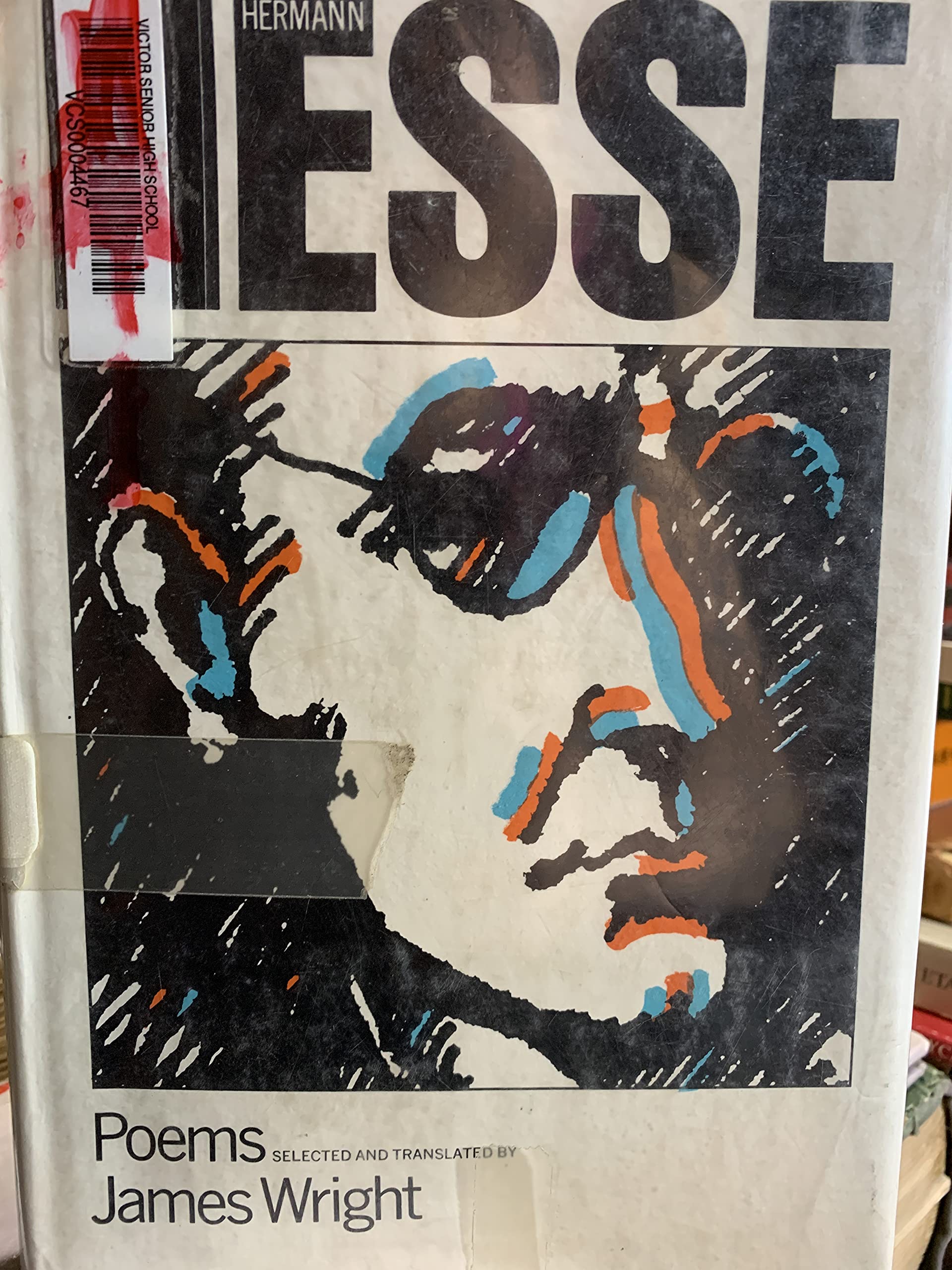
Poems
Few American readers seem to be aware that Hermann Hesse, author of the epic novels Steppenwolf and Siddhartha, among many others, also wrote poetry, the best of which the poet James Wright has translated and included in this book. This is a special volume—filled with short, direct poems about love, death, loneliness, the seasons—that is imbued with some of the imagery and feeling of Hesse’s novels but that has a clarity and resonance all its own, a sense of longing for love and for home that is both deceptively simple and deeply moving.
Hardcover
First published January 1, 1970
About the author
Hermann Hesse
1,848 books20.6k followersMany works, including
Siddhartha
(1922) and
Steppenwolf
(1927), of German-born Swiss writer Hermann Hesse concern the struggle of the individual to find wholeness and meaning in life; he won the Nobel Prize for literature in 1946.
Other best-known works of this poet, novelist, and painter include The Glass Bead Game , which, also known as Magister Ludi, explore a search of an individual for spirituality outside society.
In his time, Hesse was a popular and influential author in the German-speaking world; worldwide fame only came later. Young Germans desiring a different and more "natural" way of life at the time of great economic and technological progress in the country, received enthusiastically Peter Camenzind , first great novel of Hesse.
Throughout Germany, people named many schools. In 1964, people founded the Calwer Hermann-Hesse-Preis, awarded biennially, alternately to a German-language literary journal or to the translator of work of Hesse to a foreign language. The city of Karlsruhe, Germany, also associates a Hermann Hesse prize.
Other best-known works of this poet, novelist, and painter include The Glass Bead Game , which, also known as Magister Ludi, explore a search of an individual for spirituality outside society.
In his time, Hesse was a popular and influential author in the German-speaking world; worldwide fame only came later. Young Germans desiring a different and more "natural" way of life at the time of great economic and technological progress in the country, received enthusiastically Peter Camenzind , first great novel of Hesse.
Throughout Germany, people named many schools. In 1964, people founded the Calwer Hermann-Hesse-Preis, awarded biennially, alternately to a German-language literary journal or to the translator of work of Hesse to a foreign language. The city of Karlsruhe, Germany, also associates a Hermann Hesse prize.
Ratings & Reviews
Friends & Following
Create a free account to discover what your friends think of this book!
Community Reviews
Displaying 1 - 30 of 137 reviews

January 7, 2019
Had I been assigned Hesse’s poems in my college German class, I might have persevered with the language. As it was, I ran out of steam by the second year and never achieved fluency. It is one of my regrets. It is one of the things I would do differently if I could live my life over again. (Sorry Nietzsche. I’m not nearly as tough as you.)
So I’m glad that James Wright’s collection of Hesse’s poems is a bilingual book. The little German grammar and vocabulary that I did learn allows me to get a feel for the original poems as I read Wright’s translations.
The theme of the poems is homesickness, not the ordinary homesickness one has when travelling, but the spiritual homesickness that comes to those who are not at home in this world. It begins with a longing for the days of childhood innocence, but then it extends farther back to a time before birth. Novalis called it the dream of the Blue Flower.
“The world and my self, everything
Within and without me, grows into one.
Clouds drift through my heart,
Woods dream my dream,
House and pear tree tell me
The forgotten story of common childhood” (59).
The feeling I so often call nostalgia is nothing less than a desire for the impossible. I read the books of my youth. Revisit places I once lived. Dream of people long dead. And call to mind the fondest episodes of my childhood. But it is all for naught.
“Not a single path leads back
To the garden of our youth” (35).
As a devotee of the Blue Flower, I have felt that longing which is both the longing for something not of this world and the longing for my true self.
“O dark gate,
O dark hour of death,
Come forth,
So I can recover from this life’s emptiness
And go home to my own dreams” (39).
I’m grateful to James Wright for translating these poems because if he had not done so, I would never have read these beautiful and inspiring verses by my favorite novelist. I like them so much that perhaps I will dust off my German-English dictionary and, with Wright’s translations at my side, read them again in German.
So I’m glad that James Wright’s collection of Hesse’s poems is a bilingual book. The little German grammar and vocabulary that I did learn allows me to get a feel for the original poems as I read Wright’s translations.
The theme of the poems is homesickness, not the ordinary homesickness one has when travelling, but the spiritual homesickness that comes to those who are not at home in this world. It begins with a longing for the days of childhood innocence, but then it extends farther back to a time before birth. Novalis called it the dream of the Blue Flower.
“The world and my self, everything
Within and without me, grows into one.
Clouds drift through my heart,
Woods dream my dream,
House and pear tree tell me
The forgotten story of common childhood” (59).
The feeling I so often call nostalgia is nothing less than a desire for the impossible. I read the books of my youth. Revisit places I once lived. Dream of people long dead. And call to mind the fondest episodes of my childhood. But it is all for naught.
“Not a single path leads back
To the garden of our youth” (35).
As a devotee of the Blue Flower, I have felt that longing which is both the longing for something not of this world and the longing for my true self.
“O dark gate,
O dark hour of death,
Come forth,
So I can recover from this life’s emptiness
And go home to my own dreams” (39).
I’m grateful to James Wright for translating these poems because if he had not done so, I would never have read these beautiful and inspiring verses by my favorite novelist. I like them so much that perhaps I will dust off my German-English dictionary and, with Wright’s translations at my side, read them again in German.

August 27, 2021
At night, when the sea cradles me
And the pale star gleam
Lies down on its broad waves,
Then I free myself wholly
From all activity and all the love
And stand silent and breathe purely,
Alone, alone cradled by the sea
That lies there, cold and silent,
with a thousand lights.
Then I have to think of my friends
And my gaze sinks into their gazes
And I ask each one, silent, alone:
"Are you still mine?
Is my sorrow a sorrow to you...
Do you feel from my love, my grief,
Just a breath, just an echo?"
***
We traveled down the still river in the evening,
The acacia stood in the color of rose,
casting its light,
The clouds cast down the rose light.
***
...on many an evening,
I return gratefully to you,
when in the elder bushes
Of the garden fallen asleep
Only the rustling fountains
still make a sound.
***
And maybe,
Maybe some day you will come back from the war,
And take a walk with me some evening,
And somebody will talk about...
And smile gravely, and everything will be as before,
And no one will speak a word of his worry,
Of his worry and tenderness by night in the field,
Of his love. And with a single joke
You will frighten away the worry,
the war, the uneasy nights,
The summer lightning of shy human friendship,
Into the cool past that will never come back.
And the pale star gleam
Lies down on its broad waves,
Then I free myself wholly
From all activity and all the love
And stand silent and breathe purely,
Alone, alone cradled by the sea
That lies there, cold and silent,
with a thousand lights.
Then I have to think of my friends
And my gaze sinks into their gazes
And I ask each one, silent, alone:
"Are you still mine?
Is my sorrow a sorrow to you...
Do you feel from my love, my grief,
Just a breath, just an echo?"
***
We traveled down the still river in the evening,
The acacia stood in the color of rose,
casting its light,
The clouds cast down the rose light.
***
...on many an evening,
I return gratefully to you,
when in the elder bushes
Of the garden fallen asleep
Only the rustling fountains
still make a sound.
***
And maybe,
Maybe some day you will come back from the war,
And take a walk with me some evening,
And somebody will talk about...
And smile gravely, and everything will be as before,
And no one will speak a word of his worry,
Of his worry and tenderness by night in the field,
Of his love. And with a single joke
You will frighten away the worry,
the war, the uneasy nights,
The summer lightning of shy human friendship,
Into the cool past that will never come back.

October 17, 2022
Hesse's collection of poems. Oscillate between splendid and average. Not that enrapturing experience as his novels produce. Still a nice concoction emanating life-affirming vibes. But with occasional swerve to lamentation. Solitary time in wilderness extolled as mirror to the soul. Affinity for peaceful seclusion in the lap of nature. Penchant for spiritual oneness with nature in its multifarious manifestations. You may like it if you found his other works engrossing.

April 17, 2025
Very beautiful in German, but not sure how much point there’d be in reading just the English... The translations are clearly excellent, so it’s hard to say why, exactly. Just missing that je ne sais quoi

August 23, 2019
"Don’t be downcast, soon the night will
come,
When we can see the cool moon
laughing in secret
Over the faint countryside,
And we rest, hand in hand.
Don’t be downcast, the time will soon
come
When we can have rest. Our small
crosses will stand
On the bright edge of the road
together,
And rain fall, and snow fall,
And the winds come and go."
- On a Journey
I've never read anything by Hermann Hesse in my life until I found this little poetry collection of poems that reached me in very homely, beautiful and nostalgic ways.
I was comfortably dejected whilst reading his poetry and I felt it resulted in a giving me strong case of homesickness in existentialist terms.
I don't think that the longing he portrayed in his poetry was for a certain place, or a person or even an object. I think his longing was for something more obscure, something you cannot really address directly, something only an art can divulge.
And what his art told me is that he was an exile in this world, and it reminded me that I too am an exile who luckily got to float upon his linguistic river of familiar feelings that flew from him in a way far more beautiful than I will ever wrote and I truly loved it.
To be short, I felt he and I were nostalgic for the far away, the unanswerable and the unknown and it was so beautiful to get to read his words and feel them resonate within my current world.
come,
When we can see the cool moon
laughing in secret
Over the faint countryside,
And we rest, hand in hand.
Don’t be downcast, the time will soon
come
When we can have rest. Our small
crosses will stand
On the bright edge of the road
together,
And rain fall, and snow fall,
And the winds come and go."
- On a Journey
I've never read anything by Hermann Hesse in my life until I found this little poetry collection of poems that reached me in very homely, beautiful and nostalgic ways.
I was comfortably dejected whilst reading his poetry and I felt it resulted in a giving me strong case of homesickness in existentialist terms.
I don't think that the longing he portrayed in his poetry was for a certain place, or a person or even an object. I think his longing was for something more obscure, something you cannot really address directly, something only an art can divulge.
And what his art told me is that he was an exile in this world, and it reminded me that I too am an exile who luckily got to float upon his linguistic river of familiar feelings that flew from him in a way far more beautiful than I will ever wrote and I truly loved it.
To be short, I felt he and I were nostalgic for the far away, the unanswerable and the unknown and it was so beautiful to get to read his words and feel them resonate within my current world.

September 8, 2013
I work for a Park & Recreational District in a Northern California town. As I was cleaning up the public park I saw items on a picnic table that looked like books. The closer I got I realized there were two lonely books someone had left; one of them was this book I am reviewing. Little did I know that I had found a treasure of pondering insight. I love books like this.
Hesse’s words wooed me caressing my soul. I wanted to know these people he talked about lovingly, with sorrow, and longing. I wanted to lay in the grass and watch the animal shaped clouds float by. I wanted to feel the sun on my face, hear the birds sing, and doze off with a babbling brook in the background. I wanted to step into that world Hesse created and talk with these people. I have never read more compelling poetry in my life. I refuse to quote any of his work here because I don’t want to spoil the joy and fulfillment of the mysticism of his work upon reading for the first time.
It is ironic in finding a book of poetry by Hesse like I did. It is actions like this that make me kick up my heels or ponder lengths at a time how I happen to find the book and the nature of it all. Long live poetry!
Hesse’s words wooed me caressing my soul. I wanted to know these people he talked about lovingly, with sorrow, and longing. I wanted to lay in the grass and watch the animal shaped clouds float by. I wanted to feel the sun on my face, hear the birds sing, and doze off with a babbling brook in the background. I wanted to step into that world Hesse created and talk with these people. I have never read more compelling poetry in my life. I refuse to quote any of his work here because I don’t want to spoil the joy and fulfillment of the mysticism of his work upon reading for the first time.
It is ironic in finding a book of poetry by Hesse like I did. It is actions like this that make me kick up my heels or ponder lengths at a time how I happen to find the book and the nature of it all. Long live poetry!

September 5, 2024
SENZA RIPOSO
Cuore, uccel pauroso
sempre ancor chieder devi
se verrà pace e quiete
dopo giorni tempestosi.
Oh so, dopo giorni
pieni di quiete, per nostalgia e desiderio
ogni giorno ti sarà pena.
E tu appena al sicuro
cercherai nuovi dolori
e pieno d'impazienza
lo spazio brucerai
come stella più nuova.
LO SCOPO
Mancanza di meta
frettoloso viaggio
della mia vita,
come acqua da sorgente in fuga
a trascinarmi senza fine.
Ma ecco la scia
in circolo tornare
oltre ogni cammino
un meraviglioso solstizio
chiarisce a poco a poco
oscure vie.
SULLA STRADA
E camminando e salendo, sopra le nuvole,
in alto sulla montagna, in arie sottili,
davanti a me si dischiudeva il regno dei morti:
di mille lontani avi una nube
un balenio di innumerevoli spiriti,
e meravigliante ebbi la percezione
che io non sono né un isolato né un estraneo
che la mia anima, lo sguardo dei miei occhi,
la mia bocca e l'orecchio e la cadenza dei miei passi
non sono né nuovi né propriamente miei,
né è mia la volontà che reputavo sovrana.
Un raggio sono della luce, una foglia sull'albero
di innumerevoli stirpi, le cui prime genti
vissero nella foresta e migrarono,
e di altre, scatenatesi di guerra in guerra,
e ancora di altre, le cui dimore
gemme
costruite di legni preziosi, d'oro
risplendevano in belle città
e suscitavano meraviglia.
Cuore, uccel pauroso
sempre ancor chieder devi
se verrà pace e quiete
dopo giorni tempestosi.
Oh so, dopo giorni
pieni di quiete, per nostalgia e desiderio
ogni giorno ti sarà pena.
E tu appena al sicuro
cercherai nuovi dolori
e pieno d'impazienza
lo spazio brucerai
come stella più nuova.
LO SCOPO
Mancanza di meta
frettoloso viaggio
della mia vita,
come acqua da sorgente in fuga
a trascinarmi senza fine.
Ma ecco la scia
in circolo tornare
oltre ogni cammino
un meraviglioso solstizio
chiarisce a poco a poco
oscure vie.
SULLA STRADA
E camminando e salendo, sopra le nuvole,
in alto sulla montagna, in arie sottili,
davanti a me si dischiudeva il regno dei morti:
di mille lontani avi una nube
un balenio di innumerevoli spiriti,
e meravigliante ebbi la percezione
che io non sono né un isolato né un estraneo
che la mia anima, lo sguardo dei miei occhi,
la mia bocca e l'orecchio e la cadenza dei miei passi
non sono né nuovi né propriamente miei,
né è mia la volontà che reputavo sovrana.
Un raggio sono della luce, una foglia sull'albero
di innumerevoli stirpi, le cui prime genti
vissero nella foresta e migrarono,
e di altre, scatenatesi di guerra in guerra,
e ancora di altre, le cui dimore
gemme
costruite di legni preziosi, d'oro
risplendevano in belle città
e suscitavano meraviglia.

May 29, 2019
Here are a few samples that I liked:
Elizabeth
by Hermann Hesse (Translated by James Wright)
I should tell you a story,
The night is already so late -
Do you want to torment me,
Lovely Elizabeth?
I write poems about that,
Just as you do;
And the entire history of my love
Is you and this evening.
You mustn't be troublesome,
And blow these poems away.
Soon you will listen to them,
Listen, and not understand.
Destiny
by Hermann Hesse (Translated by James Wright)
In our fury and muddle
We act like children, cut off,
Fled from ourselves,
Bound by silly shame.
The years clump past
In their agony, waiting.
Not a single path leads back
To the garden of our youth.
The First Flowers
by Hermann Hesse (Translated by James Wright)
Beside the brook
Toward the willows,
During these days
So many yellow flowers have opened
Their eyes into gold.
I have long since lost my innocence, yet a memory
Touches my depth, the golden hours of morning, and gazes
Brilliantly upon me out of the eyes of flowers.
I was going to pick flowers;
Now I leave them all standing
And walk home, an old man.
Elizabeth
by Hermann Hesse (Translated by James Wright)
I should tell you a story,
The night is already so late -
Do you want to torment me,
Lovely Elizabeth?
I write poems about that,
Just as you do;
And the entire history of my love
Is you and this evening.
You mustn't be troublesome,
And blow these poems away.
Soon you will listen to them,
Listen, and not understand.
Destiny
by Hermann Hesse (Translated by James Wright)
In our fury and muddle
We act like children, cut off,
Fled from ourselves,
Bound by silly shame.
The years clump past
In their agony, waiting.
Not a single path leads back
To the garden of our youth.
The First Flowers
by Hermann Hesse (Translated by James Wright)
Beside the brook
Toward the willows,
During these days
So many yellow flowers have opened
Their eyes into gold.
I have long since lost my innocence, yet a memory
Touches my depth, the golden hours of morning, and gazes
Brilliantly upon me out of the eyes of flowers.
I was going to pick flowers;
Now I leave them all standing
And walk home, an old man.

May 12, 2022
En lo personal, Hesse me fascina porque parece tener una conciencia plena de las emociones, y una soltura increíble para escribir sobre cada una sin encasillarse en una en particular. Sin embargo, noto que hay un tema en común que es la descripción de paisajes naturales (así como en Peter Camenzind).
Los poemas seleccionados me parecieron melancólicos, algunos devastadores y otros que buscan esperanza y la luz del sol en un nuevo día. Mis favoritos fueron aquellos relacionados con la Gran Guerra (escritos en 1914).
Los poemas seleccionados me parecieron melancólicos, algunos devastadores y otros que buscan esperanza y la luz del sol en un nuevo día. Mis favoritos fueron aquellos relacionados con la Gran Guerra (escritos en 1914).

July 26, 2023
Favorite poems were “Ode to Hölderlin”, “Lying in Grass”, and “In a Collection of Egyptian Sculptures”.
There was a post card from Ramakrishna Temple Belur Math, Calcutta inside this second hand copy when I bought it which seems fitting.
From “In a Collection of Egyptian Sculptures”:
“But we, your younger brothers,
Stagger godless through a confusing life,
Our trembling souls stand eagerly, opened
To all the sufferings of passion,
To every burning desire.
Our goal is death,
Our belief a belief in what perishes,
…
Nevertheless, we also
Bear, burned into our very souls,
The sign of a secret affinity to the spirit”
There was a post card from Ramakrishna Temple Belur Math, Calcutta inside this second hand copy when I bought it which seems fitting.
From “In a Collection of Egyptian Sculptures”:
“But we, your younger brothers,
Stagger godless through a confusing life,
Our trembling souls stand eagerly, opened
To all the sufferings of passion,
To every burning desire.
Our goal is death,
Our belief a belief in what perishes,
…
Nevertheless, we also
Bear, burned into our very souls,
The sign of a secret affinity to the spirit”

December 22, 2017
"How heavy the days are.
There's not a fire to warm me,
Not a sun to laugh with me,
Everything bare,
Everything cold and merciless,
And even the beloved, clear
Stars look desolately down,
Since I learned in my heart that
Love can die"
There's not a fire to warm me,
Not a sun to laugh with me,
Everything bare,
Everything cold and merciless,
And even the beloved, clear
Stars look desolately down,
Since I learned in my heart that
Love can die"

July 14, 2021
but we, your younger brothers,
stagger godless through a confusing life,
our trembling souls stand eagerly, opened
to all sufferings of passion,
to every burning desire.
our goal is death,
our belief a belief in what perishes,
no great distance of time defies
our fleeting faces.
stagger godless through a confusing life,
our trembling souls stand eagerly, opened
to all sufferings of passion,
to every burning desire.
our goal is death,
our belief a belief in what perishes,
no great distance of time defies
our fleeting faces.

June 8, 2018
Meravigliose

April 26, 2022
It's always rather surprising to come across a poetry book I like, whether or not it was recommended to me (and it was). Can't wait to go around telling people how my sleep has turned into a frightened bird, "difficult to catch, to hold, yet easy to kill"
🐦....🏃♀️
🐦....🏃♀️

May 30, 2022
bu adam ne yazdıysa okuyacağım. hayat amaçlarımdan biri bu.

August 29, 2025
Homelessness, loneliness, solitariness.

February 12, 2019
The world and my self, everything
Within and without me, grows into one
Clouds drift through my heart,
Woods dream my dream
House and pear tree tell me
The forgotten story of common childhood
Streams resound and gorges cast shadows in me
The moon, and the faint star, my close friends
But the mild night
That bows with its gentle clouds above me
Has my mother's face
Kisses me smiling with inexhaustible love
Shakes her head dreamily
As she used to do and her hair
Waves through the world and within it
The thousand stars, shuddering, turn pale
Within and without me, grows into one
Clouds drift through my heart,
Woods dream my dream
House and pear tree tell me
The forgotten story of common childhood
Streams resound and gorges cast shadows in me
The moon, and the faint star, my close friends
But the mild night
That bows with its gentle clouds above me
Has my mother's face
Kisses me smiling with inexhaustible love
Shakes her head dreamily
As she used to do and her hair
Waves through the world and within it
The thousand stars, shuddering, turn pale

July 12, 2009
"To Cheryl - On The Happiest Of Days, Love Michael" - that is what is handwritten inside the cover of my copy of this book, which I purchased at a used bookstore. I always wondered what the "happiest of days" was - a wedding? Birthday? Anniversary? Well, Michael's pretty cool for having gifted Cheryl this book of poetry - it is a wonderful collection of verses.

February 28, 2018
I didn't even know that he also wrote poetry, this was OK.

June 4, 2019
2015/9/16
His poems of nature are especially my favorite
His poems of nature are especially my favorite

December 29, 2023
The poems did not resonate with me at all. Will check out some prose books by Hesse. These two lines stood out:
"Not a single path leads back
To the garden of our youth."
"Not a single path leads back
To the garden of our youth."

May 9, 2019
"I have long since lost my innocence, yet a memory
Touches my depth, the golden hours of morning,
And gazes brilliantly upon me out of the eyes of flowers."
(from "The First Flowers")
When asked who is my favorite poet, I'd be quick to jump with "John Ashbery." Curiously, if asked what is my favorite of Ashbery's books, I'd have to say "Some Trees," his first work and by far his most conventional, consisting of a good many musings on simpler things than postmodern obscurantism. I could link this to a personal appreciation of the Romantics, Wordsworth in particular, finding glory and beauty in the natural world which exists outside of human-industrial molestation. With Hermann Hesse's prose, I look for similar appreciation of the Natural, and it is with this attitude I've come to this poetry collection, though I must admit I've postponed reading the book for ages because of aforementioned interest in the more-stylistically-complex Ashbery. Questions of the presumed Insincerity of postmodernism ultimately led me to seek refuge once more in the unabashedly -pure- spirit of Hesse.
In truth, I came to this book primarily to escape the negativity felt when reading Pessoa's The Book of Disquiet, a book I purchased actually -because- it was meant to be quite depressive, but which I ultimately decided I'd do well to take small bites out of rather than reading in long sittings. Not good for the soul, with all its talk of hating his corporate 9-to-5 and things, despite the general love of nature and dreams and self and so on. I figured, hey, if I'm into that book because of These Certain Subjects, and I know for a fact that Hesse can tackle the same subjects without being so damned morose, I may as well read more Hesse, which was something I planned on doing anyway. This poetry collection just happened to be the topmost book on a stack of Hesse books I had lying on my floor.
I am most certainly satisfied with the contents of this collection. They fit what I've aimed for, w/r/t "Good Vibes." The man who compiled this volume, translator James Wright (apparently a poet himself) mentions roughly 480 pages' worth of poems in Hesse's oeuvre, which he's narrowed down to some 35-ish, presented with German original on the left-hand page and English translation on the right. Wright's primary subject dictating the poems he's collected is "homesickness," as he details in his Introduction, but in the same writing he notes how he's not entirely sure what he means by that word. He writes "What is home? I do not know the answer, but I cherish Hesse because he at least knew how to ask the question" (ix.).
With Wright informing the reader of the shared theme he's contrived for these collected poems, my fun in trying to figure it out is kind of shot down, but I at least retain the ability to try and uncover what "home" means. Having read my fair share of Hesse, I have some understanding, but I guess nothing really -too- concrete: "home" I think is something akin to the Innocence that marks the distinction between childhood/adolescence and "proper" adulthood, that purest level of Sincerity that takes a huge blow when one grows into a jaded bastard around one's college years, when one is in that odd little Limbo between a Past lifetime of school and a Future lifetime of career, when one is hesitant of going balls-deep in standard societal obligation, feeling not yet ready to sever the link to the Hope of the Past, the frame of mind from which the Future and its possibilities seem(ed?) limitless, before we come closer to the fatalistic view that maybe it would be easiest to just "lay down and take it," "go with the flow," &c., instead of the significantly-more-difficult task of continuing to shape our Being, temper our Souls, and live the full lives our "naive" younger selves dreamed of as heroes of the still-malleable reality.
And so there are a good many poems in this wee collection that kinda "flub" on me, particularly in the first half. It seems most of the poems here are from 1911 or 1915, but the very first is from 1899 and it is followed by a short series of pieces from 1902. These precede Hesse's debut novel, 1904's Peter Camenzind, and feel accordingly like a very young writer loosely trying his hand at different modes of literature. The 1911 poems would have been published after Hesse had already three novels to his name, better established as a "real" writer, but these too have the slight misfortune of sometimes feeling like the work of someone trying to break -into- verse -from- prose, even if his actual history may have suggested the reverse. Poems like "On a Journey" and "Evil Time" hint at the future of Hesse's prose career, but with the awkwardness of an unsure artist. Compare the better-fleshed-out "The Poet" and "At Night on the High Seas," perhaps "better" because they are longer and thus have more room for Hesse to establish a "voice." These couple are more pleasing to my soul, but it's more things like "Destiny," "Childhood," "Lying in Grass," "In a Collection of Egyptian Sculptures," "The First Flowers," "Holiday Music in the Evening" (the longest poem in the collection), and especially the Great War poems "Thinking of a Friend at Night," "Autumn Day," and "To Children" which speak most to me, and, perhaps not coincidentally, apply most to Wright's thesis of "homesickness."
****
Some more excerpts I enjoyed (asterisks to signify the highlights among highlights):
"That is what old songs are like--
You listen to them, and nobody laughs
And everybody draws back into
His own time till night falls into him."
(from "Ravenna (1)")
[The individualization of the Nostalgic Experience as it affects each person distinctly. That which recalls the Romance of one's childhood may be the same subject for another's memory, but certainly with difference in perception.]
"The women of Ravenna kiss
Rarely and deep, they kiss back.
And all they know about life is that
We all have to die."
(from "Ravenna (2)")
[I cannot tell from the German, which lacks a comma, but I've chosen to read this with two clauses, "The woman of Ravenna kiss rarely" and "deep, they kiss back," rather than the apparent reading of "kiss rarely and deep" and "they kiss back." The difference, I guess, would be an act of withholding the kiss, teasing as it were, but expressing great passion whenever the time comes for them to ever kiss in the first place. To link to the other "sentence" in this chunk of the poem, I would say this romance-game mirrors the sacred fatalism of human life, that it is written that each individual will eventually die, and so maybe it is best to live mindfully, kinda-sorta rationing out kisses rather than giving them away willy-nilly. Replace "kiss" with any other action of any human-emotional gravitas, and the case would be similar. A respect for the laws of nature as derived from the old Stoics, filtered through the lens of Romanticism, distorted slightly through a second lens of the coming wartime (if we imagine Hesse has felt the tensions a couple years before fighting formally broke out), &c.]
"The luminous
Vault of heaven in the future is my home:
Often in full flight of longing my soul storms upward,
To gaze on the future of blessed men,
Love, overcoming the law, love from people to people.
I find them all again, nobly transformed:
Farmer, king, tradesman, busy sailors,
Shepherd and gardener, all of them
Gratefully celebrate the festival of the future world.
Only the poet is missing,
The lonely one who looks on,
The bearer of human longing, the pale image
Of whom the future, the fulfillment of the world
Has no further need. Many garlands
Wilt on his grave,
But no one remembers him."
(from "The Poet")
[Reminds me a bit of a passage in Siddhartha. Siddhartha (the guy) views his fellow man as naive, childlike, simple. Later, he envies their simplicity, and realizes his mistake in living a life amounting mostly to sophistry rather than diving deep in the average-ness of his brothers. Here, "the poet" is like a martyr for Innocence, the sole being who can yearn for a return to primordial peace, for he is the only one who has ever had the misfortune of realizing what was lost. He learns to see beauty in the faces of his fellows, and dies ostensibly as one of them, yet not remembered as the Other he mostly was.]
"'Are you still mine?
Is my sorrow a sorrow to you, my death a death?
Do you feel from my love, my grief,
Just a breath, just an echo?'
-
And the sea peacefully gazes back, silent,
And smiles: no.
And no greeting and no answer comes from anywhere."
(from "At Night on the High Seas")
[Kind of silly, but I really just like to imagine the smugness of nature smirking at the fallen human. I could say something about the endlessness of the sea, or whatever.]
"The years clump past
In their agony, waiting.
Not a single path leads back
To the garden of our youth."
*(from "Destiny")
[Here would be one of the more "obvious" pieces of evidence I might use in an argument that "home" for Hesse's homesickness is the innocence of youth. The poem is extremely short. I don't have my copy with me right now, but if I'm not mistaken this is the second of two four-line stanzas, making this 50% of the entire poem. Short as it is, I think I find it quite depressive, as if "Innocence" (as I keep calling it) may never be found again, trapped in the Past of a linear timeflow, or whatever. The "clump"ing "years" would thus be obstacles seemingly derailing our search through the labyrinth of Time back toward a path to our younger, more beautiful years, but the "agony" would be that no such path even exists in the first place. The "waiting" I'm unsure of. Perhaps these clumps of years wait in the "agony" of somehow knowing our mission is hopeless before we do(?). But that is only -if- the mission is indeed hopeless.]
"O dark gate,
O dark hour of death,
Come forth,
So I can recover from this life's emptiness
And go home to my own dreams."
*(from "Childhood")
[This is interesting, as I've fled from Pessoa's book because it dwelt so much on the ideas of the worthlessness of waking life and the beauty of dreaming life. I sometimes like to say, as a depressive and self-deprecative joke, that sleeping is the only thing I enjoy. There is a simple, visceral reason, being the warmth of unconsciousness under one's blankets, but there is also the more complex dimension of my nonsensical dreams, often stupid but always far more interesting than the grind of my waking life. I read Pessoa, he says things I agree with, I feel I don't gain anything because of this agreement, and indeed kinda-sorta feel I've lost something when reading about a man's similar thoughts nearly a century in the past. Here, with Hesse, I'm mostly being a twat and playing with the vagueness of his language and Wright's translation to imagine a nicer world wherein this poem's speaker is not escaping reality by hiding in his dreams, but it rather reconfiguring his subjective reality such that the wonderment of his childhood shall reign once more, overwriting the banalities he's suffered in the "emptiness" of adult life.]
"No! Leave me alone, you impure dream
Of the world in suffering!
The dance of tiny insects cradles you in an evening radiance,
The bird's cry cradles you,
A breath of wind cools my forehead
With consolation."
*(from "Lying in Grass")
[But this one is kind of just plain escapism. The twist here would be that the speaker is not yearning for the fantasy of non-reality, so much as he is searching for Romance -within- reality, turning away from the "suffering" of the human-industrial body in favor of finding peace in the subtleties of nature, small insects, bird calls, a breeze, the grass in which he lays. Maybe the question would be whether the speaker is a) escaping from human-industrial reality or b) coming home to nature, the ambiguity of which would reveal the level of cynicism for whoever chooses one over the other.]
"Look:
We hate nothing that exists, not even death,
Suffering and dying
Does not horrify our souls,
As long as we learn more deeply to love.
Our heart is the bird's heart,
And it belongs to the sea and the forest, and we name
Slaves and wretches our brothers,
We still name with loving names both animal and stone."
*(from "In a Collection of Egyptian Sculptures")
[Again, more of the same idea of reuniting with nature and/or reclaiming Innocence through a neo-Romantic reappraisal of natural order. "Suffering and dying" are merely processes in the circle of life. More Stoicism, I guess, but maybe it's because I've read this book of Poems in the middle of also reading Marcus Aurelius's Meditations. Still, one sees that Hesse was practically destined to find Eastern philosophy/religion with lines such as these, even if the poem's surface subject is the quasi-Classicism of Egyptian history.]
"The world and my self, everything
Within and without me, grows into one.
Clouds drift through my heart,
Woods dream my dream,
House and pear tree tell me
The forgotten story of common childhood."
(from "Holiday Music in the Evening")
[Reminds me of the end of Siddhartha, with the extensive "river" metaphor, flowing into nature, seeing the faces of everyone Siddhartha's met earlier in the book, &c. Something maybe like pantheism, except the human speaker is also the god who is also nature. I could be a boner and say it's something like Super Tengen Toppa Gurren Lagann. "The forgotten story of common childhood" is more "obvious" evidence w/r/t my thesis of Innocence-as-"home."]
"And with a single joke
You will frighten away the worry, the war, the uneasy nights,
The summer lightning of shy human friendship,
Into the cool past that will never come back."
(from "Thinking of a Friend at Night")
[War, that ultimate element of the human-industrial world which most effectively destroys Innocence. I most enjoy that line, "the summer lightning of shy human friendship." Beneath the Wheel was the first Hesse book I ever read, and remains one of my all-time favorites (not just one of my favorite Hesse novels), and I feel the reason is twofold: 1) the Romantic nature-love, but also kinda 2) the -bRomantic- bond between two chill dudes. Hesse seems to write a lot of stuff with an avatar of himself as artistic protagonist, but with a deuteragonist who is far more artistically inclined, something of a mentor despite being close in age. This poem, featuring just a seemingly-regular soldier as subject, breaks the mold (well, before Hesse had written enough prose for there to even -be- a mold...), but the dynamic remains similar, with the proletariat soldier-friend still being capable of easily reaching beauty with a casual jest, instantly dispelling the horrors of The Great War.]
"And you shall know that whatever is noble
In your soul is always a warrior,
Even though he bears no weapons,
That every day a struggle and a destiny is waiting."
(from "To Children")
[Not sure if Hesse intended this, but the poem "Destiny" features that line about not being able to return to "the garden of our youth," yet this poem hints at a positive destiny for the youth. Perhaps the speaker has found an actual path back, and so he gives a warning to these children, a heads up, but no concrete statement regarding what to actually expect. Did I say something above about tempering one's soul? I'll link such a thing to this idea of "whatever is noble in your soul." Something about a Romantic hero spirit being imparted unto the new generation. Maybe something about being a "warrior" without engaging in the then-going War.]
Touches my depth, the golden hours of morning,
And gazes brilliantly upon me out of the eyes of flowers."
(from "The First Flowers")
When asked who is my favorite poet, I'd be quick to jump with "John Ashbery." Curiously, if asked what is my favorite of Ashbery's books, I'd have to say "Some Trees," his first work and by far his most conventional, consisting of a good many musings on simpler things than postmodern obscurantism. I could link this to a personal appreciation of the Romantics, Wordsworth in particular, finding glory and beauty in the natural world which exists outside of human-industrial molestation. With Hermann Hesse's prose, I look for similar appreciation of the Natural, and it is with this attitude I've come to this poetry collection, though I must admit I've postponed reading the book for ages because of aforementioned interest in the more-stylistically-complex Ashbery. Questions of the presumed Insincerity of postmodernism ultimately led me to seek refuge once more in the unabashedly -pure- spirit of Hesse.
In truth, I came to this book primarily to escape the negativity felt when reading Pessoa's The Book of Disquiet, a book I purchased actually -because- it was meant to be quite depressive, but which I ultimately decided I'd do well to take small bites out of rather than reading in long sittings. Not good for the soul, with all its talk of hating his corporate 9-to-5 and things, despite the general love of nature and dreams and self and so on. I figured, hey, if I'm into that book because of These Certain Subjects, and I know for a fact that Hesse can tackle the same subjects without being so damned morose, I may as well read more Hesse, which was something I planned on doing anyway. This poetry collection just happened to be the topmost book on a stack of Hesse books I had lying on my floor.
I am most certainly satisfied with the contents of this collection. They fit what I've aimed for, w/r/t "Good Vibes." The man who compiled this volume, translator James Wright (apparently a poet himself) mentions roughly 480 pages' worth of poems in Hesse's oeuvre, which he's narrowed down to some 35-ish, presented with German original on the left-hand page and English translation on the right. Wright's primary subject dictating the poems he's collected is "homesickness," as he details in his Introduction, but in the same writing he notes how he's not entirely sure what he means by that word. He writes "What is home? I do not know the answer, but I cherish Hesse because he at least knew how to ask the question" (ix.).
With Wright informing the reader of the shared theme he's contrived for these collected poems, my fun in trying to figure it out is kind of shot down, but I at least retain the ability to try and uncover what "home" means. Having read my fair share of Hesse, I have some understanding, but I guess nothing really -too- concrete: "home" I think is something akin to the Innocence that marks the distinction between childhood/adolescence and "proper" adulthood, that purest level of Sincerity that takes a huge blow when one grows into a jaded bastard around one's college years, when one is in that odd little Limbo between a Past lifetime of school and a Future lifetime of career, when one is hesitant of going balls-deep in standard societal obligation, feeling not yet ready to sever the link to the Hope of the Past, the frame of mind from which the Future and its possibilities seem(ed?) limitless, before we come closer to the fatalistic view that maybe it would be easiest to just "lay down and take it," "go with the flow," &c., instead of the significantly-more-difficult task of continuing to shape our Being, temper our Souls, and live the full lives our "naive" younger selves dreamed of as heroes of the still-malleable reality.
And so there are a good many poems in this wee collection that kinda "flub" on me, particularly in the first half. It seems most of the poems here are from 1911 or 1915, but the very first is from 1899 and it is followed by a short series of pieces from 1902. These precede Hesse's debut novel, 1904's Peter Camenzind, and feel accordingly like a very young writer loosely trying his hand at different modes of literature. The 1911 poems would have been published after Hesse had already three novels to his name, better established as a "real" writer, but these too have the slight misfortune of sometimes feeling like the work of someone trying to break -into- verse -from- prose, even if his actual history may have suggested the reverse. Poems like "On a Journey" and "Evil Time" hint at the future of Hesse's prose career, but with the awkwardness of an unsure artist. Compare the better-fleshed-out "The Poet" and "At Night on the High Seas," perhaps "better" because they are longer and thus have more room for Hesse to establish a "voice." These couple are more pleasing to my soul, but it's more things like "Destiny," "Childhood," "Lying in Grass," "In a Collection of Egyptian Sculptures," "The First Flowers," "Holiday Music in the Evening" (the longest poem in the collection), and especially the Great War poems "Thinking of a Friend at Night," "Autumn Day," and "To Children" which speak most to me, and, perhaps not coincidentally, apply most to Wright's thesis of "homesickness."
****
Some more excerpts I enjoyed (asterisks to signify the highlights among highlights):
"That is what old songs are like--
You listen to them, and nobody laughs
And everybody draws back into
His own time till night falls into him."
(from "Ravenna (1)")
[The individualization of the Nostalgic Experience as it affects each person distinctly. That which recalls the Romance of one's childhood may be the same subject for another's memory, but certainly with difference in perception.]
"The women of Ravenna kiss
Rarely and deep, they kiss back.
And all they know about life is that
We all have to die."
(from "Ravenna (2)")
[I cannot tell from the German, which lacks a comma, but I've chosen to read this with two clauses, "The woman of Ravenna kiss rarely" and "deep, they kiss back," rather than the apparent reading of "kiss rarely and deep" and "they kiss back." The difference, I guess, would be an act of withholding the kiss, teasing as it were, but expressing great passion whenever the time comes for them to ever kiss in the first place. To link to the other "sentence" in this chunk of the poem, I would say this romance-game mirrors the sacred fatalism of human life, that it is written that each individual will eventually die, and so maybe it is best to live mindfully, kinda-sorta rationing out kisses rather than giving them away willy-nilly. Replace "kiss" with any other action of any human-emotional gravitas, and the case would be similar. A respect for the laws of nature as derived from the old Stoics, filtered through the lens of Romanticism, distorted slightly through a second lens of the coming wartime (if we imagine Hesse has felt the tensions a couple years before fighting formally broke out), &c.]
"The luminous
Vault of heaven in the future is my home:
Often in full flight of longing my soul storms upward,
To gaze on the future of blessed men,
Love, overcoming the law, love from people to people.
I find them all again, nobly transformed:
Farmer, king, tradesman, busy sailors,
Shepherd and gardener, all of them
Gratefully celebrate the festival of the future world.
Only the poet is missing,
The lonely one who looks on,
The bearer of human longing, the pale image
Of whom the future, the fulfillment of the world
Has no further need. Many garlands
Wilt on his grave,
But no one remembers him."
(from "The Poet")
[Reminds me a bit of a passage in Siddhartha. Siddhartha (the guy) views his fellow man as naive, childlike, simple. Later, he envies their simplicity, and realizes his mistake in living a life amounting mostly to sophistry rather than diving deep in the average-ness of his brothers. Here, "the poet" is like a martyr for Innocence, the sole being who can yearn for a return to primordial peace, for he is the only one who has ever had the misfortune of realizing what was lost. He learns to see beauty in the faces of his fellows, and dies ostensibly as one of them, yet not remembered as the Other he mostly was.]
"'Are you still mine?
Is my sorrow a sorrow to you, my death a death?
Do you feel from my love, my grief,
Just a breath, just an echo?'
-
And the sea peacefully gazes back, silent,
And smiles: no.
And no greeting and no answer comes from anywhere."
(from "At Night on the High Seas")
[Kind of silly, but I really just like to imagine the smugness of nature smirking at the fallen human. I could say something about the endlessness of the sea, or whatever.]
"The years clump past
In their agony, waiting.
Not a single path leads back
To the garden of our youth."
*(from "Destiny")
[Here would be one of the more "obvious" pieces of evidence I might use in an argument that "home" for Hesse's homesickness is the innocence of youth. The poem is extremely short. I don't have my copy with me right now, but if I'm not mistaken this is the second of two four-line stanzas, making this 50% of the entire poem. Short as it is, I think I find it quite depressive, as if "Innocence" (as I keep calling it) may never be found again, trapped in the Past of a linear timeflow, or whatever. The "clump"ing "years" would thus be obstacles seemingly derailing our search through the labyrinth of Time back toward a path to our younger, more beautiful years, but the "agony" would be that no such path even exists in the first place. The "waiting" I'm unsure of. Perhaps these clumps of years wait in the "agony" of somehow knowing our mission is hopeless before we do(?). But that is only -if- the mission is indeed hopeless.]
"O dark gate,
O dark hour of death,
Come forth,
So I can recover from this life's emptiness
And go home to my own dreams."
*(from "Childhood")
[This is interesting, as I've fled from Pessoa's book because it dwelt so much on the ideas of the worthlessness of waking life and the beauty of dreaming life. I sometimes like to say, as a depressive and self-deprecative joke, that sleeping is the only thing I enjoy. There is a simple, visceral reason, being the warmth of unconsciousness under one's blankets, but there is also the more complex dimension of my nonsensical dreams, often stupid but always far more interesting than the grind of my waking life. I read Pessoa, he says things I agree with, I feel I don't gain anything because of this agreement, and indeed kinda-sorta feel I've lost something when reading about a man's similar thoughts nearly a century in the past. Here, with Hesse, I'm mostly being a twat and playing with the vagueness of his language and Wright's translation to imagine a nicer world wherein this poem's speaker is not escaping reality by hiding in his dreams, but it rather reconfiguring his subjective reality such that the wonderment of his childhood shall reign once more, overwriting the banalities he's suffered in the "emptiness" of adult life.]
"No! Leave me alone, you impure dream
Of the world in suffering!
The dance of tiny insects cradles you in an evening radiance,
The bird's cry cradles you,
A breath of wind cools my forehead
With consolation."
*(from "Lying in Grass")
[But this one is kind of just plain escapism. The twist here would be that the speaker is not yearning for the fantasy of non-reality, so much as he is searching for Romance -within- reality, turning away from the "suffering" of the human-industrial body in favor of finding peace in the subtleties of nature, small insects, bird calls, a breeze, the grass in which he lays. Maybe the question would be whether the speaker is a) escaping from human-industrial reality or b) coming home to nature, the ambiguity of which would reveal the level of cynicism for whoever chooses one over the other.]
"Look:
We hate nothing that exists, not even death,
Suffering and dying
Does not horrify our souls,
As long as we learn more deeply to love.
Our heart is the bird's heart,
And it belongs to the sea and the forest, and we name
Slaves and wretches our brothers,
We still name with loving names both animal and stone."
*(from "In a Collection of Egyptian Sculptures")
[Again, more of the same idea of reuniting with nature and/or reclaiming Innocence through a neo-Romantic reappraisal of natural order. "Suffering and dying" are merely processes in the circle of life. More Stoicism, I guess, but maybe it's because I've read this book of Poems in the middle of also reading Marcus Aurelius's Meditations. Still, one sees that Hesse was practically destined to find Eastern philosophy/religion with lines such as these, even if the poem's surface subject is the quasi-Classicism of Egyptian history.]
"The world and my self, everything
Within and without me, grows into one.
Clouds drift through my heart,
Woods dream my dream,
House and pear tree tell me
The forgotten story of common childhood."
(from "Holiday Music in the Evening")
[Reminds me of the end of Siddhartha, with the extensive "river" metaphor, flowing into nature, seeing the faces of everyone Siddhartha's met earlier in the book, &c. Something maybe like pantheism, except the human speaker is also the god who is also nature. I could be a boner and say it's something like Super Tengen Toppa Gurren Lagann. "The forgotten story of common childhood" is more "obvious" evidence w/r/t my thesis of Innocence-as-"home."]
"And with a single joke
You will frighten away the worry, the war, the uneasy nights,
The summer lightning of shy human friendship,
Into the cool past that will never come back."
(from "Thinking of a Friend at Night")
[War, that ultimate element of the human-industrial world which most effectively destroys Innocence. I most enjoy that line, "the summer lightning of shy human friendship." Beneath the Wheel was the first Hesse book I ever read, and remains one of my all-time favorites (not just one of my favorite Hesse novels), and I feel the reason is twofold: 1) the Romantic nature-love, but also kinda 2) the -bRomantic- bond between two chill dudes. Hesse seems to write a lot of stuff with an avatar of himself as artistic protagonist, but with a deuteragonist who is far more artistically inclined, something of a mentor despite being close in age. This poem, featuring just a seemingly-regular soldier as subject, breaks the mold (well, before Hesse had written enough prose for there to even -be- a mold...), but the dynamic remains similar, with the proletariat soldier-friend still being capable of easily reaching beauty with a casual jest, instantly dispelling the horrors of The Great War.]
"And you shall know that whatever is noble
In your soul is always a warrior,
Even though he bears no weapons,
That every day a struggle and a destiny is waiting."
(from "To Children")
[Not sure if Hesse intended this, but the poem "Destiny" features that line about not being able to return to "the garden of our youth," yet this poem hints at a positive destiny for the youth. Perhaps the speaker has found an actual path back, and so he gives a warning to these children, a heads up, but no concrete statement regarding what to actually expect. Did I say something above about tempering one's soul? I'll link such a thing to this idea of "whatever is noble in your soul." Something about a Romantic hero spirit being imparted unto the new generation. Maybe something about being a "warrior" without engaging in the then-going War.]
August 24, 2022
4.5 stars. I love James Wright as a translator as much as a poet in his own right. He was the right fit to translate Trakl into English, and he shows here that the same can be said of Hesse. Wright explains in the Introduction that he chose these poems for the theme of “homesickness,” which reminds me of one of my favorite lines from Novalis: “Philosophy is really homesickness: the urge to be at home everywhere.” And Hesse’s verse is both philosophic and searching, truly seeking to find a “home” on earth among his fellow man, but also more precisely within himself. Despite my ambivalence toward Hesse’s fiction, I am convinced he was born to be a poet rather than a novelist. I only wish more of his verse would be translated into English, as Wright points out that this slim volume was selected from hundreds of pages of poetry in Hesse’s collected works in German.
November 27, 2017
"I know many countries and cities are still waiting,
But never again will the night of the forests,
The wild fermenting garden of the earliest world
Lure me in, and horrify me with its magnificence.
Here in this endless and gleaming wilderness
I was removed father than ever from the world of men--
And i never saw so close or so clearly
The image in the mirror of my own soul."
"Now I drink pain in every delight
And poison in every wine;
I never knew it would be so bitter
To be alone,
Alone, without you."
But never again will the night of the forests,
The wild fermenting garden of the earliest world
Lure me in, and horrify me with its magnificence.
Here in this endless and gleaming wilderness
I was removed father than ever from the world of men--
And i never saw so close or so clearly
The image in the mirror of my own soul."
"Now I drink pain in every delight
And poison in every wine;
I never knew it would be so bitter
To be alone,
Alone, without you."

February 12, 2024
Hesse’s poems are very much micro short stories.
They almost read like poems in the vein Borges short fiction.
By this I mean Borge’s short stories feel like condensed novels and Hesse’s poems, at least in this collection, feel like condensed short stories.
I’ve yet to read anything of Hesse’s I dislike and the poems while not always novel, unique or new, continue to depict the interests and insights of a man concerned with both the concepts of a life well lived and a life well explored.
Well worth a read
They almost read like poems in the vein Borges short fiction.
By this I mean Borge’s short stories feel like condensed novels and Hesse’s poems, at least in this collection, feel like condensed short stories.
I’ve yet to read anything of Hesse’s I dislike and the poems while not always novel, unique or new, continue to depict the interests and insights of a man concerned with both the concepts of a life well lived and a life well explored.
Well worth a read
August 27, 2022
Hesse in his best. These poems are like compressed Hesse novels. It's sad that so few of them were translated.
...
We hate nothing that exists, not even death,
Suffering and dying
Does not horrify our souls,
As long as we learn more deeply to love.
...
Only concerning thing is, I think, the lack of poetic beauty in translated poems.
...
We hate nothing that exists, not even death,
Suffering and dying
Does not horrify our souls,
As long as we learn more deeply to love.
...
Only concerning thing is, I think, the lack of poetic beauty in translated poems.

December 31, 2017
Loved it.

July 20, 2026
"때 이른 가을"의 한 구절
놀란 영혼 속에 소망 하나 불안스레 움튼다.
생존에 지나치게 집착하지 않기를,
나무처럼 시드는 것을 깨우쳐 알기를,
그들의 가을에도 축제와 색채가 함께 하기를.
놀란 영혼 속에 소망 하나 불안스레 움튼다.
생존에 지나치게 집착하지 않기를,
나무처럼 시드는 것을 깨우쳐 알기를,
그들의 가을에도 축제와 색채가 함께 하기를.

January 19, 2022
A slim volume of Hesse's poems (31 poems to be exact), selected and translated by the poet James Wright.
The 31 poems are "I Know, You Walk", "Across the Field", "Elizabeth", "Ravenna (1)", "Ravenna (2)", "Lonesome Night", "A Swarm of Gnats", "The Poet", "Mountains at Night", "At Night on the High Seas", "To a Chinese Girl Singing", "Departure from the Jungle", "Evil Time", "On a Journey", "Night", "Destiny", "Ode to Hölderlin", "Childhood", "Lying in Grass", "How Heavy the Days...", "In a Collection of Egyptian Sculpture", "Without You", "The First Flowers", "Spring Day", "Holiday Music in the Evening", "Thinking of a Friend at Night", "Autumn Day", "To Children", "Flowers, Too", "Uneasiness in the Night", and "All Deaths".
Hesse's Wanderings are well documented. The theme is frequently explored by Hesse in his fiction and poetry...
There is a poem dedicated to the memory of Knulp. I can't find any information to provide a basis for Knulp, whether he was a friend of Hesse's or a historical figures. What I do know is that Knulp also formed the basis of Hesse's novel of the same name...
Many of the poems limit themselves to basic descriptions of nature. Not that there's anything wrong with that. In fact, many readers prefer this kind of poetry. I'm not one of these readers. In spite of my bias, I found the nature poems to be agreeable...
My favourite poem in the collection...
The 31 poems are "I Know, You Walk", "Across the Field", "Elizabeth", "Ravenna (1)", "Ravenna (2)", "Lonesome Night", "A Swarm of Gnats", "The Poet", "Mountains at Night", "At Night on the High Seas", "To a Chinese Girl Singing", "Departure from the Jungle", "Evil Time", "On a Journey", "Night", "Destiny", "Ode to Hölderlin", "Childhood", "Lying in Grass", "How Heavy the Days...", "In a Collection of Egyptian Sculpture", "Without You", "The First Flowers", "Spring Day", "Holiday Music in the Evening", "Thinking of a Friend at Night", "Autumn Day", "To Children", "Flowers, Too", "Uneasiness in the Night", and "All Deaths".
Hesse's Wanderings are well documented. The theme is frequently explored by Hesse in his fiction and poetry...
At night, when the sea cradles me
And the pale star gleam
Lies down on its broad waves,
Then I free myself wholly
From all activity and all the love
And stand silent and breathe purely,
Alone, alone cradled by the sea
That lies there, cold and silent, with a thousand lights.
Then I have to think of my friends
And my gaze sinks into their gazes
And I ask each one, silent, alone:
"Are you still mine?
Is my sorrow a sorrow to you, my death a death?
Do you feel from my love, my grief,
Just a breath, just an echo?"
And the sea peacefully gazes back, silent,
And smiles: no.
And no greeting and no answer comes from any where.
- At Night on the High Seas (pg. 23)
There is a poem dedicated to the memory of Knulp. I can't find any information to provide a basis for Knulp, whether he was a friend of Hesse's or a historical figures. What I do know is that Knulp also formed the basis of Hesse's novel of the same name...
Don't be downcast, soon the night will come,
When we can see the cool moon laughing in secret
Over the faint countryside,
And we rest, hand in hand.
Don't be downcast, the time will soon come
When we can have rest. Our small crosses will stand
On the bright edge of the road together,
And rain fall, and snow fall,
And the winds come and go.
- On a Journey in memory of Knulp (pg. 31)
Many of the poems limit themselves to basic descriptions of nature. Not that there's anything wrong with that. In fact, many readers prefer this kind of poetry. I'm not one of these readers. In spite of my bias, I found the nature poems to be agreeable...
Across the sky, the clouds move,
Across the fields, the wind,
Across the fields the lost child
Of my mother wanders.
Across the street, leaves blow,
Across the trees, birds cry -
Across the mountains, far away,
My home must be.
- Across the Field . . . (pg. 5)
The lake has died down,
The reed, black in its sleep,
Whispers in a dream.
Expanding immensely into the countryside,
The mountains loom, outspread.
They are not resting.
They breathe deeply, and hold themselves,
Pressed tightly, to one another.
Deeply breathing,
Laden with mute forces,
Caught in a wasting passion.
- Mountains at Night (pg. 21)
Beside the brook
Toward the willows,
During these days
So many yellow flowers have opened
Their eyes into gold.
I have long since lost my innocence, yet a memory
Touches my depth, the golden hours of morning, and gazes
Brilliantly upon me out of the eyes of flowers.
I was going too pick flowers;
Now I leave them all standing
And walk home, an old man.
- The First Flowers (pg. 51)
My favourite poem in the collection...
I should tell you a story,
The night is already so late -
Do you want to torment me,
Lovely Elizabeth?
I write poems about that,
Just as you do;
And the entire history of my love
Is you and this evening.
You mustn't be troublesome,
And blow these poems away.
Soon you will listen to them,
Listen, and not understand.
- Elizabeth (pg. 7)

February 9, 2019
How can such an amazing novelist be also such a great poet? Hermann Hesse is beyond human.
Some parts of poems I liked the most:
-Here in this endless and gleaming wilderness I was removed farther than ever from the world of men -- And I never saw so close and so clearly The image in the mirror of my own soul.
- Suffering and dying Does not horrify our souls, As long as we learn more deeply to love. Our heart is the bird's heart,
-The world and my self, everything Within and without me, grows into one. Clouds drift through my heart, Woods dream my dream, House and pear tree tell me The forgotten story of common childhood.
-And one day you will know That the sweet breath of this life, The precious possession of the heartbeat, Is only a loan, and that whatever was lost In the past, and the heir you long for, And the farthest future, Rolls through your blood, And that for every hair on your head Somebody endured one struggle, one pain, one death.
-And out of every form, Longing will drag me up the stairways To the last suffering, Up to the suffering of men. O quivering tensed bow, When the raging fist of longing Commands both poles of life To bend to each other! Yet often, and many times over, You will hunt me down from death to birth On the painful track of the creations, The glorious track of the creations.
Some parts of poems I liked the most:
-Here in this endless and gleaming wilderness I was removed farther than ever from the world of men -- And I never saw so close and so clearly The image in the mirror of my own soul.
- Suffering and dying Does not horrify our souls, As long as we learn more deeply to love. Our heart is the bird's heart,
-The world and my self, everything Within and without me, grows into one. Clouds drift through my heart, Woods dream my dream, House and pear tree tell me The forgotten story of common childhood.
-And one day you will know That the sweet breath of this life, The precious possession of the heartbeat, Is only a loan, and that whatever was lost In the past, and the heir you long for, And the farthest future, Rolls through your blood, And that for every hair on your head Somebody endured one struggle, one pain, one death.
-And out of every form, Longing will drag me up the stairways To the last suffering, Up to the suffering of men. O quivering tensed bow, When the raging fist of longing Commands both poles of life To bend to each other! Yet often, and many times over, You will hunt me down from death to birth On the painful track of the creations, The glorious track of the creations.
Displaying 1 - 30 of 137 reviews