

What do you think?
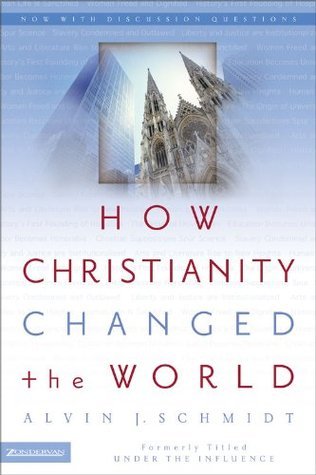
How Christianity Changed the World
Western civilization is becoming increasingly pluralistic,secularized, and biblically illiterate. Many people todayhave little sense of how their lives have benefited fromChristianity’s influence, often viewing the church withhostility or resentment.How Christianity Changed the World is a topicallyarranged Christian history for Christians and non-Christians. Grounded in solid research and written in apopular style, this book is both a helpful apologetic toolin talking with unbelievers and a source of evidence forwhy Christianity deserves credit for many of thehumane, social, scientific, and cultural advances in theWestern world in the last two thousand years.Photographs, timelines, and charts enhance eachchapter.This edition features questions for reflection anddiscussion for each chapter.
664 pages, Kindle Edition
First published May 1, 2001
Ratings & Reviews
Friends & Following
Create a free account to discover what your friends think of this book!
Community Reviews
Displaying 1 - 30 of 100 reviews

July 31, 2011
People today are profoundly ignorant about how much of modern American society is based on Christian thought. So many of our rights, freedoms, and values have a Chrstian source. This book helps bring this to light. Ignoring the Christian basis for our rights and values means only one thing: abandoning Christianity will inevitably lead to abandoning those same rights.

October 30, 2013
I absolutely loved this book. From start to finish, it is chock-full of so many interesting facts. I've never been more intrigued or informed by any book to date as much as this one. You don't have to be a history buff to enjoy the facts the author presents. I listened to this on audiobook, and loved it so much I will definitely buy a physical copy to have on hand for reference. He shows how so many of the luxuries we now deem as completely normal human behavior would most likely not be if it weren't for the influence of Christianity. Overall morality and compassion for people was changed with the spread of Christianity. Roman pagan culture used to watch gladiators fight to their deaths, get gored, or mauled by beasts for sport. Cannibalism was practiced in many cultures. Abortion, infanticide and child abandonment, and child sacrifice was common before the influence of Jesus. It was uncommon for a family to keep more than one daughter in Rome and Greece. Sexual immorality was prevalent, especially in pagan Rome and Greece. Homosexuality, pedophilia, and even beastiality, were practiced by men and women alike. Christianity greatly contributed to the freedom and dignity of women. The liberty and justice we enjoy today may not be here if not for the examples of right and wrong and fairness to all men that Christianity presented. In Rome, there was no middle class. You were either rich or your were a slave. 75 percent of Rome's population at one time were slaves. Slavery would have never been abolished had it not been for the compassion and equality of all men without Christianity's influence. It were Christians who fought against child labor. In Rome any form of manual labor, even in the arenas of Science were frowned upon. Christianity introduced the importance and honor in skilled labor and to be paid fairly for your work. Care for the poor through the founding of organizations like Salvation Army, Goodwill, and homeless shelters. Care for the elderly and the insane. Educational institutes in which children were to meet on a daily basis were originally formed by Christians. Higher universities and hospitals were also founded by Christians. Some of the greatest classical musicians, Ambrose, Bach, Handel, Mozart,Mendelssohn, Stravinsky, and Vaughn Williams, created their masterpieces inspired by Christ’s life, death, and resurrection. So many of the greatest scientists: Johannes Kepler, Leonardo da Vinci, Nicolaus Copernicus, Tycho Brahe, and Isaac Newton to name a few. Architecture, Literature, and Art all had amazing Christian contributors. Even the holidays we enjoy were of Christian origin. Our culture is so saturated with Christian origins, but in only 2,000 years it has been amazingly hidden and overlooked. It's important for us to explore these origins and to remind our culture why this country is so great. It started by a man from Galilee named Jesus Christ, who completely revolutionized our world and introduced a radically different lifestyle and died completing what he came to do. We are indebted to him for our lives, both in this world and the next.

April 8, 2013
I worked through this very slowly and shared portions on fb.
Schmidt’s book ranks high among my list of important works that set the historical record straight. It is a prodigious achievement. When faced by the facts of history, the host of ill-informed and biased attacks on Christianity fall like blunted spears at the foot of this granite wall of wisdom.
With charts, illustrations, and a prodigious number of ancient and modern citations he shows how Christianity transformed the world in dozens of areas. He discussed the role of the Bible, Christ, the gospel on transforming people, sanctifying human lkife, elevating sexual morality, elevating women to a place of freedom and dignity, inspiring charity and compassion, starting hospitals and health care, elevating universal education, dignifying labour, inspiring scientific advance, securing liberty and justice for all, abolishing slavery, affecting art, architecture, music and literature.
Every person should go through this book or be taught the facts found therein. Every Christian, after reading, will stand straighter and bend less under the irrational attacks of atheism. Every atheist and agnostic should read it.
And all of us, atheists included, should offer profound prayers of thanksgiving to Almighty God who has so profoundly affected our world. Especially those of us in the democratic countries where freedom and individual liberty abound should breathe a sigh of relief that we do not live where other religions such as Islam hold sway. The Bible, the Gospel, the coming of Jesus Christ, his life, teaching, death and resurrection are the greatest gifts of God to our fallen world.
Schmidt’s book ranks high among my list of important works that set the historical record straight. It is a prodigious achievement. When faced by the facts of history, the host of ill-informed and biased attacks on Christianity fall like blunted spears at the foot of this granite wall of wisdom.
With charts, illustrations, and a prodigious number of ancient and modern citations he shows how Christianity transformed the world in dozens of areas. He discussed the role of the Bible, Christ, the gospel on transforming people, sanctifying human lkife, elevating sexual morality, elevating women to a place of freedom and dignity, inspiring charity and compassion, starting hospitals and health care, elevating universal education, dignifying labour, inspiring scientific advance, securing liberty and justice for all, abolishing slavery, affecting art, architecture, music and literature.
Every person should go through this book or be taught the facts found therein. Every Christian, after reading, will stand straighter and bend less under the irrational attacks of atheism. Every atheist and agnostic should read it.
And all of us, atheists included, should offer profound prayers of thanksgiving to Almighty God who has so profoundly affected our world. Especially those of us in the democratic countries where freedom and individual liberty abound should breathe a sigh of relief that we do not live where other religions such as Islam hold sway. The Bible, the Gospel, the coming of Jesus Christ, his life, teaching, death and resurrection are the greatest gifts of God to our fallen world.

May 9, 2022
An excellent read, especially in the times that we are living in when Christianity is on the cancelled list of society. We stand on the shoulders of giants and few of us want to acknowledge it.
January 4, 2016
It's okay for the history, but a more accurate title for this book would be Works of Individuals Who Were Influenced by Christian Values in Some Way That Stood the Test of Time. The author stretches too far to claim Christian credit. Just because da Vinci painted scenes of The Last Supper and The Resurrection of Christ does not mean that his dissection of cadavers was motivated by Christianity.

October 17, 2021
This is really the classic book on Christianity's influence on society and culture. It is divided into 15 standalone chapters which are well-organized and presented along with black and white photographs, illustrations and charts. Each also has an extensive bibliography. Topics covered include the sanctity of human life, sexual morality, freedom and dignity of women, charity, healthcare, education, labour and economics, science, slavery, art, music, literature and culture. A fantastic resource for Christian writers and speakers and a useful complement to Vishal Mangalwadi's 'The Book that made your world' and Sharon James' 'How Christianity transformed the world'. Every Christian going to university to study the arts and sciences should read this book to give them the historical perspective they are unlikely to learn there.

December 16, 2008
I'm of two sad minds on this book. The first half of the book was awesome. It was thought provoking and interesting.
However the latter half of the book was not so interesting, or involving. It also had the tendency to show more of the books weakness.
I agree with Schmidt that Christianity had and still has a tremendous influence on nearly everything. However, his history seemed sketchy because he would site outcomes as having been born from Christianity without paying any mind to the other significant factors which made a difference.
(And totally my opinion--I think I heard a little too much of the author's opinions. I like my historical-ish books a little more historical and a little less "ish.")
In all, I would recommend this book, if only for how involving the first few chapters are. But I would caution others to not take it for more than it's worth. It's a book about Christianity's influence--not a hugely through, unbiased, and fully-representative perspective on history.
However the latter half of the book was not so interesting, or involving. It also had the tendency to show more of the books weakness.
I agree with Schmidt that Christianity had and still has a tremendous influence on nearly everything. However, his history seemed sketchy because he would site outcomes as having been born from Christianity without paying any mind to the other significant factors which made a difference.
(And totally my opinion--I think I heard a little too much of the author's opinions. I like my historical-ish books a little more historical and a little less "ish.")
In all, I would recommend this book, if only for how involving the first few chapters are. But I would caution others to not take it for more than it's worth. It's a book about Christianity's influence--not a hugely through, unbiased, and fully-representative perspective on history.

Want to Read
May 10, 2023Other edition is ISBN 9780310264491.
April 14, 2022
Some interesting insights. Several issues to quibble with.

July 6, 2011
What if Jesus had never been born, indeed, never existed in our world? What would be lost of what we experience today? This is a compelling question, and books that conquer it are few.
The first halfish of the book demonstrates a comprehensive interaction with Western Civilization, a clear line of impact from pagan Greece and Rome to the Christian witness, and a discussion of Judaic influences. The line of reasoning is persuasive, the arguments sound. It is worth reading. However, problems arise as the book progresses, and these strengths diminish as weaknesses grow.
Examples in later chapters are increasingly from America or Great Britain, while the rest of Europe, as well as Roman Catholic and Orthodox Christianity, fade away. The author begins to narrow his field to his own historic roots. The Jewish influence on law, society and religious practice are no longer considered, and the direct link between the pagan world that Jesus Christ impacted and the church today is not as distinctly drawn. I appreciate the effort to provide balance, but some of the statements made regarding where Christianity "got it right" and where Christianity "got it wrong" seem rather lacking in a robust, reasonable, foundation.
Chapters on Art & Architecture, Music and Literature are disastrous. Art & Architecture is pedantic in arguing that clearly Christian constructions are superior because Christians like them, Christians took a long time to build them, they are full of awe, and non-Christians say so too both in words and tourist spending. The Music section, in which all rock music is a condemned as a tool of darkness, is dogmatic and exceptionally curmudgeonly, as the author relies almost exclusively on his own disgust for music composed after the end of the classical age. Additionally, he completely fails to take into account other influences that have changed the musical landscape of the church (the expanded songbook, greater availability of instruments, media, etc) besides the waning influence of Christianity. The Literature section contains more of the sophomoric assertions that plagued Art & Architecture, and fails to consider the development of literature as a whole, creating a feeling that the author either THINKS Christianity is the only influence on literature, or is simply uneducated as to other influences. A follow up edition of essays by experts on these topics would have been an acceptable way to present these sections, because they should have been eliminated from this publication. A short excellent book is better than a long, tiresome one.
The book ends with a whimper in which the author documents English language words and expressions that can be traced back to either Jesus himself or the Christian church. Again, it's only about English now. It's true, without Jesus there would be no church, and without church we wouldn't use the words creed, heresy or martyr, but one has to wonder, does word choice *really* matter? How much influence is Christianity exerting because secular society recognizes we call our church leaders "Pastor" or use the theological term "Trinity." Of course, without Jesus and Christianity, we wouldn't have Christian terms to describe God or the workings of our institutions, but I can hardly see how this really MATTERS to society at large. Without dog shows we also would lose a set of vocabulary for assessing canines, but I cannot imagine such a loss would result in a completely different world, which, if you can remember it, is the original thesis.
It's too bad, really. Editing that would have limited this book to somewhere between 1/2 and 2/3 it's length could have produced a thoroughly readable and highly laudable book. Instead, later chapters highlight the author's myopia, undermine the credibility of his previous efforts, detract from interest in future publications and create a sense of relief that the read is over.
The first halfish of the book demonstrates a comprehensive interaction with Western Civilization, a clear line of impact from pagan Greece and Rome to the Christian witness, and a discussion of Judaic influences. The line of reasoning is persuasive, the arguments sound. It is worth reading. However, problems arise as the book progresses, and these strengths diminish as weaknesses grow.
Examples in later chapters are increasingly from America or Great Britain, while the rest of Europe, as well as Roman Catholic and Orthodox Christianity, fade away. The author begins to narrow his field to his own historic roots. The Jewish influence on law, society and religious practice are no longer considered, and the direct link between the pagan world that Jesus Christ impacted and the church today is not as distinctly drawn. I appreciate the effort to provide balance, but some of the statements made regarding where Christianity "got it right" and where Christianity "got it wrong" seem rather lacking in a robust, reasonable, foundation.
Chapters on Art & Architecture, Music and Literature are disastrous. Art & Architecture is pedantic in arguing that clearly Christian constructions are superior because Christians like them, Christians took a long time to build them, they are full of awe, and non-Christians say so too both in words and tourist spending. The Music section, in which all rock music is a condemned as a tool of darkness, is dogmatic and exceptionally curmudgeonly, as the author relies almost exclusively on his own disgust for music composed after the end of the classical age. Additionally, he completely fails to take into account other influences that have changed the musical landscape of the church (the expanded songbook, greater availability of instruments, media, etc) besides the waning influence of Christianity. The Literature section contains more of the sophomoric assertions that plagued Art & Architecture, and fails to consider the development of literature as a whole, creating a feeling that the author either THINKS Christianity is the only influence on literature, or is simply uneducated as to other influences. A follow up edition of essays by experts on these topics would have been an acceptable way to present these sections, because they should have been eliminated from this publication. A short excellent book is better than a long, tiresome one.
The book ends with a whimper in which the author documents English language words and expressions that can be traced back to either Jesus himself or the Christian church. Again, it's only about English now. It's true, without Jesus there would be no church, and without church we wouldn't use the words creed, heresy or martyr, but one has to wonder, does word choice *really* matter? How much influence is Christianity exerting because secular society recognizes we call our church leaders "Pastor" or use the theological term "Trinity." Of course, without Jesus and Christianity, we wouldn't have Christian terms to describe God or the workings of our institutions, but I can hardly see how this really MATTERS to society at large. Without dog shows we also would lose a set of vocabulary for assessing canines, but I cannot imagine such a loss would result in a completely different world, which, if you can remember it, is the original thesis.
It's too bad, really. Editing that would have limited this book to somewhere between 1/2 and 2/3 it's length could have produced a thoroughly readable and highly laudable book. Instead, later chapters highlight the author's myopia, undermine the credibility of his previous efforts, detract from interest in future publications and create a sense of relief that the read is over.

October 5, 2023
The Impact of Jesus Christ on the Western World
Alvin J. Schmidt was the perfect person to write this book. As a professor of sociology, Schmidt understands how cultures are formed and how history is shaped. Others have written on this topic, most notably is D. James Kennedy book, What If Jesus Had Never Been Born?, however Schmidt's grasp of the history of Western civilization and and his study of medieval literature has produced an academic-level study on Christianity's influence. Kennedy's book is a great popular treatise, but if you want to understand the sociological nuances of Jesus' impact on Western culture, this book is the one that will give it to you.
Alvin J. Schmidt was the perfect person to write this book. As a professor of sociology, Schmidt understands how cultures are formed and how history is shaped. Others have written on this topic, most notably is D. James Kennedy book, What If Jesus Had Never Been Born?, however Schmidt's grasp of the history of Western civilization and and his study of medieval literature has produced an academic-level study on Christianity's influence. Kennedy's book is a great popular treatise, but if you want to understand the sociological nuances of Jesus' impact on Western culture, this book is the one that will give it to you.

July 14, 2021
الكتاب من حوالي ٤٠٠ صفحة من الحجم الكبير يتناول في ١٥ فصل تأثير المسيحية في الحضارة الغربية في الكثير من النواحي
الاخلاق
الكرامة الإنسانية وحقوق الإنسان
اعمال الخير والرحمة
الصحة
التعليم
الاقتصاد والعمالة
العلوم
الحرية والقضاء
محاربة الرق
الفنون والمعمار والموسيقى والأدب
التقاويم والاعياد والمصطلحات والاسماء
وغيرها
الكتاب يتناول الوضع قبل المسيحية في البيئة الرومانية واليهودية واليونانية وكيف غيرت هذا الوضع ... كذلك الوضع في الإماكن التي دخلت المسيحية مؤخرا كشمال أوروبا وآسيا والامريكتين وكيف غيرت المسيحية في العادات والأخلاق
الكتاب مهم جدا لكل مهتم بالحضارة والمسيحية والتاريخ
الاخلاق
الكرامة الإنسانية وحقوق الإنسان
اعمال الخير والرحمة
الصحة
التعليم
الاقتصاد والعمالة
العلوم
الحرية والقضاء
محاربة الرق
الفنون والمعمار والموسيقى والأدب
التقاويم والاعياد والمصطلحات والاسماء
وغيرها
الكتاب يتناول الوضع قبل المسيحية في البيئة الرومانية واليهودية واليونانية وكيف غيرت هذا الوضع ... كذلك الوضع في الإماكن التي دخلت المسيحية مؤخرا كشمال أوروبا وآسيا والامريكتين وكيف غيرت المسيحية في العادات والأخلاق
الكتاب مهم جدا لكل مهتم بالحضارة والمسيحية والتاريخ

October 5, 2026
Overall, really good and the basis, sancity of life is well explained and drives the whole book. Towards the end of the book, some of the chapters are very weak, notably the education chapter which was a huge fail as the author skipped classical education. The book could've been much improved if the author had found an authority with really good proof on the subject of a certain chapter instead of writing it mainly from his own basis. Secondly, the scope narrows throughout the book, going from a global perspective to one more focused on the west and America.

April 29, 2023
This is a lengthy book with a lot of facts and details. It includes black and white pictures and summary charts. It reads like a textbook and contains study questions for each chapter at the end of the book. This would be an excellent resource for a world history/western civilization high school or college course. Despite the current downward trend in our culture, we are still blessed to live in a nation with a Christian legacy.

April 14, 2022
A good overview of Christianity’s influence on civilization for the last two millennia - although the current trends in society would seem to have us reverting to the Greco- Roman norms, sadly. The discussion questions leave much to be desired if this is to be used as a book for group study.

January 6, 2025
This book was very interesting! It sat on my shelf for at least 15 years. I am glad that I finally read it. I will keep it for the boys to read when they are in high school.

October 21, 2019
The scales have fallen off my eyes after reading this insightful book. Everywhere I look, I now see something that was in some way influenced by the teachings of Jesus and the followers of his teachings.
I thoroughly enjoyed the structure of the book. Each of the 15 chapters had a theme, a realm in which Christianity was profoundly influential. Women’s rights, sexual morality, health care, economics, education, law, abolition of slavery, music, literature, architecture and art. This book is surprisingly well researched, with around 50 sources for each chapter.
I thought it would be a quick read, but it wasn’t, simply because I couldn’t stop basking in the delightful details of all 400 pages.
Here’s a paraphrase of a few quotes that really impacted me:
“The massive impact that Christianity has had on civilization is often overlooked and denied. It was Christians who invented colleges and universities, dignified labor as divine vocations, and extended the light of civilization to barbarians on the frontiers. It provided the greatest source of inspiration for the magnificent achievements in art, architecture, music, and literature. No other religion, teaching, philosophy, or movement has so changed the world for the better, and lifted civilization to the highest plateau ever known, as Christianity.”
“Christianity has many opponents today. But the very freedom of speech and expression that ironically permits them to castigate Christian values is largely a by-product of Christianity’s influence. Christianity is ironic in that it grants freedom, which allows the beneficiaries to deny and despise the source of their freedom.”
I thoroughly enjoyed the structure of the book. Each of the 15 chapters had a theme, a realm in which Christianity was profoundly influential. Women’s rights, sexual morality, health care, economics, education, law, abolition of slavery, music, literature, architecture and art. This book is surprisingly well researched, with around 50 sources for each chapter.
I thought it would be a quick read, but it wasn’t, simply because I couldn’t stop basking in the delightful details of all 400 pages.
Here’s a paraphrase of a few quotes that really impacted me:
“The massive impact that Christianity has had on civilization is often overlooked and denied. It was Christians who invented colleges and universities, dignified labor as divine vocations, and extended the light of civilization to barbarians on the frontiers. It provided the greatest source of inspiration for the magnificent achievements in art, architecture, music, and literature. No other religion, teaching, philosophy, or movement has so changed the world for the better, and lifted civilization to the highest plateau ever known, as Christianity.”
“Christianity has many opponents today. But the very freedom of speech and expression that ironically permits them to castigate Christian values is largely a by-product of Christianity’s influence. Christianity is ironic in that it grants freedom, which allows the beneficiaries to deny and despise the source of their freedom.”

January 17, 2016
Came quite close to giving this a one-star. Warning: the targeted reader for this book is White Western Middle Class Protestant in Enclosed Christian Circle.
I think he would have done well to retain the old title, 'Under the Influence', because this book is more a compilation of interesting Christian-related trivia under vague categories than an argument, which the title 'How Christianity Changed the World' suggests. This is a book I would tolerate in a church Coffee Chat discussion group or whatever, but I will keep it far away from any of my non-Christian friends. Schmidt does not address any of the nuances and complexities of what he claims to be ways in which Christianity changed the world. Whilst I would not claim that it is a false book, it is very much a one-dimension book. He also makes claims about Western civilisation without any sophistication whatsoever... Perhaps I'm picking it up due to the nature of my training, but it made me balk a few times.
Come at the book with no expectations for a coherent argument, as it is essentially a narrativised list of interesting trivia, and you might feel more kindly about it than I do.
I think he would have done well to retain the old title, 'Under the Influence', because this book is more a compilation of interesting Christian-related trivia under vague categories than an argument, which the title 'How Christianity Changed the World' suggests. This is a book I would tolerate in a church Coffee Chat discussion group or whatever, but I will keep it far away from any of my non-Christian friends. Schmidt does not address any of the nuances and complexities of what he claims to be ways in which Christianity changed the world. Whilst I would not claim that it is a false book, it is very much a one-dimension book. He also makes claims about Western civilisation without any sophistication whatsoever... Perhaps I'm picking it up due to the nature of my training, but it made me balk a few times.
Come at the book with no expectations for a coherent argument, as it is essentially a narrativised list of interesting trivia, and you might feel more kindly about it than I do.

February 4, 2012
I think that I have never read such a precious book like that... Christianity has put it's influence in every aspect in our lives, whether you were a Christian or not, many things that you take for granted are a result of the influence of the followers of Jesus Christ. For example: The sanctification of human life, sexual morality, women rights, charity, health care, education, economic freedom, science, liberty and justice, abolishing slavery, art and architecture, literature and even music. They all had great Christian influences.
in that book you'll find about a hundred references for each chapter. It seems that the author has made a great effort in his research. Though, sometimes I feel that I need to read some references to believe some of what is written here.
I really enjoyed reading that book especially in the first chapters which were full of the history of the early Christians in a good chronological order according to the Roman emperors and the persecution of Christians in their reigns.
in that book you'll find about a hundred references for each chapter. It seems that the author has made a great effort in his research. Though, sometimes I feel that I need to read some references to believe some of what is written here.
I really enjoyed reading that book especially in the first chapters which were full of the history of the early Christians in a good chronological order according to the Roman emperors and the persecution of Christians in their reigns.

February 17, 2016
This was a WONDERFUL book! We (both in the church and secular) do not realize the indebtedness we have to the Christian faith. In just about every area.....medicine, hospitals, science and discovery, education, literature and literacy, law, legal and human rights, music and the very founding of the United States etc etc. This is a long read, but every sincere believer should attempt to read this and gain a better understanding of Christian history and it's impact on us today. On a side note gaining this knowledge makes me sad the churches (catholic, Protestant alike) do not teach this history to their members. Laypeople should not be ignorant of our history.

April 14, 2013
Very much enjoyed this book, and as a Lutheran, i enjoyed his scattered highlighting of Lutheran contributions. It is a revolutionary work, considering our current climate of political correctness. I especially enjoyed the chapters on sanctification of human life, sexual morality, liberty and justice, women, health care, and literature. This book opened my eyes to how far we've come, and how much danger we are in of regressing morally back to greco-roman times. Recommended reading!

September 2, 2013
A good read. Very interesting to learn all the facets of everyday life affected by Christianity. The section on music was interesting other than the section on the evils of "Christian rock", an obviously very biased section that detracts from the book. Otherwise, it was a good review of some oft-forgotten history.
December 21, 2013
It grieves me to think that the benefits of Christianity, of which most of us are largely unaware as we are always blah blah blahing about the imagined harms, will be undone in our emerging post-christian America.

June 30, 2016
This was a very informative book. I "read" the audio version. However it was a bit too cumbersome for simply listening. I would have benefited more by actually reading a physical book. But not sure I would have made it through! There was so much information that I got bogged down.

March 10, 2013
Read this book and be amazed to learn about all of the organizations that were founded by Christians who were determined to imitate Christ. This is a powerful, educational read.

September 1, 2015
The numerous influences Christianity had on culture, ethics and the arts as well sciences.

December 13, 2022
I listened to this book on audio, and it is a good long listen of about 15.5 hours! I appreciated learning more of the ways that Christian thought and influence has shaped the world that we live in today. I feel like I can now view so many things through a new lens - hospitals, schools, religious freedom, science, labor, music, art, literature and more. Of course, some of the influence Christianity has had on these institutions is obvious, but Schmidt really did extensive research into linking them to the teachings of Christ and so I think there is something new I learned in each chapter! And lots of interesting historical tidbits for the history buffs! This book is what I thought the "The City of God" by Rodney Stark would be about (which it was not). And consequently, these two men are contemporaries in similar fields, so this was a great follow-up to read so I can learn more about these topics through a more traditional, conservative Christian worldview.
I am unsure of where Schmidt falls when it comes to eschatology, but the direction this book leads seems like it could prove some points in favor of postmillennialism. Though I do agree that the teachings of Christ have vastly improved life for many through the impact its worldview, I do not hp;d to a postmillennial worldview, believing that if we hold to Christ teachings that we can keep making this world better and better until it is fully under the rule of Christendom.
I found that keeping Schmidt's goal in mind was helpful to see what prompted him to write this book: "Many people today have little sense of how their lives have benefited from Christianity's influence, often viewing the church with hostility or resentment." He is writing to prove that, on the contrary to what many people today believe, Christianity has actually influenced their lives for the better and they probably don't even realize it! To be fair to the author, I do not remember him saying anything about how we need to bring the kingdom of Christ to earth, or anything eschatological at all. I can see how it could lead to that point for some readers however. One other thing that I felt some disagreement on was the way that Schmidt presented some of the historical individuals as believers, when I am not sure if we can confidently say that they were. While I do not deny that there was Christian influence in the life and work of people like Thomas Jefferson, Mozart, Beethoven, etc. I am not sure that I could confidently say (at this point in my understanding) that they were true believers. Some of the writing in this book seemed to try to prove the point otherwise.
Overall, a good & educational listen for Christians to take a deeper dive into Christian influence throughout history!
I am unsure of where Schmidt falls when it comes to eschatology, but the direction this book leads seems like it could prove some points in favor of postmillennialism. Though I do agree that the teachings of Christ have vastly improved life for many through the impact its worldview, I do not hp;d to a postmillennial worldview, believing that if we hold to Christ teachings that we can keep making this world better and better until it is fully under the rule of Christendom.
I found that keeping Schmidt's goal in mind was helpful to see what prompted him to write this book: "Many people today have little sense of how their lives have benefited from Christianity's influence, often viewing the church with hostility or resentment." He is writing to prove that, on the contrary to what many people today believe, Christianity has actually influenced their lives for the better and they probably don't even realize it! To be fair to the author, I do not remember him saying anything about how we need to bring the kingdom of Christ to earth, or anything eschatological at all. I can see how it could lead to that point for some readers however. One other thing that I felt some disagreement on was the way that Schmidt presented some of the historical individuals as believers, when I am not sure if we can confidently say that they were. While I do not deny that there was Christian influence in the life and work of people like Thomas Jefferson, Mozart, Beethoven, etc. I am not sure that I could confidently say (at this point in my understanding) that they were true believers. Some of the writing in this book seemed to try to prove the point otherwise.
Overall, a good & educational listen for Christians to take a deeper dive into Christian influence throughout history!

January 1, 2019
How Christianity Changed the World is well worth reading despite some obvious flaws. As someone who teaches history, I have a strong dislike for advocate history, and this book leans in that direction. What I mean by the term advocate history is an attempt to rewrite history so that it can be used to support some cause or ideology. Examples include Soviet historians who attempted to insert Stalin into Soviet history as Lenin's ever-present best friend, people who assert that Jesus was black, or historians who claim that the ideas for the Constitution were stolen from the Iroquois. The problem with this type of history is that if we distort the past, we limit our ability to learn its lessons.
How Christianity Changed the World is definitely guilty of bias. The author, Alvin J. Schmidt sets out to prove the title. An objective author would have written a book entitled, How Much Did Christianity Change the World. At times Schmidt overstates his argument and suggests that all discoveries by Christians were made because the people were Christian. At other times developments that were probably inevitable, like the discovery of the Americas, are credited to the role of Christianity. Schmidt also has an unfortunate tendency to overlook some of the serious wrongs that were done by Christianity or in the name of Christianity. For instance, African slavery was justified because Africans were pagan (even if individual slaves were Christians). The Crusades, the Inquisition, and the conquering of the Americas are either ignored or even partially justified. Sometimes the author makes a dismissive statement that mistakes were made, but...
Despite these fairly serious flaws, How Christianity Changed the World is worth reading, because it provides a counterbalance to the almost relentless bashing of Christianity that is so common in modern culture. The Christian church is often seen as lowering the status of women, but Schmidt makes a strong argument that church has been a powerful and effective force in raising the status of women since the time of Jesus. Christians are often portrayed as anti-science and backward in thinking, but Schmidt shows that most of the best know names in science from the last 500 years have been outspoken in their belief in Jesus Christ as their Savior. In chapter after chapter, evidence is given to show how Christians and Christianity have helped to reshape every aspect of life in ways that have made the world a better place. Some of the points may be overstated, and some negative effects of Christianity may be ignored, but this book provides a lot of good information that helps to show Christianity in a more accurate light.
How Christianity Changed the World is definitely guilty of bias. The author, Alvin J. Schmidt sets out to prove the title. An objective author would have written a book entitled, How Much Did Christianity Change the World. At times Schmidt overstates his argument and suggests that all discoveries by Christians were made because the people were Christian. At other times developments that were probably inevitable, like the discovery of the Americas, are credited to the role of Christianity. Schmidt also has an unfortunate tendency to overlook some of the serious wrongs that were done by Christianity or in the name of Christianity. For instance, African slavery was justified because Africans were pagan (even if individual slaves were Christians). The Crusades, the Inquisition, and the conquering of the Americas are either ignored or even partially justified. Sometimes the author makes a dismissive statement that mistakes were made, but...
Despite these fairly serious flaws, How Christianity Changed the World is worth reading, because it provides a counterbalance to the almost relentless bashing of Christianity that is so common in modern culture. The Christian church is often seen as lowering the status of women, but Schmidt makes a strong argument that church has been a powerful and effective force in raising the status of women since the time of Jesus. Christians are often portrayed as anti-science and backward in thinking, but Schmidt shows that most of the best know names in science from the last 500 years have been outspoken in their belief in Jesus Christ as their Savior. In chapter after chapter, evidence is given to show how Christians and Christianity have helped to reshape every aspect of life in ways that have made the world a better place. Some of the points may be overstated, and some negative effects of Christianity may be ignored, but this book provides a lot of good information that helps to show Christianity in a more accurate light.
January 6, 2023
So I want to judge this based on what the author was trying to accomplish, and that is to make a survey of all the influences of Christianity. I think he more or less accomplishes that goal. But, rating the book as a whole, I think the goal of a comprehensive survey of all Christianity's influences negatively affects its persuasiveness.
The first 9 or so chapters were really excellent. They contained the most stable evidence for his claims, and had the most systematic approach. I'd say the book was worth the $5-10 I paid for it if only for the first eight chapters.
The first half was effective in proving the subtitle "How Christianity Transformed Civilization," but unfortunately the book sort of fizzled out in the second half. There began to be more and more examples that undercut the point he was trying to make. His chapter on science seemed to follow this chain of reasoning; this scientist was a Christian, therefore they must have made their great discovery/ contribution because they were a Christian. This view of Christianity as totalizing is admirable, and something I think most Christians would want to be true of them, but we need to be honest about how much the faith of historical figures affected their lives. For example, the claim that Da Vinci's scientific work flowed out of his Christian convictions because he made paintings of biblical subjects is tenuous.
Some parts had too many examples; some left the key example on the table. In his chapter on music, he failed to interact with the Lutheran view of church music as preaching/a sermon. This view is why I would affirm that we absolutely got Bach's choral music because he was a Christian. We wouldn't have the uniquely word-centric approach to music without Lutheranism.
All this aside, I agree with Schmidt's larger conclusion. Christianity has pervaded the life of the West so deeply that we tend to forget it's there. His book is thorough; sadly, this often harms its persuasiveness.
The first 9 or so chapters were really excellent. They contained the most stable evidence for his claims, and had the most systematic approach. I'd say the book was worth the $5-10 I paid for it if only for the first eight chapters.
The first half was effective in proving the subtitle "How Christianity Transformed Civilization," but unfortunately the book sort of fizzled out in the second half. There began to be more and more examples that undercut the point he was trying to make. His chapter on science seemed to follow this chain of reasoning; this scientist was a Christian, therefore they must have made their great discovery/ contribution because they were a Christian. This view of Christianity as totalizing is admirable, and something I think most Christians would want to be true of them, but we need to be honest about how much the faith of historical figures affected their lives. For example, the claim that Da Vinci's scientific work flowed out of his Christian convictions because he made paintings of biblical subjects is tenuous.
Some parts had too many examples; some left the key example on the table. In his chapter on music, he failed to interact with the Lutheran view of church music as preaching/a sermon. This view is why I would affirm that we absolutely got Bach's choral music because he was a Christian. We wouldn't have the uniquely word-centric approach to music without Lutheranism.
All this aside, I agree with Schmidt's larger conclusion. Christianity has pervaded the life of the West so deeply that we tend to forget it's there. His book is thorough; sadly, this often harms its persuasiveness.

October 9, 2025
There are so many benefits in our lives in the States that we take for granted, assuming that they have sprung up from all cultures and shared values when we see them in other cultures.
Schmidt has written a book to remind us that this is not true - that in fact, the rise of Christianity has led to many of the foundations of what we see as a desirable culture.
Roman and Greek culture both had a worldview that saw human life as disposable. Schmidt points to the prevalence of the brutal and widespread practice of gladiators and infanticide for female or less than perfect infants as an example of the low value placed on human life.
Into this world came the teachings of Jesus and his disciples. Schmidt gives repeated examples of how the early church influenced culture over the centuries halt infanticide, raise the status of women, abolish slavery, give rise to charity for strangers, create hospitals, establish orphanages, and found schools.
Christians founded the first colleges, Schmidts lists all the great early scientists who were followers of Christ,
The idea of innocent until proven guilty by two or three witnesses sprang from Christian teaching.
The contributions to music itself was amazing. I had no idea that the use of musical notation sprang from the desire of a church musician to pass his music more easily to others.
Schmidt makes the case that, though the contribution of Christians is no longer acknowledged and even suppressed, that history proves Christianity's transformation of the world.
Schmidt has written a book to remind us that this is not true - that in fact, the rise of Christianity has led to many of the foundations of what we see as a desirable culture.
Roman and Greek culture both had a worldview that saw human life as disposable. Schmidt points to the prevalence of the brutal and widespread practice of gladiators and infanticide for female or less than perfect infants as an example of the low value placed on human life.
Into this world came the teachings of Jesus and his disciples. Schmidt gives repeated examples of how the early church influenced culture over the centuries halt infanticide, raise the status of women, abolish slavery, give rise to charity for strangers, create hospitals, establish orphanages, and found schools.
Christians founded the first colleges, Schmidts lists all the great early scientists who were followers of Christ,
The idea of innocent until proven guilty by two or three witnesses sprang from Christian teaching.
The contributions to music itself was amazing. I had no idea that the use of musical notation sprang from the desire of a church musician to pass his music more easily to others.
Schmidt makes the case that, though the contribution of Christians is no longer acknowledged and even suppressed, that history proves Christianity's transformation of the world.
Displaying 1 - 30 of 100 reviews