Percy Howard Newby CBE (25 June 1918 – 6 September 1997) was an English novelist and broadcasting administrator. He was the first winner of the Booker Prize, his novel Something to Answer For having received the inaugural award in 1969.
Early life P.H. Newby, known as Howard Newby, was born in Crowborough, Sussex on 25 June 1918 and was educated at Hanley Castle Grammar School in Worcestershire, and St Paul's College of Education in Cheltenham. In October 1939 he was sent to France to serve in World War II as a private in the Royal Army Medical Corps. His unit was one of the last to be evacuated. Afterwards he was sent to the Middle East and served in the Egyptian desert.
Career Newby was released from military service in December 1942, and then taught English Literature at King Fouad University in Cairo until 1946.
From 1949 to 1978 he was employed by the BBC, beginning as a radio producer and going on to become successively Controller of the Third Programme and Radio Three, Director of Programmes (Radio), and finally Managing Director, BBC Radio.
His first novel, A Journey into the Interior, was published in 1946. He then returned to England to write. In the same year he was given an Atlantic Award in literature, and two years thence he received the Somerset Maugham Prize.
He was awarded a CBE for his work as Managing Director of BBC Radio.
Author, friend and colleague Anthony Thwaite in his obituary states: "P. H. Newby was one of the best English novelists of the second half of the century."
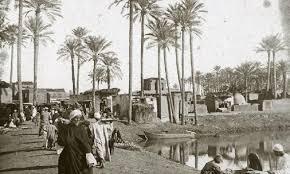
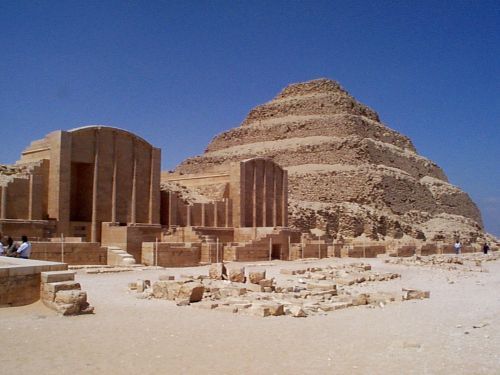
Welcome To our Picnic, guys, I hope you enjoy your few hours with us ^.^ Well starting our program, I guess we can narrate stories or personal experiences related to the place we are in, related to SAKKARA. To make it clear and not embarrassing,I'll start with one : " Long time ago, here in Egypt, there was an English professor called Edger Perry . He was very kind and modest professor and liked his students a lot . One day he had a picnic with his wife , some of his students and Mwayia (one of his students in King Fouad University ) at Sakkara . Perry was fond of geology so his student Mwayia offered him to see a site of a new tomb together. Then Mwayia took Perry to a place that wasn't a tomb, he actually bring Perry here to kill him :O , however , when Mwayia felt that the rest of people were near , he pretended that he was saving the life of his professor Perry as he tried to kill himself. Mwayia actually didn't hate Perry, it was the affair of Imperialism and war that Egypt faced because of The English ." To be honest with you guys, it's a novel narrated by NEWBY but in the same time this novel has some of autobiographical element . It represents the personal experience of Newby in Egypt . So I prefer talking about the novel, what do you think ?? I see you're totally agree with me :3 I'm not going to talk about the couple ( Marry and Perry ) or Mwayia , I'll let you find them out. But now I prefer talking about Egypt in the eyes of Newby Newby was a British writer, however , he managed to give us a full-image description of Egypt . For instance, he could describe the heat of Egypt with some sense of Humor " with so many people breathing on you it would be a miracle to escape an infection ." He, as well , described the train of Benha and Platform and train station of Zagazig . He also mentioned the Pyramids of Giza " They printed themselves with such a golden elegance on the evening sky." He gives us a horror image of Egypt during the war " In the time of tension Shubra is the most dangerous part of Cairo for a European to wander alone." This a photo of El Badrashine Village
And Our Setting Sakkara
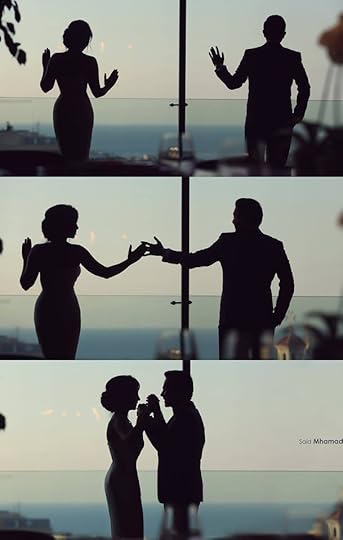
Speaking of the tension time, the main themes here are WAR and Imperialism. Newby sets the stance and conditions of Egypt in the time of Second World War , how the English lived in this time and who represented the hand of power in this time. Newby talks about many other themes that are significant as well as Standard of Education , Injustice , Pride , Hatred between the English and Egyptians , some nostalgia of people who live most of their life time in Egypt, and finally the Love between Perry and Mary during the war. This how I see the Perrys ^_^ I think the reason behind the title of the novel that the Picnic is the CLIMAX of the events and turning point in many sides of the novel.
Finally, I don't like the novel. It's not the type that raise my curiosity . I don't like novels talk about war and that miserable life . Some special reason as well is that the novel talks about Egypt and I need to know something new that I don't know and that doesn't happen here -_-
Any way thanks for the collage for this recommendation even I'm not interested reading it or even get any benefit but the good concept is that I know that there's worse novels than those I read before. Thank for paying attention to our Picnic ^^
*** After 10 years Update:
I still hate the novel, and I don't recommend it even more. Why is this update? To tell you all I hate it when my country is not portrayed fairly in novels. We have been in this time under occupation, and yet you expect the occupier to be treated well and victimize themselves! Really! And another thing, what is the hell with describing Egypt as a contagious spot when it had been compared to Paris in beauty. The more you grow up, the more you understand that not all the sources are reliable. And this one is definitely not a source at all.
***
See you next time in an other interesting world but we still as Newby said " We are all instruments in the hands of destiny " :)
This novel published in 1955 is a nicely done encapsulation of the late British colonial period in Egypt. It really is not possible to enjoy the book for the story alone without understanding the background. The British were deeply involved in Egyptian society for 75 years by operating institutions, schools, and universities, and no doubt constantly monitoring the performance of the Egyptian civil service and police. And there were always other cultures residual as well, for instance the Ottoman and the Persian from long ago. The book gives us the flavor of what it was like to be a British colonial as the Pan-Arab movement began to take hold. Egypt today is the largest Arabic speaking country with about 109 million.
I have long held an interest in Egypt, especially in the history of Ancient Alexandria, which until destroyed in mindless religious conflicts was the center of knowledge in the ancient world. Plus, many of us are still fascinated by the literature set in pre-WWII cosmopolitan Alexandria, which was actually a European city on the African continent. This long history was flavored by the exposure to French culture during the invasion and rule by Napolean, from 1798 to 1801. During that period, the French language became fashionable among the upper classes and became the lingua-franca in the legal system based on the Napoleonic Code. Also, a Frenchman was lauded for finding the famous Rosetta Stone which enabled translation of very ancient scripts. The French language was and still is well used in Egypt, especially in the upper classes, something that many of us seem unaware of.
The British involvement in Egypt began in 1882 and lasted until 1956, when the Pan-Arab movement under Nasser ended most European activity and presence in Egypt. Over this time there were different levels of colonialism practiced.
So, what we have here is the story of a modest professor of English literature, in the last days of King Farouk, who has plenty of problems in his personal life and his professional life, and eventually gets into trouble with the authorities due to his unwelcome concern for the living conditions of his students, and he runs afoul of the Muslim Brotherhood as well. But in this book, we get to see at a personal level the social manners and conventions at work, and as usual the British seem to come off with subtle humor but painful self-consciousness. And there is another good reason to read this--the British writers handle the English language like no others can. The effect is always delightful.
The reading is light, but I can't say that I saw it as comedic. Here is a foundational article. It does a better job than I can do at setting the stage for the book.
Again, something totally random I had to read for the college’s sake. *Cracking knuckles* So, here is one of the reasons why I usually dislike it when a colonizer writes: they are ALWAYS biased, they always believe that because they lived in that country for a while, they know everything to write, and they feel entitled to write anything, even when it doesn’t make sense at all. So, let’s break this down.
The writer: P.H. Newby is a yet another English writer happened to come to Egypt during WW to teach in the university, and used his own experience to write books about the war and his feelings at that time. Therefore, our novel here can be a sort of autobiography.
The plot: Edger Perry is an English professor in King Fouad university. He is a really nice and modest person, who is met by the coldness and the roughness of the Egyptian students especially one of his students, Muawiya, who is in a love-hate relationship with him, which results into Muawiya planning to kill the English professor while he is having a picnic at Sakkara with his wife. Does Muawiya kills Perry or not? That is what you will find out after reading!
Style: This is heavily loaded with description. It almost feels like someone is writing down all of his impressions about a place because he doesn’t want the memories to fade away, or forget about that place. It is good to some extent but at some point, it is too much to handle. P.H also uses a sense of humor tone to elevate the tension in the story.
Characters: Perry: He represents the writer. So, he is obviously a very ideal English man. He doesn’t agree with England policy but he still sees Egypt as a hole of ignorant people, very barbaric and vulgar.
Muawiya: A conflicted character between his hate towards the colonizer and his admiration to his professor. Muawiya can’t make up his mind on which side he is on.
Marry: Every story needs that one woman to clasp her hand over her mouth in surprise and fear… She was a sweetheart really.
Personal opinion: Again, I still don’t understand how Egypt was THAT horrible in the eyes of English people in the 40th, while in fact, at that time, people compared the beauty of Egypt to Paris. So, all of that talk about how Egyptians living an animal life? I don’t buy it. England was a colonizer and English people being treated harshly is something very normal and expected. Trying to portray Muawiya as the bad guy cause he didn’t like the colonizer, makes you look like a clown.
The Picnic at Sakkara is a rare gem—an intelligent, darkly funny, and subtly profound novel that captures the absurdities and contradictions of mid-20th century Egypt with a deft touch and a wry smile. Newby, with his sharp eye for character and detail, crafts a story that is as entertaining as it is enlightening.
Set against the political and cultural backdrop of a newly independent Egypt, the novel follows Edgar Perry, a somewhat bemused English lecturer at Cairo University, as he becomes entangled in the social maneuverings, romantic enticements, and ideological currents that swirl around him. Through Perry’s encounters with aristocrats, revolutionaries, and ex-colonial officials, Newby explores themes of identity, belonging, and the quietly tragic comedy of human ambition.
What makes the novel exceptional is Newby's voice—urbane, observant, ironic without being cruel. His prose is crisp and elegant, filled with vivid imagery and understated humor. Cairo itself is rendered not as an exotic backdrop, but as a fully lived-in world of contradictions: ancient and modern, hopeful and cynical, sacred and profane.
More than a satire, The Picnic at Sakkara is a meditation on the uneasy transfer of power, the fading illusions of empire, and the fragile dance between East and West. It’s a novel that lingers in the mind—not because of high drama or sweeping plots, but because of its quiet wisdom and the clarity with which it sees people for who they are.
A beautifully crafted and timelessly relevant book, The Picnic at Sakkara deserves a wide readership. It is a novel to savor, to laugh with, and to think about long after the last page.