An astoundingly original and tightly curated collection of stories from the award-winning author of Every Lost Country and Afterlands .
It is remarkably easy to accept Al Purdy's assertion that Steven Heighton--renowned for his craftsmanship, risk-taking, insight and range--"is one of the best writers of his generation, maybe the best." The Dead Are More Visible highlights his strengths at writing fiction that does not sacrifice humour, depth and emotion for the sake of brevity. These 11 profoundly moving and finely crafted stories encapsulate wildly divergent themes of love and loss, containment and exclusion. In the title story, a parks & rec worker faces an assailant who does not leave the altercation intact. A medical researcher and his claustrophobic fiancée are locked in the trunk of their car after a failed carjacking (the thief can't drive standard). A young woman enters a pharmaceutical trial in the outer reaches of suburbia and slips between sleeping and waking with increasingly alarming ease. Pairing the cultural acuity of Lost in Translation with the compassion and reach of The World According to Garp , Heighton breathes new life into the short story, a genre that is finally coming into its own.
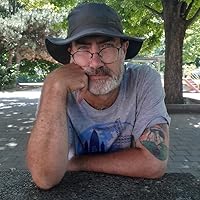
Steven Heighton (born August 14, 1961) was a Canadian novelist, short story writer and poet. He is the author of ten books, including two short story collections, three novels, and five poetry collections. His novel, Every Lost Country, was published in 2010.
Heighton was born in Toronto, Ontario, and earned a Bachelor of Arts and Master of Arts degree, at Queens University.
Heighton is also the author of the novel Afterlands (2006),which appeared in six countries. The book has recently been optioned for film. Steven Heighton's debut novel, The Shadow Boxer (2001), a story about a young poet-boxer and his struggles growing up, also appeared in five countries.
His work has been translated into ten languages and widely anthologised. His books have been nominated for the Governor General’s Award, the Trillium Award, the Journey Prize, a Pushcart Prize, and Britain’s W.H. Smith Award (best book of the year). He has received the Gerald Lampert Award, gold medals for fiction and for poetry in the National Magazine Awards, the Air Canada Award, and the 2002 Petra Kenney Prize. Flight Paths of the Emperor has been listed at Amazon.ca as one of the ten best Canadian short story collections.
Heighton has been the writer-in-residence at McArthur College, Queen's University and The University of Ottawa. He has also participated in several workshops including the Summer Literary Seminars, poetry work shop, in St. Petersburg, Russia (2007), and the Writing with Style, short fiction workshop, in Banff, Alberta (2007).
Heighton lived in Kingston, Ontario with his family.
When you feel like holding your breath picturing the long distance runner who, on the other side of fifty, takes up the challenge of a very uneven race and when you, as a non-runner, can imagine the adrenalin in his body rising, experiencing what is going on in the runner's mind…, then you know you are in the hands of an exquisite wordsmith and inventive storyteller. In this story collection Canadian author Steven Heighton, possibly better known for his novels Afterlands and Every Lost Country, comes into his own as a master of short fiction. Each of the eleven stories is tightly scripted, yet intricate in revealing the inner workings of his protagonists' minds and actions at a particular moment in time. Like the long distant runner in JOURNEYMEN, Heighton focuses his lens on one or a few ordinary people caught up in unusual, even dangerous situations, real or imagined. While placing his characters into emotionally trying or physically challenging circumstances, each story explores one or more themes of human behaviour and it becomes a building block for what confronts ourselves and, by extension our society and humanity.
Among eleven stories not all will capture your attention in the same way or with the same intensity. Still, all are very much worth reading, as Heighton persuasively builds different kinds of narrative tension and/or introduces some surprise aspect into a story when you least expect it. In NOUGHT AND CROSSES, the narrator analyzes a lover's last email that suggests a hiatus or more in the relationship. It is one of the most deeply moving ex-lover's lament that you can imagine, an intimate dialog with the beloved. In OUTRIP, a kind of Survivor challenge story, the reader follows an increasing hallucinating convict on his five-day punishment trek through the southern British Columbia desert. Written in the second person, we participate, like a voyeur, in Ben's inner struggles and physical efforts to move from one water hole to the next, long stretches apart. His dialog with the Fisher, an either real confrontational character or one grown out of the convict's exhausted mind and body like a Fata Morgana, reveals deeper existential reflections. For me this story stands out for its depiction of the landscape as well as its brilliant imagining of what happens to the human mind when one is lost in the desert and a water source is not anywhere near.
The deeper Heighton reaches into the inner pathways of a human mind, the more they engage me and trigger reflections that complemented my reading. Even the more externally descriptive or action oriented stories, such that of a young English teacher in Japan, learning the language from a bizarre primer and trying to teach the children fun and games, or the title story of a woman's unpleasant encounter while maintaining an ice rink at night, develop more than punch and never lose the connection to the inner world of the protagonists.
2022 update: am revisiting my memories of Steven Heighton's books because, unfortunately, this Canadian author recently died, age 60. Widely mourned.
// {original review} I'm not finished, and I did skip/skim a story that was too deconstructed for my mood of the moment, but I have to say that i) I'm loving this collection; and ii) am not surprised, because Heighton is a very talented writer. ...
Having now finished the collection: Brilliant! So refreshing to read a collection that does not all feel like one story in multiple versions. Instead, here we have a diverse collection, where the reader is left wondering, how can one author create all these wildly different stories? I guess if one is Steven Heighton, anything is possible.
With solid writing and deep understanding of the human experience, the author crafted several gems throughout this short story collection characterizing Canadian life. Overall, however, many of the captured moments within were lackluster and meandering albeit well-written. The title story was excellent and worth the effort…tense, foreboding, and unexpectedly touching.
Awesome. Strong tight stories all the way through. The first half of the title story was already excellent, and then it slid sharply into an unexpectedly powerful development. In Noughts and Crosses the story cleverly unfolded across the scaffolding of an annotated email. Swallow took us into the world of damaged souls numbing their pains and plumping their wallets by participating in pharmaceutical research trials. Masterfully done. Several of the stories were re-reads, having been previously published in The Walrus or Geist, but they were just as great the next time around.
I’m never quite sure how to properly describe Steven Heighton’s style of storytelling. It’s fascinating in a non-confrontational way, and the moving or amusing parts sneak up on you. In this collection of short stories Heighton explores human relationships and personal weaknesses. I particularly enjoyed “Those Who Would Be More”, a story about a disillusioned world traveler teaching English in Japan (or at least pretending to), and “The Dead Are More Visible.” I liked the latter story for its distinctly Canadian setting — it takes place during the preparation of an outdoor skating rink — and for Heighton’s inclusion of interesting things like prison slang and unorthodox injuries.
In “Shared Room on Union,” a couple faces a harrowing situation. Later, they live with it quietly except at gatherings, when they treat the event as a performance piece and retell it together. It’s an interesting examination of the way people deal with shared traumas.
The only story I didn’t enjoy was “Outtrip.” It’s about a hallucinating hiker and is more than a little disorienting. I had a hard time keeping track of what was going on and that lessened the pleasure of reading it.
Short stories are kind of a hard sell in today’s market. The mere mention of them takes people back to high school English classes. Regardless of what your teachers subjected you to in years gone by, consider reading The Dead Are More Visible. The short story is where Heighton excels. His spare style of writing and vivid characters bring life to a scene in so few words.
I've mentioned this before in an older review, I know a book is a dud when I keep thinking of what my next read will be. I tried to like this book, I really did.
I've met the author and heard him talk about "The Dead Are More Visible," and he struck me as a very inspired and eloquent writer. But even after sticking with it till the end, it has not translated to paper. I find myself with no strong recollection of any stories, its plot or characters, and with only a superficial inkling of what I've read. Perhaps, the one about a carjacked couple, or the last story about a female character who signs up for a pharmaceutical trial, which Sarah Selecky did a much better job with a similarly-themed short story in "This Cake Is For The Party," were relatively intriguing.
The writing style of Steven Heighton wasn't the issue here; in fact, I really enjoyed his choice of words and sentence structures. The stories just didn't grip me in the same way and has left me feeling I could have done without reading this.
Loved it! The stories were all very interesting. I could feel the characters developing in the few pages. Reading a short stories book is like going to a painting exposition. Each painting is a story, a snapshot, that tells you about a character and you can see them in their moment of happiness, intimacy, sadness, fear, success or failure. The stories in "The Dead are More Visible" not only make you interested in the plot of each story, but they are all well written and enjoyable that you do not miss the story, and characters, left behind when turning the pages. These short stories are for those that love modern fiction in general, not only for those that have commitment issues and can't stick with an entire novel. (;
Maybe I'll feel differently about it the second time around but the some stories were a bit of a drag to get through (I didn't particularly enjoy those told in second-person) while every now and then there'd he a story I didn't want to end. Noughts and Crosses was one of those stories and so was Those Who Would Be More. I thoroughly enjoyed the author's narrative style, however, and I'm positive this won't be the last thing by Heighton I'll read. It was also refreshing to read about places I know of and the fact that his setting was familiar was nice too.
Canada lost another gifted writer. Steven Heighton passed away in April 2022. Thankfully, he left a legacy of books so readers can continue to appreciate his work.
I must admit this was the first Heighton book that I read and I was struck by how he mastered the mannerisms and voices of so many different characters. Almost all of the 11 short stories in this 264 page collection had been previously published in such prestigious magazines as The Walrus, The Fiddlehead, The Malahat Review, and Geist in Canada as well as Tin House in the United States.
Whether he wrote about abortion, or suicide, or addiction, or dysfunctional families, or even death and grief, and/or ageing, Heighton explored the depths of traditional and non-traditional relationships in a variety of ethnic, financial, and cultural settings. I especially enjoyed the different storytelling techniques that were used: from first to second to third person points of view with one story shared via an unsent e-mail. What a range of perspectives. What an imagination with poetic phrases woven throughout to enhance the literary enjoyment of the words.
My favourite line came from "Swallow", the last story in the book, "A blood-clot sun sinks into clouds of surgical gauge." (p. 227)
As the title suggests "The Dead Are More Visible". After reading this collection, this award-winning author remains on my radar screen.
The critics are going wild at the release of Steven Heighton’s new short-story collection, The Dead Are More Visible. Recent reviews have compared Heighton to James Joyce, to Vladimir Nabokov, to Alice Munro, to Mavis Gallant. There appears to be universal agreement that he is, in the words of Jeet Heer, “as good a writer as Canada has ever produced.” This bold assertion seems designed to provoke naysayers; there have been none.
As well as being one of our country’s very best writers, Steven Heighton might also be the most prolific and most flexible. Since 2010, he has released a novel (Every Lost Country), a poetry collection (Patient Frame), a meditation on the writing life (Workbook), and now a short story collection. I have enthusiastically recommended all four of these books. I am a Heighton fan, even more so after the publication of his latest.
The Dead Are More Visible features Heighton at the top of his game. The language here is powerful, not a word misplaced, not a word wasted. Even when writing fiction, Heighton is always the poet. In one (unrequited) love letter, a character writes: “j, my j, you’ve recanted. Shouldn’t ‘recant’ mean to sing again?” This kind of attention to language brings a remarkable resonance and intensity to the work. At the end of each story, I was convinced I’d found the collection’s best.
Throughout the eleven stories, Heighton (and, through Heighton, the reader) inhabits a wide variety of bodies, including (but not limited to) a jilted lesbian professor; a middle-aged ex-athlete in prolonged mourning for his son; a twenty-three year old woman who, in the midst of an identity crisis, submits herself to pharmaceutical testing; an OxyContin addict lost in the desert near Osoyoos; a young man learning Japanese from a primer written by a psychopath; and a woman rendered invisible by middle age. The scope is impressive, particularly since no matter how far Heighton departs from his own experience (in terms of sex, age, geography, sexuality, sobriety, or class), his narrative voice is fully convincing and irresistibly compelling.
As well as being a poet, Heighton is a philosopher. Each story is infused with wisdom. There is a gravitas in this collection reminiscent of J.M. Coetzee. As in the work of the 1999 Booker Prize winner, the stories in The Dead Are More Visible have an intensity and a preoccupation with ethics facilitated by the over-thinking, highly analytical, and somewhat neurotic protagonists. Coetzee, though, is more the philosopher and Heighton more the poet. Where Coetzee might follow a philosophical thread for a few pages, Heighton whittles these thoughts down to their essence. The ambitious are never truly happy, one character claims, because time terrifies them. Or, on child-rearing, another character claims: “People will tell you, ‘I don’t want a child because it just seems wrong to bring a child into a world like this.’ High-minded horseshit, in my view. A cut-rate cliché. When has it not been a troubled world? People have children or don’t have children for their own selfish reasons, and that’s fine and natural. No need to dress up the option as a philanthropic gesture.”
This seriousness and the relentless attempt to get at truth set Heighton apart from the dominant tone of his time. In “Heart & Arrow,” the eighth story of Heighton’s collection, we’re told:
"Merrick clinks his glass of rye against [his sister’s] spritzer and forges a coy wink, and his whole manner, he can’t help seeing, is lifted from somewhere else—maybe one of those noisy, strobe-lit TV beer ads where a scrum of college jocks flex and guzzle and crack wise along a bar. He can’t be sure. But he does know how much he hates the note of glibness that keeps breezing into his voice—the keynote of so much that he reads these days and almost every party he endures. A note he sometimes picks up and sings in tune with, vaguely ashamed the whole time."
Unlike Merrick, Heighton refuses to sing in tune. He does not give in to the flippancy or tongue-in-cheek irony so prevalent in this age. Even when there is humour in his work (of which there is plenty), there remains a deep seriousness. Human actions and human words do matter in each of these stories.
Steven Beattie of the Quill and Quire has complained that Canadians never write about sex. Likely, writers avoid sex because it’s embarrassing and too easy to do badly – too romantic, too cliché, too vulgar, too predictable. Heighton, however, writes about sex. In fact, physicality and sexuality are central to this collection and its representation of humanity. He has “hot little thighs crushing …ears and cheeks.” He has a “head forced down in a death grip…the thrilling insistence of it.” There is “a pair of nuns erotically revved up by the proximity of illness, death.” There is spelunking:
"We’re back in the tunnel, you see. Despite my fear, I think I would go down and explore it with you, if they opened it up again. I am drawn to a fantasy of fucking you there, maybe in a side tunnel or a cul-de-sac, tugging you away from the tedious tour group with its silly costumed guide to make slow, wordless love in the kind of darkness that people never really do it in. What would that be like?"
Does it change your reading of this passage once you know we’re looking at two women? I wonder. I think Steven Heighton wonders too. He’s a master at suddenly shifting the readers’ perspective, making them see things anew.
The Dead Are More Visible is a perfect book recommendation as we head into the Fernie Writers’ Conference. Emerging writers could learn much from the confident execution, strong voice, and precise language in this collection. I hope they find it as inspiring as I do. When I fear that writing doesn't matter anymore, as I often do, I will re-read stories like “Those Who Would Be More.” There, the narrator says: “Energy is optimism.” Heighton’s stories crackle with energy. Reading (and re-reading) them gives me energy, and thereby optimism. Writing does matter. When I get to the end of a story like “Nearing the Sea, Superior,” I believe profoundly and right from my core: fiction matters.
I don't usually read short stories as I much prefer novels. However, this was a present so I thought I would at least try a couple of the stories before deciding to get rid of it.
It was actually better than I expected and had lots of interesting characters. I read the whole book except for 2 stories that I personally found boring.
Few would argue with the assertion that Steven Heighton is one of Canada's best writers. Anything he publishes is worth reading. His poetry is graceful and vivid and fiercely intelligent. As an essayist he is insightful and adventurous. But it is with his fiction that Heighton fully hits his stride. In three superb novels and now three collections of short fiction, Steven Heighton provides a master class in the kind of audacious, spellbinding storytelling that captures the reader's attention from the outset. The best of the stories collected in The Dead are More Visible give us further reason to admire this very talented writer, who wields his pen like a precision instrument. These are stories about people groping toward a decision, re-connecting with themselves, or struggling in the aftermath of trauma. Almost all of the characters we meet in these pages are coping with some sort of disappointment. A few are grieving a loss. The narrator of "Those Who Would Be More," leaving behind a teaching job in Japan, learns to accept the stoicism of his Japanese lover, whom he is also leaving behind. The couple in "Shared Room on Union" successfully defuse the trauma of surviving the nightmare scenario of a carjacking gone wrong by retelling the story of that terrifying night every chance they get. And in "Swallow" a young woman named Ariadne (who goes by Roddy), deals with the emotional fallout of a betrayal perpetrated by her boyfriend and her best friend by hiring herself out to a drug trial where she will stay sedated until she can figure out what to do next with her life. These stories involve the reader at a visceral level while impressing with the sheer artistry of the writing. Throughout, Heighton's prose is understated and full of surprising, felicitous and memorable observations. Collections of short fiction rarely win novelists new readers. But anyone not already familiar with Steven Heighton's earlier work should seek out this book. It's more than worth the effort.
Whom humans choose to interact with and the reactions they get in return because of those requests is an interesting facet of the human condition. Who we: love, hate, screw, dine with or even rob, can be a great analysis of the human condition. And that is what Steven Heighton has done in a collection of short stories called The Dead are More Visible.
Page 13-14 Those Who Would Be More
She was tall for a Japanese woman, fit, smartly dressed. A charcoal skirt suit over a blindingly laundered white blouse. Hair back in a tight chignon. Black frame glasses of a style that would seem hip, youthful, a decade later, but at this point did not. In fact, they seemed chosen to make her look older. More formidably set apart. Her makeup was laid on thickly enough that it was hard to guess her age. Asian adults look about ten years younger than Caucasians of the same age; she looked a little over thirty. Her expression during our meeting and through the months that followed was a repeating slide show of purposeful impatience, contained anxiety, and an openness, kindness, that came in what seemed accidental leaks and which she was always quick to deal with, like something that shamed her - a tampon, a bottle of pills or other sign of carnal frailty - flipping a purse onto a floor. Eguchi ordered beer for both of us without asking what I wanted. Hot sake was what I wanted but beer was fine. I was hungry and hoped we might order before discussing terms. She barged straight to them. Talking, she looked me over surreptitiously but steadily, as if interviewing not a potential English teacher but a sketch model or stunt double.
Having read my share of dark narratives, I’ve come to the conclusion that there are two ways of telling creepy stories.
One is the slow build – for obvious examples of this you can refer to Stephen King’s entire body of work. Another would be Henry James’ ‘The Turn of the Screw’ – these are stories that pull you in gradually, building up your trust and establishing a comfortable base of familiarity while slowly introducing elements of foreboding or ominous signs. It starts with a chill, which turns into a sense of dread, which is then realized with an unfortunate incident, followed by another, until slowly but surely every last vestige of stability is removed and you are left terrified and wholly unsettled.
The other could be called ‘short and sweet’ – the narrative is less about building your trust to tear it down and more about tearing the rug out from under you. You start off with a situation you think you understand, but the sudden introduction of something unfamiliar and completely unsettling sends you on a dark spiral into the unknown. Roald Dahl was very good at this technique, and so is Steven Heighton...
Possibly my favourite complete work by Steven Heighton. Though Afterlands was a novel I particularly loved, and many of Heighton's poems have dazzled and moved me, I find myself ever-admiring his skill with the short story. Here, he is superb throughout. From the first, hilarious and slightly unsettling story of a man struggling with a Japanese phrase book tainted by atomic holocaust; through the tale of a couple who find themselves confronting the flaws in their relationship during a bizarre urban ordeal; to the utterly crackling injured wit in the unsent email of a jilted lover, I was drawn in to every tale. While drawing upon themes of confinement and isolation that arise in much of his other work, Heighton explores a range of modern human relationships as directly and perceptively as anywhere I recall in his writing. I found these stories affecting and ringing with truth. And I was refreshed by the humour throughout--a feature that is sometimes hard to ascribe to much of his other work, hidden as it often is within darkness. Highly recommended!
I really liked "Every Lost Country" by the same author, but I have rather mixed feelings about these stories. A Right Like Yours I though was the best story in the collection, followed by OutTrip and Those Who Would Be More. Shared Room on Union and the title story were ok in my opinion, whereas Noughts & Crosses I thought was the weakest story of the lot. I haven't finished the book yet, so I will see how the rest of the stories go, and will revise this review if the remaining stories are anywhere as good as the first three I mentioned in this review, otherwise it will stand as is.
Picked it up because the National Post's Books Editor (Mark Medley) suggested the author was one of the best writers in Canada. Well, I can't say I disagree.
The writing was very good, the stories were all quite different (the only obvious connection was the location around Kingston, ON.
The book's title story was excellent. So, if you're into short stories...
As collections of short stories go I found this one uneven in writing and in my ability to be interested in the characters lives. Several were excellent in character revelation - especially Swallow that gradually revealed the main character's motivation and sense of loss. All in all a great collection to exlore one different scenario after another.
Heighton, with a broad range of styles and voices, taps into the human experience. Alienation, longing, love and loss, ridiculousness and futility. See my full review here - http://livinginthekitchenwithpuppies....
I have to think about it a bit before I post a full review, but in the meantime: this short story collection just blew me away. Definitely, highly, recommended. Powerful, evocative, human stories.
It was okay. Felt safe and somewhat imitative. Didn't feel like the author has a true voice, more something that he had developed to appeal to those in the writerly crowd. Nothing visceral here at all.