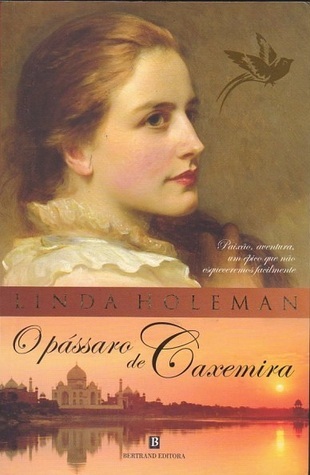
Em Liverpool, na Inglaterra vitoriana, não há lugar para uma rapariga pobre. Ainda criança, Linny Gow conhece estes tempos de agrura. Quando a mãe morre, o pai obriga-a a prostituir-se apenas com 12 anos de idade. Mas Linny tenta a todo o custo sair da vida degradante que leva e consegue um casamento por conveniência com Sommers Ingram, um abastado inglês, partindo sem hesitar para a Índia. Aparentemente, Linny é a esposa perfeita: bonita, graciosa, subserviente. Os sonhos desfazem-se quando o marido revela o seu verdadeiro carácter. Um livro soberbo e imprevisível.
Linda Holeman is the author of fourteen books of fiction. Her work includes two adult collections of literary short stories, Flying to Yellow and Devil’s Darning Needle, as well as the historic novels The Linnet Bird, The Moonlit Cage, In a Far Country, The Saffron Gate, The Lost Souls of Angelkov, and The Devil on Her Tongue. Her young adult body of work consists of a collection of short stories, Saying Good-Bye, which was re-released as Toxic Love, and four novels: Promise Song, Mercy’s Birds, Raspberry House Blues, and Search of the Moon King’s Daughter. She has also written a first-chapter book, Frankie on the Run, illustrated by Heather Collins. To date, Linda’s work has been translated into French, German, Spanish, Portuguese, Dutch, Greek, Polish, Russian, Serbian, Swedish, Danish, Norwegian, and Hungarian, soon to be published in Croatian, Italian, Czech and Slovakian.
As well as being published in many journals and periodicals, her work has been widely anthologized in Canada – most noticeably in The Journey Prize Anthology – and abroad. Linda has also acted as guest editor for a young adult issue of Prairie Fire Magazine, for which was she awarded the Vicky Metcalf Short Story Editor Award. She has been the recipient of many honours and awards for her young adult work.
Linda has been a member of the Manitoba Artists in the Schools Program and CANSCAIP, toured with the Canadian Children’s Book Centre, acted as a mentor in the Manitoba Writers’ Guild Mentor Program, taught creative writing through the University of Winnipeg’s Continuing Education, served on many juries, including the Governor-General’s Award for Children’s Literature, and created and facilitated numerous writing workshops on many aspects of the writing process to both students and adults nationally and internationally. She held a nine-month term as Writer-in-Residence at the Millennium Library in Winnipeg, and served on the editorial advisory board for Turnstone Press and on the board of the Manitoba Writers Guild. She is a member of The Writers Union of Canada.
Linda holds a BA in Psychology and Sociology from the University of Winnipeg, a BEd in Early Childhood Education and MEd in Educational Psychology from the University of Manitoba.
So far I'm about 2/3 of the way through the book, and I confess I'm only continuing to read because of the time I've already invested in it. Sort of like throwing good money after bad.
The main character, Linney, is forced into prostitution in Liverpool at the age of eleven. I'm assuming the raunchy (and crudely executed) descriptions of child (and later, teenage) prostitution are the reason this book made it past the editor's desk. Perhaps someone at Crown Publishing was so taken with the images that they failed to notice how painfully two-dimensional the stock characters are (fervid, religious old woman; kind, crippled son who loves Linney from afar; evil, scheming Englishman whom she's forced to marry, etc. I won't pain you further). This book should be a lesson on character cliches. Also, the voices don't match. The narrator (Linney) tells her story in one (boring) voice, and then writes long letters to her friend in a completely different, stiltedly elegant voice. It's like two different people talking. There are also several vernacular terms (too crude to reproduce here) that I'm fairly certain would not have been in use in the 1820s and early 1830s. Nothing about this book rings true to me.
I'd better stop now. When I began this review I felt mildly antipathetic toward this book, but now I'm feeling downright hostile. Read it at your own peril, but don't say you weren't warned.
*****Edited to add, I've decided I'll never finish this book. Life is simply too short to waste on some things, and this wretched book is one of them.
I did not expect to read such another good book so soon after reading "The Secret Keeper by Kate Morton!!!!" This book is more it is excellent! Linnet Gow is born in the slums of Liverpool. Orphaned early, her step father sells her into prostitution. How she gets out of her desperate situation, ends up in India and Afghanistan, again loses her freedom and struggles to re-gain it is the main plot of this novel. She does fall in love once but is all too soon forced to leave him. I highly recommend this book as it is a PAGE TURNER!
Even though I gave this book five stars, I must warn anyone that reads it that it is a very dark book. I gave it five stars because it's themes are true to its time period. The author did not gloss over the horrors of growing up poor in the backstreets of England, nor the sigma of marriage outside of one's place in society. More times than not, I almost hurled this book across the room because the moment you think that the author would turn around and let the characters save themselves... well, I'll let you read it for yourself.
This isn't romance. This is historical fiction at it's most real and most disturbingly brilliant.
This isn't a story about a beautiful woman defying all odds to get her happy ending, and her friends along the way don't inspire her to greatness. What this is, is a story of survival and achieving personal peace no matter what stands in your way. It was a breath-taking read, and though it made me break down and sob in a few places, I will find myself reading it again and again.
Hahah! I can't believe I actually finished this book. It was an easy read, I'll give it that.
To put it simply, this book reads like a 16-year-old girl's first attempt at novel-writing. The characters are very two-dimensional, formulaic, and not particularly endearing, even when they're meant to be. I guess it's cool that about half the book takes place in India -- that grants it a measure of uniqueness, but hardly enough to make up for the painfully overdone prostitute-turned-Scarlett-O'Hara-esque character that Holeman was going for. I remember laughing over the attempt at a colloquial-sounding English accent (and an inconsistent one, at that) -- again, it struck me as the kind of mistakes an inexperienced, young writer might make. Those bits were clearly not written by a British native. All of the foreshadowing is very heavy-handed, and that's coming from someone who can rarely predict events to come in a book. All of this... and then to find out the author has taught creative writing. Taught. I'm not sure what to make of that.
To sum up: it was easy, and stupid. I can't believe it's got the rating on Goodreads that it's got.
The writing is fine (indeed, there are some lovely descriptive passages about things both appealing & grotesque); the narrator is ok (she’s salty & a bit rude, which I can understand given her experiences). But it’s predictable to the max & slower than molasses. It’s so slow that I lost interest after a promising start of survival & longing. Tragic. ☠️
If you’re looking for similar themes done better:
—depressing historical prostitution: Slammerkin —weighty pseudo-Victorian saga: Crimson Petal & the White —surreal 1830s British occupying India: One Last Look
All these superior reads👆🏻could’ve been tossed into a blender & pulsed into this book’s content. Hence, standard 2 star DNF.
(NB: This book is part of my ongoing quest to pluck tomes I’ve had unread for 7+ years & either love-and-keep or DNF-and-donate.)
Opening:Calcutta 1839 Smoking opium is an art. I look at my tray and its contents - the pipe covered in finely worked silver, the small spirit lamp, the long blunt needle, the container of chandu, and my row of pea-sized balls of the dark brown paste.
What was it called again - that victoriana erotica doorstep made into a TV series?
The Cake and the Floorbrush? The Banana and the Chimneysweep? The Pincushion and the Melon?
This book was breathtakingly beautiful in its own way. I was gripped from the beginning. This is the type of book that you cannot simply put down and it is an addiction that when it runs out, you simply want, crave more and more. I am fourteen years old and everytime I would read this book in bed, I could not put it down. My father would have to pull the book away from my hands and close my lamp because it was so late at night. I kept thinkig of it. At the end, you will turn the last page with deap regret. The Linnet Bird stands alone one of the best books ever written. Linda Holeman gets you involved and paints you a picture of the beautiful 1800's and leaves you speechless. She is a very talented author. I enjoyed this book, and I will cherish this beautiful piece of litterature.
Amazing! The heroine Linnet Gow (Smallpiece-Ingrahm) was endearing, lovable and oh so human. I found myself at times cheering her on and at others wanting to shake some sense into her. I applaud Linda Holeman for her vivid description of India.
A heart wrenching story of a girl forced into prostitution, and then of her attempts to build a better life, with many challenges and setbacks. We go from Liverpool to India, and sea voyages too. An adventure of a story about someone who strives to be someone else.
As far as historical fiction, I thought the author did a great job recreating early 19th century England and India.
I was fascinated (and abhorred) by the seamy side of society and that's where the book lost stars for me... pretty much every possible depressing or despicable act/plot twist was thrown at the poor heroine.
I can't imagine why she didn't just take a leap over the London Bridge-- enough was enough and that was all before she was 17-- at times (especially when Linny is a child), I just wanted to walk away. However, I liked her just enough to root for the "orphan makes good" plot that I was sure awaited me around the corner.
You'll have to read it for yourself to decide whether I got my wish!
i thoroughly enjoyed this historical fiction so much that it still resonates with me years later. not only do i want to re-read this book, but i occasionally search out the author for anything else she has written. the story, the character, and their struggles are gripping all the while the settings picturesque and phenomenal.
This is really gritty historical fiction, the kind that makes you feel grateful for not being born in the 1800s. One terrible thing after another happens to the main character. Things get bad. And then they get worse. And then things get really, really bad. And then they get worse.
Despite all that, I didn't really find it a depressing book. There was something about it that felt hopeful to me, something about the way that the main character was stronger than her circumstances, getting up again every time she was knocked down. I thought it was great that improved social standing didn't automatically lead to a better life. And I loved the way that though she might try, she could never really fool the people around her into thinking that she fit into their inflexible and stifling way of life. I guess we really can't hide our true selves.
All in all, I liked the book. It's definitely one that will stick with me.
Um bonita história de coragem, que como não podia deixar de ser, tem episódios bem tristes e dolorosos, mas que são superados e no final recompensados da melhor maneira possivel! Adorei as descrições sobre a India e os seus costumes ;) e também as curiosidades sobre as suas inumeras especiarias.
"A mirra (commiphora mukul) tem uma resina perfumada que é extraída e aplicada nas pessoas inchadas com os seus fluidos, e também no inchaço doloroso das articulações."
Linnie Gow wächst zu Beginn des 19. Jahrhunderts in den Arbeiterslums von Liverpool auf. Es ist ein von Armut und Entbehrung geprägtes Leben. Ihren Vater kennt sie nicht und ihr Stiefvater verkauft sie nach dem frühen Tod der Mutter bereits mit 11 Jahren an Freier. Viel später, Linny ist 17, hat jede Abscheulichkeit gesehen und geht seit Jahren auf Strich, als sie eine Fehlgeburt erleidet. Das tragische Ereignis leitet eine Wende in ihrem Leben ein, denn Linny bekommt Hilfe von Shaker, einem jungen Bibliothekar, der lieber Arzt geworden wäre. In den folgenden Monaten lebt sie bei ihm und seiner Mutter. Die beiden geben sie als Cousine aus, geben ihr Obdach und eine gutbürgerliche Erziehung. Shaker würde sie auch gerne heiraten, doch Linny sieht in ihm den Bruder, nicht den Liebhaber oder Ehemann. Als Linnys Freundin Faith sie einlädt mit ihr nach Indien zu reisen und sich unter der dortigen -männerlastigen- englischen Kolonialgesellschaft einen Ehemann zu suchen, sagt Linny zu, und beide Frauen treffen nach monatelanger Schiffsreise in Kalkutta ein. Dort, im Indien des Jahres 1830 trifft Linny ihr Schicksal in Gestalt zweier Männer, des englischen Kolonialbeamten Somers Ingram und des Paschtunen Daoud. Das Buch hat mich von der ersten Seite an gefesselt. Linda Holeman versteht es, sowohl die bedrückende Armut und Hoffnungslosigkeit der Arbeiterslums des 19. Jh. als auch die Exotik Indiens wiederzugeben. Sie schildert die Scheinheiligkeit der Gesellschaft, die Frauen in ein Korsett aus Regeln und Moral presst, ebenso wie die unsägliche Hochnäsigkeit der englischen Kolonialherren Indiens und die weitreichende Unterdrückung und Abwertung der einheimischen Bevölkerung. Auch Beschreibungen wie die für Europäer kaum erträgliche Hitze, die Heftigkeit der Monsunregen, die Düfte und Farbenvielfalt der Märkte oder die klare Schönheit des Himalaya sind so anschaulich, dass ich mich mitten in der Geschichte fühlte. Trotzdem hängt über dem Buch ein Hauch von Schwermut, was daran liegt, dass Linnys Leben von Geburt an schwer verläuft. Dieser Frau wird nichts geschenkt, ihre Andersartigkeit (das Leben als Prostituierte) inmitten der englischen Mittelschicht und ihre Weigerung vor dem Leben zu kapitulieren lassen sie immer eine Außenseiterin sein. Romantikerinnen werden vermissen, dass die Liebesgeschichte im Roman, auch wenn sie wunderbar beschrieben ist, so kurz ist und das das Buch wenn auch ein versöhnliches so doch kein wirkliches Happy End hat.
This entire review has been hidden because of spoilers.
Is it bad that I whished Linny a horrible, horrible death? She is one of the most annoying characters I've ever read about. No matter what good happens to her, how sweet and caring people around her are, she's still unsatisfied and she pouts ALL THE TIME! And after turning in a english upper class lady, she's often mentioning how good was to be a whore. A WHORE! She becomes a lady and misses her whore times! Good God, this book is awful!
Okropna książka. Sama w sobie (styl) nawet nieźle napisana, ale główna bohaterka... Praktycznie po 1/4 tekstu tylko czekałam aż ktoś pobije/zgwałci/zabije Linny. Wiem, że to straszne, ale już dawno nie czułam takiej niechęci do postaci. W magiczny sposób z przekonanej o własnej wyższości prostytutki staje się damą, ale mentalność k*rwy zostaje. UCH! No bo jak inaczej zareagować na przemyślenia typu "och, praca w bibliotece jest taka mało płatna, na ulicy zarabiałabym, lepiej", albo "te kolacje u niezwykle bogatych i ważnych ludzi są takie nudne, lepiej było w obskurnej garkuchni, na pogaduszkach z innymi dziwkami". NO TO WRÓĆ DO PROSTYTUCJI, IDIOTKO! Gdyby Linnet została nawet królową angielską, nadal nic by jej nie pasowało! Jeśli natraficie kiedyś na ten tytuł, nawet nie dotykajcie książki. Jej czytanie to ból.
A historical romance opens in Calcutta but quickly flashes back to 1823 Liverpool, England, where its heroine, Linny Gow, is turned into a prostitute by her father shortly after her 11th birthday. Surrounded by poverty and brutality, Linny clings to her dead mother's assurance that she has noble blood, a distinction that solidifies her determination to escape from her sexual slavery and break into the genteel class. Holeman excels at painting the different milieus of the time-from the clammy docks where the whores ply their trade, to the stuffy drawing rooms where the ladies gossip over tea, to India, where a "fishing fleet" of poor young well-bred women go in search of husbands.
Wow! This was one of the best historical fiction novels I have read to date. It immediately went to my 'favorites' shelf and all of Linda Holeman's other book went on to my to-read shelf. The book reminded me a lot of Slammerkin by Emma Donaghue, one of my ultimate favorites in historical fiction. This was the first book that took me to India and I was amazed to learn about the culture, both the native people's and the European's living in India. It was great in many ways. The characters, the settings, the historical intrigue, the different cultures. I love it all. I would highly recommend to anyone that loves historical fiction.
this is a very good read. when i began reading this book i couldnt put it down. this young womens journey is truly filled with obstalces and through her wit, street smarts, and charm gets to places she would have never imagined,
I absolutely loved this book. It is one of the few books that everyone in our book club loved! This is the first time we gave a book 5 Omelets. I know it is corny, but we are The Friday Morning Bookclub! http://fridaymorningbookclub.wordpres...
This book was difficult to get into at first, but I pushed through and am *so* glad that I did! It can be quite graphic with scenes that not all people would read through... In all it was a great book! I stayed up until 2am finishing it. I love it when that happens. : )
3.5 stars. Yes, most of the characters are flat, but the settings (1820s Liverpool and 1830s India) are such a nice change from the more hackneyed historical fiction places/eras.
I enjoyed this rags to riches saga. Thoughtfully written with a satisfying conclusion after all the trauma and battles along the way. It tells the story of a poor girl in Liverpool at the beginning of the 19th Century and the first 30 years of her life, including going to India.
My friends know I'm a sucker for stories set in India (or anywhere east of Europe, for that matter). I gave this two stars primarily because I find the period interesting, the 1820s and '30s, when the East India Company held sway on the subcontinent. More than twenty years before the Mutiny, the military had a presence, but it was minor one; John Company ruled. These years saw the beginning of the "fishing fleet," the annual influx of young (and not so young) English girls in search of husbands. The increasing presence of the "memsahibs" forever changed the somewhat easy relationships white men had established with the native population; real friendships, interracial liaisons and marriages were not uncommon, and the Eurasian children they produced were not unduly deprived of education and opportunity. All that changed when white women became a permanent element in Anglo-Indian society, and men were obligated to "protect" them. Rigid social customs based on strict racial segregation became de rigueur and regulated every aspect of daily life, and woe betide anyone (English or Indian) who violated their behavioral norms. Eurasians, in particular, not born or educated into servitude, suffered from this bigotry. English children born in India did not grow up with their parents and were sent to England at a very young age to be educated and cared for by relatives or friends until they, too, "came out" as young adults. Of course it all became much worse after the Mutiny in 1857 when physical fear was added to the racial and cultural superiority that motivated the European governors of Anglo-Indian society. Post-Mutiny India is the country we know from Rudyard Kipling, Wilke Collins, Conan Doyle, and Paul Scott among others. Interestingly, Thackeray's Vanity Fair (1848) is one of the few very well-known novels that deals with pre-Mutiny India in Joseph Sedley's character, a civil servant with the East India Company
I read a review which likened this book to M. M. Kaye's The Far Pavillions. I disagree. The main characters in The Linnet Bird are rather flat or two-dimensional and lack internal consistency; supportive characters are invariably stereotypes, and the plot(s) are predictable. There is little of the creative use of the landscape which characterizes M. M. Kaye's novels.
I've also seen it compared favorably with Michael Faber's novel, The Crimson Petal and the White set in mid-Victorian England (probably because of Linnet's forced entry into child prostitution). Faber's characters and plots are complex and richly drawn, with surprises around every corner, and his writing style is masterly. The Linnet Bird is not badly written in terms of style, but it's nothing special.
I've read one other book from Linda Holeman, The Moonlit Cage. I fell in love with it and so I ended up finding other books from Holeman as well.
The Linner Bird wasn't a dissapointment even though I had very high expectations. Holeman has very unique way of writing. It's creative and at the same time describes well characters' thoughts and feelings.
I love the way that these both books (Linnet Bird and Moonlit Cage) have started with a little girl and ended to a grown woman. During The Linnet Bird the main character, Linnet Gow, grows step by step from a girl to a woman through so many different experiences and changes.
One both good and bad thing in the book is that you can never know what's going to happen next. Or at least I never had an idea how the book was going to end or what even was going to happen next. I have to admit that it's good that the book is unpredictable but the bad thing at least in my opinion is that many of the sudden turns in the plot are not something I like. Especially the ending isn't at all how I had thought it to be. But different people like different things and when I actually start to think about it, maybe it's a good thing to not to have everything the way you want.
One other thing that bothered me through the book was the name of one of the main characters, Somers Ingram. In The Moonlit Cage one of the main characters had the same surname and it was really confusing to read. These two characters have some things in common but are some ways so different from each other and at first I kept mixing them up with each other all the time.
On the whole the book was very good though. I very much love 19th century London and India where the book is based and the way Holeman describes the things plainly the way they are. I would've liked to give this book 4.5 stars but sadly it's not possible...