Jump to ratings and reviews
Rate this book

Thomas Becket: Warrior, Priest, Rebel

Rate this book
A revisionist new biography reintroducing readers to one of the most subversive figures in English history—the man who sought to reform a nation, dared to defy his king, and laid down his life to defend his sacred honor
 
Becket’s life story has been often told but never so incisively reexamined and vividly rendered as it is in John Guy’s hands. The son of middle-class Norman parents, Becket rose against all odds to become the second most powerful man in England. As King Henry II’s chancellor, Becket charmed potentates and popes, tamed overmighty barons, and even personally led knights into battle. After his royal patron elevated him to archbishop of Canterbury in 1162, however, Becket clashed with the King. Forced to choose between fealty to the crown and the values of his faith, he repeatedly challenged Henry’s authority to bring the church to heel. Drawing on the full panoply of medieval sources, Guy sheds new light on the relationship between the two men, separates truth from centuries of mythmaking, and casts doubt on the long-held assumption that the headstrong rivals were once close friends. He also provides the fullest accounting yet for Becket’s seemingly radical transformation from worldly bureaucrat to devout man of God.
 
Here is a Becket seldom glimpsed in any previous biography, a man of many facets and the skilled warrior as comfortable unhorsing an opponent in single combat as he was negotiating terms of surrender; the canny diplomat “with the appetite of a wolf” who unexpectedly became the spiritual paragon of the English church; and the ascetic rebel who waged a high-stakes contest of wills with one of the most volcanic monarchs of the Middle Ages. Driven into exile, derided by his enemies as an ungrateful upstart, Becket returned to Canterbury in the unlikeliest guise of as an avenging angel of God, wielding his power of excommunication like a sword. It is this last apparition, the one for which history remembers him best, that will lead to his martyrdom at the hands of the king’s minions—a grisly episode that Guy recounts in chilling and dramatic detail.
 
An uncommonly intimate portrait of one of the medieval world’s most magnetic figures, Thomas Becket breathes new life into its subject—cementing for all time his place as an enduring icon of resistance to the abuse of power.

NAMED ONE OF THE BEST BOOKS OF THE YEAR BY
Kansas City Star • Bloomberg

448 pages, Hardcover

First published April 5, 2012

212 people are currently reading
1582 people want to read

About the author

John Guy

164 books256 followers
John Guy is recognised as one of Britain's most exciting and scholarly historians, bringing the past to life with the written word and on the broadcast media with accomplished ease. He's a very modern face of history.

His ability for first class story-telling and books that read as thrillingly as a detective story makes John Guy a Chandleresque writer of the history world. Guy hunts down facts with forensic skill, he doesn't just recite historical moments as they stand; he brings names and faces to life in all their human achievements and weaknesses. He looks for the killer clues so we can see how history unfolded. Like a detective on the trail of a crime, he teases out what makes his subjects tick. With his intimate knowledge of the archives, his speciality is uncovering completely fresh lines of enquiry. He's never content to repeat what we already know but rather, he goes that extra step to solve history's riddles. He takes you on a journey to the heart of the matter. Forget notions of musty academics, when Guy takes hold of history the case he states is always utterly compelling. Whether it's Thomas More or Mary Queen of Scots, Guy makes these people so real you suddenly realize you are hearing them speak to you. You enter into their world. You feel you can almost reach out and touch them.

Born in Australia in 1949, John Guy grew up in England and by the age of 16 he knew he wanted to be a historian. In 2001 he made an accomplished debut as a presenter for the television programme Timewatch, on the life of Thomas More. Today he's turning history books on their head as he wins universal praise and the 2004 Whitbread Prize for biography for his thrilling account of the life of Mary Queen of Scots.

As well as presenting five documentaries for BBC 2 television, including the Timewatch film The King's Servant and the four-part Renaissance Secrets (Series 2), he has contributed to Meet the Ancestors (BBC 2), and to Channel 4's Time Team and Royal Deaths and Diseases. Wolsey's Lost Palace of Hampton Court was a short-listed finalist for the 2002 Channel 4 television awards.

John Guy also appears regularly on BBC Radio 2, Radio 3, Radio 4, BBC World Service and BBC Scotland. In print he currently writes or reviews for The Sunday Times, The Guardian, The Economist, the Times Literary Supplement, BBC History Magazine and History Today.

His broadcast and journalism experience builds upon his impeccable CV as an academic and author.

Having read History under the supervision of Professor Sir Geoffrey Elton, the pre-eminent Tudor scholar of the late-twentieth century, John Guy took a First and became a Research Fellow of Selwyn College in 1970. Awarded a Greene Cup by Clare College in 1970, he completed his PhD on Cardinal Wolsey in 1973 and won the Yorke Prize of the University of Cambridge in 1976.

John Guy has lectured extensively on Early Modern British History and Renaissance Political Thought in both Britain and the United States. He has published 16 books and numerous academic articles.

John Guy lives in North London. He is a Fellow of Clare College, University of Cambridge, where he teaches part-time so he can devote more time to his writing and broadcasting career.

Ratings & Reviews

What do you think?
Rate this book

Friends & Following

Create a free account to discover what your friends think of this book!

Community Reviews

5 stars
243 (28%)
4 stars
389 (45%)
3 stars
181 (21%)
2 stars
29 (3%)
1 star
6 (<1%)
Displaying 1 - 30 of 126 reviews
Profile Image for K.J. Charles.
Author 65 books12.2k followers
Read
April 16, 2021
In depth biography of Becket, focusing very much on the politics though still interesting on the personalities. What comes across very strongly is how incredibly untrustworthy Henry II was: yes, Becket was intransigent in his defence of Church privilege, but how else do you cope with such a chronic oathbreaker and open liar? He was a brutal tyrant who wanted sole power, and it's hard not to admire anyone who stood up to him.

That said, what Becket was standing up for was, in effect, the right of the Catholic Church to judge its priests for whatever crimes they committed instead of having them punished by law (and indeed Becket very specifically helped another bishop get away with sodomy and rape of a boy, who was killed to keep him quiet) so in fact they all sucked.

It's a very well written book, at points extremely vivid, and brings across the story and characters well.
Profile Image for happy.
313 reviews108 followers
May 1, 2019
Professor Guy has written a very good biography of one of the iconic churchmen in English history. He paints a fascinating picture of both Becket and Henry II. The author traces Becket’s rise from the son of a middle class merchant to the 2nd most powerful man in England as Henry’s Chancellor and to then how he becomes the Kings implacable enemy when he is Henry’s choice as the Archbishop of Canterbury over the objections of most of England’s bishops. In addition to tracing Becket’s rise and fall, Professor Guy also looks at how his costar in the story, Henry Plantagenet, became King of England. In fact the fist 80 pages or so explains the history behind Henry II's claim to the throne, starting with the death of Henry I's lone male heir and the chaos that followed Henry I's death. Upon the death of his son, Henry's heir became his oldest daughter, Matilda. When Henry died, the nobility wanted nothing to do with being ruled by a woman. They looked around found a "suitable" replacement for her, her cousin Stephen of Blois. She wouldn't accept their decision setting off a 20 yr civil war. Henry II was Matilda's son and part of the settlement of the civil war, Henry Plantagenet became the heir to the throne.

In looking at Becket’s rise Professor Guy looks at the importance of having a sponsor. Becket's was Archbishop Theobald, his predecessor as Archbishop of Canterbury. Becket becomes one of Theobald's clerks and rises to be an Archdeacon and Theobald’s chief diplomat and fix it man. When Henry needed a chancellor Theobald recommended Becket to Henry and Henry accepted the recommendation.

Prof Guy looks at the reasons behind Henry conflict with the church. His take is that the accepted reason of the benefit of clergy, allowing the clergy to literally get away with murder, while a problem was more of an excuse for Henry to pick a fight than an actual problem between Henry and the church. In Professor's Guy's opinion what Henry really wanted was total control of what was going on in his lands, including those in France and the church and it's lands were outside of that direct control.

One interesting facet of the narrative is the growth of Becket in his opposition to Henry. He is presented as willing to compromise, but Henry won’t, Henry wants total capitulation. This leads to the rupture between the two men and Becket’s escape to France. I found the story of the three way negotiations between Becket, Henry and the Pope fascinating and very well written.

The portraits Professor Guy draws of the two men are very well done. Henry is portrayed as a King who wants total control and will do almost anything to get what he wants. Almost every time negotiations are about succeed, Henry throws in a new demand or reneges on something he has already agreed to.

Becket is portrayed as someone who despite his experience is a little naive in his judgment of Henry and his motives. He is presented as having a genuine devotion to God and his church and his appointment to the Archbishopric not as out of left field appointment as accepted history has judged.

Finally his death/murder is vividly told. Professor Guy's description of the murder and the fate of the murders is visceral. In telling the tale, the author explodes some of the myths surrounding it. For example according to contemporary sources, Henry never said, “Who will rid me of this turbulent priest!” This quote didn’t show up until the 1760s. Contemporary sources quote Henry as saying something to the effect of , “How many cowardly drones and traitors have I nourished and promoted n my realm, who let their lord be treated with such shameful contempt by a low born clerk.” In my opinion the effect was the same.

All in all a very well told story of the conflict between church and state. I found this a solid four star read.
Profile Image for Anastasia Fitzgerald-Beaumont.
113 reviews729 followers
April 29, 2012
Kings can be dangerous and uncertain friends. Thomas More, Lord Chancellor under Henry VIII, knew as much. A close political and personal adviser to the king, he harboured no illusions about their relationship, telling Will Roper, his son-in-law, that “If my head would win him a castle in France, it should not fail to fall.” His head did fall, though not over a castle in France. So, too, in a way, did the head of Thomas Becket, the martyr Archbishop of Canterbury, who was murdered for defying the will of Henry II, his one time mentor.

There is an interesting parallel between the two commoners and the two kings, close collaborators distanced by politics and circumstances. Becket’s death secured those very privileges and legal exemptions for the church from the general course of common law that Henry had been anxious to end. His martyrdom marked a - temporary - victory of the sacred over the secular power.

More’s martyrdom, in contrast, came at the height of a political and clerical revolution that saw the church firmly subordinated to the power of the state. To confirm the new realities, Henry had Becket’s shrine at Canterbury, long the most important pilgrimage site in England, destroyed. He was no saint, the king had decreed, “but a rebel and traitor to his prince.” His namesake and medieval predecessor would doubtless have agreed.

Here we have Thomas Becket in the round, a martyr for one season and a rebel for another; saint and sinner in one. This year is the eight hundred and fiftieth anniversary of the elevation to the see of Canterbury, an occasion marked with the publication of Thomas Becket: Warrior, Priest, Rebel, Victim by John Guy. Others have traced these steps before him, not just in biography and history but also in drama, poetry and film. Becket, to use what is now rather a hackneyed expression, truly is a man for all seasons.

Guy, a specialist in Tudor history, has created a man for our season in a lucid and balanced life of one of England's greatest churchmen. He is to be commended because it’s not that easy to find a ‘via media’ with Becket. So much of the material that followed the infamous 1170 murder in the cathedral is hagiography, to be treated with considerable caution. But Guy builds up an entirely plausible picture with all of the balance and skill of a good historian.

His is a tale of an odd couple - the brutal and domineering Angevin king and the scholarly and principled commoner. This was never a relationship of equals. Henry saw in Becket a useful tool, a man who had performed a commendable administrative role as Chancellor, an office he made uniquely his own. So impressed was the King that he immediately appointed Becket as Archbishop of Canterbury on the death Theobald, though he wasn’t even a priest at the time.

Soon after came the deluge. Without even telling the King, who expected him to combine both offices, Becket immediately resigned the Chancellorship. A great layman was set to become a great churchman. Most have seen this as the key moment in the evolving relationship between the two men, as if Becket experienced a kind of epiphany, a revelation on the road to Damascus, taking him from one set of attitudes to quite the opposite. But Guy shows that there was no sudden transformation in Becket’s character; that, even at his most worldly, he had always carried deep reservoirs of inner piety, that he had principles bordering on stubbornness.

Rather surprisingly, considering that he had been so close to the centre of power, he lacked political subtlety, the real key to his downfall. There have to be real questions also about the true nature of the friendship between him and the king. They could enjoy field sports together, but neither man seems to have fully understood the other. Supporting the sovereignty of the crown at one moment and the sovereignty of the church at the next, Becket embarked on a course of action with a surprising aggressiveness. Henry was not an easy man to play, but a gentler course might have yielded better results.

But, then, perhaps martyrdom was the ultimate gaol, the ultimate political gesture. It certainly secured the ‘liberty’ of the church for centuries after the Archbishop’s death, until another Henry appeared. Becket, as a saint, may have been a heavenly success but in the long run his cause was an earthly failure. Even Charles I, the only Anglican martyr, who also sacrificed himself on a point of religious principle, considered him a traitor.

Generally speaking Guy provides us with a well-crafted analysis of a clash between two giant personalities, all against a wider political clash between church and state. Weakness comes, where all weaknesses come, when he departs from the record into the misty marshes of psychological speculation. His attribution of Becket’s “insecurity of temperament” to his “closeness to his mother as a child” strikes me as so much psycho-padding and hogwash. There is also, I have to say, a laziness in his prose style at points, places where he overdraws in the bank of cliché. Expressions like ‘baptism of fire’, ‘getting into a tight corner’ and ‘vibrant social scene’ really do gall.

Still, my carping notwithstanding, this is a solid account of a fascinating life and interesting times. I think the author has done a commendable job in uncovering the man underneath the halo, though perhaps at the expense of his royal master; as the one magnifies the other seems to diminish. Bullying and brutal he may have been, but Henry was simply trying to redress a balance, strengthening a state that had lost so much ground during the Anarchy of Stephen and Matilda. An over-mighty church was as bad as an over-mighty subject. Becket, the great commoner, had the misfortune to combine both dangers. He was the most turbulent priest in our history.
Profile Image for Mike.
1,235 reviews175 followers
May 1, 2019
A fine example of why your GR friends are helpful to your reading success. I was ready to DNF this one pretty quickly. I simply could not stand the high amount of speculation the author uses. Prior to Becket being elected Archbishop, very little of the story is solid fact. The author uses "he surely did this, undoubtedly this was the reason, it's likely he thought....blah, blah, blah". If he was going to write fiction, then label it as such. But reading happy's review (https://www.goodreads.com/review/show...) kept me nose down and I powered thru to Becket's election as the Archbishop of Canterbury. And from there forward, the story was excellent. Three Stars is probably a little harsh but I really didn't like the start. Recommended (start at the election to archbishop for a better read!)
Profile Image for MK.
279 reviews70 followers
March 12, 2019
This book was excellent, I really enjoyed reading it. I came to this book in a roundabout way from reading Pillars of the Earth, by Ken Follett.

For ease's sake, I'll just copy a post I made in a buddy read thread for Murder in the Cathedral, by T.S. Eliot:

I finished reading Thomas Becket: Warrior, Priest, Rebel, by John Guy. This plus watching the movie, Becket makes me feel ready to go back for another go at those tempter speeches in Part One of Murder in the Cathedral. I still have 18 days remaining before I have to return it, but the clock is ticking ;-).

Guy's Becket is excellent. Really interesting read. And easy to read, too. He also wrote a book about Thomas More, whose martyrdom and sainthood are strikingly similar to Becket's (A Daughter's Love: Thomas More and His Dearest Meg); he talked a few times about the martyrdom of Thomas More in relation to the martyrdom of Thomas Becket. More, too, was fighting against a Henry who wanted to sequester his church from Rome, and install himself as the final authority. Henry VIII succeeded where Henry II did not. Henry VIII also had Becket's bones burned and tried to expunge references to him from books and records, I think he also issued proclamations against Thomas Becket's canonization.

I def want to read Guy's book about Thomas More later in the year, which ties in nicely to one of the books I chose for my "New & Old" challenge, Utopia, by Thomas More.

Reading Thomas Becket made me want to find a good book on Eleanor of Aquitaine and Pope Alexander III to read, too. Although that I'll have to put on the back burner. And reading Pillars of the Earth was what brought me to reading Murder in the Cathedral. I also would like sometime to find a good book to read about the sinking of the White Ship, which figured importantly in Pillars.

That's a pretty interesting journey started from Pillars :).

The Pillars of the Earth (Kingsbridge, #1) by Ken Follett Murder in the Cathedral by T.S. Eliot Thomas Becket Warrior, Priest, Rebel by John Guy A Daughter's Love Thomas More and His Dearest Meg by John Guy Utopia by Thomas More


The movie is Becket, from another post in the buddy read thread:

It's a 1964 movie about King Henry II, and Thomas Becket.

The movie and the book should be a pretty interest contrast to each other. The movie is said to portray Henry and Becket as having a love for each other, before Becket became Archbishop. The book is said to explode this myth.

Not romantic love, btw.

The movie starts Richard Burton and Peter O'Toole.
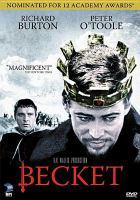


The movie was great. But, it got some REALLY big things wrong. The movie was based on a play written in 1959 by Jean Anouilh (Becket), and Anouilh got some stuff wrong. The big thing was his portrayal of Becket as a Saxon (he was a Norman), and Henry as a Norman (he was an Angevin). The movie made much of this difference, and near the end portrayed 'the people' as being on Becket's side because he, like they, were Saxons, while the barons and king were Normans. Yea, sort of a big goof. In any event, despite this, the movie was still great.

So's this book. It sorted out the errors the movie made, and covered a lot more territory, besides. Highly recommended :)
Profile Image for Christopher Saunders.
1,051 reviews960 followers
April 23, 2021
John Guy’s Thomas Becket: Warrior, Priest, Rebel revisits the life of the 12th Century Archbishop of Canterbury, his life defined (and ended) by his feud with Henry II over the rights of the Catholic Church in England. Guy, a specialist primarily in Tudor history, seeks to revise common perceptions of Becket, sainted soon after his death and long afterwards viewed as either a paragon of principle or an obstinate opponent of secularization. He had elements of both in his character, yet Guy shows that Becket’s actions could be well-understood in his time. The son of middle class Norman parents, Becket was raised in France, served as a soldier and an aide to Archbishop Theobold of Bec during the dynastic struggles of 12th Century England, where the Church often seemed the only stable institution - and certainly the only one who could rival the King. Henry II is portrayed unflatteringly as a brilliant but impulsive man, jealous of royal prerogatives and incapable of seeing his way clear to compromise. That said, Guy shows that his relationship with Becket, far from the bosom friendship so often dramatized in plays, movies and novels, was rather stand-offish, with Henry leaning on Becket for advice while never forgetting to remind him of his place. Similarly, Becket’s inner conflict between religious and secular duties was pronounced before he became Archbishop; there was no Damascene conversion to religion or “honor,” merely a flowering of his strong personality and extant beliefs in a position granting him power to exercise them. Certainly, the drama inherent in the story - the disputes over land rights, legal prerogatives and taxes, the arrests and excommunications, Becket’s exile and fraught negotiations with the Pope, and the climactic murder in the Cathedral - is powerful enough that it doesn’t need fictional embellishment. By placing Becket and Henry squarely in their time and place, Guy does history a service; and by rendering his history with such insight, intelligence and clarity, he delivers a treat to readers as well.
Profile Image for Elizabeth.
Author 48 books3,262 followers
January 29, 2013
Excellent biography of Thomas Becket which draws on a wide range of sources. While there are one or two minor historical nit-pick errors, the main drive of the narrative is well researched. It's a balanced view that doesn't make Becket a saint, but is sympathetic in bias. Henry II has the gloss stripped away from him and does come over as a controlling tyrant. And do you know what? I think (having been researching Henry II for a while now) I think Guy gets as close to the truth as anyone in his portrait of this king.
Profile Image for Orsolya.
651 reviews284 followers
August 31, 2012
Thomas Becket. Whether that name makes you think of Canterbury, martyrs, or Richard Burton; it regardless is a powerful name. Prolific biographer/historian (and husband of fellow biographer Julia Fox), John Guy opens the door to explore who Becket truly was in “Thomas Becket: Warrior, Priest, Rebel”.

The format of “Thomas Becket” may catch some readers off guard as the work is not a typical biography simply following a note-figure from birth to death. Instead, John Guy exposes various elements and roles in Becket’s life in order to understand the true meanings behind his actions. The beginning of the book resembles a biography, as it starts with a description of Becket’s family ancestry and childhood. This is rather slow and tedious, filled with much speculation and light statements. Furthermore, instead of truly focusing on Becket, Guy overly emphasizes and depicts English life (both political and personal) and therefore, almost leaves Becket hidden in the background. Although I am a firm supporter of solid foundation descriptions and supporting facts; this was a bit too detailed and caused me to forget I was reading a book about Becket.

This early lack of focus causes “Thomas Becket” to be inconsistent and ebbing and flowing in regards to capturing the reader. With that being said, the portions actually focusing on Becket are insightful, captivating, and include “stories” which are probably unknown to most readers. This induces page turning and reveals a new side of Becket. Guy includes open views into Becket’s psyche while also quoting solid, contemporary source material.

“Thomas Becket” is strongly suggested for fans of Henry II (and even Eleanor of Aquitaine) as the book’s primary focus is political and encompassing of the relationship between Henry and Thomas versus a singular spotlight on Becket. However, as the book progresses and becomes increasingly a Becket-focus; it gains momentum and strength. Guy presents a man on various landscapes (from Becket’s library collection, to his clothing, and even his psychological demeanor) versus just a saintly portrait; thus allowing the reader to make an unbiased decision regarding Becket’s merit. Events are described in a manner in which the reader feels a part of the action and begins to see Becket in a new light than of the usual propaganda. All of this is written in an accessible and understandable way.

“Thomas Becket” also includes portions in which Guy performs exemplary detective work, debunking traditional Becket views. For instance, although the murder of Becket is well known; Guy’s re-telling is vivid, exciting, and is filled with strong visual language bringing a new element to the learning of this event. Followed by an “Aftermath” of Becket’s impact both on Henry and England; “Thomas Becket” ends firmly.

For those readers interested in supplements, “Thomas Becket” includes two photo inserts (one in black & white and the other in color), a glossary of key figures, maps, and notes (the notes and bibliography are combined, however).

“Thomas Becket” is largely a political study and not recommended for those seeking a personal or saintly view into his life. For those eager to receive a wide look into his career, relationship with Henry, and to gain new insight into Becket; Guy delivers.
Profile Image for Nooilforpacifists.
989 reviews64 followers
February 29, 2016
Half way through, and one thing is clear: Becket was a pompous, childish, jerk. He's a martyr to the flaws in his own personality. The second half was more interesting: both Becket and Henry II became more alive.

The quarrel between Henry and Becket was more personal than political, as Guy concludes. Henry, yes, wanted what his Tudor namesake took--a "channel" church, with fealty to King not Pope. But he also was incredulous that Thomas, a commoner Henry himself had elevated to state council, then Archbishop, could, or would, defy him. Henry never said "Who will rid me of this turbulent priest" (that rendition appeared only in the mid-18th Century); what all witnesses agree is that he said something more like "What miserable drones and traitors I have nourished and promoted in my realm, who would let their lord be treated with such shameful contempt by a low-born clerk."

Becket, for his part, took offense too swiftly, then dismissed a half a dozen truces that may not have prevented the ultimate confrontation. But he could have kept the King's ear, while seeking a compromise.

Unless you take the view, as T.S. Eliot did, that Thomas was a suicide of unsound mind, the consequences for both Becket and Henry were oddly mixed. Becket horribly murdered, yes, but the focus of pilgrims almost instantly; Canonized swiftly, and soon even Henry was seen worshiping at his shrine. Henry didn't get his personal church, and was anything but a true penitent. Yet when the Church of England finally was created, St. Thomas Becket of Canterbury was erased from the English panoply, his Canterbury shrine stripped of what was (by then) a King's ransom in pilgrims' offerings. So, taking the centuries-long view, Becket's own sensational martyrdom helped pay for the break from Rome Becket's Henry II wanted.

This would have been a better book had the first half been pruned by at least a third. Skim that if you must.
Profile Image for Susan.
3,019 reviews570 followers
March 23, 2012
John Guy has written some brilliant historical biographies, so I was really looking forward to his latest work - the story of Thomas Becket and what a fascinating story it is. Although really it is not only the story of Thomas Becket, but also that of Henry II, as their lives, and fates, were so entwined with each other.

Thomas Becket was born to middle class, but fairly humble beginnings. His early life showed very little of what was ahead - surprisingly he was not academically minded as a young man, nor was he ambitious intellectually. It was interesting that he enjoyed the friendship of a Norman artistocrat and was introduced to another way of life - enjoying hawking and hunting. Indeed, he was wonderfully human, enjoying himself in Paris and seeming neither overly serious nor particularly pious. A critical choice in his life was joining the household of Archbishop Theobald of Canterbury and learning the craft of a right hand man, becoming invaluable and studying seriously. He also learnt an important lesson when he witnessed Theobald forced to flee for his life.

It is once Henry enters the picture that the book really comes alive. Becket is by Theobald's side when peace is brokered between Henry and Stephen, ending the civil war that had raged for so long. Theobald called Becket, "my first and only councillor" and he was marked for a glittering future career. Once King Stephen died and Henry was crowned, Becket became the new king's chancellor within six weeks. It really was a meteoric rise for a man of fairly humble beginnings, who now found himself constantly at the new king's side. Thomas Becket had a life of luxury, but was seen as an upstart by the aristocrats at court and never seemed able to rid himself of being looked down upon for his lowly beginnings.

Henry was a very self assured man who had boundless energy and was unpredictable with a terrible temper. This temper would cause Becket serious problems, especially when Henry planned to make him both Archbishop of Canterbuy and Chancellor. Henry wanted to limit the conflicts between the Church and the State, but that required that Thomas would obey what the king wanted. It was a difficult path to walk, to juggle the rival claims of the Church and State and when Becket resigned as chancellor without consulting Henry there was an increased distance between them as Henry withdrew his favour. The book discusses all the issues which caused problems between the King and Archbishop in great detail, including taxation and Henry's demands that secular judges punish criminous clerks. When Henry reproached Becket for ingratitude, asking, "are you not the son of one of my villeins?" it was again a way of emphasising their inequality. The Council of Westminster, the Council of Clarendon and attempts to make Becket submit led to charges being brought against him and, eventually, to exile.

Once in exile, the author details the many attempts to make peace, which take place over several years. Does Henry say, "Who will rid me of this turbulent priest?". Does he regret the murder of Becket? John Guy breathes life into his subject. Whatever his faults, Thomas Becket was a man who eventually had no choice but to stand up for his beliefs. When Guy recounts the murder in the cathedral it is almost like seeing the event occur in front of you and both Henry and Becket are presented fairly in this well researched and very readable biography.
Profile Image for Richard.
Author 6 books473 followers
April 11, 2018
A meticulously researched biography of St. Thomas Becket of Canterbury, one of England's most famous saints. John Guy sifts through copious source material to separate fact from pious fiction. The resulting picture of Thomas Becket glows less but impresses more. Guy explains what the argument between Becket, a hot-headed archbishop and Henry II, a demanding and devious tyrant, was actually about. He informs us that the king did not really utter the famous but altogether apocryphal words, "Will no one rid me of this turbulent priest?" which supposedly sealed the hapless martyr's doom. This is ultimately a somewhat laborious but extremely worthwhile read.
Profile Image for Colleen Browne.
409 reviews129 followers
June 23, 2022
This meticulously researched biography of Becket by John Guy reads like a novel but provides evidence, in as much one can be provided from that period, of his conclusions about the man who would be murdered at the hands of the knights of Henry II. Much of my knowledge on this subject has come from Dan Jones, a popular historian who has also been behind documentaries about the time period. Guy is a great corrective to the "history" written by Dan Jones. Particularly in his documentaries, he distorts history and presents a very different picture of the life of Becket and the relationship between him and the king.

Guy's book gives the reader a picture of Beckets's upbringing and what brought him to the attention of the Angevin king Henry. When appointed Archbishop of Canterbury, Becket had to quickly be ordained as a priest but he had an extensive history working with the previous archbishop and knew the workings of the Church visa vi the kingdom. He was then appointed to be chancellor by Henry with whom he would work closely for several years. But Henry believed that the Church held too much power in the state so when the Archbishop of Canterbury died, he appointed Becket to the position.

After becoming Archbishop, Becket resigned as Chancellor, move that many, including Guy viewed as ill timed. Although the relationship between the two had generally been a good one, it took a turn for the worst after this. While Henry was determined to reduce the power of the Church in England, Becket was determined to maintain it. The relationship deteriorated to the point that Beckett was forced to flee England for France. Meanwhile, Henry stripped him, and all family members of their land and possessions forcing them into exile.

Peace conferences, one after another failed to resolve the differences between them. Becket finally returned to Canterbury Cathedral but it was clear from the start that the agreement that the King would not abide by the agreement he had made. His anger against Becket grew and grew until, one one occasion, he ranted that he wanted someone to avenge the wrongs that Becket had done to him. Four of his knights, seeing the opportunity to carry out the revenge, murdered Becket in the cathedral in a most gruesome fashion. Henry was blamed and the murder became a scandal throughout Europe. Becket was immediately canonized and Henry was forced, at least on the surface, to admit responsibility and seek redemption.

Guy's approach is more evenhanded than that of many historians, including Dan Jones, who seeks to lionize Henry and distort the history in the process. The book is an extremely interesting read.

Profile Image for Juliette.
395 reviews
December 2, 2016
The surest way to my heart is to teach me something, and, if that "something" is rooted in history, the odds are favorable that I won't soon forget the teacher. (Persistence helps, too, because I'm not the quickest filly to the water.) So, it is with deep appreciation that I give a shout to Clem, an engineer turned medieval art historian who volunteers at Canterbury Cathedral.
I had been wandering the cathedral half-heartedly, and an older gentleman with a yellow sash called out to me to ask him anything. It was my second visit to the cathedral, and I was tired of the standard, "Who will rid me of this turbulent priest?" tour guide fare. I declined with a smile. "No, really, ask me something," he begged. I told him I couldn't think of anything and stepped away. He stepped with me, "Then tell me what struck you about the cathedral." I answered: the solitary candle that stands where the shrine stood before Henry VIII ordered the destruction of the monasteries. His eyes lit.
We started jumping through history: the birth of the Church of England, Henry II and Eleanor of Aquitaine, Elizabeth and Mary. Finally, he guided me through the cathedral for my personal, bespoke tour. He showed me the dips in the stone, worn by pilgrims' knees. He read the Miracle Windows for me. He told me why the saints (but not Christopher) were headless. He took me through the grounds . . . . He made me laugh and gasp in horror at stories from centuries ago, and, when he hesitatingly asked me my sign at the Alexandrian mosaic, I answered him quickly.
I was sad when he said he had to go. Like every great teacher, he left me with a longing to learn more. So, when I saw this book in the gift shop, I needed to buy it.


The first thing you need to know about this book, and the first thing that John Guy emphasizes, is that this is not a hagiography. This is not written to flatter a saint. In fact, if you're like me, you probably will not like Thomas very much through the first third of the book.
This is more of a character study: who was Thomas? What made him so turbulent, so intransigent?
We watch as Thomas is born into middle class London. We follow his education. (I am cheered that he wasn't a master scholar.) We wince when he is taunted and rejected by his peers, something that will happen through his life. We are skeptical that he would be a very good archbishop of Canterbury. How could he represent the Church when he was so deep in Henry's pocket?
Although character-driven, no one is very favorable in this history. Not Henry. Not Thomas. Hardly any of the priests. Definitely not the pope. In fact, the entire medieval Catholic Church is a fetid mess, and that's where Henry's quarrel with Thomas arises. Henry wanted the right to jurisdiction over certain Church crimes. Thomas said Henry was over-stepping his secular leadership. (Henry isn't a saint for some very good reasons. He wasn't trying to clean up the Church.) And that was that.

Oh, I loved this. I loved that Guy quoted from primary sources, that he described how the documents would have been written. (I am shocked that the documents -- letters and drafts of letters! -- survived the centuries.) Guy's writing style leaves something to be desired in terms of clarity, but I'll give him a pass because there's an index.
I marked this book so heavily with "Booya!" and "NO!" and "Oh, Thomas...." that I'm ashamed to loan it out. I am well aware that this is a serious history, not a soap opera, but some rejoinders were too sharp to not recognize.
So, thanks to Clem and John for introducing me to this fun, sad, and, yes, turbulent period of history.
Profile Image for Phrodrick slowed his growing backlog.
1,077 reviews68 followers
April 7, 2019
John Guy’s Thomas Beckett; Warrior, Priest, Rebel gets three stars because it is not that hard to read but…
It gets mired in too many on the edges issues. Details about who was allied with who and who wrote what appeals or protest. So, lots of names and very little reason to know many of them.

Thomas Beckett the warrior is a matter of a few pages and much of that about how the not yet Archbishop was already offering advice King Henry II did not want to hear.

What exactly was Thomas’s Theology? What about him as a religious that renders him short listed for what was a high-speed ascension to sainthood? Who is the essential Thomas Becket? Why was he never married or associated with any love affairs? My sense is that he may have been more honest than his King, but he did not have to run a country in a violent time.

The impression I get was that Becket wanted for the Catholic Church to exercise the same arbitrary extra-legal controls over its people and holdings that the King wanted over the English Catholic Church. No where did I get the idea that The Archbishop of Canterbury was a rebel in the sense of fighting for causes higher than who gets to be a center of power in England. He and his advocates were very merry about claims they were fighting against a murderous corrupt king, but what were the cases the Church was protesting? Mostly they wanted to be the ones to torture and convict clergy and they wanted the last word on the granting of divorce. There is a lot about who gets the levies on what rich holdings but nowhere were they portrayed s taking up causes of the people.

Henry II may have been an exceptionally evil-minded King. Or he may have been just another guy with lots of absolute power and the constant threat of enemies foreign and domestic. 12th century Kings are rarely typified as shy about arbitrary and capricious applications of power, including the power to execute. A few pages by John Guy about Henry II and the larger context of his reign as opposed to his gluttonous sexual habits and ability to change opinions as necessary to gain short term ends.

John Guy does not lard his book up with either the technical terms for the issues between his leading figures, nor is his style high academic. His research is detailed but stylistically he is not that engaging. When a book gets to be hard to read, one cannot up star it.

In the end I am not sure that a victorious Archbishop of Canterbury would have made England that much of a different place. Frequently I was thinking that this book makes a case for the separation of Church and State. Not that I prefer the graces of a less fettered Henry II over a more empowered Thomas Becket. What I do not see that much changing at the street level.
Profile Image for Nancy.
1,274 reviews53 followers
January 10, 2022
JANUARY
3. Thomas Becket Warrior, Priest, Rebel, Victim A 900-Year-Old Story Retold by John Guy by John Guy John Guy
Finish date: 05 January 2022
Genre: biography
Rating: B

Review: From my notes I see that the book captured
my interest starting with the "broken relationship" between King Henry II and Thomas Becket in chapter 12. So You have to plod on during the first 40% of
the book that was just a description of a middle class man who climbed the social, academic and political ladder. I was impressed how Becket's mother was keen to see what her son needed for his future (education etc)

Bad news: some key issues (Constituions of Clarendon 1164, turning point in king-archbishop relationship) took a few chapters to get through. Tip: read about people/issues quickly on Britainexpress.com ( great reference website ) and it will save you time. The chapters can be 'skimmed' if you then wish.

Good news: This book really gave me an idea what happened in that period 1120 (birth) - 1170 (murder) - 1220 (veneration of the saint). Focus is on the ruthless, untrustworthy vindictive character of King Henry II and Thomas Becket, Archbishop of Canterbury the ambitious, uncompromising zealot and how they clash. Sparks fly!

Personal:The only history about Henry II I knew was from the movie Lion in Winter with Peter O'Toole and Katherine Hepburn. I loved the film. It takes place years after Becket's murder and I must admit Henry II is painted in the embellishment of Hollywood colors and does not even divulge what (excusez le mot) a badass he was! Hepburn brought Eleanor of Aquitaine alive for me and I've read more books about her.

Trivia: Eleanor of Aquitaine was one of the longest living royalty in the Middle Ages...reached the age of 82 and outlived 8 of her 10 children.

#WorthYourReadingTime
Profile Image for Timothy Lugg.
33 reviews1 follower
September 2, 2013
John Guy writes a fascinating account of the life of Becket and his relationship with King Henry. I was was impressed by a few different aspects of Thomas Becket's life. His commoner roots put him at a disadvantage throughout his life, though he mostly overcomes this handicap during his life and certainly in death. Thomas had talent to accompany his sizable ambition and he made every effort to capitalize on both. Though his love of ostentation sometimes betrayed his pride, it demonstrated his qualifications to mix with not only the noblemen, but with kings and churchmen. Certain episodes of his life reveal Becket to be little more than Henry's alter ego and henchman, but in the end, he exhibited his own character and strength. Starting life where he did in the merchant class, he rose far higher than probably any other contemporary.

Guy's book is most notable for its readability. Though he is a first class historian, he doesn't succumb to using the difficult language which is most comfortable for those writing for other scholars. There were times when it felt more like a novel than a book of history. Of particular note, were the "Clarendon" and "Northampton" chapters that detailed Henry''s efforts to defeat Becket among his peers. Henry's double-dealing, falsity, and outright cruelty were on full display. Though Henry didn't get everything he wanted out of the confrontations he won by creating doubt about Becket among the church leadership. Originally they questioned his qualifications as a spiritual man because he was appointed with the understanding that he was Henry's appointed fixer to the church, but after Clarendon and Northampton, the church leadership questioned him because he made the church weaker since he drew Henry's outright opposition. Interestingly, history has made Thomas Becket one of the chief fundraisers for the church.

This biography is valuable for more than just retelling Becket's life. It is also strong because of the window into both King Henry's court and the machinations of the church of that era, exposing the corruption in both. Guy offers this insight through competent and extensive handling of primary sources. His summary of them at the end is especially helpful.
Profile Image for Leah.
1,733 reviews290 followers
May 5, 2013
A full and rounded picture…

Written in a way that is very accessible to the non-historian, this book gives a full and rounded picture of the life of Thomas Becket and the politics of the court of Henry II.

Throughout the book, the author fills out the political and social background to the events of Becket’s life, so that we see the contrast between Becket’s relatively humble origins (coming from what would now be thought of as the middle-class) and the exalted court and religious circles in which he later moved. Guy suggests that his lack of an aristocratic background played its part in Henry’s attitude towards him and subsequent fury at Becket’s refusal to submit to his will.

As someone who knew only the bare bones of the Becket story, I felt that the author explained very clearly the different political strands that contributed to his eventual fate – Henry’s ambitions in Europe, the involvement of King Louis of France, the ongoing schism in the papacy. Relying throughout on original sources, Guy gave a convincing picture of how Becket was seen by his contemporaries, both friend and enemy. He also looked at how Becket’s story had been written over the centuries, pointing out where he felt that inaccuracies had crept in and going back to the original sources to support his own interpretation.

But although this is clearly a scholarly, well-researched book, it is so well written that it reads almost like a novel; the lead up and execution of the murder were particularly finely done. For a non-historian like myself, this is exactly how history should be presented – assume no knowledge on the part of the reader, fill in all the necessary background, give a picture of the wider society and tell the whole thing in an interesting way. An excellent read – highly recommended.

NB This book was provided for review by Amazon Vine UK.

www.fictionfanblog.wordpress.com
Profile Image for Paul.
110 reviews8 followers
May 26, 2012
I purchased John Guy’s superb new biography of Thomas Becket as the Archbishop was central to my MTh dissertation. Uniquely, Guy uses the first third of the book to unravelling the complexity and egocentricity of Henry II’s court. I was struck at how similar some institutions operations are today. Guy builds upon Barlow’s very strong (revolutionary) academic work on Becket (from some 15 years ago) but covers the historic background in much greater detail and utilises this information in informing Barlow’s research and well as developing his arguments. This is useful because it provides a reasonable (and well argued) explanation for the change in Beckets behaviour after his ordination to Archbishop, the central question in understanding Beckets construction as a man. Superbly researched and very readable, this work left me satisfied but also asking questions provoked by Guys fresh direction and understanding of this irascible man. I re-read sections several times over and found it very hard to put down late into the night. My book of the year.
Profile Image for Andrew.
9 reviews
June 18, 2013
A great addition to the corpus of literature on this fascinating figure. Guy is a biographer, first and foremost, yet he is not unaware of the historical and hagiographical implications of Becket's legacy. While at times a bit grasping in his search to uncover some dirt in Becket's youth or in his career as Chancellor prior to being named Archbishop, Guy is nonetheless very adept at reading between the historical lines. Though nearly always arguable, and sometimes downright conjecture, Guy's analysis of character and motive is generally quite helpful in elucidating some of the more obscure moments of the history. The book doubles as a fascinating portrait of the early years of Henry II, a tyrant par excellence, and certainly a key figure for the English in the eventual devolution of the theory of divine right of kings. Overall, I was quite pleased with this modern retelling of a familiar (if oft-overlooked, especially compared to that of his moral descendant, Thomas More) story of a martyr of religious liberty.
628 reviews
March 1, 2014
John Guy has written a revisionist biography of Thomas Becket, friend and enemy of Henry II of England. The story is probably much more accurate than the legend which was fictionalized by Jean Anouilh in his play Becket. Guy introduces the notion that Becket was always a pious Catholic, even during his early friendship with Henry. And Guy does not believe that Becket and Henry were ever close buddies even before Becket was ordained a priest and made Archbishop of Canterbury.

The story is heavily documented with background facts about medieval England and France and the papacy. Guy doesn't have the storytelling ability of other biographers, but this book is worth the read, especially if you are interested in the Church and kings in medieval times.
Profile Image for Simon.
Author 5 books159 followers
January 2, 2016
The early parts of the book did not come alive for me. Only when, nearly half way through, the conflict between Becket and Henry II gets going did the book become more interesting.
Profile Image for Caroline.
719 reviews154 followers
March 26, 2017
The story of Thomas Becket, St Thomas of Canterbury fame, is one of the formative myths of the English nation - and I use the term 'myth' deliberately, because whilst most people (hopefully) know something of the story of Thomas Becket and his martyrdom, I suspect the history behind the story is much less well-known. And yet it is hard to overstate the importance of Thomas Becket in English history - not just in his struggles against the over-mighty Henry II but in the place his cult and shrine at Canterbury came to occupy in the minds of his countrymen in the centuries after his murder. In many ways St Thomas became the personal saint of the English royal family, displacing the position St Edward the Confessor had held in the years previously.

One of the most interesting aspects of this book are the parallels between Henry II and Henry VIII, the latter obviously so much better known - both dominant, bullying figures, intent on establishing entire control of their domain, resenting the influence of the papacy and the church in what they deemed purely secular affairs; both looking to create a regional church, ring-fenced by the coast, with the king as ultimate arbiter of all within the realm; both resisted by senior clergymen who ultimately paid for their resistance with their lives. Of course, one of the key differences between Becket and John Fisher or Thomas More is the latter really did die for their principles and beliefs, whereas it is hard to escape the conclusion that Becket's resistance to Henry II was more personal and worldly than spiritual.

This biography by John Guy brings the myth and the man to life, in all too real and vivid colour. It is marketed as a revisionist biography, rather than regular 'history', and the verve with which it is told is testament to that. There's a fair amount of artistic licence here, and a bit too much imaginative reconstruction for my tastes. This is far more akin to a modern biography than one would expect for a figure who died more than 800 years ago - and for someone like me used to medieval history, the lack of footnotes and references was jarring and concerning. There's little evidence of historical impartiality here, and that coupled with the aforementioned lack of references, anachronistic turns of phrase and historical supposition, leads me to view this book with more of a cautious eye than I would expect from an historian as respectable as John Guy. One thing is certainly for sure, reading this biography - John Guy is no fan of Henry II!

So on the one hand this is an excellent, readable and thoroughly enjoyable introduction to the life of Thomas Becket, but solid academic history it is not. If Guy and his publishers wished to bring Becket to life for a modern audience, then they have done a fine job - but I can't help but regret what Guy's authorial skill and academic credentials could have resulted in with just a bit more rigour and impartiality.
Profile Image for Ryan.
164 reviews1 follower
September 14, 2017
Thomas Becket: Warrior, Priest, Rebel
John Guy
Read it Hardback at 448 pages, including maps, index, bibliography.

Thomas Becket was an interesting guy living in interesting times, from relatively meager beginnings he attains power as never seen outside of the throne. Born around 1120AD, as a youth Becket traveled and took his apprenticeship from the Church, studying law and then moving into ecclesiastical offices. He was eventually to become Lord Chancellor under Henry II and friends for a time, greatly enjoying the benefits and powers of the office. King Henry II was having a bit of trouble with the papacy on a series of things and thought that instilling his friend, Thomas who had served him so well as Chancellor, as Arch Bishop of Canterbury to help manifest his will and that is when things really get spicy. Spoiler Alert, those differences would see Thomas eventually murdered on a stormy night right on the alter at Canterbury ending his career as the Archbishop but enshrining him as a saint for all of eternity.

The text is serviceable and completes the aim of the endeavor. I'm not sure I learned much that I didn't already know but it was nice to get some elaboration on things otherwise overshadowed in others biographies, specifically the many tombs on King Henry II's. Guy keep Becket in the forefront and does his best with the material available concerning Becket's early life, and later after Becket becomes archbishop you get more information concerning his efforts and point of mind mostly provided by correspondence. By the end of the book Becket remains an enigma to me. His change in actions and intents from Chancellor to Archbishop are still confounding to me and I'm not convinced the elevation to Archbishop changed Becket's moral compass, in the end he just had a new master in the Pope perhaps. Nowadays, he's most relevant for his murder and eventual canonization as a Saint. His murder providing the See of Canterbury with relics, a myth, a Saint, and all the profit of a Pilgrimage route.

John Guy is a respected English Historian who has taught at Saint. Andrews, Bristol University, UC Berkley, Rochester, and John Hopkins, while currently teaches at Cambridge part time. The bulk of Guy's training and interest actually lays in Tudor England and has appeared numerous times on BBC radio, In Our Time, to discuss aspects of Tudor England.
Profile Image for Jerome Otte.
1,916 reviews
December 28, 2024
An engaging, readable and well-written biography, focused on Becket’s dispute with Henry.

Guy provides a lively and balanced portrait of Becket, and he is pretty critical of Becket’s enemies, mainly Henry II, who comes off as self-interested, mean-spirited, and almost sociopathic. Becket does, however, come off as inflexible, and the book certainly doesn’t try to lionize him. The writing is clear and fluid, and Guy does a good job conveying drama. His portrait of Becket is rounded and colorful. He notes that some of Becket's friends would have found the idea of Becket being made a saint “utterly absurd.” The narrative definitely picks up once Henry enters Becket’s life.

The writing is vivid, and Becket does a good job laying out the background regarding Henry’s accession to the throne. There could have been some more background on the English legal system, and the reforms made by Henry’s predecessors. The portrait of Henry feels a bit one-dimensional. Sometimes the narrative can bog down when it comes to legal complaints, appeals, threats, etc. Some of Guy’s assertions seem forced. Occasionally he uses modern-day slang like “no-brainer.”

A well-researched, accessible and thoughtful work.
Profile Image for Mark Durrell.
100 reviews4 followers
March 2, 2020
A truly gripping biography. Well researched and written with enthusiasm.
Profile Image for Ellen Ekstrom.
Author 11 books85 followers
July 24, 2012
I was not prepared for this engaging and detailed yet readable biography of Thomas Becket. Like so many, I believe, I was first introduced to Becket via the Peter Glenville's cinema adaptation of Anouilh's play with Peter O'Toole as Henry II and Richard Burton as Becket. I was pleased that Mr. Guy's work was more history than hagiography. Henry II and Thomas Becket are shown for what they were: stubborn, impulsive, vain, the list goes on. Thomas Becket, the son of a London merchant, was 'raised from obscurity' as one of Theobald, archbishop of Canterbury's clerks. He is noticed by the King, Henry II and as a result of acumen in the realm of medieval politics, he first becomes Henry's chancellor and later, Archbishop of Canterbury - an idea that backfired on Henry, for Becket wasn't in the crown's pocket as Henry had hoped. In fact, it is said that Becket had a Damascene conversion as soon as he was consecrated. Or maybe he thought there'd be more power as archbishop than chancellor and gave up the chancellery for that reason.

Becket has a taste for power and luxury and he makes enemies not so much by his belief, but what that belief stands for. Becket, it appears, gave his life not for the truth of the universal church, but for a "petty squabble over the assets and privileges of Canterbury." p. 373. Both Henry and Becket refused to give ground and Henry, already known for being a less than exemplary husband and father, is shown here as a tyrant who backslides and breaks oaths at every turn. Becket is no better, stubbornly refusing to give fealty to the king first before God and the church. The quarrel started over whether the crown could prosecute 'criminous clerks,' clergy who were accused of criminal acts. It was the church's position that the church should deal with its own. Interestingly, if the church had acquiesced to Henry's demands to try criminous clerks, Becket would have found himself in trouble, for Thomas Becket had a role in a cover-up of the murder of a boy who was sexually assaulted by and later murdered on the orders of Roger de Pont'Leveque, later Archbishop of York.

After self-exile, argument and negotiation, Becket returns to England and is shortly afterwards murdered in his own cathedral by four knights who took one of Henry's famous temper tantrums to heart. The murder his horrific, gruesome, and shocked Europe.

Mr. Guy spent three years of research on this book, and he gives us more of the man than the martyr; someone who is less a priest than a courtier, a rebel, yet charismatic. His sources were the extant biographies and hagiographies written at the time (some to help along canonization)and by people who were eyewitnesses to many of the events, Thomas Grim, for example, who was gravely wounded (and survived) trying to protect Becket. William fitz Stephen, a colleague who had known Becket for most of his career.

There is no glossing over Becket's faults, nor over-praising his virtues. We are given the history and portrait of a man who chose to die for his church of Cantebury.
Profile Image for Papalodge.
445 reviews1 follower
May 28, 2013
Sequester -(ME - sequestren, fr MF sequestrer)
Did not expect this to be the issue between Henry II and Thoms Becket:
To wit -to sieze especially by writ; sequestration - the act of sequestering - the stte of being sequestered - a legal writ authorizing a sheriff or commissioner to take into custody the property of a defendant who is in contempt until he complies with the orders of a court. (Glad we don't have this to contend with in the 21st century.)

You may have thought you knew what the problem between Henry and Tom was.
This biography is a page turner - but at the tricky parts, read a page then go back a few pages to make sure you hadn't missed something to verify that what you read really what was written.
After October 12, 1170 things start to get dicey ...
Henry - "Oh, why is it that you won't do what I want? Because for certain , if you would, I'd put everything into your hands."
Reflecting ruefully on the meaning of these words, Thomas was reminded of Satan's temptation of Chrits: "All these things will I give you, if you will fall down and worship me."
In a letter, Becket explained the situation to the pope.
What Henry wanted was for Becket to admit defeat, submit to his will, and promise to obey the ancestral customs.
The customs was a big issue - epending if they were those of King Stephen or Henry; whichever sutied Henry'spurpose.
I liked Henry, he'd make a promise, get what he wanted, then ignore the promise.
(You know like today's politians - figure out what you want then lie like the devil to get it.)

Another problem, in coming to terms, Thomas had to be carefully coached for his udience before King Lousi and Henry.
The papal arbitrators were aware that Henry would insist that his "honor" be upheld.
"Saving God's honor" versus "Saving my order" was an isue that had driven Henry to apoplexy -
going around in circles with Thomas for several hours.
In the end,at the last minute Thomas ignored his coaches -
Louis was even provoked and asked Thomas, "Lord archbishop, do you wish to be more than a saint?"

John of Salbury, believed that Thomas could have shown more tact toward the four knights, took the lead in trying to calm things down, talked candidly to his friend as he had done many times before in the past twenty-five years:
"Look, Thomas. You're doing what you always do. You act and speak on impulse, saying just what you like, never asking anyone's advice. What need was there in a man of your rank to inflame and exasperate those butchers still further?
Would it not have been better to have taken our advice and given them a softer answer?"
When the knights returned, they murdered Thomas. Amen.

John of Salisbury, the most intellectually gifted Englishman whose student years coincided with Becket's, would become one of Becket's most trusted and influential friends and advisers and be an eyewitness to his murder. John was one of the most highly educted men in the 12th century.
His 'Politicraticus' is a joy to read.
Profile Image for The Girl with the Sagittarius Tattoo.
2,943 reviews390 followers
October 14, 2017
I really have to give it to John Guy for being an exceptional biographer. Not only is this book excellently researched, but it's enjoyably written. This book doesn't feel academic; in fact, in kind of reminded me of the same enjoyment I had in reading The Pillars of the Earth (which took place in exactly the same period), except with much more exposition and detail, naturally.

St. Thomas of Canterbury has always fascinated me. Early in his life, Thomas wandered off the monastic path to serve his friend King Henry II as a trusted advisor and general during the campaigns to regain disputed lands from French control. Thomas was a general, leading troops in attack! That's a tidbit most history books don't mention. It's a good thing that he returned to his plan to become a man of the cloth because he wasn't a very good general. He actually got very lucky to have survived some of the ill-conceived battlefield decisions he made.

It was for this kind of trivia that I picked up this book, and it did not disappoint.

A lot of folks know that St. Thomas was canonized as a martyr, murdered by King Henry II's supporters for defending the Church against Henry's attempts to dilute its power in England. But the deeper tragedy is that Henry and Thomas had been close friends for years, and the disintegration of that friendship was something I thought a lot about as I read. The historical records don't reveal every betrayal that built up to the crescendo, but the book shares enough of what we do know to allow us to imagine the rest.

Thomas Becket: Warrior, Priest, Rebel is full of facts that were new to me, or clarified what I thought I knew (or perhaps misremembered). I thought this biography was exceptionally well-done, and I enjoyed reading it immensely.
Displaying 1 - 30 of 126 reviews

Can't find what you're looking for?

Get help and learn more about the design.