

What do you think?

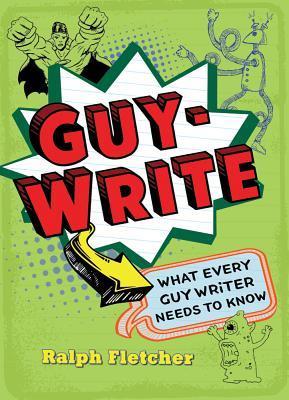
Guy-Write: What Every Guy Writer Needs to Know
It's no secret that many guys dread writing assignments. But writing doesn't have to be "boring nerd-work." Writing is about power; it's about fun; it's about spoofs, humor, sports, blood, farts, superheroes, giant monsters tearing down the city, and serious subjects, too. Ralph Fletcher, a guy writer himself and the author of forty-one books, discusses every tip needed to find the sweet spot in the place where everything except the words stands still. With advice from favorite authors like Jon Scieszka, Jarrett Krosoczka, and Robert Lipsyte, this hands-on book will make a writer out of any guy.
151 pages, Kindle Edition
First published July 3, 2012
About the author
Ralph Fletcher
80 books187 followersRalph Fletcher is a friend of young writers and readers as well as writing teachers. He has written or co-authored many books for writing teachers includng Writing Workshop: The Essential Guide, Teaching the Qualities of Writing, Lessons for the Writer's Notebook, Boy Writers: Reclaiming Their Voices, and Pyrotechnics on the Page: Playful Craft That Sparks Writing. Ralph has worked with teachers around the U.S. and abroad, helping them find wiser ways of teaching writing.
Ralph's many books for students include picture books (Twilight Comes Twice, Hello Harvest Moon, and The Sandman), novels (Fig Pudding, Flying Solo, and Spider Boy), poetry (A Writing Kind of Day and Moving Day), and a memoir, Marshfield Dreams: When I Was a Kid. His novel Uncle Daddy was awarded the Christopher medal in 2002. He has also written a popular series of books for young writers including Poetry Matters, Live Writing, and A Writer's Notebook. Ralph lives with his family in New Hampshire. He is a strong environmentalist who believes we all must work together to live in a more sustainable way. His other passions include travel, good food, dark chocolate, growing orchids, and sports.
Ralph's many books for students include picture books (Twilight Comes Twice, Hello Harvest Moon, and The Sandman), novels (Fig Pudding, Flying Solo, and Spider Boy), poetry (A Writing Kind of Day and Moving Day), and a memoir, Marshfield Dreams: When I Was a Kid. His novel Uncle Daddy was awarded the Christopher medal in 2002. He has also written a popular series of books for young writers including Poetry Matters, Live Writing, and A Writer's Notebook. Ralph lives with his family in New Hampshire. He is a strong environmentalist who believes we all must work together to live in a more sustainable way. His other passions include travel, good food, dark chocolate, growing orchids, and sports.
Ratings & Reviews
Friends & Following
Create a free account to discover what your friends think of this book!
Community Reviews
Displaying 1 - 30 of 36 reviews

June 14, 2021
Strong 3 out of 10
I love that this book is trying to convince boys to be more creative and to write their own stories, but in my opinion, there's a whole gob of unnecessary content in here that severely hinders the reading experience. I think this book talks about the interests of boys in a really overgeneralized way. Just because I'm a young male doesn't mean I'm interested in blood, boogers, and fart noises.
There's some okay advice prattled here and there, and the illustrations have a nice charm to them, but there's one thing that made me really dislike this book. THE INTERVIEWS! The flow of this book was constantly interrupted with these random interviews. I didn't expect there to be so many, and the contents of the interviews were immensely boring and got super stale very quickly. I think the interviews should've been halved.
There's some decent advice in this book, but overall this book was filled with unnecessary interviews and just random stuff that felt more like page-filler than anything. Although some of the illustrations are interesting, I couldn't recommend this book to anyone. If a "GUY" in your life is really serious about writing, there are much better options than this book.
I love that this book is trying to convince boys to be more creative and to write their own stories, but in my opinion, there's a whole gob of unnecessary content in here that severely hinders the reading experience. I think this book talks about the interests of boys in a really overgeneralized way. Just because I'm a young male doesn't mean I'm interested in blood, boogers, and fart noises.
There's some okay advice prattled here and there, and the illustrations have a nice charm to them, but there's one thing that made me really dislike this book. THE INTERVIEWS! The flow of this book was constantly interrupted with these random interviews. I didn't expect there to be so many, and the contents of the interviews were immensely boring and got super stale very quickly. I think the interviews should've been halved.
There's some decent advice in this book, but overall this book was filled with unnecessary interviews and just random stuff that felt more like page-filler than anything. Although some of the illustrations are interesting, I couldn't recommend this book to anyone. If a "GUY" in your life is really serious about writing, there are much better options than this book.

May 26, 2012
A great guide for encouraging boys to write by valuing the writing topics they like. Includes advice from many published authors, craft writing ideas, and suggestions on writing in specific styles and genres. A classroom must-have or gift for the boy writers in your life.
Not just for boys, Fletcher's tips translate to girl writers, too.
The only drawback-- Fletcher's recommended reading lists lack currency with many outdated titles that boys don't read much. Perhaps, his lists will spark boys to rediscover older titles?
Not just for boys, Fletcher's tips translate to girl writers, too.
The only drawback-- Fletcher's recommended reading lists lack currency with many outdated titles that boys don't read much. Perhaps, his lists will spark boys to rediscover older titles?

July 2, 2012
I stayed up late last night finishing this book, because I will see one of my boy writers today at a kids comic convention. I can't wait to hand the book off to him.

November 25, 2017
This was an easy read which makes it a great book to recommend to boy writers who truly enjoy writing. It is great for teachers as well because it has some practical tips from Fletcher as well as other authors. Those tips definitely offer some ideas for mini lessons within a small group format or conversation starters during writing conferences.

June 19, 2022
Great resource for teachers of boys, parents, writers of any gender, anyone looking for ideas to improve their writing techniques. Sprinkled with anecdotes, snippets of published and un-published works, and wonderful humor.

July 10, 2013
What a fun read! I'd recommend this to all K-8 teachers. I'd also recommend this to parents desiring to inspire their particularly writing-resistant sons. Ralph Fletcher writes Guy-Write with the hope of inspiring young boys to pursue writing even if they have not exactly received support for their very boyish interests such as slapstick humor, gore, or the classic boy pastime, the fart.
The book is written in a friendly and fun-loving tone and Fletcher calls upon his own experiences of hesitating to write when he was young. Additionally, he raised two boys and shares many anecdotes about the crazy (and often unpopular school topics) they enjoyed writing about. Each chapter includes illustrations from kids, entertaining examples in different genres, and little Post It® type notes as reminders about how to succeed in each genre.
For those instructors who teach writing in a "writers" workshop format, perhaps similar to those spearheaded by Lucy Calkins and her work with The Teachers College at Columbia University, you will be pleased to see a section on keeping a "writer's notebook" and the different ways to use it as a source for capturing ideas and practicing the craft of writing. He also includes a section about drawing before writing as a way to get and organize ideas, an idea embraced by many teachers who try to get reluctant writers going.
The whole idea behind the book is to get boys writing. Plain and simple. While he acknowledges that there may be few opportunities to write a serious essay on flatulence, he also argues (and I completely agree) that boys need to have "permission" to write about the things that interest them so they can master the craft of writing. Let's be honest. Few people get excited about subordinate clauses, except we odd lovers of language who adore the subordinate clause, so why not get kids writing about topics that get their juices flowing and becoming the writers we know they can be?
The book is written in a friendly and fun-loving tone and Fletcher calls upon his own experiences of hesitating to write when he was young. Additionally, he raised two boys and shares many anecdotes about the crazy (and often unpopular school topics) they enjoyed writing about. Each chapter includes illustrations from kids, entertaining examples in different genres, and little Post It® type notes as reminders about how to succeed in each genre.
For those instructors who teach writing in a "writers" workshop format, perhaps similar to those spearheaded by Lucy Calkins and her work with The Teachers College at Columbia University, you will be pleased to see a section on keeping a "writer's notebook" and the different ways to use it as a source for capturing ideas and practicing the craft of writing. He also includes a section about drawing before writing as a way to get and organize ideas, an idea embraced by many teachers who try to get reluctant writers going.
The whole idea behind the book is to get boys writing. Plain and simple. While he acknowledges that there may be few opportunities to write a serious essay on flatulence, he also argues (and I completely agree) that boys need to have "permission" to write about the things that interest them so they can master the craft of writing. Let's be honest. Few people get excited about subordinate clauses, except we odd lovers of language who adore the subordinate clause, so why not get kids writing about topics that get their juices flowing and becoming the writers we know they can be?

May 26, 2012
Ralph Fletcher knows guys. As an older brother to many and a father to boys, he knows what makes them tick as writers - what their turn offs are, what their turn ons are and what will help them grow as passionate writers. In this book he had me from his first narrative in which he described his 16 year old son going off with his friends while they were away at a camp. They weren't off to get in trouble or play a prank. they weren't even off to head for a swimming hole or hiking trail. They went off to find a quiet place to spend time with their writing notebooks! Wow!
Ralph tackles a lot of touchy subjects in this book. Subjects that are taboo in some schools - things like violence, sick humor, the guts and gore boys love, and the importance of letting drawing be part of the medium of writing. If you are a teacher you may cringe every now and then, but overall, I hope you'll listen. As I found when Ralph came out with Boy Writers, it's what we need to allow them to do in order to grow as writers. But don't worry, this book doesn't just give boys permission to use all of these things, but he shows them how to do it in effective ways to make their writing better. His suggestions are good minilessons for classrooms, because honestly, there are girls who need to hear these things, too.
Ralph also includes some interviews with some wonderful writers, which help support his arguments. Read this book, apply it, and watch your guy writers grow.
Ralph tackles a lot of touchy subjects in this book. Subjects that are taboo in some schools - things like violence, sick humor, the guts and gore boys love, and the importance of letting drawing be part of the medium of writing. If you are a teacher you may cringe every now and then, but overall, I hope you'll listen. As I found when Ralph came out with Boy Writers, it's what we need to allow them to do in order to grow as writers. But don't worry, this book doesn't just give boys permission to use all of these things, but he shows them how to do it in effective ways to make their writing better. His suggestions are good minilessons for classrooms, because honestly, there are girls who need to hear these things, too.
Ralph also includes some interviews with some wonderful writers, which help support his arguments. Read this book, apply it, and watch your guy writers grow.

September 15, 2012
Writers and teachers can always depend on Ralph Fletcher for practical advice to help improve their own or their students' writing. Not only do the twelve chapters provide tips that teachers can use tomorrow in their writing lessons, but they also include insightful interviews with authors Jon Scieszka, Greg Trine, Robert Lipsyte, Robert San Souci, and Jarrett Krosoczka, and some comment from Jane Yolen. Although Fletcher continues to focus on boy writers and their need to express themselves by drawing before or while they write, the ideas in this book can help just about any budding writer, male or female. I love his inclusion of artwork from boy writers as well as some sample pieces written by boys. His suggestions about what to include in a writer's notebook are immensely helpful. Writers need to have a place to collect ideas or mementos to use as writing inspiration, and Fletcher's discussion of his own notebook is helpful. I was pleased to see nary a writing assignment directed to a high-stakes writing prompt too. Bravo, Ralph!

August 11, 2012
In this book Ralph Fletcher discusses the "genres" that boys often like to write about - fighting, superheros, grossness, sports, drawing, etc. He gives boy writers real hints about how to improve their writing in these genres, and also gives them some ideas about how to convince teachers or other adults that it is OK to be writing about this stuff. He includes great examples, both from professional writers and from school-aged boys. Throughout the book there are interviews with professional writers who write in the genre being discussed. Ralph is good about discussing the process of writing, emphasizing that ALL writers revise and that revising means making something good better. He even has a paragraph explaining that if something isn't good to start with, it's probably better to start over than try to revise.
I checked this book out of my local public library - now I need to figure out where to buy one for my classroom!
I checked this book out of my local public library - now I need to figure out where to buy one for my classroom!

April 2, 2014
This children's non-fiction book is all about guys and their abilities to write. Ralph Fletcher discusses every tip needed to for a guy who wants to write. It has a lot of neat ideas for stories guys can write about and the types of stories too! It contains interviews with other guy writers as well and is just an overall inspiration for male children who are either unwilling to write or eager to!
The book I would pair this one with is Diary of a Wimpy Kid Cabin Fever by Jeff Kinney. I would pair these two together because Guy-Write is all about teaching guys how to write and encouraging them to do so while Diary of a Wimpy Kid is written based off of a guy writing about the things happening in his life! What better pairing than to experience a guy writing and doodling all over the pages of an exciting story through the time when he was stranded in his house over Christmas Break.
The book I would pair this one with is Diary of a Wimpy Kid Cabin Fever by Jeff Kinney. I would pair these two together because Guy-Write is all about teaching guys how to write and encouraging them to do so while Diary of a Wimpy Kid is written based off of a guy writing about the things happening in his life! What better pairing than to experience a guy writing and doodling all over the pages of an exciting story through the time when he was stranded in his house over Christmas Break.

October 2, 2012
This book would be a great addition to any library or English teacher’s classroom. The author presents the ways we go wrong in teaching boys writing and what could be done to better the situation. There are lessons on how to write, how to make your writing stronger, and how to tell it like it is. Throughout the book the author interviews other “guy-book” authors and shows children’s actual writing. His chapters include: Humor, Riding the Vomit Comet, Freaky Stories, and Read to Feed Your Writing (there are more, but that is a sampling). I think it is written in a way boys will relate to and enjoy!
Price: $14.44
Suitability: Grades 4-8
Illustrations: A few black and white drawings
Genre: Non-fiction
Possible Censorship Issues: N/A
Call #: 808.06 FLE
Price: $14.44
Suitability: Grades 4-8
Illustrations: A few black and white drawings
Genre: Non-fiction
Possible Censorship Issues: N/A
Call #: 808.06 FLE

December 5, 2011
Written for boys by a (former) boy writer, Fletcher once again hits a homerun. Do boys like to write about blood and gore? Do they yearn to stick to the familiar (i.e. sports, super heroes, and gross stuff?) YES! Fletcher knows this and gives them helpful hints about how to stay true to their "boy-ness" while still stretching their writing muscles. This can be a tough thing to do , and therefore serves not only as a help to any boy writer but to struggling teachers everywhere as well.
Highly recommended.
Highly recommended.

November 8, 2012
It is like a written panel that you get to hear other successful guy writers of children's literature.
Full of great example of writing stories that convey their author identity and taste while audience is in the center of the purpose of writing. This book eventually show writing a book is a mindful journey of communicating through writing and reading which has layers of involving audience's aesthetic and efferent reading.. John Schiska expresses " rewarding" to readers. It would be good to pair Spilling Ink by Ellen Potter and ? .
Full of great example of writing stories that convey their author identity and taste while audience is in the center of the purpose of writing. This book eventually show writing a book is a mindful journey of communicating through writing and reading which has layers of involving audience's aesthetic and efferent reading.. John Schiska expresses " rewarding" to readers. It would be good to pair Spilling Ink by Ellen Potter and ? .
March 5, 2013
Fletcher’s main audience is boys and he addresses their need to express themselves via sketching, collecting things that inspire them, and free-writing. But, the ideas in this book do not have to be limited to young male writers. There are several great examples, of his writing as well as professional writers and even from school-aged boys. The only drawback is that the recommended reading list at the back of the book has a lot of outdated titles that may not be as interesting to kids these days.
July 5, 2012
Love this book! Great resource and mentor for writers - I loved how Ralph Fletcher interviewed various authors throughout the book and talks about many different genres. Can't what for to share this with students. Although this book is titled Guy-Write and meant for boy writers, all writers can learn from and with this book! I tabbed sections and pages already that I want to use in mini-lessons, small groups, and conferences.

April 23, 2012
Loved this new resource from Ralph Fletcher. He continues to inspire and love his continued focus/follow up to Boy Writers. This writers' guide is very user friendly and filled with mini lesson ideas. It is the next best thing to having Ralph visit your classroom. Added bonus, love the interviews with other favorite male authors and tips on books boys will love.

Read
July 5, 2012Assuring guy writers that it is okay to write what they love: humor, grossness, battles fantasy and horror, this hands-on guidebook is filled with general writing tips, suggestions for ways to make writing more enjoyable, interviews with popular authors and advice about keeping a journal.
Reviewer 16
Reviewer 16

January 19, 2013
Simple message: you don't have to be a professional writer, or an adult, or a girl, to write. This is not a book about boys and writing but a book written to boys about their writing, their way. Ralph Fletcher writes great books for kids, but reading this you might almost think he was a boy once himself.
January 20, 2013
An excellent book on writing for middle grade boys. Fletcher includes chapters on a variety of genres: humor horror, sports, freaky stories, and emotional writing- how to get it write without being girly. The book includes an appealing layout with changes in font style, doodles, and interviews with popular guy writers such as Jon Scieszka, Neil Gaiman, and Robert San Souci.

July 8, 2013
I really liked this book. The font selection and book structure gave it a Diary of a Wimpy Kid feel. This book simultaneously shows what "kids should" and what "teachers should not" do to inspire better writing. The end of the book offers book suggestions for the different genres of writing covered - a useful tool for teachers trying to build their classroom libraries.
February 1, 2014
A great book for guy writers, focusing especially on the problems and interests of boys. Fletcher covers everything from interesting sports writing to dealing with aggressive writing in an age of zero-tolerance policies. The text is accompanied by sketches from writer's notebooks that inspire story planning by tying verbal skills to visual skills.

July 7, 2012
Really liked this writing book for boys. I do wish there was less "formula writing" and more "free spirit writing" in school, but standardized testing has just about killed creativity. Loved the snippets and words of wisdom from accomplished "guy writers" like Crutcher and Sciezka.

March 2, 2014
I loved this book written to help boys channel their creativity in writing. I learned so many things myself from this clearly written and organized book. I can't wait to use this with both genders of students.

December 5, 2011
Love this book and can't wait to share it with my students. Great advice for young writers in here.

July 1, 2012
Not just for guys, but gals too! I'll reference this in preparation for NaNoWriMo...
Want to Read
August 9, 2012some concrete practical ideas with a fresh direct voice to reach boys, including a section on including emotions in writing - what is going on inside the character
September 10, 2012
The companion to his Boy Writers book, this is for the boys, not the teachers. The topics are similar, but addressed to different audiences. I think student writers would like this.
January 1, 2013
Not sure who this author is- has ok advice. Though, it does seem a convenient excuse to recommend his books along with better-known writers like Gary Paulsen and Carl Hiassen.
May 29, 2013
This was very informative, and I enjoyed reading it, though I didn't appreciate some of the humor in it. The interviews with the authors and the stories included were pretty interesting.
August 20, 2013
I loved this book from the moment I laid eyes on it. I've already used it in my classroom.
Displaying 1 - 30 of 36 reviews