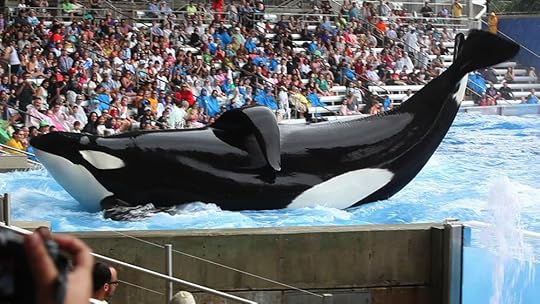
On February 24, 2010, Tilikum, the largest killer whale at SeaWorld, suddenly dragged Dawn Brancheau, his trainer, into the pool and killed her. Journalist Tim Zimmermann set out to find out why. His riveting account of Tilikum's life and the history of killer whale entertainment at marine parks dives into the world of the ocean's top predator. It chronicles Tilikum's capture and separation from his family and the physical and psychological stress he experienced in marine park pools over some thirty years. It explores Tilikum's involvement in two previous deaths. And it details the inherent risks of using captive killer whales for human entertainment. Ultimately, Zimmermann explains how the life of Tilikum came to mean the death of Dawn Brancheau.
Before the release of Gabriela Cowperthwaite's acclaimed documentary Blackfish and David Kirby's book Death at SeaWorld: Shamu and the Dark Side of Killer Whales in Captivity, journalist Tim Zimmermann penned an extensive article titled Killer in the Pool for Outside magazine. Each of these works centers around Tilikum, the largest orca held in captivity, who was responsible for the deaths of three people: two trainers and a trespasser.
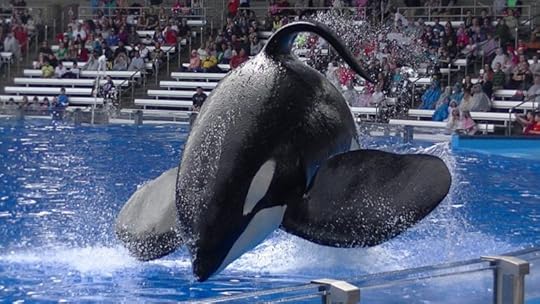
On February 24, 2010, a day at Seaworld Orlando, Florida, began like any other. Seaworld Orlando and its two sister parks, Seaworld San Diego and Seaworld San Antonio, are undoubtedly three of the most famous marine parks in the world. Similar to Disney World and Disneyland, nothing bad ever happened there. Those parks featured an abundance of tourist attractions and various animals that lived the best lives possible, spoiled and pampered beyond belief. In one of the parks, Seaworld Orlando, there lived an orca named Tilikum, which means "friend" in the Chinook Jargon of the Pacific Northwest. On that day, he was performing alongside renowned trainer Dawn Brancheau. Both Dawn and Tilikum, affectionately known as Tili, were doing their jobs well, and everything seemed to be going splendidly - until it wasn't.
That day, Tili decided to do something unexpected. Unbeknownst to the general public, he had already done this twice before, but this time it was far more brutal. His actions would forever change the American captive cetacean industry and reveal that all was not well at Seaworld. The illusion was shattered. The reality of their animals' lives was far from the glamorous image many believed; they were neither indulged nor treated with the care one might expect. This revelation highlighted the extreme measures that CEOs and executives would take to exploit animals, often putting their employees' safety at risk in the process.
Killer whales have never been known to attack a human in the wild, and everyone wanted to know one thing: Why did Dawn Brancheau die?
The title is a double entendre. "Killer in the pool" alludes to orcas, commonly known as killer whales, and highlights the fact that this particular whale is confined to a pool. It also highlights Tilikum's nature as a killer, both literally and metaphorically. But can we truly label him as such? Supporters of captivity continue to assert that Tilikum never intentionally harmed anyone, suggesting that his actions were simply a form of play. In contrast, opponents of captivity argue that he reached a breaking point and unleashed his aggression on those he believed had wronged him.
Scientists may argue that animals lack the capacity for pettiness or revenge, yet they clearly haven't encountered my cat. But I digress.
I will refer to these magnificent creatures as orcas rather than killer whales. While many argue that the term killer whale is derogatory and paints these animals in a negative light, I believe the term orcinus orca carries its own weight. It has a heavy metal vibe, as the genus name Orcinus in ancient Roman mythology translates to "of the kingdom of the dead," linking it to Orcus, the ruler of the underworld.
To give you a quick overview of orcas before diving into the book, it's fascinating to note that there are ten distinct ecotypes globally. Each of these ecotypes boasts its own specific diet, vocalizations, and behaviors. They vary so significantly that recent discussions have emerged about potentially classifying some as separate species. It's crucial to understand that these different ecotypes do not interbreed or interact in their natural habitats. This distinction is particularly important, especially considering that facilities like Seaworld have produced hybrids that don't exist in the wild. Orcas have a highly developed limbic system and possess the most gyrified brain of any species. They are extremely social, and most ecotypes stay with their mothers for life.
The tragedy of Tilikum
In the early years of the orca captivity industry, all captured orcas were taken from the waters of the Pacific Northwest, specifically Washington State and British Columbia. When orca captures were banned in the Pacific Northwest in the early 1970s, the industry shifted its focus to Iceland. In November 1983, two young male orcas and one female orca were captured in the cold, rough waters off the coast of Berufjördur.
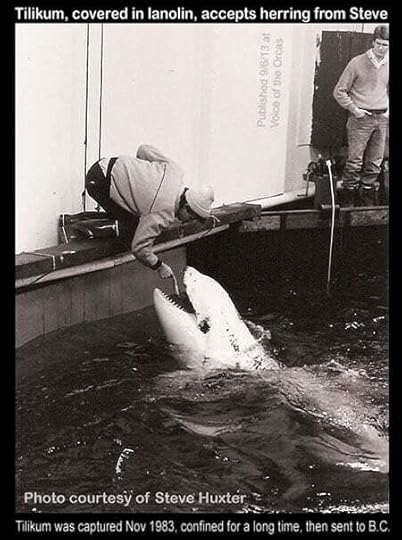
The youngest of the orcas, a two-year-old male, spent a year at the Hafnarfjörður Marine Zoo near Reykjavík. In late 1984, he was transported to Sealand of the Pacific, a marine park located near Victoria on Vancouver Island, British Columbia. Upon his arrival, he was given a new name: Tilikum.
As Zimmermann reports, the average survival time for orcas in Sealand's care was just under three and a half years. But Tilikum had bigger problems than that. His roommates were two Icelandic orcas named Haida and Nootka, who made his life difficult. Orcas live in matriarchal societies, and the older females, although smaller and weaker, constantly bit him and bullied him. The orcas were forced to perform eight times a day, seven days a week. Both Nootka and Tilikum suffered from stomach ulcers, requiring medication.
First incident
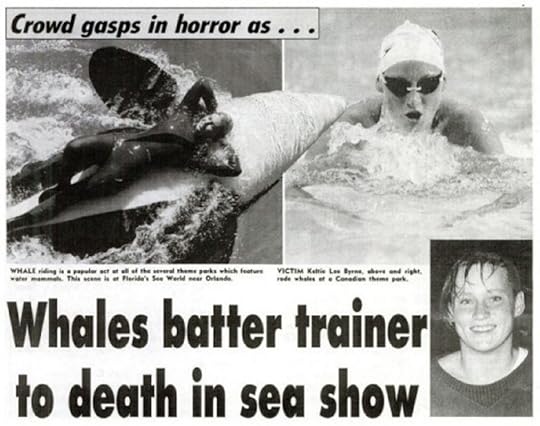
It was February 20, 1991, and Sealand had just completed its afternoon show. Keltie Byrne, a 20-year-old marine biology student and part-time trainer, was about to leave when she lost her footing and fell partially into the pool.
As she attempted to escape, one of the orcas grabbed her and pulled her underwater. Unlike the orcas at Seaworld, the orcas at Sealand were not accustomed to having trainers in the water and had not been desensitized to humans. Additionally, the Sealand orcas did not receive the enrichment that orcas at other marine parks typically enjoyed. As a result, when they caught Keltie, they became overstimulated and treated her as the focal point of a new, dangerous game that they controlled.
The other trainers tried to get Keltie to grab a life ring, but the orcas prevented her from doing so. Keltie managed to surface several times and screamed for help. After about 10 minutes, witnesses reported that she resurfaced again, but this time she was not moving. It took employees two hours to recover her body. When they finally retrieved her, she was completely naked, bruised, and sustained rakes from the orcas.
Sealand closed in 1992 and sold its orcas to Seaworld that same year.
“If you pen killer whales in a small steel tank, you are imposing an extreme level of sensory deprivation on them,” he says. “Humans who are subjected to those same conditions become mentally disturbed.”
Second incident
It's crucial to acknowledge that Tilikum was psychologically damaged long before he arrived at Seaworld. I have to give them some credit. Unlike most anti-captivity advocates, I don't consider Seaworld hell on earth. I am not against zoos and aquariums, as some do great work for conservation and education. I am opposed to marine parks and facilities that prioritize entertainment over education and force animals to perform tricks. What entertainment is there in watching bottlenose dolphins or orcas perform unnatural, choreographed routines while you sit there eating popcorn? Therefore, despite Seaworld's involvement in animal rescue and its positive contributions, I cannot support it. Additionally, while Seaworld has saved thousands of other species, it has never saved or rehabilitated an orca. Many visitors mistakenly think these orcas are in captivity due to an inability to survive in the wild; however, they were either purchased or born in Seaworld parks.
On a positive note, although I am against keeping orcas in captivity, Seaworld is certainly the best option available compared to how orcas are treated in other facilities. Seaworld has excellent veterinarians, provides high-quality fish for the orcas, maintains clean water, and has multiple tanks where orcas can be separated if necessary. While Tilikum was still a prisoner, his situation improved significantly compared to where he had been previously held.
Seaworld's vice president stated that the orcas were not to blame for the incident at Sealand, as they had not been properly trained. However, trainers at Seaworld were prohibited from entering the water with Tilikum, indicating that they recognized his potential danger yet chose to purchase him regardless. Why? They needed a breeder, and Tilikum turned out to be extremely valuable. He became the most prolific breeder in Seaworld's history, and his sperm was utilized for both natural breeding and artificial insemination. Tilikum's other specialty was splashing the crowd in the “splash zone” with his enormous flukes.
Over the decades that Seaworld has been open, there have been many incidents and injuries sustained by trainers that were not publicized because no one had died. Those trainers who dared to voice their concerns faced the threat of being removed from working with orcas or even being fired. I remember reading a statement years ago in which a trainer mentioned that the orcas could sense how long humans can hold their breath. If the orcas were angry and wanted to punish a trainer, they would keep them underwater until they were almost out of air, which gave me chills.
When Kasatka, an Icelandic female orca and the matriarch of Seaworld San Diego, nearly drowned her trainer, Ken Peters, the Occupational Safety and Health Administration (OSHA) intervened. They attempted to prevent trainers from entering the water with orcas, warning that it was only a matter of time before someone was seriously injured or killed. However, Seaworld contested OSHA's report and continued to allow trainers to interact with the orcas in the water.
He glanced through the viewing glass and saw Tilikum staring back, with what appeared to be two human feet hanging down his side. There was a nude body draped across Tilikum’s back.
On the early morning of July 6, 1999, a physical trainer arrived at Seaworld and was shocked to look through the viewing glass of the underwater viewing area of G Pool - SW Orlando's largest pool, where Tilikum was usually housed - and see Tilikum staring back at him with a naked human body draped across his back.
Daniel Dukes was the man in question, and it is believed that he either hid in the park after it closed or sneaked in after hours. As night fell, he put on his swim trunks, neatly stacked his clothes, and jumped into the pool. It is a mystery how he went unnoticed despite the extensive security at Seaworld, and how no one found him until the morning. It is also tragic that reports often refer to him as a man with mental health issues and a history of drug problems, treating his death as though it were less significant than the deaths of Keltie and Dawn. The reasons behind his actions remain unknown, but the consensus is that he wanted to swim with an orca. He had no way of knowing that G Pool was the worst place to make that choice, as Seaworld had always promoted its orcas as harmless, cuddly, and gentle creatures.
The death was attributed to drowning, but it remains unclear if Tilikum submerged him or if hypothermia was the cause. The man had numerous abrasions on his head and body, along with puncture wounds. Additionally, his testicles had been removed.
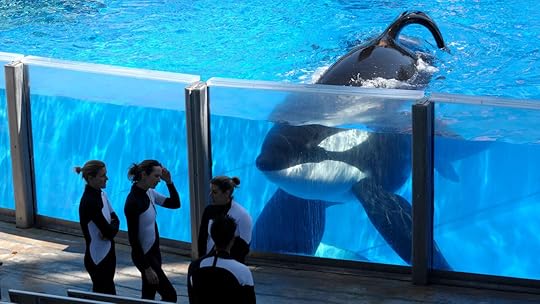
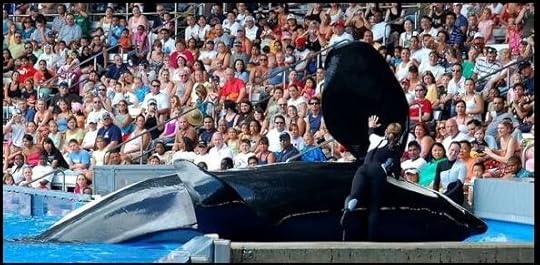
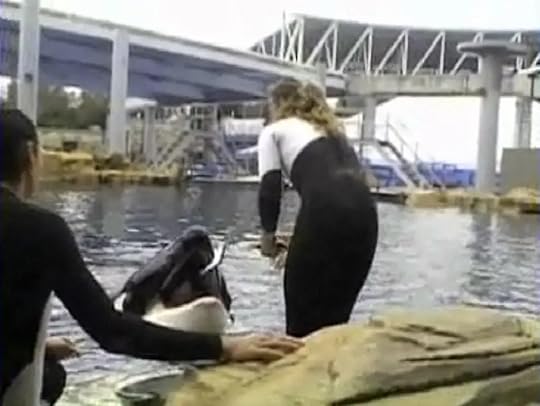
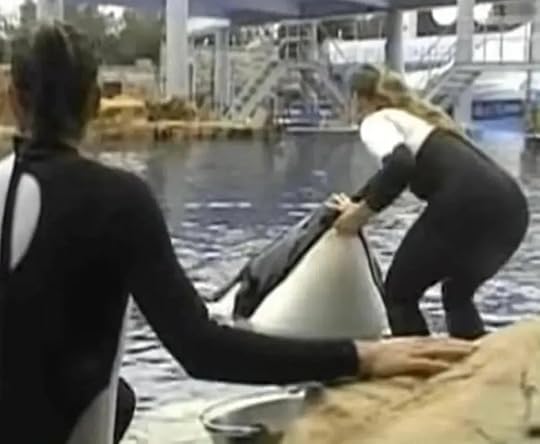
Dawn and Tilikum minutes before the attack
Third incident
I truly believe that they are smart enough to detect and know what they are doing. If they let you out, it’s because they decide to.
Nobody had a bad word to say about Dawn Brancheau. She was one of Seaworld's best trainers, volunteered at a local animal shelter, and throughout her life, she brought home dozens of different animal species in need. That's why what happened on February 24, 2010, was so shocking.
What I find most disturbing is how Seaworld subtly blamed Dawn for her tragic death. They claimed Tilikum had never shown aggression and that he was provoked by Dawn's long ponytail drifting into his mouth, even though witnesses stated he grabbed her by the arm. The ponytail remains a contentious topic, and it seems ridiculous because Tilikum had been in captivity for decades and was accustomed to women and their hair. All female trainers wore ponytails, and even if he did grab her ponytail, orcas are intelligent animals; they can distinguish between a toy and a human being. Are we really to believe that Tilikum thought Dawn's hair was a toy?
Tilikum grabbed Dawn from a shallow ledge, rammed her repeatedly in the water, severed her spinal cord, fractured her jaw, ribs, and vertebrae, nearly tore off her left arm, and scalped her. Tilikum had severely damaged teeth, with some missing completely due to his habit of chewing on metal bars. Imagine the damage he could have caused if his teeth had been intact.
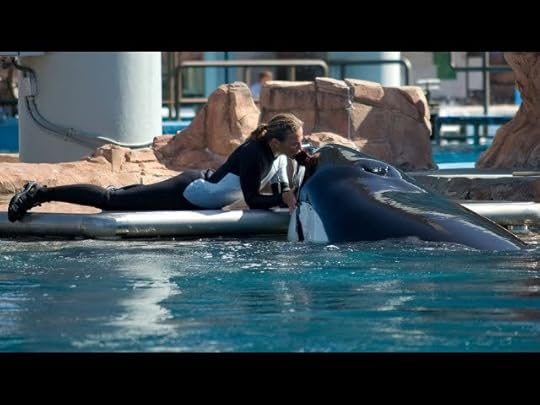
Dawn and Tilikum
Many changes have occurred since the publication of Killer in the Pool. The documentary Blackfish, which focused on Tilikum and the ethics of keeping orcas in captivity, ignited a massive public outcry that nearly devastated Seaworld. As a result, the company made the decision to stop breeding orcas and declared that this generation of orcas would be the last in their care.
North America has three orcas that were caught in the wild and are still alive. Corky, the last Northern Resident orca in captivity, resides in SW San Diego. She was captured in British Columbia in 1969 and is the oldest orca in captivity in the world. Ulises was captured in Iceland in 1980 and lives in SW San Diego. Katina, the matriarch of SW Orlando, was captured in Iceland in 1978.
Tilikum has fathered 21 calves (14 if we don’t count stillborns and miscarriages) – Kyuquot, Taku, Nyar, Unna, Sumar, Tekoa, Tuar, Nakai, Kohana, Ikaika, Skyla, Malia, Sakari, and Makaio. Seven of those offspring are still alive. He has three grandchildren - Trua, Nalani, and Adán.
Tilikum spent the last years of his life struggling with various health issues. He was already isolated from the female orcas, particularly Katina, the matriarch, who would rake him with her teeth, causing him to bleed. After Dawn's death, he continued performing and posing for pictures when he felt good; when he didn't, he brooded in the back pool. While activists reported that he was mostly alone, he often spent time with his grandson, Trua. Tilikum passed away on January 6, 2017, due to bacterial pneumonia at the age of 35. The people who captured him on that cold day in Berufjördur, Iceland, could not have foreseen that by taking him from his family, Keltie, Daniel, and Dawn would later also be taken from theirs.
Three thousand miles away, Balcomb often sees a pod of killer whales easing their way through the wilderness of water that is his Haro Strait backyard. They swim with purpose and coordination, huffing spumes of mist into the salty, spruce-scented air. The group is known as L Pod, and one, a big male designated L78, was born just a few years after Tilikum. Balcomb has been tracking L78 for more than two decades. He knows that his mother—born around 1960—and his brother are always close by. He knows that L78 ranges as far south as California with his pod, in search of salmon.
L78’s dorsal fin stands proud and straight as a knife, with none of Tilikum’s marine-park flop. He hunts when he’s hungry, mates with the females who offer themselves, and whistles to the extended family that is always nearby. He cares nothing for humans and is all but oblivious to their presence when they paddle out in kayaks to marvel as he swims. He knows nothing of the life of Tilikum or the artificial world humans have manufactured for him. But Tilikum, before 26 years in marine parks, once knew L78’s life, once knew what it was like to swim the ocean alongside his mother and family. And perhaps, just perhaps, that also helps explain why Dawn Brancheau died.
Reading this was so heartbreaking. I can't help but cry when I read the cruel ways humans treat/treated orcas. Why are we so selfish as a species? All we care about is ourselves and this essay just highlights that when it talks about our history with orcas, Tilikum the orca in particular.
Tim Zimmermann writes in quite an unbiased way. He didn't just focus on the bad but some of the good too. SeaWorld does do some good but the bad really outweighs the good. I really liked the way he wrote this, I read a few of his articles online after finishing this and if he has more content, I would gladly read it. I wish this was longer because it was really interesting.
I would recommend this, its essential reading for everyone.
~~~~~~~~~~~~~~~~~~~~~~~~
“There they were placed in a concrete holding tank about the size of a swimming pool and just 20 feet deep. The smaller male, who was about 2 years old and just shy of 11.5 feet, would remain there for almost a year, awaiting transfer to a marine park. In the wild, he had been used to swimming 50 or more miles a day, learning how to hunt from his mother, and playing with the other killer whales in his pod. In the pool, he could either cruise slowly in circles or lie still on the surface. He could hear no ocean sounds, only the mechanical rush of filtration equipment. Two other captured killer whales had died there – one from a heart attack, the other from pneumonia. Finally, in late 1984, the young orca was shipped to Sealand of the Pacific, a marine park just outside Victoria, on British Columbia’s Vancouver Island. He was given a name to go with his new life: Tilikum, which means “friend” in Chinookan.”
Fascinating essay about Tilikum, a captive orca involved in the deaths of three humans in three separate instances, each raising the same questions: Should we keep these wild animals in captivity, given the dangers to both the animals and ourselves?
I'm going to go with "no," and at the risk of sounding cold and heartless, I'm much more concerned about the orca's plight than the dangers to ourselves. These people knew what they were getting into. You can't be a professional killer-whale trainer and ignore the word "killer" in your job description. That doesn't mean it's not sad and tragic when a death occurs, it's just not entirely surprising.
Regardless, it would be interesting to know what causes these deaths and other non-fatal "incidences." Did Tilikum think he was playing? Surely if he wanted them dead the scenes would have been bloodier than they were, but on the other hand, these are incredibly intelligent creatures, so it's doubtful that he didn't know what he was doing. Good questions, but the answer seems pretty clear regardless of Tilikum's motive: you won't have to answer questions like that if you don't keep six-ton animals locked up in captivity.
Stolen from his family---Zimmerman describes how Tilikum's pod followed the crate that was dragging him to his new "home" for hundreds of miles, screaming and crying the whole way---locked in a tank hardly suitable for a salmon, and forced to do stupid tricks to entertain humans, Tilikumi's life isn't what it should have been. This should be required reading for anyone planning a heartwarming family trip to SeaWorld.
Which brings up one final point: I don't doubt that SeaWorld cares about its animals. I just don't think that even the best possible treatment in captivity can even come close to the quality of life these animals would have had had we humans not interfered.
This is a short but detailed essay about Tilikum (a marine park orca involved in three human deaths), and it's well worth the read. It explains the events that lead to the deaths as well as offers details on the circumstances that influenced Tilikum's behavior. It also includes some information on wild orca behavior and their habitats to illustrate the appalling conditions Tilikum's been in for over 20 years. It's a sad but interesting story.
This is a 52 page essay about Tillikum, the Sew World Orca that killed a trainer during a "dining with Shamu" at their Orlanda theme park. There is also a Netflix documentary about this same incident that is excellent,
This book made me terribly sad that these beautiful, intelligent animals were initially ripped from their families for entertainment purposes.
I will NEVER attend a Shamu or any other killer whale show nor will I step foot in a Sea World park.
Brief but powerful. Tries to present a fair and unbiased portrait of the situation surrounding the tragic death of Dawn. If you enjoy this and you're interested to learn more, check out Death at SeaWorld by David Kirby, or watch the new documentary Blackfish coming out this summer.
Firstly, I just want to say that this is a short article, not a full length book and can be found FREE online. I brought a Kindle copy of the book, just because I wanted easy access even when I don't have internet and I find Kindle best for highlighting and annotating. That said, on to the actual review...
I thought this was a good, eye-opening articles for people who don't necessarily know the effect of captivity on killer whales and I'm sure it packed a punch when it was first published after the death of Dawn Brancheau. It would work well as an introduction to the subject for someone who wants to know more, but there are much more informative books out there, like Death at SeaWorld and Beneath the Surface - both of which I've done reviews on. For someone who has read quite a bit on the subject, I found that this just repeated what I already knew and didn't really add much.
The only thing I didn't particularly like was the name of this article. Killer in the Pool just sounds so negative; yes, Tilikum has now killed three people, yet we started this "war", we took them from their homes, from their families and held them captive, forced them to perform for our own amusement. Who can blame them for wanting to hurt us? Especially when captivity has prematurely ended the lives of many whales... So I suppose Killer in the Pool could also be referring to the humans...
This is a great article to read if you have already seen blackfish and want more. Zimmerman has done his research and talked to people like Ken Balcomb and he's a well known whale expert. I still want to read more including Death at Seaworld.
Anyone interested in this short non-fiction piece would also likely be interested in the recently released Blackfish documentary which chronicles much of the plight of orcas in captivity, including SeaWorld. http://blackfishmovie.com/
As for this story I felt as though the author managed to stay unbiased, although I do not see how someone could read it and walk away feeling there is nothing wrong with having immensely intelligent beings such as orcas in captivity. Would YOU like to spend your life in a bathtub? I'm pretty sure people would go insane under these conditions and unfortunately it appears some of the whales snap too (such as Tilikum). I cannot blame Tilikum for the death of 3 people, he is the killer whale equivalent of "not guilty by reason of insanity".
Tilikum was taken from his family pod when he was just about 2 years old (essentially equivalent to human years). Orca family units are extremely close and loss of contact alone can cause a member to die. Tilikum was not only taken from his family but then placed in a concrete tank for nearly a year only to then be sent to another location where two female killer whales tormented him (also due to their own imbalances). Tilikum suffered from repeated stomach ulcers due to stress at this early stage and I doubt he has been free of physical manifestations of captivity since. So it comes as no surprise that within 30 years of captivity he has killed 3 people. Honestly, the total could be much higher.
The idea of keeping these amazing beings in captivity is so twisted I cannot really wrap my head around thinking it is acceptable. Zimmermann does a good job in summarizing the plight of killer whales and marine parks (mainly SeaWorld) since the 1960s. I would greatly recommend this piece to anyone considering supporting institutions with orcas. Please consider what your money supports!
"Captivity is always captivity, no matter how gentle the jailer." ~John Hargrove.
This essay is a pretty good summarized biography of Tilikum; a once wild orca swimming in the great oceans with his mother captured and forced to perform circus tricks in pools for three decades. It's truly sad how humans have ravaged the earth by destroying entire ecosystems, causing insane amounts of pollution and global warming, and massacring and caging up our fellow kin of the earth. Who are we humans to think we have priority over everything else on the planet? That we can throw our fellow earth inhabitants into cages and pools and pits like they don't have complex emotions, aren't sentient, don't have families? Then I think of how humans treat one another with racism, genocide, colonization, mass incarceration, solitary confinement, and then I'm really no longer surprised. It's upsetting how humans destroyed Tilikum's life by stripping him of his freedom and family, putting him in a shoebox of a pool, making him perform for our entertainment at the expense of his very existence, forcing him to endure unnatural stresses and hazards to his physical, mental, and emotional health, and then to blame him for being so frustrated with no outlet that he ends up killing three people. There has never been a single known incident in all of documented history of an orca killing a human in the wild. The only incidents have been in the last century of humans collecting orcas and holding them prisoner in amusement parks. Yet, the statistics of how many orcas have been killed off by humans both in marine parks and in the wild are never brought to that same conversation. It's truly heartbreaking to think that Tilikum knew freedom for only a blink of his life before he was forced to endure a highly shortened life of three decades of involuntary servitude and died in solitary confinement being treated as a monster when he was a victim of human selfishness. It is sad that three human lives were also lost because of an industry that should have never been created in the first place. This essay mentions a couple of the beneficial tidbits that were learned about orcas by them being in captivity(i.e. gestational periods), but those facts would never outweigh the great toll the marine parks have had on marine wildlife. I think back to the one time I went to a marine park as a child and got to touch a seal's flipper. Yes, it was exciting to be so close to what should have been wild dolphins, but never would I want those animals to be held as entertainment hostages just so I could see them up close for a few bucks. It's not natural, and I hope that one day the world will become disillusioned from the belief that having our kin of the earth captive and performing circus tricks is anything but horrendous and cruel.
This article is very sad, about Tilikum the orcas who was captured in the waters off of Iceland when he was about two years old - still a young child, in the orca world. He has been linked to three deaths, the latest in 2010. He is currently at Sea World Orlando.
I grew up going to Sea World in San Diego, and I know the intent of these parks is for education and conservation. My first inkling that maybe orca captivity wasn't ideal, was when I saw an orca with Dorsal Fin Collapse. Turns out, it only happens to orcas in captivity, or under duress, such as being hit by a boat or in contaminated water after an oil spill, as with the Exxon Valdez. Also, orcas in the wild seem to live much longer.
I don't think Tilikum is suited to be released into the wild. As one person said in the article, "Tilikum is psychotic." He wouldn't thrive in the open ocean. As he is in his early thirties now, and the second oldest male orca in captivity, it is likely he won't survive in captivity for very much longer.
At this time, SeaWorld makes a great deal of money from people coming to the park specifically to see the Shamu show. That money helps subsidize other conservation and education programs. Marine parks are now relying on captive-born orcas, and Tilikum has fathered many of them. Hopefully, SeaWorld will stop adding his contribution to the captive-born gene pool to prevent inbreeding.
The ideal scenario would be to have Tilikum in a large, enclosed ocean pool, where he could experience the freedom of the open ocean without the dangers. Unfortunately, that doesn't pay the fish bill, so there is no doubt SeaWorld will keep using him in shows until he dies.
This is a detailed essay that strives to be impartial whilst exploring the circumstances behind the death of SeaWorld trainer Dawn Brancheau by the largest orca in captivity, Tilikum. It explores Tili's dark past, including both previous murders and argues why this whale is responsible for three deaths, when there's not a single recorded case of wild orcas harming humans.
Ultimately, despite it's impartiality, the fact cannot be denied that forced captivity is largely to blame for Tilikum's repeated behaviours. There is a link between all three deaths, and that link is captivity.
This is an interesting essay that looks at the events leading up to and after Dawn's tragic death. You can't fail to feel that Tilikum is a victim, just like those he has killed, regardless of your views on captivity.
I feel for Tilikum; it does not seem as though life has been particularly fair to this poor creature. I appreciated the honesty and the story - it was interesting to read the different people's opinions and contributions to this short book.
1 star lost to poor grammar and lack of punctuation but the story shall stay with me for a while.
Though I have heard the story countless times, this was well written and in my opinion unbiased. Not one side either way. A story of a whale, a depiction of the life he lived; seen through a humans eyes.
After seeing the trailer for Blackfish, I did a bit of digging for more info and opinions on the subject before I see the film, and came across this article. As I am familiar with the concept of zoochosis (psychosis and mental imbalances in animals in captivity, ie apes flinging their excrement or parrots pulling out their own feathers, due to a lack of stimulation, poor living situations, etc) in primates and other land animals, I don't doubt that it happens in brilliant, higher thinking cetaceans.
I'm often suspicious of articles where I'm unfamiliar with the source or author, but Zimmerman keeps his bases covered and is an outstanding voice.
I just began David Kirby's Death at SeaWorld, and this article is a nice companion to that, or an excellent jump off point for anybody interested in the history of orcas in captivity, Tilikum, and the incident that occurred with Dawn Brancheau in February 2010. 4/5 stars.
I have used this title to describe what was pure greed. To steal baby orcas from their mothers and extended family is nothing but criminal. Man's ignorance of these animals has inevitably caused human deaths. To take the orcas from established pods which communicate between each other in the same language and dialect and then to put them with orcas from entirely different pods, different regions, different countries , to deny them their freedom is pure cruelty. This book gives an insight into the orca industry which, thankfully, may have its days numbered
A book that sheds light on the history of captive orcas and the billion dollar industry created by SeaWorld at their expense. The cruelty displayed with the "roundups" as wild orcas were ripped from family in the late 60s and 70s, to the current captive breeding program in place by SeaWorld, becomes obvious throughout the chapters. One day history will look back and rightfully label Ted Griffin and Don Goldsberry, the men who captured the first wild orca Shamu and began a subsequent "roundup" program, as truly evil men.
being that this book was only 30 pages, it was a short read. i personally did not gain much more knowledge from reading this book because it restated many of the facts that are in the documentary blackfish, however i believe that was the point. this book reads similar to the film, without the graphics of course. this is a must if you prefer to read information for yourself instead of having it given to you audibly.
This was presented and sold to me as being about crimes committed by Tilikum the killer whale, but it quickly proved to be about the crimes committed against him. The nature and severity of those crimes are still pretty much unknown to his tormentors, and even knowing that they were happening changed nothing in Tilikum's life. The moral of this story is that humans are disgusting.
I'm not being a smart arse, but if Tilikum was left alone with his family that lady he killed (Dawn) would be alive and with hers.
This is a great short essay about one of my secret passions....justice for Tilikum. Dawn AND Tilikum were both victims to our human desire to capture and cage animals that shouldn't be captured and caged.
A quick but must read before anyone visits any Marine Parks such as SeaWorld, even better combined with 'Death at SeaWorld' and the documentary Blackfish.
Well written article on the perils of captive orcas and the trauma they suffer from being penned in these relatively tiny cages. It's a heartbreaking story for both the victims and the killer whale.
The seaworld tale of Tili and others like him is such an awful tale, this of course showed that and it was sad, terrifying and everything you'd expect. Did I learn anything new from reading it now, no, if anyone else is wants to read about it I'd recommend John Hargroves Beneath the Surface for a much more in depth read.
I guess I thought this quick read was just ok. Maybe because I have read quite a few other books on the same subject, this short one was just repeating the same facts. Maybe better if you know less on Tili and the others at Seaworld.
This story is heartbreaking, why can't we find a way to offer sea animals refuge like we do with big cats? It is certain that Tilikum would never be able to be a wild orca like he was meant to be but they must be ways to offer them a life that is not a concrete aquarium. These beautiful creatures deserve better than to be seen as enjoyment, SeaWorld does not conserve the ocean and its habitants what they do is animal cruelty.
Tim Zimmermann wrote this essay perfectly, the last sentence of his article broke a part of my heart; "L78' dorsal fin stands proud and straight as a knife, with none of Tilikum's marine-park flop. He is living the life Tilikum was meant to live, the life Tilikum was denied."