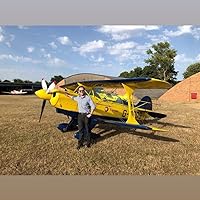
This man was clearly a brave, unusual, intelligent, charismatic, and an extremely good looking man who was not the faithful type but also not proud of that. He is also a fantastic writer.
His descriptions of flying in WW1, of Peking in the early 1920s are utterly superb. He only hints at his love life, but how utterly poetically! He barely mentions his mother, but somehow touches the core of her love for him. His prose is at times splendidly poetic and at others brilliantly lucid and concise.
Poignant parting of mother from her son embarking on his career as WW1 pilot. Cecil Lewis, Sagittarius Rising
'My mother came down to say good-bye. She behaved as all good mothers should, gave me a cigarette-case, talked of every thing except the Front, adjured me to write regularly, said she was not going to worry as I was quite certain to come through all right, and said good-bye at the station without breaking down. Seventeen is not a grateful age. So much is taken for granted. The parent's care and solicitude become a burden to be cast off. So I record with some remorse how little that parting meant. I was full of the new life, and utterly failed to grasp the blank my going would leave, the daily searching through the long casualty lists, the daily listening for the knock which might mean a word, a line, some message, however meagre, from "somewhere in France". I was rather relieved to have her gone, for I dreaded a scene. I was as certain as she that I should come through all right, and that being so, why get emotional over a temporary separation? But, all the same, the truth was that the average length of a pilot's life at that time was three weeks. I was hopelessly inequipped and inexperienced. Later, no pilot was allowed to cross the lines before he had done sixty hours' flying - I had done thirteen. There was every excuse for a last fare well; but, mercifully, we did not know it. It is only now I can look back, judge of the hazards, and get a vague idea of the miracle that passed me through those years unscathed. She had made me have my photograph taken, too, and I hated it! The only one I cared about showed the "Wings" prominently; but, of course, she liked another, in profile, where they did not show at all - liked the expression, she said. Sentimental, mothers were; but she was proud too. I was not to know that photo was to stand on her desk if "anything happened," for her to say, "This was my son!" and try to find something to justify a belief in the worthiness of my death when, in her heart, she knew that the world could never be richer or nobler for butchering a million of its sons.
She was gone, leaving me for my last evening to the care of Eleanor. It was to be a champagne dinner, her new frock, a box at the theatre, and, after, I was to take her home. She was the loveliest girl in the neighbourhood, very much sought after, with a full engagement book, a large heart, and a big sofa before the fire. Smile at this innocent parting if you please. I confess to a sigh of regret, not at a lost opportunity, but at something inevitably lost, something which, to me, seems precious - the idealism, the directness, the simplicity of youth.'
Towards the end of the book, just as World War 1 ends, Cecil Lewis writes:- 'the end of the war left me with no feeling of flatness; indeed, the change was a stimulus. Other men might shake their heads, having pre-war days to remember. I was not going back to things previously known. Everything was shining new. Besides, although the war was over, the attitude to life it had provoked continued. It was a sort of hang-over. Everyday existence was like those snatched weeks of leave from the front; incredibly hectic, gay, and careless. No doubt the general feeling of immense relief was bound to vent itself thus in an orgy of exuberance and irresponsibility. An era of false prosperity set in. Nobody stopped to examine the real situation. A million men had been killed; billions of pounds had been blown away. The waste had been terrific. The world must be poorer; but nobody would face it. Had we pulled in our belts and disciplined ourselves for four years to proceed with caution and circumspection now, when we were victors? At Versailles, those few who prophesied disaster were never heard. Who could hear such a whisper in the tumult? Hang the Kaiser! Make Germany pay! Take away her colonies, split up her empire! Rearrange Europe and give each of the victors a share of the spoils! These were so many strokes of the pen. And if some economist advised moderation, pointed out the absurdity of making a state bankrupt with one hand and demanding it should pay in full with the other, he was swept aside. The public wouldn't stand it, was the answer. And that, indeed, was true. It is easy to be wise after the event and condemn those who drew up that Treaty, but, at the time, it is difficult to see what else they could have done. The world had no experience of treaties on such a scale to go on, so its statesmen did the obvious and popular thing. It was too much to expect jaded and middle-aged politicians to realize that the whole economic structure of the world had changed overnight.
If believing in good times could bring them, the post-war years should have been the most prosperous the world had ever known. The spirit of those days was, in fact, as I remember it, immensely liberal. Everything was to be rebuilt on a bigger and better scale. Of course, it might not pay at once; but, later, things would improve. It was not until ten years after, when the looked-for prosperity had not materialized and this delusion had almost wrecked the world, that we suddenly pulled up all standing and found ourselves bankrupt. To-day, whether there is a way out is still in question. Probably the next, now rapidly preparing, cataclysm may provide an emotional solution to a problem insoluble intellectually.'
This book was published in 1936, and clearly Cecil Lewis was aware that WW2 was to happen.