Jump to ratings and reviews
Rate this book

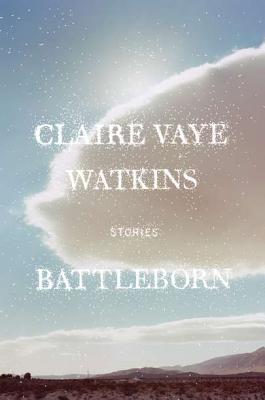
Battleborn

Rate this book
Winner of the 2012 Story Prize
Recipient of the 2012 American Academy of Arts and Letters Rosenthal Foundation Award
A National Book Foundation "5 Under 35" fiction writer of 2012


Like the work of Cormac McCarthy, Denis Johnson, Richard Ford, and Annie Proulx, Battleborn represents a near-perfect confluence of sensibility and setting, and the introduction of an exceptionally powerful and original literary voice. In each of these ten unforgettable stories, Claire Vaye Watkins writes her way fearlessly into the mythology of the American West, utterly reimagining it. Her characters orbit around the region's vast spaces, winning redemption despite - and often because of - the hardship and violence they endure. The arrival of a foreigner transforms the exchange of eroticism and emotion at a prostitution ranch. A prospecting hermit discovers the limits of his rugged individualism when he tries to rescue an abused teenager. Decades after she led her best friend into a degrading encounter in a Vegas hotel room, a woman feels the aftershock. Most bravely of all, Watkins takes on – and reinvents – her own troubled legacy in a story that emerges from the mayhem and destruction of Helter Skelter. Arcing from the sweeping and sublime to the minute and personal, from Gold Rush to ghost town to desert to brothel, the collection echoes not only in its title but also in its fierce, undefeated spirit the motto of her home state. 

304 pages, Hardcover

First published August 2, 2012

221 people are currently reading
11409 people want to read

About the author

Claire Vaye Watkins

17 books654 followers
Claire Vaye Watkins was born in Bishop, California in 1984. She was raised in the Mojave Desert, first in Tecopa, California and then across the state line in Pahrump, Nevada. A graduate of the University of Nevada Reno, Claire earned her MFA from the Ohio State University, where she was a Presidential Fellow. Her stories and essays have appeared in Granta, One Story, The Paris Review, Ploughshares, Glimmer Train, Best of the West 2011, New Stories from the Southwest 2013, the New York Times and elsewhere. Claire has received fellowships from the Writers’ Conferences at Sewanee and Bread Loaf.

Her collection of short stories, Battleborn (Riverhead Books), won the Story Prize, the Dylan Thomas Prize, the New York Public Library Young Lions Fiction Award, the Rosenthal Family Foundation Award from the American Academy of Arts and Letters, and a Silver Pen Award from the Nevada Writers Hall of Fame. A finalist for the Frank O’Connor International Short Story Award and the PEN/Robert W. Bingham Prize, Battleborn was named a best book of 2012 by the San Francisco Chronicle, Boston Globe, Time Out New York, Flavorwire, and NPR.org. In 2012, Claire was selected as one of the National Book Foundation’s “5 Under 35.”

Currently a visiting assistant professor at Princeton University, Claire is also the co-director, with Derek Palacio, of the Mojave School, a free creative writing workshop for teenagers in rural Nevada.

Ratings & Reviews

What do you think?
Rate this book

Friends & Following

Create a free account to discover what your friends think of this book!

Community Reviews

5 stars
2,126 (38%)
4 stars
2,174 (39%)
3 stars
878 (16%)
2 stars
214 (3%)
1 star
63 (1%)
Displaying 1 - 30 of 765 reviews
Profile Image for karen.
4,012 reviews172k followers
September 10, 2018
these stories are about encounters. people trying to make connections with other people. some are emotional, some protective, some sexual, some cross-cultural, some just a hand reaching out into the void. and most of them are very good.

the first couple of stories didn't do anything for me, which was a shame, because i really wanted and expected to like the manson one. but it just felt a little writer's workshoppy to me. but after the uneven first two, i pretty much loved every story that followed.

they still have some writerly quirks: future simple tense, having the protagonist referred to as "our girl," but when what follows are perfect observations like these:

Our girl likes the way the four of them form a slowly closing semicircle around her and her friend. She likes, too, how they all look the same, in their baggy jeans and pastel collared shirts. They are dressed as most boys their age or slightly older dress, as though their tops and bottoms were mismatched pieces from two separate puzzles, one marked boy and the other man.

it's hard for me to quibble.

and these stories are just drenched in loneliness, which is something i am always drawn to, when it is done in that quiet, resigned steadfast way, without bitterness:

His cigarettes helped mark the passage of time, especially on days that seemed all sun and sky, when he scolded poor Milo just to hear the sound of his own voice. The dependable dwindling of his cigarette supply reassured him that he hadn't been left out here, that eventually he would have to ride into town and things would still be there, that the world hadn't stopped whirling.

that is perfection on wheels.

i said before that the collection was about people trying to make connections, but that's not entirely accurate. more than that, it is about people accepting connections as they come, and then just enduring the memory of those connections in their absence. which is not the same thing at all.

it's better.

most of these stories take place in nevada, and have that kind of patina that the western novel has, in terms of characterization. all the things i mentioned, the quiet resignation, the vast sweeping landscapes swallowing up the individual spirit, but it never sinks into hopelessness, it is more like dogged perseverance. and that's kind of my bread and butter.

so i will definitely read more from her, and would especially love to see what kind of novel she has in her, because although i have come a long way in my appreciation of the short story, i still prefer hunkering down with something that lasts.

come to my blog!
Profile Image for Guille.
1,004 reviews3,271 followers
January 23, 2025

Maravillosa colección de relatos de estilos tan diferentes que bien pudiera pasar por una antología de diez autores premiados en un prestigioso concurso anual cuyo tema fuera la soledad y el desamparo en Nevada.

Su título original es Battleborn, un término que aparece en la bandera del estado estadounidense y que hace referencia a su nacimiento en plena Guerra Civil, y de la misma forma que se apunta al pasado del estado en el título, también es la dura carga del pasado el eje sobre el que giran muchos de estos relatos, empezando por el primero, «Fantasmas, cowboys».
“… todo lo que pueda decir sobre lo que significa perder, lo que significa vivir sin, la incómoda carga del pasado ya lo sabéis"

«Fantasmas, cowboys» es el más famoso de los diez relatos, y lo es por una razón que me fastidiaba un poco encontrar en todas y cada una de las reseñas que sobre el libro leía, muchas veces como el dato central y más extenso de ellas. La razón es que Watkins habla en él de su padre, la mano derecha de Charles Manson. Después he pensado que si ello sirve para despertar el interés por la obra, y dado que al parecer la figura de su padre fue quién la empujó a escribir, pues bienvenido sea el apunte. Pero no es de su padre de quién trata el relato, sino del peso que ese pasado tuvo para varias personas, incluida la autora. Entre esas personas está también la madre, que murió solo dos meses antes de que Watkins empezara el libro, y las madres serán un tema central en varios de sus cuentos.

La violencia es también un elemento importantísimo, especialmente la que se ejerce sobre las mujeres. Hay también desamor, pérdida y soledad, una soledad, o el sentimiento de una ausencia, que puede llegar a ocupar todo el espacio impidiendo que entre nada ni nadie.
“No existía ningún bálsamo para el espacio que él dejó. De haber existido –si la ciencia hubiese desarrollado un ungüento para la pena del alma o una pastilla para el mal de amores–, no lo habría usado. Yo quería que doliera. Yo quería una angustia catastrófica” (El inicio de mi relato preferido: «La archivista»)

Hay personajes que se dejan llevar por el dolor o que aceptan un destino que saben vejatorio; los hay que de forma imprevista atisban una oportunidad y son rápidamente derrotados o que son incapaces de estar a la altura de lo que de ellos se espera; personajes que no se dejan sacar del hoyo o que eligen siempre la peor opción. Y, por supuesto, está el personaje presente en todos ellos, Nevada, un territorio con el que los personajes, e imagino que la propia autora, mantienen una relación difícil entre el cariño, quizás añoranza, y el rechazo de unos espacios donde nunca llegaron a encontrar su lugar.


P.S. No me puedo resistir a traer aquí las declaraciones que la autora ha hecho recientemente acerca del libro:
“Escribí Battleborn para los hombres blancos, para ellos. Si se analiza el libro desde cierta perspectiva, se lo verá como un ejercicio de autodesprecio, un producto de la locura de la clase trabajadora, la corriente femenina”.

En una fantástica entrevista que le hizo Kiko Amat, nos dice:
“Me siento hacia ese libro como me siento respecto al tatuaje que me hice sobre la misma época. Lo veo y entiendo quién era yo entonces, pero no es quién soy ahora (me alegra haber dejado atrás ambas cosas, tatuaje y libro)… Hay dos tipos de historias en Nevada: viejo encuentra algo en el desierto o chica joven con trauma materno viaja en moto por Nevada. Si tengo que serte sincera, escribí las partes del viejo para justificar las partes de la chica joven, porque no quería ser considerada una escritora “para mujeres”.
No puedo decir nada sobre los sentimientos que alberga la autora acerca de su obra ni de los motivos que, confiesa, la llevaron a escribirla, pero no creo que ser hombre blanco sea la razón por la que me han gustado tanto sus relatos e ignoro si este estado, inevitable, es el que hace que no pueda ver en ellos ese “ejercicio de autodesprecio” al que alude la autora.
Profile Image for Roxane.
Author 130 books168k followers
July 13, 2012
Battleborn is by far one of the best short story collections I've ever read. Each story took my breath away with the strength of the prose and the momentum of each story, often quiet but building and building. Several of the stories made me cry by the end because they were so beautiful and so powerful and I was in such awe. I will say more in an actual review somewhere but this is outstanding. Also, there's a real diversity of narrative techniques at work here. From a craft perspective there is a great deal to admire. There is an epistolary story, a historical novella, a story about two teenage girls who have a troubling encounter with some men in a Vegas hotel room, a story about a couple where the wife is always disappointing her husband and knows it and has to live with it, and then there are the stories about motherless sisters holding on to each other as best they can, stories so tender and evocative they feel both strong and fragile at the same time. Each story in Battleborn is better than the one it follows which is, considering the excellence of each story, quite a feat.
Profile Image for Melki.
7,279 reviews2,606 followers
January 22, 2016
Quite frankly, I did not like a lot of these stories. They were filled with young, obnoxious characters that I wanted to slap; characters who always seemed to have money, though they never seemed to work, who didn't appreciate the good things they had and who made stupid, stupid choices. Looking at the author's photo, I reasoned, eh, she's young. She'll get better. Her writing, after all, is solid and nuanced. She throws off great lines like The mind is a mine. So often we revisit its winding, unsound caverns when we ought to stay out.

That line was from The Diggings, the one story that left me gobsmacked. A gold rush tale, so wrought with emotion and so packed with powerful imagery, I'll never forget it. At 60 pages, this one was almost twice as long as any other tale in the book. This makes me think that Watkins really shines in a longer format, and makes me all the more drooly with anticipation for her new novel, Gold Fame Citrus.
Profile Image for Hanneke.
394 reviews486 followers
August 6, 2018
Ten powerful stories by a tough lady. Once you know whom Claire Vaye Watkins’ father was, it is impossible to forget that fact and you’re not surprised that she tells stories that are consistently tough and hard. She moves through time, such as the story of the two unlucky golddiggers, but also tells tales which, I would imagine, are close to her own life and past and that of her family and friends. Most stories are set in Nevada in and around Reno, such as the heartbreaking story of the Italian kid visiting a girlie ranch. The stories are mainly about loss and how one reacts to it. I loved them!
Profile Image for Banu Yıldıran Genç.
Author 2 books1,416 followers
February 22, 2021
sanırım yüz kitap'ın en sevdiğim kitaplarından biri oldu. gerçi hepsini çok seviyorum da işte :)

coğrafya edebiyata nasıl etki eder, mekanlar, tarih öyküye nasıl yedirilir? sorularının ders niteliğindeki cevapları bu öyküler. en son yine yüz kitap'tan "kışın ilk günü"nü okuduğumda böyle hissetmiştim. nevada adını sadece çöl olarak bildiğim bir yerken şu an reno kasabasını (şehir mi yoksa, amerikan sistemi pek karışık), kuruluşunu filan biliyorum. bazı öykülerde ağzım çıtır çıtır kum doldu sanki... öyle bir anlatım.

ilk öykü yazarın o çok garip hayat hikayesiyle sanki tam bir açılış öyküsü, tüm öykülerdeki o garip yalnızlık, o sevgiye açlık, intihar edenler, etmemeye çalışanlar, kayıplarla baş edemeyenler bayağı sarsıyor. öyküler uzun ve okuduktan sonra ara vermek gerekiyor.

kazı yerleri öyküsünü yazabilmek için yazar ne kadar çalıştı, bilmek isterdim. çünkü neredeyse bir roman gibi ve altın arayanların hikayesi aletleri, şiddeti, tarihiyle daha ne kadar gerçekçi anlatılabilirdi bilmiyorum.

* Kitap hakkında Agos Kirk'e yazdığım yazı blog'da
https://tembelveyazar.blogspot.com/20...
Profile Image for Jeanette (Ms. Feisty).
2,179 reviews2,184 followers
November 5, 2012
This author shows some definite promise, provided she can manage to sort out her verb-tense schizophrenia. She doesn't shy away from dicey material. In the first few stories, she revels in the strange and the forbidden, with stories about abortion, incest, a gay male madam at a Nevada brothel, and kids who ran with Charlie Manson. The last few stories are a bit more commonplace, but still edgy, because edginess is the petri dish from which her stories evolve.

Most of these stories are set in Watkins's home state of Nevada. I spent my formative years on the North Shore of Lake Tahoe, on the California side, but very close to the border with Nevada. I have some familiarity with the geography and "vibe" of Nevada, which Watkins captures perfectly. Her stories grow from that boredom and restlessness and just general weirdness of life in a barren landscape, where there's so little to do but stir up mischief and go a little crazy.

Two complaints. First, wandering verb tense makes me tense. Second, I felt cheated by the way some of the stories ended. Short stories are often like outtakes from a full-length film. It takes some real skill to leave the reader satisfied while ending a story in media res. Watkins has yet to master that skill, but she certainly has the potential to do so.
Profile Image for Peter Derk.
Author 32 books403 followers
April 22, 2014
Someone just asked me "How did you learn to read poetry?"

It's a great question. It really is. Because I didn't know the answer, but at the same time there's a skill to pick up somewhere.

By that same token, I have to wonder if people struggle with short stories because they don't know how to read them. The poetry is a question I have to think over, but for the short stories I have an idea.

Short stories are the serial monogamy of reading.

For those who aren't familiar with that term and just don't feel like working it out, serial monogamy is the idea of dating someone exclusively, dating people one at a time, then moving on to someone else without crossover or any of this dating around business. It's like serial killing. You kill someone, then you move on. You kill one person at a time, not a bunch of people all at once.

I wish I'd come up with a better comparison than serial killing. It can be hard on the heart, but serial monogamy isn't a death penalty crime just yet.

To enjoy short stories, it helps to be a serial monogamist. A short story might hurt your feelings. It might leave way before you're ready. Even still, you have to be able to read as if, just maybe, this time the story will last. It'll be the short story that turns into the novel that turns into your favorite book you read over and over. You have to learn enough about yourself to say that it's okay to be in love more than once. Maybe more than once in a single day. And just because you've been in love before doesn't mean your new love doesn't mean as much.

The good thing about being a serial monogamist is that you get to date more than one really great person. You get to know them and the best things about them. You don't waste a lot of time on people you don't really like because you're kind of looking for something more than a person you can tolerate long enough to figure out why you REALLY hate them. There are a lot of good things about serial monogamy.

The bad thing, the really bad parts, are the parts where the relationships end. Those are hard. They're hard because you're involved and the people mean something to you. It's more than a fling, but somehow it's not all as epic as a dissolving marriage. There's no lawyers to see or houses to divvy.

The good thing about the short story version is that the short story doesn't have feelings. It's a break up at the last word, and it's okay for that breakup to be all about you, the reader. How sad you are to see this story go. How hurt you are it ended the way it did.

The other bad thing, the other worst part, is being strong enough to pick up the next story and read it like you didn't just have your heart broken.

If you have struggles with short stories, try thinking like a serial monogamist. Let yourself fall for characters even when you know they won't stick around. It might be the only chance you've got of falling for the right one.
Profile Image for Cynthia.
633 reviews42 followers
August 27, 2012
Quiet battle

I read Watkins’s stories compulsively. I couldn’t stop or look away though I often wanted to. With Watkins longing is a constant state of being. She writes with starkness that’s reflected in the desert settings. Sometimes her stories are set in the old west and sometimes the west of last week. There’s quietness to them. Hatred, lust, and desperation swirl under the surface and only erupt intermittently. Even in the seemingly sweetest of settings and situations sudden violence or even death is stalking, threatening to explode. Her characters are perpetually off balance while they strive for wholeness and beauty. The odd thing is they seem to achieve it if only despite the ugliness surrounding them or maybe because of that ugliness. It can be hard to survive in the desert but if you look in the right place and with the right frame of mind you’ll see you’re surrounded by beauty and sometimes truth. This is how women go to war when they have no other choice. This is how Cormac Mcarthy might write if he were a woman.

This review is based on an e-galley provided by the publisher.
Profile Image for William2.
859 reviews4,045 followers
February 12, 2024
The first story, "Ghosts, Cowboys," is excellent. Watkins's father was a member of the Charles Manson gang -- it is said he was one of Manson's top procurers of girls -- and he testified against Manson at the trial. Now here's his daughter writing a terrific story about the whole affair.

The second story, "The Last Thing We Need," is also exquisite. A Nevada farmer finds some detritus by the side of the road that connects in an odd way with a significant event earlier in his life. As he looks through the items -- photos of a '66 Chevelle, a packet of letters signed M, and two prescriptions for antidepressents-- he writes letters to the address on the Rx bottles to one Duane Moser and begins to piece his life back together. The writing is beautifully spare and moving.

"The Past Perfect, The Past Continuous" is as consistently good as the others. Watkins was about 24 when she wrote this story. It displays mastery of tone, structure, detail, etc. This one's about a young man, an Italian, a tourist, who after losing his friend to the desert heat, visits a cheesy brothel outside of Las Vegas.

BTW, Watkins's second novel — I Love You But I've Chosen Darkness — is a knockout. Please read it.
Profile Image for Connie  G.
2,143 reviews708 followers
July 21, 2015
"Battleborn", a debut collection of short stories, gets its title from the nickname for Nevada which was given statehood during the Civil War. Claire Vaye Watkins wrote the short stories soon after she started graduate school in Ohio, feeling homesick for her home state of Nevada and grieving for her recently deceased mother.

Watkins gets her family history out front in the first story, "Ghosts, Cowboys", which is mostly historical with a bit of fiction. Her father, Paul Watkins, was Charles Manson's associate and lured high school girls to the ranch for Manson. Her father was not involved in any of the killings (Tate/La Bianca) and later testified for the prosecution. Paul Watkins died when the author was six, and her mother remarried.

Watkins grew up in a small desert community an hour west of Las Vegas. The desert figures into several of the stories. In "The Past Perfect, the Past Continues, the Simple Past", an Italian youth spends his time drinking with a prostitute at a brothel/peacock farm while authorities search for his best friend who is wandering lost in the desert without water. "The Digging", set in 1849 during the gold rush, also has some tense desert moments, as well as frigid times in the mountains. It shows one man driven to madness due to emotional disappointments and a lack of luck panning for gold.

In "Rondine al Nido" a woman remembers leading her inexperienced friend to a degrading, traumatizing sexual encounter in Las Vegas. In "The Archivist" a heartbroken woman saves the things her ex-boyfriend left behind to create the Museum of Love Lost. "Man of War" shows an older lonely man who rescues an unconscious pregnant Mexican teenager. "The Last Thing We Need" involves a man whose traumatic memories are stirred up when he finds pictures of a '66 Chevy Chevelle left at the site of an auto accident.

The ten short stories have a strong sense of place--the arid desert, a muddy lake bed, an apartment in Reno, a brothel, and the glitzy casinos. Many of the characters are lonely or troubled, but there are also flashes of dry humor that lighten the stories. Claire Vaye Watkins has written a strong set of short stories set in the West.
Profile Image for Bob Brinkmeyer.
Author 8 books83 followers
May 16, 2020
This is a fine collection of stories about life in the West, most of the stories set in contemporary times, though there is a superb novella, "The Diggings," that takes place during the Gold Rush. Watkins' scrappy, hard-nosed vision cuts against the hopeful cultural mythology that has for so long shaped America's predominant conception of the West (when you're unhappy, you can pack up and head west, leaving all your troubles--and responsibilities--behind). This dream of the West is largely absent in Battleborn, except in "The Diggings," where the narrator ultimately comes to see the dream's emptiness, concluding after long travail that "California was an Ophir, not an Eden." Even while concluding this, the narrator nonetheless acknowledges wistfully that in looking back there was something heroic and thrilling in his and his brother's quest for gold, as it gave their lives, at least for a while, purpose and meaning. They were in a sense, as he says, Argonauts, even if ultimately failed ones.

The dreams of Watkins' contemporary characters are similar but smaller in scale; these characters, rather than following the overarching American Dream of the West, are merely trying to bring some meaning and a sense of wonder into their largely forlorn lives. Their efforts are mostly doomed if not downright self-destructive, ushering in at best only momentary joy. Most come to see that in their deliberate attempts at happiness--hitting the road, going out drinking, etc.--they are merely pretending, hoping that pretense will lead to something real. It doesn't, at least not in any grand way. "These are the funny, empty things we do," concludes one character, "so we can be the kind of funny, empty people who do them." Another character, slightly more hopeful, finds momentary joy during a largely disheartening road trip with friends: "We drink and watch the sun dissolve into the Sierras, and for a small sparkling moment, we are who we once were." That's about as good as it gets for Watkins' characters.

Admirers of Richard Ford's Rock Springs will find lots to like here, as there is a shared vision of the hardscrabble West in which lots of people are down-and-out rather than up-and-coming.
Profile Image for Richard Thomas.
Author 102 books706 followers
December 31, 2012
THIS REVIEW WAS ORIGINALLY PUBLISHED AT THE NERVOUS BREAKDOWN.

There is something equally freeing and unsettling about the wide-open desert—the horizon stretching out forever is both unattainable and inspiring. In Battleborn, a collection of stories by Claire Vaye Watkins, we get to explore all aspects of Nevada, from the sad allure of a brothel to nights out in Vegas that can only lead to trouble, told in an honest and yet lyrical voice. We bear witness to those moments in time beyond which there is no return. And what comes after this tipping point—that is our salvation.

Of course the themes and ideas in this book are not limited to the American West. The concept of a parent making a mistake that can change things forever—that’s a universal fear. Turn away for a second, and your child can wander out into the street, can open a screen door and simply disappear. In “The Last Thing We Need” we get to see this very moment spill out onto the page, and whether or not the father in this story meant to educate his daughter by engaging her in a moment of wanderlust, that unsettling wash of anxiety is powerful.

“When I awoke this morning there was no snow on the ground and Layla was gone. She’d left no tracks. I pulled on my boots and walked around the camp. A layer of white covered the hills and the valley of skeletons of the old buildings, lighting the valley fluorescent. It was blinding. I called my daughter’s name. I listened, pressing the sole of my shoe against the blackened rocks lining the fire pit. I watched the show go watery within my boot. There was no answer.”

Such an uneasy feeling, when you betray the trust of the innocent, when for one moment you fail not only as the parent, but also as teacher, prophet and warrior

And what about an innocent night out—two girls sick of working a crappy job, covered in fast food grease, just looking for a little distraction, a little fun in the city? Off to Las Vegas, committed to a good time, willing it to happen, even when their instincts start to kick in and the night feels off, destined for abuse. These choices will scar us forever. Take this moment from “Rondine al Nido” set in a hotel room where we all knew things were going to go wrong, and yet, we watch anyway:

“Lena. She passed out on the other bed. I thought maybe she was faking. I don’t know why. During the movie the big one got on top of her. Brad. He took off her clothes. Her eyes were shut but she was mumbling something. I don’t know what. The other one spread her out, kind of. The big one spit into his hand. I remember that. I was on the other bed, with mine.”

Past the point of no return, there can only be the echo of what happened, becoming more faint as the wind pulls the sobbing and whimpering, out across the desert. These last observations by our protagonist in the story address the horror of September 11, an announcement at school that will change us all. And at the same time, these thoughts reflect back on that one night in Las Vegas, and our need to take chances, to feel alive, and to suffer the consequences of our actions:

“The loudspeaker will emit a disembodied human breath. Things will never be the same, it will say, as if she needs to be told this. As if she doesn’t know the instability of a tall tower, a city’s hunger for ruin. As if this weren’t what she came for.”

In “Wish You Were Here” we get to see two young parents embrace the idea of raising a child, the fantasy now paired with reality, the true character of our depth and limitations revealed for all to see. We want to be perfect, to read all of the books, to breast feed, and buy the perfect toys that are educational as well as entertaining, to mold and encourage our children to be more than we are, to evolve above and beyond what we are. But, when the sleep doesn’t come, and the body is exhausted, the mind wandering lost through panic and uncertainty, we betray ourselves, we fail. And that’s okay, right, because it was never going to be perfect. So why not turn against each other?:

“The pediatrician told her to drink more water. She did, constantly, but it was never enough. The baby had to get fifty-one-percent of his milk from the breast, Carter said. Fifty-one at least. Marin tried Mother’s Milk herbal tea. She tried blessed thistle. One fenugreek capsule a day. Two. Three. A prescription for Reglan. Still, she was expressing only three ounces on the right and two on the left. His word, expressing. Finally, they went to formula entirely. Another disappointment her husband has endured silently.

Or silently until today. In the rental car on the drive up from Reno he asked whether she was experiencing any pain from stopping. Any pressure.

No, she said.

No, said Carter, thoughtfully. I guess you wouldn’t.”

The power in those words, the embarrassment and crush to your ego when a basic function of child rearing will not happen for you. The mother is kicked while she is down—the cruelty is unforgivable, and yet, these moments happen all the time—an offhand comment, our disappointments shared.

What we see in this collection of stories by Claire Vaye Watkins are not only cautionary tales of what we could be (what we are in our sheep’s clothing, if we’re honest with ourselves) but tales of war—between lovers, between family, between friends. We are all Battleborn, are we not, thrust into this world and groomed for the day that we will have to defend ourselves, always preparing for the worst, while hoping for the best? With a strong sense of history and place, an eye for the exact moment where a threshold gives, the momentum carrying downhill, out of our control, and a courageous voice that dares to speak the truth, to show us our imperfections, Claire Vaye Watkins has created a powerful collection of stories that will haunt your memories, remind you of what could be, and show you what it is to be truly alive.
Profile Image for Jill.
Author 2 books2,056 followers
January 22, 2013
It couldn’t have been easy growing up Claire Vaye Watkins. Her father – Paul Watkins – was Charlie Manson’s second in command and ultimately testified against him. But to consider this very talented author from that perspective would be reductive. She is a force to be reckoned with and writes so exquisitely and metaphorically that it is hard not to be riveted to the page.

Wisely, she ties in her own mythology with that of the West in her magnificent opening story, Ghosts, Cowboys. The pitiless landscape of the Mojave Desert and Death Valley Region is peopled with ghosts – visionaries and maniacs, movie stars and millionaires, gold diggers and tourists, and yes, Claire herself and her “twin”, Razor Blade Baby, delivered by Charles Manson with a razor blade when labor became stalled…who may or may not be her half sister. This story is about as flawless as I have seen.

And then, again wisely, Ms. Watkins moves away from her personal anthology and focuses on those others who are striving for connection…those haunted souls who inhabit the West and who strive to make sense of their loneliness and their pain. The vast majority of stories pack a wallop in their telling.

Take Rondine al Nino, for example. In this compelling tale, “our girl” attempts to offer a piece of herself to a so-called sensible man in a game of emotional stakes: he must tell her something he did that was terrible and then she’ll reveal her own story. Her story is mesmerizing and disturbing: a one-night stand in nearby Las Vegas, where she heads with her best friend Lena. Reading about her manipulation of Lena and debasement of herself – and her friend – is like watching a car wreck that you can’t quite pull away from.

Another favorite, The Past Perfect, The Past Continuous, centers on a young Italian tourist and begins, “This happens every summer. A tourist hikes into the desert outside Las Vegas without enough water and gets lost. Most of them die.” Michele’s friend Renzo is that tourist; afterwards, he ends up a frequent patron at a brothel, where he shakes up the jaded inhabitants in ways that are unexpected.

The longest story, The Diggings, is set in the 1840s Gold Rush as two brothers seek to claim their fortune. One spirals into madness; the other, a visionary, grows more content as his brother grows more wretched. “A promise unkept will take a man’s mind,” Ms. Watkins writes. “It does not matter whether the promise is made by a woman or a territory or a future foretold.” The story is page-turning and unputdownable.

These damaged characters and their inhospitable setting are a glowing testament to the author’s craftsmanship.

Profile Image for Julie.
Author 6 books2,302 followers
December 25, 2015
Stories I admired, but with which I felt very little emotional connection. Exceptional technique, but curiously absent of heart. The characters were distant, disheartened, sad creatures, dried up, like hollows in the desert where water once stood.

Highlights included Ghosts, Cowboys, a channeling of Watkins' family history, when her father sat at the right hand of Charles Manson; Rondine Al Nido, the collection's most true and fragile, about two young girls gambling their innocence in Las Vegas, although the use of "our girl" to refer to the story's central character felt like a writing workshop affectation; Man-O-War, exquisite in its pain and loveliness.

It is impossible to remain unaffected by Watkins's astonishing skill. She coaxes and teases the short story into doing her will. But the hard iron that becomes pliable under her pen too often remains cold to the touch.
Profile Image for Matt Brady.
199 reviews129 followers
November 22, 2013
A series of short stories linked by setting - the deserts of Nevada and eastern California, and by the utter despair at the core of each one. I don’t mind a sad story, but ten sad stories, with no huge variation, all utterly humourless, wasn’t very enjoyable. The author certainly has a lot of talent, particularly in the way she reveals a character’s personality through small actions and observations, but the misery became very predictable very quickly. If there’d just been a little more of, well, anything other than loneliness, regret and despair I think i would have liked this a whole lot more.
Profile Image for aPriL does feral sometimes .
2,197 reviews541 followers
June 23, 2025
I cannot help feel both awed at the small magnificence of human nature and the complete foolishness of our self-regard accurately portrayed by Claire Vaye Watkins in the book “Battleborn’. The author has written ten short stories about folks who are connected to the thoroughly Freudian id city of Las Vegas from the gold miner era to the present, catching all kinds of people who are following their inner desires mostly without any glimmer of the disaster or the hidden corner of their own mind which will soon be exposed, like an animal trap purposely set by their own intentions for others but they accidentally step into themselves.
Profile Image for Hulyacln.
987 reviews563 followers
November 1, 2023
‘Kaplanların hepsini vurup kutup ayılarının hepsini boğduğumuzda karada yaşayan en büyük etobur kim olacak biliyor musunuz? Boz ayı. Demem o ki, bazı sabahlar saatin alarmı çalmadan uyanıyorum ve yattığım yerde, en büyük etobur kara memelisinin kahrolası boz ayı olduğu bir dünyada yaşamak isteyip istemediğimi soruyorum kendime.’
.
İlk sayfasından son sayfasına karnımda bir yumrukla (Magda gibi) okudum bu kitabı. Bahsedilen her eve girdim, arka bahçesine saklandım, bir küvete oturup suyun altında derimin büzüşmesini bekledim..
Claire Vaye Watkins ağzımıza taşlar yerleştiriyor sanki çiğnemek için. Karakter analizleri, mekan tasvirleri.. Her detayıyla çok sevdiğim öyküler oldu bunlar..
Uzun bir süre aklımı kurcalayacak Nevada~
.
Zeynep Baransel çevirisi, Faruk Baydar kapak tasarımıyla ~
Profile Image for Jaqueline Franco.
295 reviews28 followers
July 16, 2022
1. Fantasmas, Cowboys: es el primer relato de este libro; para mí el mejor logrado, en cuanto a estructura, a densidad y a ese giro que da el final.

Todos los demás cuentos me parecen con un buen registro, algunos por sus temas: la historia de Nevada; las fiebres de oro y plata en el siglo XIX, los pueblos fantasmas, relaciones filiales y, la dureza de las mujeres en estas tierras áridas y, su paisaje desolado.

Promedio 4.1
Profile Image for Tubi(Sera McFly).
379 reviews60 followers
August 16, 2021
Nevada geçtiği coğrafyanın, toplumun aynası niteliğindeki öykülerden oluşuyor. Amerikan rüyası yanılsamasını, günlük hayatın çaresizlik hissettiren anlarını, kayıpların getirdiği yalnızlıkları, çöl insanlarını iyi tahlil etmiş Watkins. Raymond Carver’ı anımsatıyor bakış açısı ve üslubu.
Profile Image for Repix Pix.
2,549 reviews540 followers
February 9, 2021
Narración fuerte y una gran diversidad de técnicas narrativas.
El mejor libro de relatos que he leído.
Profile Image for Maciek.
573 reviews3,835 followers
March 25, 2014
Battleborn is Claire Vaye Watkins debut collection of short fiction, set mostly in the U.S. state of Nevada, along the California border. The title refers to one of the state nicknames, Battle Born - itself a reference to Nevada's historic achievement of statehood during the civil war. Claire Watkins is the daughter of Paul Watkins, a former member of the Mason Family - and I was curious as to what kind of stories she'd come up with, having an experience like that.

I'm sure there's plenty of interesting stories to tell about Nevada and its people - the hardships that they face and the desert, barren landscape that they inhabit. Sadly, I don't think this collection has them. These are stories of usually miserable people - people who are unhappy, poor and struggling, work in brothels and live on the edge of society. These people struggle to maintain their dignity and keep their spirit high and undefeated, true to the motto of their home state. Still, all of the stories with the exception of one failed to touche me, and rouse me from my slumber, make me care about these people and their lives. The only story which worked for me "Man-O-War" - a narrative about an old man who discovers a young runaway squatting in his home - display the strengths of the author but also her ultimate weakness: the ability to create interesting, compelling characters and draw the readers into a situation in their lives, only to end the tale unexpectedly and without resolution or impact.

So, it's not that I disliked Battleborn - I didn't feel much at all, and only finished the collection out of obligation.
Profile Image for Paolo.
161 reviews194 followers
January 19, 2021
E dire che sono veramente refrattario ai racconti. Che non si sappia in giro, ma anche con i più celebrati autori non ce n'è uno che mi sia rimasto impresso per più di tre minuti.
Questa forse è l'eccezione che conferma la regola. Una raccolta, opera prima dell'autrice allora ventottenne, che parla - per l'appunto - del Nevada, terrà pressoché invivibile e paradossale: oltre ai casinò, ci sono leggi su matrimoni e divorzi particolarmente permissive e la prostituzione è legale in dodici contee. Questi gli unici motivi per cui il Nevada è abitato, altri non ce ne sono adesso che le miniere sono esaurite e non si tengono più test nucleari.
Racconta per lo più storie di coetanei dell'autrice, già con un passato deludente, famiglie disfunzionali e pochissimo futuro sullo sfondo di un paesaggio urbano posticcio ed una natura veramente matrigna (è lo stato più arido del Nordamerica). Il tutto è raccontato con il giusto pathos, ma anche con grande asciuttezza, senza lagne da esistenzialisti fuori tempo massimo.
Spicca il primo, sulla sua vicenda personale: il padre di Claire era un compagno di merende di Charles Manson, e seppure non coinvolto nella strage di Bel Air, ovviamente era balzato agli onori della cronaca. Vi viene descritto il ranch che si vede nell'ultimo Tarantino, oltre a ricapitolare brevemente la storia dell'estremo squallore di quell'angolo di America.
Uno di quelli finali invece è un racconto lungo, stavolta "in costume", sulle vicende di due fratelli cercatori d'oro di metà '800. Potente.
Profile Image for Lindsey.
344 reviews52 followers
September 6, 2012
Starts out with three strong stories, and then the writing becomes awkward and the storylines confusing. This is the sentence that ended the endeavor for me: "I pressed my hands to my breasts where they'd begun to bloom up from my bra, and longed for a museum that didn't feel like a museum."
Profile Image for Tuck.
2,264 reviews252 followers
September 18, 2012
really compelling first collection of short stories, most set in nevada, though as the nature of the west, all over everywhere too, one i particularly liked is "the diggings" set in 1849 gold rush, for its historical authenticity and subtle (most of the time) looks at white hatred of everybody else, if that is, they have gold and you can take it away from them.
i also like the use of real trees, grasses, shrubs, rivers, creeks, playas, places for the dead-onness that invokes in me.
also like a short scene in lousis basque corner and what usually happens there.
so you say, i've never been to nevada, much less reno, so what's in it for me? alls i can say is, the heartbreaking love and aloneness of our pitiful and short lives. good going claire vaye watkins, consider yourself in the company of van tilburg clark and willy vlautin! The City Of Trembling Leaves The Motel Life
Profile Image for Santiago.
65 reviews23 followers
June 19, 2021
Un bellísimo conjunto de historias que ocurren en Nevada y sus cercanías, el desierto y sus montañas. Recorremos largas rutas desoladas, sufrimos el calor abrasador del día y el frío que cala hondo de las noches. Y, cómo no, vivimos La Noche de Nevada y Las Vegas, con sus excesos y oscuridad.
Aunque al principio me costó enganchar, Claire Vaye Watkins logró hacer que me dejara llevar por sus relatos que dan cuenta de diversas vidas difíciles, cruzadas por la pérdida, el desamor o la frustración frente a las presiones sociales. Un par de estos cuentos tratan, también, sobre hechos históricos que ocurrieron allí: la fiebre del oro de mediados del siglo XIX o la historia del propio padre de la autora, seguidor de Charles Manson.
Rescato dentro de este compendio de historias a "Medusa" y "Los placeres", joyas de cuentos que me parecieron verdaderas maravillas.
Profile Image for Jenny Shank.
Author 4 books72 followers
August 4, 2012
http://www.dallasnews.com/entertainme...

‘Battleborn,’ by Claire Vaye Watkins, is a 'remarkable debut' of short stories
By JENNY SHANK Special Contributor
Published: 03 August 2012 01:53 PM

Nevada shapes each of the characters in Claire Vaye Watkins’ assured debut collection of stories, Battleborn.

The state’s permissiveness influences some characters, as with the working girls at the Cherry Patch Ranch brothel in “The Past Perfect, The Past Continuous, The Simple Past,” or the young women growing up in the lurid glow of Las Vegas in “Rondine al Nido.” For others, the effect is physical, down to their very cells, poisoned from silver mine tailings and nuclear-test blasts (“Ghosts, Cowboys”).

Watkins writes in a poised, confident voice — or voices, rather. She writes many of the stories in the first-person perspectives of a wide range of narrators, from women in their 20s, like the author, to middle-aged contemporary men (“The Last Thing We Need”), to a teenage boy in 1849 turned pioneer and gold prospector in “The Diggings,” one of the most moving and engrossing stories in the collection.

Watkins also handles a variety of structures with a deft touch, including an epistolary story, the haunting “The Last Thing We Need,” which appeared in Best of the West 2011. Over several months, Thomas Grey writes increasingly urgent letters to Duane Moser, the man whose name is printed on the bottles of prescription pills Grey found in “the debris left over from an auto accident,” which also included a “sealed Ziploc bag of letters signed M” and photos of a ’66 Chevy Chevelle. At first Grey seeks to learn whether Moser survived the accident, but as his letters go unanswered, they become confessional, building in urgency when Grey describes his long-ago shooting of a man who drove a Chevelle.

Another structurally innovative story is “Ghosts, Cowboys,” which succinctly swirls through some events in the history of Nevada and California as they relate to the family of the narrator, beginning with the founding of Reno in 1859 and coming to rest on the peculiar incident in 1968 when Charlie Manson and his followers began to live at the Spahn ranch in California, a former set for Hollywood Westerns. Although several of the characters in the story are fictional, most of the odd details are not.

Watkins finds the history of Nevada and of the West to be a gold mine of story ideas and aptly incorporates the landscape as metaphor. One character stands “stiff and awkward as a Joshua tree,” while another seduces with remarks about the desert: “I told him of the heavy earth scent after a desert rain, three or four times a year. That it smelled like the breathing of every thankful desert plant, every plot of soil, every unfound scrap of silver.”

The handful of stories in Battleborn that focus on the love lives of contemporary women in their 20s feel the slightest — perhaps only because they are included among stronger work. When you’ve just been moved by the tale of a young man struggling for survival on his trek west and working himself half to death in the California gold fields (“The Diggings”), his brother literally driven crazy by unrequited love for his sweetheart who won’t write, it’s hard to care as much about the half-interested flirtation and feelings of vague dissatisfaction displayed by a trio of friends out to drink and laugh at the ironic amusements in “Virginia City.” But when Watkins raises the stakes, she can hold the reader in the thrall of suspense and mystery.

The narrator in “The Diggings” remarks, “The mind is a mine. So often we revisit its winding, unsound caverns when we ought to stay out.” Here’s hoping Watkins will continue to delve into Nevada’s unsound caverns and emerge with such worthy plunder.

Jenny Shank’s first novel, The Ringer, is a finalist for the High Plains Book Award in fiction.

Battleborn
Claire Vaye Watkins
(Riverhead, $25.95)
Profile Image for lucky little cat.
550 reviews116 followers
May 22, 2019
Nobody's got the miseries of Las Vegans and other Nevada desert dwellers. And they don't even have blues music for consolation.
Fasten your seatbelts, it's going to be a bumpy night*


In this short story collection, you'll meet a grieving twenty-something obsessed with polar bears, nuclear testing fallout victims, Manson's last landlord, 49ers who arrive too late, and a litter of desert-house prostitutes who telepathically clamor "Pick me!" You'll hear about the Comstock Lode Curse. And more. Watkins, with considerable skill, finds something close to grace in each story.


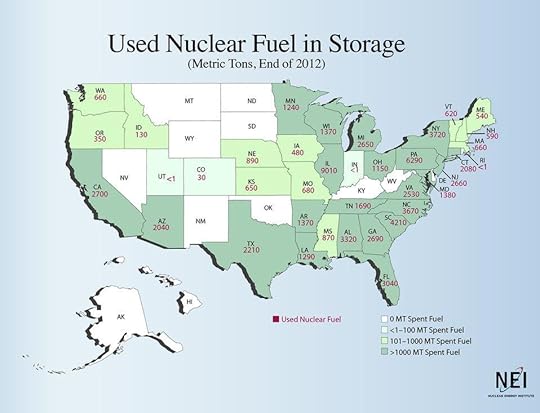
Additional information, including fact sheets for each state, available at the Nuclear Energy Institute, http://nei.org
Profile Image for Emily Thompson.
42 reviews5 followers
September 24, 2015
One of the best collections I can remember reading ever. The writing is beautiful, the dialog is raunchy, the plots are action-packed and the characters are unique and well-rounded. I'm so glad to have read this modern gem. If you love poetry mixed with psychology and action, you must read this story collection!
Profile Image for Luke.
1,626 reviews1,192 followers
December 16, 2020
2.5/5

This collection reads like a study in the bleached modern day US experience, and I mean bleached not in the way of the grimly erotic aestheticism of horned skulls lounging amidst the clearest peach-flesh-toned horizon one ever did see, but in the way of the inevitable bird-feced fate of any artificially spawned object that presumes that the fauna did not eat and sleep and breed in its location long before humans placed it and will continue to do so when said featherless bipeds have long vanished from the earth. You see, I was born and have lived all my life in this region that this collection concerns itself with, and I even spent a significant portion of that in that southern "Southwest" portion pursuing higher education. However, I am also queer, and insane in the way that encourages suicidal ideation, and while the manner in which I was raised contributed clearly to that latter attribute, it also inadvertently exposed me to a much more 'diverse' population in a much normal, humanizing fashion than US media likes to portray. So, when a piece of written work either chooses to ignore such themes or, when it must face the non-nuclear or the non-sane or the non-white, can only do so in the manner of either complaint or tragedy porn, it gets a little dull. I'm sure my less than fond memories of my time in these stories' settings also in no small way contributed to my lack of engagement, as the single truly historical piece that broke away from the contemporary sameness of passionless meandering in every field from romance to family matters to personal occupation had to be my favorite. Still, as I've said in my reviews in other pieces of 21st. century lit, if I'm going to bother with this more modern stuff, I expect to see something that tries a little harder to imaginatively escape the boundaries of 1950's WASP suburbia, otherwise what's the point?

I somewhat knew what I was getting into when I saw the extremely high rating for this collection in tandem with a reflection the author wrote on these stories in which she discusses how they were, consciously or otherwise, explicitly written for the white male reader. However, it's one thing to read that and another to experience for oneself the doldrums of white, vaguely female minds looking to swallow themselves up in a housewife existence of extremely capable careermen and mysteriously present money, where the most personably relatable character were the featureless, suicidal, failed mother figures that cropped up in a couple of stories. There's the mythos of the Helter Skelter at the very beginning, but all I know about that is how much the US loves a story of non-cis-het-monogamous sexuality coupled with tendencies towards violation, as well as how one of the victims was married to a sexual assaulter of children whose non-US existence is supported by many well-regarded denizens of the US film industry. I've already mentioned the tragedy porn inextricably tied up with anything queer or non-white, which takes the form of sex work in one story, incestuous rape of a child in another, all with accompanying white men ready and willing to feel the secondhand emotional trauma in a literary critic-approved manner. The one historical piece that I estimated the most avoided much of that, but only because there were a couple of Chinese figures to take on the pathos at the time most convenient for the troubled white boy narrator. So, the book form of films like Gran Torino, or Green Book, which even I'm susceptible to at times. In the end, how long this particular collection admirably survives in the public mind will say a great deal about the development of the contemporary US literature industry in recent times, for better or worse.

So, way too many main narrators unwilling to risk having feelings and way too many 'othered' side characters saddled with the burden of being violated in various ways in order to add a tinge of point and/or poignancy to the particular story at hand. I'm sure this collection also suffered in my estimation due to me, in an extremely rare reading instance, reading another short story collection alongside it that has proved, despite several hiccups, to be much more my style. Or maybe I just can't stand narrators who count the smell of good non-Anglo Saxon cooking among their indicators of a less than quality standard of living, and that being one of the final notes in the final story tarnished my recollections of the work as a whole. Whatever the case, my reservations about reading a work that hit a little too close to a region where I worked mind-breakingly hard at staying in the same place were further compounded by an almost complete lack of something to unreservedly sink my teeth into. Variations on the story of the meandering ephemerality that is mostly middle class white people misery located in various parts of California and Nevada that managed to sink its emotional claws into me every once in a while, but when it comes to such, but I prefer a Cormac McCarthy form of such, not a Joan Didion.
Displaying 1 - 30 of 765 reviews

Can't find what you're looking for?

Get help and learn more about the design.