

What do you think?
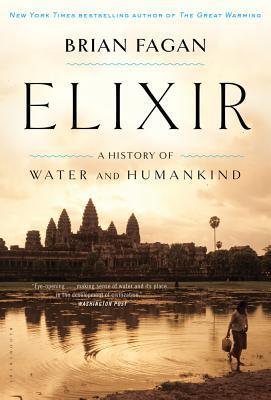
Elixir: A History of Water and Humankind
In Elixir , New York Times bestselling author Brian Fagan tells the story of our most vital resource and how it has shaped our history, from ancient Mesopotamia to the parched present of the Sunbelt. Fagan relates how every human society has been shaped by its relationship to our most essential resource. This sweeping narrative moves across the world, from ancient Greece and Rome, whose mighty aqueducts still supply modern cities, to China, where emperors marshaled armies of laborers in a centuries-long struggle to tame powerful rivers. As the earth's population approaches nine billion and ancient aquifers run dry, we once again remember the importance of this vital resource. To solve the water crises of the future, we may need to adapt the water ethos of our ancestors, captured here in rich detail by Brian Fagan.
416 pages, Paperback
First published June 1, 2011
About the author
Brian M. Fagan
144 books284 followersBrian Murray Fagan was a British author of popular archaeology books and a professor emeritus of Anthropology at the University of California, Santa Barbara.
Ratings & Reviews
Friends & Following
Create a free account to discover what your friends think of this book!
Community Reviews
Displaying 1 - 30 of 59 reviews

June 14, 2013
I quite honestly didn’t think I would enjoy this book quite as much as I did. This was really fascinating, so fascinating that it was totally absorbing. While accessible to the common reader, Fagan’s book is one that students could use, so it can, at times, be technical. Still fascinating. Though, a general knowledge of world history would be helpful.
But honestly, I didn’t think reading about water management would so engrossing. Okay, I should have known better, after all I enjoyed the book about the Hanging Gardens of Babylon and that made screws have my undivided attention. (No, not that kind of a screw). The book didn’t annoy me in the least, even when Fagan went on his brief flights of fantasy to illustrate how certain things would work.
I learned so much. Not only about how aqueducts worked, but the history of the Bali rice paddies and the part that temples play in their upkeep. Or perhaps it was the theory for why Mayan temples were designed the way they were. It wasn’t just to be strange.
And wait until you hear about how much of Iran is covered by qunats and where Segovia gets its water from.
But honestly, I didn’t think reading about water management would so engrossing. Okay, I should have known better, after all I enjoyed the book about the Hanging Gardens of Babylon and that made screws have my undivided attention. (No, not that kind of a screw). The book didn’t annoy me in the least, even when Fagan went on his brief flights of fantasy to illustrate how certain things would work.
I learned so much. Not only about how aqueducts worked, but the history of the Bali rice paddies and the part that temples play in their upkeep. Or perhaps it was the theory for why Mayan temples were designed the way they were. It wasn’t just to be strange.
And wait until you hear about how much of Iran is covered by qunats and where Segovia gets its water from.
June 14, 2013
I always enjoy reading (or listening) to something new, and "Elixir" was definitely something I hadn't read about before. Fagan, however, managed to tire even me with an incredible amount of detail about historical water management systems. I gave "Elixir" 2 stars because the book is very informative and there were sections that I found fascinating.
I enjoy a lot of things, but I got bored with very detailed descriptions of sluices, catchments, qanats, etc. Fagan doesn't even define many of these terms, which you wouldn't know unless you are a water engineer. After extensively detailing one culture's water management systems he would proceed to another culture and give excruciating detail on the next. If you don't have patience for dense books, don't read this one.
This book discusses a subject that can be heavily political with environmentalist wackos, and capitalist apologists going at it from both sides. My first impression was that Fagan belonged in the former category. He routinely romanticizes past cultures and criticizes modern societal attitudes. He attributes the environmental friendliness of past cultures to their environmental virtue - their love and respect of nature, and reverence for water itself. I would argue that much of this supposed virtue was the result of poor technology and scarcity forcing a greater appreciation on them. I was pleasantly surprised then, when in the final chapter he attributed our present unsustainable water usage rates to politicians protecting water usage from market forces that would otherwise force people to conserve and apply water to its most beneficial uses. Overall he seems to have a fairly balanced view, but does seem to romanticize the past.
On the positive side, Fagan has brought together an incredible amount of information. He covers ancient African cultures (I don't remember the names), native American farmers in the southwest called the Hohokam, ancient Mesopotamian cultures, Angkor Wat, Persia, the Muslim empires, medieval Europe, modern western culture, and I'm sure a couple others I've forgotten. He talks about what made each culture successful, covering engineering, social, and climatic aspects of the problem. He covers the interplay of all these forces on the success or failure of each culture.
I recommend this book only for those with a high tolerance for density and detail, or those who are involved in the water industry.
I enjoy a lot of things, but I got bored with very detailed descriptions of sluices, catchments, qanats, etc. Fagan doesn't even define many of these terms, which you wouldn't know unless you are a water engineer. After extensively detailing one culture's water management systems he would proceed to another culture and give excruciating detail on the next. If you don't have patience for dense books, don't read this one.
This book discusses a subject that can be heavily political with environmentalist wackos, and capitalist apologists going at it from both sides. My first impression was that Fagan belonged in the former category. He routinely romanticizes past cultures and criticizes modern societal attitudes. He attributes the environmental friendliness of past cultures to their environmental virtue - their love and respect of nature, and reverence for water itself. I would argue that much of this supposed virtue was the result of poor technology and scarcity forcing a greater appreciation on them. I was pleasantly surprised then, when in the final chapter he attributed our present unsustainable water usage rates to politicians protecting water usage from market forces that would otherwise force people to conserve and apply water to its most beneficial uses. Overall he seems to have a fairly balanced view, but does seem to romanticize the past.
On the positive side, Fagan has brought together an incredible amount of information. He covers ancient African cultures (I don't remember the names), native American farmers in the southwest called the Hohokam, ancient Mesopotamian cultures, Angkor Wat, Persia, the Muslim empires, medieval Europe, modern western culture, and I'm sure a couple others I've forgotten. He talks about what made each culture successful, covering engineering, social, and climatic aspects of the problem. He covers the interplay of all these forces on the success or failure of each culture.
I recommend this book only for those with a high tolerance for density and detail, or those who are involved in the water industry.

November 21, 2020
This book plows through loads of history, explaining how traditional civilizations around the world have managed water. The focus, it seems, is on relatively arid areas, where water management has been a massive, ongoing challenge. The text seems fairly technical and dry at first, but you get a mounting appreciation for how crucial water has been as the precondition for every human settlement. Some traditional systems offer real insight for the future. I like the ancient cities with separate systems for drinking water, water for other purposes, and waste water. All told, Fagan gives a ton of context for the challenge before us.

December 11, 2012
This is one of the best books I have ever read. It is not your traditional World History, or even your common environmental history book. It does not serves as a beginner history book either. The reader may benefit more with a broad context of world history since Fagan assumes the reader knows the periods of time, the places, and many of the people to whom he refers in his book.
He proves that through the study of water usage we can understand human societies both in comprehensive and detailed ways. Through his tales and technically, yet easy to follow descriptions, the reader can see both the individual and the society. And what comes out is that egalitarian societies were the best ones to manage water resources.
A conscientious reader would come out of this reading appreciating water in a unique (if not historical) way, and as an important side-effect, making sense of much of the challenges we have and continue to face.
He proves that through the study of water usage we can understand human societies both in comprehensive and detailed ways. Through his tales and technically, yet easy to follow descriptions, the reader can see both the individual and the society. And what comes out is that egalitarian societies were the best ones to manage water resources.
A conscientious reader would come out of this reading appreciating water in a unique (if not historical) way, and as an important side-effect, making sense of much of the challenges we have and continue to face.

September 4, 2018
The two stars are for the research that went into the book, apart from that it has very little to recommend it. The title is misleading, it is not a history of water, it is a history of water delivery systems in the ancient world. There is very little discussion apart from the final chapter about anything that has happened in the last 1000 years. I suspect the author got an advance based on his previous titles and then produced a work that was nothing like what was originally expected by the publishers. The blurb describes the book as having a 'dazzling narrative'. It doesn't, it is turgid and more of what I would expect from a textbook on hydrological engineering. There is undoubtedly a book to be written about man's use and relationship with water over the centuries but this isn't it.

April 3, 2017
Audiobook. Very interesting book about water and how civilization centered on water and much of the power resided in who controlled water.

November 19, 2019
Whiskey is for drinking; water is for fighting.
- Unknown (though often mis-attributed to Mark Twain)
The history of modern civilization is very much a history of human’s increasing ability to manage water. About 10,000 years ago people realized they could improve the reliability of their food supply by growing their own crops. It was a small leap from there to the recognition that yields could be improved and drought related disaster averted by diverting water from a nearby stream or lake. The history ever since consists of ever larger water storage and diversion projects to support the agricultural activities necessary to feed ever larger populations.
Elixir: A History of Water and Humankind by Brian M. Fagan, a professor emeritus of Anthropology at the University of California, Santa Barbara, is an exhaustive (and exhausting) catalog of hydrological developments throughout history and across the globe.
I don’t have a lot to say about this lackluster book. I found it to be rather short on interesting information and rather long on … uh … length. It goes on and on in ways that are largely repetitive (there are only so many ways to describe a trench to deliver water to crops). Fagan also re-uses a literary technique he put to good use in Cro-Magnon: How the Ice Age Gave Birth to the First Modern Humans (the only other book I’ve of his that I’ve read). That being, the use of fictional verbal vignettes to describe what life must have been like during the periods he describes. Unfortunately, whereas in Cro-Magnon I felt they brought the history to life, in Elixer Fagan waxes overly poetical in a way that distracts from the text.
I did learn a few things though:
- That a “qanat” is a horizontal well dug into a hillside to tap an underground aquifer.
- That lead pipes would have been an unlikely source of lead poisoning to Romans due to the fact that calcium buildup would have coated the inside of the pipes.
- That Roman aqueducts precisely engineered gradients (that of the Pont du Gard is only 34 cm per km).
- That a ‘noria’ is a hydro-powered waterwheel used to lift water.
- Unknown (though often mis-attributed to Mark Twain)
The history of modern civilization is very much a history of human’s increasing ability to manage water. About 10,000 years ago people realized they could improve the reliability of their food supply by growing their own crops. It was a small leap from there to the recognition that yields could be improved and drought related disaster averted by diverting water from a nearby stream or lake. The history ever since consists of ever larger water storage and diversion projects to support the agricultural activities necessary to feed ever larger populations.
Elixir: A History of Water and Humankind by Brian M. Fagan, a professor emeritus of Anthropology at the University of California, Santa Barbara, is an exhaustive (and exhausting) catalog of hydrological developments throughout history and across the globe.
I don’t have a lot to say about this lackluster book. I found it to be rather short on interesting information and rather long on … uh … length. It goes on and on in ways that are largely repetitive (there are only so many ways to describe a trench to deliver water to crops). Fagan also re-uses a literary technique he put to good use in Cro-Magnon: How the Ice Age Gave Birth to the First Modern Humans (the only other book I’ve of his that I’ve read). That being, the use of fictional verbal vignettes to describe what life must have been like during the periods he describes. Unfortunately, whereas in Cro-Magnon I felt they brought the history to life, in Elixer Fagan waxes overly poetical in a way that distracts from the text.
I did learn a few things though:
- That a “qanat” is a horizontal well dug into a hillside to tap an underground aquifer.
- That lead pipes would have been an unlikely source of lead poisoning to Romans due to the fact that calcium buildup would have coated the inside of the pipes.
- That Roman aqueducts precisely engineered gradients (that of the Pont du Gard is only 34 cm per km).
- That a ‘noria’ is a hydro-powered waterwheel used to lift water.

April 14, 2014
Brian Fagan is an astonishingly prolific producer, for a non-fiction writer, having produced more than three dozen, research-basee books (at the rate of more than one a year!)focusing on the areas of archaeology, anthropology and the impact of climate change over the millenia on humanity. I've read at least a half a dozen of them, and he continues to pump them out faster than I've been knocking them off.
That's rather remarkable, given the fact that they are all intensively detailed, although somewhat less so when one notes that many of his books overlap in areas that doubtless lie in the sweet spot of his professional areas of expertise (several, for example, are dedicated to various aspects of the entry of humankind into the New World). Still, how does he do it?
Elixir provides perhaps a clue. While it is loosely organized along nominally topical lines (Canals, Furrows and Rice Paddies; Waters from Afar), some of these categories are in themselves rather eccentric (Cisterns and Monsoons). One gets the impression that he is simply fascinated by everything, facile at taking notes on old-fashioned file cards, and remarkably facile at shuffling them into a stack that must almost instantaneously be able to translate into finished prose. It's all quite readable, although often more detailed than the typical reader is likely to have wished for. Perhaps if he were to slow down the pace a little he'd have time for another round of editing, thereby making the reader's job more rewarding.
That said, Fagan knows his stuff, and if the relationship of man to water and vis-versa is a topic of interest to you, as indeed it has been, and continues to be, fundamental to human existence, then Elixir will certainly provide you with a very thorough and informative read.
Unless it drives you to drink. Cheers!
That's rather remarkable, given the fact that they are all intensively detailed, although somewhat less so when one notes that many of his books overlap in areas that doubtless lie in the sweet spot of his professional areas of expertise (several, for example, are dedicated to various aspects of the entry of humankind into the New World). Still, how does he do it?
Elixir provides perhaps a clue. While it is loosely organized along nominally topical lines (Canals, Furrows and Rice Paddies; Waters from Afar), some of these categories are in themselves rather eccentric (Cisterns and Monsoons). One gets the impression that he is simply fascinated by everything, facile at taking notes on old-fashioned file cards, and remarkably facile at shuffling them into a stack that must almost instantaneously be able to translate into finished prose. It's all quite readable, although often more detailed than the typical reader is likely to have wished for. Perhaps if he were to slow down the pace a little he'd have time for another round of editing, thereby making the reader's job more rewarding.
That said, Fagan knows his stuff, and if the relationship of man to water and vis-versa is a topic of interest to you, as indeed it has been, and continues to be, fundamental to human existence, then Elixir will certainly provide you with a very thorough and informative read.
Unless it drives you to drink. Cheers!

July 25, 2011
If you've read some of Mr Fagan's previous books, such as The Long Summer: How Climate Changed Civilization, this book covers a lot of familiar ground, just using water and it's uses to cover human history and changes in civilization. From the earliest attempts at simple irrigation to the Roman aqueducts, to industrial age technology, with warnings about the current attitude that water is in infinite resource and the resulting overuse.
The writing is clear and concise, and the book has just the right amount of illustrations to enhance the text without overwhelming it. I found it both informative and entertaining, and it left me thinking as well.
The writing is clear and concise, and the book has just the right amount of illustrations to enhance the text without overwhelming it. I found it both informative and entertaining, and it left me thinking as well.

November 29, 2019
Humans need water. From ancient Mesopotamia to the parched present of the Sun Belt societies have arranged themself to capture and use this resource. Fagan show how ancient Greece and Rome built aqueducts, the Chinese built canals to tame their rivers and how India's culture of purification meant that they had more public wells than Europe.
Why I started this book: It's been on my list for a while... and I love a good history.
Why I finished it: Detailed and interesting to learn so much more about ancient technologies and methodologies to get water to cities. It wasn't as easy as turning on the tap and many regions lived at the edge of technological solutions and local conditions, making them vulnerable in times of stress and drought. Fagan argues that we are on the edge too, because of our permissive public policies.
Buddy Read: Collapse: How Societies Choose to Fail or Succeed and
Nudge: Improving Decisions About Health, Wealth, and Happiness. Also Salt: A World History for another narrow history of a resource.
Why I started this book: It's been on my list for a while... and I love a good history.
Why I finished it: Detailed and interesting to learn so much more about ancient technologies and methodologies to get water to cities. It wasn't as easy as turning on the tap and many regions lived at the edge of technological solutions and local conditions, making them vulnerable in times of stress and drought. Fagan argues that we are on the edge too, because of our permissive public policies.
Buddy Read: Collapse: How Societies Choose to Fail or Succeed and
Nudge: Improving Decisions About Health, Wealth, and Happiness. Also Salt: A World History for another narrow history of a resource.

June 17, 2018
A very neat book, full of great details regarding the hydrological systems of many societies, some well known and others not so much. That very breadth is its weakness though, for at times Fagan seems to jump around without having really discussed anything of value—the Aztecs, for example, are given an introduction before suddenly performing a volte-face towards the Maya, then swinging over to Peru. The brevity of this book also works against its goal as it turns into a repetitive parade of weirs, aqueducts, and qanats. While it serves to illustrate the remarkable similarity of human invention across the spectrum of societies, it lacks the staying power which deeper discussion of their individual quiddities would have accomplished. As an introduction to further reading, however, it is indeed a valuable resource. It also raises questions on the commodity culture we have surrounding water. Fagan’s treatment of the respect and rituals surrounding irrigation and catchment was a particular standout, albeit one that, as above, titillates without satisfying. I can’t really fault a popular history for not being as comprehensive as I would like, and he does include a good bibliography at the end that contains research and articles that I would like to venture to read one day. This is a book that will not quench your thirst; nevertheless, who would turn down a drink?

September 1, 2023
Reading through this book sometimes felt like drinking straight from a firehose. There’s abundant detail. But thanks to the interesting story it tells (and an excellent audiobook narrator), the experience seldom grew monotonous.
Still, I will struggle to remember the smallest fraction of specific practices@times@places. Instead, what I’ll take away is the ingenuity and range of ways humans have solved the problems of water—the technologies, rituals, and sociopolitical systems devised to manage water, whether there’s too much, too little, or erratic availability. The commonalities are striking, too, all over the world and stretching back as far as the dawn of agriculture. I wasn’t as interested in hearing about water as a source of spiritual inspiration and ritual practice until I learned how impossible it is to separate out that role of water from all the others.
It’s obvious that the author aimed for a hopeful ending. But seeing how far we’ve outstripped our hydrological means in the years since we stopped relying on gravity for water management, it’s hard not to come away with a sense of doom.
Still, I will struggle to remember the smallest fraction of specific practices@times@places. Instead, what I’ll take away is the ingenuity and range of ways humans have solved the problems of water—the technologies, rituals, and sociopolitical systems devised to manage water, whether there’s too much, too little, or erratic availability. The commonalities are striking, too, all over the world and stretching back as far as the dawn of agriculture. I wasn’t as interested in hearing about water as a source of spiritual inspiration and ritual practice until I learned how impossible it is to separate out that role of water from all the others.
It’s obvious that the author aimed for a hopeful ending. But seeing how far we’ve outstripped our hydrological means in the years since we stopped relying on gravity for water management, it’s hard not to come away with a sense of doom.
December 22, 2020
Brian Fagan cracks open our relationship with water and how it is not just a commodity to be exploited. I'm a water engineer and fascinated by civilizations, so this is totally in my wheelhouse, but it might be a bit dry for some readers. Fascinating to hear the seldom heard stories of small communities in African and Asia and South/Central America and about the sacredness of water. At other times, the book reads like Jared Diamond's rise and fall of civilization narratives. I really like how Fagan weaves spiritual and religious views of water and how it has been the source of our livelihood and health. Strong summary in the final chapter gives us a lot to ponder of how we are to move forward as a global civilization. This was an really unique view of history and I want to read more like it!

June 28, 2019
3 star review for this book, mostly for the sheer volume and thoroughness of the research that must have gone into it. Fagan really, REALLY knows a lot about ancient water systems: reclamation, conservation, storage, transportation, recycling, and etcetera.
Where the author and the narrative falls short is engagement. This is an immensely important topic and very prescient given all the talk about global warming, rising sea levels, and the decline of the amount of arable land and potable water. In this reader's opinion, there is just too much minutae about the ancient water storage and irrigation systems used. Many if not most of the civilizations, societies, and cultures that Fagan discusses used startlingly similar systems, independent of outside influences: water systems engineered and constructed are described in the most minute and almost mind-numbing detail. A summary chapter or two would have sufficed to cover these similarities and maybe there could have mentioned differences is scale and scope. Yet every civilization's water systems are discussed thoroughly, leading to a lot of redundancy and repetitiveness.
For me, the most informative and interesting chapters on the ancient civilizations of China, India, sub-Saharan Africa, Rome, and then the final chapter, which is TOO short, given the length of the other chapters. This is the chapter that NEEDED to be longer, as it discussed the contemporary problems of drying aquifers, declining water supplies, suggestions and policies on water management, and indeed the coming conflict between people and nations for this elixir of life. Doomsday predictions aside, water is the most valuable resource (and I would argue commodity) in the world today. We need to find a way to sustain a growing global population. Fagan discusses this all-too-briefly in the last chapter. I really wanted more there.
I enjoyed it well enough, but I wanted to be engrossed and engaged more, and ironically, this was a very dry read. I think most people interested in this type of topic would do well to read Jared Diamond's books.
Where the author and the narrative falls short is engagement. This is an immensely important topic and very prescient given all the talk about global warming, rising sea levels, and the decline of the amount of arable land and potable water. In this reader's opinion, there is just too much minutae about the ancient water storage and irrigation systems used. Many if not most of the civilizations, societies, and cultures that Fagan discusses used startlingly similar systems, independent of outside influences: water systems engineered and constructed are described in the most minute and almost mind-numbing detail. A summary chapter or two would have sufficed to cover these similarities and maybe there could have mentioned differences is scale and scope. Yet every civilization's water systems are discussed thoroughly, leading to a lot of redundancy and repetitiveness.
For me, the most informative and interesting chapters on the ancient civilizations of China, India, sub-Saharan Africa, Rome, and then the final chapter, which is TOO short, given the length of the other chapters. This is the chapter that NEEDED to be longer, as it discussed the contemporary problems of drying aquifers, declining water supplies, suggestions and policies on water management, and indeed the coming conflict between people and nations for this elixir of life. Doomsday predictions aside, water is the most valuable resource (and I would argue commodity) in the world today. We need to find a way to sustain a growing global population. Fagan discusses this all-too-briefly in the last chapter. I really wanted more there.
I enjoyed it well enough, but I wanted to be engrossed and engaged more, and ironically, this was a very dry read. I think most people interested in this type of topic would do well to read Jared Diamond's books.

July 11, 2021
Some reviews commented on the dry boringness of this book, and I didn't feel this was true until the last third when it really became a slog. The book is very well researched, as other reviews have already pointed out, but one detail that was curious to me was how often Fagan listed incorrect translations of measurement between imperial and metric. I don't know if I had an early edition of the book that hadn't been edited properly but sometimes he would be out by a little bit (listing 6ft as 2m) or a lot (some square ft to square m translations were hundreds of units off). Also, a book written in 2011 by an established historian/archaeologist should know better than to use the term "Aborigine" for goodness sake.

December 4, 2024
This book taught me a lot of ancient water supply systems, but didn't otherwise teach me a lot of water - I was expecting a bit more on water's uses by humankind medicinally, for food, for religious rituals, etc, but I found this book centred more on how humankind built systems to access water (without going into any depth as to what that water was then used for). Now, I don't know if that would have made for a more interesting book overall, but the lack of it did leave me feeling unsatisfied.
Fagan obviously did a lot of research for this book, but I found the delivery of that information and the writing to be quite dry (pun intended) and textbook-like. That is likely why it took me almost a year to finish the book...
Fagan obviously did a lot of research for this book, but I found the delivery of that information and the writing to be quite dry (pun intended) and textbook-like. That is likely why it took me almost a year to finish the book...

April 14, 2018
Agak sedikit membosankan bila nggak fokus pada detail2 teknis yang dibahas. Tapi general ideanya mantap. Bahwa bangsa2 terdahulu memperlakukan air dengan penghormatan yang tinggi. Mereka berusaha menaklukkan air tapi pada akhirnya air selalu tidak bisa dikuasai. Dia punya 'jalan' sendiri. Betul bahwa kita harus belajar banyak dari pengalaman orang2 jaman dulu dalam hal manajemen air (khususnya Irigasi yg banyak dibahas di buku ini). Celakanya, sepertinya manusia jaman now memperlakukan air layaknya sumberdaya yg nggak bakal habis. Kuras aja terus, cemari aja terus, ampe kita yang hancur. Oh human, plis dont be stupid in this bussiness..
Nice book I think...
Nice book I think...

December 6, 2017
90% of this book is a generally interesting and fact-filled survey of pre-industrial water use technologies and practices from throughout the world. Not a whole lot of conclusions, other than for the most part, water use was controlled and governed at the village level. The last 10% of the book is a screed about modern water use practices in the American West, where the author now lives.
August 22, 2020
Starts with something of a splash but quickly gets bogged down in the minutiae of water-delivery technology through the millennia. This just keeps going on and on. Fagan's occasional flight of fancy, when he imagines scenes of ancient life, bore rather than illuminate. Another topic crying out for essayistic treatment mushrooms into a yawn-inducing book.

March 8, 2018
I really wanted to love this book. Humankind's relationship with water has interested me for a long time, so I thought this would be a great fit. Unfortunately I couldn't get into the book. It bored me. Sigh.

July 16, 2019
Couldn’t finish this one. It was too dry of a read.... (I know.) Facts, data, well researched, yet the book could have been significantly shorter. A bit more narrative and personality to the book is needed—I know it is non-fiction, but the book was just “off” for me.
February 18, 2021
Extremely slow and way too long. I am very interested in water resources, but I did not enjoy this book (which I did finish reading). Fact after disjointed fact without a common theme or central thesis.
May 4, 2023
A very detailed book about the history of water and humankind. As the climate crisis accelerates so too will drought conditions worsen and expand. The wealthy of the world still act as though water and other precious resources are infinite and deprive others of accessing what they need.

July 31, 2025
This is an excellent book about the history of humans as they deal with water. It is fantastically researched and well written. All life depends on water. Human progress has built upon the mechanics of flowing water and the chemistry of it as well.

September 16, 2026
Great for fans of irrigation and archeology. It's interesting to view evolutions of hydrology around the world, but in spite of the topic the presentation is quite dry. After three chapters you get a sense of "The more things change the more they stay the same."

September 23, 2018
I liked the idea of this book a lot more than reading it.

Read
August 16, 2019Aside from the "water flows downhill" gaff, a well-reasoned, historically insightful account.

September 18, 2019
كتاب جميل يحكي قصة تفاعل مختلف الحضارات مع الماء والريّ.

September 12, 2026
A little repetitive, at times, but eye-opening.

February 3, 2015
Brian Fagan’s Elixir: A Human History of Water is a compelling history of mankind’s relationship to water. This is, however, to miss the real purpose of the history. The purpose of this history of water, or the archaeology of water, is to demonstrate the ways in which overuse, or lack of living in balance with nature may and can lead to parlous results. In some, not a few, cases to the destruction/death of a civilization, occasionally civilizations. To be sure the history is completely accurate and most certainly something we, in our post-industrial/post-modern civilizations, need to be aware of. Still and all, Dr. Fagan’s goal is to throw, gently, the fear of God into us.
The problem with the author’s book is though it instructs the reader to use less, the necessity to use less, Brian Fagan does not spell out a comprehensive plan for doing so. What the reader is left with is an interesting history, but a failed action plan. After all, if a writer is going to warn us to live in harmony with our water resources they need to offer us a plan for doing this. Unfortunately, Professor Fagan does not do this.
There are three approaches to dwindling resources and climate change:
1. It is too late and civilization and humankind are doomed.
2. Radical reduction and simplified lifestyles are necessary for humans and the planet to continue our existence.
3. Science and technology will innovate our way out of this conundrum.
If the first is the case we’re finished and there is no need to worry…Party Like It’s 1999.
If human civilization/society adopts the second what, inevitably, will follow is economic and political collapse on a global scale. When enough people lose their jobs and cannot support their families the political environment will become radically unstable and governments will fall. What will stalk this are civil wars, inter-state conflicts [including war], crop failures [due to the failure of a infrastructure to get crops to population centres], famine, population displacements, and the end of life as we know it for a considerable period of time.
The only viable alternative to the above is number three, where science and technology innovate a way out of this. There is little reason why they should not. The whole Malthusian approach governing the above has been pushed back again and again by the use of technology and science.
There is no reason, nonetheless, why overuse of water resources should not be a matter of concern for us—especially in the North American West, but an apocalyptic approach is not useful and only manages to frighten people into inaction. Plans need to be made for conservation, but growth must also be fit into the picture. How much growth is the issue. If one watches the YouTube presentations of Hans Rosling on demographics and the future it will be seen that population growth is really only occurring in Africa [expected growth of 2 billion] and Asia [expected growth of 1 billion] before global population growths levels off at between 9 and 10 billion. The rest of the world is either holding steady—in the Americas it is supposed population growth, including immigration, will not occur. In Europe there should be a decrease in population. In the developed countries of Asia population should decrease, but in the developing parts of Asia there will, in all likelihood, be an increase.
Is Professor Fagan’s book a good effort? In a manner of speaking, yes, but its lack of a comprehensive plan for dealing with the problem of dwindling water resources makes the book of limited value. After all, the point of the book is to warn against the overuse of water resources. That is all well and good, but how do we do this? There were suggestions in the book, but no overall plan. What we need is a plan.
The author, also, is very much in the Radical Reduction camp which, as this reviewer has suggested, will not work. What is needed, however, is careful management of water resources and a great deal of scientific and technological innovation to get the human race out of this Zero Sum game.
Recommended for those interested in the history of water and those in the Radical Reduction camp.
Rating 3 out of 5 stars.
The problem with the author’s book is though it instructs the reader to use less, the necessity to use less, Brian Fagan does not spell out a comprehensive plan for doing so. What the reader is left with is an interesting history, but a failed action plan. After all, if a writer is going to warn us to live in harmony with our water resources they need to offer us a plan for doing this. Unfortunately, Professor Fagan does not do this.
There are three approaches to dwindling resources and climate change:
1. It is too late and civilization and humankind are doomed.
2. Radical reduction and simplified lifestyles are necessary for humans and the planet to continue our existence.
3. Science and technology will innovate our way out of this conundrum.
If the first is the case we’re finished and there is no need to worry…Party Like It’s 1999.
If human civilization/society adopts the second what, inevitably, will follow is economic and political collapse on a global scale. When enough people lose their jobs and cannot support their families the political environment will become radically unstable and governments will fall. What will stalk this are civil wars, inter-state conflicts [including war], crop failures [due to the failure of a infrastructure to get crops to population centres], famine, population displacements, and the end of life as we know it for a considerable period of time.
The only viable alternative to the above is number three, where science and technology innovate a way out of this. There is little reason why they should not. The whole Malthusian approach governing the above has been pushed back again and again by the use of technology and science.
There is no reason, nonetheless, why overuse of water resources should not be a matter of concern for us—especially in the North American West, but an apocalyptic approach is not useful and only manages to frighten people into inaction. Plans need to be made for conservation, but growth must also be fit into the picture. How much growth is the issue. If one watches the YouTube presentations of Hans Rosling on demographics and the future it will be seen that population growth is really only occurring in Africa [expected growth of 2 billion] and Asia [expected growth of 1 billion] before global population growths levels off at between 9 and 10 billion. The rest of the world is either holding steady—in the Americas it is supposed population growth, including immigration, will not occur. In Europe there should be a decrease in population. In the developed countries of Asia population should decrease, but in the developing parts of Asia there will, in all likelihood, be an increase.
Is Professor Fagan’s book a good effort? In a manner of speaking, yes, but its lack of a comprehensive plan for dealing with the problem of dwindling water resources makes the book of limited value. After all, the point of the book is to warn against the overuse of water resources. That is all well and good, but how do we do this? There were suggestions in the book, but no overall plan. What we need is a plan.
The author, also, is very much in the Radical Reduction camp which, as this reviewer has suggested, will not work. What is needed, however, is careful management of water resources and a great deal of scientific and technological innovation to get the human race out of this Zero Sum game.
Recommended for those interested in the history of water and those in the Radical Reduction camp.
Rating 3 out of 5 stars.
Displaying 1 - 30 of 59 reviews