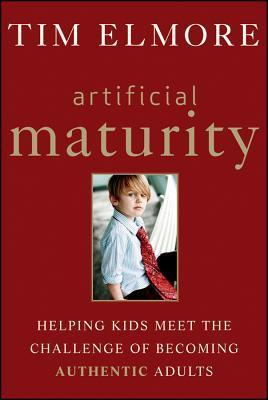
A few notes and summaries of the book:
Tim Elmore's book argues that most adults provides too much structure and information too early for kids and gives them real life experiences too late. He argues that premature information without practical application can be dangerous and leads to "artificial maturity". Another way to say this is that kids today possess knowledge without context. A wealth of information creates a poverty of attention.
In order to foster authentic maturity, Elmore offers four different approaches. 1. Provide autonomy and responsibilities simultaneously. 2. Provide information and accountability simultaneously. 3. Provide experiences to accompany their text-savvy lifestyles. 4. Provide community service opportunities to balance their self service time.
One problem he addresses is the dangers of bursts of information technology constantly provides us. Specifically, student's ability to focus is undermined by bursts of information. We have a primitive impulse to respond to immediate opportunities or threats, which for kids today means texts, tweets, and Facebook updates. With each possible piece of new information we receive a dopamine squirt, and this can become addictive. Without this constant stimulation, students can feel bored and devoid of direction. This creates a dependency on outside stimulation.
Another issue he addresses is the development of counterfeit or virtual ways to appease desires for excitement, novelty, risk, and connection. For excitement, teens may seek to get a tattoo or nose ring or ride roller coasters in order to meet this need. For novelty, instead of discovering their unique strengths and contributions at work, they may satisfy this desire by wearing bizarre clothing or coloring their hair. For risk, they avoid meaningful risk that can prepare them for adulthood, and instead satisfy this desire by playing video games, watching reality TV, or celebrity gossip. For connection, instead of moving out into face-to-face relationships in which they make get rejected, they satisfy this need online through social media.
He offers these ideas to transform artificial maturity into authentic maturity: Developing emotional intelligence, focusing on character and a sense of ethics, helping kids discover their strengths, and developing a sense of leadership so they understand that they are part of something larger than themselves.
Another issue with artificial maturity has to do with how children handle their talents. Often parents focus so much on giving them all the opportunities to develop their talent, that they fail to give them training in developing emotional maturity to go with those talents. Here is another list of suggestions for encouraging maturity in young adults: 1. Face-to-face relationships 2. Genuine as opposed to virtual projects and experiences 3. Multi-generational exposure 4. Saving money toward a goal 5. Service opportunities 6. Cross-cultural travel 7. Mammoth real-life challenges and opportunities 8. Participation on a team 9. Age-appropriate mentors 10. A rite of passage experience.
Four ideas to better engage students: 1. Problem-based learning. 2. Student-driven learning 3. Right-brained learning (creative/emotional connection). 3. Experiential learning.
EPIC mentoring = Experiential, Participatory, Image Rich, Connected
In order to get the most our of experiential learning, it is important to follow these steps: 1. The experience 2. Reflection on the experience 3. Abstract conceptualization (generalize to other situations, etc.) 4. Experimentation - try out the same skills/lessons in other settings
7 Phases of Growth and Development with objectives for each phase:
1. Personal foundations - personality, character foundation, teachable spirit, emotional security (0-6 yrs)
2. Character Formation - children learn through models - healthy choices, social awareness, capacity to prioritize what's important, submission to authority
3. Style and Identity Development - socialization by peers - personal disciplines and habits, awareness and discernment, solid sense of identity, healthy relationships, intentional attitude
4. Practice and Fitness - putting identity into practice - submission to authority, vision and ambition, emotional intelligence, strength and skill discovery, people skills, influence
5. Value and Production - midlife years - life purpose, sacrifice, priorities and focus, motive purification, productivity, widened influence, leadership reproduction
6. Convergence and Fulfillment - momentum, effectiveness, wisdom and objectivity, world vision, equipping ability, generosity
7. Afterglow and Finale - deep fulfillment and reward, wide range of influence, rest and poise, authority in their lives, multiplication of leadership
Throughout the book he offers examples from parents about ways to teach their children responsibility. For example, one parent decided to match every dollar their child saved for college and they also gave their children an allowance that was equal to their age each month.
Another parent talks about handling reference letters by asking students to write it and then they'll sign it. The exercise forces them to look at themselves from an outside perspective and helps reveal to them what they value about themselves and what they have to offer a potential employer.
One parent says they have their children who are in high school watch them pay their bills each month. They involve them with budget planning, cooking, and other basic life skills. Another parent says whenever their kids needed punishment for breaking the rules, they would make them read the newspaper. After reading a newspaper, they would ask questions about articles in the paper; they never knew which article the question would be from so they had to read the whole paper.
Another example has a mother who required her two sons to take her on a date before they are allowed to go out on a one-on-one date with a girl they like. They have to make it a real date and follow through with all the ways that they plan on treating a girl.