

What do you think?

Men Should Weep
Written for Glasgow Unity in 1947, this extraordinarily moving play of women surviving in the east end of Glasgow of the 1930s was revived by 7:84 Company to tremendous critical acclaim. It finds in the lives of Maggie, her family and her neighbours not only all the tragedy that appalling housing, massive unemployment and grinding poverty can produce, but alo a rich vein of comedy - the sense of the ridiculous, the need for a good laugh.
Paperback
First published January 1, 1947
About the author
Ena Lamont Stewart
4 books2 followersEna Lamont Stewart was a Scottish playwright. She was the daughter of a Church of Scotland minister whose family was originally from Canada and had settled in Glasgow. She married the Scottish actor Jack Stewart and they had a son, William. The couple joined Glasgow's MSU Repertory Theatre in Rutherglen.
Stewart was disturbed by the poverty in the Gorbals. She became a receptionist at the Sick Children's Hospital and witnessed malnutrition and other diseases.
Her first play was Distinguished Company. Her second play, Starched Aprons, was about the everyday trials of hospital life. Her third play, Men Should Weep, was a major theatrical landmark for the representation of Scottish class and women's issues. Glasgow Unity Theatre first performed the play at the Athenaeum Theatre, Glasgow, on 30 January 1947.
Stewart was a founder member of the Scottish Society of Playwrights.
Stewart was disturbed by the poverty in the Gorbals. She became a receptionist at the Sick Children's Hospital and witnessed malnutrition and other diseases.
Her first play was Distinguished Company. Her second play, Starched Aprons, was about the everyday trials of hospital life. Her third play, Men Should Weep, was a major theatrical landmark for the representation of Scottish class and women's issues. Glasgow Unity Theatre first performed the play at the Athenaeum Theatre, Glasgow, on 30 January 1947.
Stewart was a founder member of the Scottish Society of Playwrights.
Ratings & Reviews
Friends & Following
Create a free account to discover what your friends think of this book!
Community Reviews
Displaying 1 - 30 of 35 reviews

February 13, 2016
If I get an A in Higher English I'll give it 5 stars, other than that I never want to ever think about this play again - good enough when first reading but if I have to analyse the line "whit wis I, when we wis coortin, but your tart?" I'll start crying and might never stop
Update: got that A and a promise is a promise
Update: got that A and a promise is a promise

December 16, 2014
Hated the ending. Pointless. How the fuck am I supposed to write an essay on this when hardly anything happens?

February 28, 2022
Such a girlboss statement, yeah men SHOULD weep, cry bitchass men

November 4, 2021
if i don’t get an A after reading this stupid book like 8 whole times i’m gonna throw a fit xoxo
November 8, 2021
Very Boring

June 1, 2022
read it for my exams. hate it. if i have to write about poverty in this book and about Maggie another time i might actually cry. if i get an A in English I’ll rate it higher but eugh

September 19, 2025
higher engkish 🔫😭😔😔
i’m never gonna pass.
better than sailmaker
but what the hell
and if i was jenny i’d run away with a man too just to get out that place
i’m never gonna pass.
better than sailmaker
but what the hell
and if i was jenny i’d run away with a man too just to get out that place

September 19, 2025
compared to the atrocity that was sailmaker that i did last year this was so much better

March 11, 2021
x The accurate rhythms and noise of the Scots brands the social realism with a unique identity, gaining verisimilitude.
x A vein of life (dear to Scotland) has been successfully tapped into: the closeted world, where life ended young, still resonates, as does the way the characters travel existentially through the poverty prism accompanied by a mirthful and largely hopeless drive forward.
+ There's an abundance of themes, but was their epic potential? Spidery Isa; rash Alec; the potential for multifaceted conflict between John and Maggie driven by the orbiting minors - Lily, Bertie, etc. It was all a lot more interesting before the final act, where toxic femininity won The Battle of the Social Cesspit over toxic masculinity; bathos would have worked better.
x A vein of life (dear to Scotland) has been successfully tapped into: the closeted world, where life ended young, still resonates, as does the way the characters travel existentially through the poverty prism accompanied by a mirthful and largely hopeless drive forward.
+ There's an abundance of themes, but was their epic potential? Spidery Isa; rash Alec; the potential for multifaceted conflict between John and Maggie driven by the orbiting minors - Lily, Bertie, etc. It was all a lot more interesting before the final act, where toxic femininity won The Battle of the Social Cesspit over toxic masculinity; bathos would have worked better.

March 31, 2019
I read this for my higher English course in Hugh school and I was oh So bored there is one scene with action in it that I enjoyed however I found this to be extremely boring and monotonous. I do appreciate that it was supposed to be about gender roles etc but I couldn’t help not caring because of how bored I was

April 13, 2024
I read this for Higher English and like it's okay but I wish we did shakespeare or something funny, this is just depressing, also the original ending is so much better cause what am I meant to analyse out of "they'll be flowers come the spring" or whatever, fingers crossed I get an A though

May 12, 2020
This is on the Higher English curriculum, which I'm bashing through in lockdown in preparation for teaching next year. Bleak play that could/should be bleaker on the theme of useless men.

November 26, 2019
Hard hitting and relentlessly depressing, but genuinely moving and real. Every character is beautifully and lovingly constructed. You have sympathy for even the worst of them. The women, especially Maggie, are all so strong despite their circumstances, but I can't help but love poor John the husband despite his failings.

Read
February 10, 2026terrible people all around in a terrible situation no less. I do not pity violent men calling women bitches and being whiny and useless.
I pity the mother of the house, the aul granny, heck even Jenny and Isa though they can be terrible. And the wee children
not my cup of tea, I can see liking it better on stage
I pity the mother of the house, the aul granny, heck even Jenny and Isa though they can be terrible. And the wee children
not my cup of tea, I can see liking it better on stage

January 9, 2023
A tender and moving play set in the working class slums of Glasgow in the 1930s. It's funny, heartbreaking and beautifully written in a very specific Glasgow dialect that I can only assume is faithful to the era.

May 8, 2023
Displays many keys themes, providing multiple different perspectives on the conditions during that period of time, I think it’s an interesting play to study. The writer certainly has a hook, although I didn’t and quite frankly will never understand the humour but that’s just me.
February 27, 2024
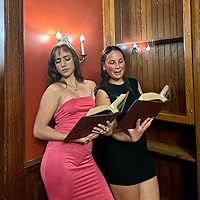
reading this was so crazy--- I also use red hats to symbolize my once rich& beautiful life. like looking in a mirror....
kidding. but I did like learning about the staging, etc. made it more of an enjoyable read.
kidding. but I did like learning about the staging, etc. made it more of an enjoyable read.
September 26, 2017
4.5/ Stars. Had to read this for my drama class. Definitely the best play I've read. (Lily is my spirit animal)
November 23, 2017
A good wee play but the 'Glaswegian' dialect was part Glasgow,part Highlands,part Fife.
July 12, 2020
Life in the tenements of Scotland is brought to life in this play. An excellent read.
October 18, 2021
I'm giving it 1 star because I can't give it 0 🙃
This entire review has been hidden because of spoilers.

February 14, 2022
Read for First Year


Read
January 27, 2023read for school

February 13, 2023
Everyone is saying this is the most boring thing they've ever read but it really wasn't so bad when read alongside voice actors playing out the scenes !

October 11, 2023
bitch ass men

February 12, 2024
go girl give us nothing!

May 6, 2025
2 stars ⭐️ ⭐️

November 22, 2011
This is the version of the play that is in my school's drama department. Until September 2011 I had never heard of this play at all. Then I found out we were going to see the show at the theatre as a class group! Then I found that one of the extracts the Intermediate 2 level students were looking at was from this play! Then somehow we ended up performing this extract and it went down well with the audience of the other Higher students. I played John Morrison in this extract and it was quite hard to get my tongue around the Scots Dialect but I managed and I really enjoyed myself. Then before the trip to the performance (about 2 weeks before)at the theatre the Intermediate 2 students were given a second extract from the play and again we are working with this one.
Then it came to the day of the show, I won't go into too much detail about the show that I saw at the theatre but I will mention that I now think this play is wonderful! It has everything from language to humour to romance to violence to poverty to politics! For a few people in my drama class, it was a bit confusing but I understood it. I even went to see it for a second time and again, I loved it!
As it is now one of my favourite plays I would recommend it to anyone my age studying the Intermediate 2 or Higher drama courses but also to people who are older than this, as this play "continues to please all ages".
Then it came to the day of the show, I won't go into too much detail about the show that I saw at the theatre but I will mention that I now think this play is wonderful! It has everything from language to humour to romance to violence to poverty to politics! For a few people in my drama class, it was a bit confusing but I understood it. I even went to see it for a second time and again, I loved it!
As it is now one of my favourite plays I would recommend it to anyone my age studying the Intermediate 2 or Higher drama courses but also to people who are older than this, as this play "continues to please all ages".
Displaying 1 - 30 of 35 reviews