

What do you think?

Lost New York
Profiles places in New York City that have been destroyed, altered, and/or demolished during the twentieth century, with photographs of the original structures, background information, and stories about memorable individuals.
144 pages, Hardcover
First published November 1, 2011
Ratings & Reviews
Friends & Following
Create a free account to discover what your friends think of this book!
Community Reviews
Displaying 1 - 20 of 20 reviews

December 20, 2013
5 big Stars..
I don't know if it is because i love N.Y. so much, the reason why i enjoyed this book so immensely.. But i did!
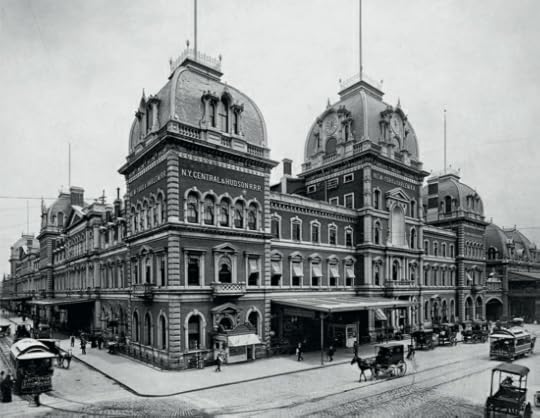
Buildings that no longer exist or have been dramatically altered through time are mentioned, accompanied by a short text that points out all the up's and down's of each site until the inevitable end.
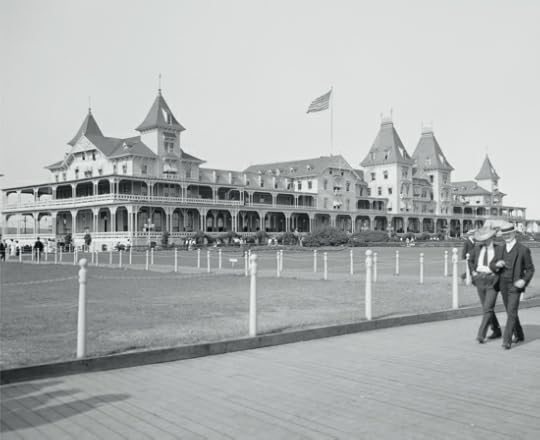
The text also gives as a variety of informations for life in New York mostly in 19th and 20th century..
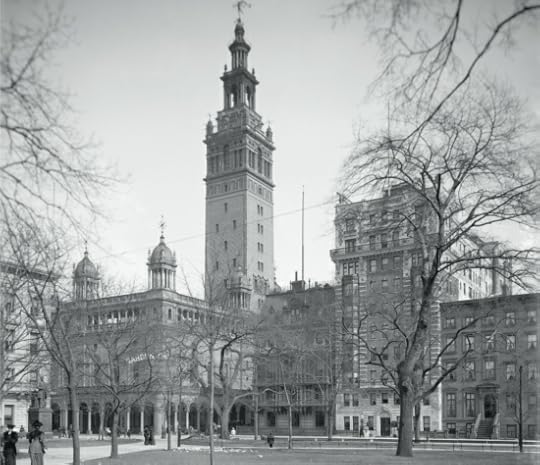
Mansions, hotels, parks, banks, stations anything you name it. it is there..
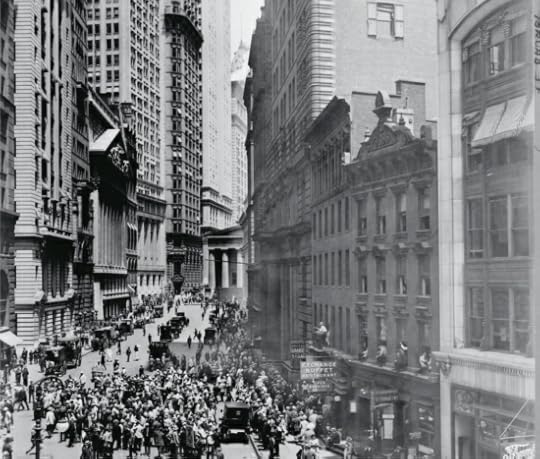
It's great historical ride on New York's demolished architectural heritage.
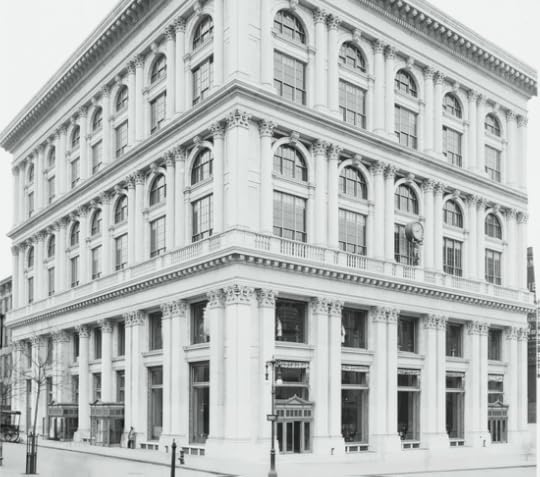
THOUGHTS ABOUT THE BOOK
- Amazing photos
- I loved the fact that i had the chance as a reader to know more about the families that had to do with the buildings..
- The book lets the reader to glimpse in the past and have a taste of the way of life then in New York.
- It reminded me of Thackeray's books and F.Scott Fitzgerald's..
ARC provided by the author Via Netgalley.
Thank you!
I don't know if it is because i love N.Y. so much, the reason why i enjoyed this book so immensely.. But i did!
Buildings that no longer exist or have been dramatically altered through time are mentioned, accompanied by a short text that points out all the up's and down's of each site until the inevitable end.
The text also gives as a variety of informations for life in New York mostly in 19th and 20th century..
Mansions, hotels, parks, banks, stations anything you name it. it is there..
It's great historical ride on New York's demolished architectural heritage.
THOUGHTS ABOUT THE BOOK
- Amazing photos
- I loved the fact that i had the chance as a reader to know more about the families that had to do with the buildings..
- The book lets the reader to glimpse in the past and have a taste of the way of life then in New York.
- It reminded me of Thackeray's books and F.Scott Fitzgerald's..
ARC provided by the author Via Netgalley.
Thank you!
February 22, 2019
This is a beautiful tribute to one of the world's great cities. The quality of the photos is exceptional, and there is just enough text to make it entertaining, not academic. I love architectural and social history, so this book fed those two interests. Since I focused my Master's in English studies on American late 19th - early 20th century fiction, many of the buildings and stories of old New York society were familiar to me. Many later 20th century lost buildings were ones which I had seen on my trip to the New York World's Fair in 1964. Oh! the Automat! Of all that was lost, the most tragic is the loss of the World Trade Center, the destruction of which had nothing to do with trying to make a fortune in real estate, accidental fires, or a building outlasting its usefulness. I live in Cleveland, Ohio which once had more millionaires than any other city its size. Many of the reasons that New York lost the treasures in this book are the same as those which have left us with only a handful of the homes that graced Euclid Avenue on Millionaire's Row.

November 23, 2019
Learned a fair amount, which is natural since New York is not my town. But half of this book seemed to be Coney Island theme parks and various ramshackle waterfront structures--not exactly what I'd put next to the lost Penn Central. Maybe this is just something I don't appreciate and those are parts of New York's cultural past in the way that The Columbian Exposition and South Water Street buildings are for Chicago? Anyway, kind of disappointing.

February 2, 2022
I love the little nuggets of New York history. For more than half the buildings I’d get lost in the story and think “oh, I’d love to see this,” then I’d land on the cruel reminder that all the building are lost. Great read!

November 23, 2017
It was interesting to see New York in the past.

May 7, 2023
The photos are wonderful, the info, the text, could be more informative.

August 6, 2025
There are two versions of this topic with identical titles. Both the Nathan Silver and Marcia Reiss versions are excellent. The advantage the Silver book has is the pithier and more knowledgeable commentary, while the Reiss book is more straightforward and its photographs are of a higher quality.

October 13, 2012
I've been living in NYC for twelve-ish years now: I came for college and didn't leave. I definitely don't have as many historical facts and dates and names in my head as some people I know, but I'm curious about the city, and reasonably well-informed about its history. So when I started reading Lost New York, I wasn't sure how much I would like it, or how interesting it would be, or how much of it I would already know. As it turned out, it was a mix of the familiar and new, but a pretty satisfying book to dip in and out of over the course of several evenings.
In the book, Marcia Reiss covers various "lost" buildings and places throughout the city. It's organized chronologically, by the date that a building/place was demolished/burned/closed down/otherwise taken out of commission, from the 1890s to the 2000s. Each entry starts with the building/place name, how it was lost, and the date of its demise; most buildings/places get two-page spreads, one of which is a full-page black-and-white image, though some places get a bit more (Steeplechase Park, on Coney Island, gets four pages). Even for the ones I knew about, there was often some new piece of knowledge in the photos or the text. Some pieces were more interesting to me than others: there are numerous 5th Avenue Gilded Age mansions that all sort of ran together, and I don't really care about the old Yankee Stadium or Ebbets Field. But I loved all the parts about Coney Island, like the spread about the elephant-shaped hotel that burned down in 1896, or the section on Luna Park, in which I learned about the "Candy Delicatessen," where "vegetables, liver pudding, blood pudding, and a long list of other childhood torments were all made of candy" (78). (See this page for more on that, including a picture that I wish were bigger/crisper.)
Speaking of pictures, the photos and illustrations in Lost New York are clearly a big part of its appeal. I love the little details that are visible in the full-page images, the sense you get of the texture of life in the city at whatever time the picture was taken. In one photo of the aforementioned Elephantine Colossus, you can see painted signs for a "Historic Sioux Indian War Village," and for "Drummond's Cottages, Furnished Rooms," and for "Andrew Holzer's Stables," which are related to some beer company whose name is partially obscured. In a picture of Dreamland, another Coney Island amusement park, there's the boardwalk and a faux-Venetian lagoon, men in straw hats and women with parasols, striped awnings and a sign for "Mowgli the Missing Link," and a big sign for "Fighting the Flames, an attraction in which there were "scores of firefighters armed with steam pumpers and hook-and-ladder trucks climbing over a six-story building to put out a sham fire while men and women leapt from the roof into nets" (18). In a picture of Herald Square there are signs for "Offices and lofts to let," and for "Lucio's Pearls," which must be synthetic or otherwise not-quite-real, since the sign says they "Defy Detection." There's a sign for "Chiropody, Hair Dressing, & Facial Massage," and there's the Hotel Normandie in the background, advertising itself as "Absolutely Fireproof" (32).
In the book, Marcia Reiss covers various "lost" buildings and places throughout the city. It's organized chronologically, by the date that a building/place was demolished/burned/closed down/otherwise taken out of commission, from the 1890s to the 2000s. Each entry starts with the building/place name, how it was lost, and the date of its demise; most buildings/places get two-page spreads, one of which is a full-page black-and-white image, though some places get a bit more (Steeplechase Park, on Coney Island, gets four pages). Even for the ones I knew about, there was often some new piece of knowledge in the photos or the text. Some pieces were more interesting to me than others: there are numerous 5th Avenue Gilded Age mansions that all sort of ran together, and I don't really care about the old Yankee Stadium or Ebbets Field. But I loved all the parts about Coney Island, like the spread about the elephant-shaped hotel that burned down in 1896, or the section on Luna Park, in which I learned about the "Candy Delicatessen," where "vegetables, liver pudding, blood pudding, and a long list of other childhood torments were all made of candy" (78). (See this page for more on that, including a picture that I wish were bigger/crisper.)
Speaking of pictures, the photos and illustrations in Lost New York are clearly a big part of its appeal. I love the little details that are visible in the full-page images, the sense you get of the texture of life in the city at whatever time the picture was taken. In one photo of the aforementioned Elephantine Colossus, you can see painted signs for a "Historic Sioux Indian War Village," and for "Drummond's Cottages, Furnished Rooms," and for "Andrew Holzer's Stables," which are related to some beer company whose name is partially obscured. In a picture of Dreamland, another Coney Island amusement park, there's the boardwalk and a faux-Venetian lagoon, men in straw hats and women with parasols, striped awnings and a sign for "Mowgli the Missing Link," and a big sign for "Fighting the Flames, an attraction in which there were "scores of firefighters armed with steam pumpers and hook-and-ladder trucks climbing over a six-story building to put out a sham fire while men and women leapt from the roof into nets" (18). In a picture of Herald Square there are signs for "Offices and lofts to let," and for "Lucio's Pearls," which must be synthetic or otherwise not-quite-real, since the sign says they "Defy Detection." There's a sign for "Chiropody, Hair Dressing, & Facial Massage," and there's the Hotel Normandie in the background, advertising itself as "Absolutely Fireproof" (32).

January 31, 2012
Both Lost San Francisco and Lost New York are wonderful works, featuring pictures and discussion of architecture of the cities, when they were built and when and how they were lost to the current visitor or resident. This is not in-depth history, but the books do provide a thorough discussion of each glimpse of the city's history via the era in which buildings were permanently lost.
This is an interesting and enjoyable item for the coffee table, sometimes hypnotizing in that recurring themes related to the growth of a large city draw the reader in, looking for other themes or new examples of the same theme. Earthquakes and fires in San Francisco. Road construction and transportation buildings in New York are among the themes that each book touches upon.
The chapters are separated by decades to make it easier to look at many great architectural achievements from the same era. The only problem is that these buildings are listed in chronological order according to when they were taken down, not when they were built. An index solves the problem of finding buildings, however, and the organization of the material according to the era when the buildings were permanently "lost" provides the reader with a sense of how the buildings were devalued in each subsequent decade.
I highly recommend this book as a gift for lovers of architecture or fans of New York history. It also comes at an affordable price -- only $18.95 for 142 glossy pages of impressive photojournalism, a great value. See also .Lost San Francisco.
This is an interesting and enjoyable item for the coffee table, sometimes hypnotizing in that recurring themes related to the growth of a large city draw the reader in, looking for other themes or new examples of the same theme. Earthquakes and fires in San Francisco. Road construction and transportation buildings in New York are among the themes that each book touches upon.
The chapters are separated by decades to make it easier to look at many great architectural achievements from the same era. The only problem is that these buildings are listed in chronological order according to when they were taken down, not when they were built. An index solves the problem of finding buildings, however, and the organization of the material according to the era when the buildings were permanently "lost" provides the reader with a sense of how the buildings were devalued in each subsequent decade.
I highly recommend this book as a gift for lovers of architecture or fans of New York history. It also comes at an affordable price -- only $18.95 for 142 glossy pages of impressive photojournalism, a great value. See also .Lost San Francisco.

December 7, 2013
Lost New York is a beautifully presented archeological type study of NYC architecture lost during the City's rapid expansion over the the last century and a half. Of note is that it wasn't until the late 1950s that the City government finally put preservation ordinances in place to save the buildings whose misfortune it was to be on very valuable land. As such, quite a bit of important history was torn down in the first half of the century.
The book presents each building/site with at least two pages - one page with text featuring background information (of the building, the builders, architect, or owner) and then another separate paragraph about the demise of the building. Each building story also has a few supplementary photos.
The book is beautifully laid out with clean design and descriptions with enough information to be interesting but not overwhelming. Each history is well worth a read.
Buildings range from hotels (Astoria), venues (Madison Square Garden (x2), private homes (Schwab mansion), amusement sites (Children's zoo, Steeplechase), and transportation (piers, trollies, elevated railways). So there is a good mix in the book to create the story of what New York City has lost.
If I have a complaint, it is that I really wanted to see the current view of the sites as well as maps (there are no maps at all). I ended up having Google maps open while reading and also did some searches for the current buildings. It made the book much more meaningful that way.
Received as an ARC from the publisher.
The book presents each building/site with at least two pages - one page with text featuring background information (of the building, the builders, architect, or owner) and then another separate paragraph about the demise of the building. Each building story also has a few supplementary photos.
The book is beautifully laid out with clean design and descriptions with enough information to be interesting but not overwhelming. Each history is well worth a read.
Buildings range from hotels (Astoria), venues (Madison Square Garden (x2), private homes (Schwab mansion), amusement sites (Children's zoo, Steeplechase), and transportation (piers, trollies, elevated railways). So there is a good mix in the book to create the story of what New York City has lost.
If I have a complaint, it is that I really wanted to see the current view of the sites as well as maps (there are no maps at all). I ended up having Google maps open while reading and also did some searches for the current buildings. It made the book much more meaningful that way.
Received as an ARC from the publisher.

December 22, 2013
This is a wonderful book, beautifully illustrated and beautifully presented. It’s a compendium of all the buildings in New York that have been destroyed, demolished, altered and rebuilt. From the most magnificent mansions to more humble constructions, it takes the reader on a journey through New York’s lost architectural heritage and the ever-changing landscape of this ever-changing city. As well as descriptions of the buildings, there are stories of the millionaires, entrepreneurs and city fathers who commissioned them. From Grand Central Station to Coney Island, from the mid-19th century to the end of the 20th, the book is also a record of historical events and the memorable individuals that have shaped the city. It wasn’t until the late 1950s that the city government started putting preservation notices on iconic buildings, so these photographs are the only record we have of what has been lost. Unfortunately there is no map in the book, which is an unfortunate omission, but nonetheless this is a delightful book, and one that is worth having in hard copy as well as an e-book, to treasure and refer to.

December 9, 2013
Posted at Book Hoarder Reviews
I loved this book more than I have words to describe. I am a huge history buff and I thoroughly enjoyed all of the pictures and this little history bits on each of the buildings. I also loved how the book was broken up into eras and not just a random order. It really shows how much the author cared for her subject. I really loved seeing the architecture of the old buildings. Possibly my favorite one was the Elephant hotel on Coney Island. I would have loved to stayed in that one.
I would definitely suggest this book to anyone who loves photography of old buildings, history or New York. I cannot wait to read more from this series.
I received a copy of this book from Netgalley for a review.
I loved this book more than I have words to describe. I am a huge history buff and I thoroughly enjoyed all of the pictures and this little history bits on each of the buildings. I also loved how the book was broken up into eras and not just a random order. It really shows how much the author cared for her subject. I really loved seeing the architecture of the old buildings. Possibly my favorite one was the Elephant hotel on Coney Island. I would have loved to stayed in that one.
I would definitely suggest this book to anyone who loves photography of old buildings, history or New York. I cannot wait to read more from this series.
I received a copy of this book from Netgalley for a review.

February 16, 2016
Lovely book of old New York buildings (mainly), ordered chronologically by the years that they became 'lost'. Not quite as luxuriously presented as the similar 'Lost London' book that was published recently, nor as in-depth as the coverage in 'New York: A Documentary Film'. Nevertheless, a worthwhile read.
There are some gems in here and some shockers too—amazing opulent houses the size of a city block were put up by rich characters only to be demolished less than fifty years later. A lot of beautiful buildings have been lost but, like London, a boldness for bringing in the new has surely played a part in the continued success of the city.
There are some gems in here and some shockers too—amazing opulent houses the size of a city block were put up by rich characters only to be demolished less than fifty years later. A lot of beautiful buildings have been lost but, like London, a boldness for bringing in the new has surely played a part in the continued success of the city.

December 12, 2013
Lost New York by Marcia Reiss offers a fascinating glimpse into the history of New York City via its lost architecture and landmarks. From the Manhattan Beach Hotel to Ebbets Field, Penn Station to the original Waldorf-Astoria hotel, history buffs will delight at the stunning vintage photographs that celebrate a bygone era of trolley cars, the Brooklyn Dodgers, and classic art deco designs.
Disclaimer: This book has been provided by the publisher in exchange for an honest review.
Disclaimer: This book has been provided by the publisher in exchange for an honest review.

December 17, 2013
What a neat book. Photographs and brief histories of 60+ buildings/landmarks no longer standing in NYC. The book is arranged chronologically beginning in 1895 and ending in 2008 allowing the reader a glimpse of life in NYC. There were no major natural disasters or widespread fires causing the destruction--most of these lost pieces of history were just demolished as times changed. A great "coffee table" book for anyone who loves architectural history or NYC.
*ARC courtesy of Anova Books, provided by Netgalley in exchange for an honest review. Thank you!*
*ARC courtesy of Anova Books, provided by Netgalley in exchange for an honest review. Thank you!*

August 22, 2014
This was a wonderful visual and reading experience, paring the history and pictorial images of now gone New York landmarks with a brief vignette of their passing and a short summary of what is now located on the former site today. I picked up many interesting gems about buildings and locations I grew up seeing or hearing about. I recommend anyone who grew up in a major city to check and see if their city has received the "Lost " examination and enjoy this very well done treatment of their home town

February 28, 2012
Loved the photos of buildings/homes/elements of New York that no longer exist. It was interesting to me that the NY Public Library sits on the site of the old 5th Ave reservoir, and that so many of the robber barons' homes have been demolished to make way for bigger and better things. The only things missing were photos showing what those sites look like today. I think that would have completely capped the book off and made it seem relevant to those of us outside of NYC.

December 6, 2013
Filled with lots of pictures and informative text that nicely outlines the New York that is gone today. It's a beautiful book that readers from New York and those who like me have never been there will enjoy and marvel of the lost beauty of New York City. Nicely done, but does remind me of 'coffee-table' books.
ARC from NetGalley
ARC from NetGalley

October 7, 2012
Large-format photo book with well-written explanations of New York City landmarks that are no more.
Excellent.
Excellent.

December 26, 2013
Great pictures accompany the interesting articles about buildings in and around New York that were destroyed in the name of progress during the last century.
Displaying 1 - 20 of 20 reviews