Excerpt from Nine Basic Arts This work and a previous one, The World of Art, were originally planned as a single book. The generosity of Mr. Harold Feldman and Mr. John F.Molloy enabled me to send a draft to various friends for criticism. As a result of the suggestions of several readers they now appear as independent though related volumes. Both are in good part the product of an interest in the arts long ago awakened by Eliseo Vivas, and encouraged, nourished, and enriched by Neil Welliver. It has been sustained by conversations with George Howe, King Lui Wu, Paul Rudolph, Peter Millard, Arthur Drexler, Erwin Hauer, Robert Engman, James Brooks, Charlotte Park, C.Marca-Relli, K.R. C.Greene, Howard Boatwright, Richard Sewall, Harry Berger, Cleanth Brooks, Janice Rule, Curt Conway, Kim Stanley, Lee Strasberg, Uta Hagen, Alfred Ryder, John Gassner, Eliot Elisofon, Jonathan Weiss, Robert Thorn, David Slavitt, and Scott Sullivan. A draft of this work was criticized in detail by Ellen Haring, Iredell Jenkins, K.R. C.Greene, Jonathan Weiss, and Richard Sewall. In addition it has had the benefit of comments from John Gassner, Louis Z.Hammer, Dorothy Walsh, Robert Herbert, Vincent Scully, Philip Johnson, Paul Rudolph, Peter Millard, James Brooks, I.C. Lieb, V.C. Chappell, Richard Bernstein, Scott Sullivan, David Slavitt, Theodore Weiss, Henri Peyre, Merce Cunningham, John Cage, and Robert Lowell. I am most grateful to them; they have made it possible to improve the book immeasurably. I have tried to follow the lead of the criticisms which I have received. Divergent vocabularies, outlooks, and stresses, however, have often proved to be great obstacles in the way of a clear and common understanding. None of the foregoing critics should be held accountable for any of the blunders or blurs the work contains. I am glad that this book is being published by Southern Illinois University Press. It is a source of great satisfaction to me that Mr. Vernon Sternberg and his excellent staff have made it the object of their usual thoughtful, sensitive concern. P.W. About the Publisher Forgotten Books publishes hundreds of thousands of rare and classic books. Find more at www.forgottenbooks.com This book is a reproduction of an important historical work. Forgotten Books uses state-of-the-art technology to digitally reconstruct the work, preserving the original format whilst repairing imperfections present in the aged copy. In rare cases, an imperfection in the original, such as a blemish or missing page, may be replicated in our edition. We do, however, repair the vast majority of imperfections successfully; any imperfections that remain are intentionally left to preserve the state of such historical works.
The book starts with a sort of reflection on the (old) categories of time and space, so prevalent in epistemology. It may sound simplistic, but the author may have a point, taking these two categories as the basic distinctive criteria for his taxonomy. As you will see, he’ll add one extra category.
SPACE
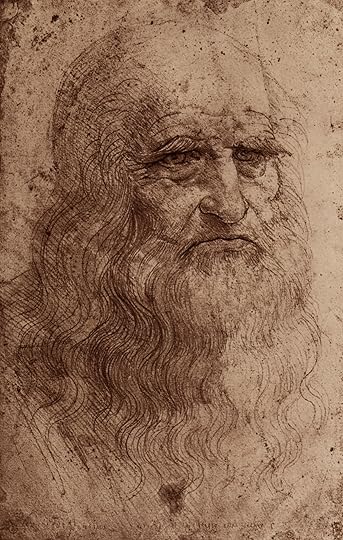
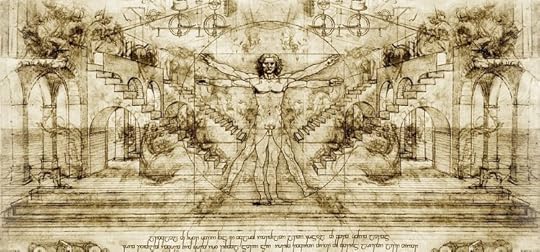
Leonardo da Vinci: “The air is full of an infinite number of radiating straight lines which cross and weave together without ever coinciding; it is these which represent the true form of every object’s essence. The spatial structure of existence is complex; it is a vast matrix beyond the reach of any formal geometry.. For the sculptor this is the very stuff of reality.When he portrays an object he congeals the meaning of spatial existence within a narrow compass so as to make himself confronted with an icon of that existence"
"Common-sense space is a most irregular space, qualitatively different from place to place. Common-sense space is a highly complex space."
"The space of science is just a geometry. It has no volume, no roominess"
"The space of values, evaluational space, is a space of positive and negative affiliations, of oppositions and frustrations, adoptions and rejections, of subjugations and enrichments."
"Perceptual content is always spread out, sometimes spatially and always temporally."
TIME
"The ancient Hebrews lived in the light of the coming of the Messiah .Christianity live under the aegis of a day of last judgment."
"Perceived time, scientific time, eventful time, and the time of evaluations differ markedly."
"Time offers a perspective on all else"
"Since existence has three dimensions, there are three types of art spatial, temporal, and dynamic".
C.P.E. Bach:“Certain purposeful violations of the beat are often exceptionally beautiful. Every artist flats his notes occasionally, delays his recurrences, forestalls his climax, in order to heighten the interest, sharpen contrasts, and thereby bring about a more important resolution than is otherwise possible”.
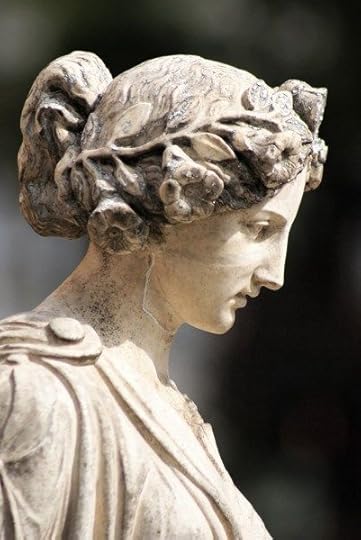
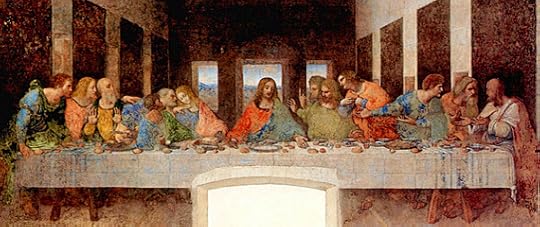
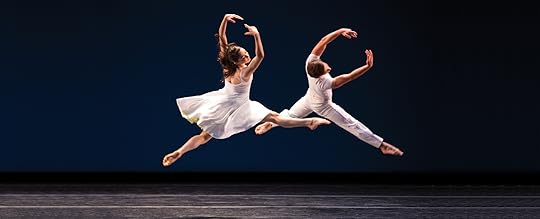
So, according to Paul Weiss, there are 9 basic arts. Architecture, sculpture and painting are space arts, they “create space”. Musicry*(includes musical composition), story [short stories, novels, and scripts for plays] and poetry are temporal arts. Finally, Music, theatre and dance are “ways of becoming”, “dynamic arts”.
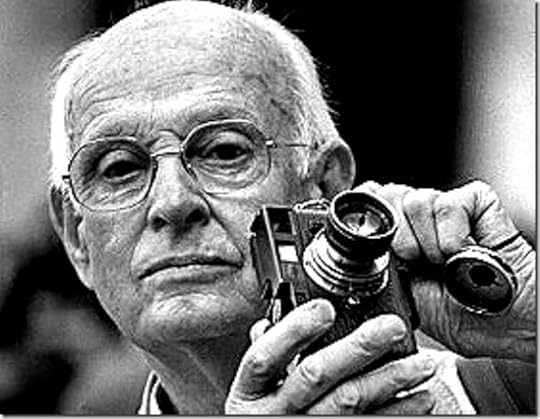
For sure, other arts may become a “compound” of those previous basic categories; such as Photography, documentary and the movies. And yet, the author admits thousands of possible combinations.
As the crown of this approach I would refer Wagner (cited by the author) who envisaged a “single all-inclusive marriage of the basic arts”. [And that one you would call it...what?].
The “nine” makes me recall when I was a late teen and I used to read about the “seventh art”: cinema.
Then I’ve made contact with the expression “the ninth art” referring to cartoons and comics.
What’s next? I wonder.
(Free translation; one guy asks the other whether he recognizes Muhammad the Prophet in any of the photos; the other guy points to one of the photos saying: this is the one, for sure. You figure.).
Fully backed by a myriad of authors (composers, artists, musicians, etc) this is one of the finest reflections on art I’ve encountered thus far.
Debatable, nonetheless.
--- *check on Victor Zuckerkandl’s book "Sound and Symbol".