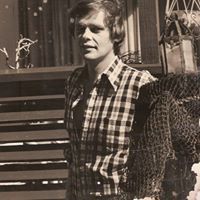
Richard Buckminster "Bucky" Fuller was an American architect, systems theorist, author, designer, and inventor.
Fuller published more than 30 books, coining or popularizing terms such as "Spaceship Earth", ephemeralization, and synergetic. He also developed numerous inventions, mainly architectural designs, and popularized the widely known geodesic dome. Carbon molecules known as fullerenes were later named by scientists for their structural and mathematical resemblance to geodesic spheres.
Buckminster Fuller was the second president of Mensa from 1974 to 1983.
Got me through hours on a hippie bus to the national rainbow family gathering. Many a hippie picked it up, but could not make sense of it. Kept me from going insane, and made me realize what a wonderful man Fuller was. It now rots in my boyfriends car, he says it's "too heady."
You have to digest Fuller's writing style in bits of less than 10 pages... but wow was this guy aware of where science was going and what humans were adding to it all. One of my all time favorite books.
i am almost at the end of the epilogue & this book has been both inspiring in many respect but quite disturbing in so far as it raises a big question for me - i think bucky has it right about ephemeralization & the fact that with using less to do more we can support a massively larger population than most people are aware - i think he has refuted malthus & also darwin - however my thinking is that he is wrong about the great pirates extinction - it seems they have dug their heels well & truly in & are clinging to everything they can & thus my question is have we gone beyond the point where utopia is acheivable for all humankind or is oblivion the inevitable outcome of the still operational great piracy?
Bucky has faith in humanity even though his approach is akin to that of the engineer: nationalities will fade into one humanity, scarcity--the cause of all wars--will end as "ephemeralization"--doing more with less--works its magic,, the "universe is the aggregate of all human experience, consciously apprehended and communicated--it includes metaphysics" and so forth. There is some repetition and this vision is tied to the information available ca 1970. One wishes he were right.
Check out this cover (seriously people, click on the cover to enlarge it and take in the beauty as the rainbowed man). 5 f***ing stars for that cover!!! It's soooooo much better in real life, if your nice to me I'll grace you with a viewing.
Tiene reflexiones interesantes, pero el hecho de que sean transcripciones d diferentes conferencias hace que se repitan las mismas ideas una y otra vez. Entre sus ideas me llama la atención la defensa de una inteligencia sistemática y no especializada que busca integrar. También es interesante su punto de vista ecológico puramente tecnológico. Para el objetivo no es el decrecimiento (como postularía el club de roma y posteriormente toda la ideología ecologista) sino el hacer más con menos es decir mejorar al máximo la eficacia, rechazando así las teorías de Malthus sobre los límites poblacionales debido a la escasez de recursos.
Nacido en 1895, y tras haber presenciado el boom económico en estados unidos de principio de siglo XX, podemos aún así reprocharle una confianza ciega en el impacto de la tecnología en mejorar las vidas de las personas.
Conclusión: personaje interesante pero libro repetitivo.
The only book I’ve ever read three times in its entirety, possibly more than three, though all when I was still in school. The title was similar to a favourite documentary of mine about the Venus Project titled Paradise or Oblivion, through which I had first heard of Buckminster Fuller. It’s a good mix of vintage humanistic optimism, sort of scientific sermon, eco-motivation, and just the pleasure of listening to a gifted raconteur. I would class it as a good self-help book for cynical STEM-interested people to feel more positive about the prospects for the future. However, as far as more concrete technical information, it’s a little dated and hyperbolic, and perhaps too grand in scope. People genuinely looking to do good would do better to limit their scope to more practical problems and solutions and more contemporary research and intellectuals. But it’s a fantastic read and I expect I’ll read it again a couple of times in my life. Also a must-read for Buckminster Fuller fans.
I read this book in the early 70s when I didn’t see how humanity would get out of the mess we had created. I appreciated his enthusiasm and optimism, but I didn’t really understand the choice we had between utopia and oblivion until I became familiar with the philosophy of Oscar Ichazo. Fuller tends to present the solution as technical, whereas Ichazo shows that this is fundamentally a spiritual problem. They both agree that the solution needs to be scientific: Fuller looks for a material solution and Ichazo proposes a spiritual solution.
A collection of essays, addresses, and statements by Fuller in 1964-65, making the argument that a) we now know there are enough resources in the world to sustain all of humanity b) because since the development of naval and aerospace technology (for a few hundred years, but not generally recognized) we have begun doing more-with-less but c) we're currently only getting the secondary benefits of this ephemeralization because it is directly developed for weapon- and war-making so d) accomplishing the success of 100% of humanity will not come through politics but d) through a design-science revolution in education e) reforming the environment in which humanity lives and is raised.
There's some strongly 60's idealism that seems necessarily quaint reading today, belief in the power of industrialization and television for good for instance. And a sense of urgency that is just a bit sad today, warning that waiting for the secondary benefits of development in 20 or 40 years (optimistic in itself!) is likely too late as we burn through our "savings account" of concentrated energy sources.
This collection is a little long and repetitive, but enjoyable to see the ideas repeated and reintegrated to different audiences; if you were to only read the chapters "How to Maintain Man as a Success in Universe", "Utopia or Oblivion", and "Design Strategy" you would get all of it. (These don't appear to be available outside this collection, however.)
This is a tough and tedious read. Fuller has a very academic writing style and loves to make up new words and dabble in his invented euphemisms. This makes understanding very difficult and time consuming. Some passages must be parsed several times before understanding what he's trying to say. Sometimes it's simply incomprehensible.
Fuller is a product of the utopian academic thinking that was prevalent in the 1960's. The world was evolving into a "world without borders" and the "international man." Students would be the vanguard of the proletariat and foster a design revolution which would create more with less (ephemeralization) and eliminate want. Nation states would become obsolete as they are only vehicles for the competition for limited resources, a problem solved by the design arts. To Fuller, it's all about "things."
History has borne out that there's more to life than "things." Man has a spiritual side, pride in ethnicity and/or race, a need to belong to tribe, or clan, or nation. Nation states and borders are not going anywhere soon.
There are some very interesting ideas in this book, but a lot of the essential framework of Fuller's ideas are obsolete in the age of Islamic terrorism.
Full of terrific insights, especially his theory of wealth. But you'll have to get used to Bucky's weird style of long sentences with strings of adjectives of his own invention. It's worth it.