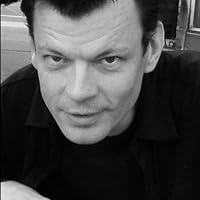
Gore Sexually Speaking presents the author’s often provocative and always engaging thoughts on sexuality. Here, fourteen essays and three rare, vintage interviews published over the past four decades tackle hot-button topics such as gay American founding fathers, sex and the Catholic church, gay bashing and the U.S. Congress, and bedding Jack Kerouac. “Vidal’s erudition, candor, and exceptional sense of humor shine.” ―San Francisco Chronicle
Works of American writer Eugene Luther Gore Vidal, noted for his cynical humor and his numerous accounts of society in decline, include the play The Best Man (1960) and the novel Myra Breckinridge (1968) .
People know his essays, screenplays, and Broadway. They also knew his patrician manner, transatlantic accent, and witty aphorisms. Vidal came from a distinguished political lineage; his grandfather was the senator Thomas Gore, and he later became a relation (through marriage) to Jacqueline Kennedy.
Vidal, a longtime political critic, ran twice for political office. He was a lifelong isolationist Democrat. The Nation, The New Yorker, Vanity Fair, The New York Review of Books, and Esquire published his essays.
Essays and media appearances long criticized foreign policy. In addition, he from the 1980s onwards characterized the United States as a decaying empire. Additionally, he was known for his well publicized spats with such figures as Norman Mailer, William F. Buckley, Jr., and Truman Capote.
They fell into distinct social and historical camps. Alongside his social, his best known historical include Julian, Burr, and Lincoln. His third novel, The City and the Pillar (1948), outraged conservative critics as the first major feature of unambiguous homosexuality.
At the time of his death he was the last of a generation of American writers who had served during World War II, including J.D. Salinger, Kurt Vonnegut, Norman Mailer and Joseph Heller. Perhaps best remembered for his caustic wit, he referred to himself as a "gentleman bitch" and has been described as the 20th century's answer to Oscar Wilde
+++++++++++++++++++++++ Gore Vidal é um dos nomes centrais na história da literatura americana pós-Segunda Guerra Mundial.
Nascido em 1925, em Nova Iorque, estudou na Academia de Phillips Exeter (Estado de New Hampshire). O seu primeiro romance, Williwaw (1946), era uma história da guerra claramente influenciada pelo estilo de Hemingway. Embora grande parte da sua obra tenha a ver com o século XX americano, Vidal debruçou-se várias vezes sobre épocas recuadas, como, por exemplo, em A Search for the King (1950), Juliano (1964) e Creation (1981).
Entre os seus temas de eleição está o mundo do cinema e, mais concretamente, os bastidores de Hollywood, que ele desmonta de forma satírica e implacável em títulos como Myra Breckinridge (1968), Myron (1975) e Duluth (1983).
Senhor de um estilo exuberante, multifacetado e sempre surpreendente, publicou, em 1995, a autobiografia Palimpsest: A Memoir. As obras 'O Instituto Smithsonian' e 'A Idade do Ouro' encontram-se traduzidas em português.
Neto do senador Thomas Gore, enteado do padrasto de Jacqueline Kennedy Onassis, primo distante de Al Gore, Gore Vidal sempre se revelou um espelho crítico das grandezas e misérias dos EUA.
Faleceu a 31 de julho de 2012, aos 86 anos, na sua casa em Hollywood, vítima de pneumonia.
1) the essays are composed as if they were 'elegant conversations' w/ a witty old uncle, and the interviews are actually so.
2) no matter the topic, vidal says the same shit over and over again, b/c he assumes correctly that most people are forgetful (he'd probably say ignorant, dull, vulgar, etc.) and need incessant reminding of the most basic ideas. they are: a) there are no homosexual people, only homosexual acts (larry kramer debates this w/ him in the final interview in the book). b) the quality of 'trade' has declined as men have rushed to place themselves in one or the other sexuality grouping. there's less boundary-crossing of the sort vidal apparently enjoyed while in prep school, the navy, w/ jack kerouac, etc. c) vidal hates sissies, especially truman capote. he references capote in much the same way that trump mentions rosie o'donnell: as placeholder, as bête noire, as erstwhile (friendly) rival. d) he loves telling tennessee williams stories. e) he is aware that he is always in the process of being forgotten, even while alive.
3) vidal, despite his avowed embrace of hedonism, is quite puritanical and conservative.
4) vidal "loves the [HIS; since he is an Old American] republic."
5) vidal hates john barth, donald barthelme, thomas pynchon, et al.
6) vidal hates (or resents) most academics.
7) vidal loves breezy, elegant writing and nothing else.
8) vidal takes politics seriously, but refuses to accept the "personal is political" line of argument that emerged in the 70s. although i *do* believe this, there's something admirably old-timey about vidal's attitude on that matter.
9) vidal is a master of the insightful insult, as when he remarks of john updike that he writes superbly for someone whose work isn't the least bit interesting, or when he notes that bill burroughs & andy warhol are similarly fraudulent "artistes."
anyway, this is a quick read, and it's not even vidal's best stuff, because vidal's best stuff doesn't have much, if anything, to do with sex.
Rarely can an author create something that tempers itself in contrast to the current times. Re-reading these observations from the greatest American essayist of the 20th century brings a fresh candor to the over-sexualization of the West, the over-feminization of the homosexualists, and the debates surrounding identity that rage today. With the current rush to identify and approve or scorn of absolutely every "type" according to the PC Pollyannas, discussions on the absurdity of labeling is refreshing.
As a stylist, for readability, for the pleasure of reading an intelligent and knowledgeable writer, I am tempted to give Vidal four stars but, and it is a big but, as an egocentric snob who thought more highly of himself then anyone else ever could have (Vidal never loved anyone except himself and that was a love reciprocated in great dollops of poorly concealed self praise) Vidal managed to get away with an awful lot considering his not very good novels - I am thinking of his historical ones in particular and his unattractive and ill concealed snobbery and prejudices against anyone who wasn't well, WASP, and of that group it was a pretty narrow East coast collection of acquaintances that he approved of. No English writer of the 20th century could have gotten away with the way he dismisses social inferiors and ethnic minorities. So to go back - I can only rate him three stars but he is still worth reading and despite its flaws what he has to say can prove a useful basis for thought and argument.
I thought what he had to say in his interview with Larry Kramer was particularly interesting. Vidal gives his 'there are only homosexual acts not homosexual people' line which of course Kramer and many other gay activists could not accept, or really understand, except as an evasion or a refusal to commit and be counted. But Vidal makes a great deal of sense today - at least in those countries were gays are accepted and any questioning of their right to be treated as equals is no longer part of the debate - how to define what being 'gay/homosexual' (Vidal disliked the term gay intensely so rarely used it accept in parentheses) means. Without an opposition against being or accepting 'gays' you cease to have any clear sense of what being gay means.
I find Vidal's questioning of defining someone as a gay writer particularly interesting and apt. I can not count the number of times I have come across reviews of novels by gay authors which have been criticised because they don't have 'gay' content. Even the author Christopher Bram (let me admit my bias I think Bram is dreadfully overrated) complained when Jonathan Strong's (a really great writer in my opinion) second book didn't have any overt gay content or characters and he felt that Strong had failed. So is a gay author only in the gayness of his work? Although this is denied vociferously the reality seems to be different and Vidal said this when many of the loudest gay commentators refused to see that anything that was identifiably gay to small section of New York was actually gay (seeing as this definition of 'gayness' didn't include most of the continental USA - outside NY and SF, Europe and all those places with dark skinned people it was pretty insular definition).
Much more interesting is Vidal's attitude towards issues like AIDS which, in contrast to Kramer's (their discussion took place 1992 at the time of AIDS and Act Up) is much more political. Kramer was intimately and deeply involved in the battles around AIDS, but only because it was personal - he had no interest in politics or fighting for change beyond beyond the immediate causes that affected him personally. Vidal was committed to understanding, challenging and changing the system, of recognising that it was the corruption and failures of, for example, the way access to health care depended on a patient's ability to pay and not their need for medical attention that was crying out for change. There was no point gaining access to AIDS medication if all the others who were denied access to good medical care were ignored.
So in conclusion Vidal has produced some interesting essays which have much that is worth thinking about - but like every essayist he is trapped in his time and very little he says about the state of the world, or the way it was going, or his thoughts on the future are anything more then curiosity pieces - it is interesting how he goes on and on about the population 'explosion'. It was a red button issue in the 1960's and 70's but barely gets a mention now.
Gore Vidal is easily one of the best essayists in the world. Here, he writes about human sexuality in its many forms, but he veers toward homosexuality as he himself expresses homosexual behaviour (but don't dare call him a gay man -- he would have to disagree with that on principle). This collection, i>Sexually Speaking features his many essays, some about sex and some not, in addition to three interviews, two of which were for homocentric magazines, like The Fag Rag and The Gay Sunshine. He writes about authors and literature and politics and leaders, some of his material fascinating, others more academic. He talks about Schlafly and Eleanor Roosevelt and Isherwood with the same candor as he talks about sex acts. His tone is always pitch perfect for whatever he's discussing. Whether or not you agree with his views is irrelevant. His writing is superb, and so, I would absolutely recommend this collection.
I love Gore and almost everything he has written. The people he has known and his contention that gay and straight do not exist; that sex is descriptive not a lifestyle.I've got to agree with him in many ways. The interviews are dated but thoroughly enjoyable and his take on Eleanor Roosevelt, Tennessee Williams, Christopher Isherwood and others are just plain enjoyable. As I said, it's dated and maybe a bit out of step with the ways things have evolved, it's refreshing that Gore never embraced his sexuality as we do today, it supports his antagonist view of almost everything. Good historical snapshot and should be required reading of the new generation of fags.
Muchos de los ensayos son una constante repetición de que el sexo es política, y de que no hay una etiqueta por los actos sexuales de las personas porque todos son actos fisiologicamente permitidos para el disfrute del placer siempre y cuando las personas estén dispuestas física y psicologicamente aptos para ellos. El sexo es política porque el estado no debe inmiscuirse en lo que hacen las personas en las puertas de su casa. Y mucho menos obligarlos a creer en convencionalismos sociales que solo son ganancia para algunos.
A bit of a random collection, but the essays were very enjoyable.
The right wing in America has always believed that those who have money are good people and those who lack it are bad people. At a deeper level, our conservatives are true Darwinians and think that the weak and the poor ought to die off, leaving the spoils to the fit. Certainly a do-gooder is the worst anyone can be, a societal pervert who would alter with goverment subsidy nature's harsh but necessary way with the weak.
The book stops, mercifully, with the President's death and the end of Eleanor and Franklin. Also, the end of...what? American innocence? Optimism? From 1950 on, our story has been progressively more and more squalid. [...] Now we live in a society which none of us much likes, all would like to change, but no one knows how. Most ominous of all, there is a sense that what has gone wrong for us may be irreversible. The empire will not liquidate itself. The lakes and rivers and seas will not become fresh again. The arms race will not stop. Land ruined by insecticides and fertilizers will not be restored. The smash-up will come.
What is behind this new restiveness, this new desire to exist not as male or female but as human? It is very simple: we are breeding ourselves into exstinction. We cannot feed the people now alive. In thirty-seven years the world's population will double unless we have the "good luck" to experience on the grandest scale famine, plague, war. To survive we must stop making babies at the current rate, and this can only be accomplished by breaking the ancient stereotypes of man the warrior, woman the breeder. The partriarchal roar is that of our tribal past, quite unsuitable, as the old Stalinist used to say, to new necessities. The New York Review of Books, 1971
Bought at an upstate used-bookstore for a $1. It's weird to read Vidal's essays on sexual matters since the issues he raised are still hot-button topics used to control the masses. Many of these were written around the time of Roe v. Wade and now that the vile SCOTUS has overturned that landmark decision, women are once again at the mercy of the state. Vidal's views of homosexuality and even the use of the word "gay" may seem outdated, but the Dobson decision could lead back to criminalizing gay relationships. Vidal eschewed the concept of romantic love between men--or between men and women--even though he had a loving relationship with a man for over 20 years. He thought there was no such thing as a homosexual or a heterosexual, there were only homo or hetero acts. History and culture have proved him wrong, I think. He remains America's pre-eminent essayist though and I always enjoy whatever he writes. I wonder what he would have thought about our current sad state of affairs. He probably would have said the rise of Trump was inevitable given corporate interests and the increase in mass media.
Vidal is a pleasure to read, especially when he goes after people, who, in these essays (like in most others), are primarily the "Christers" and other religious conservatives fuming at the existence of homosexuals and advances in the women's rights movement. There are points which Vidal repeats again and again: one is that marriage as an institution was created to force people to do the work they didn't want to do (since it won't just be the man who starves if he refuses, but his wife and children as well). Another is that humanity is breeding itself into extinction, with plague, war or famine coming to check the overpopulation in the near future (dated Malthusian doom-mongering this), and so embracing sexually progressive causes might actually be a path to salvation. He also insists that there is no such thing as a homo- or hetero-sexual person; there are only homo- or heterosexual acts. Vidal hates ghettoisation (rightfully so), and ascribes to this growing tendency to differentiate between straight and gay the decline in the masculinity of "trade" in America, which has become sissified (and Vidal doesn't like sissies: see his many put-downs of Truman Capote).
A collection that begins and ends beautifully, with a sluggish middle.
His essay about Henry Miller is one of the funniest things Vidal ever said or wrote. When Vidal was on, he was ON.
Everyone knows that. But what really makes Vidal shine is that his barbs aren't the be-all, end-all. There is an unintentional lesson in his writing about giving due along with giving lip. His challenges are more joyous, his cleverness funnier, because he is also perfectly comfortable giving credit or respect where he thinks it's due. It removes the muddy waters that result from total disappointment and disinterest, or from the stubbornness that makes one segment an encapsulation.
Individual pieces are 4 or 5 star worthy, but as a collection, some themes become repetitive. Recommend reading one piece at a time with a good break before the next one.
This book of essays loosely arranged around the theme of sexuality regroups a series of texts dating roughly from the early 60s to about the early 90s. The common thread throughout the volume is the question of identity within society, and whether the parameters chosen by some to define themselves in comparison to others are valid ones. Is one to be defined by one’s sexual preference, or by one’s personality and accomplishments, or one’s common experience of life with the rest of humanity? Vidal hates the use of the word “homosexual,” which is an adjective, not a noun, and he makes the argument that people who gather under the banner of homosexuality are limiting their identity to their sexual preference. If the latter were removed, most of the people under this banner would have no reason to “congregate” together, since this is the only thing they may have in common. These ideas may seem outdated to some people, since the word “homosexual” has become a noun, and since “gay” has likewise been adopted into the common language of alternate lifestyles. [. . .] (p. 234) As for what struck me in the book, it was the interviews because Vidal’s wittiness and mischievousness shine through, more so than in the essays. Of note: although apparently referring at Nelson Rockefeller, the following quote fits the Bush Presidency well: [. . .] Whoever becomes our next dictator will be like Arthur Godfrey-folksy and very democratic in appearance, very warm and talkative and will say a lot about how much he loves the people. He will seem all right. He will also have the full support of the Pentagon and of the big industries intertwines with the Pentagon, members of congress who support the Pentagon.” I can’t remember exactly how I became aware of Gore Vidal, but I know that it was from seeking out some of his political writings rather than from first reading one of his novels. His statements, spoken with sibylline authority have always struck me as quasi-prophetic, and by their nature frightening. Vidal is the one who, by calling one of his books “The Decline and Fall of the American Empire” pointed out that the U.S in empire, and that empires do not last forever. The Romans also thought that they would rule over the world ad infinitum.
Mordaz, furioso, exagerado, cínico, inteligente. Un puñado de adjetivos con los que simpatizo. El tema principal es la homosexualidad. Gore dice que no existe: apenas es un adjetivo, que la media (y los misma comunidad 'gay', he de decir) se ha empecinado en volver un sustantivo. Y le doy la razón. Critica la doble moral y los sinsentidos judeocristianos. Y le doy la razón. Habla del sometimiento de la mujer como fruto -entre otras cosas- de la ideología capitalista y su exaltación de la familia. Y no podía darle más la razón. Gran crítico, este Vidal. Y gran paroxista. Se tuvo creído hasta el final que el fin del mundo es inminente y se debe a la sobrepoblación, cosa que se arreglaría con más homosexualidad y más anticonceptivos. Creía que la literatura estaba muerta, y este libro rayaba con el antisemitismo. Qué daría para que siguiera analizando la cultura moderna, sin embargo.
Gore Vidal's essays are some of my favorite examples of his writing, and Sexually Speaking is certainlly among his most charged and powerful collections. Some of the writing will seem dated now, but many of the issues he takes on, particularly with regard to homosexuality, still haven't advanced much. My favorite of the lot is the essay "Sex is Politics," impressive for its rhetoric and for the tensions Vidal pulls to the surface of our cultural pool. I don't know what we'll do for intelligent cultural commentary when Vidal is no longer around to say it with sarcasm and a healthy dose of arrogance.
The sections of this book which were previously published book reviews/author summaries get a little tiresome, but the interviews at the end are classic Vidal.