

What do you think?
Why Evil Exists
Presents historical, religious and philosophical explanations for the existence of evil.
Audio CD
First published January 1, 2011
Ratings & Reviews
Friends & Following
Create a free account to discover what your friends think of this book!
Community Reviews
Displaying 1 - 30 of 44 reviews

January 3, 2021
“Might evil itself be sometimes prompted by genuine, real good?”
In this engrossing 36 half-hour lecture series about what we consider evil in Western society, Charles Mathewes, Professor of Religious Studies at the University of Virginia, approaches this question from a number of disciplines, exploring different aspects of the question of evil.
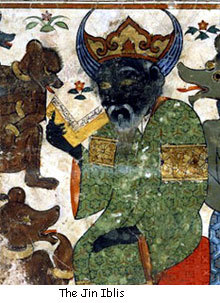
Early scriptures and tenets of Christianity, Judaism and Islam are explored for their different interpretations of the nature of evil. Lecture 11 on Islam was of particular interest to me. Mathewes points out how Islamic early scholars ensured a continuity between the vast sum of Roman civilization & philosophy and Western thinking. A fact known to students of history, but generally unknown to the masses, who view Islam with suspicion as a great menace. I found the Islamic origin story of the Devil particularly revealing. Their take on Satan is that he was originally a djinn (or angel) called Iblis Shaytan, who refused to bow down to his Lord's creation, Adam. It reveals a subtle understanding about the complexity of our motivations for doing malice.
The more commonly and simplistic, and I would say, patriarchal belief about Iblis / Satan is that his refusal to obey his master points to a depraved nature. He is portrayed as one who was led by vanity and pride, when humility and acquiescence were called for. It isn't very difficult to extrapolate why women are so reviled in some Islamic nations where the more humane aspects of Islam aren't much prized.
Why, indeed, does “evil” exist? Any person who has faced it knows it to be a fact of life. Whether we adhere to a religious group, are avowed atheists, or somewhere on the wide spectrum of spirituality, there is no question human beings are capable of doing great harm whether they directly intend to, and sadly (and more frequently) when they mean to do good. We aren’t mentally equipped to recognise, much less understand, evil, nor why individual, groups & sometimes entire nations are capable of causing irreparable damage to other life forms. Reason enough to pretend “evil” doesn’t exist; unanswerable questions are simply too uncomfortable to live with, therefore: deny. Whether we believe there is a literal devil or we understand humans are animals who can commit depraved acts which are beyond tolerable bounds, we know this is a negative force that exists.
I was brought to see countless original artifacts as a girl, saw with my young eyes irrefutable evidence: meticulous files kept by the Nazis, moving images, log books, products made from human remains, proudly kept by the original fascists to record their proceedings with the precision they are know for. Proud of ridding the earth of a large number of people they somehow decided were “impure” and inherently “evil” or "rat-like". The same antisemitic tropes about Jews being responsible for the degradation of social mores, still prevalent and made new again today.
Students of history will readily tell you it was always about money and possessions. In short: greed dressed up in uniforms. Art. Gold bullion. Banks. Elegant homes and cars. Large war debts. Conveniently made to transfer ownership by complicated means and an efficient propaganda machine.
All genocides throughout human history have been framed as necessary measures to remove unwanted bodies. Perpetrators of acts of violence must paint their targets as deserving of punishment and dehumanize them to in the process.
Trying to understand the mechanisms which lead us, inhabitants of this tiny fragile planet, to tolerate the kind of biases that lead to such needless brutality, has been a lifelong pursuit of mine. I take interest in this issue of "evil" at this time especially, with a prevalent "cultural moment" of gaslighting and abuse which many are vaguely aware of, but either choose to ignore, or feel justified in promoting to remain "relevant".
Many of us, sadly better informed from personal experience, recognize these as DARVO tactics [1] enabled by the barons of social media. Those very same ones who enable us to stay in touch in times when human contact is more precious than ever, profit from antagonism and sensationalism, while truth is treated as an inconvenience.
I have been in close contact with people who devote their lives to "good works" and helping "the most oppressed & needy" (third world illegal immigrants come to mind, as do political prisoners). These same well-meaning people do irreparable harm in the name of "good intentions". Some are simply heedless, numb or indifferent, while others know how to manipulate their image and show themselves in the best possible light.
I take an interest in studying why psychopaths, sociopaths, and those with narcissistic personality disorder traits are the way they are—and why we, as social animals, allow such people to rule our politics, our public institutions, and our corporations. Why do we let them shape our culture around ever more ingenious ways to make us buy things we don’t need? Why do we permit entities devoid of empathy or foresight to decide what we’re allowed to believe, or to make decisions that directly affect the quality of our daily lives?
— From October 2020
Notes
https://www.thegreatcourses.com/cours...
1. DARVO: acronym used to describe a common strategy of abusers. Deny the abuse ever took place; Attack the victim for holding the abuser accountable; lie and claim that they, the abuser, are the real victim in the situation, thus Reversing the Victim and Offender. Victim blaming is a form of DARVO. Also a common form of gaslighting. en.wikipedia.org/wiki/DARVO
2. Gaslighting is a form of psychological manipulation in which a person or group covertly sows seeds of doubt in their targets, making them question their own memory, perception, or judgment, often evoking in them cognitive dissonance and other changes, including low self-esteem. Using denial, misdirection, contradiction, and misinformation, gaslighting involves attempts to destabilize the victim and delegitimize the victim's beliefs. Instances can range from the denial by an abuser that previous abusive incidents occurred, to belittling the victim's emotions and feelings, to the staging of bizarre events by the abuser with the intention of disorienting the victim.
The term originated from the British play Gas Light (1938), performed as Angel Street in the United States, and its 1940 and 1944 film adaptations (both titled Gaslight). The term has now been used in clinical psychological literature, as well as in political commentary and philosophy.
3. http://www.quranreading.com/blog/shor...
In Islam, the Devil is known as ʾIblīs (Arabic: إبليس) or Shayṭān (Arabic: شيطان). In the Quran, God made Iblis out of “smokeless fire or from the unadulterated fire of fire” (same as the other jinn) and made man out of mud. The essential trait of the Devil, is that he has the ability to cast insidious recommendations into the core of men, ladies, and jinn.
“Why do humans do evil? What is behind "man's inhumanity to man," the troubling fact of human actions that produce suffering and destruction? Is it ultimately a spiritual or cosmic problem? Is it a consequence of social systems or power structures? Or is it some inner deficit of human nature, lurking in the shadow world of our psychology? Why, in the end, does evil exist?”
In this engrossing 36 half-hour lecture series about what we consider evil in Western society, Charles Mathewes, Professor of Religious Studies at the University of Virginia, approaches this question from a number of disciplines, exploring different aspects of the question of evil.
Early scriptures and tenets of Christianity, Judaism and Islam are explored for their different interpretations of the nature of evil. Lecture 11 on Islam was of particular interest to me. Mathewes points out how Islamic early scholars ensured a continuity between the vast sum of Roman civilization & philosophy and Western thinking. A fact known to students of history, but generally unknown to the masses, who view Islam with suspicion as a great menace. I found the Islamic origin story of the Devil particularly revealing. Their take on Satan is that he was originally a djinn (or angel) called Iblis Shaytan, who refused to bow down to his Lord's creation, Adam. It reveals a subtle understanding about the complexity of our motivations for doing malice.
"In Islam, the Devil is known as ʾIblīs (Arabic: إبليس) or Shayṭān (Arabic: شيطان). In the Quran, God made Iblis out of “smokeless fire or from the unadulterated fire of fire” (same as the other jinn) and made man out of mud. The essential trait of the Devil, is that he has the ability to cast insidious recommendations into the core of men, ladies, and jinn."
"(Allah) stated: “O Iblis! What keeps you from prostrating yourself to one whom I have made with Both My Hands. Are you excessively glad (to fall prostrate to Adam) or are you one of the high commended?” (Iblis) said “I am superior to he, You made me from fire, and You made him from dirt.”[3]
The more commonly and simplistic, and I would say, patriarchal belief about Iblis / Satan is that his refusal to obey his master points to a depraved nature. He is portrayed as one who was led by vanity and pride, when humility and acquiescence were called for. It isn't very difficult to extrapolate why women are so reviled in some Islamic nations where the more humane aspects of Islam aren't much prized.
Why, indeed, does “evil” exist? Any person who has faced it knows it to be a fact of life. Whether we adhere to a religious group, are avowed atheists, or somewhere on the wide spectrum of spirituality, there is no question human beings are capable of doing great harm whether they directly intend to, and sadly (and more frequently) when they mean to do good. We aren’t mentally equipped to recognise, much less understand, evil, nor why individual, groups & sometimes entire nations are capable of causing irreparable damage to other life forms. Reason enough to pretend “evil” doesn’t exist; unanswerable questions are simply too uncomfortable to live with, therefore: deny. Whether we believe there is a literal devil or we understand humans are animals who can commit depraved acts which are beyond tolerable bounds, we know this is a negative force that exists.
I was brought to see countless original artifacts as a girl, saw with my young eyes irrefutable evidence: meticulous files kept by the Nazis, moving images, log books, products made from human remains, proudly kept by the original fascists to record their proceedings with the precision they are know for. Proud of ridding the earth of a large number of people they somehow decided were “impure” and inherently “evil” or "rat-like". The same antisemitic tropes about Jews being responsible for the degradation of social mores, still prevalent and made new again today.
Students of history will readily tell you it was always about money and possessions. In short: greed dressed up in uniforms. Art. Gold bullion. Banks. Elegant homes and cars. Large war debts. Conveniently made to transfer ownership by complicated means and an efficient propaganda machine.
All genocides throughout human history have been framed as necessary measures to remove unwanted bodies. Perpetrators of acts of violence must paint their targets as deserving of punishment and dehumanize them to in the process.
Trying to understand the mechanisms which lead us, inhabitants of this tiny fragile planet, to tolerate the kind of biases that lead to such needless brutality, has been a lifelong pursuit of mine. I take interest in this issue of "evil" at this time especially, with a prevalent "cultural moment" of gaslighting and abuse which many are vaguely aware of, but either choose to ignore, or feel justified in promoting to remain "relevant".
Many of us, sadly better informed from personal experience, recognize these as DARVO tactics [1] enabled by the barons of social media. Those very same ones who enable us to stay in touch in times when human contact is more precious than ever, profit from antagonism and sensationalism, while truth is treated as an inconvenience.
I have been in close contact with people who devote their lives to "good works" and helping "the most oppressed & needy" (third world illegal immigrants come to mind, as do political prisoners). These same well-meaning people do irreparable harm in the name of "good intentions". Some are simply heedless, numb or indifferent, while others know how to manipulate their image and show themselves in the best possible light.
I take an interest in studying why psychopaths, sociopaths, and those with narcissistic personality disorder traits are the way they are—and why we, as social animals, allow such people to rule our politics, our public institutions, and our corporations. Why do we let them shape our culture around ever more ingenious ways to make us buy things we don’t need? Why do we permit entities devoid of empathy or foresight to decide what we’re allowed to believe, or to make decisions that directly affect the quality of our daily lives?
— From October 2020
Notes
https://www.thegreatcourses.com/cours...
1. DARVO: acronym used to describe a common strategy of abusers. Deny the abuse ever took place; Attack the victim for holding the abuser accountable; lie and claim that they, the abuser, are the real victim in the situation, thus Reversing the Victim and Offender. Victim blaming is a form of DARVO. Also a common form of gaslighting. en.wikipedia.org/wiki/DARVO
2. Gaslighting is a form of psychological manipulation in which a person or group covertly sows seeds of doubt in their targets, making them question their own memory, perception, or judgment, often evoking in them cognitive dissonance and other changes, including low self-esteem. Using denial, misdirection, contradiction, and misinformation, gaslighting involves attempts to destabilize the victim and delegitimize the victim's beliefs. Instances can range from the denial by an abuser that previous abusive incidents occurred, to belittling the victim's emotions and feelings, to the staging of bizarre events by the abuser with the intention of disorienting the victim.
The term originated from the British play Gas Light (1938), performed as Angel Street in the United States, and its 1940 and 1944 film adaptations (both titled Gaslight). The term has now been used in clinical psychological literature, as well as in political commentary and philosophy.
3. http://www.quranreading.com/blog/shor...

December 2, 2015
PICTORIAL REVIEW

This audio-course is an exceptional study of the nature of EVIL, as examined and imagined in art, philosophy, theology, sociology and psychology. I recommend it (with the proviso below) if you write much or if you are fascinated by the forces of good and evil in film and other arts, theology, the psychology of those who commit atrocities or in politics.
The course covers:
the nature and origins of evil (including the symbolism of tragedy, sin and wickedness),
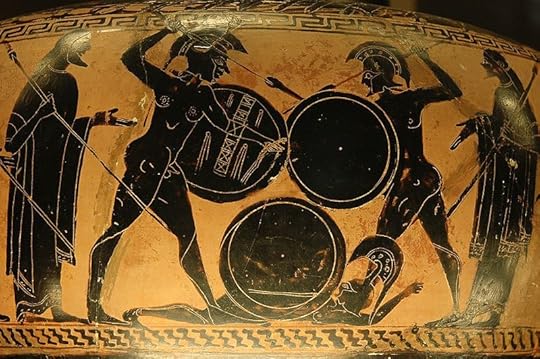
the Enuma Elish and Gilgamesh, the Peloponnesian War (and Greek tragedies), the Greek philosophers Plato and Aristotle,
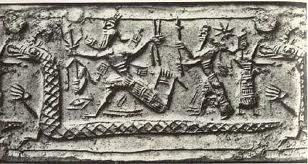
Babylonian relief depicting Marduk's victory over Tiamat, imaged as a serpent
the Hebrew Bible (Adam and Eve, Cain and Abel, the tower of Babel, Abraham and Job), Christian scripture (original sin and the Apocalypse), Augustine, Rabbinic Judaism, Islam (the Qur'an and the story of Iblis), Thomas Aquinas, Dante (Hell and the abandonment of hope), the Reformation (Luther and Calvin),

Pieter Bruegel the Elder, "The Tower of Babel," 1563


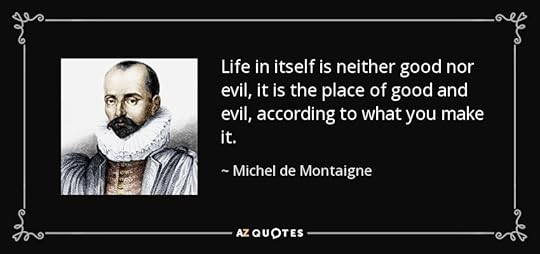
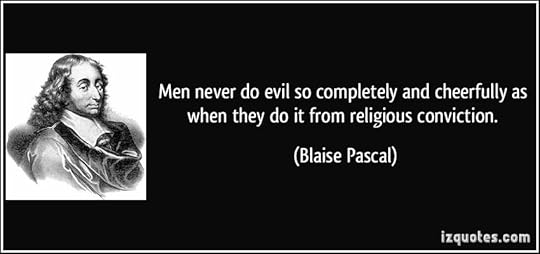
Machiavelli, Hobbes (The Leviathan), Montaigne and Pascal and divertissements, Milton (Paradise Lost and epic evil), the Enlightment (Theodicy, Voltaire v. Rousseau and Hume),
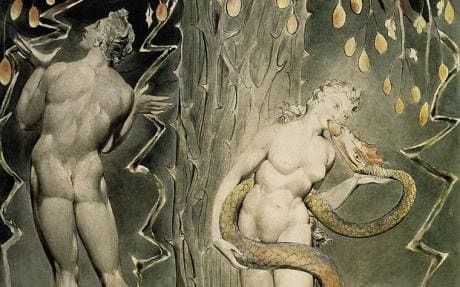
William Blake's Illustration to John Milton's Paradise Lost

Kant (the idea of radical evil), Hegel (evil in history), Marx's failed idea that evil is fundamentally a problem of material conditions), the American Civil War (Huck Finn and Abe Lincoln), Nietzsche,


Dostoevsky (Demons and the nature of evil in modernity), Conrad (human incapacity to escape the Heart of Darkness), Freud (the death drive and pleasure principle), Camus (biological evil in The Plague, selfishness and narcissism in The Fall),
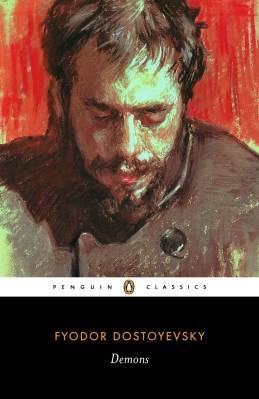
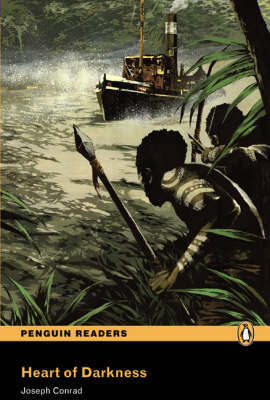

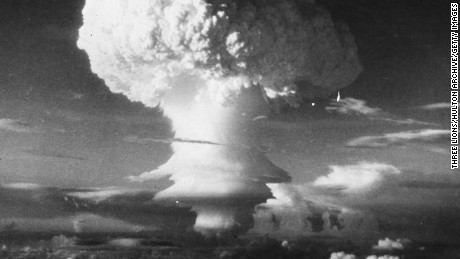
the religious outlooks on evil after WWII (Protestant, Roman Catholic and Jewish), Hannah Arendt (the banality of evil in Totalitarianism), 20th Century poets on evil (the poetry of surviving Shoah, or catastrophe), science and the empirical study of evil (the shock and prison experiments, on obedience to authority), the "unnaming" of evil (genocide, 9/11 and the H-Bomb), and

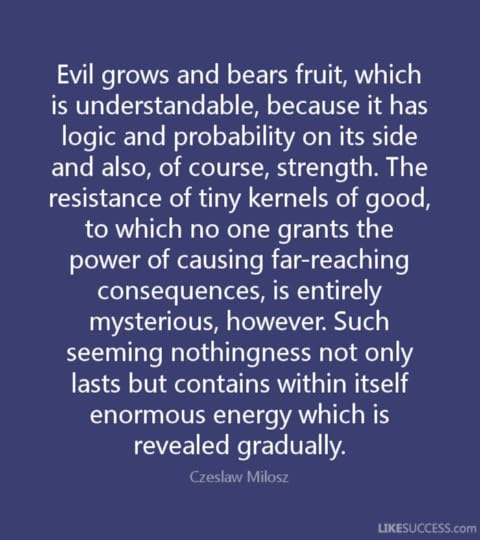

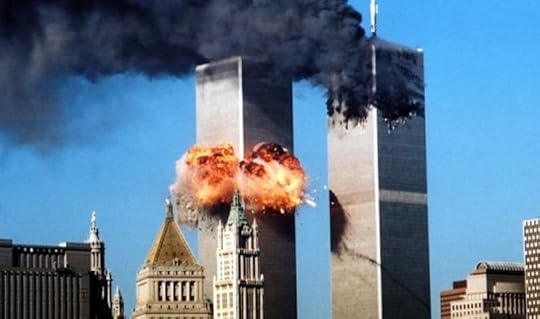
whether hope can be found (by avoiding hatred and guilt, "planting iris [that] will be flowering long after [Hitler] is dead").
The Professor did a remarkably good job on an exceedingly ambitious subject.
Proviso: The lectures get rather deep at times, making it difficult to follow if you're doing something else, such as driving, while listening. I've gone back and forth on whether to give it 4 stars or 5. I'll say, 5 if this subject is something in which you are very interested; 4 otherwise.
Pleased to meet you, Hope you guess my name....M. Jagger, K. Richards, Sympathy for the Devil, 1968
But What's Puzzling You Is the Nature of My Game
This audio-course is an exceptional study of the nature of EVIL, as examined and imagined in art, philosophy, theology, sociology and psychology. I recommend it (with the proviso below) if you write much or if you are fascinated by the forces of good and evil in film and other arts, theology, the psychology of those who commit atrocities or in politics.
The course covers:
the nature and origins of evil (including the symbolism of tragedy, sin and wickedness),
the Enuma Elish and Gilgamesh, the Peloponnesian War (and Greek tragedies), the Greek philosophers Plato and Aristotle,
Babylonian relief depicting Marduk's victory over Tiamat, imaged as a serpent
the Hebrew Bible (Adam and Eve, Cain and Abel, the tower of Babel, Abraham and Job), Christian scripture (original sin and the Apocalypse), Augustine, Rabbinic Judaism, Islam (the Qur'an and the story of Iblis), Thomas Aquinas, Dante (Hell and the abandonment of hope), the Reformation (Luther and Calvin),
Pieter Bruegel the Elder, "The Tower of Babel," 1563
Machiavelli, Hobbes (The Leviathan), Montaigne and Pascal and divertissements, Milton (Paradise Lost and epic evil), the Enlightment (Theodicy, Voltaire v. Rousseau and Hume),
William Blake's Illustration to John Milton's Paradise Lost
Kant (the idea of radical evil), Hegel (evil in history), Marx's failed idea that evil is fundamentally a problem of material conditions), the American Civil War (Huck Finn and Abe Lincoln), Nietzsche,
Dostoevsky (Demons and the nature of evil in modernity), Conrad (human incapacity to escape the Heart of Darkness), Freud (the death drive and pleasure principle), Camus (biological evil in The Plague, selfishness and narcissism in The Fall),
the religious outlooks on evil after WWII (Protestant, Roman Catholic and Jewish), Hannah Arendt (the banality of evil in Totalitarianism), 20th Century poets on evil (the poetry of surviving Shoah, or catastrophe), science and the empirical study of evil (the shock and prison experiments, on obedience to authority), the "unnaming" of evil (genocide, 9/11 and the H-Bomb), and
whether hope can be found (by avoiding hatred and guilt, "planting iris [that] will be flowering long after [Hitler] is dead").
The Professor did a remarkably good job on an exceedingly ambitious subject.
Proviso: The lectures get rather deep at times, making it difficult to follow if you're doing something else, such as driving, while listening. I've gone back and forth on whether to give it 4 stars or 5. I'll say, 5 if this subject is something in which you are very interested; 4 otherwise.

February 14, 2020
Despite the title, this series of lectures does not, in the end, actually explain why evil exists. Of course, it doesn’t, but a lot of theologians, philosophers, and other thinking people through the ages have come to a lot of conclusions about it and this is really a roundup of some of the ideas they came up with upon reflection.
I didn’t expect to find this so fascinating but discussions of evil are so basic to so much literature and art along with some of our most deeply held beliefs that it can’t help but be fascinating. These lectures take us on an absorbing journey from ancient Babylonia to the twentieth century with many stops in between.
This is a very rich subject. Like pornography, evil is difficult to define in any satisfactory way but we tend to know it when we see it. Some of the ideas these people came up with exhibited great creativity but I’m not sure they really get us any closer to any real answers. Also, there were points, in some of the later lectures, when the ideas being expressed were so abstract and convoluted that I found it difficult to keep my mind from wandering. Fortunately, there weren’t too many of those moments. It was, nevertheless a wonderful brain-stretch.
I highly recommend this one.
I didn’t expect to find this so fascinating but discussions of evil are so basic to so much literature and art along with some of our most deeply held beliefs that it can’t help but be fascinating. These lectures take us on an absorbing journey from ancient Babylonia to the twentieth century with many stops in between.
This is a very rich subject. Like pornography, evil is difficult to define in any satisfactory way but we tend to know it when we see it. Some of the ideas these people came up with exhibited great creativity but I’m not sure they really get us any closer to any real answers. Also, there were points, in some of the later lectures, when the ideas being expressed were so abstract and convoluted that I found it difficult to keep my mind from wandering. Fortunately, there weren’t too many of those moments. It was, nevertheless a wonderful brain-stretch.
I highly recommend this one.

July 23, 2020
Did I learn something? Yes.
Did I understand everything? Probably not.
Did I enjoy listening to this and kept thinking about it whenever I stopped listening? Yes.
Do I recommend this? Most definitely.
Did I understand everything? Probably not.
Did I enjoy listening to this and kept thinking about it whenever I stopped listening? Yes.
Do I recommend this? Most definitely.
December 18, 2020
A mixed bag. Some wonderful sessions in which I learned a great deal, and others that left me nothing but perplexed. Part of the problem, I feel, has to do with the fact that no effort is made to say what "Evil"is. Are "Good and Evil" the same as "Good and Bad"? Does Evil imply agency? Was the Black Death an outburst of Evil? Was the Lisbon earthquake? Is the attribution of Evil contingent on time and place? For example, was the Spanish Inquisition an example of Evil? Is the Evil of taking the Lord's name in vain or working on the Sabbath in any way like the Evil of the Shoah?
Professor Mathewes is a good lecturer. He's smart, personable, and he clearly knows his subject very well. I wouldn't hesitate to take this course IRL so I could ask questions.
Professor Mathewes is a good lecturer. He's smart, personable, and he clearly knows his subject very well. I wouldn't hesitate to take this course IRL so I could ask questions.

March 11, 2017
"Please allow me to introduce myself..."
Maybe Mick had it right in the 'Stone's "Sympathy for the Devil " as he describes the devil's involvement in our, human history. From Gilgamesh to Oppenheimer Dr Mathews delves into the history of what we call evil...offering many examples both of famous evils in history as well as contemporary reflections.
'Why evil exists' could easily be renamed 'Why goodness exists' as it examines the qualities of good and evil through the eyes of some of history's best authors and philosophers. For those thinking of listening to this lecture series know that Dr Mathews offers a well-organized, and very clearly presented set of lectures that are sometimes deeply philosophical, and, to some, spiritual, especially when he relates the thoughts of notable Christian writers. I found the lectures stimulating and far more interesting than I thought they would be.
At this point I would love to dive into a very-much one sided discussion about the philosophy of evil (I would have loved to be in the classroom in which these lectures were presented) and how evil (and goodness for that matter) are manifestations of our individual minds...not a supernatural experience that is universal, but a personalized trait borne from our culture and nurturing. This could explain the great difficulty mankind has had in defining 'evil' with any degree of certainty. Sin, virtue, altruism, just like beauty is in the eyes and mind of the beholder.
Highly recommended.
Maybe Mick had it right in the 'Stone's "Sympathy for the Devil " as he describes the devil's involvement in our, human history. From Gilgamesh to Oppenheimer Dr Mathews delves into the history of what we call evil...offering many examples both of famous evils in history as well as contemporary reflections.
'Why evil exists' could easily be renamed 'Why goodness exists' as it examines the qualities of good and evil through the eyes of some of history's best authors and philosophers. For those thinking of listening to this lecture series know that Dr Mathews offers a well-organized, and very clearly presented set of lectures that are sometimes deeply philosophical, and, to some, spiritual, especially when he relates the thoughts of notable Christian writers. I found the lectures stimulating and far more interesting than I thought they would be.
At this point I would love to dive into a very-much one sided discussion about the philosophy of evil (I would have loved to be in the classroom in which these lectures were presented) and how evil (and goodness for that matter) are manifestations of our individual minds...not a supernatural experience that is universal, but a personalized trait borne from our culture and nurturing. This could explain the great difficulty mankind has had in defining 'evil' with any degree of certainty. Sin, virtue, altruism, just like beauty is in the eyes and mind of the beholder.
Highly recommended.
March 1, 2023
Wish this was a physical book and not just an audiobook.

January 24, 2022
"I liked it." - 3 out of 5 star rating.
Author's definition of evil: Something going against the ethical norm, knowingly and willingly.
This is a pretty interesting Great Course all about the concept of evil. What is really interesting is how the content creator seems to be "pro" evil. He passionately describes evil being an inevitable concept within the force of order and "something that is built in the fabric of the cosmos itself", he so poetically expresses.
He honestly keeps looping back throughout the entire course that evil == natural. Very Dark Side Star Wars vibes going on, with statements such as "Peace is a lie when it comes to making real change." This is pretty much straight out of the Sith Code.
Darth Matthews also make very bold statements continuing down this way of thought with thing such as:
- "When there is suffering in the world, we understand that ultimately the suffering was justified - as later events will be much greater in the absence of that suffering."
- "The end (evil) justifies the means."
- "Fear drives humanity."
- "Evil is necessary for us to be productive."
Outside of that, I felt like he could have shaved off ~5 hours of content. The above is pretty much a bullet train summary of what this is all about. Outside of that, he also touches various cultures (American, Egyptian, Ancient Greece), religions (focus fire at Christianity and Judaism for the most part), and infamous historical figures (Karl Marx, Friedrich Neitzsche, Sigmund Freud, Adolf Hitler, etc.).
This was enjoyable overall and I did like it.
If you're a Dark Side Star Wars fan, you'll have fun with this. I imagine a particular class of people (extremely devout Christians come to mind) may struggle with evil being so praised and spoken upon so brightly.
Author's definition of evil: Something going against the ethical norm, knowingly and willingly.
This is a pretty interesting Great Course all about the concept of evil. What is really interesting is how the content creator seems to be "pro" evil. He passionately describes evil being an inevitable concept within the force of order and "something that is built in the fabric of the cosmos itself", he so poetically expresses.
He honestly keeps looping back throughout the entire course that evil == natural. Very Dark Side Star Wars vibes going on, with statements such as "Peace is a lie when it comes to making real change." This is pretty much straight out of the Sith Code.
Darth Matthews also make very bold statements continuing down this way of thought with thing such as:
- "When there is suffering in the world, we understand that ultimately the suffering was justified - as later events will be much greater in the absence of that suffering."
- "The end (evil) justifies the means."
- "Fear drives humanity."
- "Evil is necessary for us to be productive."
Outside of that, I felt like he could have shaved off ~5 hours of content. The above is pretty much a bullet train summary of what this is all about. Outside of that, he also touches various cultures (American, Egyptian, Ancient Greece), religions (focus fire at Christianity and Judaism for the most part), and infamous historical figures (Karl Marx, Friedrich Neitzsche, Sigmund Freud, Adolf Hitler, etc.).
This was enjoyable overall and I did like it.
If you're a Dark Side Star Wars fan, you'll have fun with this. I imagine a particular class of people (extremely devout Christians come to mind) may struggle with evil being so praised and spoken upon so brightly.

August 20, 2021
This was an interesting dive into western theological and philosophical discussions about what the nature of evil truly is, where it comes from, what it is, and whether or not evil really even exists. What this didn't cover was anything from the Eastern schools of religion or philosophy, but that wasn't neglected without mention. Mathewes states out front that this will be the case and that there could be an entire companion volume of lectures delivered on that subject.
This was interesting and it might have been made more so due to my listening to this while I was reading the book First They Killed My Father. Thinking about those events in the context of some of the lectures and discourses from this audiobook was a really fascinating journey and one that made both of them more worthwhile.
This was interesting and it might have been made more so due to my listening to this while I was reading the book First They Killed My Father. Thinking about those events in the context of some of the lectures and discourses from this audiobook was a really fascinating journey and one that made both of them more worthwhile.

July 31, 2018
The title was clickbait enough for me and I admit I had preconceived ideas of what I thought this Great Course was going to reveal to me. Initially, I struggled with the material because I wanted/hoped for some striking revelations. (I recommend the mindset of a blank but single focus if you start this course.) After having to listen multiple times to the first 10 chapters, I got the pulse of the material. Which wasn’t all about religion in case one wonders. The info presented on psychology, sociology and political science were exceptionally fascinating. The lecture on Mark Twain’s Huckleberry Finn was downright shrewd.
The info is not as serious as I first imagined but still stimulating and interesting. As always, I learned far more than I expected and definitely caused me to want to reexamine what I believe in externally and internally.
The info is not as serious as I first imagined but still stimulating and interesting. As always, I learned far more than I expected and definitely caused me to want to reexamine what I believe in externally and internally.

October 7, 2019
A good lecture series.
Prof. Mathewes is engaging and entertaining. He covers the material well and encourages deep thoughts.
My only minor complaint is that this is a distinctly western perspective on evil and only lightly touches on Eastern views.
Prof. Mathewes is engaging and entertaining. He covers the material well and encourages deep thoughts.
My only minor complaint is that this is a distinctly western perspective on evil and only lightly touches on Eastern views.
September 24, 2019
Good overview of notions of evil. Requires a second listen to understand the nuances.

December 14, 2024
I've eyed this one for a long time, and it started off really great. But unfortunately it went off the rails from modernity through the Jewish response to the Holocaust, which is a pretty important stretch of centuries and thinkers, as well as being about 1/3 of the course. I took basically nothing away from the lectures on Kant and Hegel and Neitzsche and Freud and a bunch of others, which is too bad. The lecturer tried to quickly explain a given thinker overall and then give their perspective on evil, and I wonder if skipping the overview would have helped a little with these modern thinkers, but maybe not. A lot of their positions on evil seemed muddled and confusing and often outright pseudoscientific, but maybe that’s accurate and the lecturer was conveying things as well as he could? I cannot really say. Perhaps the scene was set for thinking about evil in the west by 1600, and we’ve just been tying ourselves in knots since?
The post-Holocaust Jewish thinking about evil was very interesting and something I knew basically nothing about. The Catholic and Protestant lectures on WWII/the Holocaust/the twentieth century were nothingburgers; again, I cannot say whether that is the professor or the reality of the situation. There was a lecture on the scientific study of evil, and I immediately worried it was going to be a superficial or even misleading relaying of Milgram and Zambardo (who coincidentally died right around when I was listening) and Kitty Genovese. I know a fair amount about these studies/events from my own looking into them, and usually they’re straight-up misrepresented in media. This lecture wasn’t as bad as I feared; also, rather than Kitty Genovese like I guessed, he covered a study of seminar students being apparently crappy, so that was new to me and a little interesting. Beyond the scientific studies lectures, there were a few lectures at the end on poetry, resisting totalitarianism, genocide, how we talk about evil, and how we keep forgetting the past and so having history repeat itself. Not a full return to the excellent form of the early lectures, but an okay ending.
My major complaint about the ending is that I don’t think he covered what I figured would be the simplest answer to the question in the title: it doesn’t. I daresay this is not *not* what Neitzsche and Freud said, and if not them then perhaps a lecture on the so-called “new atheists” would have been warranted, since I’m quite sure some of them would say that rather plainly. I find this really weird in hindsight. The professor spent 18 hours articulating how hard it is to reconcile evil with an omniscient, omnipotent, and good deity, yet I don’t think he directly addressed the response “well then maybe there is no god.” Odd! Or maybe not that odd, since his final words were borderline religious proselytizing (even a C.S. Lewis quote) about how we’re still puzzled by evil.
I’m glad I listened to this, and I think I would ultimately recommend it despite my problems with ~40% of the lectures as outlined above. The first half-ish was awesome, and at that point you’re pot-committed anyways. Also, as I speculated above, maybe there’s something to that timetable … perhaps the stage for thinking about evil in the west was sufficiently set by the time the ancient Greek philosophers were rediscovered, at least if you’re not willing to very directly wonder about the premise of the question. And it’s certainly worth thinking deeply about evil to better equip yourself to resist it, especially these days with resurgences of hatred, bigotry, political violence, and outright land wars in the developed world.
The post-Holocaust Jewish thinking about evil was very interesting and something I knew basically nothing about. The Catholic and Protestant lectures on WWII/the Holocaust/the twentieth century were nothingburgers; again, I cannot say whether that is the professor or the reality of the situation. There was a lecture on the scientific study of evil, and I immediately worried it was going to be a superficial or even misleading relaying of Milgram and Zambardo (who coincidentally died right around when I was listening) and Kitty Genovese. I know a fair amount about these studies/events from my own looking into them, and usually they’re straight-up misrepresented in media. This lecture wasn’t as bad as I feared; also, rather than Kitty Genovese like I guessed, he covered a study of seminar students being apparently crappy, so that was new to me and a little interesting. Beyond the scientific studies lectures, there were a few lectures at the end on poetry, resisting totalitarianism, genocide, how we talk about evil, and how we keep forgetting the past and so having history repeat itself. Not a full return to the excellent form of the early lectures, but an okay ending.
My major complaint about the ending is that I don’t think he covered what I figured would be the simplest answer to the question in the title: it doesn’t. I daresay this is not *not* what Neitzsche and Freud said, and if not them then perhaps a lecture on the so-called “new atheists” would have been warranted, since I’m quite sure some of them would say that rather plainly. I find this really weird in hindsight. The professor spent 18 hours articulating how hard it is to reconcile evil with an omniscient, omnipotent, and good deity, yet I don’t think he directly addressed the response “well then maybe there is no god.” Odd! Or maybe not that odd, since his final words were borderline religious proselytizing (even a C.S. Lewis quote) about how we’re still puzzled by evil.
I’m glad I listened to this, and I think I would ultimately recommend it despite my problems with ~40% of the lectures as outlined above. The first half-ish was awesome, and at that point you’re pot-committed anyways. Also, as I speculated above, maybe there’s something to that timetable … perhaps the stage for thinking about evil in the west was sufficiently set by the time the ancient Greek philosophers were rediscovered, at least if you’re not willing to very directly wonder about the premise of the question. And it’s certainly worth thinking deeply about evil to better equip yourself to resist it, especially these days with resurgences of hatred, bigotry, political violence, and outright land wars in the developed world.

November 7, 2023
This 36 lecture course was the second course I had listened to by Professor Mathewes, the first one being "Books That Matter: The City of God". Both were well done, I liked this one better than the first one. Professor Mathewes speaks very clearly and is easy to understand, with no distracting mannerisms. This is a pretty philosophical course, so I found I did better listening in areas where I would not be easily distracted.
The course guides the listener through centuries of thought on evil. The course starts back with the ancient Greeks, then goes through the Old Testament, lots of Christian thinkers, a brief stop with Islamic thought, and then brings us up through the Enlightenment thinkers, then has three lectures on reaction to the evils of the Holocaust, before ending with modern perspectives. I felt Professor Mathewes had a great deal of good insight to share about the topic. His lectures were interesting and balanced. The lectures I enjoyed the most were where he gave exposure to thinkers that I hadn't previously researched in much depth- Irenaeus, Hobbes, and Hegel. Then there were lectures on more familiar thinkers such as Dante, Augustine, and even Joseph Conrad that were fascinatingly presented. I liked that Professor Mathewes had a lecture on psychological experiments from the universities and what they could teach us. There were three separate lectures on Jewish, Catholic, and Protestant responses to the Holocaust.
Sometimes I admit that I got lost in what the Professor was trying to say. This has more to do with distractability issues while driving than with the professor's presentation I would say. This course merits listening to over again to gain further understanding. It was one of my very favorite courses from the Great Courses that I have heard. Deep and thought provoking!!
The course guides the listener through centuries of thought on evil. The course starts back with the ancient Greeks, then goes through the Old Testament, lots of Christian thinkers, a brief stop with Islamic thought, and then brings us up through the Enlightenment thinkers, then has three lectures on reaction to the evils of the Holocaust, before ending with modern perspectives. I felt Professor Mathewes had a great deal of good insight to share about the topic. His lectures were interesting and balanced. The lectures I enjoyed the most were where he gave exposure to thinkers that I hadn't previously researched in much depth- Irenaeus, Hobbes, and Hegel. Then there were lectures on more familiar thinkers such as Dante, Augustine, and even Joseph Conrad that were fascinatingly presented. I liked that Professor Mathewes had a lecture on psychological experiments from the universities and what they could teach us. There were three separate lectures on Jewish, Catholic, and Protestant responses to the Holocaust.
Sometimes I admit that I got lost in what the Professor was trying to say. This has more to do with distractability issues while driving than with the professor's presentation I would say. This course merits listening to over again to gain further understanding. It was one of my very favorite courses from the Great Courses that I have heard. Deep and thought provoking!!

July 11, 2021
This obviously doesn’t answer the question of why evil exists nor does it really attempt to give a coherent answer. But lectures aren’t supposed to answer questions, they help you develop your own thinking.
Further reading I’d like to do:
John Romanides - The Ancestral Sin
Martin Buber
Post WW2 Protestant:
Paul Tillich - The Courage to Be
Karl Barth
Post WW2 Catholic:
Hans Urs von Balthasar
Post WW2 Jewish:
Richard Rubinstein - After Auschwitz
Emil Fackenheim - To Mend the World
Arthur Cohen - Tremendum
Emanuel levinass
Eastern European Poetry:
Paul Celan
Czesław Miłosz
Zbigniew Herbert
Further reading I’d like to do:
John Romanides - The Ancestral Sin
Martin Buber
Post WW2 Protestant:
Paul Tillich - The Courage to Be
Karl Barth
Post WW2 Catholic:
Hans Urs von Balthasar
Post WW2 Jewish:
Richard Rubinstein - After Auschwitz
Emil Fackenheim - To Mend the World
Arthur Cohen - Tremendum
Emanuel levinass
Eastern European Poetry:
Paul Celan
Czesław Miłosz
Zbigniew Herbert

August 14, 2024
I was initially a little disappointed that this is only an examination of evil as it has been thought of in the western religio-philosophical tradition, but ultimately this was an intended feature, not a blindspot of the work (though I wish it were more clearly stated upfront). Dr. Mathewes in the final lecture acknowledges that this is only one tradition around one 'structure' of thinking about evil, and there are many others around the world. The depth of exploration in this lecture series does justify the scope of its focus; there was nothing I would want cut to make room for briefly talking about separate civilizations' thoughts on the topic.

August 23, 2024
“Life changing shit right there” - James Garcia 10th grade English teacher and uni high school legend
It was pretty good. Machiavelli chapter was enlightening as someone who had never read him. Same goes for Augustine. Wish there was more addressing Eastern and alternative thought on evil, it focuses a lot on Abrahamic traditions and the evolution of thinking on evil from only western history. Haven’t finished the postmodern stuff yet (thinking after the events of the world wars) but I bet that’ll be cool
It was pretty good. Machiavelli chapter was enlightening as someone who had never read him. Same goes for Augustine. Wish there was more addressing Eastern and alternative thought on evil, it focuses a lot on Abrahamic traditions and the evolution of thinking on evil from only western history. Haven’t finished the postmodern stuff yet (thinking after the events of the world wars) but I bet that’ll be cool

November 7, 2025
Professor Mathewes offers a trip throughout the ages that discussed the definition of evil.
This journey entails trips to the ancient Mesopotamia to post-WW2 Catholic, Jewish thinkers.
You are introduced to a vast stream of ideas behind how human beings have struggled to define and understand what evil is.
As the professor states up front, there's no clear cut answer to this. However, the journey through ancient text, scripture, literature, and journalistic writing offers an overall picture of how we might cope with suffering in the world.
This journey entails trips to the ancient Mesopotamia to post-WW2 Catholic, Jewish thinkers.
You are introduced to a vast stream of ideas behind how human beings have struggled to define and understand what evil is.
As the professor states up front, there's no clear cut answer to this. However, the journey through ancient text, scripture, literature, and journalistic writing offers an overall picture of how we might cope with suffering in the world.
August 10, 2023
Mostly a review of established Western philosophies of evil. The subject matter was interesting but not particularly thought provoking, and the presenter had some difficulty staying on the specific topic for each lecture. Also had the habit of occasionally speaking with an extremely soft palate, I'm still trying to decide if the presenter had a legitimate speech impediment or was simply being a little evil himself.

July 10, 2026
Massive undertaking by Charles Mathewes and I think he did a splendid job. I don't know that we ever get to the actual 'why' but that's because we can't possibly know, and I think Mathewes gets us as close as anyone has come through a thoughtful and thorough examination of the great minds of recorded history, from Greek and Roman philosophers to leading theologians to modern thought leaders like Hannah Arendt.
September 7, 2022
Why Evil Exists is a solid survey of western religious and philosophical views on evil.
I found myself wishing that more time could be spent on the modern science of evil than the single chapter allotted to the topic. However, this was a decidedly religious and philosophical survey and anything beyond a brief overview of some of the science was beyond the scope of the lectures.
I found myself wishing that more time could be spent on the modern science of evil than the single chapter allotted to the topic. However, this was a decidedly religious and philosophical survey and anything beyond a brief overview of some of the science was beyond the scope of the lectures.

July 20, 2020
I thoroughly enjoyed this thought-provoking lecture series and its accompanying readings. The thirty-minute lectures made for the perfect accompaniment to my walking home from work in the afternoons, followed by the readings for each lecture. Highly recommended.
November 23, 2022
This course looks at western and near eastern thinkers and their thoughts about why evil exists. There are many different ways to look at the problem, some think that no one does evil because the one doing evil thinks he is doing good, while others think that evil is a natural part of humans.

May 27, 2023
I was hoping for a science reason of why people are evil but instead got a healthy discussion on how we think of evil. The book did dive into some of the cultural ways we justify genocide and how we aren’t doing enough to prevent the next one.

August 23, 2023
Some of these lectures spoke to me more than others, but I particularly loved lectures 13 and 15. Very thought provoking and in a way, artistic. Overall this made me think outside the box regarding why and how different cultures and people thought about and perceived evil.

September 29, 2020
I still don't know why evil exists. Interesting listen, but not terribly helpful. I think the title should be "Why Does Evil Exist?" because the lectures had a lot more questions than answers.
September 30, 2020
There's a wonderful video of these lectures. Catch up on everything from proto babylonian myths to the world today. I still don't have a copy of the left behind books.

July 16, 2021
Very good

July 25, 2021
The breadth of knowledge about how other world views come to terms with evil were helpful to a new appreciation for why it is so hard to understand evil's nature.
November 11, 2021
Interesting book covering thoughts about "evil" through time and philosophy. So far, I have found Great Courses on various topics to be very well done and informative and this is no exception.
Displaying 1 - 30 of 44 reviews