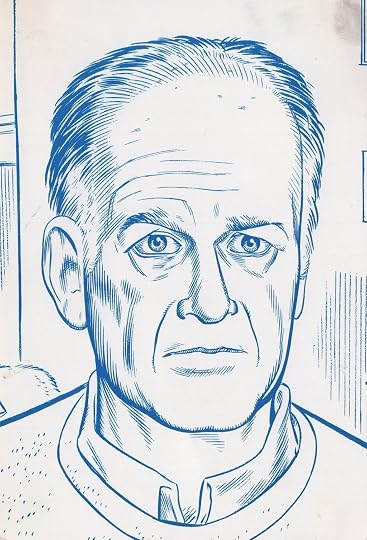
A shocking phone call in the first sentence sparks a soaring tour-de-force saga by the writer Publishers Weekly deemed "a hip Saul Bellow." It is the tale of two brothers, years apart in age, who have become close late in life. But the freakish death of one at the book's outset sends the other reeling into a shattered yet strangely exhilarating revisitation of their lives together. Phone Rings is the work of a master at the peak of his a beautiful overlapping of scenes both remembered and ongoing, told with tenderness and an antic, laugh-out-loud sense of humor. In Dixon's inimitable mix of absorbing narrative, deceptively simple prose, and waggishly innovative style, it becomes the sprawling chronicle of a large Jewish family in midcentury New York City, surviving three wars, the 1960s cultural revolution, marriages, divorces, births, and deaths. . . . Is it all lost with the piercing sound of a ringing phone? Or is that the chance to realize the possibility of transcendence? Stephen Dixon has long been considered the "secret master" of American fiction by great writers such as Jonathan Lethem. In this book, he may well have written his masterpiece. Stephen Dixon is the author of 24 books of fiction, including, most recently, the acclaimed Old Friends and the National Book Award nominees Frog and Interstate . His work has won the Pushcart Prize and the O. Henry Award, as well as honors from the Guggenheim Foundation, the National Endowment for the Arts, and the American Academy of Arts and Letters. He is on the faculty of Johns Hopkins University.
Stephen Dixon was a novelist and short story author who published hundreds of stories in an incredible list of literary journals. Dixon was nominated for the National Book Award twice--in 1991 for Frog and in 1995 for Interstate--and his writing also earned him a Guggenheim Fellowship, the American Academy Institute of Arts and Letters Prize for Fiction, the O. Henry Award, and the Pushcart Prize.
The five Dixons I read prior to this introduced me to his singular powers as a narrator of the obsessive mind—a less misanthropic, more sentimental Bernhard. This novel is a sizzling hot mess, leaping in time from paragraph to paragraph, from each Dixonic cipher character to another in an attempt to create a broad family saga that begins with the death of a brother. The brothers ‘Stu’ and ‘Dan’ are interchangeable dullards and the little vignettes are a sequence of tedious quotidian dialogues where the speakers are unclear and the moments themselves are the bland stuff of life. Dixon’s narrative style is a high-wire act, here too much is attempted at once, the result is a frustrating soup of the banal. Bailed on p.130.
okay listen, i hate to do this but im dnfing at around 65%. this is nothing. nothing is happening. there are no paragraph breaks, i can never tell really who’s speaking, and it is like im listening to the most boring podcast of all time and it just won’t stop. i had to stop it. i took like a month break from it because it was making me dread reading, and ive just picked it back up and thought: why am i doing this to myself?
I read part of _Interstate_, also by Dixon, a few years ago and was enthralled before I threw it down because it was too painful in the way it kept going over the same traumatic scene of a father watching helplessly as his daughter is murdered in front of him. There was a looping of time in that book I found bracingly cool, but too much for me at the same time, because I needed to be able to move on from that introductory horror.
_Phone Rings_ is obsessed with the same kind of eternal return, this time about the death of a brother, probably accidental, and the narrator's elliptical pattern of grief. But somehow, this one fails to ever raise a reaction aside from =blah=. The story is so particular to the narrator that it needs to do something with him, with the incident or his dealing with it to make this a story worth telling, and I'm afraid Dixon never does that. And it is so specific, the idea that there's a recognizable universal truth about grief and brother-love here seems sort of hard to swallow.
I wanted to like this, and from the outside, I think maybe I even do. But the book itself, page for page, is a real disappointment.
A phone rings, and Stu Fine grabs the receiver to hear that his brother Dan collapsed while running through a remote park. The cause stays open for debate, a fallen tree, a tripped root, a clot, a mugging, and Dixon lets every theory keep its own dial tone. Grief prefers a busy signal to a straight answer.
Then it rings again. And again. Dan keeps calling, warm and chatty, long after the coroner signs off, and here Dixon does something sly with his title. The phone becomes the last open line to the dead, so we hear Dan the way Stu does, mid-conversation about van flats and IRS bills and whether the tires were bald. Posthumous calls that are eulogy and confession.
Mom chose it to bury the old Jewish name after Dad's abortion scandal filled the papers and sent him to Sing Sing, so the clan answers every ring with a chirp of everything's fine, a household of Fines forever fine, forever fined by the father's temper and his paratrooper boots and the belt he took to his sons. Everybody is a Fine, and being one frays the nerves of anyone chirping it.
A father counting shaves per blade, stretching one for a month. An old man mailing the New Yorker a barrage of letters about loose subscription cards, and Stu, after Dan dies, taking up the same futile campaign to keep a dead man's habit alive on paper. A mean white cat called Streak, gray flash on his crown, clawing Stu and chasing a plumber, affection one second and claws the next. These grace notes show how the Fines love, in petty grievances and inherited quirks handed down the line.
Stu's wife Janice moves through the book on a failing body, a degenerative disease tightening her legs and slurring her speech, and Stu pours these fears into the phone too, rehearsing the next loss while still winded from the last. Dan answers on demand, Dan would say, Dixon phrases it, and that conditional tense does the mourning, a brother summoned by grammar alone once the living line has gone dead.
The style runs on Courier-typed sentences that fold back, correct themselves, and dither over the theory of death, prose built from the exact rhythm of a family stuck rehashing every grievance. Dixon gives you the same call four ways, the receiver grabbed before the machine, after the machine, dropped, fumbled, and the repetition becomes fascinating and annoying. This is how a mind loops around a wound, dialing the same memory hoping for a warmer pickup.
Like Knausgård, Dixon mines the mundane for its full ore, the shaving math and the piano sold off cheap and the lampshade squabble over the inheritance. The difference is the phone, always the phone, ringing the family into and out of each other's lives.
The book powerfully and honestly refuses to console. Dixon transforms the ordinary into a mirror, reflecting how we cling to rituals and routines to distract from the hollow spaces left behind. Loss is not an event but a persistent, shape-shifting force. A portrait of how small acts of control become lifelines in the face of irreparable rupture. Dixon shows a family that speaks fluently in small complaints and grieves clumsily once the line goes quiet. The prose, however, was very hard for me to connect with and stay interested and engaged throughout.
Though there were things that I liked about this much heralded book, overall it was a big disappointment. Dixon is a prolific writer and this is the first book of his which I've read. It begins when the phone rings and Stu gets the news that his older brother has died. What follows is a sort of stream of conscious memory piece, as Stu thinks back over his life with his brother (and his parents, siblings, etc). I very much liked Dixon's inventive use of time.
But the characters are unrealistic, unlikeable, and boring. Most of the book is dialogue and I don't know that I've ever encountered a book where the author was so deaf to how people speak. Sample bit of dialogue... "I knew this was my fertile period and I was planning to ask you to withdraw before you ejaculated. But I got so lost in the act that I forgot to--as I said, it's been a while and my head and body were spinning--and I'm certain I conceived." Does anyone speak this way? Worse, most of the characters speak in an identical fashion. And Dan, the much revered older brother whose death begins the book, is one of the most irritating characters I've recently encountered.
I've not finished this book yet but lemme tell you- all the gimmickry in the writing is just a load of crap.All these Literary devices - this book is riddled with them. Like starting all the first 5 chapters with the sentence "Phone rings'.And then from that point on the story is so tangled up that we have to pray that at a certain point an adult will step in and tell us EXACTLY what the hell is going on. This kind of BS trickery is beyond irritating. It's downright pretentious and stupid. I mean , Buddy you have a story? then SPIT IT OUT.We're waiting. JUST SPIT IT OUT. Nahh this book is like one of those art installations where the description and all the various interpretations go on forever and ever. BUT ,you say, IT'S JUST A BLACK DOT ON A WHITE CANVAS.Yes but such a profound black dot. And then the critic goes on and on and on and on about the MEANING of the black dot on the white canvas. There is no meaning.There's a pretentious 2nd rate artist laughing his way all the way to the bank- because he pulled it off. This book is a scam -just like that. The critics are where the real drama lies because these guys have been presented with a stupid gimmick and what do they do?They twist it and turn it until it has some DEEP DEEP Meaning.And they think that they come off sounding SO SMART. The truth of it is it's a black dot on a white canvas and these guys are as full of crap as the book is.You got a story to tell- then can the BS and SPIT IT OUT. This book is all about the critics.It ain't about the book at all-which like I said is just a load of pretentious crap.JM
Dixon is a true American master, and Phone Rings is no exception. Dixon takes a phone call about the death of a brother and uses it to hang his incredible literary talents to illuminate the familial relationship. How are there only 8 people on all of Shelfari with this book. Why does Dixon remain a secret. Phenomenal. Read anything you can find by this man. Seriously.
While I think the writing, story, etc. was great and the style was interesting - Overall just wasn't for me. Was a little hard to relate, as the main character is a 60-something-year-old man whose brother abruptly and tragically passes. Definitely found parts of it that I couldn't stop reading, but overall just was a bit slow for me.
A remarkably personal story of one family, several grown up siblings, and specifically the connection between two brothers who communicate largely over the telephone. A bumpy ride of joy and sorrow - siblings remembering the past, slogging through in the present and looking to the future in very different ways. It sucked me in from start to finish.
An older man learns that his beloved brother has died in a freak accident, leaving him adrift. I found this book very affecting, in part because it reminded me of the relationship between my father and my uncle and the pain it caused my uncle when my father passed away. The narrative structure is cyclical, the phone ringing again and again, and the protagonist rehearing the news and recalling other aspects of their past together. However, it many ways the prose is traditional, with a strong, unique first person voice and point of view. The novel had the feeling of early Philip Roth. I'm interested in reading more by this author.