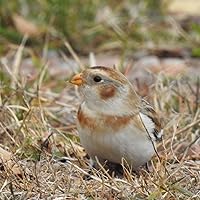
The Nebraska Sandhills is the largest area of sand dunes in the western hemisphere, covering an area about as large as Vermont, New Hampshire, and Rhode Island combined. Unlike most dunes, the Sandhills region supports an astonishing variety of wildlife. Sixty million years ago the area lay submerged in a vast inland sea. As the land lifted and the waters receded, the sandhills were formed, built upon a sandy floor above a sandy basement. Paul A. Johnsgard’s appreciation for the region includes its evolution, a process that continues today making a very special place, patiently shaped by water, wind, and time. Sometimes 450 feet higher than their sloping valleys, the hills themselves are almost entirely covered with plants that manage to survive on an unstable substrate and in a climate of merciless heat and cold. They provide homes and resting places for rare species and sustain the livelihoods of a remarkable variety of people. Though firmly established in science, this book is an extended love letter to the Sandhills region and its people, plants, and animals. Johnsgard is now in his third decade of research in the Sandhills. This Fragile Land lets others see what he sees, a land with a fascinating range of geological, biological, and ecological vistas.
Paul Johnsgard's book This Fragile Land: A Natural History of the Nebraska Sandhills is dry like its subject. It's not an uninteresting book, but when I pulled it off the shelf of a local used bookstore--it's cover is very appealing--I hoped it would be something more akin to Prairyerth, William Least-Heat Moon's 'deep mapping' of Chase County, Kansas. Unlike that book and its plentiful human stories, in Johnsgard's book there are none aside from a few anecdotal stories shared by the author himself. The first few chapters of the book are instead devoted to a geologic and geographic description of the Nebraska Sandhills, a wilderness as big as Vermont and New Hampshire combined. The next section of the book provides a series of close but narrow descriptions of various localized flora and fauna. We learn about the parasitic behaviors of brown-headed cowbirds that deposit their eggs in the nests of other unwitting birds and the misogynistic mating rituals of the stippleback fish, among other interesting but rather sterile pieces of information loosely connected by landscape type. The short third and final section of the book describes a history of farming and ranching developments in the region with a focus on the uptake of center-pivot irrigation technology and ground water pollution. Johnsgard, an ornithologist by profession, is weary of agricultural interests but never so much so that his text employs the kind of hyperbolic rhetoric so often used by people without a close association to the land, and which is so easily panned by those who do enjoy such proximity. He's too much a realist for that. Reading his book almost a quarter of a century after it was written, though, it's fair to ask if perhaps his level-headed account of the ecological threats facing the region and its underground water supplies was not alarmist enough, seeing how now many of his warnings continue to echo louder and louder in the region's headlines. The book also dates itself to a pre-internet world; a world in which it was still useful to publish in book form six appendices and a glossary of factual information on the various plant and animal species of the region, 40 percent of the book's 255 pages. Appendices or no appendices, in an age of cable television shows on almost any imaginable facet of natural history, the book is something of a relict, like a number of the plant and animal communities it describes, too detailed to hold interest with the generalist reader and not subject specific enough to be used in an academic setting. Even so, This Fragile Land does make for a solid reminder of just how diverse the natural environment is even in a region with a smaller amount of biodiversity than many of the places that surround it. It will hold continuing appeal especially to those with a strong connection to the specific landscapes it describes. (c) Jeffrey L. Otto, May 27, 2018
Paul Johnsgard was a professor of ornithology at the University of Nebraska and it is clear from This Fragile Land that Professor Johnsgard loved the Nebraska Sandhills. The book has three parts - the first covered the different terrains that comprise the sandhills, the second are a series of chapters exploring the different biomes, and the third discusses the impact of farming and ranching on the sandhill ecology.