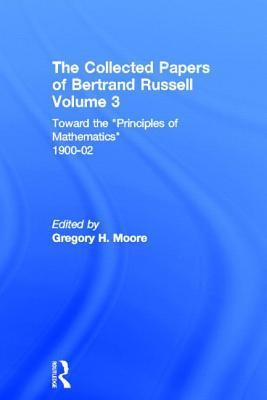
This volume shows Russell in transition from a neo-Kantian and neo-Hegelian philosopher to an analytic philosopher of the first rank. During this period his research centred on writing The Principles of Mathematics where he drew together previously unpublished drafts. These shed light on Russell's paradox. This material will alter previous accounts of how he discovered his paradox and the related paradox of the largest cardinal. The volume also includes a previously unpublished draft of an early attempt to solve his paradox, as well as the earliest known version of his generalised relation arithmetic. It contains three articles which have never previously been published in English.
Bertrand Arthur William Russell, 3rd Earl Russell, OM, FRS, was a Welsh philosopher, historian, logician, mathematician, advocate for social reform, pacifist, and prominent rationalist. Although he was usually regarded as English, as he spent the majority of his life in England, he was born in Wales, where he also died.
He was awarded the Nobel Prize in Literature in 1950 "in recognition of his varied and significant writings in which he champions humanitarian ideals and freedom of thought."
Dieser Band beleuchtet die entscheidende Phase, in der Bertrand Russell die Grundlagen für sein monumentales Werk zur mathematischen Logik entwickelte. Er versammelt zentrale Entwürfe und Arbeitspapiere, die Russells Übergang zum logischen Platonismus ebenso dokumentieren wie die Entdeckung des nach ihm benannten Paradoxons. Die Texte eröffnen tiefe Einblicke in die technische Ausarbeitung seiner Symbollogik und Mengenlehre und machen die konzeptuellen Spannungen sichtbar, aus denen die moderne Logik hervorging. Für Mathematik- und Philosophiehistoriker stellt dieser Band eine unverzichtbare Primärquelle zur Genese der logischen Grundlagen des 20. Jahrhunderts dar.