Jump to ratings and reviews
Rate this book

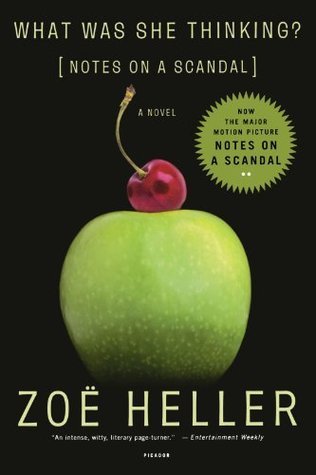
What Was She Thinking? [Notes on a Scandal]

Rate this book
Schoolteacher Barbara Covett has led a solitary life until Sheba Hart, the new art teacher at St. George's, befriends her. But even as their relationship develops, so too does another: Sheba has begun an illicit affair with an underage male student. When the scandal turns into a media circus, Barbara decides to write an account in her friend's defense—and ends up revealing not only Sheba's secrets, but also her own.

258 pages, Paperback

First published January 1, 2003

Loading...
Loading...

About the author

Zoë Heller

15 books362 followers
Zoe Heller was born in London in 1965 and educated at Oxford University and Columbia University, New York. She is a journalist who, after writing book reviews for various newspapers, became a feature writer for The Independent. She wrote a weekly confessional column for the Sunday Times for four years, but now writes for the Daily Telegraph and earned the title 'Columnist of the Year' in 2002.

She is the author of three novels: Everything You Know (2000), a dark comedy about misanthropic writer Willy Miller, Notes on a Scandal (2003) which tells the story of an affair between a high school teacher and her student through the eyes of the teacher's supposed friend, Barbara Covett and her latest - The Believers (2008).

Zoe Heller lives in New York.

Ratings & Reviews

What do you think?
Rate this book

Friends & Following

Create a free account to discover what your friends think of this book!

Community Reviews

5 stars
5,623 (22%)
4 stars
10,484 (41%)
3 stars
7,006 (27%)
2 stars
1,885 (7%)
1 star
513 (2%)
Displaying 1 - 30 of 2,489 reviews
Profile Image for Robin.
609 reviews3,933 followers
June 22, 2018
Move over Stephen King, now this is scary shit.

I'll admit, it's frightening that Sheba, a grown woman with children, can abandon her senses to the point of having a sexual affair with her 15 year old student, putting her whole privileged life at risk. The consequences of such a scandalous relationship bring nothing short of disaster for Sheba's family, her career, her reputation. Even when the reader can see these consequences advancing as though in slow motion, we shield our eyes from the impending doom.

But what really filled me with horror is Barbara, the prim, perfectly respectable older woman in the shadows, taking notes and keeping score. She lives alone, with no one but an ageing cat to care if she is dead or alive. Her painful, brutal aloneness drives her in perpetual need to be seen, to rank, to prove she exists. It's what turns her into a sinister succubus for attention, and, ironically, is what sets her apart from everyone around her.

Before you go and feel sorry for her, imagine: this emotional vampire, insidious as invisible ink, inveigles her way into a position of trust, wielding her power in order to satisfy her greedy, endlessly deprived appetite for validation. A secret agenda colours her every action. She's the penny that keeps turning up. The smell that won't go away. She's there every time you turn around, offering "help" and "friendship". She hasn't forgotten about you, especially the secrets you told her in moments of wrongly placed trust. This control freak stops at nothing to find a place to belong, even if this place is stolen, at great price to you. Her victimhood is long, her claws very, very sharp.

All this leads one to a chicken/egg type of question. Lonely because she's so toxic, or toxic because she’s so lonely?

This brilliant story touches on many topics, including class, monogamy, and repressed sapphic desires. It is also good fodder for conversation regarding the double standard of an adult woman in a sexual relationship with a boy, versus a man in such a relationship with a girl. But it seems to me that above all, this book is about Barbara and the albatross of sick, festering loneliness she carries around. Beware anyone who is kind or naive enough to allow her into their life.

Zoe Heller has written a compelling story which is speckled with humour amid the dark, secretive caverns of its disturbing main character. I’d love to read her again.
Profile Image for Nico.
19 reviews38 followers
January 16, 2008
An unforgiving, cold-eyed, wickedly beautiful little book.

A warning: if you have ever been crushingly lonely -- particularly if you have, on occasion, feebly attempted to rationalize that loneliness as a burden of your superior and isolating intelligence -- then I suspect that you, like me, will feel personally filleted by certain passages in this book.

Here's an example of Heller's brutally precise understanding of this manner of loneliness; what strikes me in this passage is how elegantly, how unsentimentally Heller limns Barbara Covett's outcast state:

"It's always a disappointing business confronting my own reflection. My body isn't bad. It's a perfectly nice, serviceable body. It's just that the external me... does so little credit to the stuff that's inside... I always wonder, what must it be like to have a beautiful body? A body you don't want to escape? Several years ago, [I] saw a woman dancing on the bar in a little bistro in Montmartre. She was very pretty and very, very young. All the men in the place were dribbling slightly. It was a silly thing really, but for just a moment, as I watched them watch her, I remember feeling that I would give anything -- be stupid, be impoverished, be fatally ill -- to have a little of her sort of power.

"...I stopped crying then, got down from the chair and made a cup of tea... Slowly I grew calm."

The grace of this passage -- the way Heller has Barbara casually mention her weeping in passing (and she doesn't return to it) -- made me gnash my teeth with envy.

Which is perhaps my highest form of praise.
Profile Image for Cecily.
1,384 reviews5,659 followers
January 18, 2009
In the US, this was published as "What Was She Thinking?", with "Notes on a Scandal" in brackets, as a subtitle.

Having just read Lolita (see my review HERE), I thought it would be interesting to read a more modern take on such a difficult subject, albeit with sexes reversed.

It's the story of Sheba, a married middle-class middle-aged pottery teacher who has an affair with a 15 year old pupil.

It is told by Barbara, a sixty-ish spinster who teaches in the same school, in a voice that could easily have been written by Alan Bennett - except that she's far nastier than any protagonist of his.

Innocence - and Not

Unlike Humbert in Lolita, there is no premeditation on the part of the Sheba; instead she succumbs through weakness (not that that's a justification) and excitement. In many ways she is the most childlike character, having married very young and been babied to some extent ever since, first by her husband and more recently by the manipulative Barbara.

Although Steven is a victim, he is also sexually assertive (as Humbert claims Lolita is), and Sheba is prey to both him and Barbara (described as a succubus, by Sheba's husband). The fact that Sheba started going out with her husband when he was her lecturer perhaps makes her feel it's not crossing such a big boundary for her to have a sexual relationship with Steven.

Compared with Lolita and others

Lolita was a child, a victim of rape as well as psychological abuse. Stephen, too. They are unquestionably victims of abuse by adults.

It's precisely because they are not passive, not conventionally pure or innocent (not that we can trust Humbert's account), that these are troubling and intriguing books. Both children are allegedly sexually experienced (possibly from abuse by other adults) before they meet the protagonists of these stories, and both apparently seek out and try to seduce their abusers. That absolutely does not justify the adults succumbing to that, but it does create a complex and twisted scenario for readers to judge. And we never get either story from the child's point of view.

Having a male victim of an older woman also changes the dynamic. See also John Banville's Ancient Light (my review is HERE), in which an aging man fondly remembers a teenage fling with a friend's mother.

For another slant of the young girl/older man, there's Marguerite Duras' autobiographical The Lover, set in 1929 Vietnam, which I reviewed HERE.

Amanda's comment, highlighting "toxic female friendship" made me realise this links intriguingly to Atwood's brilliant Cat's Eye, which I reviewed HERE.

Who is the Power?

Although the headline relationship is between Sheba and Steven, it is arguably that of Barbara and Sheba that is more twisted and exploitative. Barbara thinks she is lonely and that Sheba is insensitive to that, but Sheba is at least as lonely in a different way, and not as self-centred. Barbara wheedles her way into Sheba's life, with clear, but implicit Sapphic undertones, and loves the reflected glory of being friends with an attractive family.

She subsequently relishes her disgust and revels in the power of secrets. Even when the story breaks in the press, Barbara still gets a vicarious kick out of the scandal and her place in it.

Overall, a fascinating book, with lots to think about.
Profile Image for Petra  - Online but emotionally in airplane mode.
2,520 reviews35.8k followers
March 18, 2009
Wonderfully-written, brilliantly-drawn characters who each vie for the title of 'most detestable person in the book' as they live through a most despicable situation of a middle-aged teacher having an affair with a young pupil and the Machiavellian machinations of an older, bitter teacher who is a repressed lesbian. I would imagine it translated better into a film, especially given the stellar cast of Judi Dench and Cate Blanchett, than it read as a book.

Fantastic writing but somehow the story didn't quite do it for me. 3.5 stars rounded down because if you don't like anyone at all in a book, there is very little emotional involvement and that makes a book, a novel, just ok.
Profile Image for Lucie.
99 reviews53 followers
March 8, 2018
GLORIOUS FUN! What Was She Thinking earned a very well-deserved Man Booker Prize nomination in 2003.

This story is so much more than the surface scandal of the teacher and the student, which really just provides the backdrop. Written in diary form, the story-teller (a friend of the teacher's) is retelling the events of the past months, leading up to the present-day ending.

The diary-writer is such a delicious character to unravel. You love her, you feel for her... yet at times, she creeps you out. Are her reactions to the events in the story typical and just human? Or... is she perhaps leaning a little bit... psychopathic? She's a real trip.

This book is full of so many right-on-point observations about people and life, so perfectly said that you wonder why you never thought to describe them that way yourself.

This was just SO much fun to read, SO hard to put down. The last sentence actually gave me chills. I completely did not see it coming, and it was fantastic!!
Profile Image for Judith.
724 reviews2,995 followers
August 30, 2017
4.5 Stars.

This is so good!!


Passion,
Jealousy,
Loneliness,
Friendship,
Forbidden relationship,
Manipulation,

And brilliant story telling.


I watched the film years ago and the book is even better.


‘I’m not sure I could categorize what this is. People always want to boil these things down, don’t they ? I want to recapture my lost youth. He wants experience. I’m forcing him into it. He’s forcing me into it. He feels sorry for me. I feel sorry for him… But it’s never that simple, is it?’


One woman's secret,

Is another woman's power....


https://m.youtube.com/watch?v=yqHyge7...


The synopsis might lead towards a forbidden love affair and that does happen but the story really is about Barbara.....


Barbara is in her sixties,a history teacher.Never married,no children.She's about to develop a rather unhealthy fixation on a fellow teacher...


Sheba is seemingly happily married,she's concentrated on raising her family but when she starts to feel desired again,she's powerless to resist and embarks on an affair with a 15yr old pupil.


Barbara watches,and she waits,and she gets more and more infuriated as she thinks Sheba is not valuing their friendship.


Was her fixation sexual?
Other reviews have hinted at her being a Lesbian and the film definitely goes slightly in that direction but this book doesn't really explore her sexuality.....it's more of an obsession.She wants Sheba to only rely on her...


I loved this story.There's nothing I like more than a forbidden relationship and it's consequences and this one is extremely well done.....

My only negative was the end was ridiculously abrupt.
Profile Image for Nandakishore Mridula.
1,388 reviews2,814 followers
April 22, 2018
Notes on a Scandal is an extremely sordid story, narrated by a totally unlikeable (and unreliable?) narrator – dealing with an illicit sexual affair between a frustrated middle-aged schoolteacher and a disadvantaged teenage student with learning difficulties. Almost all of the dramatis personae are despicable and there is not a single ray of hope in the whole sorry episode. That it makes a gripping read speaks volumes for Zoe Heller’s mastery of the written medium.

Barbara Covett is a middle-aged spinster, a history teacher at St. George’s School in Archway, North London. The school is a sort of catchment area for disadvantaged students who cannot afford more posh schools – and as such, it is not the ideal temple of learning. Into this school comes the new pottery teacher, the naive and sexy Bathsheba (or Sheba) Hart. Barbara is initially attracted to her, but she keeps herself aloof until one day she helps her control a pack of unruly students, something which Sheba has no flair for. Their friendship grows, when Sheba confides in Barbara about her affair with Steven Connolly. Barbara is aghast and advises her against it – but Sheba cannot stop, and the affair moves to its logical conclusion: the teacher in the dock for molesting an underage student.

The narrative starts from this point: Sheba has already been arrested and is out on bail. Thrown out of her house by Richard, her self-righteous prick of a husband, she and Barbara are staying for the time being in the house of Eddie, Sheba’s brother. Barbara is writing down an account of the affair, which we, the readers, are perusing.

Barbara outs herself immediately as a stuck-up and frustrated prig, with possible homosexual impulses which have not been acknowledged: Ms. Heller has done wonders with her voice. She has low opinions of almost all her co-workers, as well as an extremely low one of the headmaster Pabblem: however, even when her prejudices are there for all to see, we sense a certain perceptive honesty in her – a person having no illusions of herself or the world, she can go past the beautiful mask and see the ugly visage underneath. Looking through her grey-tinted glasses, we see people at their worst. Sheba, naive but having no sense of propriety beyond immediate sensual gratification; Richard, ostensibly the intellectual but actually an ineffective gas-bag; Polly, Sheba’s daughter, the rebellious teenager who is a manipulative child-devil – I could go on and on. The only character sympathetically treated is Ben, Sheba’s son with Down’s Syndrome.

The memoir is a strange mix. Barbara talks about her own activities in the first person – however, there are parts where she narrates Sheba’s adventures from the third person point of view. The question immediately arises how she could have known what transpired exactly – the answer is that she doesn’t. She is writing from her imagination. And since from the beginning of the memoir, we are aware of Barbara’s feelings for Sheba (for example: her illogical jealousy about her friendship with Sue, the music teacher), it is a foregone conclusion that the affair would be described only in the most lurid terms. The author, here, practically asks us to distrust her mouthpiece.

But then, we are shown the stark honesty of Barbara about her personal feelings – and her strange vulnerability behind the facade of the iron lady. At some point of time in the story, we find ourselves identifying, at least partially, with this tragic product of the hypocritical British middle class. And then, everything becomes shades of grey rather than black and white – as human life is.

In this tale of sex and sleaze within the walls of a London school, Zoe Heller has managed to create a drama which makes us question the very basis of our moral standards.
Profile Image for Beverly.
971 reviews487 followers
October 17, 2021
Notes on a Scandal is an intriguing portrait of two women who are ostensibly friends at a secondary school in England. Sheba (short for Bathsheba) and Barbara are drawn together by circumstance. Barbara needs a friend, and Sheba needs a confidante. It is a match made in Hell.

Each is repellent in their own way. There are few likable characters in the story, even the peripheral ones are obnoxious, except for Ben, Sheba's son who is autistic. He is the only warm, loving person in the story. Of the two women, Sheba is the most genuine, but she is deeply disturbed. Barbara is manipulative and false and unable to truly connect with others. This can not end well and neither can see the crash coming, and are powerless in the wake of what they have created.
Profile Image for Samadrita.
295 reviews5,326 followers
December 9, 2012
Notes on a Scandal is a multi-layered story. While keeping up with the pretense of titillating readers with the lurid details of a much older woman's romance with an adolescent boy, it skilfully but subtly exposes the hypocrisy practiced by each one of its characters. How each one of them remained so painfully aware of Sheba's perversions while being stubbornly dismissive of their own.
Zoe Heller also forces us to rethink what we consider moral and immoral and ask ourselves whether we can really patronize Sheba Hart for what she did.

At the heart of the story is a theme of social deviance but there's also a tender love story at its core, albeit entirely one-sided.
The story of the scandal is narrated from Barbara's point of view who scribbles down whatever she feels about Sheba and her life in her notes while occasionally giving the reader a glimpse into her own sad little existence. Although she may come off as a woman with slightly sociopathic tendencies, keeping tabs on Sheba and meddling with almost every aspect of her life right from the time of their first meeting, one also feels for the profound loneliness she suffers from. She takes pleasure in watching Sheba's picture-perfect family life crumble bit by bit while she waits on the sidelines for a time to arrive when only she will remain by her side. While Sheba - subconsciously dissatisfied with the way her life has turned out to be - gets sucked deeper into the madness brought forth by her own deviance, Barbara observes silently and patiently. Till the time all hell breaks loose and both women-somewhat cut off from the mainstream of society-find a safe haven in each other's company.

A very significant question raised by the author in this book is - whether the supposed victims could sometimes be the culprits themselves? Whether a minor or a teenager can really be capable of manipulating an adult and bend him/her to their own will?
Not that this is an attempt at absolving Sheba of her actions but it's a question worth pondering.

To sum it up, this is a twisted and complicated tale revolving around relationships which cannot be labelled and the notions of culpability and hence right up my alley. No this does not mean I'm twisted (okay maybe a little) but merely that I love a good conundrum.
Profile Image for Emily B.
505 reviews539 followers
January 5, 2019
I read notes on a scandal in less than a day and found myself getting gripped by the second page. The storyline of a teacher and her student involved in an affair is an engaging one however Barbara’s narration adds another dimension to the story.

One thing that annoyed me about the book was the frequent use of French words. I guess it’s just another part of the narrators interesting personality. I’m not sure why it grated on me so much.

‘...what is romance, but a mutual pact of delusion? When the pact ends, there's nothing left’
Profile Image for Katie.
298 reviews531 followers
October 28, 2020
A married female teacher, Sheba Hart, has an affair with a fifteen year old pupil. The story is narrated by another teacher at the school, an elderly spinster who herself develops romantic feelings for Sheba. There was lots to like but I also had two misgivings. One was that there was never a surprise. Once the scenario had been outlined it was a bit too obvious what was going to happen. I felt the narrator could have been developed more subtly, with more artistry. Often she was too lucid, too reliable as a narrator. I would have liked a narrator more accomplished at deluding herself. The second misgiving was the characters themselves. I'm not sure why the author chose to make the boy so unattractive. I could never get a grip on what his attraction was for Sheba. Which in turn made Sheba appear a bit half baked. The author gives her a son with Down Syndrome and makes her a talented sculptress but instead of giving her more reality as a character these two details made her still more baffling for me. There's a clumsy scene towards the end where Sheba sculpts a mother and child, using herself and her lover as models, as if she's replacing her damaged real son with an idealised version. But this seemed a far-fetched and overly complex explanation for what she did. There's a film of this book and I wouldn't be surprised if it depicts the boy as much more attractive and leaves out some of the random detail of the book.
Profile Image for Glenn Sumi.
417 reviews2,015 followers
February 19, 2014
Even if you've seen the Judi Dench/Cate Blanchett film, you'll enjoy this savagely funny look at a lonely older schoolteacher, Barbara, who becomes obsessed with a younger colleague, Sheba, who in turn is obsessed with one of her younger students.

Barbara's observations, especially about some of her fellow teachers, are brutally frank and read-aloud-to-your-best-friends funny. Some details are also quite poignant.

Heller gets a lot in – a commentary about class (Heller herself was educated at Oxford), the nature of obsession, liberal bohemians – but she doesn't quite suggest enough about Barbara's inner life. The character is so observant about others that it's odd she doesn't understand herself, including her sexual wants and desires.

Still, Barbara is great company, and based on this I'd definitely read another Heller book.
Profile Image for Kelly (and the Book Boar).
2,925 reviews9,666 followers
March 13, 2017
Find all of my reviews at: http://52bookminimum.blogspot.com/

If you follow my reviews you’ll know my brain failed me once again as somehow I put myself on the library waiting list for this selection and failed to make any kind of bookmark to remind myself why. I vaguely remember some sort of list about “characters you love to hate,” but I’ll be damned if I can find the sumbitch now. Why wouldn’t I save that????? Those are my favorite characters! The only thing I can think is it must have been a short list and I’d already read the other choices (again, I sorta remember You being on it, but at this point my brain is my worst enemy so it probably just made that up so I’ll spend eternity wondering what other gems I missed).

Anyway, long story long I ended up getting notified that my turn had come around for What Was She Thinking? (Notes On A Scandal) the day after being denied Alyssa Nutting’s latest contribution to the literary world. Normally I’m quick to shrug moments like those off and chalk it up on my frequent flyer list of denials, but this time my reaction was a bit more dramatic. It started like this . . . .


And escalated from there . . .


The timing of What Was She Thinking ended up being pretty amazing since I first fell in love with Nutting thanks to the little trip she took me on to a town called Tampa and maybe the cure to bring me out of my downward spiral of rejection when I discovered the plot for this book appeared to be another teacher/student tryst . . . .


What I didn’t know was the second half of this book’s title was apropos as we would not be hearing things from Sheba the teacher’s perspective, but rather . . . .


From a fellow teacher named Barbara.

If you’re thinking of reading this for the shock and awe that comes with the details of an illicit affair, keep on keeping on (or just go get Tampa) because you will be sorely disappointed. On the other hand, if you enjoy the contributions to the world by an unreliable narrator, Barbara will have you delighted that she chose to ask herself . . . .

“Who else will help her, if I don’t.”


Gold star indeed!

Still not convinced you want to waste your precious reading time on this one? Go check out the movie. Apparently it was nominated for allllllllllll the Oscars a few years ago.
Profile Image for Mary.
501 reviews981 followers
January 24, 2012
Gosh, this book creeped me out. And, it wasn't even the older woman/school boy thing; it was Barbara, the narrator. She was creepy as all hell. Maybe because my copy had Judi Dench's cold eyed stare on the cover, but from first page to last, it was utterly unnerving.

What saved this book from being a daytime made-for-TV movie was that it was told from the perspective of Barbara and not the teacher who has an affair with a pupil. Barbara is this incredibly sinister, bitter, manipulative woman who is also viciously funny and makes for fabulous company. She's a snippy old cow really, but she's so tragically real; from bleeding feet as she awkwardly breaks in new sandals to her ultimate betrayal and possessiveness. Her witty observations, her cold envy, the repressed lesbian vibe...it's a Glenn-Close-Fatal-Attraction kind of brilliant.

It was fascinating to read about the teacher Sheba and what drove her to such behavior. What drives any of us to do the things that we do?

There are certain people in whom you can detect the seeds of madness - seeds that have remained dormant only because the people in question have lived relatively comfortable, middle class lives. They function perfectly well in the world, but you can imagine, given a nasty parent, or a prolonged bout of unemployment, how their potential for craziness might have been realized. p203

The story is beautifully written and delighfully gloomy.
Profile Image for Jean-Luke.
Author 3 books497 followers
May 13, 2015
First off, can we talk about that perfectly chosen surname? Barbara Covett--it's Dickinsian! Excuse him, what he means is Dickensian. It always makes me shake my head when people give a book a bad review because they did not like the main character. Were you supposed to like the main character? In this one the answer is a firm NO. Right, then the author did her job. So heads up, you will not like this main character, but then there are those of us who adore unlikeable characters and relished every last sad, bitter, twisted word. Too many of my reviews somehow end up with me gushing about the amazing Judi Dench (who starred in the film adaptation), so I will resist the temptation just this once. You're welcome.
Profile Image for Christine.
7,359 reviews595 followers
May 2, 2010
Sex is a complicted subject. Sometimes, literature doesn't make it easier. Neither do movies or television. There is something to be said for this; honest truths about sex and embarassment would lead to less children; however, it is rare to find a book that looks at sex and actually has something to say besides the words "drenched in her honey".

Heller does examine sexual issues in this book, and the phrase "drenched in her honey" doesn't come up at all. She takes a hard look at conset, age, and desire.

The story is told from the viewpoint of Barbara, who if you've seen the movie, Judi Dench captures to perfection. The books is a little kinder on Barbara than the movie. Barbara tells us about her friendship with Sheba and about Sheba's relationship with a young student, who at 16 is a year younger than Sheba's daughter.

The original title, What Was She Thinking? is far more apt, for it is hard to understand what extactly Sheba was thinking. It is far easier to understand Barabara's interest in Sheba, even if Barabara hids that knowledge from herself. Heller writes lonely extremely well and extremely accurately. This contributes to the reader's conflicted response to Barbara. The reader doesn't pity her, doesn't really like her; but the reader doesn't hate her. It's a complicted reaction, but it is rooted in understanding. In part, this seems to be because Barbara is more honest than Sheba.

Heller does tackle the question of sex and how society looks at sex in this novel. The major issue is, of course, Sheba's relationship with her student. While Barbara doesn't approve of the relationship, she raises some intersting questions. While is it okay for Prince Charles to have married 19 year old Diana? Why sixteen as the age of consent when some 16 year olds have more sexual knowledge than 40 year olds? The questions are reenforced by the fact that Richard, Sheba's husband, seems to have a thing for younger women. The age difference between him and Sheba, for instance, is as great or greater than that of Sheba and her student. Less obivious is the sex sitution and comments around Barbara, yet in some ways these are more interesting. Is she a prude because she doesn't have sex like Sheba and all the students in the novel? Is she more healthly? Heller leaves it up to the reader to answer these questions. Her job is to simply get the reader to think.

Heller goes further for it is hard, extremely hard, to see Sheba's student, Connelly, as a victim. In fact, the only victim seems to be Sheba herself. This puts the reader in to an uncomfortable position. Like Barbara, we know the relationship is wrong, but we also know that Connelly is manipulating Sheba and he isn't as innocent as Sheba thinks. Sheba is the one who stands to lose more.

It is a book about people you want to dislike, but can't help to feel something for.
Profile Image for Leanne.
130 reviews307 followers
July 15, 2013
This is a story about scandal - but more deeply, it's a story about loneliness. Pure, desperate, bone-aching loneliness. As I wrote that, I realized it was a weak, paraphrased version of the most powerful passage in the book. And that's the difficulty of reviewing Notes on a Scandal - everything I try to say, Heller has already said, and much more powerfully. And she manages to do it all neatly and beautifully - there are no bloated metaphors or silly comparisons, only acute observations and layered themes.

It's a story that's been done before, in many different forms - the student/teacher affair, the older man/woman preying on the vulnerable youth - but Notes on a Scandal takes this story and makes it better. Instead of a scandalous account of the affair from the point of view of one of the participants, it is told by Barbara - the self-appointed narrator of Sheba's fall from grace. This gives the events an unemotional tone; Barbara doesn't really understand what actually attracted Sheba to Connolly, and therefore you don't either. You start to understand that Barbara is a strange, desperate, overly attached woman - but you can't help but sympathize with her. At the beginning, Barbara claims the story is about Sheba, not herself, but Barbara's story is the more compelling one, the one that starts to seep in and take over.

I did wish the ending had been a little more sinister - I was expecting more of an explosion, but I should have known it would only be quietly disconcerting.

Finally, one of my favourite quotes (other than the aforementioned one on loneliness): "I'm a child in that respect: able to live, physically speaking, on a crumb of anticipation for weeks at a time, but always in danger of crushing the waited-for event with the freight of my excessive hope."

All of this in 258 pages! I am a self proclaimed lover of sweeping, lengthy novels, but this didn't need to be any longer. It was perfect in its length. It tells its story, it unsettles you and makes you reflect, and then it's done. 4.5 stars - almost teetering over the edge to 5.
Profile Image for Sasha.
Author 17 books5,224 followers
July 10, 2017
Here's the crazy thing that happens in Zoe Heller's funny, crushing, brilliant Notes on a Scandal, and it's not the part where a teacher fucks her student. You'd think it would be, right? Pretty, gauzy pottery teacher Sheba has an affair with her teenaged student, and there's your book. It's narrated by a lonely old spinster named Barbara, who's been ignored on the sidelines all her life. You think she's the fifth business - a sideline reporter, a bystander. But here's the crazy thing: slowly but inexorably, Barbara takes over. And here's the really crazy thing: you're into it. Halfway through, you realize that you're more interested in Barbara than the student-fucking.

What Sheba is is pretty straightforward. She got married too young, to someone too old. Now she's starting to get old herself. She misses her youth. She misses being pretty. She's not a deep thinker. She gets herself in trouble.

Barbara is a lot more complicated. Is she gay? Probably, in that way that people used to be where they were so deeply closeted they didn't even know they were gay. Sheba's husband probably nails it when he accuses her of being an incubus, a kind of demon who comes secretly and steals the life energy of sleeping women. She's buttoned up, strict, hilariously bitchy, and desperately lonely. Heller's descriptions of loneliness are devastating. "The level of the salt in your shaker decreases at the same excruciating rate, day after day," she says. She asks you to imagine how it feels "to sit in a darkened flat on Halloween night, because you can't bear to expose your bleak evening to a crowd of jeering trick-or-treaters." Rough stuff, right? And it turns out that the most compelling thing in the book is Barbara's desperate need for companionship, and the lengths she's willing to go to to get it. She'll sacrifice everything just to be part of something, and she does, and she is. She's not fifth business after all; she is the business.
Profile Image for Melody Sams.
63 reviews43 followers
July 5, 2018
Having seen the movie adaptation of this years ago, I wasn’t sure what to expect. I had a distaste for both Sheba and Barbara from the film, so I expected to feel the same way about the book characters. Turns out, this was only partially true. I found myself entirely unsympathetic towards Sheba and her completely depraved self-absorption. However, Barbara was a different story. I was saddened by her inner dialog and felt she was deserving of pity. She was in no way the cold, heartless snoop that was depicted in the film. Instead she was a terribly lonely person who was desperate for a companion.

I would recommend this to anyone who loves a good scandal story.
Profile Image for Dannii Elle.
2,449 reviews1,853 followers
April 29, 2018
This was one of the longest standing, unread members on my shelves and it feels like such an accomplishment to have now actually read it!

As the title suggests, this novel is a compilation of the observations from Barbara Covett upon the scandalous affair between new teacher and friend, Sheba Hart, and one of their students. Barbara's examination has much to tell the reader about both the scandal this focuses on, and also the lonely individual wielding the pen.

I know many a reader with whom the score of unlikable characters would have been cause to set this novel down with distaste, but I loved this exploration into the villainous psyche. Every character had some unlikable attribute awarded to them, in varying degrees, which made this sordid and twisted tale all the more intriguing.

Heller displayed an aptitude for human understanding. Provided was a complete portrait of each of the characters, along with the mechanisms that moved them, to give life to the individuals and aid comprehension for their calculated actions. This felt, on times, like a psychological study, so astutely and devotedly did Heller commit to the study of her cast.

My only small source of discontent was that few other elements muddied the waters of this text, than were provided in the synopsis. The delicious wickedness won me over, however, and I was undeniably hooked, throughout.
Profile Image for Britany.
1,236 reviews517 followers
March 19, 2019
Sheba Hart (quite the name!) is a new art teacher at St Georges school. She floats in stealing all the attention in the teachers room, and Barbara Covett (Ironic name?) has her eye trained on Sheba. Barbara tells us this story from her detailed and slightly creepy perspective. She's detailing the relationship Sheba has with the others at St Georges, including an inappropriate one with a student. We learn this at the very beginning, then Barbara goes back and forth, until both storylines converge. Barbara is a older, single woman with a cat- Portia. She's desperately lonely and really craves a friend. Sheba is equally lonely in her marriage with two kids, and confides in Barbara, the only one she can divulge information to.

At first, the writing was thoughtful and something to savor. As the book moves forward, the writing is perfectly constructed to illustrate these characters. Their flaws, their weaknesses and their motivation as they make decisions that will impact each other's lives. This book is one for ripe for discussion- morally and literary. I'm disappointed with the quick ending, felt a little rushed, but this is one that I will pick up again because there are so many phrases I want to read all over again.
Profile Image for Jo .
932 reviews
January 31, 2021
This book was a delicious but also a disturbing story about an illicit affair between Sheba, a bored, middle-aged teacher and her male student, and before I continue with my thoughts, I can freely admit, this book was excellent.

The narration is told in the perspective of Barbara, an older teacher who works at the same school as Sheba, and who appears to have more than just friendly intentions towards her. Barbara is lonely and also very manipulative, and she quite honestly, is a case herself. I enjoyed her idea of her humour, though, however dark the subject matter. Her obsession with Sheba is obvious from the outset, and further into the book, things rapidly become creepy.

The writing in this book was well above what I expected. It was excellent. Maybe I was expecting something more seedy, but actually, I was pleasantly surprised.

When it comes to the teacher/student relationship I mean, it really does beg the question, what was she thinking?? Why do people do the things they do?

This was gripping, but also really rather grim and depressing, but damn, it made for a great read.


Profile Image for Scarlet.
193 reviews1,342 followers
December 31, 2019
I read this book in early March, then struggled for the next 10 months to write a befitting review because I was so intimidated. Today is the last day of the year and I'm still rendered pretty much wordless.

Suffice to say: What Was She Thinking is a cleverly crafted, exceedingly well-written masterpiece of a novel that masquerades as focusing on one woman's public sex scandal while simultaneously exposing the many hypocrisies and stubborn denials of all its other characters, especially the narrator's (who reminded me oddly of the titular character in Eileen).

This is also the book that officially completes my 2019 reading goal, so yay for that! :)
Profile Image for Annet.
570 reviews987 followers
May 26, 2008
Read this before the movie was done. Read it during ski-ing holiday. Very well written, intriguing book.
Profile Image for Vimal Thiagarajan.
139 reviews79 followers
November 13, 2016
Venting it out is easy, but venting it out in style isn't. That is if one isn't Zoe Heller. What acerbity, what acrimony, what sarcasm, what was she thinking?

This book is so many things, but it primarily came across as a caustic compendium of anti-hypocrisy tirades directed at anyone and everyone with a vitriolic flair that is one of its kind. It's one of those books where in an effort to note down catchy sentences, I ended up rewriting the entire book. It didn't matter whether it was sunny or not outside, the book kept me wrapped in perpetual gloom the whole time I read it. It started out seeming all saucy and spicy with a sex scandal, salivating tabloids, the 'promise' of a funny inside story etc but it soon plunged into a gloom so dark and engulfing that it leaves you no choice but to partake in it.

The narrator Barbara Covett has some very kind and nice words for everyone she is describing(to quote a few, this is how she introduces Connelly, one of the 'Protagonists' - with eyes so downcast as in a tragedy mask, a nose very badly off centre and hair the color of Pee. Sue, one of her colleagues is - a living anthology of mediocre sentiments). Sheba Hart, around whom the story revolves has an uncanny capacity for talking low things and making them seem perfectly decent(no, not quoting anything here). Every character in the story says or does something that only adds to the doom and gloom of the narrative, but amazingly that's what is so highly entertaining about this book. At the outset, one would think there isn't much scope for suspense in the story, but the borewell of Zoe Heller's psychological penetration into her characters seems never to hit rocks at all as it descends deeper and deeper and this greatly enhances the anticipation and suspense factor in the story. Her treatment of Barbara's loneliness was the most commendable portion of the book. The paragraph below was so brilliantly written and a few long-dormant butterflies in my stomach were stirred to life.


A gloomy entertainer that is one of its kind!
Profile Image for Naomi.
336 reviews59 followers
April 25, 2016
I don't give 5 stars very often. I'm so impressed with this book that I'm not quite sure where to begin.

Let's start with why I read it—I read Tampa a few months ago, and it outraged me. People (including the author, Alissa Nutting) compared Tampa to both Lolita and American Psycho, so I decided to finally read both of those. Lolita was the saddest, most horrifying thing I've ever read in my life. I think most people who love it don't actually "get" it. They're so taken with the language that they don't read between the lines, and they miss the point the author was making. I was a complete mess for several weeks after reading Lolita, so I took American Psycho back to the library unread. I just wasn't in a place to get through it. Someday I will be.

But anyways, back to Tampa. It too was about a teacher sleeping with an underage student. I was hoping this book would get everything right that I felt Tampa got wrong, and it did.

Alissa Nutting seems like a sweetheart. I read her interviews after reading and hating Tampa, because I wanted to understand where she was coming from. She wanted to prove that teen boys are just as much victims as teen girls are when it comes to statutory rape. I disagree.

The girls are victims twice. The girls are labeled "fast." They're sluts, they're sexually precocious, they were initiating it, they weren't the pure and chaste virgins that females are supposed to be. Their reputations are trashed, whether they sleep with someone their age or not. Does that happen to boys? No. They're congratulated for sleeping with peers. To bag a teacher gets them even more respect. It's only natural, right? Females, be they 12 or 42, are meant to be fucked.

Look at the sexualized covers of both Lolita and Tampa. Despite Lolita being about a prepubescent tomboy with a flat chest who picks her nose and doesn't wash her chestnut hair, we picture her as a blond, curvy teenager in heart-shaped glasses licking a lollipop suggestively. And even though Tampa is about a young boy, the cover is of a buttonhole on a pink teacher's blouse which is meant to symbolize a vagina. It's all about the sexy teacher. Girls are sexualized practically from the time they are born, and it never stops. The same can not be said about boys. We're the objects, and when they objectify us, they're just boys being boys.

Also, I don't think statutory rape is rape, and I hate that it's called that. It needs to be called what it is—sex with a minor. Rape is rape, and having experienced rape, nothing else is comparable. Nothing.

As for sex with minors, is it immoral? Yes. Should it be illegal? I'm not sure. If it's truly a crime, why wouldn't both parties be disciplined for it? You know what, when I was in high school a teenage boy who sat right across from me in study hall attacked and raped an elderly woman in her own home, and his ass went to jail. When teens gang rape other teens, and they're found guilty, they go to jail. When teens mug people, break into their homes, rob stores at gunpoint, or kill people, guess what? They go to jail. Even if their accomplice is of legal age. So why, if it's illegal for someone under the age of consent (which varies, depending on country or state) to have sex with someone over it, wouldn't both people be charged?

I'm gonna say it. We coddle teen boys and girls. That's why teen pregnancy is so prevalent. We refuse to acknowledge that it's a sexual time in their lives, with their newly developed bodies and their hormones, when they will naturally want to explore that side of themselves. We treat them like they are asexual toddlers who just need to be monitored and taught no. How about we teach girls bodily autonomy? How about we teach them they have the right to say NO or to say YES, and to do it safely, and to take pride and responsibility in their decision? We do teen girls no favors when we treat them like they're too young to give consent. They are old enough to give it, and old enough to withhold it.

Thirdly, the problem I had with Tampa is how campy and silly it was, and how the teacher was like a comic book villain. If you're not going to REALLY address the issue, why bother?

In this book, all the characters are very real and believable. Barbara, the narrator, is a lonely older lady who regrets never having had a child. Sheba, her friend who sleeps with the 15/16-year-old boy, is young enough to be her daughter, and quite childish and sheltered and selfish, so Barbara takes on a maternal role with her. Some reviewers have assumed Barbara is sexually attracted to Sheba and wanting to date her, but they must've read a different book than I did. I saw no indication of that at all.

But Sheba... She is a mother with a 12-year-old boy who has Downs Syndrome, and a 17-year-old girl who clearly needs a mother figure in her life. She's starting to wonder about things like feminism, and search for female role models, yet she doesn't have any. Her mother is too obsessed with underage penis to give a damn about her own kids at all. She says awful things about her children that I really found upsetting. Funny, she lies about her romantic feelings for Steven, but has no problem expressing her resentment for her kids. She even goes as far as saying she feels more maternal for the boy she's sleeping with, and loves him more than her family.

It's ironic. The woman who has the family doesn't want it, she just wants to be babied. The woman who would do anything to have just one child has none. Real life is like that, isn't it? And so, they find that in each other, and this book is actually a story of their co-dependent friendship.

Steven, like most teen boys, loses interest in Sheba. He says some nasty things to her about her loose vagina and her being old. He moves onto another girl, one his age, once the novelty wears off. Is he emotionally harmed by the affair? Of course not. I really found this to be the most realistic portrayal I've seen yet about how these things happen, and believe me, I've witnessed them. It is Sheba who is "heartbroken" but of course she never really loved the boy. It was just her ego that got hurt.

And all this is narrated by Barbara, one of my favorite female protagonists of all time! She's not an "unreliable narrator" like some have suggested. She's observant, bitingly sarcastic and frank, hilarious, and poignant. So much of what she said where the truest things I've ever read in a work of fiction.
Profile Image for Bren fall in love with the sea..
1,988 reviews503 followers
November 17, 2016
“There are certain people in whom you can detect the seeds of madness - seeds that have remained dormant only because the people in question have lived relatively comfortable, middle class lives. They function perfectly well in the world, but you can imagine, given a nasty parent, or a prolonged bout of unemployment, how their potential for craziness might have been realized.”
― Zoe Heller, What Was She Thinking? [Notes on a Scandal]


Is Barbara not one of the most creepy characters ever written? Seriously. She made me very nervous. Poor Sheba.

So while I did enjoy this book I oddly enough preferred the film version. That rarely happens to me but I think it maybe because I saw the film version first so I already knew the whole story. I could see having a stronger reaction to the book had I gone in knowing nothing about it.

That is not to say it isn't good..it is! But it did not have the same power maybe because there is nothing like seeing two of the greatest actresses of our generation breath life into these characters. I really adored the movie.

Also and here is where I need to put a SPOILER ALERT: Because yes I am going to talk about the ending.

It ends way differently then the movie. I actually prefer the movie version as the book's ending had a bit to much of the creepy factor. Also there were some other changes in the movie from the book. The student is alot more cunning and nasty in the book version.

I always liked the character of Sheba, a lady who has some of the worst judgement I have ever seen in either books or movies. She makes many mistakes but honestly I think the ending in the movie was a tad more realistic then in the book.

Anyway if you have not read it nor seen the movie I would say read the book first as I kind of wish I'd done. Both versions are pretty good though.
Profile Image for Gumble's Yard - Golden Reviewer.
2,358 reviews1,957 followers
April 19, 2018
A book I first read in 2005 alongside Muriel Spark's "The Prime of Miss Jean Brodie" - the two books were my first read of 2005 and were a double book group selection - both set in schools and both looking at vicarious living.

Of the two I have to say I much preferred this book to Spark's classic. I revisited both books due to Spark's book being part of the 2019 Mookes Madness Challenge.

Book is notes made by one teacher Barbara, about an affair between another teacher – Sheba (named after Bathsheba – presumably some form of biblical allusion?) and a 15-year-old pupil called Connolly. Notes were written after the event – when affair has been discovered and Sheba (by now the subject of tabloid notoriety) has been forced out of her home and is soon due to face trial.

Book is much more about Barbara – about her need for any form of meaningful relationship and her desire if she finds such a relationship to completely control it as well as her almost insane jealousy (her main problem with the affair is that it diverts Sheba’s attention from her). She allows Sheba’s secret to leak out to another teacher who then reports her – and then is the only one to stand by Sheba – which finally leaves her (secretly triumphantly) in the position she wants – of another human being fundamentally depending on her.

Very gripping, dark story – particularly clever in the way that the reader gradually realises Barbara’s true character and motivation as well as in the way that many of the themes (see below) are actually much more about Barbara than (as would seem more obvious) Sheba/Connolly.

Ultimately a book about obsession and the need for a control in a relationship.
Profile Image for Jess the Shelf-Declared Bibliophile.
2,518 reviews962 followers
January 19, 2026
2.5 stars. This was a tough read, and quite stomach-churning at times. The protagonist continually defended and casualized the teacher-student relationship, and it's mind-blowing how everyone wasn't as skeeved out as they should have been. So many excuses were made!
Displaying 1 - 30 of 2,489 reviews