

What do you think?

Seward: Lincoln's Indispensable Man
From one of our most acclaimed new biographers—the first full life of the leader of Lincoln’s “team of rivals” to appear in more than forty years.
William Henry Seward was one of the most important Americans of the nineteenth century. Progressive governor of New York and outspoken US senator, he was the odds-on favorite to win the 1860 Republican nomination for president. As secretary of state and Lincoln’s closest adviser during the Civil War, Seward not only managed foreign affairs but had a substantial role in military, political, and personnel matters.
Some of Lincoln’s critics even saw Seward, erroneously, as the power behind the throne; this is why John Wilkes Booth and his colleagues attempted to kill Seward as well as Lincoln. Seward survived the assassin’s attack, continued as secretary of state, and emerged as a staunch supporter of President Andrew Johnson, Lincoln’s controversial successor. Through his purchase of Alaska (“Seward’s Folly”), and his groundwork for the purchase of the Canal Zone and other territory, Seward set America on course to become a world empire.
Seward was not only important, he was fascinating. Most nights this well-known raconteur with unruly hair and untidy clothes would gather diplomats, soldiers, politicians, or actors around his table to enjoy a cigar, a drink, and a good story. Drawing on hundreds of sources not available to or neglected by previous biographers, Walter Stahr’s bestselling biography sheds new light on this complex and central figure, as well as on pivotal events of the Civil War and its aftermath.
William Henry Seward was one of the most important Americans of the nineteenth century. Progressive governor of New York and outspoken US senator, he was the odds-on favorite to win the 1860 Republican nomination for president. As secretary of state and Lincoln’s closest adviser during the Civil War, Seward not only managed foreign affairs but had a substantial role in military, political, and personnel matters.
Some of Lincoln’s critics even saw Seward, erroneously, as the power behind the throne; this is why John Wilkes Booth and his colleagues attempted to kill Seward as well as Lincoln. Seward survived the assassin’s attack, continued as secretary of state, and emerged as a staunch supporter of President Andrew Johnson, Lincoln’s controversial successor. Through his purchase of Alaska (“Seward’s Folly”), and his groundwork for the purchase of the Canal Zone and other territory, Seward set America on course to become a world empire.
Seward was not only important, he was fascinating. Most nights this well-known raconteur with unruly hair and untidy clothes would gather diplomats, soldiers, politicians, or actors around his table to enjoy a cigar, a drink, and a good story. Drawing on hundreds of sources not available to or neglected by previous biographers, Walter Stahr’s bestselling biography sheds new light on this complex and central figure, as well as on pivotal events of the Civil War and its aftermath.
720 pages, Hardcover
First published September 11, 2012
Ratings & Reviews
Friends & Following
Create a free account to discover what your friends think of this book!
Community Reviews
Displaying 1 - 30 of 160 reviews

April 14, 2015
”We must be content to lead when we can, and to follow when we cannot lead; and if we cannot at any time do for our country all the good that we would wish, we must be satisfied with doing for her all the good that we can.”
William Henry Seward
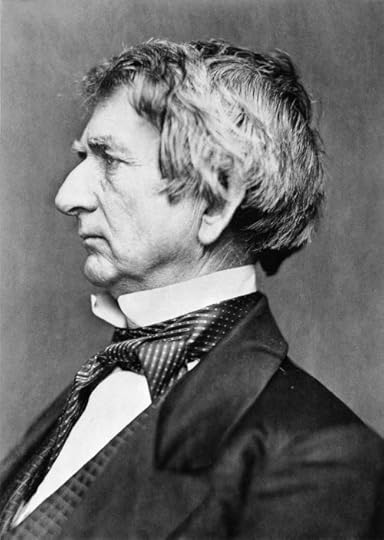
The famous profile of William H. Seward with the macaw nose on prominent display.
William Seward was a man certainly qualified to be president. When the first ballots came in during the Republican primary in 1860, he was well in the lead with 172 votes to Abraham Lincoln’s 102. He was 70 votes shy of winning the nomination. He felt reasonably assured he was going to be the Republican nominee. There were plenty of votes still out there loosely attached to candidates (favored sons of certain states) who were incapable of winning the nomination. Deals were to be made, and those votes would eventually swing to either Seward or Lincoln. Seward discovered only after it was too late that he had been outflanked. The convention was being held in Chicago, which of course was in Lincoln’s home state. When the final balloting was tallied, Lincoln men had filled the hall, and the Seward contingency found themselves outside unable to lend their voices in support of their candidate.
Lincoln won the nomination.
Politics is a fickle child, spawned of ambition, greed, and backroom deals. Seward was an old hand at politics and was a lightening rod for opposition from the very beginning of his political career in New York. He was an opinionated speaker and writer. People didn’t have to speculate about what he believed. The press knew he was always good for a quote, and he obliged them sometimes to his detriment. He was fervently against expansion of slavery in the territories as they were added as states. He was not as fervently supportive of the dissolution of slavery, but his wife Francis was a firm believer that the country could never be sanctioned by a higher power unless those in chains were fully liberated.
Seward had experienced the political tide going his way when he was elected governor and U.S. Senator, but he’d also lost elections due to the manipulations of his enemies who had chafed under the scorn of his oratory and writing ability. People were incapable of neutrality in regards to William Henry Seward. They either loved him or despised him.
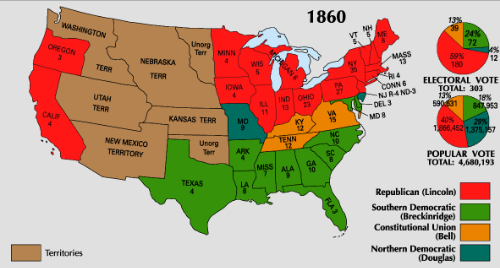
There is speculation that Seward might have lost the election in 1860 if he had been nominated. Lincoln was a relatively unknown, inexperienced candidate that in some cases might have hurt his chances, but the log cabin, rail splitter campaign resonated with people. As you can see from the map, the electoral vote was split between four candidates which certainly increased Lincoln’s chances, but even if all those Lincoln opposing states were united under one candidate, they would still fall short of winning the presidency. Seward may have lost states that Lincoln won which might have thrown the election to the House of Representatives to decide. A Democratic challenger would probably have been selected as a conciliatory notion to the South.
It is hard to even speculate about where we would be as a nation today if Lincoln had not become president in 1860. As much as I adore Seward, he may have compromised where Lincoln held firm, and one Civil War might have just been a prelude to another.
81.2% of the population turned out to vote, which shows how important Americans felt that election would be. It was the largest voter turnout in American history to that point, only eclipsed by the contentious 1876 election sixteen years later. Considering what happened as a result of Lincoln being elected, it was good that the 1860 election was determined by a majority of the population.
With an attempt at conciliation to all factions, Lincoln assembled his famous team of rivals (not to be confused with The Avengers) with the hope that the Southern states would be somewhat mollified.
They were not.
I’ve spent some time muttering and irritated over the irrational, impulsive behavior of South Carolina. Rebellion against any change seems to be in their blood. They drafted resolutions to secede once again in 2012 over a disagreement with the implementation of the Affordable Care Act. I will never forget the famous moment during President Obama’s state of the union speech when Joe Wilson, House member from South Carolina, shouted ”you lie”. He is a hero in South Carolina and has been comfortably re-elected ever since.
It’s the only time I remember seeing Obama look like he wanted to throw down with someone.
I’ve come to believe that South Carolina is the Judas Iscariot of this story. As the Bible tale goes, Judas has to betray Jesus for the son of God to die for all of our sins. Without the betrayal of Jesus there is no martyr (not to mention the cleansing of sin), and probably Christianity would never have been one of the dominant religions it is today. Only Mary Magdalene might be more maligned in history than Judas. So if I believe that about Judas, I have to believe that about South Carolina.
South Carolina had to betray the Union so that the United States could continue to exist as one nation. By attacking Fort Sumter, they forced the hands of the other Southern states. The South was not interested in any of the proposals to settle the slavery issue. In other words, war was the only solution. It is hard to swallow because one would like to find that pivotal moment when war could have been avoided, but if the war didn’t happen in 1861, then it would have happened later in our history with potentially even more devastating results. The South was sure they could beat the North in a war and split the United States asunder. As long as they believed this, war was inevitable.
Seward joined the cabinet as Secretary of State. He was once described by a member of the opposing party as looking ”dirty, rusty, vulgar, and low” and used words like “hell and damn”. His cuffs were often noticed to be unraveling. His face frequently unshaved, and his tongue untamed. Lincoln was not a paragon of fashion either, so Seward’s appearance as well as his counsel may have been why the once rivals bonded so closely so quickly. It was an endless source of irritation to the other cabinet members that Lincoln sought Seward’s opinions on so many matters. Mary Todd was not of the same opinion regarding Seward as her husband. She voiced her thoughts most vehemently when she discovered her husband intended to include him in the cabinet.
”Never” She insisted that “if all things should go right--the credit would go to Seward--if they go wrong--the blame would fall upon my husband. Seward in the cabinet--NEVER!”
Lincoln would not have been Lincoln without Seward. There were many grumblings among friends and foes alike that Seward was the true power behind the throne. This reminds me of the same kind of grumblings regarding President George W. Bush and his Vice-President Dick “Dark Lord” Cheney.
There are many moments where Seward offered Lincoln brilliant counsel. There are many bills and proclamations that have Seward’s deft skill with words etched into their framework. I will only talk about one particular event where Seward altered the course of history. Even thinking about what it would have meant for the country sends a shiver down my spine if Lincoln’s initial intentions had become the final decision. In 1861 the Union learned that representatives of the recently, hastily formed, Confederate government were on their way to England to ask for their nation to be formally recognized. Lincoln wanted them intercepted. They were found off the coast of Cuba on a British ship called the RMS Trent by the USS San Jacinto. Confederate representatives James Mason and John Slidell and their aids were detained and arrested. This became known as The Trent Affair.
Britain, understandably, went ballistic and started adding troops in Canada. The Confederate government was thrilled. This was a golden opportunity for an implosion that would lead to severed relations between the Union and Britain. In the process, it would strengthen relations between the South and Britain, after all the European cousins were missing their Southern grown cotton.
Lincoln was willing to go to war with England.
Think about the implications of that.
He was determined to keep those rebel diplomats locked up. Seward convinced Lincoln otherwise. It was not as simple as convincing the President. He also needed to convince the constituency. He drafted some articles with the intent of changing the mind of the public. These were successful, and instead of looking soft the administration ended up looking magnanimus. Potential boos became applause.
Here is a handkerchief for your sweaty brow, Mr. Seward.
Cuba is one of the many strange parallels between the Lincoln and Kennedy administrations. In 1962 the Cuban Missile Crisis happened almost exactly a hundred years after the Trent Affair. Since the Bay of Pigs disaster of 1961 was the direct cause of the Cuban Missile Crisis, one could say these potentially catastrophic events happened exactly a hundred years apart.
Seward proved to be loyal. He was one of the few cabinet members who did not conspire against Lincoln. In fact, Seward staunchly defended him at every turn and admired him immensely. When Seward was laid up from a carriage accident, Lincoln came to visit. He took off his hat and stretched out his long frame on the bed next to Seward and caught his Secretary of State up on all he’d missed since being laid up. That scene to me validates the closeness of these two men more than anything else I’ve ever heard. This was the same bed that Seward was dozing in when Lewis Powell tried to kill him on April 14th, 1865. ”Seward later recalled that the blade was cold, and then there was what seemed like a rainfall--a rainfall of his own blood.”
They didn’t tell Seward right away that Lincoln was dead, fearing that the shock would hinder his recovery, but Seward knew. As he said to an attendant, “If he had been alive he would have been the first to call on me; but he has not been here, nor has he sent to know how I am.”
1865 was a bad year for many people in the United States, but certainly Seward qualifies for being one of those most affected. ”Seward was tested in 1865 as few men are ever tested: by the carriage accident, by the attack of the assassin, by the near death of his son Frederick, by the death of his good friend and leader Lincoln, and the death of his wife Frances.”
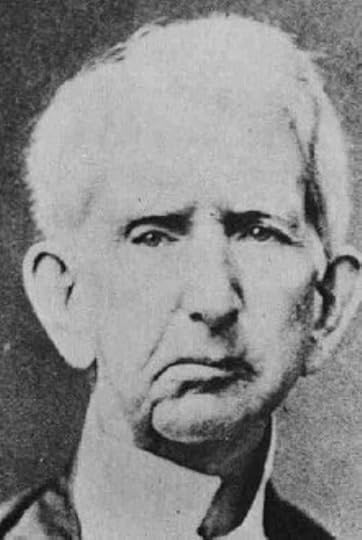
The Scars of the Powell attack are evident in the changed geography of his Seward’s face.
I don’t know exactly why Seward, once healthy enough to leave his bed, returned to work and even stayed to help President Andrew Johnson, except that he still felt the need to serve his country. He was instrumental in buying Alaska from, our good allies at the time, the Russians. He was ridiculed by opponents and friends for buying “worthless land.” He had even more ambitions to extend the borders of the United States, and in one such attempt almost swung a deal to bring British Columbia into the United States. After he retired from public office, he travelled extensively in the United States and around the world despite having health issues, including moments of paralysis of his hands that stemmed from the attack in 1865.
”In sum, although Seward was far from perfect, his talents and accomplishments more than entitle him to be called a statesman. Indeed, other than presidents, Seward was the foremost American statesman of the nineteenth century.”
American Heritage considers him one of the ten best Secretaries of States to ever serve our government. Click to see the ten best Secretaries of State He is second only to John Quincy Adams.
Walter Stahr has written a compelling biography about one of those oh so important men who stand in the shadows of other men, and yet, whose presence changed history. At times I felt like I was in Lincoln’s cabinet, sitting behind Seward, looking over his shoulder as he proofed legislation that would forever alter the destiny of the United States.
See more of my writing on my blog. http://www.jeffreykeeten.com.
William Henry Seward

The famous profile of William H. Seward with the macaw nose on prominent display.
William Seward was a man certainly qualified to be president. When the first ballots came in during the Republican primary in 1860, he was well in the lead with 172 votes to Abraham Lincoln’s 102. He was 70 votes shy of winning the nomination. He felt reasonably assured he was going to be the Republican nominee. There were plenty of votes still out there loosely attached to candidates (favored sons of certain states) who were incapable of winning the nomination. Deals were to be made, and those votes would eventually swing to either Seward or Lincoln. Seward discovered only after it was too late that he had been outflanked. The convention was being held in Chicago, which of course was in Lincoln’s home state. When the final balloting was tallied, Lincoln men had filled the hall, and the Seward contingency found themselves outside unable to lend their voices in support of their candidate.
Lincoln won the nomination.
Politics is a fickle child, spawned of ambition, greed, and backroom deals. Seward was an old hand at politics and was a lightening rod for opposition from the very beginning of his political career in New York. He was an opinionated speaker and writer. People didn’t have to speculate about what he believed. The press knew he was always good for a quote, and he obliged them sometimes to his detriment. He was fervently against expansion of slavery in the territories as they were added as states. He was not as fervently supportive of the dissolution of slavery, but his wife Francis was a firm believer that the country could never be sanctioned by a higher power unless those in chains were fully liberated.
Seward had experienced the political tide going his way when he was elected governor and U.S. Senator, but he’d also lost elections due to the manipulations of his enemies who had chafed under the scorn of his oratory and writing ability. People were incapable of neutrality in regards to William Henry Seward. They either loved him or despised him.

There is speculation that Seward might have lost the election in 1860 if he had been nominated. Lincoln was a relatively unknown, inexperienced candidate that in some cases might have hurt his chances, but the log cabin, rail splitter campaign resonated with people. As you can see from the map, the electoral vote was split between four candidates which certainly increased Lincoln’s chances, but even if all those Lincoln opposing states were united under one candidate, they would still fall short of winning the presidency. Seward may have lost states that Lincoln won which might have thrown the election to the House of Representatives to decide. A Democratic challenger would probably have been selected as a conciliatory notion to the South.
It is hard to even speculate about where we would be as a nation today if Lincoln had not become president in 1860. As much as I adore Seward, he may have compromised where Lincoln held firm, and one Civil War might have just been a prelude to another.
81.2% of the population turned out to vote, which shows how important Americans felt that election would be. It was the largest voter turnout in American history to that point, only eclipsed by the contentious 1876 election sixteen years later. Considering what happened as a result of Lincoln being elected, it was good that the 1860 election was determined by a majority of the population.
With an attempt at conciliation to all factions, Lincoln assembled his famous team of rivals (not to be confused with The Avengers) with the hope that the Southern states would be somewhat mollified.
They were not.
I’ve spent some time muttering and irritated over the irrational, impulsive behavior of South Carolina. Rebellion against any change seems to be in their blood. They drafted resolutions to secede once again in 2012 over a disagreement with the implementation of the Affordable Care Act. I will never forget the famous moment during President Obama’s state of the union speech when Joe Wilson, House member from South Carolina, shouted ”you lie”. He is a hero in South Carolina and has been comfortably re-elected ever since.
It’s the only time I remember seeing Obama look like he wanted to throw down with someone.
I’ve come to believe that South Carolina is the Judas Iscariot of this story. As the Bible tale goes, Judas has to betray Jesus for the son of God to die for all of our sins. Without the betrayal of Jesus there is no martyr (not to mention the cleansing of sin), and probably Christianity would never have been one of the dominant religions it is today. Only Mary Magdalene might be more maligned in history than Judas. So if I believe that about Judas, I have to believe that about South Carolina.
South Carolina had to betray the Union so that the United States could continue to exist as one nation. By attacking Fort Sumter, they forced the hands of the other Southern states. The South was not interested in any of the proposals to settle the slavery issue. In other words, war was the only solution. It is hard to swallow because one would like to find that pivotal moment when war could have been avoided, but if the war didn’t happen in 1861, then it would have happened later in our history with potentially even more devastating results. The South was sure they could beat the North in a war and split the United States asunder. As long as they believed this, war was inevitable.
Seward joined the cabinet as Secretary of State. He was once described by a member of the opposing party as looking ”dirty, rusty, vulgar, and low” and used words like “hell and damn”. His cuffs were often noticed to be unraveling. His face frequently unshaved, and his tongue untamed. Lincoln was not a paragon of fashion either, so Seward’s appearance as well as his counsel may have been why the once rivals bonded so closely so quickly. It was an endless source of irritation to the other cabinet members that Lincoln sought Seward’s opinions on so many matters. Mary Todd was not of the same opinion regarding Seward as her husband. She voiced her thoughts most vehemently when she discovered her husband intended to include him in the cabinet.
”Never” She insisted that “if all things should go right--the credit would go to Seward--if they go wrong--the blame would fall upon my husband. Seward in the cabinet--NEVER!”
Lincoln would not have been Lincoln without Seward. There were many grumblings among friends and foes alike that Seward was the true power behind the throne. This reminds me of the same kind of grumblings regarding President George W. Bush and his Vice-President Dick “Dark Lord” Cheney.
There are many moments where Seward offered Lincoln brilliant counsel. There are many bills and proclamations that have Seward’s deft skill with words etched into their framework. I will only talk about one particular event where Seward altered the course of history. Even thinking about what it would have meant for the country sends a shiver down my spine if Lincoln’s initial intentions had become the final decision. In 1861 the Union learned that representatives of the recently, hastily formed, Confederate government were on their way to England to ask for their nation to be formally recognized. Lincoln wanted them intercepted. They were found off the coast of Cuba on a British ship called the RMS Trent by the USS San Jacinto. Confederate representatives James Mason and John Slidell and their aids were detained and arrested. This became known as The Trent Affair.
Britain, understandably, went ballistic and started adding troops in Canada. The Confederate government was thrilled. This was a golden opportunity for an implosion that would lead to severed relations between the Union and Britain. In the process, it would strengthen relations between the South and Britain, after all the European cousins were missing their Southern grown cotton.
Lincoln was willing to go to war with England.
Think about the implications of that.
He was determined to keep those rebel diplomats locked up. Seward convinced Lincoln otherwise. It was not as simple as convincing the President. He also needed to convince the constituency. He drafted some articles with the intent of changing the mind of the public. These were successful, and instead of looking soft the administration ended up looking magnanimus. Potential boos became applause.
Here is a handkerchief for your sweaty brow, Mr. Seward.
Cuba is one of the many strange parallels between the Lincoln and Kennedy administrations. In 1962 the Cuban Missile Crisis happened almost exactly a hundred years after the Trent Affair. Since the Bay of Pigs disaster of 1961 was the direct cause of the Cuban Missile Crisis, one could say these potentially catastrophic events happened exactly a hundred years apart.
Seward proved to be loyal. He was one of the few cabinet members who did not conspire against Lincoln. In fact, Seward staunchly defended him at every turn and admired him immensely. When Seward was laid up from a carriage accident, Lincoln came to visit. He took off his hat and stretched out his long frame on the bed next to Seward and caught his Secretary of State up on all he’d missed since being laid up. That scene to me validates the closeness of these two men more than anything else I’ve ever heard. This was the same bed that Seward was dozing in when Lewis Powell tried to kill him on April 14th, 1865. ”Seward later recalled that the blade was cold, and then there was what seemed like a rainfall--a rainfall of his own blood.”
They didn’t tell Seward right away that Lincoln was dead, fearing that the shock would hinder his recovery, but Seward knew. As he said to an attendant, “If he had been alive he would have been the first to call on me; but he has not been here, nor has he sent to know how I am.”
1865 was a bad year for many people in the United States, but certainly Seward qualifies for being one of those most affected. ”Seward was tested in 1865 as few men are ever tested: by the carriage accident, by the attack of the assassin, by the near death of his son Frederick, by the death of his good friend and leader Lincoln, and the death of his wife Frances.”

The Scars of the Powell attack are evident in the changed geography of his Seward’s face.
I don’t know exactly why Seward, once healthy enough to leave his bed, returned to work and even stayed to help President Andrew Johnson, except that he still felt the need to serve his country. He was instrumental in buying Alaska from, our good allies at the time, the Russians. He was ridiculed by opponents and friends for buying “worthless land.” He had even more ambitions to extend the borders of the United States, and in one such attempt almost swung a deal to bring British Columbia into the United States. After he retired from public office, he travelled extensively in the United States and around the world despite having health issues, including moments of paralysis of his hands that stemmed from the attack in 1865.
”In sum, although Seward was far from perfect, his talents and accomplishments more than entitle him to be called a statesman. Indeed, other than presidents, Seward was the foremost American statesman of the nineteenth century.”
American Heritage considers him one of the ten best Secretaries of States to ever serve our government. Click to see the ten best Secretaries of State He is second only to John Quincy Adams.
Walter Stahr has written a compelling biography about one of those oh so important men who stand in the shadows of other men, and yet, whose presence changed history. At times I felt like I was in Lincoln’s cabinet, sitting behind Seward, looking over his shoulder as he proofed legislation that would forever alter the destiny of the United States.
See more of my writing on my blog. http://www.jeffreykeeten.com.

January 11, 2020
https://thebestbiographies.com/2020/0...
"Seward: Lincoln's Indispensable Man" by Walter Stahr was published in 2012. Stahr spent twenty-five years as a lawyer before turning his attention to writing. His first biography "John Jay: Founding Father" was published in 2005 and his most recent book "Stanton: Lincoln's War Secretary" was published in 2017. He is currently working on a biography of Salmon Chase.
Avid fans of American history - particularly those enthralled by great presidential biographies - will recognize William Seward as a core member of Abraham Lincoln's cabinet which was marvelously depicted in Doris Goodwin's 2005 Lincoln-focused biography "Team of Rivals." Seward was Lincoln's primary competitor for the Republican presidential nomination in 1860 and later became one of his most important advisers. Seward is widely regarded as one of the best Secretaries of State in U.S. history.
As an important but comparatively under-covered politician, Seward holds great promise for a biographer. Unfortunately, an apparent lack of information regarding his early life and a methodical but often dry writing style prevents Stahr's biography from reaching its full potential. And while this lengthy and often detailed review of his life succeeds admirably as history, it is unexceptional judged as biography.
This book is clearly meritorious in several respects, however. From its introduction, which does a good job teasing out Seward's essence and explaining why readers should care about his legacy, to Stahr's assessment of Seward's twelve-year Senatorial career, this book contains many nuggets of wisdom and insight.
Arguably the most valuable section of the book: the ten chapters covering Seward's tenure as Lincoln's (and, subsequently, President Johnson's) Secretary of State. Though this period accounts for just eight of Seward's seventy-one years, it consumes more than half the book. Stahr carefully reconstructs nearly everything Seward said or did of importance during this time and, although these pages are rarely captivating, they are extremely informative.
But as commendable as the book is documenting Seward's (mostly public) life, readers will quickly identify several shortcomings. Relatively little is offered of Seward's early years; he is a senior in college after just a dozen pages, and the first half of his life is covered in fewer than 60 pages.
In addition, Stahr almost completely fails to humanize his subject. Part of this may be attributed to Seward himself - he would never be described as the life of any party. But throughout the book he feels like an inert two-dimensional character observed from afar. And while readers periodically see his wife and children, their occasional presence does little to illuminate the man.
Important supporting characters such as the incomparable Thurlow Weed fail to receive adequate introductions...or sufficiently integral involvement in the story line. And, in general, Stahr's narrative feels like a carefully-assembled collection of facts glued together with little in the way of vibrancy or verve.
Overall, Walter Stahr's "Seward: Lincoln's Indispensable Man" provides a solid review of the life of a consequential 19th-century political figure. But if a great biography combines meticulously rendered history with a colorful, animating narrative then this book falls short. As political history it is often excellent, but as a literary experience it is unsatisfying.
Overall rating: 3½ stars
"Seward: Lincoln's Indispensable Man" by Walter Stahr was published in 2012. Stahr spent twenty-five years as a lawyer before turning his attention to writing. His first biography "John Jay: Founding Father" was published in 2005 and his most recent book "Stanton: Lincoln's War Secretary" was published in 2017. He is currently working on a biography of Salmon Chase.
Avid fans of American history - particularly those enthralled by great presidential biographies - will recognize William Seward as a core member of Abraham Lincoln's cabinet which was marvelously depicted in Doris Goodwin's 2005 Lincoln-focused biography "Team of Rivals." Seward was Lincoln's primary competitor for the Republican presidential nomination in 1860 and later became one of his most important advisers. Seward is widely regarded as one of the best Secretaries of State in U.S. history.
As an important but comparatively under-covered politician, Seward holds great promise for a biographer. Unfortunately, an apparent lack of information regarding his early life and a methodical but often dry writing style prevents Stahr's biography from reaching its full potential. And while this lengthy and often detailed review of his life succeeds admirably as history, it is unexceptional judged as biography.
This book is clearly meritorious in several respects, however. From its introduction, which does a good job teasing out Seward's essence and explaining why readers should care about his legacy, to Stahr's assessment of Seward's twelve-year Senatorial career, this book contains many nuggets of wisdom and insight.
Arguably the most valuable section of the book: the ten chapters covering Seward's tenure as Lincoln's (and, subsequently, President Johnson's) Secretary of State. Though this period accounts for just eight of Seward's seventy-one years, it consumes more than half the book. Stahr carefully reconstructs nearly everything Seward said or did of importance during this time and, although these pages are rarely captivating, they are extremely informative.
But as commendable as the book is documenting Seward's (mostly public) life, readers will quickly identify several shortcomings. Relatively little is offered of Seward's early years; he is a senior in college after just a dozen pages, and the first half of his life is covered in fewer than 60 pages.
In addition, Stahr almost completely fails to humanize his subject. Part of this may be attributed to Seward himself - he would never be described as the life of any party. But throughout the book he feels like an inert two-dimensional character observed from afar. And while readers periodically see his wife and children, their occasional presence does little to illuminate the man.
Important supporting characters such as the incomparable Thurlow Weed fail to receive adequate introductions...or sufficiently integral involvement in the story line. And, in general, Stahr's narrative feels like a carefully-assembled collection of facts glued together with little in the way of vibrancy or verve.
Overall, Walter Stahr's "Seward: Lincoln's Indispensable Man" provides a solid review of the life of a consequential 19th-century political figure. But if a great biography combines meticulously rendered history with a colorful, animating narrative then this book falls short. As political history it is often excellent, but as a literary experience it is unsatisfying.
Overall rating: 3½ stars

March 3, 2024
This is a truly masterful and thoroughly engrossing biography of William Henry Seward, one of the foremost American statesmen of the 1800s. Impeccably researched and well written, this is narrative history that lives and breathes. Seward is presented fairly as adroit, talented, imaginative, likeable, cultured, ambitious, and sometimes not altogether truthful. Some of his contemporaries thought he was more of a politician than a statesman. Reading this book I felt that though he was ideologically flexible, he was results driven and absolutely dedicated to loyal service in the employ of his president and country. And he was far more visionary and habitually optimistic than any of his cohorts. Seward lived through and helped to shape some of the most momentous events of our nation's history, and the author has done a great job of organizing and recounting it all. Highest recommendation for American history buffs.
September 3, 2015
This was a great biography of Seward's political and private life as under the Lincoln administration. It tells of the terrible struggle between the Northern states, the Union, and the Southern States, the confederacy. Theree are many colorful charictors mentioned who worked closely with Seward such as MR. Weed and Abraham Lincoln.
This book gives a great glimpse at the precivil and Civil war era of the United States of America.
I recommend thisbook to all.
Enjoy and Be Blessed.
Diamond
This book gives a great glimpse at the precivil and Civil war era of the United States of America.
I recommend thisbook to all.
Enjoy and Be Blessed.
Diamond

February 2, 2013
This is a very detailed biography of the political life of William Henry Seward. Taking the title a step further (although author Walter Stahr does not) from what is presented here, you could conclude that without Seward there would be no Lincoln.
Stahr shows how Seward took unpopular stands on behalf of free and enslaved Blacks: supporting the right of free Blacks to vote, defending a Black man tried for murder, helping Harriet Tubman buy a property for the underground RR, as a senator speaking and working behind the scenes to stop the Fugitive Slave Law and stopping the admission of Kansas to the Union as a slave state, and more.
He might have been the Republican nominee for President in 1860, but Lincoln's views were less known and the convention was in Illinois. Seward got over his loss quickly and campaigned tirelessly for Lincoln in 1860 and then again in 1864. Stahr shows how Lincoln heeded Seward's counsel starting with his inaugural address and much beyond. Seward was always there when needed, crisscrossing the country campaign style to raise greatly needed recruits for the Union Army and working behind the scenes.
While famous for the purchase of Alaska, Seward had many more achievements as Secretary of State. The book takes you through threats of invasions from Canada, the French designs on Mexico and the British, dependent on cotton (and slavery which they had outlawed for Britain), supplying the Confederacy. But for Russia, Britain and France could have mediated the war in favor of Confederacy. Seward managed all this, despite Congressional resistance. Some achievements were the quiet kind that set precedents for future generations, such as establishing the US passport without race designated, quite amazing for its time. Another is Seward's negotiating the meaning of US citizenship. Due to his diplomacy, naturalized Americans could not be pressed into military service or jailed for their exercise of free speech in their previous country.
While he presents a flood of information, Stahr provides little guidance for understanding his subject. There are several about faces. Early in his career, Seward does not support the Erie Canal, expansion to Cuba or Texas and seems to make the rights of Blacks and immigrants a priority. This changes later in his career when he supports public works and US expansion, and works less on behalf of civil rights.
Did Seward have an unusual number of enemies or was this expected for its time? Did he have a prickly personality? Would any public figure ahead of his time on race, immigrants and women's rights face abuse? Was the cash distributed by Eduard de Stoeckl to get the votes for the Alaska purchase the norm? Party switching is a difficult in our times, how about then when Seward did it twice? Was it the norm to appoint your son as a second in charge, (and another son a paymaster) and not hypocrisy to descry patronage appointments? The friendship with Weed is curious. His wife, Francis Seward is worth a biography on her own. What made him tick?
In the last 4 pages Stahr gives a bit of analysis, and finally an opinion, that Seward is the greatest statesman of the 19th century. Perhaps through the life of Seward we learn that to be in a position to be a statesman, you have to be a politician first.
I look forward to someone who builds on Stahr's very comprehensive work and provides an interpretive bio.
Stahr shows how Seward took unpopular stands on behalf of free and enslaved Blacks: supporting the right of free Blacks to vote, defending a Black man tried for murder, helping Harriet Tubman buy a property for the underground RR, as a senator speaking and working behind the scenes to stop the Fugitive Slave Law and stopping the admission of Kansas to the Union as a slave state, and more.
He might have been the Republican nominee for President in 1860, but Lincoln's views were less known and the convention was in Illinois. Seward got over his loss quickly and campaigned tirelessly for Lincoln in 1860 and then again in 1864. Stahr shows how Lincoln heeded Seward's counsel starting with his inaugural address and much beyond. Seward was always there when needed, crisscrossing the country campaign style to raise greatly needed recruits for the Union Army and working behind the scenes.
While famous for the purchase of Alaska, Seward had many more achievements as Secretary of State. The book takes you through threats of invasions from Canada, the French designs on Mexico and the British, dependent on cotton (and slavery which they had outlawed for Britain), supplying the Confederacy. But for Russia, Britain and France could have mediated the war in favor of Confederacy. Seward managed all this, despite Congressional resistance. Some achievements were the quiet kind that set precedents for future generations, such as establishing the US passport without race designated, quite amazing for its time. Another is Seward's negotiating the meaning of US citizenship. Due to his diplomacy, naturalized Americans could not be pressed into military service or jailed for their exercise of free speech in their previous country.
While he presents a flood of information, Stahr provides little guidance for understanding his subject. There are several about faces. Early in his career, Seward does not support the Erie Canal, expansion to Cuba or Texas and seems to make the rights of Blacks and immigrants a priority. This changes later in his career when he supports public works and US expansion, and works less on behalf of civil rights.
Did Seward have an unusual number of enemies or was this expected for its time? Did he have a prickly personality? Would any public figure ahead of his time on race, immigrants and women's rights face abuse? Was the cash distributed by Eduard de Stoeckl to get the votes for the Alaska purchase the norm? Party switching is a difficult in our times, how about then when Seward did it twice? Was it the norm to appoint your son as a second in charge, (and another son a paymaster) and not hypocrisy to descry patronage appointments? The friendship with Weed is curious. His wife, Francis Seward is worth a biography on her own. What made him tick?
In the last 4 pages Stahr gives a bit of analysis, and finally an opinion, that Seward is the greatest statesman of the 19th century. Perhaps through the life of Seward we learn that to be in a position to be a statesman, you have to be a politician first.
I look forward to someone who builds on Stahr's very comprehensive work and provides an interpretive bio.

November 21, 2012
This book represents a biography of one of Abraham Lincoln’s “ream of rivals.” An aspirant to become president, he ended up serving two presidents as a Cabinet member—Lincoln and Andrew Johnson. The book’s goal is straightforward (page 5): “. . .to bring to life for a new generation one of the great Americans of the Civil War generation.”
The book is organized chronologically—from his family background and his youth to the development of his career, concluding with the last years of his life. He had some noteworthy moments in his college career. His professional life really began when he became eligible to practice law. He worked out of his new home in Auburn, NY. Shortly thereafter, he married Francis Miller. Their marriage was different: she tended not to want to put up with the hurly burley of Washington, D. C. and spent much of her marriage at home, even when Seward was stationed elsewhere.
Sward’s political career began when he was elected to the New York State Senate. After serving a rather brief time in that post, he ran for Governor on New York. During this period of time, he began his career long relationship with Thurlow Weed, a powerful political operative and newspaper editor. With time and experience, Seward began to have presidential aspirations and ambition. As a Republican, he made an effort to win the nomination in Chicago in 1860. Abraham Lincoln prevailed though.
In a major development, Lincoln appointed a number of major Republican figures to serve in his Cabinet, including some who themselves had been presidential contenders or wannabes. One of those was William Seward, whom Lincoln nominated to serve as Secretary of State. At the outset, Seward had a rather condescending view of Lincoln and offered his services in a much larger role than simply Secretary of State. Lincoln smoothed that over, and Seward became one of his most effective Cabinet members. It is clear that Lincoln considered Seward valuable, but he was also strong enough to move ahead on his own.
In this volume, we read Seward’s achievements. His diplomacy, including trying to keep Great Britain out of the war, was important. His political advice on the Emancipation had some effect on the timing of Lincoln’s issuance of that statement. Then, of course, Seward’s effort to purchase Alaska from Russia. There were doubters, but—in the end—the purchase was made.
With Lincoln’s assassination, Seward stayed on as Secretary of State with Andrew Johnson. He continued to work to advance the country’s agenda and was more supportive of Johnson than one might have expected.
The book allows for an evaluation of Seward’s contributions and career. The volume is written well and would be a useful addition to one’s Civil War library.
The book is organized chronologically—from his family background and his youth to the development of his career, concluding with the last years of his life. He had some noteworthy moments in his college career. His professional life really began when he became eligible to practice law. He worked out of his new home in Auburn, NY. Shortly thereafter, he married Francis Miller. Their marriage was different: she tended not to want to put up with the hurly burley of Washington, D. C. and spent much of her marriage at home, even when Seward was stationed elsewhere.
Sward’s political career began when he was elected to the New York State Senate. After serving a rather brief time in that post, he ran for Governor on New York. During this period of time, he began his career long relationship with Thurlow Weed, a powerful political operative and newspaper editor. With time and experience, Seward began to have presidential aspirations and ambition. As a Republican, he made an effort to win the nomination in Chicago in 1860. Abraham Lincoln prevailed though.
In a major development, Lincoln appointed a number of major Republican figures to serve in his Cabinet, including some who themselves had been presidential contenders or wannabes. One of those was William Seward, whom Lincoln nominated to serve as Secretary of State. At the outset, Seward had a rather condescending view of Lincoln and offered his services in a much larger role than simply Secretary of State. Lincoln smoothed that over, and Seward became one of his most effective Cabinet members. It is clear that Lincoln considered Seward valuable, but he was also strong enough to move ahead on his own.
In this volume, we read Seward’s achievements. His diplomacy, including trying to keep Great Britain out of the war, was important. His political advice on the Emancipation had some effect on the timing of Lincoln’s issuance of that statement. Then, of course, Seward’s effort to purchase Alaska from Russia. There were doubters, but—in the end—the purchase was made.
With Lincoln’s assassination, Seward stayed on as Secretary of State with Andrew Johnson. He continued to work to advance the country’s agenda and was more supportive of Johnson than one might have expected.
The book allows for an evaluation of Seward’s contributions and career. The volume is written well and would be a useful addition to one’s Civil War library.

November 6, 2014
William Henry Seward, after serving as a progressive governor of New York and an outspoken Senator, was the Secretary of State in the Lincoln/Johnson administrations. During the Civil War, Seward managed foreign affairs exceptionally well, keeping the European powers from interfering in the war or recognizing the Confederacy, which would have been a catastrophe. He also played a role in various military, political and personal matters that Lincoln's cabinet dealt with. His most famous accomplishment, of course, was the treaty wherein the USA purchased Alaska from Russia in 1868, a brilliant coup, which not everyone appreciated at the time. His lowest moment, in spite of the support he had given to the downtrodden such as slaves and immigrants early on in his career, was his lack of empathy towards and aid to the newly freed blacks of the Southern States. Much of this had to do with the current philosophies of government then current in America, but it is still a bit hard to swallow. He was loquacious and mercurial and with a very high opinion of his own abilities. Early on, Lincoln had to squash him a bit until he understood who was the boss in that administration. With all that, Seward was probably the leading American statesman of the 19th century, with the vision and skills to help fulfill his vision of a great American empire, based on freedom. Walter Stahr's masterly biography is certainly an excellent introduction to the man and his times. It belongs on any serious Civil War bookshelf.

March 3, 2013
I had high exceptions for this book, based on my experience with Team of Rivals. When it didn't have the powerful narrative of Rivals it immediately relegated itself to the three star category.
Seward was controversial in life and death. With the perspective of a 150 plus years I can say that Seward was a good man with honest intentions, if not always honest means. For a political figure Seward had every right to be angry and bitter, but he wasn't. Despite losing what looked to be a sure nomination to Lincoln he immediately assisted Lincoln with the campaign. Later joined him at the White House as Secretary of State, despite prior to inauguration he had not met Lincoln. Unlike his fellow cabinet members (I'm talking about you Chase), he was loyal, almost to a fault. His first priority was doing what was best for the country and second for the president. He often lived far from his wife and family dedicating his life to public service. In the course of a year he was nearly killed, son surviving brutal assault defending Seward, President Lincoln killed and his daughter dying from TB. Rough year, but he continued on helping now President Johnson in completing Lincoln's mission. His influence was long felt in government; two personal aides rose to high office, including Secretary of State for McKinley and Theodore Roosevelt.
Seward was controversial in life and death. With the perspective of a 150 plus years I can say that Seward was a good man with honest intentions, if not always honest means. For a political figure Seward had every right to be angry and bitter, but he wasn't. Despite losing what looked to be a sure nomination to Lincoln he immediately assisted Lincoln with the campaign. Later joined him at the White House as Secretary of State, despite prior to inauguration he had not met Lincoln. Unlike his fellow cabinet members (I'm talking about you Chase), he was loyal, almost to a fault. His first priority was doing what was best for the country and second for the president. He often lived far from his wife and family dedicating his life to public service. In the course of a year he was nearly killed, son surviving brutal assault defending Seward, President Lincoln killed and his daughter dying from TB. Rough year, but he continued on helping now President Johnson in completing Lincoln's mission. His influence was long felt in government; two personal aides rose to high office, including Secretary of State for McKinley and Theodore Roosevelt.

June 21, 2013
A thorough, engaging and well-researched biography of Seward, mainly focused on his public life and political career. Stahr does not go into much detail regarding Seward’s private life; he addresses Seward’s complicated marriage but does not go into much detail, and one often feels like the book lacks insight at times, especially on his character and motivations. Still, the book is far from dull, and the narrative is clear and readable (if a little clinical at times). Stahr’s treatment of the man is quite balanced, with all of Seward’s qualities as a politician and public servant examined in detail, be they favorable or not.
The narrative moves along at a good pace, and the various chapters transition well. Stahr handles thematic issues smoothly, and makes clear to the reader whenever the historical record on a certain area is unclear. Stahr still considers Seward the greatest American statesman of his century, even greater than Clay or Webster.
Candid, readable and insightful.
The narrative moves along at a good pace, and the various chapters transition well. Stahr handles thematic issues smoothly, and makes clear to the reader whenever the historical record on a certain area is unclear. Stahr still considers Seward the greatest American statesman of his century, even greater than Clay or Webster.
Candid, readable and insightful.

December 15, 2012
Excellent read, especially in light of the new Lincoln movie
I had never read a full bio of Seward before, and this was great.
First, looking near the end of his life, I did not know he was such a conservative on Reconstruction. Indeed, while not a racist like Andrew Johnson, he fully supported the generally conservative nature of his approach. He appears not to care much for the fate of post-war Southern blacks, and also, ironically at least, fretted about too much federal intervention in states' rights. It made me wonder if he would have tried to influence Lincoln that way, had Lincoln lived.
Oh, and other things that kind of connect to the Lincoln movie?
Apparently, a fair amount of bribery was used to get the treaty of purchasing Alaska approved by the Senate; shades of 13th Amendment passage. (And, speaking of, which the movie doesn't tell us, Kentucky's Rep. Yeaman? Was named minister to Denmark for his vote swap; that's a pretty big payoff.)
Anyway, beyond that, it's stuff like this, and other stuff by Seward's "Karl Rove," Thurlow Weed, that make this a very good read.
I had never read a full bio of Seward before, and this was great.
First, looking near the end of his life, I did not know he was such a conservative on Reconstruction. Indeed, while not a racist like Andrew Johnson, he fully supported the generally conservative nature of his approach. He appears not to care much for the fate of post-war Southern blacks, and also, ironically at least, fretted about too much federal intervention in states' rights. It made me wonder if he would have tried to influence Lincoln that way, had Lincoln lived.
Oh, and other things that kind of connect to the Lincoln movie?
Apparently, a fair amount of bribery was used to get the treaty of purchasing Alaska approved by the Senate; shades of 13th Amendment passage. (And, speaking of, which the movie doesn't tell us, Kentucky's Rep. Yeaman? Was named minister to Denmark for his vote swap; that's a pretty big payoff.)
Anyway, beyond that, it's stuff like this, and other stuff by Seward's "Karl Rove," Thurlow Weed, that make this a very good read.
March 26, 2013
I have just finished reading SEWARD: LINCOLN'S INDISPENSABLE MAN by Walter Stahr, and I will recommend it to history buffs, but only to history buffs. It doesn't have the narrative arc to satisfy everyone; a few days ago The New York Times Book Review called it occasionally plodding. It is indeed slow in parts, but it is also a solid biography of Abraham Lincoln's and Andrew Johnson's secretary of state, who, more than anyone else, was responsible for Lincoln's election as president, for the peaceful reunification of the confederate states after the war, for the acquisition of Alaska, and for the eventual acquisition of Hawaii, Guam, the Philippines, the Panama Canal, and Puerto Rico. Late in life, as a widower with a 20-something girlfriend whom he adopted as his daughter, he was one of the first persons to travel as a tourist around the world. Actor David Strathairn portrayed Seward in the Spielberg movie LINCOLN. If the movie made you want to understand more, then this book may be for you.

November 4, 2012
This is an exceptional biography. Usually I scan through the early years and then focus on the subjects rise to prominence. One of the attributes of this book is that Walter Stahr makes Seward's formative years as interesting as his time as Secretary of State. This also has a great history of New York state politics prior to the civil war. Another eye-opening aspect of this book was how much of an effect Seward had on domestic affairs while Sec of State. I could not imagine Hillary Clinton (or any other recent Sec of State) being involved in some of the issues Seward was involved in. If you're interested in precivil war politics and international intrigue during the Civil War, you'll want to pick this up.

December 6, 2012
I found out about this book after seeing Lincoln, and the portrayal of Seward. He has accomplished quite a bit professionally and personally. I struggled a bit with finishing this but it was surprising to learn that Seward was one of the targets in the Lincoln assassination. John Wilkes Booth and his accomplices not only attacked Lincoln, but also Seward (Andrew Johnson was to be hit as well but his attacker chickened out). Seward survived his assault with permanent physical damage but got to see the world post-career.

October 19, 2012
I really enjoyed this book. We hear about Seward's Folly but not much is taught about him today. Th is book not only shows Seward, but also the times he lived through, which were some of the most turbulent the US has known. There is so much history in that era, that we only skim the surface, it was good to find more and details to full out some of the actions that lead to the Civil War and occurred during and after.

December 26, 2013
Interesting book about Lincoln's rival turned Secretary of State who probably single-handedly prevented foreign intervention in the Civil War. Suffers a bit from bad editing, the timeline and subject matter change jarringly at points. Also, we never really learn that much about Seward's apparently fascinating personality, only glimpses. Anti-slavery but not abolitionist, intellectual, imperialist, conniving politician and raconteur; I would've loved to get to know him better.
September 28, 2023
I think William Henry Seward is one of the most interesting figures in American history: Intelligent, educated, successful patent attorney, NY state senator & governor, 2 time U.S. Senator, controversial, bellicose, & shrewd diplomat, he came within a whisker of becoming President.
He found himself in the co-pilot’s seat during the greatest crisis in U.S. history as Abe’s Secretary of State. They talked nearly every day and as Lincoln’s key policy sounding board within the cabinet, Seward undoubtedly provided not only political advice but critical emotional support during the many dark, depressing days of the war.
This is Author Stahr’s 2nd biography, after 25 years as an international law attorney and his clean, crisp writing reflects it. Unfortunately, I believe Stahr has violated the cardinal rule of biography: he fell in love with his subject to the detriment of objectivity.
3 examples: (1)Stahr claims Seward was the most important person in getting Lincoln elected in 1860 because he made a multi state campaign trip on his behalf. But Lincoln scholar Michael Burlingame says Seward seldom mentioned Lincoln by name and when he stopped in Springfield to meet Lincoln, Seward insulted him by not leaving his railcar and rudely ended meeting after 15 minutes.
(2) Seward raised funds for A. johnson’s impeachment trial defense and
used some of this money to buy Senator acquittal votes as well as grease the skids to get his Alaska purchase treaty funded. Stahr brushes this off as Seward just being a politician!
(3) Between Lincoln’s inauguration and Ft. Sumter, Seward actually worked against Lincoln and probably provided the spark for Confederates to open fire on the fort after he promised certain southern representatives that the fort would be abandoned. This was insubordination. Stahr breezes by this too.
To his credit, however, Stahr does a good job of explaining how Seward’s Civil War delicate and complex diplomacy kept Great Britain and France from recognizing the Confederacy or providing financial or military support to the rebels.
It also a great complement to Seward that was able to change his distain for Lincoln into unquestionable respect and support. They made quite a team.
He found himself in the co-pilot’s seat during the greatest crisis in U.S. history as Abe’s Secretary of State. They talked nearly every day and as Lincoln’s key policy sounding board within the cabinet, Seward undoubtedly provided not only political advice but critical emotional support during the many dark, depressing days of the war.
This is Author Stahr’s 2nd biography, after 25 years as an international law attorney and his clean, crisp writing reflects it. Unfortunately, I believe Stahr has violated the cardinal rule of biography: he fell in love with his subject to the detriment of objectivity.
3 examples: (1)Stahr claims Seward was the most important person in getting Lincoln elected in 1860 because he made a multi state campaign trip on his behalf. But Lincoln scholar Michael Burlingame says Seward seldom mentioned Lincoln by name and when he stopped in Springfield to meet Lincoln, Seward insulted him by not leaving his railcar and rudely ended meeting after 15 minutes.
(2) Seward raised funds for A. johnson’s impeachment trial defense and
used some of this money to buy Senator acquittal votes as well as grease the skids to get his Alaska purchase treaty funded. Stahr brushes this off as Seward just being a politician!
(3) Between Lincoln’s inauguration and Ft. Sumter, Seward actually worked against Lincoln and probably provided the spark for Confederates to open fire on the fort after he promised certain southern representatives that the fort would be abandoned. This was insubordination. Stahr breezes by this too.
To his credit, however, Stahr does a good job of explaining how Seward’s Civil War delicate and complex diplomacy kept Great Britain and France from recognizing the Confederacy or providing financial or military support to the rebels.
It also a great complement to Seward that was able to change his distain for Lincoln into unquestionable respect and support. They made quite a team.

May 12, 2026
Seward: Lincoln’s Indispensable Man
By Walter Stahr
I really enjoyed learning more about William H. Seward. Most people who know who he is, at this point recall him as part of Lincoln’s “Team of Rivals” who had run against Lincoln in 1860, then accepted a position in his cabinet. Seward was the Secretary of State.
The book, which is well organized and informative, tells about Seward’s early life. He had an extensive political career long before the Civil War and was key in many significant events. He was an accomplished lawyer.
He was very adroit politically, but had a remarkable ability to tick people off. Many of his enemies spent their time trying to get him kicked out of the cabinet.
One thing I learned about him which endeared him to me was his loyalty. While it is true that he initially tried to run the government behind Lincoln’s back, once he realized Abe was more than competent, he forgot his only career desires and became one of Lincoln’s most faithful team members. They conferred constantly, and Seward became fiercely loyal. When Lincoln was assassinated, he became loyal to Johnson, who was Lincoln’s polar opposite. He argued often with Grant when Grant was a general, yet when Grant became president, Seward wrote favorably of him.
As the author described, some criticized him for this. But this is one of the things which made Seward great. When you work for someone, you owe them your honest counsel in private, and your support in public. That’s the job. I have received the same criticism (Mears is so and so’s boy). I was never anyone’s man. I just knew my job. I had people who worked for me who got it, and some who did not. Nothing makes your life hell more than having to fight with someone who is supposed to have your back while trying to do your job. All hail Seward on this point.
Seward is also responsible for gaining Alaska and the US Virgin Islands for the US, which he had to fight for amongst heavy criticism.
This was a good book and well worth the time.
By Walter Stahr
I really enjoyed learning more about William H. Seward. Most people who know who he is, at this point recall him as part of Lincoln’s “Team of Rivals” who had run against Lincoln in 1860, then accepted a position in his cabinet. Seward was the Secretary of State.
The book, which is well organized and informative, tells about Seward’s early life. He had an extensive political career long before the Civil War and was key in many significant events. He was an accomplished lawyer.
He was very adroit politically, but had a remarkable ability to tick people off. Many of his enemies spent their time trying to get him kicked out of the cabinet.
One thing I learned about him which endeared him to me was his loyalty. While it is true that he initially tried to run the government behind Lincoln’s back, once he realized Abe was more than competent, he forgot his only career desires and became one of Lincoln’s most faithful team members. They conferred constantly, and Seward became fiercely loyal. When Lincoln was assassinated, he became loyal to Johnson, who was Lincoln’s polar opposite. He argued often with Grant when Grant was a general, yet when Grant became president, Seward wrote favorably of him.
As the author described, some criticized him for this. But this is one of the things which made Seward great. When you work for someone, you owe them your honest counsel in private, and your support in public. That’s the job. I have received the same criticism (Mears is so and so’s boy). I was never anyone’s man. I just knew my job. I had people who worked for me who got it, and some who did not. Nothing makes your life hell more than having to fight with someone who is supposed to have your back while trying to do your job. All hail Seward on this point.
Seward is also responsible for gaining Alaska and the US Virgin Islands for the US, which he had to fight for amongst heavy criticism.
This was a good book and well worth the time.

January 7, 2018
When I saw the movie Lincoln, I thought that the character of William Seward was very interesting. Then I read about him in Doris Kearns Goodwin's Team of Rivals, and I still wanted to know more. So now I've read Seward: Lincoln's Indispensable Man by Walter Stahr. I must say, Seward is an interesting man.
The big thing I got out of this biography that was missing in other books I've read about Lincoln or the Civil War was what was happening with international relations during this period. Yes, much is made about the Trent Affair (google it) and fears of England aiding the Confederates, but this goes into relations with Russia, France, Mexico, Colombia, and the Guano Islands Act (google that one, too).
Stahr's research seems thorough to this novice history reader. He often gives several versions of different meetings, then weighs the evidence, and shows which version he finds most likely. Sometimes he comes to the conclusion that none is likely. He then tries to sift out what might be true or false in the versions.
I didn't really get into the book until about half way when Seward made Secretary of State. His time as politician, governor, and lawyer were less than interesting. When he becomes Secretary of State and Lincoln tells Seward that he would have to take care of foreign policy because Lincoln would be handling the war, I knew I was going to get some new insights into the working of the government, and I did.
I also liked the section on Seward's time working with President Andrew Johnson. The working relationship between the two was quite a contrast with Seward's Lincoln relationship.
The book shows how Seward really set the stage for America's international presence that would be greatly exploited during the McKinley/Roosevelt era at the turn of the century beginning with the purchase of Alaska, which history books inaccurately call "Seward's Folly".
So, if you like reading about American Cabinet Members, I would most certainly recommend this book to you.
The big thing I got out of this biography that was missing in other books I've read about Lincoln or the Civil War was what was happening with international relations during this period. Yes, much is made about the Trent Affair (google it) and fears of England aiding the Confederates, but this goes into relations with Russia, France, Mexico, Colombia, and the Guano Islands Act (google that one, too).
Stahr's research seems thorough to this novice history reader. He often gives several versions of different meetings, then weighs the evidence, and shows which version he finds most likely. Sometimes he comes to the conclusion that none is likely. He then tries to sift out what might be true or false in the versions.
I didn't really get into the book until about half way when Seward made Secretary of State. His time as politician, governor, and lawyer were less than interesting. When he becomes Secretary of State and Lincoln tells Seward that he would have to take care of foreign policy because Lincoln would be handling the war, I knew I was going to get some new insights into the working of the government, and I did.
I also liked the section on Seward's time working with President Andrew Johnson. The working relationship between the two was quite a contrast with Seward's Lincoln relationship.
The book shows how Seward really set the stage for America's international presence that would be greatly exploited during the McKinley/Roosevelt era at the turn of the century beginning with the purchase of Alaska, which history books inaccurately call "Seward's Folly".
So, if you like reading about American Cabinet Members, I would most certainly recommend this book to you.

July 22, 2012
Stahr's biography of William Henry Seward, the secretary of state from 1861 to 1869, is always solidly researched and often quite compelling, particularly in his discussion of the complex power struggle between Lincoln and Seward during the secession winter of 1860-61. However, insofar as Stahr hopes to defend Seward as a great statesman of the Civil War era, his argument is frequently unconvincing. While I finished this book feeling as if I understood Seward much better than I had before, it was at the cost of losing considerable respect for the man.
First, credit where due: Seward was in his early life a brave and progressive politician, unafraid to take up the cause of immigrants and African Americans. As governor of New York, he was not only an ardent opponent of slavery, but an opponent of northern black codes that restricted movement of free blacks and placed racial restrictions on voting and other legal rights. (He argued that the latter was a form of slavery, as indeed it was.) He also supported opening up the public education system to Catholic immigrants, and even once proposed that they should be taught in their native languages. Indeed, it could be argued that he lost the 1860 Republican nomination to Abraham Lincoln because the delegates doubted his commitment to white supremacy.
But Seward's response to the secession crisis belied his radical reputation. While Lincoln slowly traveled from Springfield to DC to assume the presidency, Seward remained in Washington and undertook a flurry of activity, spying on the Buchanan cabinet, attempting to rally Republicans behind his peace proposals, carrying on negotiations with southern Unionists, and generally attempting to sideline Lincoln while seizing the real power for Washington for himself. His motives were a mixture of arrogance and high-level strategy. He genuinely believed that if secession could be contained to the Deep South, then the nascent Confederacy could be isolated economically and politically until the southern Unionists reasserted control. He also believed that he was the best man for the job.
Seward turned out to be dramatically wrong, however. The secessionist control over New Orleans and other Gulf ports gave foreign merchants a place to ship goods without being subject to federal import taxes. That would, in effect, starve the US government of funding in less than two years and put time on the Confederacy's side. Meanwhile, any precipitous military action (like a Union blockade) would inevitably alienate southern Unionists and cause them to support secession. And while Lincoln and other Republicans supported some attempts at compromise, Seward was willing to give away the store. At one point, he proposed returning to the Missouri compromise line even to territory "thereafter acquired", which would have given a green light to southern attempts to establish slave territories in Cuba and Central America. Seward largely succeeded in alienating Republicans without finding a workable compromise.
Lincoln, shortly into his presidency, politely but firmly declined Seward's bid for power, at which point Seward famously became Lincoln's most loyal adviser. Seward's tireless efforts on Lincoln's behalf are admirable, but is it too cynical to suggest that more than good feelings were at work here? While once Lincoln had to worry about cultivating a leading GOP pol like Seward, soon it would be Seward whose position depended entirely on Lincoln's willingness to defend him against his Radical critics. And while an adroit diplomat, particularly in the crucial Trent crisis, Seward was also the primary conservative in the Lincoln administration. Seward argued against Lincoln's Emancipation Proclamation and as late as 1864 suggested that slavery might be permitted to survive the war in some form.
What really isolated Seward was his decision to remain in Andrew Johnson's Cabinet after Lincoln's death. Seward, like Johnson, saw no reason why southern states should not be allowed to enact punishing restrictions on the freedmen so long as they formally outlawed slavery. While once Seward had opposed black codes, he now sounded a different tune: "[T]he North has nothing to do with the negroes. I have no more concern for them than I have for the Hottentots." While Republicans in Congress passed civil rights protections, including the 14th and 15th Amendments, Seward stood in lonely opposition.
In some ways Seward was a vision of the future. Gilded Age Republicans would take a much reduced interest in black civil rights, and Seward was positively visionary in other ways. By 1859, his proteges in New York had created the sort of incestuous marriage between politics and corporate interests that would dominate America after the Civil War. (Seward himself, while not personally corrupt, was happy to spend hundreds of thousands of dollars in bribes to win over Congress, as he did when Andrew Johnson was impeached.) And Seward was also an ardent imperialist, who anticipated that one day soon America would swell to include Canada and large swathes of the Caribbean and Latin America. He even proposed that America acquire what is now Taiwan. He was himself responsible for the acquisition of Alaska, and his proteges at the State Department would make imperialism an important part of Republican foreign policy for a long time to come.
Stahr is a scrupulous biographer, and his biography is filled with lots of fascinating revelations and careful analyses. (Hence why I managed to go on at length about the man: Stahr gave me much to consider.) But his defenses of Seward are sometimes strained and unconvincing. Seward may well have believed that his Reconstruction policy was in line with Lincoln's, but many historians do not. And when faced with the question of whether Seward's imperialism was a good thing, Stahr simply says that Seward would have thought so. Regardless, SEWARD is highly recommended to fans of American history, even those who end up disagreeing with Stahr's conclusions.
First, credit where due: Seward was in his early life a brave and progressive politician, unafraid to take up the cause of immigrants and African Americans. As governor of New York, he was not only an ardent opponent of slavery, but an opponent of northern black codes that restricted movement of free blacks and placed racial restrictions on voting and other legal rights. (He argued that the latter was a form of slavery, as indeed it was.) He also supported opening up the public education system to Catholic immigrants, and even once proposed that they should be taught in their native languages. Indeed, it could be argued that he lost the 1860 Republican nomination to Abraham Lincoln because the delegates doubted his commitment to white supremacy.
But Seward's response to the secession crisis belied his radical reputation. While Lincoln slowly traveled from Springfield to DC to assume the presidency, Seward remained in Washington and undertook a flurry of activity, spying on the Buchanan cabinet, attempting to rally Republicans behind his peace proposals, carrying on negotiations with southern Unionists, and generally attempting to sideline Lincoln while seizing the real power for Washington for himself. His motives were a mixture of arrogance and high-level strategy. He genuinely believed that if secession could be contained to the Deep South, then the nascent Confederacy could be isolated economically and politically until the southern Unionists reasserted control. He also believed that he was the best man for the job.
Seward turned out to be dramatically wrong, however. The secessionist control over New Orleans and other Gulf ports gave foreign merchants a place to ship goods without being subject to federal import taxes. That would, in effect, starve the US government of funding in less than two years and put time on the Confederacy's side. Meanwhile, any precipitous military action (like a Union blockade) would inevitably alienate southern Unionists and cause them to support secession. And while Lincoln and other Republicans supported some attempts at compromise, Seward was willing to give away the store. At one point, he proposed returning to the Missouri compromise line even to territory "thereafter acquired", which would have given a green light to southern attempts to establish slave territories in Cuba and Central America. Seward largely succeeded in alienating Republicans without finding a workable compromise.
Lincoln, shortly into his presidency, politely but firmly declined Seward's bid for power, at which point Seward famously became Lincoln's most loyal adviser. Seward's tireless efforts on Lincoln's behalf are admirable, but is it too cynical to suggest that more than good feelings were at work here? While once Lincoln had to worry about cultivating a leading GOP pol like Seward, soon it would be Seward whose position depended entirely on Lincoln's willingness to defend him against his Radical critics. And while an adroit diplomat, particularly in the crucial Trent crisis, Seward was also the primary conservative in the Lincoln administration. Seward argued against Lincoln's Emancipation Proclamation and as late as 1864 suggested that slavery might be permitted to survive the war in some form.
What really isolated Seward was his decision to remain in Andrew Johnson's Cabinet after Lincoln's death. Seward, like Johnson, saw no reason why southern states should not be allowed to enact punishing restrictions on the freedmen so long as they formally outlawed slavery. While once Seward had opposed black codes, he now sounded a different tune: "[T]he North has nothing to do with the negroes. I have no more concern for them than I have for the Hottentots." While Republicans in Congress passed civil rights protections, including the 14th and 15th Amendments, Seward stood in lonely opposition.
In some ways Seward was a vision of the future. Gilded Age Republicans would take a much reduced interest in black civil rights, and Seward was positively visionary in other ways. By 1859, his proteges in New York had created the sort of incestuous marriage between politics and corporate interests that would dominate America after the Civil War. (Seward himself, while not personally corrupt, was happy to spend hundreds of thousands of dollars in bribes to win over Congress, as he did when Andrew Johnson was impeached.) And Seward was also an ardent imperialist, who anticipated that one day soon America would swell to include Canada and large swathes of the Caribbean and Latin America. He even proposed that America acquire what is now Taiwan. He was himself responsible for the acquisition of Alaska, and his proteges at the State Department would make imperialism an important part of Republican foreign policy for a long time to come.
Stahr is a scrupulous biographer, and his biography is filled with lots of fascinating revelations and careful analyses. (Hence why I managed to go on at length about the man: Stahr gave me much to consider.) But his defenses of Seward are sometimes strained and unconvincing. Seward may well have believed that his Reconstruction policy was in line with Lincoln's, but many historians do not. And when faced with the question of whether Seward's imperialism was a good thing, Stahr simply says that Seward would have thought so. Regardless, SEWARD is highly recommended to fans of American history, even those who end up disagreeing with Stahr's conclusions.
January 29, 2021
Reading this book about William Henry Seward, best known as Abraham Lincoln's Secretary of State, provided a different perspective on the US Civil War. Most books on Lincoln, or the Civil War, focus on the battles and speeches, but the work at which Seward excelled was managing the stage behind the scenes. Most of Seward's notable achievements in this period are seen as avoiding events, like deterring Great Britain and France from recognizing the Confederate States as a breakaway nation, ensuring a world view of states as simply in rebellion against the government. Seward also worked tirelessly on electing Lincoln for his first term, and then delaying secession of the crucial border states as long as possible to gain breathing room at the run-up to the Civil War. This book is long, and well-researched, so it takes time to read, which will be rewarded by an increased understanding of this great statesman's role in 19th century America.

September 13, 2018
Excellent biography of William H. Seward (he of Seward's Folly fame). This was a long, detailed book, but was very well written and very interesting. Much of the book dealt with Seward's relationship with Lincoln, but also spent time on his earlier years in NY politics and as governor of NY. Very worthwhile book for those interested in American History, especially with regard to Lincoln and the Civil War.

January 6, 2022
A well-written and researched biography of a vital man in American history. It not only brings to the front his life but additional details in American history that shaped the times.
I especially appreciated the author surmising the motives of Seward during his later years and the long-term ramifications of Seward’s service. The modern United States is the result of many of his initiatives. Stahr also doesn’t let his own feelings about other figures seep through the pages. You are left to judge them yourselves.
I especially appreciated the author surmising the motives of Seward during his later years and the long-term ramifications of Seward’s service. The modern United States is the result of many of his initiatives. Stahr also doesn’t let his own feelings about other figures seep through the pages. You are left to judge them yourselves.

June 9, 2020
Pretty remarkable overview of the life of Seward. It tracks his relationship with Lincoln in detail as well as his puzzling support of Johnson. Well written and well researched.

July 27, 2025
What is a “statesman?”
To read Walter Stahr’s Seward is to be rewarded with an answer to that question.
A statesman is a human being who represents the state, who defends and understands the people in the state, and who acts always to keep the state together. A statesman is “great” if their accomplishments significantly aid that state and its people, especially when circumstances make such goals difficult or unlikely. The great statesman probably devotes his entire life to the task of statesmanship, which is a form of sacrifice. A narcissist can never be a statesman, for the simple reason that they put self over state. The same is true for all partisans, who place party over state, and zealots, who place some social or political issue, like abolitionism, ahead of the state.
In Stahr’s monumental work, we see how William Seward acts throughout his life to represent his state. In his inaugural address on becoming governor of New York at age 30, he pushed for public education and wide acceptance of immigrants, with sound arguments that these were as important to the development of the state of New York as the more popular public works projects, like canals, which served industry and capital.
Seward was only ever moderately successful at advancing these causes, but in retrospect, arguments against welcoming immigrants to New York, or against paying to send the children to school, now seem unstatesmanlike. Statesmen are perhaps never common, even in times like the 1830s, when people were very active politically.
To expand the interest of a person beyond their “own affairs” is a necessary first step to statesmanship, but it’s easy to imagine how many citizens might be distracted from considering the state as a whole by the possibilities of power and influence. Thurwood Weed and Horace Greeley feature in this book as examples of partisans, shaping public opinion with their newspapers, and working as party leaders who chose the candidates for high office. Weed would become an early boss of the Republican Party, using his influence to counsel Seward to stay involved despite not getting his party’s presidential nomination in 1856. In 1860, Weed used all his connections and previous campaign experiences to support Seward, but Stahr notes that he had gotten a reputation by then for using bribery to get what he wanted in Congress, thus tarnishing Seward’s credentials as an anti-corruption candidate.
In what must have been a series of difficult decisions, Seward reconciled himself to supporting another candidate for President in 1860. Abraham Lincoln’s political rhetoric was similar to Seward’s, but with Lincoln more likely to win, Seward accepted a less illustrious role. Stahr finds a wonderful primary source showing how in 1859-60, Seward became the calculating partisan working for Lincoln that Weed had been for him.
The big question for the statesman in 1860 was, how could the United States be protected and preserved? President Buchanan had argued that if the southern states did secede, there was nothing he could do to stop them. President Lincoln begged to differ. Seward first fought hard to prevent secession, and it interests us to learn in these pages that secession might indeed have been prevented, at least in the first months of 1860, if certain state committees had voted to delay, rather than decide, in the heat of the moment. After the Confederacy formed, Seward continued to work to prevent border states like Missouri and Maryland from joining. His interpretation of being Secretary of State was that he was responsible for dialogue with an out-group he hoped to make back into an in-group. To unify the country under a stricter sense of freedom as excluding slavery gradually became the moral justification for the Civil War.
As if this political problem were not complex enough, Seward also had to manage relations between his state and other states. As Secretary of State, Seward was responsible for the dance of negotiations with Britain and France, who showed a willingness to negotiate with Richmond as well as Washington, to preserve the trade in cotton, and look for advantages, naturally, for their own states. Canada was still being shaped to the north, and Cuba was often thought of as a future US territory. When the Russian czar expressed moral support for Lincoln and the Union, Seward leaped at the chance to make a friend to counter potential British and French threats to aid the Confederacy.
It is owing to Seward that no international wars erupted during the course of the Civil War. As Secretary of State, Seward stood firm on certain matters, but knew when to yield. In the Trent Affair, he was convinced by his counterpart Lord Lyons that holding the Confederate envoys was the wrong choice to prevent war with Britain. Lincoln agreed, and the envoys were peacefully returned. When the French occupied Mexico in the 1860s, Seward overruled Grant’s request to attack and repulse French forces, because he deduced that a strike against France in Mexico was unnecessary when France’s position was so likely to collapse on its own. Seward’s thinking proved sound. Maybe it was just a lucky call. But I enjoyed the line Stahr finds from Gideon Welles, then the Secretary of the Navy, and usually a striking enemy of Seward inside Lincoln’s cabinet, saying that Seward “acts from intelligence, Grant from impulse.” In social psychology terms, the greater statesman will find the time for a slower deliberation. Careful reasoning is never exactly common, I think, but I wonder: was it in especially short supply during the war, or did those circumstances call the actors to higher roles? Grant lost the Mexico round, but he was clearly capable of slow deliberation when it mattered most in his sphere. Maybe Seward simply had a better intuition for foreign affairs, while Grant’s talents developed on American battlefields.
Before and after the war, Seward worked toward what he thought of as “American empire.” This term most often carries a negative connotation today, but not in Seward’s time. Why shouldn’t the greatest country in the world, with the most robust written constitution, guaranteeing the rights of property, commerce, and the humans engaged in it, be the operating system for the entire world? Alaska, “Seward’s folly,” was actually widely understood even at the time to bring us great economic gain. “Guano islands” in the South Pacific were natural resource banks pursued and won, and later on crucial to Pacific victories in World War II. The United States did not just fight and win a war to keep its states together, preventing at the same time war with other states; it went on to gain ground throughout the 1860s and beyond. Imperialism has garnered a bad reputation since these days of the 19th century, but it does remain the duty of a statesman on the world stage to represent the interests of their state, and even to expand the territory and people of the state. Of course, such dealings should always be accomplished by negotiation. It’s (almost?) never worth it to pursue foreign policy with foreign wars.
A statesman has to represent the people of their state. War is an enormous cost faced by ordinary civilians, and always in grotesque situations of suffering, violence and death. The puzzle of the people of the United States in the 19th century was always: are Black Americans Americans? Seward seems to have understood the people of the state as white Americans first and foremost. Black Americans were a new type of stateless migrant who should be gradually made members of the United States. This explains many seeming contradictions, such as that Seward should have helped Johnson veto a civil rights bill for Black Americans in 1868, even though he had helped in the passage of the 13th, 14th, and 15th Amendments previously, and had voted to extend suffrage to Black New Yorkers even before that. The rights of Southern whites defeated in war simply could not be limited by the federal government, nor could the rights of the massive population of southern Blacks defended by the federal government. Either pressuring the one group or propping up the other would lead to another Civil War, Seward was convinced.
He certainly had a visceral sense of the tensions, having just barely survived a deadly knife attack by an associate of the man who assassinated Abraham Lincoln, in 1865. At a recent exhibit of historical American photography at the Metropolitan Museum of Art, I saw an image, famous in its day, of the young man who had run up to the aged Secretary in his bed and slashed at his face and arm. There was a dreadful handsomeness there, an all-American look, which when we contemplate, expresses some of the anger, and hatred, felt by the Confederates and their supporters. Seward played a very long game, working toward a lasting peace through compromise between the radical sides of the issue of Black America and white supremacy.
Seward would probably have approved of the Atlanta Compromise speech that Booker T. Washington gave in 1895, wherein a black leader articulated one vision to gradually improve the lives of Black Americans. Maybe Seward deserves credit for preventing a second civil war, then. Or maybe, like Booker T. Washington, he underestimated the force of radical white supremacism, and an earlier effort to combat it actively would have been necessary for Black Americans to have a more stable position in the state today. Or maybe the more important lesson is, dialogue and negotiation between what counts as a member of the people of a state will always be contentious, particularly in our country, the United States of America, with all its diversity and constant flow of immigration. We should perhaps remind ourselves to take some pride in just how politically stable we have managed to be, in spite of the constant and multifaceted opportunities for conflict.
These are some of the points in Stahr’s massive work, which makes the case for Seward as a model statesman.
“The nineteenth century” is a careful qualifier. Benjamin Franklin and Alexander Hamilton were among the magnificent non-presidential statesmen of the eighteenth century. And by the twentieth century, the system is so complex that no single person supervised so much administration directly. There’s a certain romance to the heroic, global wrestling of nineteenth century figures like Napoleon, or Lincoln, or Seward. I think the lasting lesson of imagining these dashing men in their funny hats and coats is to embrace our own strengths, clarify our own values, and then stick to them, for lives of confidence, and purpose.
To read Walter Stahr’s Seward is to be rewarded with an answer to that question.
A statesman is a human being who represents the state, who defends and understands the people in the state, and who acts always to keep the state together. A statesman is “great” if their accomplishments significantly aid that state and its people, especially when circumstances make such goals difficult or unlikely. The great statesman probably devotes his entire life to the task of statesmanship, which is a form of sacrifice. A narcissist can never be a statesman, for the simple reason that they put self over state. The same is true for all partisans, who place party over state, and zealots, who place some social or political issue, like abolitionism, ahead of the state.
In Stahr’s monumental work, we see how William Seward acts throughout his life to represent his state. In his inaugural address on becoming governor of New York at age 30, he pushed for public education and wide acceptance of immigrants, with sound arguments that these were as important to the development of the state of New York as the more popular public works projects, like canals, which served industry and capital.
Seward was only ever moderately successful at advancing these causes, but in retrospect, arguments against welcoming immigrants to New York, or against paying to send the children to school, now seem unstatesmanlike. Statesmen are perhaps never common, even in times like the 1830s, when people were very active politically.
As [Seward] put it in his memoir, “politics was the important and engrossing business of the country.” Many observers agreed. Alexis de Tocqueville, the Frenchman who toured the United States in the early 1830s, observed that it was hard to overstate the importance of politics for Americans: “If an American were condemned to confine his activity to his own affairs, he would be robbed of one half of his existence; he would feel an immense void in the life which he is accustomed to lead, and his wretchedness would be unbearable.”
To expand the interest of a person beyond their “own affairs” is a necessary first step to statesmanship, but it’s easy to imagine how many citizens might be distracted from considering the state as a whole by the possibilities of power and influence. Thurwood Weed and Horace Greeley feature in this book as examples of partisans, shaping public opinion with their newspapers, and working as party leaders who chose the candidates for high office. Weed would become an early boss of the Republican Party, using his influence to counsel Seward to stay involved despite not getting his party’s presidential nomination in 1856. In 1860, Weed used all his connections and previous campaign experiences to support Seward, but Stahr notes that he had gotten a reputation by then for using bribery to get what he wanted in Congress, thus tarnishing Seward’s credentials as an anti-corruption candidate.
In what must have been a series of difficult decisions, Seward reconciled himself to supporting another candidate for President in 1860. Abraham Lincoln’s political rhetoric was similar to Seward’s, but with Lincoln more likely to win, Seward accepted a less illustrious role. Stahr finds a wonderful primary source showing how in 1859-60, Seward became the calculating partisan working for Lincoln that Weed had been for him.
Dr. Tullio Verdi, the Washington physician who frequently attended the Seward family, recalled that he asked Seward during the war how he had failed to secure the nomination that had seemed so certain. Seward replied that “the leader of a political party in a country like ours is so exposed that his enemies become as numerous and formidable as his friends, and in an election you must put forward the man who will carry the highest number of votes. Pennsylvania would not have voted for me, and without her vote we could not carry the election; hence I was not an available man. Mr. Lincoln possessed all the necessary qualifications to represent our party, and being comparatively unknown, had not to contend with the animosities generally marshaled against a leader. We made him the candidate; he was elected, and we have never had reason to regret it.”
The big question for the statesman in 1860 was, how could the United States be protected and preserved? President Buchanan had argued that if the southern states did secede, there was nothing he could do to stop them. President Lincoln begged to differ. Seward first fought hard to prevent secession, and it interests us to learn in these pages that secession might indeed have been prevented, at least in the first months of 1860, if certain state committees had voted to delay, rather than decide, in the heat of the moment. After the Confederacy formed, Seward continued to work to prevent border states like Missouri and Maryland from joining. His interpretation of being Secretary of State was that he was responsible for dialogue with an out-group he hoped to make back into an in-group. To unify the country under a stricter sense of freedom as excluding slavery gradually became the moral justification for the Civil War.
As if this political problem were not complex enough, Seward also had to manage relations between his state and other states. As Secretary of State, Seward was responsible for the dance of negotiations with Britain and France, who showed a willingness to negotiate with Richmond as well as Washington, to preserve the trade in cotton, and look for advantages, naturally, for their own states. Canada was still being shaped to the north, and Cuba was often thought of as a future US territory. When the Russian czar expressed moral support for Lincoln and the Union, Seward leaped at the chance to make a friend to counter potential British and French threats to aid the Confederacy.
It is owing to Seward that no international wars erupted during the course of the Civil War. As Secretary of State, Seward stood firm on certain matters, but knew when to yield. In the Trent Affair, he was convinced by his counterpart Lord Lyons that holding the Confederate envoys was the wrong choice to prevent war with Britain. Lincoln agreed, and the envoys were peacefully returned. When the French occupied Mexico in the 1860s, Seward overruled Grant’s request to attack and repulse French forces, because he deduced that a strike against France in Mexico was unnecessary when France’s position was so likely to collapse on its own. Seward’s thinking proved sound. Maybe it was just a lucky call. But I enjoyed the line Stahr finds from Gideon Welles, then the Secretary of the Navy, and usually a striking enemy of Seward inside Lincoln’s cabinet, saying that Seward “acts from intelligence, Grant from impulse.” In social psychology terms, the greater statesman will find the time for a slower deliberation. Careful reasoning is never exactly common, I think, but I wonder: was it in especially short supply during the war, or did those circumstances call the actors to higher roles? Grant lost the Mexico round, but he was clearly capable of slow deliberation when it mattered most in his sphere. Maybe Seward simply had a better intuition for foreign affairs, while Grant’s talents developed on American battlefields.
Before and after the war, Seward worked toward what he thought of as “American empire.” This term most often carries a negative connotation today, but not in Seward’s time. Why shouldn’t the greatest country in the world, with the most robust written constitution, guaranteeing the rights of property, commerce, and the humans engaged in it, be the operating system for the entire world? Alaska, “Seward’s folly,” was actually widely understood even at the time to bring us great economic gain. “Guano islands” in the South Pacific were natural resource banks pursued and won, and later on crucial to Pacific victories in World War II. The United States did not just fight and win a war to keep its states together, preventing at the same time war with other states; it went on to gain ground throughout the 1860s and beyond. Imperialism has garnered a bad reputation since these days of the 19th century, but it does remain the duty of a statesman on the world stage to represent the interests of their state, and even to expand the territory and people of the state. Of course, such dealings should always be accomplished by negotiation. It’s (almost?) never worth it to pursue foreign policy with foreign wars.
A statesman has to represent the people of their state. War is an enormous cost faced by ordinary civilians, and always in grotesque situations of suffering, violence and death. The puzzle of the people of the United States in the 19th century was always: are Black Americans Americans? Seward seems to have understood the people of the state as white Americans first and foremost. Black Americans were a new type of stateless migrant who should be gradually made members of the United States. This explains many seeming contradictions, such as that Seward should have helped Johnson veto a civil rights bill for Black Americans in 1868, even though he had helped in the passage of the 13th, 14th, and 15th Amendments previously, and had voted to extend suffrage to Black New Yorkers even before that. The rights of Southern whites defeated in war simply could not be limited by the federal government, nor could the rights of the massive population of southern Blacks defended by the federal government. Either pressuring the one group or propping up the other would lead to another Civil War, Seward was convinced.
He certainly had a visceral sense of the tensions, having just barely survived a deadly knife attack by an associate of the man who assassinated Abraham Lincoln, in 1865. At a recent exhibit of historical American photography at the Metropolitan Museum of Art, I saw an image, famous in its day, of the young man who had run up to the aged Secretary in his bed and slashed at his face and arm. There was a dreadful handsomeness there, an all-American look, which when we contemplate, expresses some of the anger, and hatred, felt by the Confederates and their supporters. Seward played a very long game, working toward a lasting peace through compromise between the radical sides of the issue of Black America and white supremacy.
Seward was worried that the Radical [Republican] approach could lead to a second civil war. He was willing to leave the treatment of southern blacks to the southern state governments, in the same way that the treatment of northern blacks was handled by the northern state governments. Seward no longer had a Radical in his own household, in the form of his wife Frances, who would surely have shared the Radical concern for the fate of southern blacks. Unlike Frances, Seward was never an abolitionist who insisted on the immediate end of slavery; he was prepared before the Civil War to wait for decades to see the gradual but inevitable end of the slave system. It is thus not surprising that after the war and his wife’s death, he was prepared to wait for gradual social and political processes to improve the lives of former slaves and their descendants.
Seward would probably have approved of the Atlanta Compromise speech that Booker T. Washington gave in 1895, wherein a black leader articulated one vision to gradually improve the lives of Black Americans. Maybe Seward deserves credit for preventing a second civil war, then. Or maybe, like Booker T. Washington, he underestimated the force of radical white supremacism, and an earlier effort to combat it actively would have been necessary for Black Americans to have a more stable position in the state today. Or maybe the more important lesson is, dialogue and negotiation between what counts as a member of the people of a state will always be contentious, particularly in our country, the United States of America, with all its diversity and constant flow of immigration. We should perhaps remind ourselves to take some pride in just how politically stable we have managed to be, in spite of the constant and multifaceted opportunities for conflict.
These are some of the points in Stahr’s massive work, which makes the case for Seward as a model statesman.
In sum, although Seward was far from perfect, his talents and accomplishments more than entitle him to be called a statesman. Indeed, other than presidents, Seward was the foremost American statesman of the nineteenth century.
“The nineteenth century” is a careful qualifier. Benjamin Franklin and Alexander Hamilton were among the magnificent non-presidential statesmen of the eighteenth century. And by the twentieth century, the system is so complex that no single person supervised so much administration directly. There’s a certain romance to the heroic, global wrestling of nineteenth century figures like Napoleon, or Lincoln, or Seward. I think the lasting lesson of imagining these dashing men in their funny hats and coats is to embrace our own strengths, clarify our own values, and then stick to them, for lives of confidence, and purpose.

March 6, 2013
A thoroughly researched, balanced view of a complex man central to a compelling time in our history
Walter Stahr outlines Seward's career as a lawyer attracted to politics. Seward is ahead of his time in opposition to slavery and for civil rights for Blacks and he aligns himself against the Democratic party's opposition to a federal government role in internal improvements and economic policy. He sets himself apart from fellow Whigs in his openness to immigration. His beliefs in civil rights and for a strong role for federal government in the economy eventually lead him to help found the Republican party.
The 1860 nomination contest is fully detailed with Stahr offering convincing evidence that Seward's record of outspoken opposition to slavery contrasted with Lincoln's similar views being lesser known and Seward's refusal to bargain with the corrupt Simon Cameron contrasted with Lincoln's willingness were the two things that cost Seward the nomination. Stahr then describes the 1860 election which was not then the foregone conclusion that history now assumes. It includes Seward's efforts, despite his disappointment in not receiving the nomination, in campaigning in key northern states against Stephen Douglas.
The book recounts the Civil War from Seward's perspective as Secretary of State where he focused on keeping England and France out of the war and as Lincoln's ally. The attempted assassination is told in chilling detail with the poignant story of Seward, in his sickbed for days after the attempt concluding that Lincoln had been killed because he saw through his window a flag at half mast with the realization that only death would have kept Lincoln from visiting Seward when Seward was so badly injured. The sadness is compounded when his wife dies days after the attempted assassination which also seriously injured their son
Stahr's balance is shown in his frank discussions in how Seward backed Andrew Johnson's reconstruction policies, partly out of loyalty but mainly out of sincere conviction that reuniting with the south was more important than safeguarding the freedoms and lives of the newly freed slaves, something that Seward was sadly unconcerned about
Stahr's scholarship is at its best when he refutes the myth of "Seward's folly"--he summarizes the near universal positive reaction of the newspaper editorials and articles at the time and the Senate ratification of the treaty with a bipartisan 59 to 2 vote. It was only later, when political opponents had other reasons to attack Seward. that Seward's folly was coined. One thing that I was fascinated to learn in this book was that in Seward's retirment he actually visited Alaska
Seward's wife, Anna, was the most fascinating part of Seward's life and I wish that Stahr had spent more time on her and their marriage. She was not a conventional political wife, even of our time, she did not center her life around Seward and refused to engage in many of the social activities expected of her. She was ahead of Seward in many ways, she agigated against slavey more than him, urged emancipation early in the war, and correctly predicted, against Seward's position the South's post reconstruction against the newly freed slaves--she maintained her friendship with the radical republican Charles Sumner even as Sumner and Seward had their political fallings out. She also spoke of her belief in the future where unmarried women would have roles in life and society.
In summary, a great book!!!!
Walter Stahr outlines Seward's career as a lawyer attracted to politics. Seward is ahead of his time in opposition to slavery and for civil rights for Blacks and he aligns himself against the Democratic party's opposition to a federal government role in internal improvements and economic policy. He sets himself apart from fellow Whigs in his openness to immigration. His beliefs in civil rights and for a strong role for federal government in the economy eventually lead him to help found the Republican party.
The 1860 nomination contest is fully detailed with Stahr offering convincing evidence that Seward's record of outspoken opposition to slavery contrasted with Lincoln's similar views being lesser known and Seward's refusal to bargain with the corrupt Simon Cameron contrasted with Lincoln's willingness were the two things that cost Seward the nomination. Stahr then describes the 1860 election which was not then the foregone conclusion that history now assumes. It includes Seward's efforts, despite his disappointment in not receiving the nomination, in campaigning in key northern states against Stephen Douglas.
The book recounts the Civil War from Seward's perspective as Secretary of State where he focused on keeping England and France out of the war and as Lincoln's ally. The attempted assassination is told in chilling detail with the poignant story of Seward, in his sickbed for days after the attempt concluding that Lincoln had been killed because he saw through his window a flag at half mast with the realization that only death would have kept Lincoln from visiting Seward when Seward was so badly injured. The sadness is compounded when his wife dies days after the attempted assassination which also seriously injured their son
Stahr's balance is shown in his frank discussions in how Seward backed Andrew Johnson's reconstruction policies, partly out of loyalty but mainly out of sincere conviction that reuniting with the south was more important than safeguarding the freedoms and lives of the newly freed slaves, something that Seward was sadly unconcerned about
Stahr's scholarship is at its best when he refutes the myth of "Seward's folly"--he summarizes the near universal positive reaction of the newspaper editorials and articles at the time and the Senate ratification of the treaty with a bipartisan 59 to 2 vote. It was only later, when political opponents had other reasons to attack Seward. that Seward's folly was coined. One thing that I was fascinated to learn in this book was that in Seward's retirment he actually visited Alaska
Seward's wife, Anna, was the most fascinating part of Seward's life and I wish that Stahr had spent more time on her and their marriage. She was not a conventional political wife, even of our time, she did not center her life around Seward and refused to engage in many of the social activities expected of her. She was ahead of Seward in many ways, she agigated against slavey more than him, urged emancipation early in the war, and correctly predicted, against Seward's position the South's post reconstruction against the newly freed slaves--she maintained her friendship with the radical republican Charles Sumner even as Sumner and Seward had their political fallings out. She also spoke of her belief in the future where unmarried women would have roles in life and society.
In summary, a great book!!!!

September 11, 2013
I enjoy reading about history and lately I've focused on US History. With all of the books and movies out about Lincoln and the Civil War, I decided to find out more about other historical figures of that time.
While I had known that Lincoln's Secretary of State was also attacked the night John Wilkes Booth shot Lincoln, I didn't know anything more than that. I'm really glad that I chose Walter Stahr's biography to get to know more about Willam Seward. I feel that the author did a really good job of protraying all sides of this human being and not judging him through the eyes of modern times.
As I read this book, I came to find that Seward was a very interesting man. He practiced law, was the Governor of NY, then a Senator from NY and in fact ran against Lincoln for their party's nomination for president. However, once Lincoln won the nomination, Seward campaigned for him (it was not the thing to campaign for yourself in those days) and gave him his full support. As a result, Seward was awarded the cabinet post of Secretary of State. Seward was a devout Unionist and vowed to do whatever it took to keep the Union together - if it meant tolerating slavery, he would do that (not happily) or abolishing it, he would agree to that too. Once I understood his goal of keeping the US as 1 country, I better understood some of his actions/allinaces/antagonisms with members of the government and military of the day.
Seward was not a war monger, but if that's what it would take to bring the union back togther, then he supported it whole heartedly. If war could be avoided, he did his best to do so, which he accomplished with painstaking diplomacy at home and abroad with regards to the Europeans installing an Emporer in Mexico and then eventually withdrawing him without the US getting involved militarily.
Most famous lasting legacy, "Seward's Folly" turned out to be a good thing for America - as the folly - Alaska- became a state.
I reccommend this book to anyone interested in US History or Civil War History.
While I had known that Lincoln's Secretary of State was also attacked the night John Wilkes Booth shot Lincoln, I didn't know anything more than that. I'm really glad that I chose Walter Stahr's biography to get to know more about Willam Seward. I feel that the author did a really good job of protraying all sides of this human being and not judging him through the eyes of modern times.
As I read this book, I came to find that Seward was a very interesting man. He practiced law, was the Governor of NY, then a Senator from NY and in fact ran against Lincoln for their party's nomination for president. However, once Lincoln won the nomination, Seward campaigned for him (it was not the thing to campaign for yourself in those days) and gave him his full support. As a result, Seward was awarded the cabinet post of Secretary of State. Seward was a devout Unionist and vowed to do whatever it took to keep the Union together - if it meant tolerating slavery, he would do that (not happily) or abolishing it, he would agree to that too. Once I understood his goal of keeping the US as 1 country, I better understood some of his actions/allinaces/antagonisms with members of the government and military of the day.
Seward was not a war monger, but if that's what it would take to bring the union back togther, then he supported it whole heartedly. If war could be avoided, he did his best to do so, which he accomplished with painstaking diplomacy at home and abroad with regards to the Europeans installing an Emporer in Mexico and then eventually withdrawing him without the US getting involved militarily.
Most famous lasting legacy, "Seward's Folly" turned out to be a good thing for America - as the folly - Alaska- became a state.
I reccommend this book to anyone interested in US History or Civil War History.

October 2, 2013
Walter Stahr’s biography of William Henry Seward is well researched and well written. Stahr has gone into detail about Seward’s life and he has done a good job presenting an unbiased view. He has pointed out common reports and proves they are false or true. Stahr also has gone into detail about opposing viewpoints about Seward, tells us what he can prove and what he cannot thereby allowing the reader to make up their own minds on the issue. Seward was an interesting man. He was a successful lawyer in Auburn, New York he appeared to be interested in politics from an early age. He was a New York state senator in 1830, was governor of New York in 1869 and a Federal Senator. In 1860 he became Lincoln’s Secretary of State. I found it interesting that he was so involved in domestic issues as the Secretary of State. Of course, he did work hard on foreign issues such as working to keep England and France from recognizing the Confederacy. He kept the U.S. from being involved with fighting in Mexico to kick out the French and Austrians. He helped remove them by diplomacy. I was unaware that there were other attempted assassinations when Booth killed Lincoln. Seward was injured in a horse carriage accident and had a fractured jaw and shoulder and was home in bed when the assassin stabbed him in neck and jaw. Family members pulled the man off him before he was able to complete his job. Seward is famous as the man who bought Alaska but most of the information provided in the book was new knowledge for me. I read this as an audio book it is a long book 22 hours 29 minutes. William Dufris did a good job in narrating the book. If you are interested in history this is a book for you.

January 30, 2013
After reading about Lincoln and seeing the movie I was curious to learn more about those times and the other people. This book is about William Seward who was Secretary of State under Lincoln and later, Johnson. He was a fascinating man! He had been governor of New York and a senator from New York. One of the creators of the Republican party he as Lincoln's rival for the presidential nomination--then he became Secretary of State. He was a lively man with great abilities. It was interesting to me to learn about the foreign policy issues during the Civil War--keeping Britain and France neutral, Russia being a great ally, France invading Mexico and putting Maximillian on a throne there. And then later whether we should invade Mexico to drive the French out, etc. He was eager to enlarge the United States--he did buy Alaska from the Russians and there was some consideration given to buying British Columbia too. He started the processes that eventually led to Hawaii, Puerto Rico and the Isthmus of Panama being territories--also Midway Island in the Pacific.
He was injured in a carriage accident and then very nearly killed as part of the same plot that killed Lincoln. He stayed on to help Johnson, even though those were very difficult times. After he was retired he took two very long and difficult trips--one west and even to Alaska, and another around the world before he died. I love learning about the smaller figures on the stage of history who made great contributions--even tho we tend to give all the credit to the major figures.
He was injured in a carriage accident and then very nearly killed as part of the same plot that killed Lincoln. He stayed on to help Johnson, even though those were very difficult times. After he was retired he took two very long and difficult trips--one west and even to Alaska, and another around the world before he died. I love learning about the smaller figures on the stage of history who made great contributions--even tho we tend to give all the credit to the major figures.
October 4, 2012
This is the first book I read by Walter Stahr, I saw Ron Chernow wrote a nice forward about it so I thought it must be good as Chernow is SO good. I really enjoyed the book as it's the only one I've read on Seward. I'm not sure if Stahr is a bit of a "only the facts mam " writer or if Steward while having a long and successful career in politic's wasn't rather dull as a person. One can't do everything Seward did and be totally boring but it seems that way in this book. The thing I think stuck me most about this book is the fact that when I think about Seward I think about what a horrible year 1865 was for him. First Lincoln gets shot, Seward himself gets brutally stabbed and mutilated, his wife dies and then his daugther dies and probably his Goldfish too... Man what a bad year and he likes Andrew Johnson who doesn't really like him. It goes on and on... Hell, the more I think about it this book wasn't bad at all even If I've been walking around thinking it wasn't good, it sure made a good impression.
January 2, 2014
Excellent biography of a prominent American statesman of the 19th c. New York Governor, Senator, Presidential candidate, Secretary of State for A Lincoln and Andrew Johnson, and purchaser of Alaska (Seward's folly). The author covers his distinguished career in some detail giving a look at political life in the antebellum period and the travails on the Civil War. Seward as a controversial figure and the author covers the issues that aroused such feelings in his supporters and his enemies.
Seward was intimately involved in the post war reconstruction period under the very controversial President Johnson, whom many consider the worst president in our history! The issue facing the country then in reuniting the southern states were significant and one gets a good flavor or Seward's role in helping move the country through this period.
This is a good complement to the book I am reading about Reconstruction that covers this period and through the Grant presidency.
Seward was intimately involved in the post war reconstruction period under the very controversial President Johnson, whom many consider the worst president in our history! The issue facing the country then in reuniting the southern states were significant and one gets a good flavor or Seward's role in helping move the country through this period.
This is a good complement to the book I am reading about Reconstruction that covers this period and through the Grant presidency.
Displaying 1 - 30 of 160 reviews