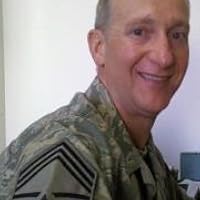
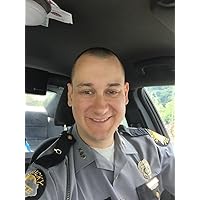
While the American public is aware of the CIA’s use of highly controversial “enhanced interrogation techniques,” few know the man who, in the wake of September 11, led all U.S. counterterrorism operations and oversaw the use of those procedures—procedures that obtained vital and timely intelligence and helped safeguard the nation from future attacks.
Puerto Rican–born Jose A. Rodriguez, Jr., served the United States for twenty-five years as an undercover officer before bringing his wealth of field knowledge to the CIA’s Counterterrorism Center; now, in this riveting account and fascinating life story, one of America’s top undercover operatives reveals how hard measures have derailed terrorist activity targeting the U.S., and saved countless American lives. Fully disclosed here for the first time are the undercover operations and tactics implemented during the George W. Bush presidency—which were approved by the highest levels of the U.S. government, certified as legal by the Department of Justice, and supported by bipartisan leadership of congressional intelligence oversight committees.
But as the shock of 9/11 faded, the support that the intelligence community enjoyed and deserved gave way to shortsighted and potentially dangerous political correctness. One by one, the tools needed to successfully fight terrorism were banished, and the men and women who volunteered to carry out our nation’s orders in combating al-Qa'ida found themselves second-guessed, hamstrung, and investigated— including Rodriguez himself. In effect, the United States has chosen to willfully and unilaterally disarm itself in the war on terror. In Hard Measures, Rodriguez convincingly argues for the techniques used, and uncompromisingly details when these techniques were necessary, why they worked, and how, ultimately, they contributed to the capture of the world’s most-wanted terror operatives, including Usama bin Ladin. From law school student to CIA recruit to his role as America’s top spy, Rodriguez’s full story is one of utmost importance—a rare, insider’s look at an issue that demands attention. Above all, it’s a reasoned, imperative, and fully informed case for hard measures, and an explosive and gripping account of the real war on terror— where it’s been and where it’s headed.
Terrorism has always been one of the toughest targets on which to collect intelligence. The secrets you want to steal frequently don’t reside in computer systems, which can be hacked, or safes, which can be broken into, but in the inner recesses of a handful of individuals’ minds.
The cliché about intelligence work is that it is like working on a thousand-piece jigsaw puzzle but not having the box top to show you what the finished picture should look like. If only it were that easy. In fact, it is more like working on a million-piece puzzle with no box top, and having millions more random pieces that look like they might fit, but actually are from different puzzles altogether.
It fell to us to make sense of the countless fragments of information and to take action on the chunks of the puzzle, which represented a real and growing threat to the United States and our allies.
After reading this book, some of my resistance to EIT has been lowered. I am glad Mr. Rodriguez has had the opportunity to set the record straight on what had previous been some bias reporting on the nature and extent of EIT. The program was far better reviewed, rigorous, and structured than much news reporting had suggested.
Forget what the major media has told you about CIA interrogations. Listen to the guy in charge of them. Laugh when he reveals what really broke KSM and made him compliant. Water isn't involved but a long standing but simple technique is.
An excellent read by a good man and a man of integrity. We need more men like this in government service and fewer of those like Barack Obama. The book complements others I have read about the CIAs role in terrorist interrogation, including those by George Bush and Dick Cheney.
This is a must read book! Mr. Rodriguez is a true American Hero and needs to be awarded a Nobel Peace Price. Thank you for all the sacrifices you've made to keep our country safe.
It's not the most exciting book in the world, but there is a very straightforward style of writing that I appreciated. I saw Mr. Rodriguez discussing the movie Zero Dark Thirty on a video panel discussion and wanted to read more about his angle.
Hard Measures is a timely book about topics (interrogation techniques including waterboarding, terrorism, detainee camps, drones) by someone who was intimately involved (head of CIA counter-terrorism division) that should be discussed and analyzed. I would have appreciated a book that presented facts, figures, history etc of these topics.
I tried to come at this book with an open mind. Torture is awful: yes; would I torture someone if it would save my loved ones from harm? yes. Therefore: I abhor torture, but entertain the thought that it might be necessary. But - is it effective? Is it necessary? These questions weren't answered satisfactorily, to my mind at least. It was impossible for me to take everyone the author said at face value; there were too many conflicting statements or opinions, too much wiggling and self defensive posturings. This book may have actually pushed me to into believing the opposite of what the author said.
Unfortunately, too much of Rodriguez' book amounts to a cover-your-ass memo, justifying what he did, and in a way that makes you suspicious about some of his actions. Protesteth too much? Lines like "...(the IG decided to investigate. I had no problem with that. There had been some problems with the interrogations program - as with every program..." (188), "years later, the special prosecutor who would be appointed to look into the matter surfaced a single email Rizzo allegedly sent me in 2005 saying Harriet Miers (White House counsel) had expressed qualms, but if I ever saw it (and I don't think I did), it made no impact on me. Just another lawyer saying "I'd rather you not..." (p 191) hint at more than he fully discloses. Fine - I don't know enough facts about any of this, but it gave the whole book more of an "I didn't do it" feel than a scholarly presentation would have.
There were things I learned, or found interesting, in the book. -technical issues: black sites, EITs (ten of them), few people waterboarded (by CIA at least), never more than 30 days, etc -we really waterboarded our own troops?? -16 agencies do US intelligence (and wow, redundancies are portrayed well here, as is the sometimes ridiculousness of all the government abbreviations: NCS, NSC p 149 - starts to sound like gobbledygook) -history, though not enough of it, of CIA - I didn't realize it was formed in 1948? - -being undercover, coming out of it to your kids
I wanted to hear more about: - interrogation techniques allowed in Army Field Manual, the concept of honor in war, the Geneva convention - why so many were sent to Guantanamo, etc -waterboarding our own troops and the SERE program: Survival, Evasion, Resistance, and Escape (SERE) is a program, best known by its military acronym, that provides U.S. military personnel, U.S. Department of Defense civilians, and private military contractors with training in evading capture, survival skills and the military code of conduct. Established by the United States Air Force at the end of the Korean War (1950–53), it was extended during theVietnam War (1959–1975) to the U.S. Army, U.S. Navy, and U.S. Marine Corps. Most higher level SERE students are military aircrew and special operations personnel considered to be at high risk of capture. -http://www.slate.com/articles/news_an...
- the history - how OSS became CIA, etc etc. but I guess that's for a different book.
+++++
These are notes I make for myself to look book at or refer to later; no interest to anyone else :)
-p 8, I apologize for any inconvenience to President Bush and Prime Minister Blair - so insincere -p 9, dropped charges for lack of evidence - well, maybe if you'd waited longer -p 29 life undercover -p 51 renditions, terrorists picked up and spirited to other countries where they are interogated. CIA prefers own interrogations in black sites in third countries pg 53 -p 57 fbi (wants proof of crime to convict) v cia (wants intelligence), leads to diff techniques of interrogation -p 61 techniques such as sleep deprivation, loud noise, isolation - all ok -p 62 more aggressive but legal techniques -p 62 contractor's belief that 30 days was time to know if detainee wd ever talk -p 65 define EIT (Enhance Interrogation Techniques) p 80 CIA is -p 67 implement above 30 days policy -p 69 we waterboard our troops for training -p 70 waterboard description -p 80 CIA is "flat" organization, easier to get stuff done -p 87 "agent" (our foreign draftees) vs "officer" (US employee) -p 120 "useful to "assist terrorists to get from where they were - - wink wink, hate this -p 121-2 wisdom of killing foreign leaders outside war zones -p 127 trouble with white house -p 129 16 agencies make up intelligence community -p 144 shake up at CIA, political "gosslings", retribution for Bush narrow win -p 142 he's blameless, haha, (had been fired from Latin America Divison - check) -p 145 bush agrees to double size of intelligence -p 146 WMD report shown how wrong we were -p 146 creation of NCS (from what had been DO) -p 148 McCain amendment Detainee Treatment Act of 2005, no agency can subject people in its custody to cruel, inhuman or degrading treatment or punishment -p 148 NCS vs p 149 NSC haha so many initials -p 158-60 etc explains how he got fired from LA division (ss note on p 142) -p 167 counterintelligence -p IG (Inspector General) Office within CIA, leaks -p 188 things went wrong -p 189 says Abu Ghraib awful -p 191 denies getting email -p 196 he says IG report on interrogation was wrong -p 195 says years later he heard that Goss felt I denied him the opportunity to find solution -p 203 dropped his cover -p 228 editing - spelled too wrong -p 230 breaking cover to his kids -p 230 honest assessment? -p 233 addresses possibility of getting wrong info through torture -p 234 only a third of prisoners got EIT -p 237 stopped waterboarding in 2003 -p 237 waterboard our own troops, Senator Nelson asks to be waterboarded -p 257 easy for those not in power to say you must do the right thing - kind of like him dissing obama?? -p 243 honorable people can come to the conclusion that although the EITs were successful, they are not something they want their government to engage in...(though thousands may die) -p 243 difference between terrorists and legitimate military personnel covered under Geneva Convention, Army Field manual
Guantanamo Bay, GITMO Why Usama and not Osama? Why does he have to say "Danny" Pearl instead of Daniel? Bragging of some close relationship? Demeaning to Pearl....
Started off a bit, for lack of a better term, “self-centered,” for a non-fiction work on the intelligence community (IC) in the years after 9/11. But it quickly focuses on the areas and targeted individuals (KSM, OBL, etc.) and how the intelligence community broke them down. One of the greatest urban legends is that we water boarded dozens of men and women in the years after the Towers, that the interrogators were sadistic. No, it was one of the Enhanced Interrogation Techniques (EITs), and never used on a subject after he started talking. And the EIT that broke KSM was not water boarding, but sleep depravation. It ends with the Obama administration coming in and basically threatening the counterterrorism assets with criminal prosecution. Just like the Obama War on Cops, this makes the IC members much less assertive in their jobs. If they think they will be prosecuted after the next election, they won’t push it. Mr. Rodriguez also discusses how drone strikes were Obama’s preferred technique for dealing with these terrorist. The two issues are one, obviously, collateral damage. Then, two, you can’t interrogate a dead man. Overall a good read on the intelligence community, and how the work is dirty, but it needs to get done.
Mr. Rodriguez is a true patriot for serving our country during one of the most challenging times in US history. He sounds like he had a very interesting career; however, you don’t find out much about it in this book. A large portion of the book is dedicated to his defense of controversial decisions that he made while executing the war on terror. I would have been more interested to hear how executed operations against terrorists instead of how he had to mount a defense in the face of two-faced politicians. Great man, but not really a great read.
A controversial and searing look into the difficult challenges the CIA faced after 9/11 in keeping the US safe, obtaining information needed to protect the country, and the difficulty of dealing with prisoners captured in the War on Terror. It provides a first-hand understanding of the difficult decisions facing policymakers and agency leaders in the War on Terror.
This book was out of my normal type of reading but I learned a lot from it. It was basically a CIA agent telling how enhanced interrogation techniques (EIT) are used and specifically, waterboarding. Jose Rodriguez had a very exciting career in the CIA and had some interesting stories to tell.
Very good insights on what went down from someone in the perfect position to tell it. I didn’t exactly expect it to be a fast read, and it wasn’t. There was a decent amount of repetition, but I suppose that was to hammer home the points. Overall a fascinating perspective
While there was some intriguing stories about some operations regarding a tense period for the CIA, it felt to me to be to thin. However, there was some material that dealt with legal issues regarding those that work in the CIA. It sounds as if it has become to bureaucratic issues nature with way to many lawyers in the employ of the CIA. Not a good way to run an agency.
nhanced Interrogation as part of a HUMINT collection program works! Anyone who denies this knows nothing about interrogation or HUMINT. Jose Rodriguez is a great American Patriot. Thank God we still have a few people like this left to keep us safe. On the other hand, the book reveals what many Americans have suspected for some time: There are anti-American ideologues in the government and media, who will do everything within their power to harm the U.S. and anyone who tries to protect and defend her. In simply doing his job, Rodriguez had to contend with self-serving bureaucrats, politicians and malignant reporters hell-bent on releasing classified information to the world. It is these illegal leaks, and not Rodriguez' noble and necessary HUMINT activities, that are criminal.
The book demonstrates what a hopeless bureaucratic nightmare our intelligence and defense services have become; an endless charade of paperwork, rules, attorneys and confusing nonsensical, bureaucratic steps, just to conduct simple intelligence activities. Certainly, at this rate, we will not--we cannot--prevail in a war with a capable adversary. And the facts revealed, so far, demonstrate this is exactly what liberals in the U.S. want. Consistent with facts revealed in this book, and stated liberal ideology, we now see irrefutable evidence that the Obama administration and its corrupt Attorney General and his minions, are behind further leaks of classified information and a grand cover up of the same. No amount of sham regime "investigations," however, can cover-up the truth. Lawless Obama, Holder and treasonous leaker-liberals should be tried and jailed. Rodriguez deserves high praise and our gratitude for doing what needed to be done to keep us safe, all in the face of liberal treason.
Hard Measures covers the career of Jose Rodriquez, the former director of the CIA’s National Clandestine Service. It is as much his autobiography as it is a leadership story from the intelligence world during the War on Terrorism. He skillfully describes the steps taken in the Counter Terrorism Center after the 9-11 attacks to develop a program capable of combating al-Qaeda.
The author’s primary motivation, as revealed by the subtitle, “How Aggressive CIA Actions After 9/11 Saved American Lives,” not so subtlety reveals his agenda. Rodriquez convincingly explained both the reasons for and the physical details of the enhanced interrogation program. This included the infamous, but often misunderstood, water boarding technique. This hard measure, which was only one of many controlled steps, is described as having turned three major al-Qaeda personalities into fairly reliable intelligence assets that greatly aided the US. Many of the later pages are largely devoted to defending the author against the peculiar controversy, concerning the order to burn interrogation video tapes, which enveloped him at career’s end.
The primary problem with the read comes from Rodriquez’s successful climb up the agencies’ leadership ladder. As such, the narrative completely follows his interests and responsibilities along the same path. Exciting tales about al-Qaeda, terrorist plots, and intelligence operations, nearly disappear in the second half. Sadly, Hard Measures culminates with dreary discussions about institutional structures, bureaucratic challenges, and political fights. However, the book should be considered a serious defense of CIA work in the complicated post 9-11 world, and an often intriguing examination of the life of one of its finest officers.
Hard Measures is the story of Jose A. Rodriguez (and told by him) and his time at the CIA. Rodriguez was born in Puerto Rico, but lived in many international locations as his father’s job took him to many countries. Rodriguez attends university in the US and obtains a law degree. After graduation, he decides to join the CIA, to try to recapture some of the excitement and adventure of his youth with his many exotic travels. The majority of story documents his many years at the CIA and how he moved up through the ranks. He also explains many of the obstacles he encounters on this journey. In the post 9/11 days he ends up running what for fans of the TV series 24 would call CTU. In the world of the CIA, they call this area the Clandestine Service division. During much of the controversial Bush years in the White House and the Iraq and Afghan wars, Rodriguez is in senior CIA jobs that have him running the CIA’s “war on terror”. He spends a great deal of time explaining the details of the CIA’s enhanced interrogation program. He gives his perspective of what worked and what did not work in the program. He carefully explains the critics side of the program, but of course offsets these points with from his vantage point. Rodriguez also makes the, now infamous decision to destroy the enhanced interrogation program tapes which leads to enormous personal pressure and years of further scrutiny. Since much of this book is such recent past history, and my obsession with the news, this book was fascinating to me.
An excerpt from a paper I wrote about Hard Measures: "Reading Hard Measures was like slogging through a bad essay—you really want to get it over with, but the author just keeps droning on and talking in circles. It reminds me of a high school exam paper, where students who don’t actually know the answers to the questions, so they (and excuse my language) bullshit their way through it with enough to make it seem like they have at least an inkling of what they’re talking about. I mean, Rodriguez opens up the 8th Chapter with the line “It sounded like a good idea at the time.” In what world does that line, opening up a chapter in a nonfiction work, ever give the reader the impression that the author is a trustworthy source. “It sounded like a good idea at the time” is the excuse for doing something stupid with friends as a kid, or eating an entire cake at a slumber party and feeling ill the next day. It’s the excuse for internet-famous videos of people injuring themselves doing senseless things. But it cannot be used as an excuse for national controversy. Rodriguez, throughout the book, uses phrases and sentences that don’t suit the situation. They treat it lightly where it should be professional, or cop out of giving real answers. My final suggestion on Hard Measures is that Rodriguez may want to skip nonfiction altogether next time and try writing a teen novel—at least then his writing style wouldn't be out of place."
First hand account by the man behind the development and implementation of the Enhanced Interrogation Techniques (EIT's) used by the CIA after 9/11 on high value terrorists prisoners. The media has only given us one side of the story. Here, Mr. Rodriguez gives us the CIA's version of events and how, in very few instances, these EIT's were applied and the valuable information obtained as a result that thwarted future attacks and saved countless lives. Information received by these high value prisoners also lead to the name of Osama bin Laden's trusted courier and ultimately to the SEAL mission on his Abbottabad compound. Bottom line, don't form an opinion as to whether or not our country was involved in "torture" until you read this book. It certainly changed my opinion. Well done Mr. Rodriguez, and thank you for your service.
I believe that Jose Rodriguez’ book titled Hard Measures, is a valid discussion about the courage, commitment, and decisiveness of the CIA in the period following 9/11 and before the American people (and politicians) lost their courage to do whatever it takes to defeat a determined enemy and safeguard our communities.
Here we learn about our intrepid silent warriors putting themselves in harms way, only to be destroyed by politicians who, rather than looking out for America, spend millions od dollars developing studies that have one goal in mind: to advance their own partisan agenda. This book is a worthwhile read.
Here's the Senate Committee's report of an investigation started after Rodriguez reportedly destroyed at least 100 tapes of interrogations and was accused of lying to a Senate committee and covering up illegal activities.
An interesting look into the life of a CIA agent. I appreciated the facts about waterboarding- the technique, the limited application, and its effectiveness. I thank him for his service and pray that other men who can act in upright ways follow. The way these people are hounded and second guessed makes you wonder why anyone would want this kind of job. If Congress had a smidge of his character we would be in a better place.
This is the first book I have read by an insider regarding enhanced interrogation techniques the CIA administered on terrorists. I had read Ali Soufains book and his criticism of the CIA interrogation methods and this book is very different in the effectiveness of the EIT. Rodreguiez makes a good case for the EIT program and why he destroyed tapes of the interrogations. This is a very readable book.
Very good book, easy read by the man to established, got approval, and oversaw the administration of enhanced interrogation techniques. Describes why they were necessary, how they worked, how they were used, how the terrorists were not harmed by them, how the information obtained has kept Americans safe, and how they led to the capture of Osama Bin Laden.
Very enlightening book to highlight how little is done to obtain info from terrorists. Why anyone works in intelligence with how politicized and undervalued our politicians make these positions is beyond me. So few these days willing to make courageous decisions because of politicians try to ruin your reputation and career