Now available in paperback, from the bestselling author of The Great Depression Ahead , a book that continues to show readers how to weather the storm in these tough economic times by cautioning against the misguided beliefs that lead to bad investment decisions.
With incisive critical ana lysis and historical examples, The Great Crash Ahead lays bare the traditional assumptions of economics, outlining why the next financial crash and crisis is inevitable, and just around the corner— coming between mid-2012 and early 2015. Widely respected in the financial world for his accurate forecasts, Harry S. Dent, Jr., shows that the government doesn’t drive our economy, consumers and businesses do; that the Fed does not create most of the money in our economy, the private banking system does. This necessary and illuminating book gives very clear strategies for prospering in the challenging decade ahead . . . a world turned upside down.
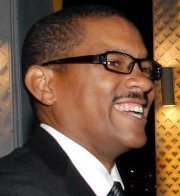
Harry S. Dent, Jr. (born 1950) is an American financial newsletter writer.
Dent writes an economic newsletter that reviews the economy in the US and around the world through demographic trends focusing on predictable consumer spending patterns, as well as financial markets, and has written several books.
This book is about the financial meltdown that has occurred and the deflationary downturn which the author believes is coming over next decade and beyond. I’m not a financial guru, so I really liked this book for the simple reason that the author explained what has happened and what he predicts will happen in very easy to understand terms.
Understanding how the US economy got to where it is now really opened my eyes. Sure I had heard the analysis on CNN and other news outlets a hundred times, but I had never grasped the scope and magnitude of the problems until I read this book and was taken through it step by step.
Loans given without validating documentation, loans given to people with no income and no jobs (ninja loans), and banks that make money just for giving loans, regardless of how and if they ever get paid back. Of course we all know what happened to ease the pain, the government stepped in with stimulus packages. The bankers made money while the government paid to try and clean up the mess. I love the term the author used when he described it as privatized profits and socialized losses.
The analogy to drugs used early in the book makes perfect sense, the financial stimulus methods used, qualitative and quantitative easing, were like crack cocaine, providing a short term high but resulting in an inevitable crash that leaves the user (consumers, borrowers, and lending institutions in this case) desperately wanting more. The bubble created by these stimulus packages has to burst, it cannot be sustained. Keeping with the drug analogy, a detox period must come when the bubble bursts.
The demographic research in the book shows that the baby boomers who brought us so much prosperity, the fall season as the author calls it, when they were in their peak spending years are now aging and spending less as they favor saving. This change combined with the debt detox to come is bringing us into the winter season. The book presents sage advice on how to prepare for and even prosper during the winter season.
The author has a clear track record of understanding and predicting the financial seasons. Everyone should read this book and understand the insanity that lead to this unprecedented debt load and what can be done to manage the correction to come. A webinar is also available at http://www.hsdent.com/webinar.
Harry Dent's theory is that the state of the economy depends primarily on what the baby boomers are up to. If they are in a stage of life when they are buying houses, raising kids, and spending a lot of money, the economy is going to be great. As they are getting older and nearing or at retirement, they're going to stop spending, start paying off debt, and save as much as they can. That time is now, and therefore the economy is going to be very slow for the next ten or twelve years, no matter how much the government stimulates it. This book rehashes a lot of what he already said in some of his other books. Probably worth reading, but time will tell if his predictions pan out.
There were a lot of graphs in this book. Lots of cycles. All about the boomers. But the conclusions were not explained except to say people do the same things at the same stages in life. There were supposed to be stratagies for "a world turned upside down". That seemed to be, pay off your bills. Don't buy real estate, unless it is cheap, then get some and rent it out. Buy bonds, and forget about using much health care when you get old. Oh, and your social security has been stolen, sorry, nothing we can do about that, and get used to it, your taxes will really be going up cause it is just crazy to think we would stop spending.
Harry Dent's theory on why spending will decrease in the future could be useful for strategic financial planing. However, I'm a natural optimist... But, as a Real estate agent... Maybe Harry's take on why vacation/second home communities could crash in value is, well... worth digesting.
"The Great Crash Ahead" is at the very least an interesting look at the post-Great Recession economy. This book is full of predictions, many of which have not come true or are yet to come true. If I was to judge this book by the accuracy of the predictions, I would give it a very low rating. However, I liked the book because it forces me to look at things differently than I normally would. Dent touches on the government's interference in the economy and how this has contributed to colossal financial bubbles. However, government interference plays a minor role when compared to demographic trends, according to Dent. I do not necessarily agree with this assessment, but it is a viewpoint that I had never read before.
Harry Dent's forecasting is build around demographic trends. He believes that abnormally large generations, like the Baby Boomers, cause a predictable cycle that the smart investor can use to stay ahead of the pack. As the large generation comes of age, new construction must be undertaken to build schools, recreational outlets, and other facilities to house the children. When they graduate from school and enter the job market, there is typically a rough employment period; there are not enough jobs to absorb the young, inexperienced members of the large generation. However, as the members of this generation gain experience, they become an economic powerhouse due to the generation's size. The generation's spending grows as it raises children, buys houses, and generally consumes more. This spending peaks at about 46 years old, at which time the average person begins to shift more of his or her income toward saving and investment as its children move out of the house. Right now, the Baby Boomer generation has surpassed this age. Its consumption is decreasing and will continue to decrease as the members of the generation get closer to retirement and actually retire. Japan's sluggish economy over the last 20+ years can be attributed to this same trend, according to Dent. Japan had a Boomer-type generation that was 15-20 years older than the U.S.'s Boomers.
Related to this, Dent believes that government cannot overcome these demographic trends. If governments try to swim against the current by keeping interest rates low, printing money, and/or otherwise pumping stimulus into the economy, it ultimately has little to no long-term effect on the economy and will just leave governments in more debt and with a weaker currency. These policies inflate bubbles that distort the economy, but these bubbles are all subordinate to the demographic cycles that I discussed in the last paragraph. Rather than fight a losing battle, Dent believes that the Fed should no longer have a multi-pronged mandate to pursue price stability and maximum employment. It should focus solely on price stability - keeping inflation between -2.5% and 2.5%. Deflation is inevitable during the Winter Season (when a generation like the Boomers decreases its consumption to focus on saving for retirement), so it is impossible to always inflation.
As far as predictions go, Dent predicted that the "Great Crash Ahead" would happen no later than 2015. This crash has not happened, but, to be fair, it is impossible to make any concrete predictions in a financial world so distorted by central banks. In this crash, he predicted the Dow would fall to 3,000-6,000, deflation would take hold, and oil and real estate prices would also crash. I am pessimistic about the long-term prospects of the U.S. economy, but even I do not believe that the Dow will fall by that much. I also think that the Fed is crazy enough to print enough money to force inflation on the economy. With the size of the federal debt and unfunded liabilities (to which Dent commits quite a bit of space in this book), the printing press will work overtime to monetize this debt.
I think Dent identifies most of the problems correctly and brings to the table an interesting way to look at the problems. At the same time, though, I do not think that most of his predictions will come to fruition. This book was worth it to read because I think his analysis of the problems with the U.S. economy is generally valuable. Also, I am sure many readers would be in the same boat as me; they would not before have seen these problems analyzed through a primarily demographic lens.
Great book from an analytical perspective. Outlined the deflation trend and argued it very well and convincingly. There is little doubt the difficulties predicted (deflation/contraction and a "winter season" in some economies) are highly likely. However, the book failed to fully address some major issues: the more drastic levels of policy response and its potential impact, especially in the scenario of extreme quantitative easing and inflation risks. This makes full & complete acceptance of his strategy/thesis somewhat difficult. Concerns about sovereign default and debt restructuring and its impact on bond investments was not addressed at all. However this is more Kenneth Rogoff's and Kyle Bass's field. However, this is a very convincing book (with great data to back it up) on the likely prevailing forces at work in the wider economy. This book will have a significant impact on how you picture the future.
Opinionated and foreboding, Mr Dent writes of an impending financial crash, ca. 2013-14, in this book from 2011. He predicts that the DJ will plummet to half its current resurgence. Operating a financial advice program since the late '80s, Dent makes reasonable hypotheses and explains as precisely as possible for the financially uninitiated, like myself. Spending patterns, the birth index, the generational spending wave, state pensions: Dent presents straightforward thoughts on economics. Economists tend to fall politically conservative. It's refreshing to hear one call for spending cuts across the board, paired with tax increases.
Accuracy? - anyone's guess. Always interesting to hear another opinion on the national economics that no one has successfully predicted, ever. The presentation is so good that as soon as I finished, I went back to re-read. Mr Dent makes me want to understand more.
A thought-provoking inter-correlated analysis. Dent explains how all the contributing factors lead us to this moment. The failure of QE (quantitative easing), the asset/debt bubble, the decrease in consumer spending, and the underfund situations in the State pension and retirement benefits; concoct with the anemic GDP growth, the domino effect of the European debt, the downfall of the Japanese economy; multiply by the aging of baby boomers en masse that leads to the increase of obligation in health care expenditure, social security payment, and Medicare liabilities.
Our only saving grace is to focus on the tasks on hand and determinate to weather through this detox period and let the lethal cocktail out of our system.
The author gives the impression that he has been warning all along about the impending crash of 2008. I did not read his previous books so I cannot say how true it is.
The book has many charts and very well researched and documented, which I really appreciate.
The author is definitely not a fan of big government or Keynesian economics or “intervention” by the central bank (the Feds). This is a unique perspective, although I am not sure how useful this is.
The seasonal cycle of Spring Summer Fall Winter is definitely interesting, and there may be some truth to the demography (population pyramid) as the major driver of our economy.
One thing for sure we are now in 2018 and his prediction about the Dow Jones going to 3300 is way off. I suppose the author may need to write another book.
If you are interested in investing and economics this is a very interesting book in terms of the impact of demographics. Harry Dent has always been controversial, but he always provides interesting and daring perspectives based on his study of demographics, although his timing of their impact on the economy and the markets is not usually very timely.
Dent doesn't provide a ton of new information as to why we are in this mess. But his conclusions differ substantially from Peter Schiff and David/Robert Wiedemer (Aftershock). His use of demographic tables to posit a period of coming deflation (akin to Japan's "lost decade") is VERY interesting. While I may not necessarily agree with his conclusions, it's absolutely worth a read.
Using simple language Dent explains the cause of the most recent financial crisis and the factors which he believes will lead to a prolonged period of deflation, low interest rates and another major real estate market bust (this time in China). The analysis in the book is based on an examination of various waves and cycles related to demographic trends and associated spending patterns.
Another layer added to previous book, a five star if he is as accurate as the great depression ahead. Builds confidence that you can still invest in the future and gets you out of the herd of sheeple.
I agree with about 75% of what Dent has written here. I certainly don't hold to the same world view that he really gets into in the last chapter and conclusion of the work -- evolution and uniformitarianism. I will be reading his earlier work about the coming depression.
Reading book 4 years after published. Prophecy's dated but basis for forecasts good. Easy to read and understand. Great charts & graphs. H Dent's long range forecasts reasonably good but schedule predictions not so good.
Not a leisure read, however, if he is correct with his theories, the book will prove to be invaluable for your financial well being in the coming years.
Economics from an obviously biased point of view. The data presented seems to be one sided to fit the argument. Without objectivity this reader is left unconvinced.