

What do you think?

Russian Fairy Tales: A Choice Collection of Muscovite Folk-lore - also includes an annotated bibliography of select works on worldwide fairy tales and folk lore
1873. One touch of storytelling may . . . make the whole world kin. So stated Ralston. In England the works of Ralston were the first to deal with the vast field of Slavonic, and more especially of Russian, folklore. His chief endeavor was to show the great amount of information which the unwritten literature of Russia contains as to the early stages of religious development.
521 pages, Kindle Edition
First published November 30, 2000
About the author
William Ralston Shedden Ralston
116 books1 followerWilliam Ralston Shedden-Ralston (born William Shedden and later known as William Ralston) was a noted British scholar of Russia and translator and Russian.
He was the only son of W. P. Ralston Shedden, who made his fortune as a merchant in Calcutta and set up home in Palmira Square, Brighton, when he returned to England. William spent most of his early years there. Together with three or four other boys he studied under the Rev. John Hogg of Brixham, Devonshire, until he went to Trinity College, Cambridge in 1846, where he graduated with a BA in 1850.
During this period William's father entered into a lengthy but unsuccessful litigation over his claim to Ralston estates in Ayrshire. The cost dissipated his fortune. The family pressed the claim for many years. Shedden's only sister took up the pleadings, and at one stage conducted the case before a committee of the House of Lords for more than thirty days. William had been called to the bar before the litigation began, but the change in the family's fortunes forced him to seek immediate remunerative employment. He also adopted the additional surname of Shedden.
In 1853 he went to work as a junior assistant in the printed-book department of the British Museum, where his zeal and ability won the respect of his superiors. The work began with the requisite two years copying titles for the printed books catalogue, and thereafter he rose slowly through the ranks. When he saw a need for someone who could catalogue Russian books, he began studying Russian, and even learned pages of the dictionary by heart.
He also studied Russian literature. He translated 93 of Ivan Andreevich Krylov's two hundred fables, and this work, published in 1868 as Krilof and his Fables, ran to numerous editions. The following year he brought out a translation of Ivan Turgenev's Nest of Gentlefolk as Liza; in 1872, his 439-page Songs of the Russian People as Illustrative of Slavonic Mythology and Russian Social Life, and in 1873 a bloodthirsty collection of Russian Folk Tales. He made two or three journeys to Russia, formed numerous literary acquaintances there, and had a lasting friendship with Turgenev. He also became a corresponding member of the Imperial Academy of Sciences of St. Petersburg. He visited Serbia twice, and made numerous visits to Germany, Belgium, and Switzerland.
In 1874 he published Early Russian History, the substance of four lectures delivered at the Taylor Institution in Oxford. His visits to Russia were mainly to collect material for another, more comprehensive account. Having contracted for its publication with Messrs. Cassell & Co, at the last moment he allowed them to cancel the agreement and publish instead Donald Mackenzie Wallace's book Russia.
He also possessed a gift for narrating stories orally. He devised a novel form of public entertainment, telling stories to large audiences in lecture-halls, making several successful appearances at St. George's and St James's Halls. He gave story-tellings to the young princes and princesses at Marlborough House, and to other social gatherings; and also, in aid of charities, to audiences in east London and the provinces.
His health failing, he resigned from the British Museum in 1875 and sought to devote himself to literary work, but he was susceptible to acute depression and became increasingly withdrawn. Nevertheless he wrote for the Athenæum magazine and the Saturday Review, as well as the Nineteenth Century and other magazines.
He was the only son of W. P. Ralston Shedden, who made his fortune as a merchant in Calcutta and set up home in Palmira Square, Brighton, when he returned to England. William spent most of his early years there. Together with three or four other boys he studied under the Rev. John Hogg of Brixham, Devonshire, until he went to Trinity College, Cambridge in 1846, where he graduated with a BA in 1850.
During this period William's father entered into a lengthy but unsuccessful litigation over his claim to Ralston estates in Ayrshire. The cost dissipated his fortune. The family pressed the claim for many years. Shedden's only sister took up the pleadings, and at one stage conducted the case before a committee of the House of Lords for more than thirty days. William had been called to the bar before the litigation began, but the change in the family's fortunes forced him to seek immediate remunerative employment. He also adopted the additional surname of Shedden.
In 1853 he went to work as a junior assistant in the printed-book department of the British Museum, where his zeal and ability won the respect of his superiors. The work began with the requisite two years copying titles for the printed books catalogue, and thereafter he rose slowly through the ranks. When he saw a need for someone who could catalogue Russian books, he began studying Russian, and even learned pages of the dictionary by heart.
He also studied Russian literature. He translated 93 of Ivan Andreevich Krylov's two hundred fables, and this work, published in 1868 as Krilof and his Fables, ran to numerous editions. The following year he brought out a translation of Ivan Turgenev's Nest of Gentlefolk as Liza; in 1872, his 439-page Songs of the Russian People as Illustrative of Slavonic Mythology and Russian Social Life, and in 1873 a bloodthirsty collection of Russian Folk Tales. He made two or three journeys to Russia, formed numerous literary acquaintances there, and had a lasting friendship with Turgenev. He also became a corresponding member of the Imperial Academy of Sciences of St. Petersburg. He visited Serbia twice, and made numerous visits to Germany, Belgium, and Switzerland.
In 1874 he published Early Russian History, the substance of four lectures delivered at the Taylor Institution in Oxford. His visits to Russia were mainly to collect material for another, more comprehensive account. Having contracted for its publication with Messrs. Cassell & Co, at the last moment he allowed them to cancel the agreement and publish instead Donald Mackenzie Wallace's book Russia.
He also possessed a gift for narrating stories orally. He devised a novel form of public entertainment, telling stories to large audiences in lecture-halls, making several successful appearances at St. George's and St James's Halls. He gave story-tellings to the young princes and princesses at Marlborough House, and to other social gatherings; and also, in aid of charities, to audiences in east London and the provinces.
His health failing, he resigned from the British Museum in 1875 and sought to devote himself to literary work, but he was susceptible to acute depression and became increasingly withdrawn. Nevertheless he wrote for the Athenæum magazine and the Saturday Review, as well as the Nineteenth Century and other magazines.
Ratings & Reviews
Friends & Following
Create a free account to discover what your friends think of this book!
Community Reviews
Displaying 1 - 4 of 4 reviews

June 1, 2013
I downloaded this for free at gutenberg.org. It is a wonderful resource on Russian folklore with different versions of legends regarding Baba Yaga, Koshei the deathless, Maria Morevna, Beautiful Vassilisa, and many others.
The chapters each focus on a specific legend or type of monster/creature/hero type that is unique to Russian folk tales and provides several different stories that relate to the theme. I found some cool references to monsters that I had first heard about on Supernatural, such as the "Shtriga" that was portrayed on one of the episodes.
This book was a lot of fun, and good research material for those interested in folklore from around the world.
The book was not illustrated, but here are a few images from Russian mythology that I found on the net.
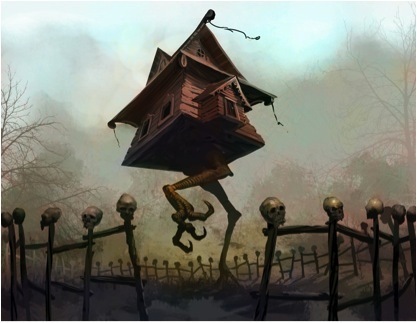
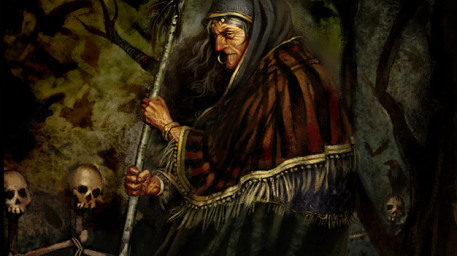

The chapters each focus on a specific legend or type of monster/creature/hero type that is unique to Russian folk tales and provides several different stories that relate to the theme. I found some cool references to monsters that I had first heard about on Supernatural, such as the "Shtriga" that was portrayed on one of the episodes.
This book was a lot of fun, and good research material for those interested in folklore from around the world.
The book was not illustrated, but here are a few images from Russian mythology that I found on the net.

December 13, 2009
I love Russian myth. Especially Baba Yaga (who depending on the story can be good or evil) and Vasilissa, who is always wise and beautiful.

December 12, 2011
Reads like a dissertation. More Skazkas, less analysis.

December 28, 2025
As someone new to Slavonic culture, I really loved this (and I plucked it for free from a street library so lucky me!) It perfectly satiates my appetite for European folklore. I particularly loved the final chapter about legends and demons.
It covers many aspects of Russian folktales from myths, magic, ghost stories, and legends. The contents list 51 tales but Ralston includes similar abridged versions in between each one and in footnotes, so really, there's more than 80 stories in this book (and a lot of Ivans).
It covers many aspects of Russian folktales from myths, magic, ghost stories, and legends. The contents list 51 tales but Ralston includes similar abridged versions in between each one and in footnotes, so really, there's more than 80 stories in this book (and a lot of Ivans).
Displaying 1 - 4 of 4 reviews