

What do you think?

Very Short Introductions #061
Clausewitz: A Very Short Introduction
Karl von Clausewitz (1780-1831) is considered by many to have been one of the greatest writers on war. His study On War was described by the American strategic thinker Bernard Brodie as "not simply the greatest, but the only great book about war." It is hard to disagree. Even though he wrote his only major work at a time when the range of firearms was fifty yards, much of what he had to say remains relevant today. Michael Howard explains Clausewitz's ideas in terms both of his experiences as a professional soldier in the Napoleonic Wars, and of the intellectual background of his time.
96 pages, Paperback
First published May 16, 1983
About the author
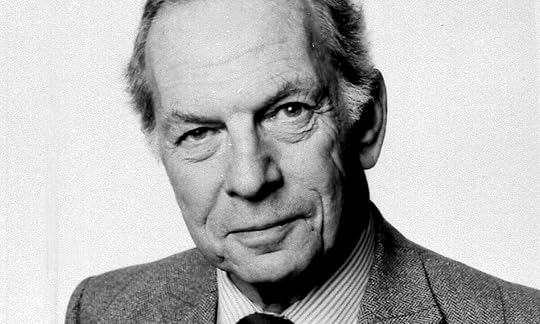
Michael Eliot Howard
63 books84 followersSir Michael Eliot Howard OM CH CBE MC (M.A., Christ Church College, Oxford University, 1948) was an English military historian, formerly Chichele Professor of the History of War, Honorary Fellow of All Souls College, Regius Professor of Modern History at the University of Oxford, Robert A. Lovett Professor of Military and Naval History at Yale University, and founder of the Department of War Studies, King's College London.
In 1958, he co-founded the International Institute for Strategic Studies.
In 2013, Howard was described in the Financial Times as "Britain's greatest living historian". The Guardian described him as "Britain's foremost expert on conflict".
In 1958, he co-founded the International Institute for Strategic Studies.
In 2013, Howard was described in the Financial Times as "Britain's greatest living historian". The Guardian described him as "Britain's foremost expert on conflict".
Ratings & Reviews
Friends & Following
Create a free account to discover what your friends think of this book!
Community Reviews
Displaying 1 - 30 of 57 reviews

March 20, 2025
Clausewitz denied indeed that war could have its own logic; it could only, he said, have its own grammar.
This was a pleasant enough introduction, which is the point, I suppose. I bought it this morning and was hoping it would catapult me back towards my Eastern Front project but alas there’s a surfeit of war in my membranes presently and I can’t muster the will. I’d rather be reading Dickens, Orwell and Henry James.
This parses the distinctions between the moral and physical aspects of armed conflict. A large section details Clausewitz and his notions of limited and absolute war. Again, I did find it interesting but only just.
This was a pleasant enough introduction, which is the point, I suppose. I bought it this morning and was hoping it would catapult me back towards my Eastern Front project but alas there’s a surfeit of war in my membranes presently and I can’t muster the will. I’d rather be reading Dickens, Orwell and Henry James.
This parses the distinctions between the moral and physical aspects of armed conflict. A large section details Clausewitz and his notions of limited and absolute war. Again, I did find it interesting but only just.

October 11, 2021
"Much of On War is therefore of interest only to military historians, dealing as it does with detailed questions of tactics and logistics that were to be out of date within a few decades of Clausewitz’s death. What is remarkable, however, is how much of what Clausewitz had to say did outlast his time and remain relevant, not only under military circumstances transformed out of all recognition, but for a readership far broader than the officers of the Prussian Army whose education he primarily had in mind. Why this should be so it will be the purpose of this volume to explain."
Clausewitz: A Very Short Introduction was a very well-written and presented short work that I enjoyed.
Author Sir Michael Eliot Howard (29 November 1922 – 30 November 2019) was an English military historian, formerly Chichele Professor of the History of War, Honorary Fellow of All Souls College, Regius Professor of Modern History at the University of Oxford, Robert A. Lovett Professor of Military and Naval History at Yale University, and founder of the Department of War Studies, King's College London. In 1958, he co-founded the International Institute for Strategic Studies.
Michael Eliot Howard:
Most known for his preeminent treatise on warfare, I have Carl von Clausewitz's famous books On War also on my list. I decided to give this one a go first, as I usually enjoy most of the offerings from the "Very Short Introduction" series.
I have found that you can often get more long-lasting value from a shorter book, than a longer one. Some of the really long books I've read often tend to bog the reader down in a torrent of minutia; effectively losing the forest for the trees...
By their very nature, a short book needs to give the reader a more succinct summary.
Howard begins the book with a brief history of Clausewitz's life. He drops this quote:
Carl von Clausewitz:

Howard writes with an easy and engaging style here, and thankfully produced a book that is both very interesting, as well as readable. There are many excellent quotes throughout.
Howard explains Clausewitz's rationale here:
And here:
I have heard that Clausewitz’s books, On War are very long, difficult reads. Howard says this of the source material:
Howard has a great bit of writing in here about Clausewitz's theoretical concept of Absolute War . This short quote sums it up nicely:
Prophetically enough, this concept would become manifestly real in the warfare that took place in the Second World War. Its threat loomed large for the duration of the Cold War, as well...
Tragically, Clausewitz would die early; aged only 51 years. Appointed chief of staff to the Prussian army that prepared for intervention against the Polish revolt of 1831, Clausewitz died of cholera that year. His unfinished work, together with his historical studies, was posthumously published by his widow.
*************************
As mentioned at the start of this review, I enjoyed this short book.
Howard did a great job in the overall presentation.
I would recommend it to anyone interested.
5 stars.
Clausewitz: A Very Short Introduction was a very well-written and presented short work that I enjoyed.
Author Sir Michael Eliot Howard (29 November 1922 – 30 November 2019) was an English military historian, formerly Chichele Professor of the History of War, Honorary Fellow of All Souls College, Regius Professor of Modern History at the University of Oxford, Robert A. Lovett Professor of Military and Naval History at Yale University, and founder of the Department of War Studies, King's College London. In 1958, he co-founded the International Institute for Strategic Studies.
Michael Eliot Howard:
Most known for his preeminent treatise on warfare, I have Carl von Clausewitz's famous books On War also on my list. I decided to give this one a go first, as I usually enjoy most of the offerings from the "Very Short Introduction" series.
I have found that you can often get more long-lasting value from a shorter book, than a longer one. Some of the really long books I've read often tend to bog the reader down in a torrent of minutia; effectively losing the forest for the trees...
By their very nature, a short book needs to give the reader a more succinct summary.
Howard begins the book with a brief history of Clausewitz's life. He drops this quote:
"Clausewitz was no desk soldier. He received his baptism of fire at the age of 13, when the Prussian Army, on the left wing of the forces of the First Coalition containing and driving back the armies of the First French Republic, was campaigning first on the Rhine, then in the Vosges.
Advancing across that broad valley, trudging up and down those steep, wooded mountain tracks, he acquired that infantryman’s familiarity with terrain that was to inspire so many of the pages of On War."
Carl von Clausewitz:
Howard writes with an easy and engaging style here, and thankfully produced a book that is both very interesting, as well as readable. There are many excellent quotes throughout.
Howard explains Clausewitz's rationale here:
"So it was with war. One could only learn how to conduct war, said Clausewitz, by learning, and learning from, what had already been done; by studying war not in the abstract but in the reality. Only thus could a truly comprehensive theory of war be developed, one that would make it possible not only to understand (as with painting or architecture) what the great masters had achieved, but to appreciate how their achievements came to be creative and not imitative acts, unique in themselves but enlarging the scope of expression available to their successors.
This meant studying the history of war, for ‘in the art of war experience counts for more than any number of abstract truths’ (p. 164). But the study of that history had itself to be an exercise of critical judgement.
One could not take for granted the reliability of historians. The bulk of histories, Clausewitz warned, were indeed so unreliable as to be almost useless. Most of what had come down from antiquity or the Middle Ages was too incomplete and inaccurate to be of value, even when it was not pure myth. Clausewitz was prepared to accept as material for study only those campaigns about which full and accurate knowledge was obtainable, which effectively restricted him to those fought in Europe,
and predominantly Western Europe, during the past two centuries."
And here:
"War is a clash between major interests that is resolved by bloodshed – that is the only way in which it differs from other conflicts. Rather than comparing it to an art we could more accurately compare it to commerce, which is also a conflict of human interests and activities; and it is still closer to politics, which in turn may be considered as a kind of commerce on a larger scale. (p. 149)
Any theory of war was thus a branch of social and political theory and had to be considered in the context of politics, ‘the womb in which war develops – where its outlines already exist in their hidden, rudimentary form, like the characteristics of living creatures in their embryos’...
I have heard that Clausewitz’s books, On War are very long, difficult reads. Howard says this of the source material:
"It is not easy, however, to give a fair and comprehensive summary of Clausewitz’s strategic doctrine, since it is presented with infuriating incoherence. Key passages relating to it are scattered almost at random throughout On War, fully bearing out his gloomy prophecy that his readers would find in the book only ‘a collection of material from which a theory of war was to have been distilled’. The section of the work entitled ‘On Strategy in General’ is only a collection of chapters on diverse topics linked by no very evident common theme. A casual reader might very reasonably assume that Clausewitz’s interest in the overall problems of strategy was slight in comparison with his almost obsessive concern with what he saw as the main tool of the strategist – the engagement, and in particular the major battle; a topic to which he devoted an entire book, perhaps the most powerfully written and best organized in the whole of On War."
Howard has a great bit of writing in here about Clausewitz's theoretical concept of Absolute War . This short quote sums it up nicely:
"...there is no stopping-place short of the extreme."
Prophetically enough, this concept would become manifestly real in the warfare that took place in the Second World War. Its threat loomed large for the duration of the Cold War, as well...
Tragically, Clausewitz would die early; aged only 51 years. Appointed chief of staff to the Prussian army that prepared for intervention against the Polish revolt of 1831, Clausewitz died of cholera that year. His unfinished work, together with his historical studies, was posthumously published by his widow.
*************************
As mentioned at the start of this review, I enjoyed this short book.
Howard did a great job in the overall presentation.
I would recommend it to anyone interested.
5 stars.

December 27, 2012
Howard's Clausewitz: A Very Short Introduction provides the reader both with the expected and the unexpected. The expected aspect of Howard's short work here provides the reader with the general themes of Clausewitz's On War. However, quite unexpectedly, Howard's work also provides the reader with the context of Clausewitz's zeitgeist.
With regard to the former, having not read Howard's preferred version myself, the Paret (and Howard) translation, I suspect it is only of limited value in providing the reader an in-depth understanding of Clausewitz's concepts. The most important aspect of Howard's review was Clausewitz's focus upon fighting -- where 'strategy is nothing without fighting....':
Ultimately, Howard's Clausewitz was a very good introduction that will be used throughly as a cross-reference while working through On War. There will be more to come in how Clausewitz and Boyd's theories can or cannot be yoked.
With regard to the former, having not read Howard's preferred version myself, the Paret (and Howard) translation, I suspect it is only of limited value in providing the reader an in-depth understanding of Clausewitz's concepts. The most important aspect of Howard's review was Clausewitz's focus upon fighting -- where 'strategy is nothing without fighting....':
Clausewitz was so anxious to deny that of bloodless victory through skillful manoeuvre. But the victory could be bloodless only if the strategist was prepared to shed blood; to fight and win, at whatever cost, the engagement he offered the enemy. 'All action is undertaken', as Clausewitz wrote, 'in the belief that if the ultimate test of arms should actually occur, the outcome would be favourable.... [H]owever ingenious the manoeuvres and combinations, however skillfully contrived the marches, none of them were of the slightest value unless at the end of it all the general was in a position to fight, and to win.Unexpectedly, Howard provides the reader with a brief overview of Clausewitz's learned experiences in both the sciences, but more strikingly in the arts. Ultimately, Clausewitz was fascinated with iterative learning, thus his desire to revise his unfinished seminal work as merely an example. "Intellectually, Clausewitz was very much a child of his time," Howard tells us, "[for] him war was not an activity governed by scientific laws but a clash of wills, or moral forces":
His studies in aesthetic theory taught him that the artist did not succeed simply by learning and applying a given set of rules, but rather that those rules had significance only as indications of what great artists had actually done, and had to be modified as the innovations and perceptions of new generations enriched the comprehension of their subject. All art, all thought (for as Clausewitz himself expressed it, all thought is art), was a creative activity, not an imitative or derivative one. And the same applied with particular force to the conduct of war.I found this aspect of Howard's introduction to be very curious, and it reminded me of studies of John Boyd. Howard's insinuations especially reminded me of Frans Osinga's Science, Strategy and War: The Strategic Theory of John Boyd , where Boyd shares Clausewitz's fascination (almost obsession) of social sciences. This furthers my suspicion that the theories of Clausewitz and Boyd are not mutually exclusive, as some have suggested, but rather richly reinforcing.
Ultimately, Howard's Clausewitz was a very good introduction that will be used throughly as a cross-reference while working through On War. There will be more to come in how Clausewitz and Boyd's theories can or cannot be yoked.

April 1, 2012
This easy read is the first and only book you need to understand Clausewitz. And more. Yes, I mean that. Here is why. What I like about it is that it tells me about the personal life of Clausewitz. That helps me understand his ideas. Secondly, it examines how it was used by generals. You learn a lot about great ideas by looking at how they are used, right?
This short book first tells us about the man Karl von Clausewitz. His personal life and carreer. His struggle to raise in ranks frustrated by the fact that top ranks were only open to men of noble birth in a class society. His dream to attain personal honour by victory in a decisive major battle made him a man who wants to be like the great heroes of his own time. His worlview therefore was the result of his history and culture. He was a child of his 'Zeitgeist'. The surprise is that he came up with ideas that would have been of great value in his own time, and have proven to be valuable ever since. Contrary to other scolars of his time who focussed on the local mechanics of war, he managed to come up with an integral all comprehensive model of war dynamics. His holistic view was therefore the one that stood the test of time and was even able to include airpower and cold-war into the equation when that entered the stage. So despite the omission of seapower and technological innovation in his analysis, his work proved to be universaly valuable. Still worth studying today. He died before the book was finished. Clausewitz philosophy grew during his writing years and this VSI explains in which chapters of On War that development is visible. The comments on the reading list at the end is also a valuable step for further study.
So now you know something about the man Karl. The second good reason to read this VSI comes next. On War is put informative into historical context. This is very insightfull indeed. We see how On War first collected decades of dust before it was lifted to prominence by authoritative figures in the rising Prussian State. Next we see how it became misinterpreted because the military essentially said it had to mean that politicians had to do what generals want, rather than the other way around. Furthermore, what Clausewitz teaches about the art of defence, seemed to be put on a dusty shelve for many decades. Not to come back untill his defensive strategies were used effectively to stop the Prussian army's plan in WWI from swooping around and capturing Paris.
Rather than a Very Short Introduction, An Essential Introduction would be a better title for this book.
This short book first tells us about the man Karl von Clausewitz. His personal life and carreer. His struggle to raise in ranks frustrated by the fact that top ranks were only open to men of noble birth in a class society. His dream to attain personal honour by victory in a decisive major battle made him a man who wants to be like the great heroes of his own time. His worlview therefore was the result of his history and culture. He was a child of his 'Zeitgeist'. The surprise is that he came up with ideas that would have been of great value in his own time, and have proven to be valuable ever since. Contrary to other scolars of his time who focussed on the local mechanics of war, he managed to come up with an integral all comprehensive model of war dynamics. His holistic view was therefore the one that stood the test of time and was even able to include airpower and cold-war into the equation when that entered the stage. So despite the omission of seapower and technological innovation in his analysis, his work proved to be universaly valuable. Still worth studying today. He died before the book was finished. Clausewitz philosophy grew during his writing years and this VSI explains in which chapters of On War that development is visible. The comments on the reading list at the end is also a valuable step for further study.
So now you know something about the man Karl. The second good reason to read this VSI comes next. On War is put informative into historical context. This is very insightfull indeed. We see how On War first collected decades of dust before it was lifted to prominence by authoritative figures in the rising Prussian State. Next we see how it became misinterpreted because the military essentially said it had to mean that politicians had to do what generals want, rather than the other way around. Furthermore, what Clausewitz teaches about the art of defence, seemed to be put on a dusty shelve for many decades. Not to come back untill his defensive strategies were used effectively to stop the Prussian army's plan in WWI from swooping around and capturing Paris.
Rather than a Very Short Introduction, An Essential Introduction would be a better title for this book.

December 31, 2021
4.5 stars… no other short read can introduce anyone with the depth and intricacies of Clausewitz’ work. Michael Howard deserves an acknowledgment for this wonderful work.
I finished this book on the eve of 31st Dec & feel the year 2021 is ending on a high note.
Rest in peace Michael Howard.
I finished this book on the eve of 31st Dec & feel the year 2021 is ending on a high note.
Rest in peace Michael Howard.

October 2, 2021
I'm not normally a fan of reading introductions before reading the primary, since so often introductions are arguing hard for the author's (sometimes quirky) interpretation, but this one is so good. Clausewitz is cited far more than read, and the more common editions are a 1907 or so translation. So, the book seems more archaic in language than it was. Howard was part of the best translation/edition, and this little book does a great job of summarizing Clausewitz's argument, and even explaining how it was misrepresented.
If you're interested in Clausewitz, start here.
If you're interested in Clausewitz, start here.

May 8, 2012
Anyone starting to read dead Carl should start with this short introduction. It's an easy read, very insightful and provides just enough background to give the reader a better understanding of the great Prussian.

January 5, 2019
an excellent and brief overview of Clausewitz' great work.

April 19, 2019
Carl von Clausewitz "On War"
This book made very interested in reading the book more than knowing about the writer. And I got the book so (hurray) going to be on the TBR for now.
I have not heard of him before so this was very informative; but it was very very short 77 pages I think the shortest of the series so far.
His life was very very interesting; because of his young age, joining the army at the age of 12 and fighting in the Napoleonic Wars. His words are one of the reasons of dropping the 2 nuclear bombs to end all wars.
This book made very interested in reading the book more than knowing about the writer. And I got the book so (hurray) going to be on the TBR for now.
I have not heard of him before so this was very informative; but it was very very short 77 pages I think the shortest of the series so far.
His life was very very interesting; because of his young age, joining the army at the age of 12 and fighting in the Napoleonic Wars. His words are one of the reasons of dropping the 2 nuclear bombs to end all wars.
War is the continuation of politics by other means.
the character of battle is slaughter, and its price is blood
wars could be of two kinds, those fought for the elimination of the opponent’s political independence and those fought to obtain favorable terms of peace.
The aggressor is always peace-loving (as Bonaparte always claimed to be); he would prefer to take over our country unopposed. To prevent his doing so one must be willing to make war and be prepared for it. In other words it is the weak, those most likely to need defense, who should always be armed in order not to be overwhelmed.

August 20, 2026
"The aggressor is always peace-loving (as Bonaparte always claimed to be); he would prefer to take over our country unopposed. To prevent his doing so one must be willing to make war and be prepared for it. In other words it is the weak, those most likely to need defense, who should always be armed in order not to be overwhelmed." On War 310

March 9, 2013
The Platonic form of the VSI: a short essay on the subject's life, a slightly longer essay on the subject's thought, all very well written, clear and interesting without being needlessly condescending. Clausewitz seems more interesting to me now than he did before I read this (in part because Howard shows how C is influenced by German idealism; in part because Howard shows how C's thought might be relevant in the nuclear era, without denying that we have to make some adjustments to that thought). Highly recommended if you want to know i) a bit about the difference between absolute and limited war; ii) the relation between war and politics; iii) a few neat Clausewitz quotes without having to get through the 700+ pages of 'On War.'

January 2, 2020
A very good introduction to Clausewitz focusing on the aspects of his major work ‘On War’ that bring him acclaim in how they outlast his time and remain relevant today.
Previously writers on the subject of war had dealt primarily with practical matters. What distinguishes Clausewitz in ‘On War’ is his experience of the horrible reality of war from the view of a professional soldier and his appreciation of the moral forces and “friction” determinate in war. He evolved a theory with full awareness that it not could tell one exactly what to do but serve as a guide to the conduct of warfare.
In summary, a great pocket sized read for anyone wanting to learn about Clausewitz and his enlightened thoughts on war and its socio-political dimensions!
Previously writers on the subject of war had dealt primarily with practical matters. What distinguishes Clausewitz in ‘On War’ is his experience of the horrible reality of war from the view of a professional soldier and his appreciation of the moral forces and “friction” determinate in war. He evolved a theory with full awareness that it not could tell one exactly what to do but serve as a guide to the conduct of warfare.
In summary, a great pocket sized read for anyone wanting to learn about Clausewitz and his enlightened thoughts on war and its socio-political dimensions!

December 1, 2020
One of the best books in the series - explains the man, his personal life, innate qualities (introversion), the societal context (how war was “linear murderous set-pieces”) and how the latter transformed the man into one of the most brilliant strategists of all time. Strategists are ones who grok the context, use abstractive tools and craft something that - not only is out of ordinary, or even thinkable, for the times - proves to be an immediately winning one. Clausewitz did all that, and his strategic tools survived post-equine warfare very much into 21st century. And, is useful in many other non-military domains as well. A brilliant book in well under 75 pages.
February 2, 2022
This is a good book. I gave it three stars for it being solid but something I wouldn't really re-read or something that changed my thinking entirely. This book does what it's supposed to, give a short introduction to Clausewitz. I did learn more about him, his theories and his legacy and Howard did that well.
At short 77 pages it's super easy to just pick up and read on the bus (like I did).
If you have any interest in military history, it's a good primer to see if you're interested in a short introduction of one of the greatest military theorists.
At short 77 pages it's super easy to just pick up and read on the bus (like I did).
If you have any interest in military history, it's a good primer to see if you're interested in a short introduction of one of the greatest military theorists.

November 27, 2015
A very short introduction that was, for once, very short, and very well focused (at least I assume so, as I haven't read On War). I feel I have learned something, at least, and something about Clausewitz, and On War, rather than the author, or ancillary readings.
February 20, 2021
Very Short, Indeed
But perhaps keeping it short allows a beginner in theory of war a chance to at least know its main principles without becoming overwhelmed by the density of the original text. Not useful for deep and detailed research.
But perhaps keeping it short allows a beginner in theory of war a chance to at least know its main principles without becoming overwhelmed by the density of the original text. Not useful for deep and detailed research.

December 28, 2023
An excellent and concise summary and evaluation of Clausewitz’s writings on war. Given the quantity and somewhat rambling nature of Clausewitz, this little volume is particularly valuable. An excellent snortcut to a sense of the man and his views on the nature and purpose of war.

January 9, 2018
2013-05 - Clausewitz: A Very Short Introduction. Michael Howard (Author) 2002. 96 Pages.
The best introduction and summary of Clausewitz I have read.
The best introduction and summary of Clausewitz I have read.

October 4, 2023
Very digestible read about a heavy topic. The author did a great job is explaining Clausewitz’s ideas in a short amount of pages.

June 6, 2024
Good intro on On War
This was an insightful, well organized, and easy to understand analysis of the main philosophical or theoretical foundations of von Clausewitz’ On War.
This was an insightful, well organized, and easy to understand analysis of the main philosophical or theoretical foundations of von Clausewitz’ On War.
June 19, 2024
A very short yet very good introduction to one of the greatest military theorists by one of the greatest military historians.
August 1, 2026
Book quality:
Overall, the work itself is a very clean summary of Clausewitz with a good elaboration on his basic concepts and their relation to each other. The critical discourse was good as well.
Thoughts:
War has always been of some interest for the humanities.
At the dawn of thought Heraclitus identifies it with the logos, the divine law which is “father of all and king of all” (B53; see also B80). In the discourse of contemporary liberalism it exists as the controlling edge case which justifies the creation of political law and order. Hobbes, for instance, believes the self-imposition of sovereignty is a fear reaction following the violence of the ‘war of all against all’ in the state of nature (Ryan 2016, p. 88). Locke similarly defines liberalism as a condition of non-tyranny which prevents the invocation of the “right to resistance” (Ashcraft 1994). A careful reading of book 5 of Adam Smith reveals his concern with wealth accrual (through free market competition) is ultimately one of building the requisite state-capacity to wage war. Given the importance of ‘war’ analytical attention must be dedicated towards it.
In this regard, I think Clausewitz is rather limited. Inasmuch as he is useful, he is useful in isolating the essence of war as a contest in producing force, and articulating the best way to maximise, wield and apply force. Unfortunately, his theories of war take ‘force’ as a constant. There is a set number of individuals, of industrial capacity, of institutions, of money, and despite his recognition of the commercial nature of war, it is scarcely explored. This is illustrated in his total lack of consideration of naval blockades (which ultimately ended an Imperial Germany which adopted his values), or of industrial regions as potential ‘centres of gravity’.
Below is a summary of my understanding of Clausewitz.
Summary of Clausewitz’s ‘system’:
Clausewitz’s analysis of war begins with the duality of the ‘means’ and ‘ends’. This is because “the object of war as of all creative activity, was ‘the employment of the available means (Mittel) for the predetermined end (Zweck)’” (p. 16).
In war, there is only one 'means', which is fighting (p. 37). The primary principle of fighting is almost a tautology, the “best strategy is always to be very strong; first in general, and then at the decisive point” (p. 42). War is thus determined by the “greatest possible concentration of fire” (p.16). This fighting, for Clausewitz, should target the opponents “centre of gravity … the hub of all power and movement on which everything depends” (p. 40). The aim is the destruction of the enemy’s capacity to resist, the “killing of his courage rather than his men” (p. 46). But such a formulaic approach to war theory (as articulated by Jomini) is disagreeable, since it fails to acknowledge War’s friction, the uncertainty and chaos which produces feelings of “suffering, confusion, exhaustion and fear” (p. 25). This is why Clausewitz focuses on the importance of morale and genius. Morale is cheerfulness, spirit, enthusiasm and elan, the “great strength of will” possessed by the army. Genius is “a very highly developed mental aptitude for a particular occupation”. Military genius is a combination of intelligence, courage, determination and intuition, the “instinctive capacity to discern through the fog of war what was happening” (p. 28).
But all fighting is ultimately subordinate to the political ends determined by the government. The end is thus ultimately political, with it being of two kinds, “either to totally destroy the adversary, to eliminate his existence as a state, or else to prescribe peace terms to him” (p.17). The distinction is one between an absolute as opposed to a limited war (p. 49). Absolute war is the Platonic ideal of war. If war is the competing application of forces, it reasons escalation necessitates total commitment. There “is no logical limit to an act of force” (p. 52). But this leads to a paradox, extreme violence in war is not continuous but punctuated. Clausewitz suggests that these periods of inactivity is due to the relative rarity of mutually ideal conditions for battle and indecision (p. 54). From all this, Clausewitz concludes that war requires the unity of the “remarkable trinity” of the government, army and the “attitude of the population” (p. 21). The government needs to be decisive in its selected ends, the army must be powerful in its means, and the populace must provide sufficient morale.
Overall, the work itself is a very clean summary of Clausewitz with a good elaboration on his basic concepts and their relation to each other. The critical discourse was good as well.
Thoughts:
War has always been of some interest for the humanities.
At the dawn of thought Heraclitus identifies it with the logos, the divine law which is “father of all and king of all” (B53; see also B80). In the discourse of contemporary liberalism it exists as the controlling edge case which justifies the creation of political law and order. Hobbes, for instance, believes the self-imposition of sovereignty is a fear reaction following the violence of the ‘war of all against all’ in the state of nature (Ryan 2016, p. 88). Locke similarly defines liberalism as a condition of non-tyranny which prevents the invocation of the “right to resistance” (Ashcraft 1994). A careful reading of book 5 of Adam Smith reveals his concern with wealth accrual (through free market competition) is ultimately one of building the requisite state-capacity to wage war. Given the importance of ‘war’ analytical attention must be dedicated towards it.
In this regard, I think Clausewitz is rather limited. Inasmuch as he is useful, he is useful in isolating the essence of war as a contest in producing force, and articulating the best way to maximise, wield and apply force. Unfortunately, his theories of war take ‘force’ as a constant. There is a set number of individuals, of industrial capacity, of institutions, of money, and despite his recognition of the commercial nature of war, it is scarcely explored. This is illustrated in his total lack of consideration of naval blockades (which ultimately ended an Imperial Germany which adopted his values), or of industrial regions as potential ‘centres of gravity’.
Below is a summary of my understanding of Clausewitz.
Summary of Clausewitz’s ‘system’:
Clausewitz’s analysis of war begins with the duality of the ‘means’ and ‘ends’. This is because “the object of war as of all creative activity, was ‘the employment of the available means (Mittel) for the predetermined end (Zweck)’” (p. 16).
In war, there is only one 'means', which is fighting (p. 37). The primary principle of fighting is almost a tautology, the “best strategy is always to be very strong; first in general, and then at the decisive point” (p. 42). War is thus determined by the “greatest possible concentration of fire” (p.16). This fighting, for Clausewitz, should target the opponents “centre of gravity … the hub of all power and movement on which everything depends” (p. 40). The aim is the destruction of the enemy’s capacity to resist, the “killing of his courage rather than his men” (p. 46). But such a formulaic approach to war theory (as articulated by Jomini) is disagreeable, since it fails to acknowledge War’s friction, the uncertainty and chaos which produces feelings of “suffering, confusion, exhaustion and fear” (p. 25). This is why Clausewitz focuses on the importance of morale and genius. Morale is cheerfulness, spirit, enthusiasm and elan, the “great strength of will” possessed by the army. Genius is “a very highly developed mental aptitude for a particular occupation”. Military genius is a combination of intelligence, courage, determination and intuition, the “instinctive capacity to discern through the fog of war what was happening” (p. 28).
But all fighting is ultimately subordinate to the political ends determined by the government. The end is thus ultimately political, with it being of two kinds, “either to totally destroy the adversary, to eliminate his existence as a state, or else to prescribe peace terms to him” (p.17). The distinction is one between an absolute as opposed to a limited war (p. 49). Absolute war is the Platonic ideal of war. If war is the competing application of forces, it reasons escalation necessitates total commitment. There “is no logical limit to an act of force” (p. 52). But this leads to a paradox, extreme violence in war is not continuous but punctuated. Clausewitz suggests that these periods of inactivity is due to the relative rarity of mutually ideal conditions for battle and indecision (p. 54). From all this, Clausewitz concludes that war requires the unity of the “remarkable trinity” of the government, army and the “attitude of the population” (p. 21). The government needs to be decisive in its selected ends, the army must be powerful in its means, and the populace must provide sufficient morale.
September 20, 2021
Notes
Paradigm shift that was the Napoleonic Grand Armee. 18th century European armies were professional forces limited by how many could be hired and trained. General populace felt war was something that happened between professional armies and kings, like pre-Jena Prussia including Kant. After French Revolution, the idea of patriotism is harnessed to grossly inflate the number of humans you can press into cheap, voluntary, short-notice service. Professional Romans beat tribal Gauls. But tribal Gauls at 10 times the size beat professional Romans.
War is policy pursued by other means (more accurately, by additional means)
War as a clash of moral will, above all else.
All of military strategy, logistical and operational science, training and tactics, are predicated on the assumed inevitability of the engagement: conflict, like all the prep or trash talk or weight management that goes into an upcoming prize-fight. So how long can strategy really be meaningful in a cold war?
The point of military theory is not to abstract warfare or control human uncertainty based on theoretical rules, but instead build sets of decisions to disseminate down the ranks when an army gets so big you're likely to have layers and layers of incompetent middle-management whose coup d'oeil cannot be counted on.
Paradigm shift that was the Napoleonic Grand Armee. 18th century European armies were professional forces limited by how many could be hired and trained. General populace felt war was something that happened between professional armies and kings, like pre-Jena Prussia including Kant. After French Revolution, the idea of patriotism is harnessed to grossly inflate the number of humans you can press into cheap, voluntary, short-notice service. Professional Romans beat tribal Gauls. But tribal Gauls at 10 times the size beat professional Romans.
War is policy pursued by other means (more accurately, by additional means)
War as a clash of moral will, above all else.
All of military strategy, logistical and operational science, training and tactics, are predicated on the assumed inevitability of the engagement: conflict, like all the prep or trash talk or weight management that goes into an upcoming prize-fight. So how long can strategy really be meaningful in a cold war?
The point of military theory is not to abstract warfare or control human uncertainty based on theoretical rules, but instead build sets of decisions to disseminate down the ranks when an army gets so big you're likely to have layers and layers of incompetent middle-management whose coup d'oeil cannot be counted on.

March 29, 2021
3 to 4-Stars if you picked this up already knowing something about Clausewitz and On War.
5-Stars if you picked this up without any foreknowledge of Clausewitz and On War. This truly is a "very short introduction," covering the quotable aspects of On War while providing the necessary context of Clausewitz's life required to put his work into perspective. For a more thorough examination, see Heuser's Reading Clausewitz.
Most military staff colleges would be better served issuing this book to students instead of On War. This book would not prevent officers from misquoting Clausewitz, but it is more likely to be read than the standard Clausewitz assignment, Book 1 and Book 8 of On War.
5-Stars if you picked this up without any foreknowledge of Clausewitz and On War. This truly is a "very short introduction," covering the quotable aspects of On War while providing the necessary context of Clausewitz's life required to put his work into perspective. For a more thorough examination, see Heuser's Reading Clausewitz.
Most military staff colleges would be better served issuing this book to students instead of On War. This book would not prevent officers from misquoting Clausewitz, but it is more likely to be read than the standard Clausewitz assignment, Book 1 and Book 8 of On War.
June 17, 2025
Excellent little book that moves quickly. I was going to recap what it says, but then realized that's what Wikipedia is for.
Chapters are:
1- Clausewitz in his time (how his life in the Napoleonic era shaped his ideas)
2- Theory and Practice in War (moral forces - morale IMHO, uncerty/friction in practice vs ideal theory, war as policy, limited vs total war, coup d'oeil)
3- Ends and Means in War (tactics vs strategy/statesmanship, best strategy=strength always & when critical, triad of people/power/army, slaughter &blood)
4- Limited and absolute war (for position vs anhilation, practice vs platonic perfect model, inherently stronger defense, regular vs popular forces - moral3)
5- Legacy (Marxism-Lenin, WW1 stalemates, WW2 blitzkrieg, nuclear)
Chapters are:
1- Clausewitz in his time (how his life in the Napoleonic era shaped his ideas)
2- Theory and Practice in War (moral forces - morale IMHO, uncerty/friction in practice vs ideal theory, war as policy, limited vs total war, coup d'oeil)
3- Ends and Means in War (tactics vs strategy/statesmanship, best strategy=strength always & when critical, triad of people/power/army, slaughter &blood)
4- Limited and absolute war (for position vs anhilation, practice vs platonic perfect model, inherently stronger defense, regular vs popular forces - moral3)
5- Legacy (Marxism-Lenin, WW1 stalemates, WW2 blitzkrieg, nuclear)
December 20, 2023
Just what it says on the tin...
"Very Short Introductions" are a series of books on a spread of topics. They're small (in all dimensions: <100 pages, with the pages being smaller than a paperback) overviews of the person, their work, and its impact.
In this case, it does a good job of giving you who he was, what On War was about, and how it did (and didn't) influence military or statecraft thinking. There are gaps in the work but nothing major, though I would have like to have seen more about his wife who was a major factor in getting On War published after his death. All in all, this is definitely a good grounding on Clausewitz and a springboard for deeper study.
"Very Short Introductions" are a series of books on a spread of topics. They're small (in all dimensions: <100 pages, with the pages being smaller than a paperback) overviews of the person, their work, and its impact.
In this case, it does a good job of giving you who he was, what On War was about, and how it did (and didn't) influence military or statecraft thinking. There are gaps in the work but nothing major, though I would have like to have seen more about his wife who was a major factor in getting On War published after his death. All in all, this is definitely a good grounding on Clausewitz and a springboard for deeper study.

July 19, 2024
Clausewitz might take the spot for my favorite paradigm-shifting, Germanic, theorizing Carl… Clausewitz > Jung > Marx…
Crazy how he anticipated nuclear strategy 100 years in advance… He was trying to theorize about Napoleonic war, but in my opinion, he accidentally developed a more general theory of achieving objectives—friction, strategy, intermediate goals, tactics, etc. Can’t these ideas be abstracted to basically any objective, whether in business, war, politics, personal life, etc?
I’ll save a full review for the full book. This short introduction has convinced me it’s worth reading… though it’ll be a tough one 😮💨
Crazy how he anticipated nuclear strategy 100 years in advance… He was trying to theorize about Napoleonic war, but in my opinion, he accidentally developed a more general theory of achieving objectives—friction, strategy, intermediate goals, tactics, etc. Can’t these ideas be abstracted to basically any objective, whether in business, war, politics, personal life, etc?
I’ll save a full review for the full book. This short introduction has convinced me it’s worth reading… though it’ll be a tough one 😮💨

August 30, 2021
pretty good, lite on his theories
Where this little book shines is in the background stuff. This book gives more context in fewer words than anything else I've read on this subject.
Where this book falls short is in the contents of "On War" itself. This is not a short primer on military strategy. You will not be ready to invade anything more than a Walmart after reading this.
Ps. Attack from the home/garden entrance. Seize the frozen foods and make a lightning raid into tools/hardware/sporting goods before fortifying your position.
Where this little book shines is in the background stuff. This book gives more context in fewer words than anything else I've read on this subject.
Where this book falls short is in the contents of "On War" itself. This is not a short primer on military strategy. You will not be ready to invade anything more than a Walmart after reading this.
Ps. Attack from the home/garden entrance. Seize the frozen foods and make a lightning raid into tools/hardware/sporting goods before fortifying your position.

Read
May 14, 2021کتاب به جنبه های زندگی نظامی کلاوزویتس میپردازه
و اینکه چطوری تحت تاثیر جنگهای ناپلئون کلاوزویتس نظراتیش طرح ریزی میکنه
و اینکه نظریات کلاوزویتس چه تاثیراتی بر ارتش المان ، روسیه و انگلیس گذاشته
جالبترین نکته درک اینکه تشکیل دولت ملتها چه تاثیری بر ارتش فرانسه گذاشت
و چطوری شد که ناپلئون قدرت اول اروپا شد
و اسیر حکمرانان از فرانسه الگو گرفتن و دولت ملتها رو پی ریزی کردن
و اینکه چطوری تحت تاثیر جنگهای ناپلئون کلاوزویتس نظراتیش طرح ریزی میکنه
و اینکه نظریات کلاوزویتس چه تاثیراتی بر ارتش المان ، روسیه و انگلیس گذاشته
جالبترین نکته درک اینکه تشکیل دولت ملتها چه تاثیری بر ارتش فرانسه گذاشت
و چطوری شد که ناپلئون قدرت اول اروپا شد
و اسیر حکمرانان از فرانسه الگو گرفتن و دولت ملتها رو پی ریزی کردن
October 19, 2021
A brief essay on the war theorist. I feel the last chapter, which describes Clausewitz's impact on wider military thinking, is it's best. As for Clausewitz's thought itself, I can't help but feel that his ideas have so thoroughly permeated how talk about war, that it feels obvious to us. The fact that it wasn't is proof of his genius, I suppose.
Displaying 1 - 30 of 57 reviews