

What do you think?

Wallenstein #1
Wallenstein I: Wallensteins Lager, Die Piccolomini
This work has been selected by scholars as being culturally important, and is part of the knowledge base of civilization as we know it. This work was reproduced from the original artifact, and remains as true to the original work as possible. Therefore, you will see the original copyright references, library stamps (as most of these works have been housed in our most important libraries around the world), and other notations in the work.
This work is in the public domain in the United States of America, and possibly other nations. Within the United States, you may freely copy and distribute this work, as no entity (individual or corporate) has a copyright on the body of the work.
As a reproduction of a historical artifact, this work may contain missing or blurred pages, poor pictures, errant marks, etc. Scholars believe, and we concur, that this work is important enough to be preserved, reproduced, and made generally available to the public. We appreciate your support of the preservation process, and thank you for being an important part of keeping this knowledge alive and relevant.
This work is in the public domain in the United States of America, and possibly other nations. Within the United States, you may freely copy and distribute this work, as no entity (individual or corporate) has a copyright on the body of the work.
As a reproduction of a historical artifact, this work may contain missing or blurred pages, poor pictures, errant marks, etc. Scholars believe, and we concur, that this work is important enough to be preserved, reproduced, and made generally available to the public. We appreciate your support of the preservation process, and thank you for being an important part of keeping this knowledge alive and relevant.
176 pages, Paperback
First published January 1, 1798
About the author
Friedrich Schiller
5,670 books892 followersPeople best know long didactic poems and historical plays, such as
Don Carlos
(1787) and
William Tell
(1804), of leading romanticist German poet, dramatist, and historian Johann Christoph Friedrich von Schiller.
This philosopher and dramatist struck up a productive if complicated friendship with already famous and influential Johann Wolfgang von Goethe during the last eighteen years of his life and encouraged Goethe to finish works that he left merely as sketches; they greatly discussed issues concerning aesthetics and thus gave way to a period, now referred to as classicism of Weimar. They also worked together on Die Xenien ( The Xenies ), a collection of short but harsh satires that verbally attacked perceived enemies of their aesthetic agenda.
https://en.wikipedia.org/wiki/Friedri...
This philosopher and dramatist struck up a productive if complicated friendship with already famous and influential Johann Wolfgang von Goethe during the last eighteen years of his life and encouraged Goethe to finish works that he left merely as sketches; they greatly discussed issues concerning aesthetics and thus gave way to a period, now referred to as classicism of Weimar. They also worked together on Die Xenien ( The Xenies ), a collection of short but harsh satires that verbally attacked perceived enemies of their aesthetic agenda.
https://en.wikipedia.org/wiki/Friedri...
Ratings & Reviews
Friends & Following
Create a free account to discover what your friends think of this book!
Community Reviews
Displaying 1 - 23 of 23 reviews

Read
January 1, 2012und solang der Kaiser diesen Friedeland/ Lässt walten, so wird nicht Fried' im Land (p26)
says the Capuchin monk, full not with cappuccinos but with communion wine perhaps, extravagant in his word play.
Such a play rife with rumour and uncertainty, I love Wallenstein's obsession with discovering the right time, the right moment to make his great political move while we know it is too late as the Emperor and his men are already moving against him. Indeed from early on it seems Fortuna has turned her wheel and the noble Prince is doomed to fall, what the monk says long presumably the subject of plans made by the big wigs in Vienna.
In the Wallenstein's Lager section of the play we get a portrait of the improbable army created by Wallenstein to fight the Emperor's wars with men drawn from every country, Walloons, Croats, Swiss, Irishmen, all sorts of Germans, it reminded me of Die Rauber an alternative society sworn to the service of their great captain, a society with rank and hierarchy, everything to sustain it - such as births, and schooling, everything except a country. This is perhaps a historian's vision of a proto-Germany, unified through service, but in the end come the conclusion of the piece in Wallenstein's Tod this is an illusion, there is a deeper political order that is not dependant on the practical ability to pay wages - a note of hope maybe for a world in the wake of 1789 and the adventurous successes of the French in Europe. And every character here has their own story, the market woman waltzes off with Brecht to become Mutter Courage und ihre Kinder.
Yet for all the ideas of discipline and order and strategy suggested by the military setting this is also a world of luck and charm, the farmer and his son, setting out with weighted dice to plough the purses of unlucky soldiers intending to be bad shepherds and fleece them out of season. They pursue the same course as Wallenstein and every soldier, gambling and chancing, seizing the moment and surfing the wave, or not. Death awaits the losers. This is war.
Der Krieg ernährt den Krieg. Gehn Bauern drauf/ Ei so gewinnt der Kaiser mehr Soldaten (p49) This is a world of war, friendships made on the field of battle, men moved from Italy to Belgium to Bohemia across Germany. A world of disruption and opportunity, fortunes won and lost with equal ease.
"oh! Nimm der Stunde wahr, eh' sie entschlüpft./So selten kommt der Augenblick im Leben, / Der wahrhaft wichtig ist und groß. Wo eine/ Entscheidung soll geschehen"...
"Die Zeit ist noch nicht da" (p73)
On the one side excitement and adventure, ambition, on the other caution, waiting for the correct alignment of stars, does man make himself? Reading the suspicion grows that Schiller is not showing the decisive moment, but the times after the decisive moment has passed, the chance either to retire from the world of war or to seize Imperial power gone. if ever either had existed. Schiller for a time taught world history at Jena and at times I have a sense of the teacher deciding that the theatre stage rather than the lecture theatre reaches the bigger audience, but the choice of subjects seems determined by his own tumultuous times.
Only in the subplot am I uncertain, imagining that contractually he was obliged to find roles for the theatre's actresses and fell lazily on a love story rather than making the wives participants in plots and political ambitions.
A convenient pocket-sized edition, the yellow coming from the spine, burnt by my fingers, long travelled in coat and jacket pockets on more journeys than I can imagine - a good companion, who can want for cheer when one can dip into the middle of the Thirty years war so conveniently - Ernst ist das Leben, heiter ist die Kunst (p6)
says the Capuchin monk, full not with cappuccinos but with communion wine perhaps, extravagant in his word play.
Such a play rife with rumour and uncertainty, I love Wallenstein's obsession with discovering the right time, the right moment to make his great political move while we know it is too late as the Emperor and his men are already moving against him. Indeed from early on it seems Fortuna has turned her wheel and the noble Prince is doomed to fall, what the monk says long presumably the subject of plans made by the big wigs in Vienna.
In the Wallenstein's Lager section of the play we get a portrait of the improbable army created by Wallenstein to fight the Emperor's wars with men drawn from every country, Walloons, Croats, Swiss, Irishmen, all sorts of Germans, it reminded me of Die Rauber an alternative society sworn to the service of their great captain, a society with rank and hierarchy, everything to sustain it - such as births, and schooling, everything except a country. This is perhaps a historian's vision of a proto-Germany, unified through service, but in the end come the conclusion of the piece in Wallenstein's Tod this is an illusion, there is a deeper political order that is not dependant on the practical ability to pay wages - a note of hope maybe for a world in the wake of 1789 and the adventurous successes of the French in Europe. And every character here has their own story, the market woman waltzes off with Brecht to become Mutter Courage und ihre Kinder.
Yet for all the ideas of discipline and order and strategy suggested by the military setting this is also a world of luck and charm, the farmer and his son, setting out with weighted dice to plough the purses of unlucky soldiers intending to be bad shepherds and fleece them out of season. They pursue the same course as Wallenstein and every soldier, gambling and chancing, seizing the moment and surfing the wave, or not. Death awaits the losers. This is war.
Der Krieg ernährt den Krieg. Gehn Bauern drauf/ Ei so gewinnt der Kaiser mehr Soldaten (p49) This is a world of war, friendships made on the field of battle, men moved from Italy to Belgium to Bohemia across Germany. A world of disruption and opportunity, fortunes won and lost with equal ease.
"oh! Nimm der Stunde wahr, eh' sie entschlüpft./So selten kommt der Augenblick im Leben, / Der wahrhaft wichtig ist und groß. Wo eine/ Entscheidung soll geschehen"...
"Die Zeit ist noch nicht da" (p73)
On the one side excitement and adventure, ambition, on the other caution, waiting for the correct alignment of stars, does man make himself? Reading the suspicion grows that Schiller is not showing the decisive moment, but the times after the decisive moment has passed, the chance either to retire from the world of war or to seize Imperial power gone. if ever either had existed. Schiller for a time taught world history at Jena and at times I have a sense of the teacher deciding that the theatre stage rather than the lecture theatre reaches the bigger audience, but the choice of subjects seems determined by his own tumultuous times.
Only in the subplot am I uncertain, imagining that contractually he was obliged to find roles for the theatre's actresses and fell lazily on a love story rather than making the wives participants in plots and political ambitions.
A convenient pocket-sized edition, the yellow coming from the spine, burnt by my fingers, long travelled in coat and jacket pockets on more journeys than I can imagine - a good companion, who can want for cheer when one can dip into the middle of the Thirty years war so conveniently - Ernst ist das Leben, heiter ist die Kunst (p6)

Read
October 20, 2024This book contains the first and second parts of the Wallenstein trilogy by Friedrich Schiller, a German play published in 1799. For the modern reader, it requires some background knowledge of the Thirty Years' War (1618-1648), which mainly took place in the German lands (the Holy Roman Empire) according to an incredibly complex scenario, with constantly changing alliances and very variable military opportunities. The Bohemian Duke Albrecht von Wallenstein (1583-1634) played a maior role in it, as commander-in-chief of the imperial troops, on the Catholic side. Wallenstein went down in history as a cruel warlord who had his troops plunder and devastate numerous regions and also physically eliminated personal allies. In Schiller's version, we see him at a time when his fortunes were turning, and the emperor and other Catholic princes began to fear his successes, and suspected him of fighting on his own behalf.
In this first and second part, we get to see Wallenstein himself only to a very limited extent. Schiller has opted to portray the perilous and complex situation in which the general finds himself indirectly. For example, part 1, as the title 'Wallenstein’s camp' suggests, focuses on the foot soldiers: we get an impression of the constantly grumbling, drunk and vulgar mercenary army of Wallenstein and his allies, a glimpse of the inhuman war from below, with little information about the ‘geopolitical’ situation.
In part 2, the attention shifts to the commanders and nobles in Wallenstein’s circle. Through father and son Piccolomini, we get an impression of the confusion that has gripped them, now that the position of their commander-in-chief is faltering and it is no longer clear where his loyalty lies. I’m afraid this confusion also affects the viewer, causing both part 1 and part 2 to not really come into their own, and to lack dramatic tension (which will of course be compensated for in the third part). Moreover, the short, constantly rhyming verses of part 1 create a monotonous effect that is off-putting. As far as I'm concerned, not a success, but part 3 Wallenstein II: Wallensteins Tod definitely makes up for that. See my review here
In this first and second part, we get to see Wallenstein himself only to a very limited extent. Schiller has opted to portray the perilous and complex situation in which the general finds himself indirectly. For example, part 1, as the title 'Wallenstein’s camp' suggests, focuses on the foot soldiers: we get an impression of the constantly grumbling, drunk and vulgar mercenary army of Wallenstein and his allies, a glimpse of the inhuman war from below, with little information about the ‘geopolitical’ situation.
In part 2, the attention shifts to the commanders and nobles in Wallenstein’s circle. Through father and son Piccolomini, we get an impression of the confusion that has gripped them, now that the position of their commander-in-chief is faltering and it is no longer clear where his loyalty lies. I’m afraid this confusion also affects the viewer, causing both part 1 and part 2 to not really come into their own, and to lack dramatic tension (which will of course be compensated for in the third part). Moreover, the short, constantly rhyming verses of part 1 create a monotonous effect that is off-putting. As far as I'm concerned, not a success, but part 3 Wallenstein II: Wallensteins Tod definitely makes up for that. See my review here

October 2, 2016
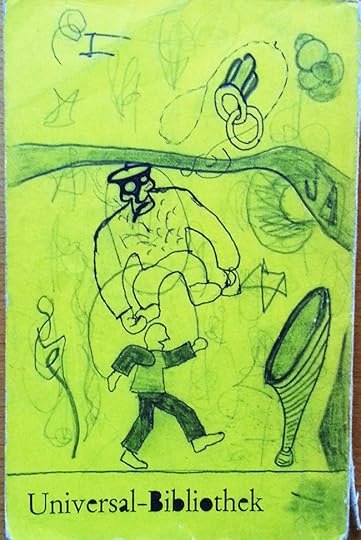
I think it was in 1980/81 when we had to read this in school. Can't remember much of, but I must have been bored during the lessons in which we discussed it. Here's the back cover of my copy. I think it needs a re-read.

This work is licensed under a Creative Commons Attribution-NonCommercial-ShareAlike 3.0 Unported License.

This work is licensed under a Creative Commons Attribution-NonCommercial-ShareAlike 3.0 Unported License.

June 8, 2025
Nachtrag

August 9, 2020
„Der Krieg ernährt den Krieg.“
In diesem Sinne ist Wallenstein heute so aktuell wie vor 200 Jahren und lesenswert, wenn man in einen von Intrigen verseuchten Krieg eintauchen will.
Denn das Drama führt den parasitären Charakter des Militärs im Dreißigjährigen Krieg vor Augen: Außer Max Piccolomini kämpft niemand für Ideale, Religion oder Vaterland, sondern einzig aus eitlen, raffgierigen und opportunistischen Motiven heraus. Der Frieden hat folglich keine Chance
In diesem Sinne ist Wallenstein heute so aktuell wie vor 200 Jahren und lesenswert, wenn man in einen von Intrigen verseuchten Krieg eintauchen will.
Denn das Drama führt den parasitären Charakter des Militärs im Dreißigjährigen Krieg vor Augen: Außer Max Piccolomini kämpft niemand für Ideale, Religion oder Vaterland, sondern einzig aus eitlen, raffgierigen und opportunistischen Motiven heraus. Der Frieden hat folglich keine Chance

January 13, 2023
Eine meiner vielen Unilektüren.
Durch meine Geschichtsvorlseungen, konnte ich mir den Geschichtlichen Hintergrund noch viel besser vorstellen und auch die Handlungen der einzelnen Figuren besser nachvollziehen. Ich bin nun gespannt, was das große Finale der Trilogie für mich bereithält
Durch meine Geschichtsvorlseungen, konnte ich mir den Geschichtlichen Hintergrund noch viel besser vorstellen und auch die Handlungen der einzelnen Figuren besser nachvollziehen. Ich bin nun gespannt, was das große Finale der Trilogie für mich bereithält

January 29, 2013
Im Grunde handelt es sich bei den ersten beiden Teilen der Wallensteintrilogie nur um das Vorgeplänkel zum längeren letzten Teil, aber trotzdem kann man als Leser von Wallensteins Lager und Die Piccolomini unglaublich viel mitnehmen.
Im ersten Teil gelingt es Schiller sehr plastisch ein Heerlager des 17. Jahrhunderts darzustellen, mit einer bunten Mischung von Charakteren, die dem Rezipienten Appetit auf die viel besprochenen Generäle machen - allen voran natürlich Wallenstein selbst -, die im zweiten Teil die Handlungsträger darstellen.
Auch der zweite Teil macht seinen Schauplatz, des Grafen Schloss, wunderbar greifbar. Nachdem Wallensteinslager eher recht statisch in der Handlung ist, passiert in diesem Teil auch endlich was, nämlich das Ränkespiel mit dem Wallensteins Vertraute versuchen, die Generäle vom Kaiser zu lösen und an Walleinstein zu binden. Dazu kommt noch die unter keinem guten Stern stehende, frei erfundene Romanze zwischen Wallensteins Tochter und dem frei erfundenen Max Piccolomini; was will man mehr?
Über Schillers Dichtkunst an sich muss man wohl nicht mehr viel sagen (Die edleren Verse finden sich selbstverständlich im zweiten Teil. So ist das Heerlager auch in der Form von den Herren im zweiten abgehoben. Finden wir in Wallensteins Lager noch Reimpaare mit wechselnden Reimschemata ist der Rest des Dramas im Blankvers verfasst) und Schillerfreunde werden dieses Stück eh auf ihrer Leseliste haben, egal, was eine dahergelaufene Rezension sagt.
Diese Reclamausgabe bestitzt außerdem einen abschließenden Teil mit Erläuterungen, die den Leser immer darauf aufmerksam machen, wann Schiller historisch belegte Ereignisse verlässt und sich selbst seinen Teil dazudichtet.
Im ersten Teil gelingt es Schiller sehr plastisch ein Heerlager des 17. Jahrhunderts darzustellen, mit einer bunten Mischung von Charakteren, die dem Rezipienten Appetit auf die viel besprochenen Generäle machen - allen voran natürlich Wallenstein selbst -, die im zweiten Teil die Handlungsträger darstellen.
Auch der zweite Teil macht seinen Schauplatz, des Grafen Schloss, wunderbar greifbar. Nachdem Wallensteinslager eher recht statisch in der Handlung ist, passiert in diesem Teil auch endlich was, nämlich das Ränkespiel mit dem Wallensteins Vertraute versuchen, die Generäle vom Kaiser zu lösen und an Walleinstein zu binden. Dazu kommt noch die unter keinem guten Stern stehende, frei erfundene Romanze zwischen Wallensteins Tochter und dem frei erfundenen Max Piccolomini; was will man mehr?
Über Schillers Dichtkunst an sich muss man wohl nicht mehr viel sagen (Die edleren Verse finden sich selbstverständlich im zweiten Teil. So ist das Heerlager auch in der Form von den Herren im zweiten abgehoben. Finden wir in Wallensteins Lager noch Reimpaare mit wechselnden Reimschemata ist der Rest des Dramas im Blankvers verfasst) und Schillerfreunde werden dieses Stück eh auf ihrer Leseliste haben, egal, was eine dahergelaufene Rezension sagt.
Diese Reclamausgabe bestitzt außerdem einen abschließenden Teil mit Erläuterungen, die den Leser immer darauf aufmerksam machen, wann Schiller historisch belegte Ereignisse verlässt und sich selbst seinen Teil dazudichtet.

May 19, 2024
The main piece is Die Piccolomini which shows the lust for power, intrigue but also each character's interpretation of justice. They are fighting in the 30 Year War with successful general Wallenstein - at the height of his power - being distrusted by the emperor. Having conflicting views on how to fight this war, treason is brewing on all sides. Everybody seems to know what is right and all have a piece of the truth. This muddles the water and we are not sure who is in the right.
Wallensteins Lager is an enjoyable insight into the breeding grounds of Wallensteins later actions. It's short and it rhymes and it's a microcosm of war.
Wallensteins Lager is an enjoyable insight into the breeding grounds of Wallensteins later actions. It's short and it rhymes and it's a microcosm of war.

December 3, 2008
Maybe it was because I am still spot-on when it comes to Wallenstein and the thirty year war (1618-1648) since it was part of my oral exam in history but Schiller's adaption of this topic is kind of fantastic. It is like reading a thriller/adventure book. Even though I/you know how it ends. It is still amazing and really refreshing to read something this good after all the shit I had to read lately for uni!
Now, on to the tragic ending...
Now, on to the tragic ending...

March 2, 2010
Our crazy german teacher read it with us at high school and I loved it.

September 19, 2024
Das Buch an sich ist nicht schlecht. Aber ich habe anscheinend eine tiefgründige Verachtung für Literatur aus dem 18. Jahrhundert, weil das Werk mir gar nicht gefallen hat, weder gefallen mir andere Bücher aus dem 18. Jahrhundert haha naja, es ist halt eine Geschmackssache
April 1, 2017
3.5 stars. The first part of Schiller's Wallenstein trilogy consists of Wallenstein's Camp and The Piccolomini, preceded by a prologue. The entire trilogy took a decade to write and were the first dramatic works to be released by Schiller after
Don Carlos
, which I consider to be one of the greatest dramas ever written. My favorite part of these works is actually the short prologue, in which Schiller gives an impassioned plea for the dramatic arts to illuminate truth through the illusions of fiction: "Life is in earnest, art serene and free." It is a freedom enacted on the stage, where the beauty of truth is revealed in sublime moments of fabrication, woven by writers and performers speaking moral truths aimed at their own time, but with a universal appeal for all times. As Schiller writers, "For he who satisfies the best of his / Own age, has lived for every age to come."
Wallenstein's Camp is unusual because it is written in rhyming blank verse, a dramatic structure which Schiller had not used up to this point in his plays. It's a brief one-act play that provides a glimpse into the difficult lives of soldiers who are outcasts wherever they go. Despite these complaints, they claim that soldiering gives them unparalleled freedom and a brotherhood that transcends nationality, although such claims are dubious in their moral certitude. We are also introduced to Max Piccolomini, a staunch supporter of Wallenstein. The soldiers respect both men and desire to follow their lead, as opposed to the out-of-touch Emperor.
The Piccolomini, a full five-act play, picks up where Camp leaves off, giving us the perspective of the generals who command the soldiers as they are torn between their loyalty to Emperor (their leader by default) and Wallenstein (their leader by his military knowledge, experience, and ability to inspire men -- all traits the Emperor lacks). We also finally meet Wallenstein, who refuses to see Germany divided, even if it would mean he would get a slice of the land. His loyalty to his men, his nation, and a lasting peace put him at odds with the Emperor. The older Piccolomini (Max's father) remains loyal to the Emperor, causing Max to decide whether he will support his father or his friend Wallenstein, which sets in motion the tragic events that will come to a head in the final five-act play, Wallenstein's Death (spoiler alert in title! haha).
Beyond the stirring prologue and a couple brief moments in Camp, I found the first two plays in the trilogy to be lacking the fire of Schiller's previous work. It felt as if he were spending time introducing characters, plots, and themes that will come to fruition in the final play, Wallenstein's Death. I hope that is the case, and will reserve judgment of the entire trilogy until I read that final play.
Wallenstein's Camp is unusual because it is written in rhyming blank verse, a dramatic structure which Schiller had not used up to this point in his plays. It's a brief one-act play that provides a glimpse into the difficult lives of soldiers who are outcasts wherever they go. Despite these complaints, they claim that soldiering gives them unparalleled freedom and a brotherhood that transcends nationality, although such claims are dubious in their moral certitude. We are also introduced to Max Piccolomini, a staunch supporter of Wallenstein. The soldiers respect both men and desire to follow their lead, as opposed to the out-of-touch Emperor.
The Piccolomini, a full five-act play, picks up where Camp leaves off, giving us the perspective of the generals who command the soldiers as they are torn between their loyalty to Emperor (their leader by default) and Wallenstein (their leader by his military knowledge, experience, and ability to inspire men -- all traits the Emperor lacks). We also finally meet Wallenstein, who refuses to see Germany divided, even if it would mean he would get a slice of the land. His loyalty to his men, his nation, and a lasting peace put him at odds with the Emperor. The older Piccolomini (Max's father) remains loyal to the Emperor, causing Max to decide whether he will support his father or his friend Wallenstein, which sets in motion the tragic events that will come to a head in the final five-act play, Wallenstein's Death (spoiler alert in title! haha).
Beyond the stirring prologue and a couple brief moments in Camp, I found the first two plays in the trilogy to be lacking the fire of Schiller's previous work. It felt as if he were spending time introducing characters, plots, and themes that will come to fruition in the final play, Wallenstein's Death. I hope that is the case, and will reserve judgment of the entire trilogy until I read that final play.
January 21, 2010
German edition - German review:
Wallensteins Lager hebt sich vom Rest der Trilogie formal durch seine (gereimten) Knittelverse und inhaltlich durch das durchweg dem 'einfachen Volk' zuzuordnende Figurenpersonal ab. Dieser erste Teil fängt die Stimmung in Wallensteins Heer ein, das sich ihm als Führer mehr verpflichtet fühlt als den Befehlen des Kaisers. Eine nette Idee, sich so der Figur des Wallensteins zunächst in absentia durch die Gespräche seiner Untergebenen zu nähern und sie ist auch so elegant ausgeführt, dass das gut funktioniert, ohne gekünstelt zu wirken oder langweilig zu werden.
Die Piccolomini setzt diese Strategie zunächst fort und lässt Wallenstein erst im zweiten Akt auftreten, dann aber in kennzeichnender Weise eingeführt von seinem Astronomen Seni. Zuvor werden die widerstreitenden Interessen in den Führungsriegen gezeigt. Die fiktive Liebesgeschichte zwischen dem (ebenso fiktiven) Max Piccolomini und Wallensteins Tochter Thekla erhöht hier das dramatische Potential. Das Ende ist ein echter Cliffhanger und wie das zeitgenössische Publikum das aufgenommen hat, würde mich wirklich interessieren, zumal es ja fast drei Monate warten musste, bis es die Auflösung präsentiert bekam.
Die Trilogie ist gut lesbar und lässt die Fortschritte in der Figurenzeichnung und -motivation erkennen, die Schiller in den anderthalb Dekaden seit seinen Sturm-und-Drang-Dramen Die Räuber und Kabale und Liebe gemacht hat. Im Gegenzug fehlt dafür jedoch das Gefühl der Direktheit und mireißenden Leidenschaft. Tja, man kann halt nicht alles haben...

October 11, 2020
Eerste twee toneelstukken uit de Wallenstein-trilogie over de ondergang van Wallenstein tijdens de Dertigjarige Oorlog. Het eerste inleidende stuk vind alleen in het legerkamp en toont Wallenstein niet direct, maar juist daarom heel helder. Zonder op het toneel te verschijnen toont de dynamiek van het legerkamp hoe hij als leider is.
Het tweede stuk is soms wat traag en met name heel erg gericht op intriges. De steun voor Wallenstein is zo groot dat mensen zelfs op een opstand tegen de keizer hopen, zonder dat Wallenstein dat na te streven schijnt. Juist die liefde van zijn volgelingen maakt hem echter een gevaar voor de keizer en leidt zodoende zijn ondergang in. Erg boeiend toneelstuk; soms wel wat traag.
Het tweede stuk is soms wat traag en met name heel erg gericht op intriges. De steun voor Wallenstein is zo groot dat mensen zelfs op een opstand tegen de keizer hopen, zonder dat Wallenstein dat na te streven schijnt. Juist die liefde van zijn volgelingen maakt hem echter een gevaar voor de keizer en leidt zodoende zijn ondergang in. Erg boeiend toneelstuk; soms wel wat traag.

May 13, 2020
I really appreciate what Schiller tries to do in these plays, but I just keep comparing them to Maria Stuart, in which he explores similar themes of fate, chance, and the possibility of action, but in a much more tense and exciting way. Still, these two plays form a brilliant historical drama, and I’m looking forward to Wallenstein’s Tod.

January 17, 2021
Wer sich mit der deutschen Literatur beschäftigt, sollte dieses Buch gelesen haben (zusammen mit dem 2.Teil). Das Thema des Werks ist der 30-jährige Krieg. Wie man am Titel erkennen kann, befinden wir uns im ersten Teil im Lager von Wallenstein (ein wichtiger Feldherr im 30-jährigen Krieg) und der zweiten Teil "Piccolomini" spielt im Rathaus, im Umfeld des Adels.
Schillers Werk ist durchaus keine leichte Kost. Ich bin froh, dass ich nebenbei ein Seminar hatte, indem ich mich mit Kommolitonen austauschen konnte.
Schillers Werk ist durchaus keine leichte Kost. Ich bin froh, dass ich nebenbei ein Seminar hatte, indem ich mich mit Kommolitonen austauschen konnte.
June 27, 2022
idk normally i love political intrigue, but here it was a real slog. maybe it had to do with the fact that i was reading it and not listening to it, but i could not finish it. i did in the end and it wasn’t bad so yeah

August 6, 2023
Part I and II ✅
A classic for a reason! It makes it almost impossible to pick a side so you just end up hating but understanding almost every character’s actions.
A classic for a reason! It makes it almost impossible to pick a side so you just end up hating but understanding almost every character’s actions.

March 12, 2024
wallenstein astrokuja brt kad ne zna šta će gleda u horoskop i karte ili šta već

November 21, 2024
*3.5
was ein cliffhanger
was ein cliffhanger
December 11, 2024
🧑🏻💼👩❤️👨👒👗🪭🪢🎖️🃏🪁🀄🖼️🌫️🌁🌉🏞️🌅🎆🌆🌃🗾🗺️🎐 🪻🌷🌹🌸💮🦋🏕️🏡🚪🛏️🛋️🪞🪟🧮🧸🕰️🔮📒📔📗📘📕📖✉️💌📑🧧🔖⬛🎩⬜🧵🪡🖇️🧤💍💎🟦⬜🎉🎊🎀🎁🟨

February 8, 2020
Spät gelesen, doch gelesen. Vielleicht übertrieb Dick, wenn er meinte, das sei so gut wie Shakespeare.

September 4, 2024
Plot / Story ☆☆☆
Characters ☆☆☆
Emotional Depth ☆☆☆
Tension / Entertainment ☆☆☆
Originality ☆☆☆☆
Writing Style ☆☆☆☆☆
Final: ☆☆☆
Characters ☆☆☆
Emotional Depth ☆☆☆
Tension / Entertainment ☆☆☆
Originality ☆☆☆☆
Writing Style ☆☆☆☆☆
Final: ☆☆☆
Displaying 1 - 23 of 23 reviews