In this extraordinary collection of poems and prose, Nikky Finney once again demonstrates her distinctive ability to speak to the heart. With her gift for creating imagery that transfixes and words that dance on the page, Finney captivatingly draws attention to some of life's most intimate moments. In The World Is Round, the author is a chorus of monks. She is an elephant longing for home. She is sweetgrass and the confederate flag. She is an umbilical cord and a southern congressman's retarded son. She is a woman's grotesquely cut body and her father's last cigarette.
With her remarkable and truthful poetic style, Finney gracefully puts us in touch with ourselves and holds our unwavering gaze as she bears witness to the effects of struggle, community, sensuality, hatred and hunger.
Nikky Finney's view of the world informs us uniquely of its roundness—not simply because a Portuguese explorer said it was so in the 16th century. Each word of this skillfully crafted journey shows that all of life is a circle—a circle of beautiful, and sometimes bittersweet, things. The World Is Round clearly solidifies Finney's place as one of the most brilliant, provocative poets of our time.
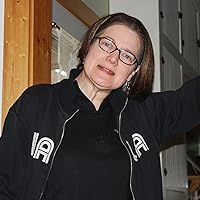
Nikky Finney was born at the rim of the Atlantic Ocean, in South Carolina, in 1957. The daughter of activists and educators, she began writing in the midst of the Civil Rights and Black Arts Movements. With these instrumental eras circling her, Finney's work provides first-person literary accounts to some of the most important events in American history.
In 1985, and at the age of 26, Finney's debut collection of poetry, On Wings Made of Gauze, was published by William Morrow (a division of HaperCollins). Finney's next full-length collection of poetry and portraits, RICE (Sister Vision Press, 1995), was awarded the PEN America-Open Book Award, which was followed by a collection of short stories entitled Heartwood (University Press of Kentucky, 1998). Her next full-length poetry collection, The World Is Round (Inner Light Books, 2003) was awarded the Benjamin Franklin Award sponsored by the Independent Booksellers Association. In 2007, Finney edited the anthology, The Ringing Ear: Black Poets Lean South (University of Georgia Press/Cave Canem), which has become an essential compilation of contemporary African American writers. Her fourth full-length collection of poetry, Head Off & Split, is a National Book Award Winner.
Finney and her work have been featured on Russell Simmons DEF Poetry (HBO series), renowned chef Marcus Samuelsson's feature The Meaning of Food (a PBS production) and National Public Radio. Her work has been praised by Walter Mosley, Nikki Giovanni, Gloria Naylor and the late CBS/60 Minutes news anchor Ed Bradley. Finney has held distinguished posts at Berea College as the Goode Chair in the Humanities and Smith College as the Grace Hazard Conklin Writer-in-Residence.
Finney is currently a Professor of English and Creative Writing at the University Kentucky. She is a founding member of the Affrilachian Poets
This collection has fewer furious poems than Head Off & Split. Some of the poems here are humorous ("Mean Nina"). Many are tender, particularly for members of the poet's family: "The New Medicine," "Lobengula: Her Wall-Bound Child," "Hurricane Beulah," "Mean Nina," and "Charm."
A sharp, intentional collection of poems about family, love, loss, racism, slavery, childhood, womanhood, and magic. Finney’s words are silky, hitting all of the right places on my tongue when I read them out loud. Her stanzas build momentum and energy as they work towards conveying ever important messages about relationships and injustices and how we make our way in this often unfair yet beautiful world. Her poems are filled with anecdotes built from well crafted scenes. Some of my favorites in this collection: “The Greatest Show on Earth,” a poem about “Black woman as spectacle;” “Shark Bite,” a poem in which Finney meditates on the horrors of slavery for Black women, as felt through the sea; “Mean Nina,” an enlightening poem about Finney’s Great Aunt at the end of her life; “The Undersea World of Jacques Cousteau,” a poem in which Finney imagines herself meeting Jacques Cousteau underwater and wondering about her ancestors who perished there during the slave trade; and “The New Cotton,” a poem about prison work lines, which are really no different than slave cotton picking ones.
In the penultimate poem, “Fishing Among the Learned,” Finney uses the metaphor of fishing to reflect on how we best teach others. She asks, “Will I teach them anything that the world will later ask of them to be sure and know?” This very poem will help frame my next year of teaching. The lessons of this collection, for both Finney herself about her family, and her readers about life, run as deep as the seas about which she writes.
A magical collection that operates on so many levels, violence and love, history and current events, imagining progress while honoring the places from where each image and emotion emerged.
'We are speaking the same language now/a dialect of water and salt. / I am frozen on his wavy channel / the seawater in me swelling.' from 'The Undersea World of Jacques Cousteau' Finney deftly pulls together history that has been handed down at home (what's often been omitted from 'exceptional' history books) with pop culture, mistrust and imagination. For this ability to pull the reader into the complex amalgamation of fragments created by violence and prejudice, but also love, tradition and family - this is a collection that needs to be read widely and shared often.
I have never resonated with a poet as I did with Nikky Finney in “The World Is Round.” She deftly handles griefs, of grandmother, parents, young Black lives lost, the history and lack of basic human privilege. Her use of language is like that of a magician; she pulls words from one context and they thrive in new strange soil. Thank you, Nikky Finney, for your heart, for fishing early and late, for sharing your catch.
Ah, I loved these poems. The author wove a story of life and modernity, and her grandmother, and our nation, and created a tapestry of insight and truth. Her poems, consistently and throughout opened the world, my world, our world, to be better seen and known.
I don't typically read poetry, but this one was required for one of my book groups. There is a lot to take in from this very slim volume. A lot of anger and loss. The part I most identified with was "Hurricane Beulah," where the author describes her grandmother's death. It brought by so many memories of my mother's death.
will always be one of my favorites. this is a book of prose and poetry by a southern black lesbian. i'm not fond of being sappy, but when she writes about family and love theres a feeling of longing that settles in the bottom of my chest. this is a must read!
"A poet needs to stand girded before the / listening eyes of those who pay their hard-earned / money wondering, Will I teach them anything that / the world will later ask of them to be sure and know?"
A great read and informative style. The personal touches oozed in the pages serve to inform and develop a longing for self expression. Finney is one of my favorite poets.