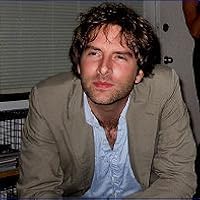
Thomas Bernhard was an Austrian writer who ranks among the most distinguished German-speaking writers of the second half of the 20th century.
Although internationally he’s most acclaimed because of his novels, he was also a prolific playwright. His characters are often at work on a lifetime and never-ending major project while they deal with themes such as suicide, madness and obsession, and, as Bernhard did, a love-hate relationship with Austria. His prose is tumultuous but sober at the same time, philosophic by turns, with a musical cadence and plenty of black humor.
He started publishing in the year 1963 with the novel Frost. His last published work, appearing in the year 1986, was Extinction. Some of his best-known works include The Loser (about a student’s fictionalized relationship with the pianist Glenn Gould), Wittgenstein’s Nephew, and Woodcutters.
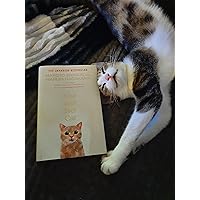
One review on Goodreads?! Inconceivable. I'll not break my oft-stated rule about not reviewing poetry, but I'll tell you that this collection is probably, already, the best, most beautiful poetry I'll read this year. You might find that surprising if you know anything about Bernhard, the irascible, grumpy, and self-tormented author of many incredible novels. Most of these poems were written in the 50s and 60s and Bernhard struggled with acceptance into the literary world he would grow to loathe so much, and they are very uncharacteristic, further enriching B. as a writer, rich with themes of dark rurality, tradition, and strange weather. I can't really convince you to collude in enjoying them, but you should give it a shot anyway. Some notes, and a nice afterword (should've been a foreword) by the devout translator James Reidel who makes a good show of trying to show how Bernhard's poetry morphed into his novels. Also included is a bunch of shit stuck in a few appendices that Bernhard never wanted read (I skipped these, of course).
Thomas Bernhard's poetry outwardly looks familiar in form and not very modern in the motifs. But once one begins the work of understanding, it becomes clear that the poems are hard to grasp and not quite fit for analysis. His poems contain moments, perhaps just a few verses or a combination of words, that stubbornly resist interpretation. Inaccessible, these passages stand in the midst of clear speech and reflect back on it, weaving a web of riddles through it.
Bernhard`s poem Am Brunnen reminded me in some ways of the themes in "Am Brunnen vor dem Tore“, which are the first lines of Wilhelm Müllers poem Der Lindenbaum (1823). Franz Schubert composed his song cycle „The Winterreise“ to the text of Müllers poems. In my eyes Bernhard plays in Am Brunnen his own poetic game with the same themes: the fountain, the snow, the wheater, the passing of time, and reflects with his own returning theme of the thousand years perspective on the trees and the solitude.
Bernard has some returning words in his poetry. North" is one of them, "woods", "father", "November“, "wind" and also the word combination "thousand years".
Bernhard's poems form a preliminary phase to his later so strikingly worked out aesthetics of the monstrous in his novels and plays.
Am Brunnen
Der Mond schaut aus dem Brunnen. Wer wird seine Augen heimtragen für den Winter, wenn der Schnee die Erde zudeckt? Wer wird meinen Namen sprechen, die Blüten wiedersehen, die der Regen treibt? Wer wird mich trösten, wenn die Seelen der Bäume versteint sind in tausend Jahren? Wer wird meiner Verlassenheit einen Grabstein setzen und nicht nach meiner Welt fragen? Wer wird die Vögel lieben, die ich verachte weil sie nach Süden ziehn?
—
At the fountain
The moon looks out of the well. Who will carry his eyes home for the winter, when the snow covers the earth? Who will say my name, see the flowers again, driven by the rain? Who will comfort me when the souls of the trees will be petrified in a thousand years? Who will set a tombstone for my loneliness and not ask about my world? Who will love the birds I despise because they are moving south?
Ich wusste nicht, dass es so viele Möglichkeiten gibt über Leid und Tod zu schreiben :0 Besonders die landschaftlichen und atmosphärischen Gedichte über unterschiedliche Klostergärten, Kirchen und Städte haben mir gefallen! Und der Titel: Yeats war nicht dabei
A lot of the early poems feel quite indebted to Trakl, and otherwise with a lot in common with other post war Poets like Ingeborg Bachmann or Peter Huchel. Not that there's anything wrong with that though, and he definitely has his own pre-occupations within that style.
I liked the short biography included as as afterward, it would have been useful as an introduction in truth.
My favourite poem was actually the standalone Paranoia from the early 80s. It felt closer to the tone of his novels.
Der Tod hat mich ins Sommerheu geschlagen. Jetzt hängt er draußen und lacht und erwürgt den Birnbaum. Niemand schüttelt ihn herunter, kein Trompetenstoß verscheucht ihn zu den Hügeln, aus den Tälern kommen die, die mich erschlagen werden; Bauern, Händler, Fleischer und der Pfarrer mit dem Osterlamm, der sich mir anvertraut. Der Tod hat mich ins Sommerheu geschlagen. Keiner bricht mir meinen Ruhm entzwei und läßt mich laufen...
"Ich ertrage es nicht mehr, niedriger zu sein als der Spargelverkäufer, niedriger zu sein als die Wahrsagerin und niedriger als der Pfarrer, der seinen Fuß an den Weihwasserkessel von Notre Dame stößt."