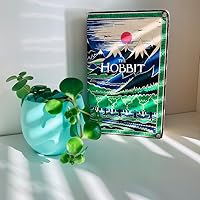
Spanning 3,500 years and forty literary traditions, this volume brings forth a rich and varied body of work by women poets, some familiar to the English-speaking reader, but many others long neglected or virtually unknown outside their respective countries. An introductory note on each poet tells something of her life and of the historical and literary context in which she wrote. The poems themselves--approximately four hundred in number and translated from languages as diverse as Byzantine Greek, Sanskrit, Old French, Hindi, Gaelic, Vietnamese, and Maori--cut across the barriers of time and culture to take their rightful place among the wealth of the world's literature. (Penguin Books)
'In America, as everywhere else, women have been and are among our major poets, and here they all are, the familiar elbowing the exotic in endless variety of form, subject, temperament. From Sappho to Judith Wright--by way of Li Ching-chao, Sor Juana Ines de la Cruz, Emily Dickinson, and Anna Akhmatova--this anthology can be read straight through as a dizzying world tour, and returned to as a solid work of reference' --Ellen Moers, author of Literary Women
"Under the waning moon In the dawn-- A frosty bell. My horse's hooves Tramp through the yellow leaves. As the sun rises Not a human being is visible, Only the sound of a stream Through the misty trees." - "Starting at Dawn" by Sun Yun-feng
Happy International Women's Day 2020! I decided to briefly discuss this book that I've been reading from for over 5 years. It is an old, but expansive look at women's poetry over thousands of years and nearly every type of ethnic group you can think of. It is an extraordinary mass paperback anthology for it's era. This isn't a Norton Anthology style book as it is the length and width of a regular 300-page novel and that makes it easy to carry around. If there was one realistic downside to this book it would be that the accuracy and art of translations have come a long way since this book was published. I've seen better translations of some of the poems published, but I doubt I'll read a book of this size that has so many voices in it.
"Out of this wealth of material we have sought to create a book which would allow the reader to view women in new and mutually enlivening perspectives. There are several contexts that condition the work of every writer: national history,cultural milleu, individual experience. We have tried to illuminate the additional context of sexual identity as it may affect the poetry of women across the lines of time and culture. Women poets over the centuries have struggled for acceptance as artists. We hope that this book is presented in a way that permits each poem to be appreciated for its particular merits and each poet to speak in her own voice." - from preface.
This collection was released in 1978, edited by Carol Cosman, Joan Keefe and Kathleen Weaver. Who says I’m living in the past? It features three thousand five hundred years of women’s poetry, beginning in Egypt in the fifteenth century BC. I did not approach the book with feminist literature in mind. I was simply looking for some poetry to read. But as I journeyed through the ancient world, the Middle Ages, Renaissance, and into the nineteenth and twentieth centuries, what I discovered was that women's lives and literature are inextricably linked and that, no matter how long ago these poems were written, here were voices with whom I could relate.
Each poet is given a biographical introduction, often as fascinating as their poems. In ‘from Eighteen Verses Sung to a Tartar Reed Whistle,’ Chinese poet, Ts'ai Yen (200 AD), writes of men ‘as savage as giant vipers’ who ‘strut about in armour, snapping their bows.’ Her biography tells us she was captured by the Huns, forced into sexual slavery, rescued, made to leave her children, and enslaved again, and that the poem was written during her captivity. The sad thing is that for many women, not much has changed. The 'bride show' in which St Kassia (Byzantium, 900 AD), passed up her chance to marry the Emperor wouldn’t be out of place on twenty-first century Saturday night TV. Close call, Kassia! She went on to found a convent and became famous for her hymns and epigrams in iambics, many of which addressed hypocrisy and inequality: ‘A half-dead, bald, one-handed, / Stuttering, pint-sized, pimply, / Pigeon-toed, cross-eyed man, / When mocked by a lying pimp, / […] said: / “I’m not to blame – you think / I asked to be like this? / But you!... the credit’s yours.’
Although much of the material is weighted towards the twentieth century, there are some big herstorical hitters including excerpts from Sappho, and Christine de Pisan's fourteenth century bestseller, ‘A Lytil Bibell of Knyghthood.’ Other well known women wordsmiths included here are Mairi MacLeod, Elizabeth Barrett Browning, Emily Dickinson, and none other than Elizabeth I. The poems come from around the globe and, although translated, many feel like they could have been written yesterday:
I can’t hold you and I can’t leave you, and sorting the reasons to leave you or hold you, I find an intangible one to love you, and many tangible ones to forgo you. (Sor Juana Ines de la Cruz (1652-95) Mexico)
In the great night my heart will go out, Towards me the darkness comes rattling. (Owl Woman, Papago Indians, American Southwest)
Struggle is a prevalent theme in this collection. Denied any other means of expression, these women have something to say and are not afraid to say it. They are writing because they need to write. The result is innovativeness in style and form. I particularly enjoyed the selection of twentieth century Eastern Bloc poets, whose works reveal excruciating persecution, poverty, intellectual loneliness and death. One only has to read Marina Tsvetayeva and Anna Akhmatova, but also the lesser known, Natalya Gorbanyevskaya, and, Bella Akhmadulina (translated by Elaine Feinstein and W H Auden), and Zinaida Hippius, whose work (unjustly) remains largely unrecognised in the English speaking world.
For her now in him a valley grows, rusty-leaved, closed by a snowy mountain. (Wislawa Szymborska, Poland, translated by Czeslaw Milosz)
I promise to make you so alive that the fall of dust on furniture will deafen you... (Nina Cassian, Romania):
They say, his strange, large eyes, Opal-like, odd, Nordic eyes, Always looked far-off. He could Fuss half a day with a flower’s root... (Margit Kaffka, Hungary)
They race, the linens. Under the lightning’s muzzle. (Agnes Nemes Nagy, Hungary)
I was also introduced to fascinating Scandinavian poets, like Edith Sodergran, who died, virtually unknown, of hunger in Finland after escaping from the Russian Revolution:
Luck has no songs, luck has no thoughts, luck has nothing. Push your luck so that she breaks, for luck is evil. (Edith Sodergran, Finnish-Russian)
Where do you go with your fury, child, when the roads are blocked with words, (Cecil Bodker, Denmark)
to stand up and walk, to wear out the plaited shoes, to look for the stream and to come to a bank made by men. (Eeva-Liisa Manner, from ‘Cambrian, A Suite about the Sea and the Animals')
Again, there are the tragic biographies. Alfonsina Storni (Brazil) drowned herself in the waters of Mar del Plata due to terminal illness, but left behind the beautiful pared lyricism of her poetry:
Below the city rises up, a cement rose, motionless on its stem of dark cellars.
And, of course, there is the unforgettable, Julia de Burgos, who went largely unrecognised in her lifetime; suffering from poor mental health and alcoholism, she died anonymously on a New York street: 'I am curled by the wind, painted by the sun.' Though it's not all doom and gloom. Greek poet, Jenny Mastoraki, offers a wry blend of ancient myth and modern culture:
The Wooden Horse then said no I refuse to see the press and they said why not and he said he knew nothing about the killing...
The last part of the collection is dominated by the likes of H.D., Marianne Moore, Elizabeth Dayrush, Sylvia Plath, Amy Lowell, Gertrude Stein, Gwendolyn Brooks, Adrianne Rich. A glaring omission from the canon is Maya Angelou. Overall, I came away with the impression that these poems tell herstory, and I have deliberately focused on the poets I hadn’t heard of, because that’s what made it for me. It is sad that so many of these writers struggled with oppression, depression, neglect and poverty. However, there is a truthfulness to their writing. It’s such a different experience reading poetry that speaks directly to you as a woman. I realised how much energy I’ve spent trying to align myself with male poetry that says nothing of my experience. This collection has gone some way to changing that.
I readily admit that I don't really know how to read poetry books. I must also confess that I am not likely the target audience for this book. So take this review with a hefty dose of skepticism.
I'm not sure I agree with the editorial direction of this book. The title claims it is a book of women poets. In that, I suppose it has lived up to its purpose. There are women poets in this book, and a lot of women poets. I really enjoyed the fact that for almost all of the poets included in the book, there is also a brief paragraph or two of biographical highlights of her life. I probably enjoyed those biographical notes even more than many of the poems.
Which brings me to what I didn't like about the book. The selection of poems. And perhaps of poets. It felt like the selection had more to do with the idea that the poet was a woman from a certain area and time than that her poetry demanded to be included. Perhaps it is only because something is lost in translation. Perhaps it is because with just a poem or two you can't really get a feel for her work. Or perhaps it really was the case that the poems weren't very good. I guess if you want to read a sample of poems from all ages and places, this book is a pretty good start. But if you want to read good poetry, perhaps your time would better be spent elsewhere.
That's not to say that there weren't a lot of great poems included in the book. There were some real gems. But I did feel I had to wade through a lot of mediocre or uninspired poems to get to the gems. I suppose I can't complain; it was probably worth it. But I have to admit that I found myself really getting excited about the book only about the time I got to English-speaking poets born after about the turn of the nineteenth century. That was where I found fewer and fewer poems that just left me scratching my head, and more and more poems that felt like good poetry. Yeah. So blame me for being a male. And English-speaking. And a product of my times.
It's not a huge anthology, but for its size, I felt like it was very comprehensive. I particularly appreciated the very careful attention and prominence given to women writing all over the world--not just in the English tradition. I've never read Kenyan, Nepalese, or Peruvian women poets before; I'm thankful that this little compendium gave me that opportunity.
An excellent smorgasbord of poetry by (and to some extent for) women, arranged chronologically - and to some extent geographically - from Ancient Egypt through to the late twentieth century. This book is both a good overview and a good "sampler" - I have noted the names of several poets to investigate further; some I had heard of, others are obscure, and some had a time in the limelight but are now often criminally neglected. A welcome addition to any shelf of poetry books.
A wonderful collection. I hope the need for books such as this is past (it was published in 1978) since most of the poets I see in books stores now are women, but this may be treated as a foundational anthology from a time when the politics were different.
Not a crazy poetry fan, but this book was well organized. There were poems from the ancient world to the present modern age. It was great for comparing and really finding my niche and favorite female authors. My book is now completely highlighted and annotated and I'm excited to look into different poets I would never have known.
Generally I found I preferred the poetry of the earlier writers to that of the more modern writers. I LOVED the biographies. It was really fascinating what little tidbits were included about some ladies' lives.