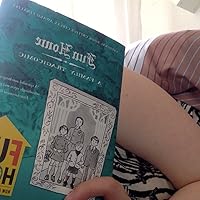
I rather enjoyed reading this book; the life of Alan Turing is most interesting. Reading about his life from start to finish from his Mother's perspective is, I believe, a very important piece in the puzzle of constructing a picture of A.Turing's life. However, it is this very fact - namely that the book is written by his mother (Sara Turing) - which hinders its overall potency.
From the biography, or some may say hagiography(!), one can gather that S.Turing loved her son and believed him to be a genius from an early age - or at least she managed to convince herself of this later in life. She paints him as the archetypal young genius: bad school reports, shoddy looking, individual and the list goes on. Although, one part which seems rather striking to me is that she didn't seem to spend much time at all with her own children and left them in foster care for the majority of each year. This, to me, suggests that her knowledge of her son is far from complete.
This book represented the view that S.Turing had conjured up later in life to alter the memory of her son. For example, there is no mention of A.Turing's homosexuality along with a flat out refusal to believe that he committed suicide and retained the view that it was accidental. Both of these elements are pivotal, in my opinion, to understanding A.Turing.
The book concluded with a short word from A.Turing's brother - John Turing. This is somewhat more tart than the text it follows and includes his admission to his dislike of homosexuals - though, not surprising for the period. It is also revealed that, upon reading Alan's psychiatry notes, he had a strong dislike for his mother. Another mark showing S.Turing's true distance from her son.
I have given this three stars - although, in truth, two stars may be more appropriate - mainly due to the subject of the biography. Personally, I find it most interesting to discover more about A.Turing's mathematical work; additionally, the letter from J.Turing at the end puts the majority of the text into a much clearer perspective. However, the overwhelming message that I have taken away is that Alan Turing's mother did not know her son; he had been a misunderstood man, living with the worries that come with homosexuality in the 20th Century which culminated in him taking his own life (I don't claim this to be the reason of his committing suicide), but leaving behind an academic legacy to be marvelled at.
(Note: I would read this as a supplement to a larger, more general, biography of Alan Turing)