Jump to ratings and reviews
Rate this book

Daisy Miller and Other Stories

Rate this book
A wonderful new collection of tales exploring Henry James's favourite 'international theme': the experiences of Americans in Europe, and the meeting of the old world and new.Daisy Miller is one of Henry James's great heroines - a young, independent American travelling in Europe, whose flouting of social conventions has the potential to lead to disaster. Her story is here accompanied by six more set among English castles, Swiss hotels and French ports, and all riffing on a classic Jamesian the clash between the old world and new, Europe and America.The tales included in this volume are 'Travelling Companions', 'Madame de Mauves', 'Four Meetings', 'Daisy Miller', 'An International Episode', 'Europe' and 'Fordham Castle', and the collection has been edited by renowned scholar of Anglo-American literature, Stephen Fender, under the general editorship of Philip Horne. This is one of three new volumes of James's greatest tales in Penguin Classics, and is accompanied by The Aspern Papers and Other Tales and The Turn of the Screw and Other Tales (forthcoming).

158 pages, Mass Market Paperback

First published January 1, 1878

65 people are currently reading
885 people want to read

About the author

Henry James

4,554 books3,940 followers
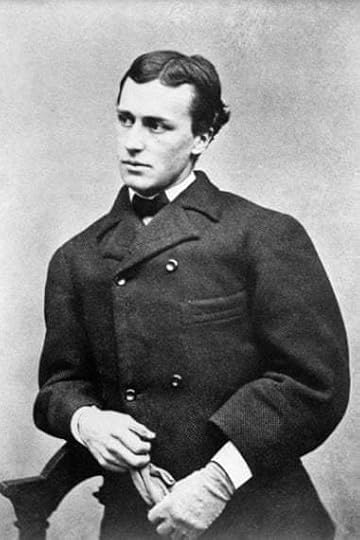
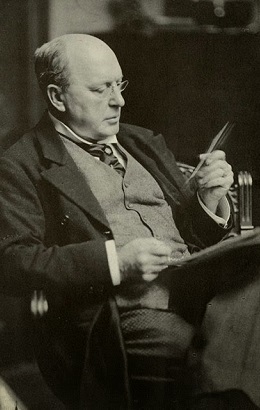
Henry James was an American-British author. He is regarded as a key transitional figure between literary realism and literary modernism, and is considered by many to be among the greatest novelists in the English language. He was the son of Henry James Sr. and the brother of philosopher and psychologist William James and diarist Alice James.
He is best known for his novels dealing with the social and marital interplay between émigré Americans, the English, and continental Europeans, such as The Portrait of a Lady. His later works, such as The Ambassadors, The Wings of the Dove and The Golden Bowl were increasingly experimental. In describing the internal states of mind and social dynamics of his characters, James often wrote in a style in which ambiguous or contradictory motives and impressions were overlaid or juxtaposed in the discussion of a character's psyche. For their unique ambiguity, as well as for other aspects of their composition, his late works have been compared to Impressionist painting.
His novella The Turn of the Screw has garnered a reputation as the most analysed and ambiguous ghost story in the English language and remains his most widely adapted work in other media. He wrote other highly regarded ghost stories, such as "The Jolly Corner".
James published articles and books of criticism, travel, biography, autobiography, and plays. Born in the United States, James largely relocated to Europe as a young man, and eventually settled in England, becoming a British citizen in 1915, a year before his death. James was nominated for the Nobel Prize in Literature in 1911, 1912, and 1916. Jorge Luis Borges said "I have visited some literatures of East and West; I have compiled an encyclopedic compendium of fantastic literature; I have translated Kafka, Melville, and Bloy; I know of no stranger work than that of Henry James."

Ratings & Reviews

What do you think?
Rate this book

Friends & Following

Create a free account to discover what your friends think of this book!

Community Reviews

5 stars
205 (17%)
4 stars
427 (36%)
3 stars
400 (33%)
2 stars
132 (11%)
1 star
20 (1%)
Displaying 1 - 30 of 125 reviews
Profile Image for Fionnuala.
886 reviews
Read
April 4, 2021
When I set out to read Daisy Miller, I could only find a copy that included six other stories. As it turns out, Daisy Miller is quiet short, scarcely fifty pages, and I'm not sure what my reaction to it would have been had I read it alone. In any case, I’m certain now that the story benefited hugely from being inserted right in the middle of the other six, some of which are quite a bit longer, but all of which share its sharp and merciless eye for cultural differences, and people's habits and behaviors in general.

I’m also certain that this collection contains the keenest satire I've come across in Henry James. Not that there isn't fine satire in the novels, plenty of gentle mockery of people with too much money, too much greed, too much selfishness. Or alternatively, too much generosity, too much heroism, too many ideals. No, it's more that the novels inevitably contain involved plots, and the satire has to make way for the necessary trappings of those plots. In the stories, the satire is given more space, and it somehow garners the very best lines.

The seven stories all focus on travel, Americans going to Europe and Europeans heading to America, and each story offers a different angle on the experience. There are even a few characters who do nothing but dream of traveling to Europe; one unfortunate woman, having dreamed such dreams for years, reaches Le Havre only to be obliged to sail back again. On the other hand, there’s a pert little person who is convinced that the trip on the boat is the best part of going to Europe. But he is an exception.

One of the common themes of these travel tales is the romantic vision of old Europe cherished by young American women in the late nineteenth century; they all dreamed of marrying a prince and living in a castle, it seems. HJ skewers this notion devastatingly in the second story, ‘Mme de Mauves’. The main character is a young American girl who marries a French nobleman, and even though she has a tremendously romantic soul, and even though she is steeped in poetry, she soon discovers that life is hard prose, and one must learn to read prose contentedly. I once thought that all the prose was in America, which was very foolish.

HJ approaches the 'princess' theme differently in ‘An International Episode’. In that story, the young American heroine deliberately destroys her chances of marrying a nobleman and living in the coveted castle. Bessie Alden is a more hard-headed character than Mme de Mauves and she sees the reality behind appearances. She knows that though a Prince may fall in love with you, it doesn't mean his mother will love you too. Life can not be lived on love alone.

HJ returns to the princess theme in the hilarious final story, ‘Fordham Castle’, where he has fun with a couple of hustling American women whom he allows to triumphantly capture the castle—in spite of their names being the very unpoetic sounding Mattie Magaw and Sue Taker.

As for the title story of the collection, it might seem as if living in a castle would be the ultimate goal for Daisy Miller too. But Daisy is not at all ambitious in the style of Mattie Magaw and Sue Taker. Nor is she a great romantic like Mme de Mauves. Daisy desperately desires to visit the castle, to visit each and every castle in Europe, but she’s more than content with a day trip.

The idea that all the prose was in America and all the poetry in Europe, is something HJ returns to again and again in these stories. Mr Evans, in ‘Travelling Companions’, when he finds himself in front of Leonardo Da Vinci's famous 'Last Supper' in Milan, prefers to look at the small canvas which a copyist is working on rather than the original wall painting. His comment to his daughter sums up his practical nature: 'He hasn’t got in that door’, he says, pointing to the unfortunate doorway that had been cut into the wall containing the centuries old fresco.

Many of HJ’s Americans show a tendency towards such practical viewpoints and a corresponding scorn of tradition. There is always the implication that they would actually prefer to be in the familiar watering places of Newport or Saratoga instead of in a Swiss resort where they might have to put up with neat German waiters, who look like secretaries of legation; Russian princesses sitting in gardens; little Polish boys with their governors; a view of the snowy crest of the Dent du Midi, and the picturesque towers of the Castle de Chillon. When Daisy Miller takes a boat trip across the lake to Chillon Castle, Mr Winterbourne, who accompanies her (Daisy describes him as 'quaint'), is afraid that she will talk loud, laugh overmuch, and even perhaps desire to move about the boat a good deal (and the reader almost forgets that Mr Winterbourne is himself an American). Daisy’s mother, when asked how she likes Rome, answers, 'Well, I must say I'm disappointed. We had heard so much about it; I suppose we had heard too much. We have seen places that I should put a long way before Rome...There's Zurich. I think Zurich is lovely; and we hadn't heard half so much about it.’

If his American characters can have idiosyncratic views of Europe, Henry James allows his Europeans to have some equally odd views of the United States. M de Mauves, on his brief trip across the ocean, is unable to view the great American experiment in democratic self-government in a serious light. He smiled at everything, and seemed to regard the New World as a colossal 'plaisanterie'...a gigantic joke, and his urbanity only went so far as to admit that it was not a bad one [But] he had understood nothing, he had felt nothing, he had learned nothing.

Lord Lambeth too, in 'An International Episode', has difficulty understanding American life in general, and in particular the notion that there is no leisure class; that the exceedingly wealthy Mr Westlake spends long hours in his New York office is incomprehensible to Lambeth. However, in almost the same breath, Lambeth resents the fact that Mr Westlake thinks English people of his own class do no work at all. Yet when asked by Bessie Alden if he ever 'speaks' in the 'House', he admits to hardly ever attending, and preferring in any case to spend his time 'speaking' to pretty women. Similarly to Daisy Miller, Lord Lambeth has a frivolous side which he favours, but both characters are more complex than they seem, and beautifully paradoxical in their behavior and thinking. Though they belong in different stories (and in different milieux), Henry James describes them in a similar way, focusing on the perfection of their profiles and giving the impression that their physical beauty goes hand in hand with a superficiality of character. But at the same time, he allows them both to surprise us every now and then with an unexpected acuity. Even while she appears to be absently arranging her ribbons or adjusting the fall of a flounce, Daisy will suddenly make us sit up and take notice, 'I don't like the way you say that...It's too imperious...I have never allowed a gentleman to dictate to me, or interfere with anything I do'. And poor 'quaint' Winterbourne, who had simply suggested that it might not be a good idea to wander alone in Rome in the evening, retreats in disarray.

All of HJ's American heroines show variations of this independence of mind which stands in contrast to European attitudes. Miss Evans, in 'Travelling Companions', reminds the narrator that in America, daughters insist quite as much as fathers, and she points to the lack of logic surrounding the rules laid down for women in European society; to go about alone is considered wrong but to request a male friend to accompany her is also wrong. How then is she to visit all the places she longs to see? This difference in outlook is summed up neatly by American Mrs Westlake who claims that there is no such thing as a 'fast girl' in America; that it must be a European invention. Daisy Miller gets labeled a 'fast girl' while in Europe, and the irony is that it is mainly ex-patriot Americans who consider her so; the Italians are less censorious—they simply label Daisy 'American'.

HJ often points to such inconsistencies in people's thinking. Mme de Mauve's mother, for example, a 'gay divorcee' who had been a very good-natured censor on her own account, felt a genuine spiritual need to sacrifice her daughter to propriety. Mrs Cleve belonged to that large class of Americans who make light of their native land in familiar discourse, but are startled back into a sense of moral responsibility when they find Europeans taking them at their word. Like the very English Lord Lambeth, Mrs Cleve 'thinks' one thing and 'does' quite another. HJ seems to imply that there is a happy lack of such 'Christian' hypocrisies in the more 'pagan' French. M de Mauves's sister can't begin to understand the puritanical nature of her American sister-in-law who feels aggrieved at her husband for having a mistress: There has never been a De Mauves who has not given his wife the right to be jealous. Our men are real Frenchmen, and their wives—I may say—have been worthy of them. You may see all their portraits in our house in Auvergne; every one of them an "injured" beauty, but not one of them hanging her head. Not one of them had the bad taste to be jealous. But American-born Mme de Mauves is incapable of seeing things à la française. She insists on calling her husband to account in a way his ancestors had never been—even by their mistresses. It's a very fine story, by the way, with a most unexpected twist.

In fact, the seven stories in this collection are all very fine, and they all contain twists, but none with a twist quite as perfect as the story which is simply entitled 'Europe'. I haven't mentioned it so far, yet it encapsulates the main themes of the collection perfectly. In the table of contents, it is the only story title with quotation marks, which suggests that it is the French word 'Europe' that is intended rather than the English.
A beautifully subtle comment on the difference in perspective depending on the direction of your gaze.
Profile Image for Paula Mota.
1,665 reviews563 followers
October 4, 2024
“Daisy Miller” foi a minha estreia com Henry James e foi, sem dúvida, amor à primeira leitura. Como foi a primeira heroína do autor que conheci, ficou a ser para mim o epítome da mulher jamesiana, à qual todas as outras são comparadas, mesmo que sejam mais discretas e mais refinadas que esta jovem norte-americana a passar uma temporada na Europa, como muitas das muitas personagens no universo deste autor dos EUA, que se naturalizou britânico a dado momento da sua vida. Daisy Miller, a namoradeira americana com quem nos cruzamos na Suíça e, posteriormente, em Roma é, basicamente, uma rapariga à frente do seu tempo que assume liberdades e vontades que vão contra as normas vigentes na sociedade da época: conversa e passeia livremente com homens sem nenhum chaperon por perto e, fazendo-o de forma inocente, não só não vê malícia nisso como não compreende a crítica alheia. Apesar de a ação central decorrer numa cidade do século XIX, há um carácter universal neste conto, já que ainda hoje, seja em meios pequenos, seja em bairros mais tradicionais, há sempre alguém a ver e a comentar o comportamento que se considera leviano nas jovens, ou mesmo nas mulheres em geral, independentemente da idade e do estado civil.

- Que tem feito ela?
- Tudo o que aqui não se faz. Namoriscar com qualquer homem que lhe apareça à frente; sentar-se ao canto das salas com italianos misteriosos; dançar toda a noite com os mesmos parceiros; receber visitas às 11 horas da noite.


Este é o meu conto preferido desta compilação muito uniforme em termos qualitativos, mas sofre uma punição de 0,5 da minha parte, como tem acontecido com outros escritores da minha eleição (Kate Chopin, Somerset Maugham, D.H. Lawrence) por também ele punir a sua protagonista pela sua conduta. Seja por moralismo ou para criar dramatismo, é-me indiferente, pois ao contrário da ingénua Daisy Miller, já detecto malícia à distância.

Daisy Miller-4,5*
Eu, graças a Deus, não sou uma jovem deste país. As jovens deste país têm muito pouco tempo para aquilo que é bom, tanto quanto percebi; não percebo por que hei-de ser eu a mudar de hábitos.
- Receio que os seus hábitos sejam os de uma simples namoradeira – disse Winterbourne com gravidade.
- Claro que são – assentiu ela, oferecendo-lhe de novo o seu olhar sorridente. – Sou uma namoradeira terrível. Temível! Já viu alguma boa rapariga que não o fosse? Mas calculo que me vá dizer agora que eu não sou uma boa rapariga.


O Último dos Valerii-4*
Mais um conto de uma americana em Roma que decide casar com um conde italiano a quem só lhe resta o título, para grande desprazer do tio, que não lhe poupa críticas.
Englobando-se nos contos de cariz gótico que HJ também apreciava, Martha vê-se obrigada a medidas extremas quando tem de dividir as atenções do marido com a estátua de Juno desenterrada na propriedade.

Continuava ali sentada, sacudindo as moscas do corpo dele, estirado a ressonar como uma estátua, e, se eu me atrevia a passar por perto, punha um dedo sobre os lábios e murmurava que o marido lhe parecia tão bonito a dormir como acordado. Confesso que em várias ocasiões me senti tentado a responder que ele era igualmente interessante em ambos os estados.

Os Originais-4*
Um pintor é abordado por um casal aristocrático de meia-idade cuja atual situação financeira os obriga a trabalhar como modelos. HJ recorre sempre à ironia, mas neste conto caricato consegue ser especialmente sarcástico.

Quando ela se voltou a sentar-se agradeci-lhe, comentando que aquilo que um retratista mais valoriza nos seus modelos é a faculdade de permanecer em silêncio.
- Oh, ela consegue estar em silêncio – disse o major Monarch. Depois, jocoso, acrescentou: - Sempre a mantive calada.
- Não sou nenhum diabrete, pois não? – retrucou ela em direcção ao marido.
Ele encarou-me para responder.
- Talvez não seja desadequado referir… porque devemos falar disto como profissionais, não é verdade?... que quando me casei com ela, ela era conhecida como
A Bela Estátua.

A Lição do Mestre-4*
HJ tem predilecção por histórias protagonizadas por escritores, incluindo aquelas em que convivem com outros colegas de profissão e discutem sobre o “desenho no tapete”. Nesta em particular, um jovem escritor conhece o seu ídolo, mais velho e casado, que o aconselha a manter-se solteiro para poder dedicar-se ao seu ofício sem interferências nem obrigações. É mais um caso em que as personagens femininas, embora ligeiramente periféricas, brilham, sendo uma delas também uma jovem de espírito livrem e pouco dada às convenções, tendo sido criada numa colónia inglesa no Oriente.

- Pensa então que o artista não deveria casar?
- Fá-lo a seu próprio risco… fá-lo a seu próprio custo.
- Nem mesmo quando a esposa apoia o seu trabalho?
- Ela nunca apoia… não pode! As mulheres não têm noção de tais coisas.
- Com certeza que, de vez em quando, fazem-no elas mesmas – contrapôs Paul.
- Sim, na verdade muito mal. Claro está, muitas vezes elas pensam que compreendem, pensam que apoiam. É então que são mais perigosas. A ideia delas é que uma pessoa deve criar muito e ganhar muito dinheiro.
Profile Image for Issicratea.
229 reviews475 followers
February 11, 2018
This is a very well composed collection, and it would not make a bad introduction to Henry James, for anyone wanting to dip a toe in without committing to a full novel. The seven “tales” that comprise the volume are arranged chronologically, and they take us from practically the dawn of James’s fiction-publishing career, in 1870 (his first full-length novel, Roderick Hudson, came out in 1875), to pretty much the end, in 1904, the same year as The Golden Bowl. In stylistic terms, we go from the relative crispness of the first five stories, all dating to the 1870s, to the dense, entangled prose of the final two, dating, respectively.

The collection is unified by theme; all seven stories revisit from different angles what the editor, Stephen Fender, calls the “international theme”—the curious, charged, conflicted relationship of late nineteenth-century Americans with Europe (and, to a lesser extent, Europeans’ relationship with America). It makes a fascinating read in conjunction with James’s novels on the same theme. I caught strong echoes of James’s 1877 novel The American in this collection’s 1875 story “Madame de Mauves,” and strong echoes of Roderick Hudson just about everywhere, but perhaps especially in “Daisy Miller,” which is similarly set in Rome.

“Daisy Miller,” the title story, is far the best-known in the collection, but it wasn’t the one I was most struck by. In very different ways and for different reasons, the tales I liked best were the first, “Travelling Companions” (1870); the fifth, “An International Episode” (1878-79); and the penultimate, “Europe” (1899). I’ll limit my discussion to those three.

“Travelling Companions” is a work I suspect James regarded in later life as a piece of faintly embarrassing juvenilia. It was the only one of these stories that was never published in book form after first appearing (as the others did too) in a magazine. I can see why James might have rejected it, as there is something a little naïve about it. The protagonist, Mr Brooke—his first name is never revealed—is new to Italy, unlike most of James’s American male characters in this collection; and he rather breathlessly records his impressions of Italian life and art as he meanders from Milan to Venice to the Roman campagna, taking in Padua and Vicenza on the way. This makes the story something of a hybrid—half-fiction, half-travelogue—and, as the notes to this edition reveal, the travelogue passages are transparently based on James’s own early impressions, as recorded in his letters.

This may detract somewhat from the quality of the story as fiction, but it was part of what made it so fascinating to me. Here we have a fine, exquisitely sensitive, but very “period” response to Italian medieval and Renaissance art, as well as to the experience of Italy generally, with its powerful assault on the senses. I loved the moment in Vicenza, when Brooke found himself responding to Palladio’s architecture, even though Ruskin told him he shouldn’t; and the moment in Padua, when he found himself overwhelmed by the power Giotto’s Arena Chapel narratives, having earlier decided that “to talk about Giotto was to make more or less of a fool of one’s self.” This story captures a particular moment in the history of the reception of Italian art of this period, and it portrays it with great vividness and immediacy. I rather liked the uncharacteristically narrative as well.

“An International Episode” I liked for its lightness and humor—not qualities one necessarily associates with James! Unusually, this story examines not merely American attitudes to Europe, but the reverse, in the form of the splendidly caricatural, Englishman-abroad figures of Lord Lambeth and Percy Beaumont, who fish up in New York City in the middle of a summer heatwave, and find themselves inadvertently caught up in a transatlantic relationship with possible matrimonial consequences. I loved the sheer fatuousness of the two young men’s conversation, especially Lord Lambeth’s, contrasted with the earnestness of his American would-be love interest (“Doesn’t your father sit in the House of Lords?” Bessie Alden went on. “Very seldom,” said Lord Lambeth. “Is it an important position?” she asked. “Oh dear no,” said Lord Lambeth.) As Fender’s introduction interestingly documents, English readers did not take kindly to this caricature at the time.

“Europe” is very different from these two early, carefree sketches: poignant, compressed, oblique. I thought, in many ways, it was the standout of the collection. Viewed—as so many of these stories are—through the eyes of a James proxy (male, sophisticated, Europhile), it tells the tale of three Bostonian spinsters attending to their ancient, sporadically infirm, widowed mother. The three aging daughters all aspire to go to Europe, following in the footsteps of their parents, who had made the Grand Tour shortly after the post-Waterloo peace of 1815. The story examines Europe as a site of desire in a quasi-abstract, quasi-philosophical manner, using great economy of means. It is an immensely disciplined work, and, in many ways, a minor, modernist masterpiece. Although it is not the last story in the volume—the broadish-humor, bittersweet “Fordham Castle” follows—for me, “Europe” was the climax and epitome of this rich, varied, thought-provoking collection.
Profile Image for Vesna.
239 reviews169 followers
August 15, 2022
Unlike most other collections of Henry James' stories and novellas, this edition and its companion collection The Aspern Papers and Other Tales in the most recent Penguin Classics series present an excellent selection of his short fiction as originally published, rather than in his later revised versions. The reactions to the same stories and novels, especially the earlier ones as they were more heavily revised stylistically some 30 years later, significantly vary from being ”easily accessible” (early/middle HJ) to “impenetrable in cobwebby style” (late HJ), depending on the edition read. So just to share a literary caveat emptor that it’s critical to read the “Note on the Text” and decide if the reader is ready for the late James and his revised versions (only in style not the plots).

Since I myself prefer to follow his writing over time, it was serendipitous when I came across this collection of his earlier novellas (with a couple of shorter form exceptions). And then I found out that my GR friend Fionnuala also read it and wrote such a comprehensive and brilliant review that there is no point in reiterating what she already so perceptively and eloquently wrote, here.

I would only add a few additional points/thoughts of my own:

- Only a couple of stories are “short stories”, the rest are novellas, all of which find their way to get imprinted and linger for quite a long time in the afterthoughts. I found myself changing my mind about some characters by 180 degrees only to go back to the original reaction, … or not…

- While all include an “international travel” theme, with HJ’s keen observations of the manners and customs, all the same, I felt it was equally about the cultural clashes brought about by rapid economic and social shifts in the 19th century, bringing out the contrast between the rising new “bourgeoisie” in America on the one hand, and the ossified ancien régime of “aristocracy” in Europe, including (and perhaps even more cruelly) their imitators in “Europeanized” Americans.

- I was surprised by a Chekhovian feeling I had while reading two stories, an immensely sad “Four Meetings” and a psychologically and metaphorically manifold “Europe”, which were perfectly arched as near bookends in this collection, despite being written 30 years apart.

- Among the heroines in the collection, I must say that, despite the popularity of Daisy Miller , it was in Bessie Alden in An International Episode that HJ gave the most impressive portrayal for me, a prototype of a new woman, eager to expand her independence, intellectual and cultural horizons, as well as life experiences, while not giving a fig for the game of money, power, and status either of the old or new order. Bessie is my girl!

And this is just touching the tip of the iceberg that HJ manages in these few short fictions… Highly recommended!
96 reviews
April 4, 2021
J'ai lu ce recueil avec trois brillants contes de Henry James et ils m'ont plus énormément. I have read this selection of three tales of Henry James and they appealed to me no end. Ils représentent, they represent the every idea of shock or clash from the gap in understanding taken as a string of tales, or clips from newspapers , or or simply put by word of mouth while one is on one's journey somewhere. For these tales, Daisy Miller, An International Episode and Lady Barberina are those tales, told or taken from the notepad, or diary from an interested observer who writes as well, someone deeply concerned about human nature and loved it for all its diversity. Daisy Miller, An International Episode and Lady Barberina are just those tales that a travelling man and a writer as as well as fine observer of human nature is eager to find in his cosmopolitan path. He takes as principal object of his study young, attractive, striking, handsome, adamant and supple, hard and vulnerable creature a girl of 17, 19, and 18 or thereabouts. Why? Because it is the age of expectation, of ignorance, of capacity to look around and searching not exactly not knowing what , only pursuing their dream or intuition or difference to their very self. In other words it is " les jeunes filles en fleurs " that are the subject of these tales, those that their fellows or companions are agog to notice and remark on gaily or reproachfully their conduct, or at sea . Why is it so? Because these young ladies have a potentiality of their own secret stories . those of hopes and fears and dreams as though they felt all the world were theirs and as though they could easily or with style transgress their line, they do so as a matter of course unhindered by God mothers, mothers , fathers , their elders They do it for fun or to satisfy the very curiosity of the power of their act. They are fresh and innocent but their innocence is titillating, bursting in its edges, it is here one moment, gone in another. They are seductresses, or only the girls who want to know themselves. Shallow and deep at the same time. They are like princesses dancing on the night m bringing with them their torn dancing shoes, devils and fairies who long to be comprehended and saved for themselves or if not they will disappear, "telle Albertine disparue", or die. They play with fire for joy and first emotion, they experience the novelty with gusto and happiness to move the world like their own world. These are the tales about society and their values with the observant and intelligent man who notices the change for they are about to change themselves and the world in their entourage. This , they are vaguely conscious of, they are going as in a dream to their destiny . Daisy goes really to her destiny , misunderstood , by her "amoureux" , man of Geneva attitudes, braving her destiny Daisy had gone to the very precarious , endangering lethally her young life. In an International episode a noble Englishman Lord Lambeth and his friend Percy Beamont are confronted to the liberty of American New York life and fascinating free and lovely Miss Alden, sister of their hosts. , young and clever and charming, the Bostonian, who knows a lot, transgresses the line with her bold questions and confronted with implacability of the old tradition ,is faced with what is insurmountable in the old world, the lordly traditional England ,and the man who is timid and not bold

the third story, Lady Barberina is about the noble and blue blood , pure blood , race roman, woman m daughter of Crusaders m lady Barb and her sister Lady Agatha who is is firmly set on the novelty. In doing so she rejoins all the lovely, young brilliant, curious and intelligent girls from literature, Adelam Lucy ; Lydia, Marianne, who act on their own. She is the princess, eager to break the line go on unhindered. Lady Barb is the image of the old, the stiff upper lip type, understatement type, deficient to go on in this modern world.m failing to understand everything except her ways of birth. And James Lemon , her disgustingly rich husband is in the opposite pole from her but on the same level, only fishing for the right social image in the other prolongation of their superficial self whereas Agatha's aspirant and husband , Herman Longstraw is a man of future, an all America, a a new prince capable of charming enthralling and in doing so enriching spiritually his chosen one who has eyes to see the difference and value.
Fairy tales of the modern world, they are spiritually rich in observations and deep in connotations

"Le bonheut se saisit au vol malgre le diable"
Profile Image for Jo .
930 reviews
July 25, 2024
This is my first experience of reading any Henry Miller, and I'm happy to say I haven't finished this disappointed. This is a short book consisting of Daisy Miller and three other novellas, those being Four Meetings, Longstaff's Marriage and Benvolio. I found this collection in a National Trust bookshop, and since I found I had it on my list anyway, how could I resist the purchase?

The first thing I noticed about the prose, is that it's deliciously flowery with a certain lyrical consistency to it, but better than that; it flows wonderfully. The descriptions are detailed and the scene is always beautifully set. My favourite story from the four is in fact, Daisy Miller. It was intriguing from the outset and was beautifully written. My only complaint is that is wasn't a hundred pages longer.

The remaining three stories were grand, but perhaps not on the same scale as Daisy Miller. They were written in the same descriptive style, but I thought the plots were not as solid, and I didn't feel as immersed. I wouldn't let this put me off in seeking out more Henry James in the future, though.
Profile Image for kyma_booklover.
434 reviews37 followers
December 25, 2020
Henry James es un autor con el que tengo mis más y mis menos. Tanto sus novelas como sus relatos me llaman mucho la atención; sin embargo, no siempre consigue engancharme ni que me guste su forma de contar las historias. Si hay una palabra que para mí describe a Henry James es ambiguo.

Llegué a este libro buscando una edición que tuviera “Otra vuelta de tuerca” y esta estaba disponible en Nubico Premium, así que pensé, aprovecho la coyuntura y así me leo otros tres relatos más. Ya os adelanto que la parte de “otros relatos” me la podía haber saltado. Esos otros relatos eran: “La bestia en la jungla” y “El rincón feliz”.

Estos dos no me han gustado nada. No me engancharon en ningún momento, ni conseguí enterarme de lo que me estaba contando. Y eso que no son relatos muy breves, ya que juntos eran menos de la mitad del libro. Se me hicieron largos y pesados y no los abandoné por pura cabezonería. Los personajes daban vueltas una y otra vez sobre lo mismo, haciendo que perdiera el interés desde la página uno de cada uno de ellos.

En cambio, “Daisy Miller” y “Otra vuelta de tuerca” me han gustado mucho. Destaco especialmente “Otra vuelta de tuerca”. Me ha parecido una historia muy buena y muy bien contada, que te hace estar pendiente en todo momento de lo que dicen y hacen los personajes para entender el 100 % del relato. Creo que con una relectura la disfrutarás mucho más, porque sabes cosas y te facilitan la comprensión, pero aún así merece mucho la pena leerla.

Daisy Miller también me pareció bastante bueno, además, tiene un final que no me esperaba, por lo que fue de lo más sorprendente para mí. Es el primer relato que nos encontramos y creo que es un muy buen comienzo.

Como recomendación, no empezaría a leer a Henry James por estos relatos, ya que puede chocarte la forma de escribir que tiene el autor. Yo he empezado con Washington Square y creo que para iniciarse es mejor.
Profile Image for Sara Jesus.
1,673 reviews123 followers
October 15, 2016
Henry James é um escritor muito detalhado, na minha opinião. As suas descrições são um pouco maçadoras, e estive quase a desistir da leitura desta obra devido a esse pormenor. Penso que deve-se ao facto deste livro ser uma colectânea de várias histórias. Mas felizmente as duas últimas conquistaram.
Ambas se referem aos costumes e críticas da sociedade inglesa. Henry James é americano, no entanto viveu grande parte da sua vida em Londres. As suas obras espelham as diferenças entre o mundo americano e o mundo europeu.
Adorei especialmente "Daisy Miller", uma jovem americana que namorisca com todos os forasteiros que encontra e acaba por morrer de febre. Não deixa de ser uma leitura agradável, de fácil entendimento... Mas não conquistou-me de verdade! Espero que ler os seus próximos livros para comprovar a sua arte.
Profile Image for Darinda.
9,137 reviews157 followers
March 16, 2018
Daisy Miller and Other Stories
by Henry James
ISBN 0192816187

A collection of four stories by Henry James: Daisy Miller, Pandora, The Patagonia, and Four Meetings.

Daisy Miller ☆☆☆☆
Daisy Miller is a young American woman traveling in Europe. She is confident and carefree, and enjoys the company of men, which causes her to become the topic of speculation, as it is not proper for a young woman to behave in such a way. One of her friendships is with Mr. Winterbourne, an American gentleman.

Told from Winterbourne's point of view, this short story was an interesting look into European society in the 1870s. What was normal and socially acceptable in America was not the same in Europe. While others thought Daisy to be improper, really, she was an innocent and naive young woman.

Pandora ☆☆☆
Pandora, a charming and ambitious young American woman, is returning to America after her holiday in Europe. While aboard ship traveling home, Pandora meets Count Otto Vogelstein, a German diplomat.

A short story that explores the differences between Europe, specifically Germany, and America.

The Patagonia ☆☆☆
The setting is aboard The Patagonia, a ship traveling from America to Europe. The group of people aboard includes Grace, Mrs. Nettlepoint, and Jasper, Mrs. Nettlepoint's son. Grace is traveling to Europe to meet her fiance, who she hasn't seen in years and isn't happy about marrying. While aboard the ship, she begins a friendship with Jasper, which ends tragically.

This short story is told from the perspective of a gentleman friend of Mrs. Nettlepoint. An interesting commentary on society in the 1880s.

Four Meetings ☆☆☆
A man recalls the four times he met Caroline Spencer. The first time was when she was a young woman in America, the second and third times take place in Europe, and the last time was back in America.

The unnamed man narrates the story. The narrator, while a part of her life because he knows her, is an outsider and relays her story without ever offering any help or guidance.
Profile Image for Julia.
72 reviews14 followers
June 26, 2020
Henry James has this flowery, lyrical prose that calls to me. It never exceeds its descriptiveness to be labeled tedious, nor is it never a story that doesn’t bring out some intrigue within you. This collection of seven short stories dives further into the society and social contrasts between Americans and Europeans.

Travelling Companions is a travel and art guide throughout Rome, Venice, and other sections of Italy that bring vivid artwork, gothic architecture, and beautiful scenery from Monte Rosa as “she stands, frozen and fixed, resting her head upon that mountain wall, looking over at this lovey southern world and yearning towards it forever it vain,” to Venice’s Adriatic view and it’s secret of being “the salt-sown garden of the city of the sea.”
It is a picturesque story and shows that falling in love with a city, it’s culture and art, allows your mind to open to the possibility of falling in love with another soul as enamoured with Italy. This story gets a 4 star rating.

Four Meetings is a 3 star rating story due to its lack of providing all that I normally love within James’ writing. It’s an interesting little story that allows us to realize that not all our dreams come to any fruition and yet we should continue to not part with these allowances of imagination in hopes that whether in dreaming, or through novels we can have a little bit of its experience in our otherwise simple lives.

Madame de Mauves is layered with such complexity and transparent obscurity throughout the disposition of the characters and the little story’s plot line. Madame de Mauves is a stern hearted, obstinate and filled with such fidelity that she never strays far from this temperament and expectations of herself.
Euphemia also is very forward in her renunciation of affection and coquetry and turns to associating herself with novels and furthers herself from past romantic notions.
Most associate ‘mauve’ with the pale tone of purple and it’s symbolism can be seen throughout Euphemia’s sentiments and essence as the colour when chosen by the wearer wishes to not stand out and is rather reserved. From a website further describing the colour and it’s symbolism, a quote that relates heavily to Euphemia is that “they may not want to capture attention, but they are also known for their expressive temperament.” This is very fitting to our heroine due to the fact that with her honest and startling grey eyes does expression shine most through and reveals itself to the one gazing into them. It’s in her looks that our hero; Mr Longmore and M de Mauves are able to understand her sentiments clearly. “She raised her eyes at last, and looked at him with what at first seemed a pleading dread of excessive emotion.”
And another quote, “for she had a way of not dropping her eyes, according to the mysterious virginal mechanism.”
Another incredible writing technique that James adopts into this story is the antithesis behaviour between the two Americans; Euphemia de Mauves and Mr Longmore, with the two French characters; Madame Clarin and M de Mauves. Euphemia and Madame Clarin’s approach when broaching the subject of infidelity can easily be marked that the former holds the belief and general dialogue of one against such turpitude behaviour and has an ‘Angel on the shoulder’ quality, while the latter believes it is socially acceptable to commit adultery as long as it’s not socially known and sullies the family name, and is the partnering ‘Devil on the shoulder.’ Similarity as well the theme adds stereotypical notions of philandering French flirts with an honest American view.
All in all this is one of favourite James’ short stories, it gets a 4.5 star rating.

Daisy Miller represents simplicity and positive vibes when being surrounded by them. Similarly with our character Daisy who dons the nickname allows our hero Mr Winterbourne to feel light, positive and cheerful in her presence that in the beginning confused him. Further symbolism behind daisies are purity, innocence, new beginnings, transformation, and cheerfulness. All of these things are incredibly linked to Daisy’s disposition and her very self.
She is consistently referred to as “uncultivated” and one with such “innocence.” The only manner in which Daisy may be, or appears as uncultivated is with societal expectations and the naivety of her indifference towards the gossip others lavish her in.
She provides and opens herself not only to new beginnings, transformations, and experiences, but also awakens Mr Winterbourne to them. He displays childish glee in discovering the city through her eyes and in what she wishes to see and how.
Daisy Miller was simply put a young woman who feels societal constraints that don’t amount to full understanding of the reasoning behind these rules on women of stature, age and deportment. She contains the purity in her actions and flirtatious behaviour and many instead view her as compromising herself and those that associate themselves with her. This short story gets a 4 stars.

An International Episode further delves into societal constraints and cultural differences between Europe and America. It’s prominent that Bessie does not behave in the standard hushed British fashion and due to this factor, she is quite refreshing to Lord Lambeth and manages to spark his interest.
We are able to witness the clash between Europe’s old fashioned manners and views when Bessie; a known intellect, is bold and brash in Percy’s sentiments as she questions him on Lord Lambeth’s ancestry, rank in legislator, overall privilege, and his castle. All of these query’s ring gold digger alarms in Lambeth’s friend Percy and it’s with the thoughts of her vulgarity that he warns Lambeth “that girl means to try for you.” It’s an interesting story and provides an intriguing twist of an ending that receives a 3.5 star rating.

’Europe’ is a rather unexpected tale of a mother who being widowed keeps her three girls close to her side and does not wish for them to stray far from her side and experience all life, society, travel and culture have to offer them. Mrs Rimmel appears to me as a paralleled Ms Havisham with the main antithesis of style and physical appearance. When their mother is content with her daughters abstaining from travel always being the cause due to self prescribed illness that cures itself relatively quickly, she feeds off of her daughters like “a vulture.” The lustre of the mother’s appearance begins to mirror Ms Havishams decayed style and disposition when one of the girls finally flees from home to Europe and vows never to return. It’s an intriguing read that reminds me of a witch preying on a young woman’s beauty and lack of experience.

Fordham Castle allows the lucid transformation from obscure opacity into vivid transparent fictionalized death of ones disposition. It reads like the shedding of a snake ridding itself of its previous skin and reappearing with the same look; however, a new nature is inspired within the character. This story gets a 3.5 stars out of me. It’s quite an intriguing little fiction that reawakens a reimagined attitude and outlook on life. The suppression of ones parentage is where this little story takes an unparalleled turn that’s new in this compendium of tales. Death is a metaphor in allowing oneself to start anew and not feel morally wrong in their actions but rather that their choice is done with understanding and deviating from further ties and confusion.
Profile Image for Amarie Fernández.
Author 6 books142 followers
September 3, 2019
Acabo de leer #OtraVueltaDeTuerca y me ha resultado una paranoia más grande que la primera vez que lo leí. ¡Casi me ha resultado desagradable! Y los diálogos tan rebuscados con múltiples significados, demasiado ambiguo y mal intencionado! Sobre todo fuera de lugar en niños de 6 y 10 años, ¿no?

Sé que es un clásico del siglo XIX, famoso por sus múltiples interpretaciones y porque según la edad y madurez con que leas está novela corta puedes encontrar diferentes historias.

Es verdad, pero casi prefiero una historia clásica de fantasmas que lo que encontré en esta segunda lectura 👻
Profile Image for C.M. Chafin.
Author 1 book10 followers
April 25, 2025
Theme: Fuckboy wants Yankee (but he’s too good for her)

Daisy Miller: 4/5 fuckboy meets girl, girl not accepted by society, girl dies
Pandora: 2/5 fuckboy meets girl, girl not accepted by society, girl gets to live
The Patagonia: 2/5 fuckboy jealous of other fuckboy, fuckboy 2.0 experiences Daisy Miller plot, girl dies
Four Meetings: 2/5 fuckboy meets girl, girl not accepted by society, girl dies
Profile Image for Stuart.
159 reviews37 followers
September 25, 2010
What is book does really well in the three short stories contained in it is compare the upper echelons of British and European society with American society in the last quarter of the nineteenth century. The title story which is seen from the viewpoint of an admirer, I found quite engaging and actually found myself feeling the pangs of jealousy that the admirer experiences. The first tale has Switzerland and Italy as the backdrops. The tale unfolds gently with a twist at the end that the reader must experience for himself or herself, it contrasted with the other two tales, which end more gently. The second tale "An International Episode" sees the tale of two English gentlemen who visit the United States and meet a pair of women who in turn visit them in London. What follows is a comedy of manners. The final story "Lady Barbarina" sees the tensions of an upper class girl from England who marries into New York Society. The latter two tales I did not find as emotionally involving, but both displayed subtle and intelligent dialogues
Profile Image for Sarah.
604 reviews51 followers
September 16, 2017
This book contains some excellent short stories, all about the concept of the 'new woman' in American history. James brilliantly portrays the anxieties and misunderstandings concerning the newer generation, as well as inserting his own criticism on the attitudes of the traditional, established generation.
I particularly liked how the short stories were arranged, each one vaguely related to the previous one in a fun and interesting way.
Profile Image for Bella Brittan.
28 reviews5 followers
January 20, 2020
If I was in any book written by an American in the 1800s, I’d be safely dead by chapter 2
Profile Image for Lucy.
89 reviews
October 1, 2025
3.25 ⭐️

the problem with reading henry james is that it’s so good and engaging to analyze but it’s so insanely boring to read. but what’s even worse is that about 5-10% of each story is actually really gripping and scathing and dramatic/scandalizing, and that rewarding analysis only comes out of really dedicated close reading, so there’s no half-assing it the other 90-95% of the time. so all in all my brain feels both very stimulated and incredibly blunted. also each short story would’ve been like 5 pages if james knew how to have a single normal conversation with a woman
Profile Image for Maria Chiper.
75 reviews30 followers
May 31, 2017
Cartea conține 7 nuvele, care se citesc destul de ușor și sunt interesante, cel puțin, vor părea așa celor care adoră literatura clasică, literatura sec. XIX. Mi-am dorit demult să citesc Daisy Miller și mai nu am dat cartea necitită la un eveniment, dar totuși intuiția mi-a spus să o păstrez. Desigur, a fost decizia corectă, pentru că alături de Daisy Miller mi-au plăcut aproape toate povestirile, în special Scrisorile lui Aspern, care mi-aș fi dorit să fie mai lungă de 100 de pagini. Pe lângă călătoriile în timp, am avut ocazia să călătoresc și în Italia: Veneția și Florența alături de personaje și subiectele nuvelelor.
Profile Image for Steve Dewey.
Author 16 books10 followers
August 25, 2019
I once tried reading a Henry James novel. I can't remember what it was -- possibly "The Golden Bowl" -- and it was so dense and prolix I was bored by page 30 or so and gave up. This put me off James for... well, most of my reading life.

So I thought I'd try these short stories. "Daisy Miller" was reasonably famous, so must have some merit I thought. And it was... okay. There were still too many words. There was still too much rambling. But it was manageable. Of the three stories in the book, however, I think I enjoyed "An International Episode" the most; it felt lighter, somehow, freer -- more relaxed and free than the acclaimed "Daisy Miller". "Lady Barbarina" relapsed into wordiness, and could have been much shorter, even given the fashions in fiction of the time it was written. I didn't really care about anybody, and the sideshow about the cowboy and Lady Barbarina's sister seemed a far more intriguing story, of which Lady Barbarina and Jackson Lemon might instead have been a subplot.
Profile Image for Ela B.
80 reviews11 followers
July 7, 2023
I actually liked his writing style, it had an easy flow for me and I enjoyed the beginning of each story. However, I didn't like any of them past about halfway, and I didn't care for any of the endings. Some of them seemed rushed, it was like building the arc and the characters and then wham bam thank you mam it concluded in 5 sentences.
Profile Image for Matthew.
1,173 reviews40 followers
December 4, 2024
At the front of many Henry James stories is an observer who is describing or commenting on the events that he witnesses. I say ‘he’ because the observer is usually a man. The observed is usually a woman. That is the case in all four of the stories in this selection. While James was not much of a feminist, the reader at least may note that the stories are all about how society judges and confines women more than men.

We might think that the stories are studies on the observed woman, but arguably they are as much about the observer as they are about the observed. James himself is a kind of uber-observer, the author who looks in on his characters. We too are observers of perhaps an even higher level since we are observing the art of Henry James, reviewing the quality of his work, and speculating on what his stories say about his own opinions or life.

It might be thought that James would be largely sympathetic to his observer heroes since he spends so much of his own literary career observing others. In fact James is aware of the limitations of the observer.

Does the observer have the moral right to look on the lives of others and judge them? How far can the observer stay impartial? Will their comments and judgements affect the people they observe, and will those effects be harmful? Can they be truly mere observers, or will they be drawn into acting? If they fail to act, are they responsible for any tragedies that unfold which they might have prevented?

In any case, the observer should ask the obvious question. Should he be spending his time worrying about what others do, or should he be looking at himself instead? How acceptable is his own behaviour? What impact are the events having on his own state of mind? Curiously the Jamesian observers are intelligent (but not always perceptive) in their evaluation of other people, but singularly lacking when it comes to introspection.

Before going on, I should say that the four stories are so compact that I hardly see how I can discuss them without offering spoilers. Read on at your peril.

‘Daisy Miller’ is the most famous of the four stories here, which is why it is the only story to be named in the title. Nowadays it is hard to understand the popularity of this little story, as it fitted into the zeitgeist of its time. The story inspired etiquette books and Daisy Miller hats.

This is because Daisy Miller was seen as a particular ‘type’ of American girl, fresh-faced, flirtatious, lacking in elegance, and entirely innocent. Her fate is seen through the eyes of another American, Frederick Winterbourne.

Daisy has newly arrived in Europe, but Winterbourne has been there for some time. She retains the purity of America, while Winterbourne bears the corrupting influence of Europe. Before long, gossip spreads about Daisy’s interest in other men, which may or may not be innocent.

Winterbourne is torn in his loyalties. He is charmed by Daisy’s naïve and unsophisticated manner, but he allows himself to be influenced by the judgement of the scandalised Europeans around him. When he coldly rebuffs Daisy, she contracts malaria and dies soon after.

Is her death caused by Winterbourne? The names of the two characters gives us a clue where James stands on the matter. Daisy is the innocent flower who can be killed off by the coldness of a winter-born man. Perhaps Daisy was in love with Winterbourne? Or perhaps her death was a coincidence?

Many James stories show a similar chauvinism. James likes to show citizens from a new and less corrupted continent falling prey to the attentions of an older and more contaminated Europe.

Of course there is an element of nonsense about this. I find it hard to believe that American girls were so fragile that a little night air and a harsh word could snuff out their lives so easily. A reading of any Edith Wharton novel will show us that there were plenty of strong women and plenty of decadent characters in America already.

Still this is the myth that America put across for many years, and it was so widely believed that it almost came to be true. Americans saw themselves as liberated and self-reliant, looking at works such as Walden for inspiration, even though Thoreau spent only a short period living self-sufficiently. As late as the 1930s and 1950s, American films showed a touching faith in their political institutions.

Sadly I fear America has lost that innocence now, something that we see in a country where the electorate were unfazed about voting for a convicted felon and rapist with a reputation for lying and law-breaking, a bigoted loathing of anyone who is not white, heterosexual, rich and male, and a tin ear for democracy.

Perhaps the problem is that America’s obsession with liberty has proved damaging to the freedom of the country. The notion of liberty is often self-serving and selfish, promoting individualism over social cohesion. However the liberties we give up to live in a society that promotes social welfare actually makes us freer in the end, since we are protected from greater harm in such a society.

Anyway I digress. Let us move onto ‘Pandora’, another story that seemed to embody an American ‘type’ of woman. This time around it is the self-made girl. The action moves to America here. A German, Count Otto Vogelstein is travelling to America. On the ship going over here, he meets the shy and diffident Pandora, who is looking after her family.

When Vogelstein next meets Pandora, they have both been in America for a few months, but Pandora is now a self-confident socialite who is accepted by the people who once rejected her, and she is even able to get the ear of the President.

‘Pandora’ is a lesser story, and perhaps the least interesting tale in this volume, but it is not without some interest. It is also nice to have a story that is more comical and does not end with the obligatory death.

Another sea journey takes place in ‘The Patagonia’. Here the observer is watching a love affair develop on the journey to America. However Grace Mavis is affianced and travelling to America to meet her future husband, while Jasper Nettlepoint is an arrogant and unpleasant man, making his appeal to her a mystery.

Once again gossip has a poisonous effect on the affairs of the heroine. The narrator simply cannot stop talking about Grace’s affairs, and all the other passengers are quick to come forward with their censure of Grace. Just before arrival in America, Grace throws herself overboard. Perhaps the gossip is as much a factor as her feelings for Jasper.

This is a decent enough story, but it is let down a little, especially in the first half, by James’s baroque prose. James’s writing is more convoluted than ever, leaving the reader to wade through some very long sentences and paragraphs before the second half becomes easier.

Finally we have ‘Four Meetings’, a rather poignant tale. The narrator is once again unnamed. He describes the four occasions on which he met an enthusiastic young woman called Caroline Spencer. The narrator is well-travelled, so Caroline is glad to see his pictures of Europe, a place where she hopes to go.

This is a romantic dream for Caroline. She is saving up her money to go to Italy, and is excited to go there. The second and third times that the narrator sees Caroline are during her brief stay in Europe, where her cousin soon bamboozles poor Caroline into giving all her money to him to pay his debts, and she leaves Europe after only seeing it for a few hours.

The last time that the narrator meets Caroline she is back in America. She can never return to Europe as her cousin does not repay her the money. Worse still a faux Countess connected to her cousin is now imposing on the foolish Caroline, and she is unhappy. Perhaps her death is a release for her.

For the narrator this raises the question of how far he should disabuse Caroline of her trust in her cousin and the ‘Countess’ or whether he is best leaving her in ignorance. She certainly pays a high price for her brief contact with the cynicism of the older continent.

The story is a nice idea and a very sad one too. The last part of it was a little disappointing as it focuses too much on the ‘Countess’ and not enough on Caroline.

In sum, I would say that none of the stories here can be counted as James’s best work, but they all have points of interest. They are written with great care and artistry, but sometimes this gets in the way of telling the story.
Profile Image for Amy.
3,051 reviews619 followers
February 2, 2011
Giving the book four stars may be a little generous, but the last story is what changed my mind. Daisy Miller and Other Stories consists of four of Henry James's "short" stories, Daisy Miller, Pandora, The Patagonia, and Four Meetings. Overall I found his dialouge great, his writing interesting, but his characters infuriating. He also doesn't appear to believe in happy endings, as all the girls seem to be disgraced or die.
His view of the females in general seems to be that they are petty, naive, frequently flirtacious, and don't care a fig about what others think. Or maybe that is just the type of girl he likes writing about.
Of course, taking it the other way, all the male protagonist seem like very confirmed bachlors without a romantic bone in their bodies xD
Anyway, I overall found Daisy Miller horribly dull. It took me forever to get into it, but the ending was good. (I know, morbid of me, but that is what made that story with it)
Pandora was interesting, the beginning amused and facinated me, and though I was initially upset by the ending (the fiance was 40!), I eventually came to appreciate it.
The Patagonia was...odd. But I liked it. Again, the morbid ending quite...did it. I'm not sure how. Maybe that is the master of James's writing.
Finally, Four Meetings which was probably my favorite. I liked the heroine. She wasn't like the other girls, who annoyed me excessively. Her dreams were quaint and beautiful, and her tragedy actually left me sad, instead of vaguely pleased. I wanted more about her. And really, I wanted her happy ending to come true (though I'd be satisfied with the large "countess" getting booted out of her house). I guess I was disapointed with the hero, though. I mean, I suppose he didn't know her. She was hardly an aquaintence, but he was so passive. That seems to be the general trend with this bachelor bunch.
Anyway, Daisy Miller which I expected to like the most, was actually my least favorite, but the others were various degrees of good! James is an interesting writer, and while he probably will never be a favorite, I'm glad I read this book and would probably read more by him.
Profile Image for Michael Canoeist.
144 reviews12 followers
January 10, 2011
Startling to find Henry James dialogue that made me think of J.D. Salinger. In the title story, there is a quickness, a lightness, even some rule-breaking discarding of punctuation, that mirror Daisy Miller's own vivaciousness, and her penchant for bending and breaking rules. I had forgotten that Henry James could write this way! Only 84 pages long, but surprisingly dense in character development, while nonetheless dancing in its movement toward the climax. There are many contrasts reflected in these characters -- between rising America and old Europe; between freedom and license; between the individual and society. Most people in the book group for which I read this didn't particularly care for it, but I enjoyed the subtleties and constant variations that James moved about so dextrously in the story. In the second novella, "Pandora," a young man again observes an appealing young woman and the story is of their ensuing relationship. An added wrinkle is that the young man in this story is reading "Daisy Miller" (unnamed, at first, but unmistakable) and even studying its plot development for clues as to how he might develop his friendship with charming Pandora Day, from Utica, N.Y. Though a bit of a New-Kid-in-Town story (even a bit high-schoolish in its emphases), this variation on the theme was also fun to read. The younger Henry James tended to see most of his characters as inferior, to one degree or another, which can be irritating; but that flaw is balanced by his zest for the story-telling, and his relatively light touch with the intricacies of the central relationships.
Profile Image for Arcadius.
36 reviews1 follower
October 25, 2011

Most people recommend embarking on James at the beginning, when he was more accessible, and I thought it wisest to act on their advice. The three novellas and one long story collected here are a good sampling of his early to middle work (first publication dates range from 1877 to 1888) and all deal in various ways with his favourite theme of European-American differences in manners and attitudes.

Daisy Miller is the novella which made James’ name on both sides of the Atlantic. Easy to see why - it’s subtle and interesting, and the heroine has great charm. Equally good, in my view, is The Patagonia, about a woman with a secret making the Atlantic crossing. Probably the weakest of the four is Pandora, and even that held my interest throughout.

I enjoyed these stories more than I expected to. They gave me a pretty good idea of what James’s writing is all about, and have certainly succeeded in whetting my appetite for more. This little volume makes an excellent introduction.
62 reviews31 followers
June 29, 2021
It's true: after watching him criticise almost every other nineteenth century writer- or praise them, more rarely- I was MORE than eager (-I was jumping) to read the man himself, HJ. What is he like? Does he criticise so much, judge so much, in his fiction too? How IS he, you know?
Well, turns out, the experience was one more lesson in writing. Nothing of the critic enters his pages in fiction- he is a lucid, stunned traveller, an excited dreamer, a skillful narrator, and someone who knew his way about the world. All matters of what he-said, she-said, to this-or-that author- they vanish, "Poooff!" into thin air.
Witty conversations, beautiful scenery, great ecstasy tumbling out in long, easy-to-follow thought-processes, and of course, VERY knowingly crafted out writing- it's as if HJ noted down everything he saw every night, in great detail, read as much as he could, travelled a bit too much, and when he got down to writing, kept saying, "Aw...let's try this method; and this one wouldn't go bad, either; I'll see what happens!".......and the diary, let's not forget that. So is that what this collection is all about: exquisite locations, short-time romances, cultural conflict (what an overused term, but then, nothing's more appropriate than THIS!), and several POVs-?

Fortunately not. How can it be so??


The first five of these were written in the 1870s, and have a style of their own; the narrator rarely barges in, when it's the third-person point of view, except for a moment or so, to recollect to himself what exactly is going on; and the delicacy of his prose is maintained. They've all got a special...tone of excitement, and of being an experienced narrator; the 1870s, if I'm not wrong, was a period when Henry James was at his most prolific, though also prolific in starting out as a writer (-not necessarily confined to being only a 'short-story writer' or only a 'novelist').

I have to say this, though, that the first tale- Travelling Companions- had me in a trance. Well, it IS a story about the narrator being in a rapture of joy, on seeing Italy; and it's as much a story as it is a travelogue- so influenced was I that I even boasted about HJ's finesse later on. But seriously, it's a pure celebration of youthful proportions, about drinking in the beauty of a city, mingling in with its local custom; and all boundaries of time disappear; say, you won't realise, at the moment, that it's an 1870 story! And it also has the best blend of poetic phrases, good language, modern dialogue...

But featured somewhere in the second of these 'tales' (- Madame de Mauves) is a dialogue about some Frenchie who says, 'reading Wordsworth is like holding your head over a bowl of cabbage soup'; and for the most part, I had a similar reaction to this particular story. It's about a young man getting strangely attracted to a married woman; a married woman who's unhappy, who's stern, who's putting conventional boundaries onto herself, and....yes, many things in the same vein; it's not entertaining, but I can say this: the second half rounds it off deliciously. That story's what I'd call "mesmeric", but a bit boring.


Among others, 'An International Episode is more entertaining, and more innovative too. I guess that's because it starts off with Brits in American scenery; which, if you ask me, is something strange in HJ's prose; but it's warming. Still, the story in question had no "episode" as such; only a great deal of good conversation, good characterisation, and a nice glimpse into a New Yorker who, hopefully for me, doesn't end up being married like many heroines.

But the final two deliver the massive blow that leaves you....a bit unnerved. More than any others, these are what may be called 'exercises' in a short-story. That is, you can SEE clearly that after a long, experienced, innovative- even a very experimental career- now he knows how to deliver his stories like a performer. Even so, "Europe", the penultimate one, is filled to the brim with complicated sentences, almost never-ending in difficulty, and yes, VERY unfriendly to the reader.


Fordham Castle, though, is like the last slash of a knife, something of a coup de grace. Literally. And when was it written?- 1904. SO late, but so skilfully! Everything here's modern, from the dialogue to the concepts, and the maturity of the voice, and yes,- most of all, he completely MASTERS the form of the short story here, as well as the third-person POV. Yes, the ending is a bit...complicated, even unclear to understand; but the sort of "well of loneliness" that exists at the end is befuddling. It's new. How could he have managed it?

At his best, James can be seen in Daisy Miller, which you read so fast and so delightfully that you don't know how quick it ends; but at his worst, he's tedious, which I suppose he became in the 1899 story. Are these stories very enjoyable, like...do they stay with you forever? Not sure, (since I've just finished 'em); but it can be answered in an analogy.


If you've been eating cheese pizza all your life, reading Henry James will make you say, with some delight, "OHH! I never knew there was such a thing as tomato cheese pizza; and with more topping, more gravy, not to forget, more mushroom as well!!"
Profile Image for Pam.
303 reviews32 followers
June 7, 2015
i really liked daisy miller, and the second story wasn't bad either but i couldn't get into the third story, i felt like it was taking forever to start and with 6 short chapters it's ridiculous to not be able to get through the first 9 or 10 pages in 2 days, i just gave up on it, i might right read it some day but not any time soon, i hear that james's writing style changes through the years so i think the style of daisy miller is just a little more to my taste, i've even read the first chapter of a portrait of a lady in the paste and was really interested in it so i think maybe he'll be a little hit or miss for me, there was a paragraph in lady barbarina that was almost 2 entire pages long! some of sentences are the size of normal paragraphs and his paragraphs are the size of a short story lol anyways i'm quitting on it and moving on, i figure it's not really cheating since the goodreads page count is wrong on this book and i've read as many pages as the book is listed as having...
Profile Image for Ana Díaz.
125 reviews
August 3, 2016
Stories included in the collection:
- Daisy Miller: 2 stars
- An International Episode: 2.5 stars
- Lady Barbarina: 2.5 stars

Profile Image for Michael.
261 reviews
April 6, 2020
There were three novellas in this book and outside of "Turn of the Screw" it is the first stories I've ever read by Henry James.
In many of his stories he shows the marked difference between American and European cultures in the Victorian era and/or gilded age after the American Civil War to the early Twentieth Century.
The first story was the eponymous "Daisy Miller", in which a somewhat coquettish American girl is traveling in Europe with her mother and brother. She ignores what is considered standard European etiquette when meeting with the opposite sex. She meets an American gentleman living in Switzerland and goes off alone with him to tour The Chateau de Chillon, a castle on the lake and the gentleman, Mr Winterbourne, is very attracted to her and makes plans a few weeks later to meet up with her in Rome where he finds that she is spending time with several potential suitors. The story has a sad ending which caught me a bit off guard. Let's just say the author is no Jane Austen. 3 stars.
The second story "An International Episode" tells us about two English gentleman who visit The United States. Much of the action in the first half of the story takes place in Newport, RI. This is during the gilded age but prior to the building of the famous Vanderbilt mansions like The Breakers and Rosecliff. Being from Rhode Island originally I enjoyed reading about Newport. One of the gentlemen, the young Lord Lambeth begins falling in love with Bessie Arden, a Bostonian girl while enjoying the hospitality of her family's summer cottage (mansion) in Newport. A year later when she visits England with some family members she finds how different the English treat the more uncouth and untitled Americans. 3 stars
Finally, "Lady Barbarina". Another story this time of a wealthy American doctor visiting England falls in love with a titled noble, marries her and takes her back to New York City accompanied by her younger sister. Once again we find how incompatible the match truly was as his new wife is never truly happy in New York and as a result he pays the price for his pride and not listening to sound advice. 2 stars.
Displaying 1 - 30 of 125 reviews

Can't find what you're looking for?

Get help and learn more about the design.