

What do you think?
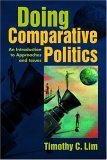
Doing Comparative Politics: An Introduction to Approaches And Issues
This systematic, user friendly, and refreshingly unusual introduction to comparative politics has not only been updated and refined in the third edition, but also fully revised to reflect the impact of major new developments in world politics. Designed to teach students how to think comparatively and theoretically about the world they live in, the book is organized around a set of critical questions—why are poor countries poor? why is East Asia relatively prosperous? what makes a democracy? how can we explain terrorism and genocide? what leads people to mobilize around a cause?—each the topic of a full chapter. These issue chapters are based on the solid methodological and theoretical foundation laid out in the first part of the book, and the entire text is enhanced with case studies and graphics.
336 pages, Paperback
First published January 1, 2005
Ratings & Reviews
Friends & Following
Create a free account to discover what your friends think of this book!
Community Reviews
Displaying 1 - 6 of 6 reviews

January 15, 2024
Dr. Lim's text reads like a conversation. It presents a series of examples, such as, for example, the economic rise of East Asia, then provides three perspectives on how these events can be viewed, i.e., through the lens of a Rationalist, a Structuralist, and a Culturalist theory. My problem with the book is that Lim devotes too much to Structural and rational choice theory while often relegating cultural theories as an afterthought, if not altogether dismissive of the school of thought, in much shorter sections than the former two. It feels too inherently biased.
I will say Lim is very persuasive, though.
I will say Lim is very persuasive, though.

March 23, 2015
a text book for a comparative theory class I had this semester.
it reads simply and is easy to understand. each section breaks down popular issues in the international studies world into three schools of thought -- rationalism (boo), structuralism (Marxists) and culturalism (the best).
some of these issues include:
-Capitalist Development
-Social Movements
-Economic Underdevelopment
-Transitions from Authoritarian Rule to Democratic Rule
there are many instances of the author repeating himself in this book and using the same kind of language to either save himself from searing criticism or to transfer from one section to another. yet the book reads like a conversation and not some holier-than-thou academic text, which I found refreshing.
I think this book is best for studying how rationalists, structuralists and culturalists study problems in the international community, not so much for any kind of factual reference.
it reads simply and is easy to understand. each section breaks down popular issues in the international studies world into three schools of thought -- rationalism (boo), structuralism (Marxists) and culturalism (the best).
some of these issues include:
-Capitalist Development
-Social Movements
-Economic Underdevelopment
-Transitions from Authoritarian Rule to Democratic Rule
there are many instances of the author repeating himself in this book and using the same kind of language to either save himself from searing criticism or to transfer from one section to another. yet the book reads like a conversation and not some holier-than-thou academic text, which I found refreshing.
I think this book is best for studying how rationalists, structuralists and culturalists study problems in the international community, not so much for any kind of factual reference.

April 20, 2012
The book is an easy-read by and large, not so filled with academese. The topics chosen are very relevant and interest-evoking. The discussions are well structured with the stressing of proper methodology a key theme throughout the book.
February 21, 2007
I hate the overuse of the word "democracy", and this book is kind of a democracy whore. Also, bad cover art, even for a textbook.

August 11, 2010
Reading this book again to prepare myself for the Fall quarter.

August 24, 2011
Not terrible for an undergrad textbook--but still far from sold on the idea that there even ought to be any sort of comparative politics textbook. Textbook=mature science. We're not there yet...
Displaying 1 - 6 of 6 reviews