An Introduction to the Life & Work of the Great Medieval Thinker
Aquinas (1224-74) lived at a time when the Christian West was opening up to a wealth of Greek and Islamic philosophical speculation. An embodiment of the thirteenth-century ideal of a unified interpretation of reality (in which philosophy and theology work together in harmony), Aquinas was remarkable for the way in which he used and developed this legacy of ancient thought - an achievement which led his contemporaries to regard him as an advanced thinker. Father Copleston's lucid and stimulating book examines this extraordinary man - whose influence is perhaps greater today than in his own lifetime - and his thought, relating his ideas wherever possible to problems as they are discussed today.
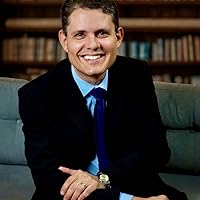
Frederick (Freddie) Charles Copleston was raised an Anglican and educated at Marlborough College from 1920 to 1925. Shortly after his eighteenth birthday he converted to Catholicism, and his father subsequently almost disowned him. After the initial shock, however, his father saw fit to help Copleston through his education and he attended St. John’s in Oxford in 1925, only managing a disappointing third in classical moderations. He redeemed himself somewhat with a good second at Greats in 1929.
In 1930 Copleston became a Jesuit, and, after two years at the Jesuit novitiate in Roehampton, he moved to Heythrop. He was ordained a Jesuit priest at Heythrop College in 1937 and soon after went to Germany (1938) to complete his training. Fortunately he made it back to Britain before the outbreak of war in 1939. The war made it impossible for him to study for his doctorate, as once intended, at the Gregorian University in Rome, and instead Copleston was invited to return to Heythrop to teach the history of philosophy to the few remaining Jesuits there.
While in Heythrop Copleston had time and interest to begin the work he is most famous for, his "A History of Philosophy" - a textbook that originally set out to deliver a clear account of ancient, medieval and modern philosophy in three volumes, which was instead completed in nine volumes (1975). To this day Copleston’s history remains a monumental achievement and stays true to the authors it discusses, being very much a work in exposition.
Copleston adopted a number of honorary roles throughout the remainder of his career. He was appointed Visiting Professor at Pontifical Gregorian University in Rome, spending half of each year lecturing there from 1952 to 1968. He was made Fellow of the British Academy (FBA) in 1970, given a personal professorship from his own university (Heythrop, now re-established in the University of London) in 1972 and made an Honorary Fellow of St. John’s College, Oxford, in 1975. He was Visiting Professor at the University of Santa Clara between 1974 and 1982, and he delivered the Gifford Lectures at the University of Aberdeen between 1979 and 1981. His lectures were published under the title Religion and the One, and were largely a metaphysical tract attempting to express themes perennial in his thinking and more personal than in his history. Gerard J. Hughes notes Copleston as remarking "large doses of metaphysics like that certainly don’t boost one’s sales".
He received honorary doctorates from a number of institutions, notably, Santa Clara University, California, University of Uppsala and the University of St. Andrews (D.Litt) in later years. He was selected for membership in the Royal Institute of Philosophy and in the Aristotelian Society, and in 1993 he was made CBE.
Copleston’s personality saw him engage in the many responsibilities bestowed upon him with generous commitment and good humour.
WOULD YOU LIKE TO SWING ON A STAR? CARRY MOONBEAMS HOME IN A JAR? AND BE BETTER OFF THAN YOU ARE?
The summer of 1970 was idyllic for me. I worked at a university library, not at my own alma mater, but further north. I had access to gadzillions of books - and that to me was paradisal.
That was when I read this book.
Copleston, like Aquinas, writes clearly and concisely. Both believed our books’ value is in keeping us on an even keel - the so often-ignored Straight and Narrow Road. Reading it, I felt serene - elevated to heavenly heights of thought. And in that ethereal library atmosphere, it cleared out my mind’s cobwebs.
Temporarily!
For I had a LOT to learn...
But also, in that summer break before my Junior year at college I decided to even up my course load quota by taking an evening course-for-credit there at Ontario’s Carleton University.
Taking the course gave me comprehensive privileges at that well-stocked (to accommodate us ‘highly literate’ Baby Boomers? heh heh!) college library.
What a treat!
Each course night, before or after class, I’d attempt to study a bit (the course, given in French, was often incomprehensible to me, though I passed) - but, more important for me personally, I tried to gorge my then-voracious appetite for reading.
I already knew Father Copleston for his level-headed debate on the Existence of God, in my Freshman philosophy reader, and also greatly admired his clear and accessible, though monumental History of Philosohy, a seventies classic among scholars.
And here in this book he makes that old metaphysical fussbudget, Aquinas, easy enough for a primary schooler! He wasn’t at all the inaccessibly Olympian Thinker I had always thought him to be.
I devoured it, and dreamt someday of treating myself to a reading of the complete Summa Theologica, only a few shelves down from that reading room.
Back then, we weren’t spoiled like modern kids when we read it, because we didn’t then have Peter Kreeft’s wonderful A Summa of the Summa, one of a few of his insightfully epochal intros to it. With all its carefully-chosen excerpts...
But those were golden years indeed!
The world often, in a young man’s eyes, seems to stretch out before him in an endless scintillating panorama of promise, beckoning him to ever new heights of achievement and glory.
But the world’s intentions are in fact quite disappointingly otherwise.
So Conrad’s Marlowe, lounging in a deck chair on an old ship of the sea somewhere in the shipyards of Victorian London - his wealthy and influential friends listening to his memories in rapt silence and a sense of lingering regret - as he weaves for them his fantastical yarns of dashed youthful hope...
My dream was not to be.
The brutal reality of life uncaringly intervened.
But looking back now on those golden years, I’m grateful to have been given that earlier experience, though, instead of slogging through a Vietnamese rice paddy - which REALLY could have happened - given my dual citizenship!
Thanks be to God.
And, Father Copleston - May you Rest In Peace - I’m also grateful to you for this wonderful, wonderful book! So clear and readable.
It will always show its readers just how simple the way to clear intellectual Faith really IS - if you preserve it ALL THE WAY THROUGH your attendance at that School of Hard Knocks we call life!
You know, throughout his life Aquinas insisted that the Highest End that we humans can achieve is quite simple:
It’s the Vision of God.
And when at the end of his life Aquinas had a tremendous vision that made his Magnum Opus seem “like so much straw” -
Though naysayers diss it as a nervous breakdown or a stroke -
Thomas Aquinas (1225-1274) was an Italian Catholic friar, philosopher, and theologian of the Middle Ages of the Dominican Order. Pope John XXII canonized him. He is the author of the "Suma Theologica," where he exposes the principles of Catholicism. Thomas Aquinas was born in the castle of Roccasecca, in Aquino, in the kingdom of Sicily, in southern Italy, in 1225. His family, of noble origin, stood out in the service of the Emperor of Germany, Frederick II. His parents hoped their son would continue the family tradition and become a valued military leader or a skilled statesman.
Childhood and Training
From the age of 5 to 10, Thomas Aquinas took his introductory course with the monks of the nearby town of Monte Cassino. At that time, he showed signs of unusual intelligence. In 1239, he was forced to return to his family when the Emperor expelled the monks. Afterward, he was sent to the University of Naples, where he studied the liberal arts. At the age of 15, Thomas Aquinas decided to enter a convent. He knocked on the doors of the Dominican Order, an order that criticized traditional monastic life in favor of a preaching and teaching practice. Considered very young and immature, the young man begged, pleaded, argued, and was welcomed by the order with such conviction.
Prison and escape
Upon learning of Tomás de Aquino's decision to join the Dominican Order, his father sent his faithful servants to bring him back to Roccasecca. Knowing of the plan, the convent's superior sent Thomas Aquinas to Paris, but the young man was reached by his father's emissaries, who kept him prisoner in the castle tower. The following year, Thomas Aquinas escaped and returned to the convent in Naples. At 17, he took religious vows and became Friar Tomás. Thomas Aquinas had chosen the Dominican Order, as he did not want to be locked in a cell and withdraw from the world, but to spread the Christian faith. In 1245, he entered the University of Paris, one of the great centers of the Middle Ages' theological studies. After four years, he became a teacher.
Main ideas of Thomas Aquinas
After seven years of teaching and meditating in Paris, Thomas Aquinas began to elaborate his Christian doctrine, which would later be accepted by the Church and known as "Thomism." Initially, Thomas Aquinas reviewed the Church's attitude towards Aristotle's philosophy, which was rejected as a pagan thinker and the other Greek thinkers of the period before Christ. In the Middle Ages, if it weren't for the Arab philosophers like Averroes, who translated and disseminated Aristotle's works, they would have disappeared. But the interpretation that Averroes gave them in his "Commentary" directly conflicted with the doctrine of the Church since he denied Revelation and thought that only through reason could man arrive at the knowledge of God.
Summa Theologica
After studying Aristotle's philosophy, Thomas Aquinas reached his conclusions:
First: Aristotle's philosophy was not necessarily pagan because the philosopher was born before Christ – after all, the Greeks, especially Aristotle, also had a conception of God. Second: The reason given to man by God does not clash with faith. On the contrary, it can only lead to the truth if well used. Third: Divine Revelation guides reason and complements it. The conclusions of Thomas Aquinas were gathered in his main work, "Suma Theologica," written to prove that human reason is not opposed to faith. In the Summa Theologica, Thomas Aquinas makes a clear exposition of the principles of Catholicism, which were accepted by the Church and remain valid. Aquinas' studies made him famous even during his lifetime. In 1261, when Pope Ubald IV instituted the Chair of Theology at the Superior School of the Pontifical Curia in the Vatican, he entrusted it to Friar Thomas Aquinas. Eleven years later, he was invited to reorganize the University of Naples. Pope Clement IV proposed his nomination for Archbishop of Naples then, but the invitation was denied. He preferred to remain a Dominican friar and dedicate himself to his studies.
Death
In 1274, Thomas Aquinas fell seriously ill on a trip to attend the Second Council of Lyons in France, which aimed to remedy the split between the Greek and Roman churches. Knowing that he would not be able to heal or reach his destination, he asked to be taken to a Monastery in Fossanova, a small town near where he was born. Thomas Aquinas died in Fossanova, Italy, on March 7, 1274. He was canonized on July 18, 1323, by Pope John XXII. He was recognized as a Doctor of the Church in 1567. The Catholic Church celebrates him on January 28, when his relics were transferred to Toulouse.
By the time F.C. Copleston wrote this book on his favorite medieval philosopher, which was in the 1950s, it was becoming fashionable for philosophers to dismiss any analysis of God, the soul, or the afterlife. Now, postmodernism and materialism hold court. Descartes and even Kant and Hegel get criticized for a system of philosophy based on an assumption of a God, or at least a unifying Absolute. And the poor medieval philosophers, like Aquinas, don't have any chance at legitimacy in the eyes of a David Lewis or a David Armstrong or a Jean-Paul Sartre. The modern philosopher may not doubt that Aquinas was a genius, but they point to the fact that he was a theologian as indicative of a fatal flaw. The accusation, loosely stated, is that Aquinas had an implicit bias--he came to the conclusions he wanted in the first place. In other words, wishful thinking.
But can't someone with a belief in God have rational evidence for such a belief? Let their system of philosophy be considered on its own merit. To dismiss such philosophy outright is also to begin with an assumption. The postmodernist, the physicalist, and the materialist fail to understand that their conclusions were influenced by their own wishful thinking! Perhaps philosophers would be better off admitting that they are not disembodied minds, and that their thoughts do not operate in a vacuum. Everyone is influenced by prejudices, passions, and experiences, no matter how mindful we try to be when making judgments. If anything, Thomists do tend to understand this better than most philosophers because of their overall rejection of scepticism, and are generally interested in how non-Thomist ideas add to our understanding--preferring to highlight the positives of other schools of thought than to find fault.
Yes, Aquinas was Christian. He was canonized as a saint after all. But Copleston explains that to say his metaphysics was "Christian" is not completely accurate. It's like saying that a microbiologist who is Christian is practicing Christian microbiology. Aquinas was analyzing Christian theology through the lens of metaphysics. And one of the conclusions he came to was that philosophical reflection does lead us to logically to God. However, Aquinas clarified that though we can conclude that God EXISTS, we cannot know WHAT God is.
Aquinas was kind of an early empiricist, but not in the way Locke and Hume were. He believed that through our observations of the world and relationships of things to each other, we can have natural metaphysical knowledge. Our brains are wired that way. As little children, we may not be able to know what a dinosaur is if we've never seen one, but if it was described to us, we'd be able to come up with some image based on our ability to connect previously encoded memories, shapes, and symbols. The description of the thing need not say anything about whether or not the thing exists. For Aquinas, the essence of a thing is not the same as the existence of a thing. We are able to have an understanding that finite things point beyond themselves to manifest the existence of something on which they depend. Therefore, through philosophical reflection, we can trace back causes to a first cause upon which all things depend, which would be God. But Aquinas, despite already being a Christian, admitted that the existence of God is NOT self-evident. It is through systematic analysis of sense experience that one can come to verify the validity of the proposition that God exists.
What makes Aquinas so neat is that philosophy has been arguing for and against his very basic premise ever since. When I read analytic philosophy of the last thirty years, they're STILL talking about this whole idea of the first cause. Aquinas' thinking was very elegant and hard to dismiss.
But people do try to dismiss Aquinas because they consider his work to be theology. It is true that the Summa Theologica is exactly what it says it is--a theological summary, at least from a Christian perspective. But what made that book so unique is that Aquinas separated out what in Christian thought is in the realm of religion versus what can be deduced as truth from objective philosophy. There are some ideas, like the role of Jesus Christ as part of a Trinity, that are matters of revelation and must be taken on faith, and thus fall into Christianity as religion. But then there are ideas within that religion that can be figured out through philosophical analysis. Philosophy isn't religion and vice versa, but it doesn't mean that there isn't some crossover between the two studies. To say that the techniques of one can't assist the other is like saying psychology and psychiatry are completely unrelated. And despite the fact that he was a theologian, Aquinas was not a digital-thinking Bible-thumper. Based on his moral and ethical analysis, he would say that the invitation from Jesus to give up all worldly possessions to the poor would be extremist, irrational, and not virtuous in someone with kids to feed.
What IS strange about Aquinas is not his Christian bias, but the fact that he was influenced by Aristotle. Aristotle was a materialist. That doesn't seem compatible with a belief in God or a soul or anything of the sort that could be called Christian. In fact, Aristotle's works were the subject of much censorship by the Christian Church for this reason, a subject brought up in Umberto Ecco's "The Name of the Rose". Aquinas had a huge role in rediscovering Aristotle after all those centuries. So what gives?
This brings me to my only real complaint about this book. Copleston doesn't really address how Aquinas reconciled his affection for Aristotle through his own philosophy. He does say that Aquinas borrowed the humanistic elements of works like the Nichomachean Ethics, but came to his own conclusions regarding the existence of God and soul. I would have liked more clarification on how Aquinas may have logically diverged so radically from a philosopher he defended. Instead, Copleston seems to spend a lot of time in apology, often beginning sentences with "But Aquinas did not think..." or "Aquinas was not trying to say..." or "Aquinas did not mean...". Well, that's nice, but what DID Aquinas think? What WAS he trying to say? What DID he mean? Copleston does a overall great job giving us these answers, but he too frequently approaches Aquinas from the negative as if to debunk any potential detractors, which got very repetitive and confusing. I think this is because Copleston was, in fact, a Thomist, and so he had some difficulty approaching some of the weaker elements of Aquinian thinking which are vulnerable to criticism. No, I don't think Copleston was guilty of "wishful thinking", but I found he was not always scrupulously objective in his analysis.
It is when Copleston is simply straightforward in his distillation of the major themes from Aquinas' lengthy volumes that he really shines. He has a knack for summarizing and explaining difficult philosophical material. After all, he did write a comprehensive series of books detailing the history of philosophy from the ancients to the modern. So if you have a novice to moderate understanding of philosophy, you'll get a lot out of his books.
Overall, this is the book that truly helped me appreciate Aquinas, and so much of the great man's philosophy still influences me at least on a subconscious level today. I first read the "Summa Theologica" back in my twenties, and I have reread Copleston's "Aquinas" three times since. The reason I find myself always falling back to Copleston is because I keep running into Thomist ideas in other areas. For example, I detect an analysis of Aquinas' theory of natural moral law in one of my favorite science fiction novels, "The Amphibians". Recently, I read "The Education of Henry Adams," which is supposed to have been largely inspired by Aquinas and his views on motion and multiplicity. At first, I had difficulty understanding how Henry Adams utilized Aquinas at all. So I pulled out my battered and underlined Penguin edition of Copleston's "Aquinas" to find the answer, and the next thing I know, I'm reading the whole thing again. That's a pretty high recommendation. And what I discovered on this go-around is that Henry Adams did manage to use Aquinian philosophy to make some stunning predictions about the world we are living in today--over a hundred years ago! This is because the best philosophy gives us a framework for understanding an incredibly complex world that is always changing and moving forward. Philosophy works on the abstract plane, and science fills in the framework with the concrete. Therefore, philosophy is preparatory to, and a stimulus of, empirical scientific research.
If you want a fairly short summary of Aquinas' basic metaphysical principles that will help you understand the fundamentals of his work, this is still about as good as it gets. Even if you are not a philosopher or a Catholic, I think the points discussed here, after all these centuries, still have great value for the religious and secular alike.
This book was just incredible. Copleston does a superb job outlining St. Thomas Aquinas' philosophy and theology for anyone looking to get into the great mystic Saint. It wasn't (in my opinion, anyway) the easiest book to read, but it was readable. I mean that there were times where I was unfamiliar with a certain topic or theme and I learned even that much more. There were times that seemed to have some fluff, but not so much to make me want to put this book down by any means. Bisbop Barron recommends this book as a Segway to Aquinas, and I'd agree that this is a great way to learn more about the angelic Doctor and his theology and philosophy. I would 100% recommend this book to anyone looking to get into Saint Thomas Aquinas.
I don't know if it takes a dull person to want to study Aquinas, or if the study of Aquinas makes one a dull person. Which is in many ways unfortunate, because Aquinas has interesting things to say about interesting topics. This is my second foray into the Doctor's thought, and the second time I've come away slightly smarter, slightly more informed about philosophy and Medieval theology, and quite a bit disappointed in the prose style of everyone involved.
In this short book (~270 pages), F.C. Copleston engages many of the philosophical topics in Aquinas of greatest interest to modern readers. Metaphysics, apologetics, anthropology, ethics, sociology, and cosmology are all explained with brevity (relative to Aquinas himself) and elegance, if not in a way that is particularly engaging.
The big philosophical take-away from this is the two-sided approach Aquinas takes to philosophy: it is to be grounded upon the common experience of the common man, and it is to be explored by means of common sense. So, for example, if we want to ask the question "is there a God?" The philosophical approach will be to begin with what we all know and experience in everyday life, and then reflect upon that knowledge. As one example, we all know that an object in motion requires the influence of another object to start it moving. Yet, we also all know that these chains of motion (I use a pool cue on the cue ball, the cue ball strikes the 8 ball, which strikes another, and so on) are not infinite in nature. That is, there was a starting point. Therefore, common sense tells us that there must be a "first mover." The other arguments follow similar paths, which I have to admit was not something I picked up on the first few times I was exposed to Aquinas' thought. While I've been taught his five arguments for the existence of God several times, I've never been taught that he draws them (and all of his philosophy) from common experience. Of course, had I actually done the assigned reading at the time I may have picked up on that...
This method carries over into all of his thought- what is a law? Well, we know from common experience. What is the nature of existence? Why do we talk about people as having both a body and a soul? And so on.
I should point out that Copleston's book focuses mainly on Aquinas' theology. If you want his theology, you'll have to look elsewhere.
Like I said, this book is fairly interesting in its substance. It's just the writing that drags it down a bit (but not much, certainly not as much as a goodly number of other philosophical works out there). Yet, I'm not unhappy I took a couple of weeks to read this. It was well worth the time and effort and will undoubtedly work its way into my lectures on Aquinas.
So, if you're going to study Aquinas and just can't force yourself through the Summas, this is a good place to go. (I've also been told that Peter Kreeft's Summa of the Summa is good, as is his Shorter Summa.)
I recently read A Summa of the Summa , edited by Peter Kreeft, which contains the essential philosophical passages of Aquinas. As helpful as Kreeft’s footnotes were, I found this to be a useful follow-up.
He begins persuasively, encouraging the reader to not dismiss metaphysics out of hand, at the same time appealing to modern empiricists by showing Aquinas’s emphasis on sense-perception. The most rational of philosophers, when they instinctively use images in processing ideas, show that they are not free from the senses.
Copleston’s comments on Aquinas’s metaphysics were interesting to me because he notes that, while there is a natural inclination to think of things as existing and acting “in the world” (as though the world is a containing entity), for Aquinas, the world IS the system of interrelated things. I guess I have tended to follow natural inclinations. Incidentally, at this point “We are the world” started playing in my mind. Because of my brain’s wacky connections, St. Aquinas is now forever associated with Michael Jackson.
While reading A Summa of the Summa, it was not always clear to me how Aquinas was using some of Aristotle’s terms and Copleston’s explanations, especially on existence, essence, and form were mostly very clear. “Essence is the potential metaphysical component in a thing (it is that which is or has being), while existence is the act by which essence has being. This distinction is not a physical distinction between two separable things; it is a metaphysical distinction within a thing.” Also interesting is how, in these terms, existence is “limited” by essence. And the point of all of these distinctions is to “render explicit the implications of ordinary knowledge and ordinary language.”
In the middle of this, he states that substantial forms, apart from the soul, cannot exist by themselves. I wondered why the soul is an exception? Understanding Aquinas’s emphasis on sense-perception as the beginning of knowledge, if our “experience” of the soul contradicts what we have observed about other substantial forms, what do we make of this? Or maybe I still don’t understand his terms. ~sigh~
On being, one thing Copleston points out in the Metaphysics chapter is that Aquinas refers to the act of being as “perfection”, the actuality of all acts. In the chapter on “God and Creation” his comments on evil as the privation of good, and how Aquinas thought of the simple act of being as “good”, made me wonder how these things apply to the old Christian conception of Satan. Copleston’s only remark is, “Aquinas does not mean to deny the existence of Satan. But for him Satan is not an ultimate being at all, but a creature. Created good, he remains good, if considered simply as a being.” This really goes against the grain and I wish he had discussed this a little more.
From metaphysics, God, and creation, he moves on to “Man: Body and Soul” and “Man: Morality and Society”. A lot of this is a bit repetitive if you have read Aristotle’s On the Soul or Nicomachean Ethics. Still, I thought Copleston’s comments were insightful and I am grateful that he drew my attention to things I had not noticed while reading the Summa. Copleston places Aquinas appropriately in his surroundings while showing how he is relevant today. He maintains a very Aquinas-y objectivity throughout the book, though he does close with a rather promotional chapter on thomists. It is a good companion to the original text.
Strangely enough, reading this book has forced me to look again and how I feel about Richard Dawkins. I read The Selfish Gene twenty five years ago, and was immediately impressed. Not so much with the science, which was not actually Dawkins' own; but with the clarity with which the science was expressed. (For a good account of who developed the science in the Selfish Gene and how, I recommend A Reason for Everything) I was also impressed with the thoroughness with which the implications of the science were brought out. Then the majority of people who were committed to the synthesis of evolutionary and genetic theory were committed to it as a matter of common sense, rather than as a matter of ideology. A great deal of the original argument over 'The Selfish Gene' was between people who accepted evolution via genes, but hadn't really accepted its implications. The argument between Dawkins and theists came later.
I read the Selfish Gene and thought I agreed heartily with what Dawkins was saying. I read The Extended Phenotype, and thought that was not only original but in accordance with my own vaguely pantheistic beliefs. When the Blind Watchmaker came out, I didn't understand why Dawkins had started picking fights with creationism, the belief in a God who created the universe. I thought that as long as one didn't have a literal belief in the creation story in Genesis and elsewhere, there was no conflict between the theists' account of biological diversity and the biologists'. God may not have individually designed each of the species we see around us, but he could have created the fundamental physical and chemical laws that enabled their biological evolution. So I never read 'The Blind Watchmaker', or 'River out of Eden' or heaven forbid, 'the God Delusion': I just didn't see the point. But having read this book on Aquinas, I just might do so. Because I guess now, that the real argument between Dawkins and the theists is not about biology, it's about what kind of universe we're living in; a mechanistic universe or a teleological one, and what that implies for us to live a good life.
A teleological universe is unfamiliar to me, the idea in Aquinas - and I suppose in Catholicism - that 'we are on a mission from God'. For all of my adult life I have seen myself living in a purposeless, value neutral universe, one that forces us to decide upon our own values and try to live in accordance with them. Our values and our mission are constrained by our human nature, our culture and our individuality, and I have seen no evidence of a 'supernatural' force imposing values and a mission from outside of ourselves.
My situation wouldn't surprise Aquinas, whose empiricism led him to argue that neither do we enjoy any intuition of the divine essence, nor is the proposition 'God Exists' self-evident or analytic (pg 109). Even so, Aquinas accepts that the empiricist way to God is difficult: "The first cause surpasses human understanding and speech. He knows God best who acknowledges that whatever he thinks and says falls short of what God really is'. (pg 131). So it's not so surprising that I may have overlooked God. This Socratic agnosticism I also find a completely unfamiliar aspect of Catholic thinking: what appears more typical is the priest claiming both a special knowledge of, and a special relationship with God.
Aquinas's apprehension of God's goal for man came to me most clearly, not in the section on God and Creation, but in the section on Morality and Society, and Aquinas's account of Natural Law. My view of natural law is no more sophisticated than my view of human values: the collective values that human societies express in law derive from our biological, cultural and individual natures. But for Aquinas natural law derives from our nature as rational creatures, rational values should override the animal impulses in our nature. "For law is defined as an occurrence of reason, and irrational creatures, being irrational, cannot recognize and promulgate to themselves any natural law. ... And the term is applicable, not to the natural tendencies and inclinations of man on which his reason reflects, but to the precepts which his reason enunciates as a result of this reflection." These precepts are, of course, the existence and nature of God, and the rational demands he makes of us.
Before reading this book, I was interested in discovering the relationship between Aquinas's and Aristotle's thought. Obviously the strict empiricism is derived from Aristotle, and so are the virtue ethics. But Aquinas believes Christ asked us to aspire to more than 'animal' happiness, and offered us a new set of virtues to help: faith, hope and charity. These transcend the (Aristotelean) human virtues, for they are virtues of a man in so far as he is made a sharer in divine grace" (pg 209). And it is the sharing in divine grace which is the ultimate telos for humanity. Dawkins' view of the universe excludes any such telos, and that, irrespective of any claims about the nature of the origin of life is the real issue theists should have with him.
A great book that gives an overview of some of the most important elements of Thomas Aquinas's approach to philosophy and theology. Written in the 1950s Copleston interacts with many of the philosophical systems and views that were predominant including postivism, Hegel, and Heidegger. This book is a great introduction to Thomism and is worth reading.
This is a tough one to rate. I'm going with three stars in light of the word 'introduction' being on the cover. You can consider this an 'introduction' to Aquinas if you are already acquainted with the overall history of Western philosophy, especially the 'linguistic turn' of the twentieth century and the subsequent fall from favor of metaphysics. If the latter half of that sentence didn't make sense then you've got some homework to do before tackling this book. I will also personally deduct a point for Copleston's style - at times admirably clear, at others irritatingly pedantic and sometimes hopelessly opaque. If you are old enough to have had the experience of tuning in a distant TV station by attaching aluminum foil to a pair of rabbit ears and then trying to find the optimum position of the antenna through improvisational yoga only to have an admirably clear picture dissolve into howling white noise due to an unfortunate sneeze you'll have some idea of my experience with this book.
I cannot devise any meaningful criticism of or objections to this book. As with Copleston's other works, it excels. It's well-written, entertaining, and informative. It finely balances its coverage of the various objects of consideration in Thomistic philosophy, including ethics, political philosophy, and metaphysics.
Unlike his multivolume history of philosophy, in this book Copleston seems to address chiefly general, laymen audiences, and does not have in mind Catholic seminary students as its foremost readership. I don't actually consider this a drawback of that series, but those less compelled to read more esoteric, academic language would profit more greatly from reading this book to gather for themselves the elementary positions of Thomistic philosophy than, for example, reading the section on Aquinas in volume two of A History of Philosophy.
I've already happened to have read many uncommonly good books this year, but even among those, this is surely the best I've yet read.
I adore Aquinas. I first read a beautiful exegesis of his work in Etienne Gilson’s great work on Medieval Philosophy. Frankly, even though that was written nearly a century ago, it is still, word for word, the best book written on the subject.
If you’re interested in St. Thomas and medieval thought, start with Gilson. I am not a formal philosophy student but I found Gilson’s language much easier to understand than this author’s. That’s almost funny when you realize Gilson wrote in French in 1920 and Copleston is a contemporary English philosopher.
I am sure there is a definite audience for this book but I am clearly not that audience. I get the sense that Copleston’s work is intended for actual students of philosophy, both past and current. If you’re not such a person, try Gilson.
Having been forced to study Thomistic psychology in medical school I have always had a dim view of St. Thomas Aquinas. Trying to understand Descartes led me to want to know more about what he was reacting to and in this way back to Aquinas. Coppleston's presentation is clear and concise. I now have a better idea about Aquinas' ideas about the soul and the passions. I can't imagine a general reader getting into this book. After al it sat on my shelf for 20 years before I found a reason to read it.
Copleston does a great job of presenting Thomas' thought in a clear, consice manner. He tackles Aquinas' metaphysics (a topic that modern man should spend much time on but which is all too often ignored), his view of God and creation, and his anthropology. The section on man and society is quite interesting as Copleston points out Thomas' perhaps not so implicit understanding of civil authority coming from the governed.
I would hardly call this book an "introduction" to Aquinas' life and general work. To me, an introduction is something a casual reader can pick up and work through, but I can't imagine someone without at least a couple philosophy classes getting much out of this book. Although it's been a while, I've read my own share of philosophy, but I felt like there was a lot in this book that was over my head - probably because I've been out of the game so long.
And that brings me to another point on the title - this book only presented Aquinas' philosophy, which would have been fine for a work titled something like: "Aquinas: A Presentation of his Philosophy." For one of the greatest theologians in history, and someone who is known for his theology more than his philosophy (at least in my experience, but maybe that's because I have spent much more time reading theology than I have philosophy), I think an introduction to his work would need to spend some time with his theology. But that wasn't the point of the book, and maybe the author would have chosen a different title if it were left up to him.
I don't think I'll explore specifics of the book beyond what I've already shared here, mostly because I don't think I could do them justice, as I explained above. If I had read this book five years ago, I would have absolutely loved it. I enjoyed it on some level, but I think this shows me how my interests have changed over the years. I don't engage philosophy in ways I used to. It was fun to return to it for a time, but now my interests have moved more toward psychology than philosophy as a companion to theology. Nevertheless, I do think this book helped me remember some of the ways reading a lot of philosophy shaped the way I think and understand concepts. It also reminded me just how much the angelic doctor has influenced my own thought.
Overall, while this book wasn't really what I was expecting or looking for, I thought the writing was excellent, both clear and concise, though written more for a philosophy student than a casual reader looking to learn some basics about Aquinas.
F.C. Copleston’s "Aquinas" is an authoritative, brief, and well-written overview of Aquinas' philosophy: his metaphysics, natural theology, ethics, and theory of the human person. Medieval terms and concepts are lucidly explicated. The author expertly places Aquinas’ thought into historical perspective, but does not mire the reader in the era’s more arcane philosophical controversies. “Aquinas” while a sympathetic interpretation, does point the reader toward some possible avenues for critical analysis.
In short, "Aquinas" is an admirable introduction, and a laudable compliment to Copleston’s “Volume 2:Medieval Philosophy.” Along with Josef Pieper’s “Guide to Thomas Aquinas,” this book allows the reader to effortlessly grasp Aquinas as philosopher. While the author notes Aquinas’ theological import, it is not the focus of the present study. A highly readable book, by a truly great historian of philosophical thought.
Apesar do cristianismo e o meu ceticismo de agnóstico não serem os melhores amigos, a verdade é que há temas da filosofia cristã (e religiosa, em geral) que sempre me fascinaram: as provas da existência de Deus, a sua natureza, o que podemos racionalizar do divino desde as nossas limitadas capacidades... e portanto, este resumo do pensamento de S. Tomás foi para mim uma leitura interessantíssima, ainda que uma em que nem sempre concorde com o autor. Os argumentos de S. Tomás são invioláveis? De maneira nenhuma. Nenhuns são, afinal de contas: nem S. Tomás pode provar definitivamente que Deus existe, nem a filosofia ateia pode provar definitivamente que ele não existe. Mas engenhosos, inteligentes e fascinantes, isso são. E valem a pena ser lidos, ainda que por olhos descrentes.
This was perfectly organized. Perfect length for an introduction to St. Thomas, and the topics really couldn't have been divided better by chapter. Father Copleston has this excellent way of expressing what St. Thomas may or may not assent to today, what he claimed explicitly in his writings, what he implied, and what he disagreed with. Fr. Copleston also takes great care to emphasize that Aquinas' theories are metaphysical, not empirical. His place in the history of philosophy and in the Thomistic schools of thought of the 20th century is made particularly clear. This is the go-to introduction to St. Thomas Aquinas' philosophy.
Excelente introducción a la obra de Tomás de Aquino, el filósofo, no tanto el teólogo. El autor hace un gran trabajo al clarificar en todo momento la distancia y diferencia entre la teología y la filosofía aquinatense. Al ser una obra que se declara como introductoria, hace un trabajo al delinear las líneas principales de los distintos ámbitos de estudio del tomismo, especialmente en lo que a moral y sociedad se refiere.
I was expecting a biography which was my mistake. The book is for a very small set of people (thomists) that want to understand Aquinas beliefs without a primary focus on his faith.
I don't think you can separate him from his faith and I was pleased to see the author's efforts fail in this regard.
Siempre es un placer leer a Copleston. Recomiendo ampliamente este libro para entender a Santo Tomás y romper con el mito de que en la Edad Media no hubo avances en el ámbito del pensamiento.
Essa é a melhor introdução, dentre as mais básicas, à filosofia de Tomás de Aquino. Não se trata de apresentar a vida de Aquino, mas sim os principais aspectos de seu pensamento. No prefácio, Copleston faz um resumo da vida de Aquino em duas páginas. E já na introdução adentra ao pensamento de Aquino. A introdução (capítulo I) apresenta as principais teses do pensamento do filósofo medieval. No capítulo dois, Copleston discute a concepção de metafísica, ciência, substância e essência em Aquino. No capítulo seguinte, o autor trata da existência de Deus, cinco vias, atributos de Deus, o problema do mal, a distinção entre ato e potência. Em seguida, Copleston apresenta a concepção de homem para Aquino, discutindo a relação entre corpo e alma, teoria do conhecimento, intelecto e vontade, liberdade. No capítulo cinco, Copleston trata da ética em Aquino, abordando o tema da moralidade e sociedade. Nesse capítulo, o autor apresenta tópicos como bem supremo para Aquino, razão, intenção, hábitos, lei natural e a relação entre Estado e Igreja. O último capítulo é sobre os desenvolvimentos do tomismo a partir do século XIX e o diálogo com áreas como ciência, filosofia, política, ética, etc. Copleston faz várias citações de Aquino, levanta questões sobre alguns elementos de seu pensamento e apresenta possíveis respostas subjacentes aos escritos do pensador medieval. Esse livro é uma grande contribuição.