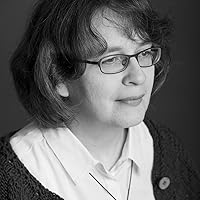
Gretel helped to protect fugitives hunted by the Gestapo, hid her Jewish doctor in her cellar and passed to the resistance secrets learned from her work on the Enigma encryption machine.
Finally arrested in 1945, she was liberated as the British Army advanced towards Hamburg. After the war, Gretel fell in love with a British officer. When he was transferred back to England, her determination and bravery were tested once more.
Claudia Strahan was at a friend’s house in London, listening to music one day, when a cross neighbour knocked on the door to complain about the noise. She was 78 years old, and spoke with a German accent. Claudia had been born in Germany and so asked her a little of where she came from. The cross old lady proved to be so interesting, Claudia went to have coffee with her. The more she discovered about Mrs Mahoney’s life, the more fascinated she became. Nine years later, the two published this extraordinary memoir of Mrs Mahoney’s life in Hamburg during the Second World War. Gretel Wachtel, as she was then, helped to protect fugitives hunted by the Gestapo, hid her Jewish doctor in her cellar, and passed secrets she learned from her work on the Enigma encryption machine to the German Resistance, and was finally arrested by the Gestapo.
She was just an ordinary German girl who did extraordinary things to try and fight the cruel Nazi regime under which she lived. Her verve, courage, and humour shine through in every word … one can just imagine her as a feisty old lady, telling her stories to Claudia over kaffeeklatsch, remembering one story after another through her young visitor’s eager questioning. A great memoir of one woman’s extraordinary life.
Anything even vaguely biographical can be so challenging to review; it’s someone’s life afterall. That being said, simply because a work is inspired by a true story does not in any way, shape or form render it untouchable or immune to criticism. So for anyone poised to attack me with that specious argument: your attempts will be in vain.
This one should in theory have been very interesting – the wartime experience of a young German woman trained to work with the infamous Enigma Machine and her own personal resistance story.
Alas, this for me is an example of how powerful source material disintegrates in a narrative medium that it does not suit. (It carries much of the same sentiment I have towards The Tattooist of Auschwitz - see my review here - but is certainly not such a travesty as that.) A Different Kind of Courage reads more as a piece of ventriloquism than a biography that conveys pertinent acts of resistance in their full reality, especially in their historical and political context. The prose is at times stilted and lacks economy in a way that dilutes the potential of its source, centering to a greater extent on sexual exploits and womanly wiles. The focus is misplaced.
Ultimately, I wasn’t engaged; I skim-read from about halfway. The execution simply doesn’t do the concept justice.
I found this story to be very moving indeed. It is truly very well written and extensively researched. It is very difficult to fully appreciate just what dreadful difficulties and grusum situations people had to endure during the war. Let’s hope the young people of today are able to appreciate, and be greatful for, the many sacrifices made by their parents and grandparents.
German resistance was not recognized as a united resistance movement during the height of Nazi Germany, unlike the more organised efforts in other European countries.The German resistance consisted of small, isolated groups that were unable to mobilise mass political opposition. This included individual attacks on Nazi authority, sabotage, and the disclosure of information about Nazis to the Allies. One strategy was to persuade leaders of the Wehrmacht to stage a coup d'état against the regime; the 20 July plot of 1944 against Hitler was the catalyst.While it cannot be disputed that many Germans supported the regime until WWII's end,beneath the surface of German society there were also currents of resistance, if not always consciously political.German historian Detlev Peukert,called this phenomenon "everyday resistance." Everyday resistance is based on the actions of people in their everyday lives. Everyday resistance is perceived to be the most common form of resistance to oppression. This particular form of resistance is a way of undermining power in a matter that is typically disguised or hidden. The acts of everyday resistance are considered to be relatively safe and they require either little or no formal coordination.Everyday resistance can be understood as exploited, oppressed people undermining power as a way of surviving,holding onto their dignity and executing agency.Opposition could be passive—absenteeism, malingering, spreading rumours, trading on the black market, hoarding and avoiding various forms of state service.Sometimes, it could be active, such as issuing advance warnings, hiding people, or helping escapees,or turning a blind eye.Postwar, voluntary relationships between the “occupiers" and "occupied" which included friendships,romance,sex work and supply partnerships.Intermarriages were conducted despite bureaucratic and legal obstacles.The brides needed to undergo medical and ideological examinations.Some German war brides settled in Britain and remained married for life.Others,however, found it difficult to cope with cultural differences and unmet expectations and returned home,separated or divorced.
Francina válka a Moje tajná válka s Hitlerem mají dost společného. Obě knihy jsou o druhé světové válce. Obě jsou podle skutečnosti. Hlavními hrdinkami jsou dvě dívky. V jedné figuruje židovka a v téhle Němka. Franci... tu napsala hlavní autorka a byla i tak vydána, tuhle napsala profesionální autorka, která knihu sepsala podle vyprávění a daných podkladů. Rozdíl je znát. Ona vypsaná ruka i prostě ten talent na psaní. Má tajná válka byla více příběhová. Obě knihy jsou velmi zajímavé a skýtají originální pohled. No s Gretel jsem ne vždy sympatizovala. Ne vždy jsem s ní souhlasila. Některé věci mi nešly moc pod nos. Taky mi přišlo, že se místy i chvástala a dělala hezčí, lepší a tak. Nebo ji takovou dělala ta autorka. I proto dávám 3*. To neznamená, že si knihu nemáte přečíst. Pokud se o druhou válku a skutečné příběhy zájímáte, může to být pro vás přínos.
The story of a generation exposed to the pressures of th e Nazi totalitarian state and war machine. Different people responded differently of course, but the feisty and independently minded young Gretel risked it all to be part of a hidden army of those dedicated to decency and right behaviour .. At considerable personal risk. This is a very personal and very honest story, believable and inspiring. In the end Gretel has her Happy Ever After, richly deserved and comforting to know. Thank you for finding Gretel and her brave colleagues
Gives a different slant on Germany during second world war
It took me a while to get into this book but glad I persevered. It was interesting to read of the hardships endured and the difficulties faced depending what side you were on in Germany. How dehumanised Hitler made the Jews and how probably decent people were captured by his rantings. Then the German people who had no respect for all that Hitler stood for. At times so compelling I just had to keep on reading. A well written book of a quite remarkable woman who I fear has no idea just how brave she was.
I thoroughly enjoyed reading this book. It revealed the colourful and true life of a young German woman,who's name was Gretel. Gretel hated the nazi regime and among other things helped the local Priest, feed the Jews he was hiding.Her dealings on the black market, also helped her mother, feed the people, who were living in her mother's house, after their houses had been bombed. A really good read which is very entertaining and I thoroughly recommend.
True story of a brave young German woman who was against the Nazis. She discovered she was good at buying and selling on the Black Market, when she had extra food she took it to the nearby church where the priest was hiding Jews. She hid her Jewish doctor in her coal cellar until he could be moved. Gretel was a civilian working with the Wehrmacht on telex machines and the engima machine. While there she befriended an officer who was also against Hilter.
It is good to read a book about someone who lived through to the war in Germany
I was so fascinated with this book, read it every time I had a few minutes to spare because I needed to know what her next adventure would be but now I am there I hate the fact that there is no more! Obviously there were many Germans against Hitler and his policies doing their bit, true patriots.
This is an extraordinary and inspiring story of courage, sacrifice, and love in one of history’s darkest times. Gretel’s bravery from hiding fugitives and defying the Gestapo to aiding the resistance through her work with the Enigma machine is nothing short of remarkable. Her strength in the face of danger and her unshakable humanity make this a truly unforgettable read.
Gretel's story is told simply. She does not believe she is brave. She loves men; loves to party and does what needs to be done to fight Hitler from the inside.
Wonderful to get such true Insight from a German citizen during ww2.
Totally unexpected journey through the life's of the woman of Hamburg during ww2. Who is to say how any nationality would behave given similar conditions. Good people are not confined to the victors.
This is a book about a girl growing up in Hamburg during WW2. A book on survival and how to stay ahead of the Nazi regime and doing what was needed to live.
Beautifully written and beautiful story, easy reading and it takes your imagination back to those times. We fallen in love with Gretel! Great testimony of history that should not be forgotten
Brilliant book really enjoyed it the descriptions were brilliant and you felt you were there with going through the trials and tribulations of war in Germany.
Amazon Description : The inspiring story of a courageous young woman who worked to defeat the totalitarian Nazi regime during the Second World War.
Gretel helped to protect fugitives hunted by the Gestapo, hid her Jewish doctor in her cellar and passed to the resistance secrets learned from her work on the Enigma encryption machine.
Finally arrested in 1945, she was liberated as the British Army advanced towards Hamburg. After the war, Gretel fell in love with a British officer. When he was transferred back to England, her determination and bravery were tested once more.
My Thoughts : Mrs Mahoney's Secret War is based on facts and interviews with Gretel Mahoney by her friend, Claudia Strachan. There is no sensationalism or Hollywood glamour to it, yet despite its subject, is written in a way that makes for an easy but thought provoking read. I found Gretel's story both fascinating and educational. Prior to this I had never really thought about how the German people were affected by the war, how difficult life was for them and the aftermath of the war that they had to deal with for many years.
It also told of Gretel's personal battles, some which came her way as a direct result of war and others that any young woman, anywhere and at any time has had to face.
I think the thing that struck me most about Gretel was her resilience and inner strength which stayed with her for all her 91 years. It's definitely a story that will stay with me.
What a fascinating story! This is one of the first books that I've read recounting what life was like for ordinary people who lived through World War II in Germany. Through a German writer, this German woman recounts her story of the horrors of the war as a citizen of Germany. The most compelling sequences - and the most heart-breaking - were the descriptions of Allied bombings of her beautiful city of Hamburg. While war was harsh, she also provided vivid descriptions of her social life during these years.
Gretel's life also touched history-making events:
+ She attended the 1936 Olympics in Berlin and saw Jesse Owens win a gold medal. + She worked for the Wehrmarkt as a telex operator, saw General Stauffenberg in the office, and was one of the first learn about the plot to kill Hitler which nearly toppled the Third Reich. + She served time a women's camp for refusing to reveal any information she might have known about the plot. + As part of the German underground, she silently helped Jewish friends and others escape to freedom. + She learned quickly how to work the black market to her advantage during war time.
If you are feeling that your life is dull, read this book and realize how much we have to be thankful that we do not live in a war zone.
Oh my goodness, this was hilarious. Gretel was quite a character! Outrageously flirtatious and, let's be honest, sex-mad, she used her feminine wiles to run rings around the Nazis in her workplace. I'm kind of amazed she made it through the war, to be honest! She didn't seem to have any caution. Despite making many mistakes, she always seemed to land on her feet somehow, mostly by using her charm and intelligence. She made a killing on the black market, hiding the goods beneath her bed (fine when it was something like satin, not so fine when it was something like fish or smelly cheese) and running a lucrative business from her bedroom -- despite having a house spy as a lodger. (Gretel frequently took men up to her bedroom, so her lodger didn't suspect anything was amiss sd;aflksdj how hilarious is that.) And she put her success to good use by helping provide food for Jewish refugees, once even hiding her old Jewish doctor in her cellar for a few nights.
Gretel's indomitable spirit and humour shone through every word of this. A fascinating memoir from a wonderful storyteller!
In this memoir, Gretel tells the story of her young adulthood in Hamburg, Germany. While she desperately wishes she could be a part of the formal Resistance, she rebels against the Nazi regime in small, everyday ways. When she is removed from her job in retail for making an off-putting remark about Hitler, she misfiles papers at the arms plant at which she is assigned to work, begins a booming business trading food and luxury items on the black market, and eventually begins work at a main war office decoding messages from the front lines, which she turns over to members of the Stauffenberg plot.
Her memories also include air raid sirens, nights of firebombings, discovering that what first appears to be twisted beams of homes are actually the burned remains of her neighbors, prison camps, and finding joy in every possible corner in which it could be found. Gretel's story is an amazing story of the everyday ways in which common people can exercise their disapproval of the government and keep themselves motivated to do as much good as they can, even under the most oppressive circumstances.
Puur toevallig zag ik dit boek bij Audible en kocht het zonder te weten wat ik er van kon verwachten. Het bleek echter een heel interessant verhaal. Het verhaal van de Duitse Gretel Wachtel die naast haar werk voor de Duitse Wehrmacht, ook nog bijverdiende op de zwarte markt en joden hielp ontsnappen uit Duitsland.
Gretel's verhaal werd door schrijfster Claudia Strachzan op een interessante manier opgebouwd en gaandeweg leert de lezer een vrouw kennen wiens leven zich afspeelt in één van de meest besproken en beschreven periodes van de twintigste eeuw n.m. de tweede wereldoorlog. Een verhaal dat allicht niet van toepassing is op alle Duitse vrouwen uit die tijd, maar dat wel een genuanceerd beeld geeft over hoe je(over)leeft in een dictatuur tijdens oorlogstijd. Daarnaast is het ook een positief verhaal van een individu, die hoewel zij weinig kan veranderen en doen, toch iets weet bij te dragen zonder haarzelf te verliezen of verloochenen.
Schitterend verteld door Carole Boyd is dit audioboek één dat me nog lang zal bijblijven.
Wonderful book about a young, strong, unconventional German woman, surviving in Nazi Germany during WW II, and trying to absolutely make the best of life in the worst of circumstances.
She absolutely hated the Nazi’s and did all in her power to sabotage the Nazi war effort. She even got to operate the highly secret Enigma coding machines. The story is told in first POV of the heroine.
Part of the novel are her experiences with love. The first one that ends badly, and the last one with a happy end, that leaves her married and living in England. The book ends at the end of WW II when she decides to go to England to her lover.
The story of Mrs. Mahoney is told by the writer, Claudia Strachan, who accidentally meets the heroine, then Mrs. Mahoney, when she is already very old.
An extraordinary tale of courage, will-power, and optimism. This book deserves many, many readers!
I am so thankful the author came to know Mrs Mahoney and that together, they were able to capture Mrs Mahoney's wartime experiences in Germany on paper. How often is it that we get to hear things from the German side? The ordinary German citizens suffered just as much as anyone else in the war.
However Mrs Mahoney is no ordinary lady. Not really. She is honestly like the Doctor Who character River Song personified. A glamorous, resourceful, outrageous, caring, law breaking, resistance fighter! Yet somehow still a normal German citizen too.
This book is best enjoyed without knowing anything of her life beforehand. As her story unfolds you are taken along on the highs and lows, the happy and the horrific moments with her as her astonishing wartime life reaches its incredible conclusion.
I cried once I finished the last page. Her story is very affecting and will stay with me always.
i thought this book was simply fascinating and eye-opening. it felt so much like a crazy, wild fictional character's story, so all the more i loved it knowing it really happened to someone real. as a history fanatic, i was extremely glad to read about the Nazi regime from a whole different perspective. it wasn't what i expected, which is really what i was looking for.
Gretel has gone through so much and her life has been full of ups and downs, adventures and amazing happenings all in a single lifetime. I'm so glad the author made the "misfortune" of blasting music in her home as that was what it took for these two to meet. I thank Gretel for sharing her story and Claudia for putting all that time and effort (10 years!!!) into this biography.